Memory foam hotel mattresses: when soft comfort leads to faster sagging
Memory foam hotel mattresses can create an immediate impression of softness, pressure relief, and upscale comfort. For procurement teams, however, the key question is not whether guests like the first-night feel. It is whether that comfort profile can hold up under heavy commercial use without early sagging, uneven body impressions, and rising replacement costs. In many hospitality settings, the answer is that softer memory foam models do carry a higher risk of losing support faster if the material density, layer design, and base construction are not specified correctly.
That does not mean memory foam is always a poor choice for hotels. It means buyers need to evaluate it as a lifecycle asset rather than a showroom comfort product. A mattress that feels luxurious on day one but degrades within a short operating window can undermine guest satisfaction, housekeeping efficiency, warranty recovery, and total room profitability. For large-scale hotel procurement, softness should never be accepted without testing the structural reasons behind it.
Why procurement teams should look beyond “soft comfort” in memory foam hotel mattresses
The search intent behind memory foam hotel mattresses is usually practical and commercial: buyers want to know whether these mattresses are a smart hospitality investment, how long they will last, and whether their comfort appeal justifies the operational risk. Procurement managers are rarely looking for generic sleep advice. They are trying to avoid premature sagging, brand inconsistency, guest complaints, and avoidable capex.
In hotel use, mattresses face conditions very different from residential bedrooms. Nightly turnover, mixed guest body weights, repeated edge sitting, housekeeping pressure, climate variation, and room revenue expectations all accelerate wear. A mattress that performs acceptably in a home may fail much sooner in a property with high occupancy and demanding service standards.
This is why commercial buyers should reframe the question. Instead of asking, “Do guests like memory foam?” ask, “Can this specific memory foam construction maintain comfort, support, and appearance through the expected replacement cycle of this property segment?” That shift leads to better specifications, better vendor conversations, and fewer post-installation surprises.
Why memory foam hotel mattresses may sag faster than expected
Memory foam is designed to respond to heat and pressure. That is part of its appeal: it contours closely, reduces pressure points, and creates a cushioned feel associated with premium rest. But the same body-conforming behavior can also make sagging more visible over time, especially in softer builds with lower-density comfort layers.
One major cause is foam density. Lower-density memory foam tends to compress faster under repeated load. In hospitality environments, that repeated load is intense and unpredictable. If the top comfort layers are too soft and not dense enough, the mattress may develop body impressions, localized fatigue, and reduced recovery speed. Guests may still describe it as soft, but support consistency declines.
Another issue is layer thickness. Some suppliers create a plush first impression by using thick memory foam comfort sections. That can work in premium retail sales, where initial feel drives conversion. In hotels, however, extra-thick soft layers can increase sink depth and reduce resilience. As guests repeatedly sleep in the same central zones, the mattress can begin to feel uneven even before visible sagging reaches a warranty threshold.
The support core also matters. Memory foam does not work in isolation. If the base foam beneath it is weak, the mattress will lose structural stability faster. Buyers sometimes focus too much on the top feel and too little on the underlying support architecture. Yet many sagging complaints originate from inadequate core strength rather than from the comfort layer alone.
Temperature sensitivity is another factor. Memory foam softens with heat. In warm climates, poorly ventilated rooms, or properties without strong environmental consistency, the material may feel softer and recover more slowly. Over time, repeated thermal softening can contribute to the perception of flattening or loss of firmness, especially when paired with heavy nightly use.
Finally, maintenance realities affect wear patterns. Guests often sit on the edge while dressing, working, or using luggage stands. If edge reinforcement is weak, the perimeter can break down early. Once edges collapse, the mattress appears older, room presentation suffers, and guest confidence in overall bed quality drops.
What early sagging really costs a hotel operation
For procurement teams, faster sagging is not just a product flaw. It is a cost multiplier. The most obvious impact is a shorter replacement cycle. If mattresses need to be replaced one or two years earlier than expected across a large room inventory, the unplanned capital burden can be substantial.
There is also the guest experience cost. Guests may not use technical language such as “foam density” or “support core fatigue,” but they notice the outcome. Reviews mention terms like “sunken bed,” “too soft,” “back pain,” “worn mattress,” or “not what I expected for the rate.” For branded or upscale properties, that disconnect between room price and sleep quality directly affects reputation.
Operationally, inconsistent mattresses create hidden friction. Front desk teams handle room-change requests. Housekeeping notices visual depressions during bed-making. Engineering or quality teams spend time inspecting mattresses and documenting complaints. Procurement then has to revisit specifications, negotiate with suppliers, and defend prior purchasing decisions.
Even where a warranty exists, recovery is often imperfect. Many mattress warranties cover manufacturing defects but apply strict body impression thresholds. A mattress can feel uncomfortable and commercially unsuitable long before it qualifies for replacement under warranty. This gap between functional failure and warranty definition is one of the biggest procurement risks in memory foam sourcing.
Which hotel segments are most exposed to this problem
Not every property faces the same level of sagging risk. High-occupancy urban hotels, extended-stay properties, and business hotels often see more frequent use patterns that accelerate material fatigue. Extended-stay guests, in particular, place more sustained nightly load on the same mattress surfaces over longer periods.
Luxury and upper-upscale hotels face a different challenge. Their brand promise often encourages buyers to prioritize plush comfort. If procurement leans too far toward softness without balancing durability, these properties can end up with mattresses that impress during opening periods but lose consistency before the next planned refurbishment cycle.
Budget and midscale hotels are also vulnerable, but for financial reasons. They may be more tempted by attractive pricing on soft all-foam models. Yet if those products require early replacement, the low initial price becomes misleading. In many cases, the real risk is not buying “cheap” mattresses. It is buying mattresses with insufficient performance transparency.
Resort environments can introduce climate and humidity variables that affect foam response. In warmer regions, heat-retentive memory foam may soften more dramatically, affecting both sleep comfort and long-term recovery behavior. That makes climate-fit specification especially important for international procurement programs.
How to evaluate memory foam hotel mattresses before a bulk purchase
Procurement teams should start with technical specifications, not marketing language. Terms such as “luxury comfort,” “cloud feel,” or “pressure-relieving sleep” are not decision-grade information. What matters is measurable construction data: memory foam density, comfort layer thickness, support core density, edge reinforcement method, total mattress height, fire-compliance system, and intended commercial-use classification.
Ask suppliers to define the density of each foam layer, not just the overall mattress. A mattress can include one acceptable layer and one weak layer that becomes the performance failure point. Commercial buyers should also request compression and durability test data where available, especially for high-volume installations.
Trial methodology matters as much as product data. A short showroom test is not enough. Ideally, buyers should conduct in-room pilot testing across a representative sample of guest profiles and occupancy conditions. Include housekeeping feedback, because ease of bed-making, edge stability, and visual recovery affect daily operations.
It is also important to compare the mattress after repeated use, not just first impression. In procurement decisions, day-one softness should be considered alongside 6-month and 18-month support expectations. If a supplier cannot clearly explain how the mattress is designed to maintain shape under commercial load, that is a warning sign.
Review warranty terms with legal and operational realism. What body impression depth triggers a claim? Does the warranty cover transport, labor, or only prorated product value? How quickly are claims processed for multi-property accounts? Procurement value is not simply the existence of a warranty but the practical recoverability behind it.
Key specification questions buyers should ask suppliers
To make better sourcing decisions, procurement teams should use a structured supplier questionnaire. The goal is to move the conversation from comfort language to performance accountability.
Ask what density is used in the top memory foam layer and whether the mattress is designed specifically for hospitality rather than retail home use. Request clarification on how edge support is engineered and whether the product has been supplied to properties with similar occupancy levels and positioning.
Buyers should also ask for evidence of long-term shape retention. This may include internal fatigue testing, third-party lab data, or reference installations with known service life. While not every supplier will provide the same level of transparency, serious hospitality manufacturers should be able to discuss durability in technical terms.
Other useful questions include whether the cover material affects heat dissipation, whether the foam is open-cell or gel-modified, how the mattress performs in warm-climate installations, and whether firmness can be customized without weakening support stability. For larger groups, consistency across production batches is equally important. A good approved sample means little if delivered units vary across projects or replenishment orders.
When memory foam hotel mattresses still make sense
Despite the risks, memory foam hotel mattresses are not automatically the wrong choice. They can work well when the specification is disciplined and aligned to the property concept. Hotels that want strong motion isolation, quieter sleep surfaces, and a plush but controlled comfort signature may still find memory foam attractive.
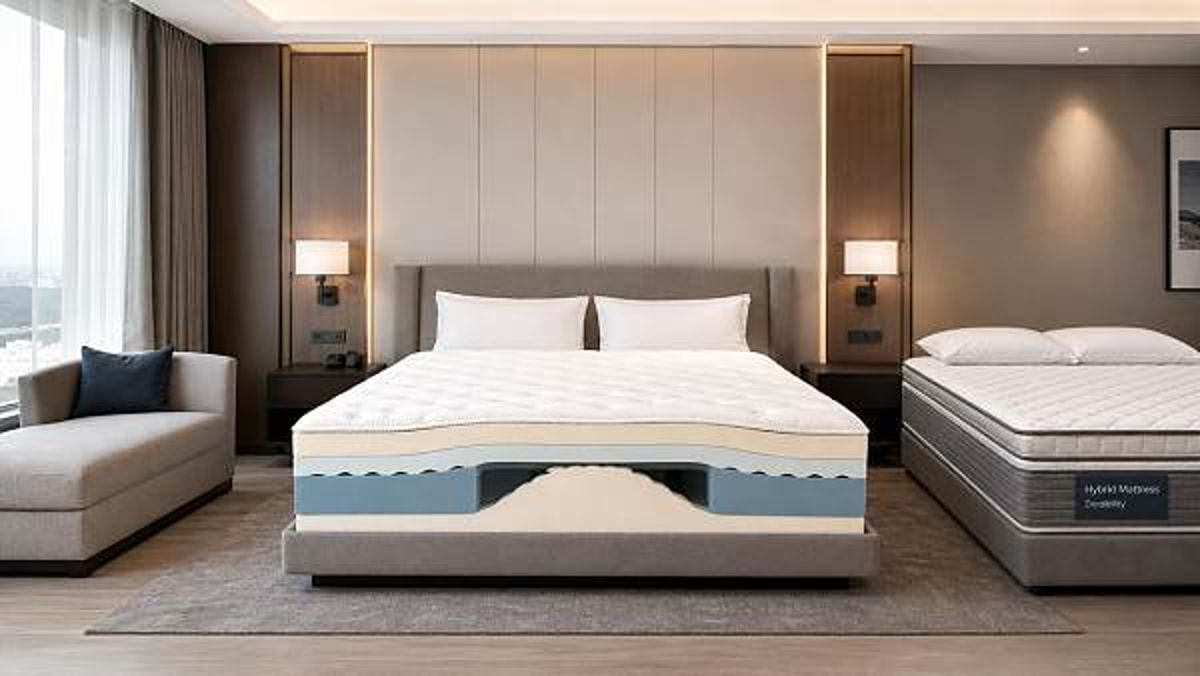
The best candidates are usually hybrid or engineered constructions where memory foam is used as a comfort component rather than the entire performance identity of the mattress. In these designs, the contouring layer is balanced by a stronger support system that limits deep sink and improves shape retention.
Memory foam can also be effective in rooms serving guests who value pressure relief, particularly when paired with temperature-management features and firmer support beneath. The issue is not memory foam itself. The issue is over-reliance on softness as a proxy for luxury.
For procurement teams, the right conclusion is nuanced: memory foam can support guest satisfaction, but only if its durability profile, support structure, and replacement economics fit the operational model of the property.
Alternatives and risk-reduction strategies for hospitality buyers
If sagging risk is a major concern, buyers may want to compare memory foam hotel mattresses with hybrid mattresses, high-resilience foam systems, or commercial innerspring models with reinforced comfort layers. In many cases, hybrids offer a better balance of comfort, airflow, resilience, and edge integrity for full-service hotels.
Another strategy is to specify a firmer baseline mattress and add comfort through high-quality toppers where appropriate. This can reduce the risk of premature structural wear while preserving a plush guest feel. Toppers are also easier and less expensive to replace selectively than full mattresses, although they introduce their own housekeeping and hygiene considerations.
Procurement teams should also align mattress selection with asset planning. If a property expects a major soft refurbishment in a shorter timeframe, a different durability threshold may be acceptable. But if the mattress must perform strongly over a longer ownership horizon, material resilience should outweigh showroom softness.
For multi-property groups, standardization should not mean oversimplification. Different brands, climates, and guest profiles may justify different mattress specifications. A procurement framework can still be centralized while allowing controlled flexibility by segment.
A practical decision framework for procurement teams
When evaluating memory foam hotel mattresses, buyers should score options across five categories: guest comfort, durability, support consistency, warranty practicality, and total cost of ownership. This creates a more balanced decision than choosing based on feel or unit price alone.
Comfort should be judged by target guest profile, not internal preference. Durability should be judged by verified construction and expected occupancy stress. Support consistency should account for body impressions, edge performance, and temperature response. Warranty practicality should focus on claim usability. Total cost of ownership should include projected replacement timing, complaint handling, and reputational impact.
In many sourcing decisions, the best commercial mattress is not the softest one, nor the cheapest one. It is the one that protects brand sleep quality over time with the lowest operational volatility.
That is especially true in hospitality, where every bed is both a guest experience product and a long-term capital asset. Procurement success depends on understanding both roles at once.
Conclusion: softness is appealing, but performance decides value
Memory foam hotel mattresses can absolutely enhance guest comfort, but they can also sag faster when softness is achieved through low-density materials, overly thick comfort layers, weak support cores, or poor climate suitability. For procurement teams, the real risk is mistaking immediate comfort for durable hospitality performance.
The smartest buying approach is to evaluate these mattresses through a commercial lens: how they wear, how they recover, how they affect reviews, and how they influence replacement budgets. If a memory foam model is technically robust and properly matched to the property segment, it can be a strong option. If not, faster sagging will turn plush comfort into avoidable cost.
In short, memory foam hotel mattresses should be bought on evidence, not feel alone. The more rigor buyers apply before purchase, the more likely they are to secure both guest satisfaction and long-term operational value.
Search News
Hot Articles
- Commercial KitchenStainless steel GN pans with reinforced corners last longer in busy kitchensMay 02, 2026
- Hotel Room AmenitiesMemory foam hotel mattresses: when soft comfort leads to faster saggingMay 02, 2026
- Hotel Room AmenitiesElectronic hotel door locks: battery alerts are often less simple than they seemMay 02, 2026
Popular Tags
Need ExpertConsultation?
Connect with our specialized leisureengineering team for procurementstrategies.
Recommended News
 May 02, 2026Memory foam hotel mattresses: when soft comfort leads to faster saggingMemory foam hotel mattresses may feel luxurious at first, but can soft comfort cause faster sagging? Discover how buyers can reduce risk, improve durability, and protect hotel ROI.● Hospitality Sourcing Dir
 May 02, 2026Electronic hotel door locks: battery alerts are often less simple than they seemElectronic hotel door locks battery alerts are more complex than they appear. Learn how firmware, usage, and environment affect reliability, maintenance efficiency, and smarter sourcing.● Hospitality Sourcing Dir
 May 02, 2026Hotel housekeeping carts: the layout detail that saves minutes on every floorHotel housekeeping carts can save minutes on every floor. Discover how smarter cart layout improves workflow, reduces labor strain, and supports faster, more consistent room turnover.● Hospitality Sourcing Dir
 May 02, 2026Wholesale hotel safes: keypad reliability matters more than extra featuresWholesale hotel safes should be judged by keypad reliability first. Discover the checklist that helps buyers reduce lockouts, maintenance costs, and guest complaints.● Hospitality Sourcing Dir
 May 02, 2026Hotel lobby chandeliers: how size mistakes affect the whole arrival experienceHotel lobby chandeliers can make or break first impressions. Learn how sizing mistakes affect luxury, circulation, and brand value—and how to choose the right scale.● Hospitality Sourcing Dir
 May 02, 2026Industrial ironing machines: steam output is not the only thing to compareIndustrial ironing machines should be compared by more than steam output. Discover how temperature control, pressure stability, efficiency, and durability affect real commercial performance.● Hospitality Sourcing Dir
 May 02, 2026Blackout curtains for hotels that block light without trapping heatBlackout curtains for hotels that block light without trapping heat—discover smarter fabrics, thermal comfort benefits, and sourcing tips for better guest sleep and hotel performance.● Hospitality Sourcing Dir
 May 02, 2026Hotel luggage carts: why wheel quality matters more than frame finishHotel luggage carts perform best when wheel quality comes first. Discover how better casters reduce noise, protect floors, improve handling, and lower long-term hotel maintenance costs.● Hospitality Sourcing Dir
 May 02, 2026Custom printed hotel key cards: PVC or wood for a better guest feel?Custom printed hotel key cards: compare PVC and wood to find the best mix of guest feel, durability, sustainability, and brand impact for smarter hotel sourcing.● Hospitality Sourcing Dir
 May 02, 2026Commercial laundry equipment sizing mistakes that raise utility billsCommercial laundry equipment sizing mistakes can quietly drive up water, energy, and labor costs. Learn the biggest planning errors and how smarter sizing protects budgets and efficiency.● Hospitality Sourcing Dir
 May 02, 2026Why some wholesale bath towels for hotels wear out too fastWholesale bath towels for hotels can wear out fast due to fiber quality, GSM, weave, and laundering mismatch. Learn how to choose durable towels that cut replacement costs and protect guest experience.● Hospitality Sourcing Dir
 May 01, 2026Hotel Desks That Work for Both Business Guests and Small RoomsHotel desks for compact rooms: learn how to choose durable, space-saving, business-friendly designs that improve guest satisfaction and simplify hotel procurement.● Hospitality Sourcing Dir
 May 01, 2026Hotel Slippers in Bulk: Cheap Pairs Can Hurt Guest PerceptionHotel slippers bulk choices affect more than cost. Discover how cheap pairs can damage guest perception, comfort, and brand value—and how smarter sourcing improves reviews.● Hospitality Sourcing Dir
 May 01, 2026Hotel Room Furniture Sets That Balance Style and Replacement CostHotel room furniture sets that combine style, durability, and lower replacement cost. Discover a practical checklist for smarter sourcing, better lifecycle value, and reliable hospitality project results.● Hospitality Sourcing Dir
 May 01, 2026Hotel Bed Linens Wholesale Quality Checks Before Large OrdersHotel bed linens wholesale quality checks: learn how to verify fabric strength, shrinkage, stitching, wash durability, and supplier reliability before placing large hotel bedding orders.● Hospitality Sourcing Dir
 May 01, 2026Hotel Bathroom Amenities That Shape First Impressions FastHotel bathroom amenities shape guest first impressions fast. Discover how the right choices improve brand image, efficiency, and perceived quality from day one.● Hospitality Sourcing Dir
 Apr 30, 2026Hotel cabinets that look custom without custom lead timesHotel cabinets that look custom without long custom lead times. Learn how to balance brand style, durability, and faster installation for hotel projects.● Hospitality Sourcing Dir
 Apr 30, 2026Hotel sofas that hold shape better in high turnover roomsHotel sofas that keep their shape longer in high-turnover rooms. Learn what frame, cushion, and upholstery specs improve durability, guest appeal, and lifecycle value.● Hospitality Sourcing Dir
 Apr 30, 2026Hotel wardrobes that save space without looking budgetHotel wardrobes that save space without looking budget: discover premium, durable designs, smart specs, and sourcing tips to maximize guestroom value.● Hospitality Sourcing Dir
 Apr 30, 2026Hotel room furniture mistakes that quietly hurt guest comfortHotel room furniture mistakes can quietly damage guest comfort, reviews, and brand value. Learn how smarter layout, sizing, and material choices improve hotel room performance.● Hospitality Sourcing Dir
 Apr 30, 2026What makes hotel outdoor furniture easier to maintainHotel outdoor furniture is easier to maintain when it uses weather-resistant materials, smart construction, and replaceable parts. Learn how to cut upkeep and improve long-term value.● Hospitality Sourcing Dir
 Apr 30, 2026Hotel lobby furniture trends shifting guest first impressionsHotel lobby furniture trends are redefining first impressions with modular comfort, brand storytelling, tech integration, and durable style that elevates guest experience.● Hospitality Sourcing Dir
 Apr 30, 2026Why some hotel nightstands wear out faster than expectedHotel nightstands wear out faster when materials, edge sealing, and hardware are underspecified. Learn how to spot durable options, reduce lifecycle costs, and source smarter for hospitality projects.● Hospitality Sourcing Dir
 Apr 28, 2026Iranian Delegation at Sanya Asian Beach Games Spurs Halal-Certified Hardware DemandHalal-certified hardware demand surges after Iranian delegation’s cultural showcase at Sanya Asian Beach Games—key for GCC event tech exporters.● Hospitality Sourcing Dir