Hotel sofas that hold shape better in high turnover rooms
In high-turnover hospitality environments, hotel sofas must do more than look refined—they need to retain shape, comfort, and visual appeal through constant guest use. For procurement teams balancing durability, brand standards, and lifecycle value, choosing the right sofa construction is a strategic decision. This guide explores what makes hotel sofas perform better over time and how to source options that support both guest experience and operational efficiency.
Why do some hotel sofas lose shape faster than others?
This is usually the first question procurement teams ask after seeing a lounge, guest room, or lobby seating program age too quickly. In most cases, hotel sofas do not lose shape because of one single weak point. They fail gradually through a combination of underbuilt frames, low-density seat materials, weak suspension systems, and upholstery that stretches under repeated use. In high-turnover rooms, a sofa may face dozens of sitting cycles per day, which quickly exposes any shortcut in construction.
A sofa that looks acceptable during showroom review can still perform poorly after 6 to 12 months if the internal structure is not specified for commercial use. Procurement decisions often focus on outer appearance, fabric hand feel, or unit price, but shape retention depends far more on what is hidden beneath the upholstery. Seat crowns flatten, back cushions migrate, and front rails sag when the internal engineering is light-duty or inconsistent between production batches.
For hotel operators, this problem has a direct operational cost. Once hotel sofas lose shape, they affect guest perception, housekeeping efficiency, and renovation schedules. A visibly tired sofa can make an otherwise clean room appear older than it is. In upscale properties, even a 12-to-18-month drop in presentation quality may trigger early replacement discussions, raising total cost of ownership far above the original purchase price.
Which components usually cause early deformation?
The most common failure points are the seat core, suspension platform, and arm structure. If foam density is too low for the application, cushions compress and never fully rebound. If webbing is loosely tensioned or springs are underspecified, the seating platform begins to hammock. If the arms are not reinforced, they can loosen under the side loading that happens when guests sit down, stand up, or place luggage on the edges.
- Low-density seat foam often creates a soft first impression but tends to show compression faster in high-use zones.
- Loose back-fill or poorly baffled cushions can shift within 3 to 6 months in properties with heavy occupancy.
- Thin plywood, weak corner blocks, or poor joinery increase the risk of frame movement and visible distortion.
- Stretch-prone fabrics and low-stability faux leathers can make even a structurally sound sofa look worn prematurely.
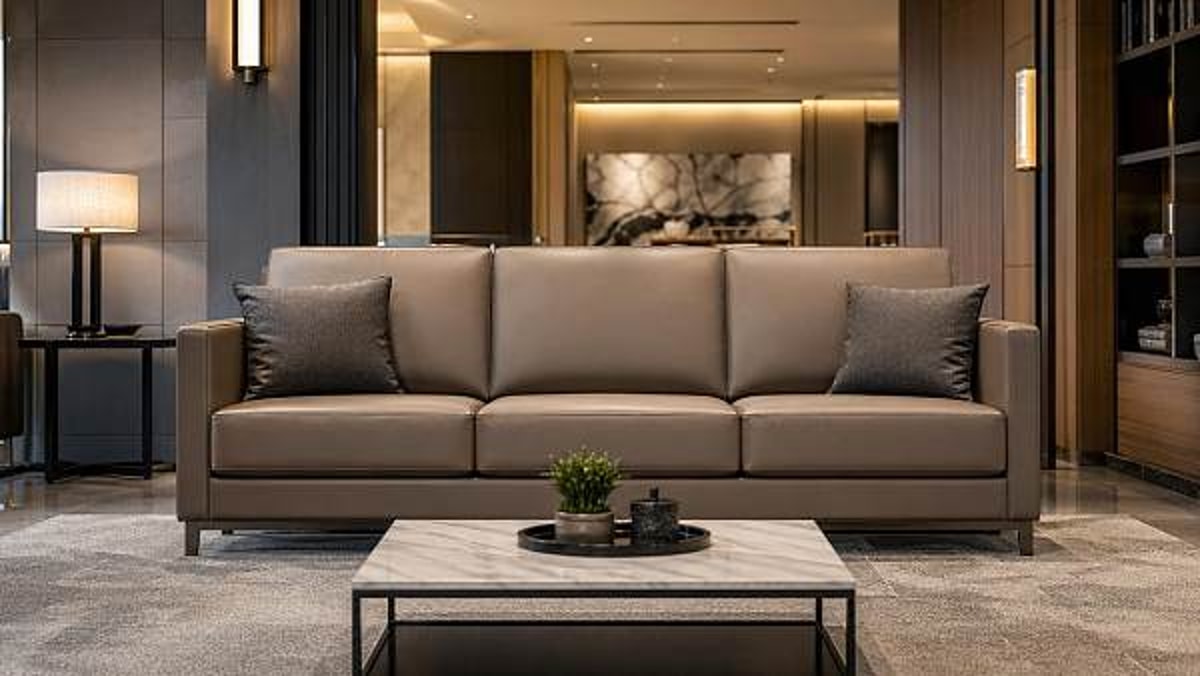
Procurement teams should therefore evaluate hotel sofas as integrated systems rather than decorative items. Shape retention is achieved when frame, suspension, cushion specification, and cover material are aligned to the actual usage level of the property. A lobby sofa in a full-service hotel may need a very different build from a sofa in an extended-stay suite, even if the visual language is similar.
Quick procurement takeaway
When reviewing hotel sofas, ask not only how they look on day one, but how they are expected to perform after 10,000 to 30,000 sitting events. That framing changes the sourcing conversation from decorative preference to lifecycle performance, which is the more useful lens for procurement.
What construction details help hotel sofas hold shape better over time?
The strongest shape retention usually starts with frame integrity. Commercial-grade hotel sofas often use hardwood, engineered wood with stable moisture control, or metal-reinforced areas at high-stress joints. Corner blocks, glued and mechanically fixed joints, and predictable dimensional tolerances matter more than decorative trim. A stable frame resists racking, reduces movement, and protects the seating geometry over multi-year use cycles.
The second key factor is suspension. For many hotel applications, sinuous springs or tensioned webbing can both work, but their performance depends on gauge, spacing, attachment quality, and weight distribution. Procurement buyers should not treat “spring seat” or “webbed seat” as complete answers. The correct question is whether the suspension is engineered for repeated commercial loading across the expected guest profile and operating pattern.
The third factor is cushion build. High-resilience foam, layered constructions, wrapped cores, and compartmentalized back cushions generally provide better shape recovery than very soft, low-density fills. In practical hotel use, balanced firmness often outperforms plush softness. A sofa that feels slightly more supportive at installation may still look and perform better after 18 to 24 months than one designed purely for a soft showroom impression.
Which specifications deserve closer review?
The table below helps procurement teams compare the main construction areas that influence how well hotel sofas keep their shape in high-turnover rooms.
For buyers, the main lesson is that hotel sofas with stronger hidden construction usually present lower lifecycle risk. Even when two models look similar from the outside, the one with a better frame and better cushion architecture is more likely to preserve profile, stitching alignment, and guest comfort through heavy occupancy.
Does upholstery also affect shape retention?
Yes, and often more than expected. Upholstery does not create structural strength, but it strongly affects how shape changes become visible. Fabrics with better dimensional stability, tighter weaves, and commercial abrasion suitability can help hotel sofas keep a crisp appearance longer. By contrast, materials that bag, crease deeply, or stretch along seat fronts can exaggerate wear even when the cushion core is still acceptable.
For high-turnover rooms, procurement teams often evaluate cleanability, stain performance, and fire compliance alongside appearance. These are all valid concerns, but the cover should also be reviewed for recovery behavior after repeated loading. A sofa used 20 or more times per day will reveal fabric instability quickly, especially on seat decks and front edges where pressure concentrates.
How should procurement teams compare hotel sofas for guest rooms, lobbies, and suites?
Not all hotel sofas face the same type of use. A guest room sofa may serve short sitting periods, occasional luggage contact, and lighter daily cycles. A lobby sofa may experience continuous use, side loading, casual waiting, and uneven weight distribution for 12 to 18 hours per day. Suite sofas can add sleeping, lounging, and family occupancy patterns. Procurement teams should therefore match the build to the setting instead of applying one specification across every zone.
This category planning becomes especially important for multi-property groups and renovation programs. A brand standard that only defines dimensions, color, and silhouette may not be enough. Better outcomes come from pairing visual standards with performance tiers, such as standard-use, heavy-use, and public-area use. That approach makes it easier to source hotel sofas that are consistent in appearance while still adapted to different wear profiles.
The following comparison table can help teams align application area with practical specification priorities.
This comparison shows why hotel sofas should be sourced according to use intensity, not only aesthetics. In practical procurement, a public-area sofa may justify a higher initial cost if it extends replacement intervals by 12 to 24 months. That tradeoff is often favorable once labor, freight, guest disruption, and disposal costs are considered.
What questions should buyers ask suppliers during evaluation?
- What frame materials and reinforcement methods are used at joints, arms, and front rails?
- What cushion construction is specified for this model, and can firmness be adjusted without sacrificing recovery?
- Which upholstery options are most suitable for hospitality traffic, cleaning routines, and visual retention?
- Can the supplier provide guidance on where this sofa performs best: guest rooms, lobbies, suites, or mixed-use areas?
- What are the typical lead times for standard production, custom finishes, and replacement parts or matching orders?
These questions create a more useful sourcing dialogue than simply asking for the cheapest compliant option. They help procurement teams compare hotel sofas based on suitability, serviceability, and consistency across projects.
What are the most common mistakes when sourcing hotel sofas for high-turnover rooms?
One common mistake is overvaluing showroom softness. A sofa that feels extremely plush for the first 5 minutes may not be the best choice for 24-month performance. In hospitality, visual recovery after repeated use matters just as much as first-touch comfort. Hotel sofas that are too soft often show seat troughs and back collapse earlier, especially in compact guest rooms where guests may sit on the same edge repeatedly.
Another mistake is failing to account for housekeeping realities. Cushions that require constant fluffing, fabrics that reveal every crease, or silhouettes with fragile piping may increase labor demands across hundreds of rooms. In a 150-room or 300-room property, even an extra 1 to 2 minutes of daily touch-up per room can create meaningful operating pressure over time. Procurement teams should consider maintenance behavior as part of shape retention strategy.
A third mistake is treating all suppliers as equal once visuals are approved. Consistency across production runs matters greatly for hotel sofas, especially for phased renovations and repeat orders. If the sofa profile, foam response, or upholstery fit changes between batches, the property may end up with visible variation on the same floor or within the same brand program.
Which red flags should be reviewed before approval?
Before final sign-off, procurement teams can use the following checklist to reduce avoidable risk.
- Seat cushions already show wrinkling or uneven recovery during sample evaluation.
- Arm tops flex noticeably when weight is applied during normal ingress and egress simulation.
- Back cushions lack containment and appear to shift after a short sitting test.
- Supplier documentation does not clearly define upholstery, internal build, or replacement matching policy.
- Lead time for repeat orders is unclear, which can be problematic in phased rollouts lasting 6 to 18 months.
Avoiding these mistakes does not require overengineering every product. It requires a sourcing process that links commercial performance, operating conditions, and brand presentation. That is especially relevant for buyers managing multiple regions, mixed occupancy patterns, or projects with both standard and premium room categories.
How can procurement reduce mismatch risk?
Requesting a review sample, confirming final upholstery fit, and validating room-use assumptions before full approval can prevent expensive corrections later. Even a short evaluation cycle of 2 to 4 weeks may reveal whether a candidate among several hotel sofas has better recovery, easier maintenance, and more stable appearance under repeated use.
How do cost, lead time, and lifecycle value affect the final decision?
Procurement teams rarely buy hotel sofas based on durability alone. Budget, delivery window, room opening schedule, freight planning, and installation sequencing all influence the outcome. The practical goal is to find the best balance between upfront spend and useful service life. A lower-cost sofa may still be the right choice for selected low-use areas, but in high-turnover rooms the least expensive option often becomes more costly once replacement timing is factored in.
Lead times also matter. Standard commercial programs may move in 4 to 8 weeks, while custom upholstery, project-specific dimensions, or coordinated brand finishes can extend timelines to 8 to 14 weeks or more depending on sourcing origin and order complexity. Buyers should confirm not just first delivery but also repeat-order continuity, because hotel sofas often need matching replenishment for damaged units, expansion phases, or future refurbishments.
Lifecycle value becomes clearer when viewed across a 3-year to 5-year operating horizon. If one sofa maintains acceptable shape and presentation for even 12 months longer than an alternative, the savings may appear through reduced replacement labor, fewer guest-facing defects, and less pressure on capex planning. This is why professional sourcing should assess hotel sofas through total use cost, not purchase price alone.
What does a practical evaluation framework look like?
The following table offers a simple way to compare hotel sofas across procurement priorities without reducing the decision to price only.
Using a framework like this helps buyers compare different hotel sofas on a more strategic basis. It also supports internal alignment between procurement, design, operations, and ownership teams when tradeoffs need to be justified clearly.
What should you confirm before placing a hotel sofa order?
Before purchase order release, procurement teams should confirm the final application, dimensions, seat comfort profile, upholstery performance, and project timeline. This is particularly important when sourcing hotel sofas for multiple room types or for projects spanning more than one delivery batch. Small specification gaps at approval stage can lead to larger issues after installation, especially when visual consistency matters across guest-facing spaces.
It is also useful to confirm whether the supplier can support custom requirements such as seat height adjustments, arm width changes, contract upholstery substitutions, or region-specific compliance requests. In hospitality projects, these details often determine whether a sofa works well in real operation or becomes a recurring issue for housekeeping, maintenance, or guest feedback teams.
For buyers managing regional sourcing, mixed brand portfolios, or time-sensitive openings, the value of a knowledgeable supply partner goes beyond product availability. The right partner helps translate room-use needs into workable specifications, aligns design intent with commercial durability, and reduces the risk of costly mismatch.
Why choose us for hotel sofa sourcing support?
At GCT, we support commercial buyers who need more than a product list. We help procurement teams evaluate hotel sofas through the lens of performance, sourcing practicality, and project fit. That includes assistance with parameter confirmation, model comparison, upholstery direction, supplier screening, and questions around lead time, customization scope, and repeat-order reliability.
If you are comparing hotel sofas for guest rooms, lobbies, suites, or multi-property programs, we can help you narrow options based on use intensity, expected lifecycle, and brand presentation goals. We can also support discussions around sample review, commercial material choices, replacement planning, and cost-positioning across different project tiers.
Contact us to discuss your next step
If you need to confirm specifications, shortlist suitable hotel sofas, review delivery timing, assess custom solutions, clarify certification-related requirements, request sample support, or open a quotation discussion, contact us with your project brief. A clear conversation at the start can save significant time and reduce sourcing risk across the full hospitality furnishing cycle.
Search News
Hot Articles
Popular Tags
Need ExpertConsultation?
Connect with our specialized leisureengineering team for procurementstrategies.
Recommended News
 Apr 30, 2026Hotel cabinets that look custom without custom lead timesHotel cabinets that look custom without long custom lead times. Learn how to balance brand style, durability, and faster installation for hotel projects.● Hospitality Sourcing Dir
 Apr 30, 2026Hotel sofas that hold shape better in high turnover roomsHotel sofas that keep their shape longer in high-turnover rooms. Learn what frame, cushion, and upholstery specs improve durability, guest appeal, and lifecycle value.● Hospitality Sourcing Dir
 Apr 30, 2026Hotel wardrobes that save space without looking budgetHotel wardrobes that save space without looking budget: discover premium, durable designs, smart specs, and sourcing tips to maximize guestroom value.● Hospitality Sourcing Dir
 Apr 30, 2026Hotel room furniture mistakes that quietly hurt guest comfortHotel room furniture mistakes can quietly damage guest comfort, reviews, and brand value. Learn how smarter layout, sizing, and material choices improve hotel room performance.● Hospitality Sourcing Dir
 Apr 30, 2026What makes hotel outdoor furniture easier to maintainHotel outdoor furniture is easier to maintain when it uses weather-resistant materials, smart construction, and replaceable parts. Learn how to cut upkeep and improve long-term value.● Hospitality Sourcing Dir
 Apr 30, 2026Hotel lobby furniture trends shifting guest first impressionsHotel lobby furniture trends are redefining first impressions with modular comfort, brand storytelling, tech integration, and durable style that elevates guest experience.● Hospitality Sourcing Dir
 Apr 30, 2026Why some hotel nightstands wear out faster than expectedHotel nightstands wear out faster when materials, edge sealing, and hardware are underspecified. Learn how to spot durable options, reduce lifecycle costs, and source smarter for hospitality projects.● Hospitality Sourcing Dir
 Apr 28, 2026Iranian Delegation at Sanya Asian Beach Games Spurs Halal-Certified Hardware DemandHalal-certified hardware demand surges after Iranian delegation’s cultural showcase at Sanya Asian Beach Games—key for GCC event tech exporters.● Hospitality Sourcing Dir
 Apr 27, 2026Iranian Delegation’s Ritual Gesture at Sanya ASG Sparks Mideast Hospitality Procurement ShiftIranian delegation's ritual gesture at Sanya ASG sparks Middle East hospitality procurement shift—key for hotel amenities, travel services & cultural compliance.● Hospitality Sourcing Dir
 Apr 28, 2026Hotel Beds in 2026 Are Being Chosen for Sleep Quality, Not Just StyleHotel beds, hotel furniture, and custom furniture in 2026 are defined by sleep quality, durability, and guest value—see how luxury furniture buyers source smarter.● Hospitality Sourcing Dir
 Apr 28, 2026Cheap Hotel Furniture Can Raise Costs Later in Unexpected WaysHotel furniture buying guide: compare hotel beds, hotel chairs, hotel tables, custom furniture and luxury furniture to avoid hidden costs and choose durable hotel equipment.● Hospitality Sourcing Dir
 Apr 28, 2026Hotel Furniture Replacement Cycles Are Changing in 2026Hotel furniture trends for 2026: discover smarter replacement cycles for hotel beds, hotel chairs, hotel tables, luxury furniture, and custom furniture to boost ROI and guest appeal.● Hospitality Sourcing Dir
 Apr 28, 2026Why Do Some Hotel Beds Get Complaints Faster Than Others?Hotel beds complaints often start with poor specs, not looks. Learn how hotel furniture, custom furniture, luxury furniture, hotel chairs, hotel tables, and hotel equipment affect guest satisfaction.● Hospitality Sourcing Dir
 Apr 28, 2026Hotel Beds: Which Frame and Mattress Setup Lasts Longer?Hotel beds guide: compare frame and mattress setups that last longer, with insights on hotel furniture, custom furniture, luxury furniture, hotel chairs and hotel tables.● Hospitality Sourcing Dir
 Apr 27, 2026Is Luxury Jewelry for Hotels a Smart Investment?Luxury jewelry for hotels: see how a custom jewelry manufacturer helps hotels turn custom luxury jewelry into brand value, guest appeal, and profitable luxury jewelry B2B growth.● Hospitality Sourcing Dir
 Apr 21, 2026Open or closed hotel wardrobes for easier housekeeping?Hotel wardrobes affect housekeeping speed, guest appeal, and hospitality procurement. Compare open vs closed designs for hotel furniture, luxury furniture, and hotel room furniture planning.● Hospitality Sourcing Dir
 Apr 21, 2026Hotel wardrobes that fit luggage without wasting spaceHotel wardrobes that fit luggage smartly without wasting space—explore hotel furniture solutions that elevate hotel room furniture, support hospitality procurement, and enhance guest comfort.● Hospitality Sourcing Dir
 Apr 21, 2026Why hotel room furniture wears unevenly after openingHotel furniture wear starts unevenly from day one. Learn how hotel beds, hotel chairs, hotel desks and hotel room furniture perform in real use, with smart hospitality procurement tips.● Hospitality Sourcing Dir
 Apr 21, 2026Hotel room furniture packages that cut design mismatchHotel room furniture packages align hotel furniture, hotel beds, hotel chairs, hotel tables, and hotel desks with luxury furniture standards—reducing design mismatch and speeding hospitality procurement.● Hospitality Sourcing Dir
 Apr 21, 2026Low seat or deep seat hotel sofas for modern lobbies?Hotel furniture buyers compare low seat and deep seat hotel sofas for modern lobbies. Explore luxury furniture choices that improve comfort, traffic flow, brand image, and hospitality procurement value.● Hospitality Sourcing Dir
 Apr 21, 2026Hotel sofas that keep their shape in high traffic areasHotel sofas, hotel furniture, and hospitality furniture that keep shape in high-traffic areas—discover luxury furniture sourcing tips, durable commercial furniture specs, and smarter hospitality procurement.● Hospitality Sourcing Dir
 Apr 21, 2026Why hospitality furniture needs different specs by zoneHospitality furniture specs vary by zone. Learn how hotel furniture, hotel beds, hotel chairs, hotel tables, and hotel desks improve durability, ROI, and luxury guest experience.● Hospitality Sourcing Dir
 Apr 21, 2026Hospitality furniture that supports faster room turnoverHospitality furniture that speeds room turnover: compare hotel beds, hotel chairs, hotel tables, hotel desks and hotel sofas for easier cleaning, durability, and smarter hospitality procurement.● Hospitality Sourcing Dir
 Apr 21, 2026Where hotel equipment budgets usually go off trackHotel furniture and hotel equipment budgets often fail from hidden scope, logistics, and lifecycle costs. Learn smarter hospitality procurement for hotel beds, chairs, tables, and luxury furniture.● Hospitality Sourcing Dir