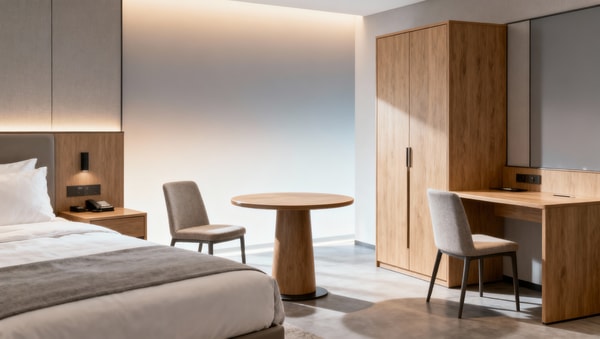
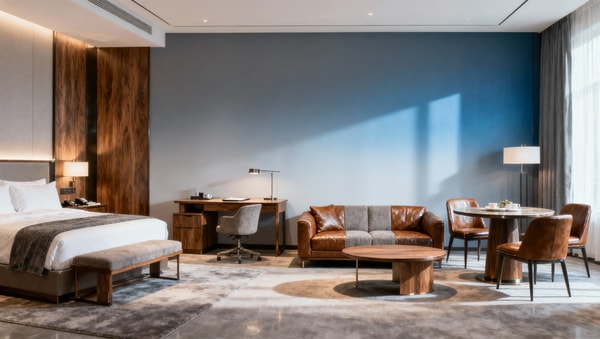
Hotel wardrobes that save space without looking budget
For procurement teams balancing guest experience, room efficiency, and long-term value, choosing the right hotel wardrobes is more strategic than it looks. Space-saving designs no longer have to signal low quality or limited style. With the right specifications, materials, and supplier capabilities, hotel wardrobes can maximize storage, support premium interiors, and meet the practical demands of modern hospitality projects.
In many hotel developments, wardrobes are treated as a secondary joinery item until room mock-ups reveal a familiar problem: bulky storage reduces usable floor area, while undersized units create guest dissatisfaction within the first weeks of operation. For procurement professionals, that means the wardrobe decision affects not only aesthetics, but also room revenue logic, housekeeping efficiency, replacement cycles, and project coordination.
The strongest hotel wardrobes today combine compact footprints, premium visual language, and operational durability. Whether the property is a city business hotel, a serviced apartment, or an upscale resort, buyers need solutions that fit 18–28 square meter guestrooms without making the interior feel compressed or cost-driven. This guide outlines what to specify, what to avoid, and how to source wardrobes that save space without looking budget.
Why space-saving hotel wardrobes matter in modern guestroom planning
Guestroom layouts have become tighter in many urban and mixed-use hospitality projects. In an 18–22 square meter room, every 100 mm of depth has a visible impact on circulation. A poorly planned wardrobe can obstruct luggage movement, reduce bedside clearance, or make the entry sequence feel cramped. That is why hotel wardrobes are no longer just storage units; they are part of spatial engineering.
Procurement teams also face a more demanding design brief than in the past. Owners want premium finishes, operators want easy maintenance, and designers want visual consistency with headboards, vanities, and media walls. A wardrobe that looks cheap can lower perceived room value even if the mattress, bathroom fittings, and lighting are strong. In practice, guests often read storage quality as a signal of the hotel’s overall standard.
The commercial issue is straightforward: if space-saving hotel wardrobes are specified well, they support higher room usability without increasing built area. If they are specified badly, they trigger rework, guest complaints, chipped laminates, and hardware failures within 12–24 months. For procurement, that makes early specification more cost-effective than late corrective action.
What “space-saving” should actually mean
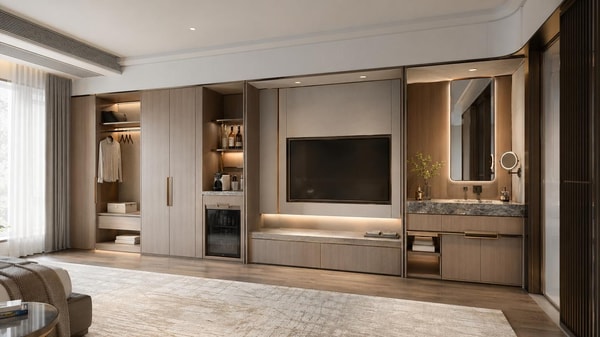
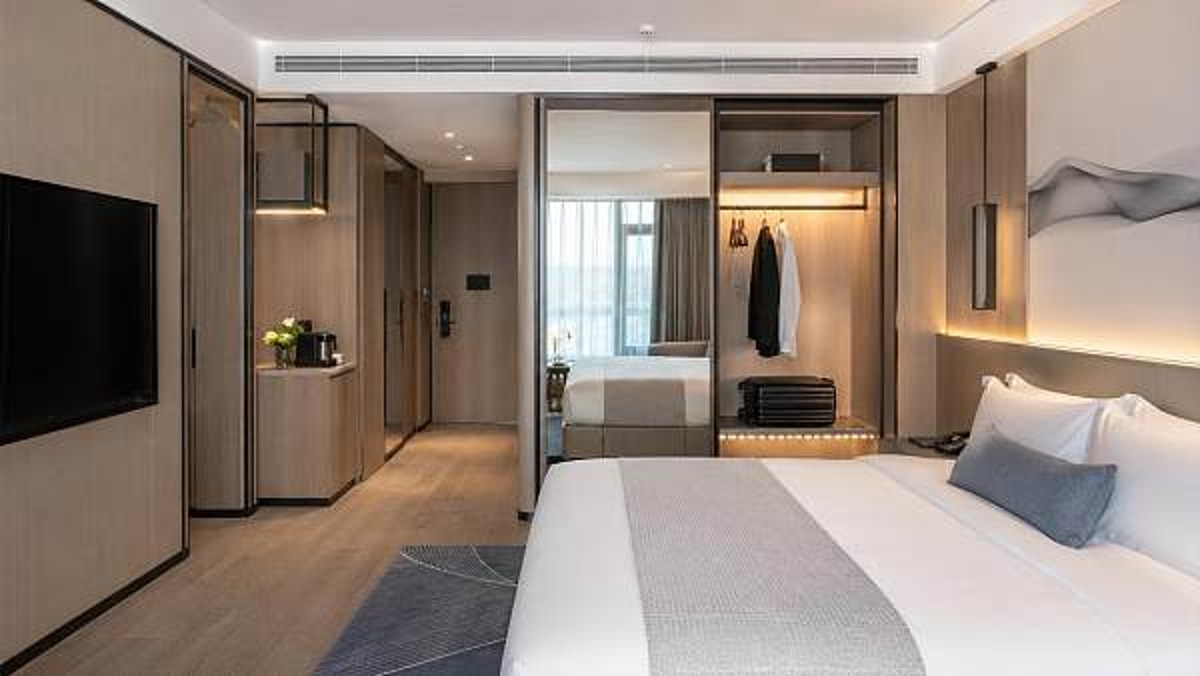
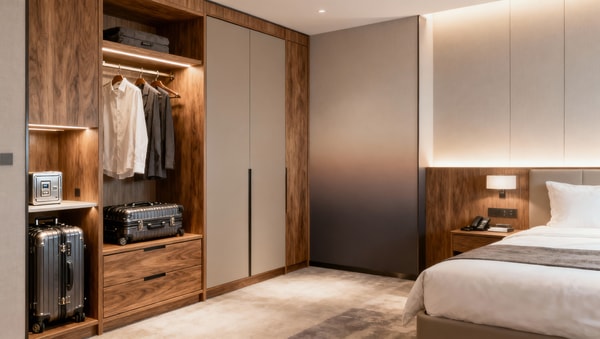
Space-saving should not be confused with simply making the wardrobe smaller. In hospitality projects, the goal is to optimize storage function per square meter. That may involve sliding doors instead of swing doors, integrated luggage benches, open hanging sections, top shelves for low-frequency items, or mirrored door panels that visually expand the room.
For many midscale and upscale properties, a wardrobe depth of 550–600 mm is common for full hanging functionality, while shallow formats of 450–500 mm may work in shorter-stay or compact urban concepts. The right choice depends on guest profile, average length of stay, and room category mix, not just on architectural constraint.
Key design pressures buyers must balance
- Storage capacity for 1–2 guests, including hanging space, shelf volume, and luggage placement.
- Clear circulation zones, ideally maintaining practical movement paths near the entrance and bed.
- Visual quality, including door alignment, finish consistency, concealed fasteners, and premium hardware feel.
- Durability under high turnover conditions, especially edges, hinges, runners, handles, and kick plates.
When these pressures are handled in an integrated way, hotel wardrobes stop being basic casegoods and become value-protecting assets. That is especially relevant for procurement teams managing brand standards across multiple properties, where repeatability and defect control are just as important as first-cost pricing.
Which wardrobe formats save space without lowering design perception
Not every compact wardrobe solution looks premium. The difference usually comes from proportion, material detailing, and how the wardrobe connects to adjacent furniture. Slim modules can feel architectural and intentional when they align with wall panels or vanity lines, but they can look budget when they appear as isolated boxes with visible joints and low-grade surfaces.
For procurement teams, format selection should start with use case. A 4-star city hotel with 1–3 night stays may prioritize efficient open wardrobes with luggage shelves. A resort or long-stay concept may need larger enclosed hotel wardrobes with more hanging capacity, drawers, and accessory storage. There is no universal best format, but there are formats that consistently perform better in compact rooms.
The table below compares common wardrobe formats used in hospitality projects where floor area efficiency and visual value must coexist.
The key takeaway is that compact hotel wardrobes look premium when their format supports the room concept. The most successful models usually reduce wasted movement space while increasing visual integration. That is often more effective than simply shrinking the cabinet body.
Features that elevate perception
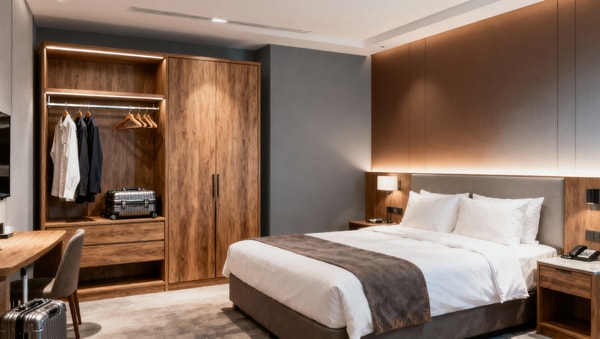
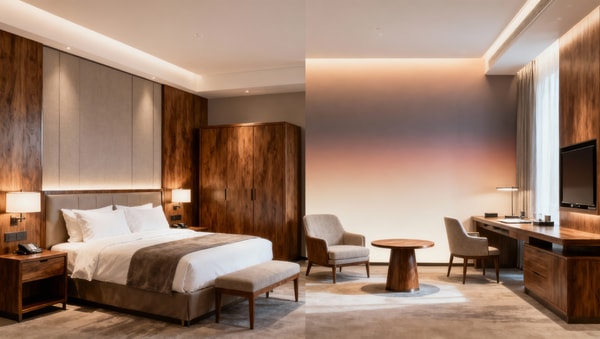
Premium perception often depends on a few visible details: consistent reveals, soft-close motion, integrated lighting, metal hanging rails with solid feel, and door faces that match surrounding joinery. Even in value-engineered projects, these details can make hotel wardrobes appear custom rather than generic.
A practical benchmark is to reduce visible clutter. Open sections should be intentionally framed, cable routing should be hidden, and shelf spacing should reflect actual use. For example, top shelf heights of 300–350 mm and hanging sections of 950–1100 mm suit many standard room programs, while baggage shelves should handle regular suitcase loading without flexing.
Specifications procurement teams should review before placing an order
When buyers compare hotel wardrobes from different suppliers, visual renderings can be misleading. Two products may look similar in a tender pack yet perform very differently in operation. Procurement should therefore translate design intent into measurable specification points covering structure, finish, hardware, and installation tolerance.
Material selection is one of the first decisions. Engineered board with decorative laminate or melamine is common in commercial hospitality because it balances stability, finish consistency, and cost control. Veneered panels can deliver a stronger luxury impression, but they require tighter quality control and may be less forgiving across large production runs if grain matching matters.
Hardware quality is equally important. In high-turnover hotels, soft-close hinges, roller systems, shelf supports, hanging rails, and drawer runners may be used hundreds of times per month. A wardrobe that saves 8% on purchase cost but fails after 18 months can become far more expensive once labor, guestroom downtime, and replacement logistics are included.
Core specification checkpoints
Before approval, buyers should ask for a room-by-room specification matrix rather than relying only on product photos. The following table summarizes practical review points that help separate hospitality-grade hotel wardrobes from low-performance alternatives.
This type of review helps procurement move beyond appearance-based decisions. The right hotel wardrobes should align with maintenance reality, housekeeping routines, and replacement planning over a 5–8 year operating horizon, even if the interior refresh cycle is shorter.
A practical 5-point pre-order checklist
- Confirm dimensions against actual room layouts, including skirting, service access, and door swings.
- Request a finish sample board under project lighting, not only digital visuals.
- Verify hardware grade, spare part availability, and after-sales support response time.
- Check assembly method for on-site installation speed and tolerance control.
- Review packaging standards for export, multi-floor delivery, and room-by-room labeling.
For international sourcing projects, lead time planning also matters. Depending on volume, customization level, and finish complexity, a typical production window may range from 4–10 weeks, followed by shipping and installation coordination. Procurement teams should build wardrobe approval into the FF&E schedule early, not at the final manufacturing stage.
How to source hotel wardrobes for durability, consistency, and project control
A strong wardrobe specification still depends on supplier execution. In commercial hospitality, sourcing is not only about unit pricing; it is about whether the manufacturer can deliver finish consistency across dozens or hundreds of rooms, maintain dimensional accuracy, and support coordination with other casegoods packages. The risk increases when procurement selects a vendor based on showroom samples without reviewing production discipline.
For hotel wardrobes, supplier capability should be assessed across at least 4 dimensions: engineering support, customization flexibility, quality assurance, and logistics readiness. Engineering support matters because wardrobe integration often involves skirting notches, access panels, lighting cut-outs, or fire and MEP coordination. A supplier that cannot read hospitality drawings accurately may create site delays even if the product quality is acceptable.
Consistency is another major issue. In multi-room projects, guests immediately notice if one wardrobe door tone differs from another or if gaps vary from room to room. Procurement teams should therefore ask for control methods such as batch finish matching, pre-shipment inspection routines, and mock-up approval procedures before mass production begins.
Questions that reveal real supplier strength
The most useful supplier questions are operational rather than promotional. Buyers should ask how room type variations are handled, what tolerance range is accepted for installation, how damaged panels are replaced, and whether KD packing or pre-assembled modules are recommended for the project. These questions quickly reveal whether a supplier understands hospitality delivery conditions.
A reliable sourcing process for hotel wardrobes often follows 6 steps from sample review to final handover. The structure below is useful for both new developments and refurbishment projects.
- Step 1: Define room types, target dimensions, storage expectations, and budget bands.
- Step 2: Review shop drawings, finish boards, and hardware samples before prototype approval.
- Step 3: Build 1:1 mock-up or sample module to test door movement, shelf use, and visual fit.
- Step 4: Approve production with room coding, packaging lists, and inspection checkpoints.
- Step 5: Coordinate phased delivery, especially for 50+ room projects or live refurbishment sites.
- Step 6: Conduct snagging review, spare inventory check, and post-installation performance follow-up.
Common sourcing mistakes
One common mistake is over-prioritizing unit cost while ignoring room integration cost. A wardrobe that arrives cheaply but requires significant on-site cutting, alignment, or finish correction can erode the expected savings very quickly. Another mistake is selecting finishes that look refined in a sample size but show fingerprints, scratches, or edge wear too easily under daily hospitality use.
Procurement teams working through sourcing hubs such as GCT typically benefit from a wider comparative view of supplier capability, OEM/ODM flexibility, and category-specific project requirements. This is especially valuable when the wardrobe package must align with broader hotel furnishing standards rather than being purchased as an isolated furniture line item.
Operational guidance: installation, maintenance, and long-term value
The lifetime value of hotel wardrobes depends on more than manufacturing quality. Installation accuracy, housekeeping behavior, and spare management all influence how the product performs over time. Even premium wardrobes can look tired within 12 months if leveling is poor, doors drift out of alignment, or exposed corners are not protected in high-contact zones.
During installation, buyers should pay attention to wall flatness, floor tolerance, and interface conditions with adjacent millwork. In renovation projects, existing walls may vary enough to affect reveal consistency. If the supplier allows for site scribing or adjustable plinth details, the final outcome is usually more polished than a rigid one-size-fits-all module strategy.
Maintenance planning should begin before guest opening. For example, housekeeping teams need guidance on approved cleaning agents for laminates, mirrors, metal handles, and soft-close hardware areas. A simple maintenance protocol reviewed every 3–6
Search News
Hot Articles
Popular Tags
Need ExpertConsultation?
Connect with our specialized leisureengineering team for procurementstrategies.
Recommended News
 Apr 30, 2026Hotel cabinets that look custom without custom lead timesHotel cabinets that look custom without long custom lead times. Learn how to balance brand style, durability, and faster installation for hotel projects.● Hospitality Sourcing Dir
 Apr 30, 2026Hotel sofas that hold shape better in high turnover roomsHotel sofas that keep their shape longer in high-turnover rooms. Learn what frame, cushion, and upholstery specs improve durability, guest appeal, and lifecycle value.● Hospitality Sourcing Dir
 Apr 30, 2026Hotel wardrobes that save space without looking budgetHotel wardrobes that save space without looking budget: discover premium, durable designs, smart specs, and sourcing tips to maximize guestroom value.● Hospitality Sourcing Dir
 Apr 30, 2026Hotel room furniture mistakes that quietly hurt guest comfortHotel room furniture mistakes can quietly damage guest comfort, reviews, and brand value. Learn how smarter layout, sizing, and material choices improve hotel room performance.● Hospitality Sourcing Dir
 Apr 30, 2026What makes hotel outdoor furniture easier to maintainHotel outdoor furniture is easier to maintain when it uses weather-resistant materials, smart construction, and replaceable parts. Learn how to cut upkeep and improve long-term value.● Hospitality Sourcing Dir
 Apr 30, 2026Hotel lobby furniture trends shifting guest first impressionsHotel lobby furniture trends are redefining first impressions with modular comfort, brand storytelling, tech integration, and durable style that elevates guest experience.● Hospitality Sourcing Dir
 Apr 30, 2026Why some hotel nightstands wear out faster than expectedHotel nightstands wear out faster when materials, edge sealing, and hardware are underspecified. Learn how to spot durable options, reduce lifecycle costs, and source smarter for hospitality projects.● Hospitality Sourcing Dir
 Apr 28, 2026Iranian Delegation at Sanya Asian Beach Games Spurs Halal-Certified Hardware DemandHalal-certified hardware demand surges after Iranian delegation’s cultural showcase at Sanya Asian Beach Games—key for GCC event tech exporters.● Hospitality Sourcing Dir
 Apr 27, 2026Iranian Delegation’s Ritual Gesture at Sanya ASG Sparks Mideast Hospitality Procurement ShiftIranian delegation's ritual gesture at Sanya ASG sparks Middle East hospitality procurement shift—key for hotel amenities, travel services & cultural compliance.● Hospitality Sourcing Dir
 Apr 28, 2026Hotel Beds in 2026 Are Being Chosen for Sleep Quality, Not Just StyleHotel beds, hotel furniture, and custom furniture in 2026 are defined by sleep quality, durability, and guest value—see how luxury furniture buyers source smarter.● Hospitality Sourcing Dir
 Apr 28, 2026Cheap Hotel Furniture Can Raise Costs Later in Unexpected WaysHotel furniture buying guide: compare hotel beds, hotel chairs, hotel tables, custom furniture and luxury furniture to avoid hidden costs and choose durable hotel equipment.● Hospitality Sourcing Dir
 Apr 28, 2026Hotel Furniture Replacement Cycles Are Changing in 2026Hotel furniture trends for 2026: discover smarter replacement cycles for hotel beds, hotel chairs, hotel tables, luxury furniture, and custom furniture to boost ROI and guest appeal.● Hospitality Sourcing Dir
 Apr 28, 2026Why Do Some Hotel Beds Get Complaints Faster Than Others?Hotel beds complaints often start with poor specs, not looks. Learn how hotel furniture, custom furniture, luxury furniture, hotel chairs, hotel tables, and hotel equipment affect guest satisfaction.● Hospitality Sourcing Dir
 Apr 28, 2026Hotel Beds: Which Frame and Mattress Setup Lasts Longer?Hotel beds guide: compare frame and mattress setups that last longer, with insights on hotel furniture, custom furniture, luxury furniture, hotel chairs and hotel tables.● Hospitality Sourcing Dir
 Apr 27, 2026Is Luxury Jewelry for Hotels a Smart Investment?Luxury jewelry for hotels: see how a custom jewelry manufacturer helps hotels turn custom luxury jewelry into brand value, guest appeal, and profitable luxury jewelry B2B growth.● Hospitality Sourcing Dir
 Apr 21, 2026Open or closed hotel wardrobes for easier housekeeping?Hotel wardrobes affect housekeeping speed, guest appeal, and hospitality procurement. Compare open vs closed designs for hotel furniture, luxury furniture, and hotel room furniture planning.● Hospitality Sourcing Dir
 Apr 21, 2026Hotel wardrobes that fit luggage without wasting spaceHotel wardrobes that fit luggage smartly without wasting space—explore hotel furniture solutions that elevate hotel room furniture, support hospitality procurement, and enhance guest comfort.● Hospitality Sourcing Dir
 Apr 21, 2026Why hotel room furniture wears unevenly after openingHotel furniture wear starts unevenly from day one. Learn how hotel beds, hotel chairs, hotel desks and hotel room furniture perform in real use, with smart hospitality procurement tips.● Hospitality Sourcing Dir
 Apr 21, 2026Hotel room furniture packages that cut design mismatchHotel room furniture packages align hotel furniture, hotel beds, hotel chairs, hotel tables, and hotel desks with luxury furniture standards—reducing design mismatch and speeding hospitality procurement.● Hospitality Sourcing Dir
 Apr 21, 2026Low seat or deep seat hotel sofas for modern lobbies?Hotel furniture buyers compare low seat and deep seat hotel sofas for modern lobbies. Explore luxury furniture choices that improve comfort, traffic flow, brand image, and hospitality procurement value.● Hospitality Sourcing Dir
 Apr 21, 2026Hotel sofas that keep their shape in high traffic areasHotel sofas, hotel furniture, and hospitality furniture that keep shape in high-traffic areas—discover luxury furniture sourcing tips, durable commercial furniture specs, and smarter hospitality procurement.● Hospitality Sourcing Dir
 Apr 21, 2026Why hospitality furniture needs different specs by zoneHospitality furniture specs vary by zone. Learn how hotel furniture, hotel beds, hotel chairs, hotel tables, and hotel desks improve durability, ROI, and luxury guest experience.● Hospitality Sourcing Dir
 Apr 21, 2026Hospitality furniture that supports faster room turnoverHospitality furniture that speeds room turnover: compare hotel beds, hotel chairs, hotel tables, hotel desks and hotel sofas for easier cleaning, durability, and smarter hospitality procurement.● Hospitality Sourcing Dir
 Apr 21, 2026Where hotel equipment budgets usually go off trackHotel furniture and hotel equipment budgets often fail from hidden scope, logistics, and lifecycle costs. Learn smarter hospitality procurement for hotel beds, chairs, tables, and luxury furniture.● Hospitality Sourcing Dir