Live sound equipment failures that usually start at setup
Many live sound equipment failures don’t begin mid-show—they start quietly during setup, when rushed checks, poor cable management, and mismatched power conditions create problems that surface later. For project managers and technical leads, spotting these early risks is essential to protecting performance quality, installation efficiency, and event continuity from the very first connection.
Why setup-stage risk is becoming a bigger issue in live sound projects
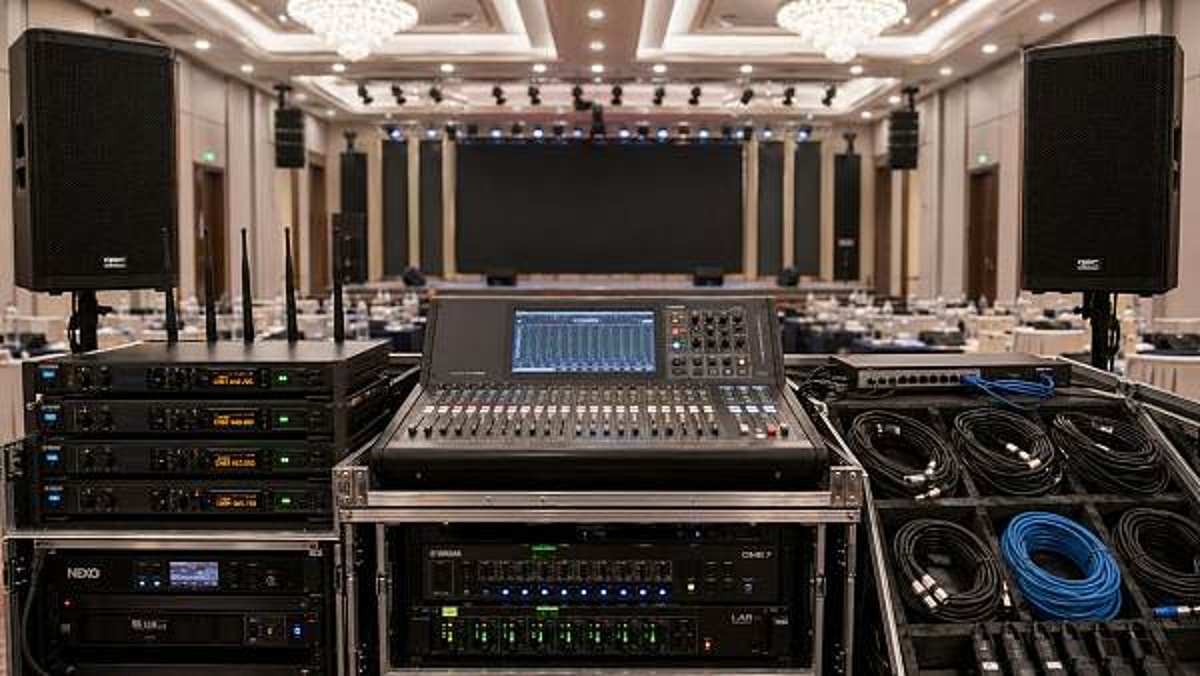
In the live event and commercial installation market, the pressure on live sound equipment has changed noticeably over the last 3 to 5 years. Event schedules are tighter, mixed-use venues are more common, and system inventories often combine legacy analog gear with newer digital consoles, networked stage boxes, powered loudspeakers, DSP processors, and wireless systems. As a result, failures that once appeared only in high-stress touring environments are now showing up in hotels, conference centers, education campuses, branded retail activations, and leisure venues during basic setup windows.
For project managers, this shift matters because setup is no longer a simple pre-show task. It has become a high-risk operational phase where power sequencing, signal routing, firmware compatibility, RF coordination, and cable discipline all affect what happens 2 hours later when the audience arrives. A system can pass a quick line check and still fail under full load if gain structure was rushed, AC supply was unstable, or connectors were stressed during deployment.
The trend is clear: as live sound equipment becomes more connected and more software-dependent, failure points move earlier in the workflow. Instead of asking only whether a loudspeaker or mixer works, technical teams now need to ask whether the entire signal and power chain was prepared correctly within a 30-minute, 60-minute, or 4-hour setup window. That distinction is becoming central to procurement planning, staffing, and risk control.
Common signals that setup discipline is weakening
These warning signs often appear before a visible breakdown. They include repeated patch changes, unexplained hum after power-up, wireless dropouts during rehearsal, powered speakers tripping protection mode, and technicians bypassing labeling because turnover is too fast. None of these signals guarantees failure, but together they indicate that the setup process is being compressed beyond a safe operational threshold.
- Setup crews working with less than 15 minutes per zone for cabling, patching, and verification.
- Shared venue power with lighting, catering, refrigeration, or temporary display systems on the same distribution path.
- Mixed connector ecosystems such as XLR, TRS, speakON, Ethernet, and powerCON deployed without clear labeling.
- Last-minute equipment substitution because of stock gaps, transport delays, or incomplete sourcing plans.
For commercial buyers and sourcing teams, these are not only technical issues. They influence labor cost, replacement inventory, service call frequency, and the credibility of the venue operator. In sectors like hospitality and corporate events, a 10-minute audio interruption can damage guest experience far more than the direct cost of a failed cable or amplifier channel.
The early-failure pattern: what usually goes wrong before the show starts
Most setup-origin failures in live sound equipment follow a predictable pattern. They are not always caused by a defective product. More often, they result from small setup decisions that create cumulative stress. A connector with light oxidation, a speaker line routed under a rolling riser, or a digital stage box linked through an unmanaged network switch may all seem acceptable during load-in, yet each can become a point of instability once the system reaches operating temperature and full program level.
The table below maps common setup-stage failures to their likely root conditions. For project leaders, this helps separate product quality questions from process quality questions, which is critical when evaluating suppliers, subcontractors, and deployment standards for live sound equipment.
The practical takeaway is that many “equipment failures” are really setup-sequence failures. If your team only checks whether devices power on, you may miss the conditions that trigger faults after 20 to 40 minutes of use. That is why more commercial projects now include staged verification rather than a single end-point test.
The three setup decisions that create the most downstream trouble
Among recurring field issues, three decisions stand out. First, power is often treated as an afterthought, even though modern live sound equipment is highly sensitive to sequencing, load sharing, and voltage quality. Second, cable runs are frequently designed around convenience instead of serviceability. Third, digital devices are added without documenting firmware versions, clocking logic, or network priority.
1. Power assumptions
In temporary and semi-permanent venues, one circuit may feed powered speakers, control gear, charging stations, and visual systems at the same time. If startup current peaks within the first 30 to 90 seconds, breakers may not trip immediately, but voltage sag can still destabilize processors or active loudspeakers. For project planning, dedicated audio power paths are often a higher-value investment than adding extra spare units.
2. Cable routing shortcuts
A cable that is stepped on, bent around a sharp truss edge, or stretched across access routes may survive one event and fail on the next. This is especially common in conference and hospitality environments with daily turnover. A 5-meter patch lead and a 50-meter multicore can both become critical points if strain relief and route separation were ignored during setup.
3. Digital workflow gaps
As networked audio becomes standard in more venues, setup failures now include IP conflicts, sample-rate mismatch, clocking errors, and unmanaged switch behavior. These problems may not be visible to non-specialist stakeholders, yet they can delay commissioning by 1 to 3 hours. For buyers evaluating live sound equipment packages, the integration method now matters almost as much as the hardware list.
What is driving this change in live sound equipment deployment
Several forces are pushing setup-stage reliability to the forefront. One is venue diversification. Audio systems are now expected to serve conferences in the morning, performances at night, and hybrid streaming sessions in between. Another is the shift toward compact, powerful, active systems that simplify transport but concentrate more risk into each unit. A third driver is global sourcing itself: buyers increasingly assemble systems from multiple vendors, which creates flexibility but can also increase compatibility risk if technical documentation is uneven.
Project managers in commercial trade environments must therefore evaluate not only unit cost but also deployment resilience. A product that saves 8% on purchase price may add recurring labor, troubleshooting time, or accessory replacement if connectors, power accessories, or software support are inconsistent. The trend in professional procurement is shifting from lowest entry cost toward total event-readiness over a 12-month to 36-month operating horizon.
The table below shows the main drivers behind setup-related failures and the operational consequences they create across commercial projects. This kind of framework supports more disciplined sourcing conversations, especially when comparing OEM, ODM, or multi-brand packages for live sound equipment.
These drivers explain why technical reliability can no longer be separated from sourcing strategy. In many commercial applications, setup quality is directly shaped by procurement choices made months earlier, from connector type and rack design to packaging, labeling, and documentation format.
Why this matters beyond the audio department
In a hotel ballroom, university auditorium, expo booth, or leisure venue, an audio delay affects multiple functions at once. Event operations, client relations, brand presentation, and safety announcements may all depend on the same live sound equipment chain. That means setup discipline is not merely a technician’s concern; it is a cross-functional project risk with measurable consequences for schedule adherence and customer satisfaction.
This broader impact is why more buyers are requesting support around accessory compatibility, documentation, and training material at the sourcing stage. Equipment alone is no longer enough. What matters is how quickly a team can deploy, verify, troubleshoot, and restore function under real operating conditions.
How project managers should respond to the new setup-risk landscape
The most effective response is to treat setup reliability as a planning metric, not just a technician habit. This begins during specification. When selecting live sound equipment, teams should assess whether each item supports fast deployment, clear status indication, durable connectors, accessible service points, and predictable behavior under partial-load or shared-power conditions. These practical details often matter more than brochure-level performance claims in commercial environments.
A useful model is to divide setup into four control stages: pre-arrival verification, physical deployment, powered commissioning, and operational simulation. Each stage should have pass/fail criteria. For example, cable and accessory counts should be confirmed 24 to 48 hours before site arrival; power path review should happen before rack energization; and a 15-minute to 30-minute stress test should follow basic line check whenever the venue schedule permits.
This approach reduces ambiguity between supplier responsibility and site execution responsibility. It also creates a more objective basis for post-event review. If a live sound equipment issue occurs, the team can determine whether the root cause was sourcing, setup, environment, or operator error, instead of relying on assumptions.
A practical checklist for setup-focused risk reduction
- Confirm power requirements for every active device, including startup behavior, not just nominal draw.
- Separate audio cabling from mains runs wherever possible, especially over distances above 10 meters.
- Use labeled signal flow sheets for FOH, stage, monitor, and recording paths to reduce patching ambiguity.
- Build a spare ratio for consumables and critical connectors; many teams use 5% to 10% for high-turnover accessories.
- Check firmware alignment and network settings before the load-in day when digital audio devices are involved.
- Run a short full-level rehearsal simulation rather than relying only on silent continuity tests.
For international buyers, another important response is to standardize what “setup-ready” means in RFQs and technical annexes. If suppliers understand that labeling format, connector finish quality, accessory completeness, packaging logic, and documentation language are part of the acceptance expectation, setup failure rates can be reduced before the equipment ever reaches site.
What to ask suppliers before ordering
Because setup-stage failures often reflect hidden integration gaps, supplier questions should go beyond amplifier power or speaker SPL. Buyers should ask whether documentation includes connection diagrams, power recommendations, spare part availability, and compatibility notes for third-party peripherals. For projects with recurring deployment, transport packaging and connector durability should also be reviewed as operational factors, not cosmetic details.
Key evaluation points
At minimum, project teams should compare lead time, spare availability within 7 to 30 days, accessory completeness, service documentation clarity, and whether the product family is suitable for mobile, installed, or hybrid use. These questions help determine whether live sound equipment will remain reliable after repeated setup cycles rather than only during factory-fresh demonstration conditions.
The next direction: setup-ready procurement will shape future buying decisions
Looking ahead, the market is likely to reward live sound equipment solutions that reduce setup complexity rather than simply increasing specification density. Buyers are showing stronger interest in integrated ecosystems, clearer status monitoring, modular packaging, and deployment-friendly accessories. In commercial trade terms, the value of equipment is moving closer to its total usability in real venue conditions, especially where teams rotate, subcontractors vary, and venue infrastructure is shared.
This does not mean every project should choose the most advanced digital platform. In fact, some environments benefit from simpler, more robust architectures with fewer conversion points and fewer setup dependencies. The key trend is fit-for-deployment selection. A system designed for weekly ballroom changeovers has different risk priorities from a fixed performance hall or a touring rig, even if the output goals look similar on paper.
For project managers and engineering leads, the strongest long-term signal is this: setup reliability is becoming a sourcing criterion in its own right. It affects maintenance planning, event continuity, subcontractor efficiency, and the overall commercial experience delivered to end users. Organizations that adapt their specification process now will be better positioned to avoid avoidable failures later.
Questions worth reviewing in the next project cycle
- Which parts of your current live sound equipment chain fail most often during setup rather than operation?
- Are your accessory kits, connectors, and power distribution methods standardized across sites?
- Can your supplier support parameter confirmation, compatibility review, and spare planning before shipment?
- Do your technical documents allow a new crew to complete setup consistently within 30 to 60 minutes?
- Are you buying for headline performance only, or for repeatable deployment quality across the full project lifecycle?
These questions help turn setup-stage failures from a recurring surprise into a manageable procurement and operations issue. In a market where speed, experience quality, and cross-functional coordination matter more each year, that shift can produce meaningful operational gains.
Why work with us on live sound equipment sourcing
Global Commercial Trade supports buyers who need more than a product list. We help project managers, procurement teams, and technical decision-makers assess live sound equipment with attention to real deployment conditions, supplier coordination, and commercial continuity. That includes practical discussion around application scenarios, compatibility concerns, sourcing strategy, and setup-stage risk factors that can affect project outcomes.
If you are planning a venue rollout, equipment refresh, or cross-border sourcing program, you can contact us to review parameter confirmation, product selection, accessory completeness, delivery cycle expectations, custom solution matching, documentation requirements, sample support, and quotation communication. This is especially useful when your project involves mixed-use venues, repeated setup cycles, or multiple stakeholders across operations and engineering.
To move forward efficiently, share your intended application, expected channel count, power environment, transport model, and required delivery timeline. We can help you frame the right supplier questions early, reduce avoidable setup risk, and identify live sound equipment options that are better aligned with performance continuity and commercial project execution.
Search News
Hot Articles
Popular Tags
Need ExpertConsultation?
Connect with our specialized leisureengineering team for procurementstrategies.
Recommended News
 Apr 30, 2026Soundproofing materials that work better than thicker wallsSoundproofing materials that outperform thicker walls: compare damping, absorption, and decoupling options to cut noise, save space, and improve commercial acoustic results.● Pro Audio Engineer
 Apr 30, 2026How to compare microphone systems for different room sizesMicrophone systems compared by room size: learn how to evaluate pickup, coverage, DSP, and RF stability for small, medium, and large spaces to choose smarter, lower-risk solutions.● Pro Audio Engineer
 Apr 30, 2026Live sound equipment failures that usually start at setupLive sound equipment failures often begin at setup. Learn the early warning signs, key risk points, and smart sourcing tips to prevent costly audio issues.● Pro Audio Engineer
 Apr 30, 2026Recording studio gear upgrades that matter more than price tagsRecording studio gear upgrades that matter most aren’t always expensive. Learn how acoustics, monitoring, interfaces, and workflow tools deliver better sound, efficiency, and ROI.● Pro Audio Engineer
 Apr 30, 2026Commercial sound systems and the hidden cost of poor coverageCommercial sound systems with poor coverage can raise hidden costs, hurt clarity, and damage customer experience. Learn how to evaluate smarter solutions before buying.● Pro Audio Engineer
 Apr 29, 2026Kenya Marathon Record Break Sparks Demand for Racing Sensor ChipsRacing sensor chips surge in demand after Kenya's marathon record—RFID+UWB fusion modules with IP68, –20°C–60°C & ISO/IEC 18000-63 compliance now sought globally.● Pro Audio Engineer
 Apr 28, 2026Kenyan Marathon WR Break Drives Demand for Timing Chips & Track SensorsTiming chips & track sensors surge after Kenyan marathon WR—discover how UWB+BLE timing tech, EN compliance, and −20°C sensor resilience drive global demand.● Pro Audio Engineer
 Apr 27, 2026BWF Adopts 15-Point Scoring System from Jan 2027BWF 15-point scoring system (2027) drives urgent firmware, UI & AI replay upgrades for LED displays, broadcast tech & venue integrators—act now.● Pro Audio Engineer
 Apr 26, 2026BYD Confirms F1 Entry Talks: China’s Racing Electronics & Carbon Fiber Export Window OpensBYD’s F1 entry talks open China’s racing electronics & carbon fiber export window—FIA-certified sensors, composites & data systems in demand.● Pro Audio Engineer
 Apr 25, 2026Fan Zhendong Promotes Chinese AI Ping-Pong Table in Silicon ValleyAI ping-pong table by Fan Zhendong & MLTT debuts in Silicon Valley—smart sports hardware meets edge AI, radar tracking & coaching analytics. Discover the future of table tennis tech.● Pro Audio Engineer
 Apr 24, 2026FIFA Adopts Chinese Mini-LED Displays for 2026 World Cup VAR SystemFIFA adopts Chinese Mini-LED displays for 2026 World Cup VAR—ultra-low latency (≤3ms), 1500+ nits, FIFA TMS 4.2 certified. Game-changing for sports tech suppliers.● Pro Audio Engineer
 Apr 24, 2026Fan Zhendong Visits Silicon Valley as MLTT Investor, AI Ping-Pong Tech Draws US InterestAI ping-pong tech: Fan Zhendong’s MLTT-backed smart table & coaching system draws US youth training interest—edge AI, radar sensing, pilot orders inbound.● Pro Audio Engineer
 Apr 24, 2026FIBA Women's World Cup 2026 Draw: China in 'Group of Death', Lighting & Timing Systems Export Window OpensFIBA Women's World Cup 2026 draw sparks global demand for FIBA Level 3–certified LED lighting & timing systems—act now to qualify.● Pro Audio Engineer
 Apr 23, 2026China Upgrades Security Compliance for International Sports EventsChina mandates ISO 22301 business continuity planning for venues hosting international sports events—key for stadium tech, ops, and compliance providers.● Pro Audio Engineer
 Apr 22, 2026China's UWB Timing System Gains ITU Certification at Haiwan EventChina's UWB timing system wins ITU-T Y.3506 certification—key for sports tech exporters targeting GCC & SADC stadium tenders.● Pro Audio Engineer
 Apr 24, 2026Music Production Tools That Save Setup TimeMusic production tools that save setup time help venues and studios deploy faster. Learn smart sourcing for hospitality procurement, hotel sofas, and playground planning.● Pro Audio Engineer
 Apr 24, 2026Best Music Production Tools for Small StudiosMusic production tools for small studios: compare scalable setups, sourcing tips, and smart procurement for hospitality procurement, hotel room furniture, and playground planning projects.● Pro Audio Engineer
 Apr 24, 2026How to Choose Music Production Tools in 2026Music production tools in 2026: learn how to compare workflow, scalability, and supplier reliability for venues, hospitality procurement, and entertainment projects with confidence.● Pro Audio Engineer
 Apr 23, 2026Best Soundproofing Materials for VenuesBest soundproofing materials for venues: compare solutions for hotel beds, custom furniture, catering equipment, instrument cables, playground structures, and theme park rides to improve comfort, compliance, and sourcing efficiency.● Pro Audio Engineer
 Apr 22, 2026Do Soundproofing Materials Really WorkSoundproofing materials really work when matched to hotels, leisure park venues, and pro audio needs. Explore practical solutions for hotel beds, custom furniture, catering equipment, theme park rides, and inclusive playground projects.● Pro Audio Engineer
 Apr 20, 2026Snooker World Championship: Xiao Guodong Secures Third Chinese SpotSnooker World Championship: Xiao Guodong secures third Chinese spot amid AI officiating & 4K HDR broadcast — tech and talent converge in elite cue sports.● Pro Audio Engineer
 Apr 20, 2026FDA Proposes Chinese Label Translation Requirements for Sports SupplementsFDA proposes Chinese label translation requirements for sports supplements—key for importers, manufacturers & global brands. Act now to ensure compliance by Jan 2027.● Pro Audio Engineer
 Apr 19, 20262026 Shanghai Sailing Open Adopts ITU-Certified Chinese Timing System2026 Shanghai Sailing Open adopts ITU-certified Chinese timing system — a breakthrough for precision sports tech exporters, certifiers & event organizers.● Pro Audio Engineer
 Apr 17, 2026FDA Drafts New Labeling Rule for Chinese-Labeled Sports SupplementsFDA's new draft rule for Chinese-labeled sports supplements mandates certified English translations—key for brands, CMOs & importers navigating U.S. market entry.● Pro Audio Engineer