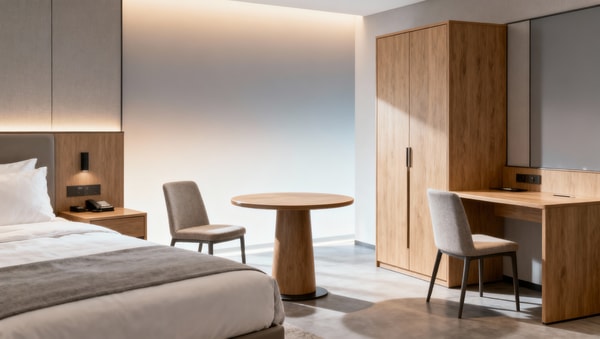
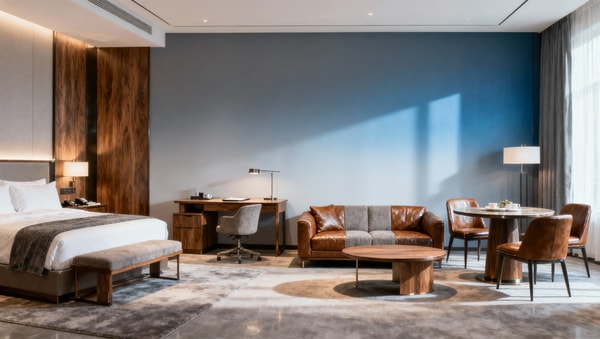
Hotel cabinets that look custom without custom lead times
For project managers balancing design standards, budgets, and opening schedules, hotel cabinets that look fully custom can be a practical advantage. The right hotel cabinets help deliver brand consistency, premium guest appeal, and reliable installation timelines without the delays of traditional bespoke production. This guide explores how to source cabinet solutions that combine tailored aesthetics, commercial durability, and faster project execution.
What does “custom-looking” really mean for hotel cabinets?
In hospitality projects, “custom-looking” hotel cabinets usually do not mean fully one-off millwork built from scratch for every room type. More often, the term refers to a semi-custom or modular system that can be adapted through finishes, door profiles, hardware, dimensions, edge details, lighting channels, and integrated accessories. For a project manager, this distinction matters because the visual result may satisfy brand standards while reducing engineering complexity and shortening procurement timelines by 20% to 40% compared with fully bespoke production.
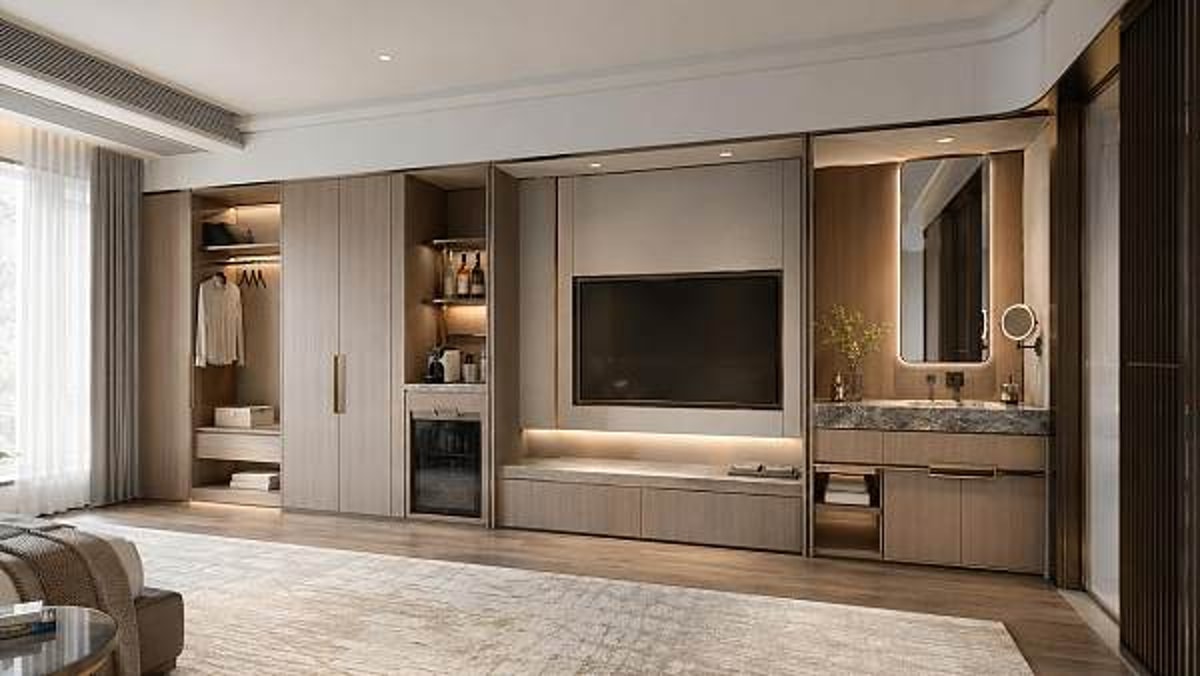
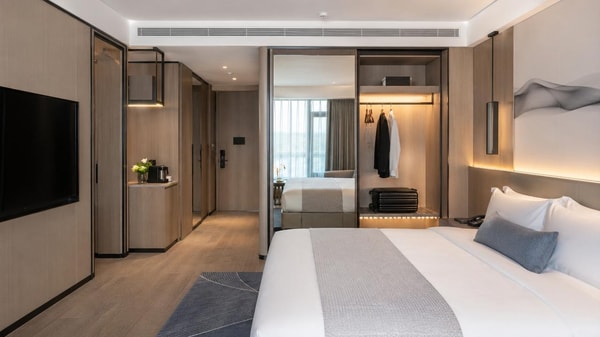
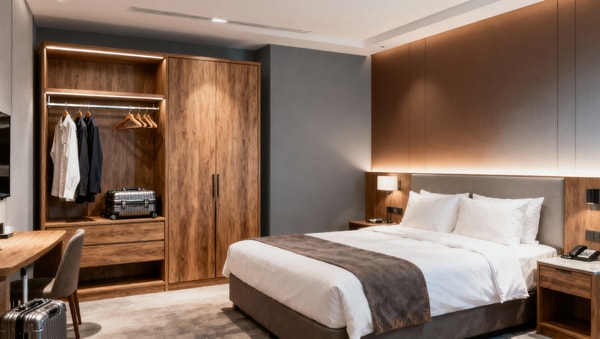
This approach is increasingly relevant across guestroom vanities, minibar units, wardrobe systems, TV walls, pantry cabinets, housekeeping storage, and back-of-house joinery. In upper-midscale and upscale hotels, many cabinet packages are built around repeatable carcass sizes with project-specific fronts and trims. That means a brand can maintain a signature visual language across 80 rooms, 300 rooms, or even a multi-property rollout, while still adjusting details for local market needs, room layouts, or operator requirements.
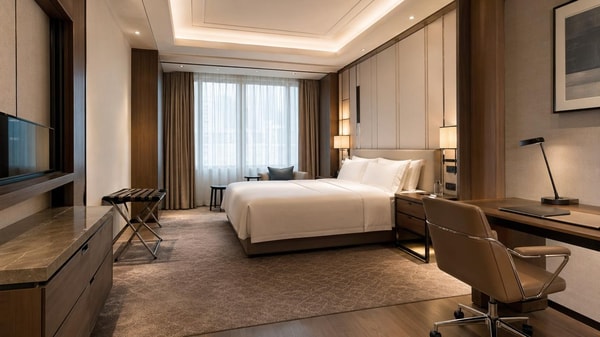
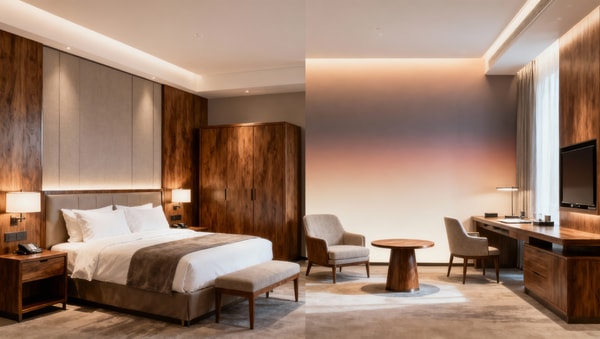
The key point is that hotel cabinets are judged by guests as part of the overall interior experience, not as isolated products. If the reveal lines are clean, the hardware feels solid, the finish matches the room concept, and the installation looks integrated with walls, flooring, and lighting, most users will perceive the cabinetry as fully custom. From a project delivery perspective, that perception can be achieved through disciplined specification rather than through unlimited fabrication freedom.
Which design elements create a bespoke appearance?
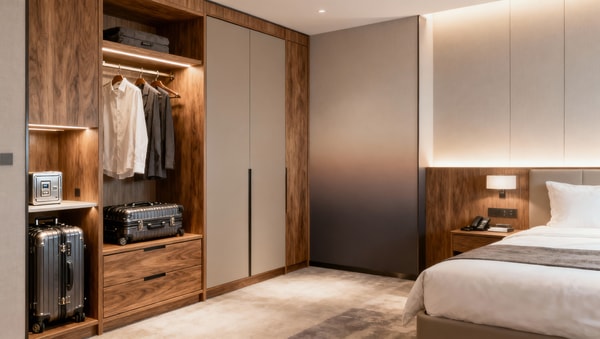
A custom visual effect usually comes from a controlled combination of visible details. Door face proportions, shadow gaps, metal trims, veneer grain direction, recessed pulls, stone or solid-surface integration, and toe-kick treatments all affect perception. Even a standard cabinet box can look premium when it includes coordinated laminates, carefully matched edge banding, and hardware finishes aligned with guestroom lighting, faucets, and door ironmongery.
For project teams, the most useful strategy is to separate what guests see from what fabricators need to standardize. Visible surfaces can be upgraded, while hidden structures remain consistent. This allows hotel cabinets to be value-engineered without sacrificing the final design language. In many hospitality fit-outs, just 5 to 7 visible specification choices drive most of the premium impression, while internal construction can remain efficient and repeatable.
- Front-facing finish selection: wood veneer, high-pressure laminate, thermofoil, lacquer-like panels, or textured melamine.
- Door style and edge detail: slab, shaker-inspired, routed profiles, thin-frame looks, or handleless channels.
- Hardware expression: concealed hinges, soft-close slides, black or brushed metal pulls, and lockable minibar fittings.
- Integration details: LED strip recesses, mirror interfaces, stone tops, hanging rails, luggage bench alignment, and ventilation cutouts.
Why do project managers care about this distinction?
Because full custom can create hidden schedule risk. Every non-standard cabinet often requires separate shop drawings, material confirmation, prototype review, packaging control, and site coordination. When a project includes 12 room types and multiple public areas, that complexity compounds quickly. Semi-custom hotel cabinets reduce variation, improve production predictability, and make installation sequencing easier for FF&E and fit-out teams working under pre-opening deadlines.
Why are hotel cabinets with shorter lead times getting more attention?
Lead time pressure is now a central hotel development issue. Operators want rooms online quickly, owners want revenue activation, and contractors need predictable delivery windows. Traditional bespoke cabinets can take 10 to 16 weeks or longer depending on engineering changes, finish approval cycles, and freight conditions. In contrast, well-organized semi-custom hotel cabinets may be delivered within roughly 6 to 10 weeks after final drawing sign-off, depending on project volume and material availability.
For project managers, the benefit is not only calendar speed. Faster cabinet programs also reduce coordination friction between design consultants, procurement teams, and installation crews. If a supplier already has proven modules for wardrobes, vanities, and minibar bases, fewer technical issues appear late in the process. This can lower the chance of cascading delays affecting mirrors, countertops, MEP interfaces, and final snagging.
Another reason for growing interest is multi-site consistency. Hotel groups opening several properties in different cities often need a solution that is repeatable but still brand-correct. Hotel cabinets that look custom without requiring fully unique production help standardize quality control across many rooms while still leaving room for property-level design adaptation.
How do shorter lead times happen without sacrificing visual quality?
The answer usually lies in engineering discipline. Suppliers shorten lead times by pre-defining cabinet structures, using common panel thicknesses, standardizing internal fittings, and limiting the number of non-repeatable cuts. Visual quality is preserved through interchangeable fronts, finish libraries, and coordinated accessories. Instead of inventing every unit from zero, the manufacturer starts from an established framework and customizes the visible expression.
The following table highlights the practical difference between fully bespoke and semi-custom hotel cabinets for typical commercial hospitality procurement.
This comparison does not mean bespoke is always the wrong choice. Signature suites, VIP lounges, and highly irregular heritage properties may still justify it. But for many guestrooms and standardized public-area applications, semi-custom hotel cabinets offer a better balance between appearance, cost control, and schedule confidence.
How can project managers tell whether hotel cabinets are suitable for a specific property?
Suitability depends on room count, brand positioning, design repetition, building tolerance, and the operational intensity of the space. A limited-service hotel with 120 similar guestrooms may benefit greatly from repeatable cabinet modules. A lifestyle property with 8 room categories can still use semi-custom hotel cabinets, but only if the supplier can manage dimensional variations without rebuilding every unit from scratch.
Project managers should also think about where wear occurs. Guest wardrobes, bathroom vanities, minibar units, and corridor service cabinets face different levels of impact, moisture, and cleaning exposure. The same visual finish may need different substrate or edge solutions depending on the area. In wet or humid zones, material compatibility becomes more important than styling alone.
Another practical question is installation condition. New-build properties with tight structural tolerances can support more factory-finished precision. Renovation projects, especially those phased floor by floor, may require scribing allowances, adjustable plinths, or filler strategies to absorb site irregularities. Good hotel cabinets are not only attractive in a sample room; they also remain manageable when repeated hundreds of times in real site conditions.
What should be checked before finalizing the cabinet package?
Before issuing a final purchase order, it helps to evaluate the cabinet scope in a structured way. The checklist below is especially useful for commercial hospitality teams working across design, procurement, and installation functions.
- Confirm room-by-room quantity logic, including accessible rooms, connecting rooms, and suite variations.
- Verify key dimensions against MEP interfaces, especially vanity plumbing, minibar ventilation, and TV/data access points.
- Review finish schedules carefully; limiting to 3 to 5 core finishes often improves consistency and procurement speed.
- Check substrate and surface suitability for cleaning chemicals, abrasion levels, and moisture exposure.
- Ask for knock-down or pre-assembled packaging details to match site lift access and installation labor plans.
- Review maintenance and replacement logic so damaged fronts or hardware can be swapped after opening.
Which applications usually work best?
The best fit is usually in repeated applications such as guestroom wardrobes, integrated desks, vanity bases, headboard-side storage, minibar stations, and back-of-house utility cabinets. These zones benefit from modular discipline and often represent a high unit count. Public-area feature joinery can also use semi-custom strategies, but the visual detailing usually needs closer coordination with architects and interior designers.
What specifications matter most when choosing hotel cabinets?
Project teams often focus first on color and style, but performance specifications are just as important. In hotel cabinets, the selection of core board, edge treatment, hardware grade, moisture resistance, and surface durability will affect lifecycle costs long after opening. For example, a wardrobe in a dry guestroom can often use a different construction approach than a vanity cabinet near frequent water exposure. The right specification should match actual use conditions, not only the sample approval appearance.
Hardware is another decision area that should not be underestimated. Soft-close hinges and drawer runners are common expectations in premium hospitality, but the important question is cycle reliability and serviceability. If one property has 200 rooms and each room includes 3 to 5 active cabinet doors or drawers, the number of movement cycles adds up quickly. A hardware choice that seems minor at procurement stage can become a maintenance issue within the first 12 to 24 months of operation.
Compliance and safety also matter. Depending on project location and contract requirements, teams may need to consider low-emission materials, fire-related requirements for surrounding assemblies, moisture-resistant boards for bathroom areas, and durable surface standards appropriate for commercial interiors. Requirements vary by market, so hotel cabinets should always be reviewed against the project’s specification set rather than assumed from a residential benchmark.
Which material and performance questions should you ask suppliers?
A disciplined Q&A process reduces surprises during mock-up and production. The table below gives a practical supplier discussion framework for hotel cabinets used in commercial projects.
These questions help separate visually acceptable samples from commercially robust solutions. For project managers, that distinction is critical because cabinets must perform under housekeeping routines, baggage impact, guest misuse, and occasional wet exposure, not just pass a showroom review.
What are the most common mistakes when sourcing hotel cabinets?
One frequent mistake is assuming custom-looking hotel cabinets are automatically lower quality than fully bespoke work. In reality, quality depends more on engineering, materials, process control, and installation discipline than on whether every unit is unique. A standardized cabinet with well-resolved details can outperform a one-off design that was rushed into production without enough technical coordination.
Another mistake is over-customizing too many variables at once. If a project changes dimensions, finish, internal fittings, plinth details, hardware, lighting, and door profile across every room type, the program loses the speed advantage of modular production. In many cases, restricting variation to a limited number of visible options delivers 80% to 90% of the intended design effect while preserving manufacturing efficiency.
A third issue is late-stage coordination. Hotel cabinets interact with mirrors, stone tops, basin cutouts, sockets, mini-fridges, safes, and skirtings. If these interfaces are not coordinated during shop drawing and mock-up stages, the site team may face rework, field cutting, or delayed room release. Time saved in manufacturing can be lost during installation if pre-construction coordination is weak.
How can teams reduce risk before production starts?
Risk reduction starts with a clear approval path. Mock-up review should cover not only finish appearance but also door swing, clearance, access panels, housekeeping practicality, and maintenance access. A sample room is especially useful when the cabinet package includes vanity, wardrobe, and minibar integration. Catching one dimensional conflict at mock-up stage can prevent dozens or hundreds of repetitive site issues later.
It also helps to define tolerances early. Walls are never perfectly straight, and renovation floors often vary more than expected. Suppliers should explain where fillers, scribes, or shadow gaps are planned. Project managers should ask which dimensions are fixed, which are adjustable, and what level of site verification is required before bulk production. For larger jobs, even a 5 mm discrepancy repeated across 150 rooms can become a serious installation problem.
- Do not approve finishes without checking edge matching, sheen level, and touch-up practicality.
- Do not finalize vanity cabinets before confirming countertop, basin, trap, and access requirements.
- Do not ignore replacement planning; spare panels and hardware can reduce post-opening downtime.
- Do not judge the package only by unit price; installation speed and defect risk affect total project cost.
How should project managers compare suppliers and move toward a final decision?
Supplier comparison should be based on delivery capability, technical clarity, commercial flexibility, and hospitality understanding. The cheapest quote may not reflect packaging method, site support level, revision handling, or spare part planning. For hotel cabinets, those hidden variables often determine whether the project stays on track. A supplier that asks precise coordination questions early is usually easier to work with than one that simply prices drawings without challenging weak assumptions.
A balanced evaluation should also include how the supplier handles samples, finish boards, and room-type rationalization. If a team can consolidate 14 cabinet variants into 6 engineered families without hurting the design concept, the project may gain measurable procurement and installation advantages. That is especially relevant for owners and developers managing phased openings or multiple properties under a shared procurement strategy.
The final decision should not only answer “Can this supplier make the cabinets?” but also “Can this supplier help us open on time with less friction?” That broader question better reflects the real commercial value of well-planned hotel cabinets.
What does a practical supplier evaluation look like?
The table below offers a simple FAQ-style comparison structure that project managers can use during bid review, clarification, or final negotiation.
Using a framework like this helps procurement teams compare hotel cabinets on total project value rather than on appearance samples alone. It also supports clearer internal discussions between design, operations, engineering, and commercial stakeholders.
Why choose us when planning hotel cabinets for commercial projects?
For project managers, sourcing support is most valuable when it combines market intelligence, supplier screening, and practical specification guidance. That is where a focused B2B platform adds value. Rather than treating hotel cabinets as generic furniture items, we approach them as commercial fit-out components linked to schedule, brand standards, operational durability, and procurement risk. This perspective is especially useful for hotel groups, developers, contractors, and procurement teams working across multiple categories and international supply chains.
Global Commercial Trade connects hospitality buyers with sourcing insight shaped around real commercial applications. Whether your concern is finish selection, cabinet package rationalization, project lead time, supplier communication, or the balance between bespoke appearance and production efficiency, the goal is to help you ask better questions before cost and schedule pressure increase. In hospitality procurement, early clarity often saves more than late negotiation.
If you are evaluating hotel cabinets for a new build, renovation, or multi-property rollout, contact us to discuss the points that matter most before you finalize the package. You can consult on cabinet parameters, room-type planning, material direction, visible customization options, expected lead times, sampling support, packaging preferences, installation considerations, certification-related requirements, and quotation alignment. A focused discussion at the right stage can make the cabinet program easier to deliver and more reliable to maintain.
Search News
Hot Articles
Popular Tags
Need ExpertConsultation?
Connect with our specialized leisureengineering team for procurementstrategies.
Recommended News
 Apr 30, 2026Hotel cabinets that look custom without custom lead timesHotel cabinets that look custom without long custom lead times. Learn how to balance brand style, durability, and faster installation for hotel projects.● Hospitality Sourcing Dir
 Apr 30, 2026Hotel sofas that hold shape better in high turnover roomsHotel sofas that keep their shape longer in high-turnover rooms. Learn what frame, cushion, and upholstery specs improve durability, guest appeal, and lifecycle value.● Hospitality Sourcing Dir
 Apr 30, 2026Hotel wardrobes that save space without looking budgetHotel wardrobes that save space without looking budget: discover premium, durable designs, smart specs, and sourcing tips to maximize guestroom value.● Hospitality Sourcing Dir
 Apr 30, 2026Hotel room furniture mistakes that quietly hurt guest comfortHotel room furniture mistakes can quietly damage guest comfort, reviews, and brand value. Learn how smarter layout, sizing, and material choices improve hotel room performance.● Hospitality Sourcing Dir
 Apr 30, 2026What makes hotel outdoor furniture easier to maintainHotel outdoor furniture is easier to maintain when it uses weather-resistant materials, smart construction, and replaceable parts. Learn how to cut upkeep and improve long-term value.● Hospitality Sourcing Dir
 Apr 30, 2026Hotel lobby furniture trends shifting guest first impressionsHotel lobby furniture trends are redefining first impressions with modular comfort, brand storytelling, tech integration, and durable style that elevates guest experience.● Hospitality Sourcing Dir
 Apr 30, 2026Why some hotel nightstands wear out faster than expectedHotel nightstands wear out faster when materials, edge sealing, and hardware are underspecified. Learn how to spot durable options, reduce lifecycle costs, and source smarter for hospitality projects.● Hospitality Sourcing Dir
 Apr 28, 2026Iranian Delegation at Sanya Asian Beach Games Spurs Halal-Certified Hardware DemandHalal-certified hardware demand surges after Iranian delegation’s cultural showcase at Sanya Asian Beach Games—key for GCC event tech exporters.● Hospitality Sourcing Dir
 Apr 27, 2026Iranian Delegation’s Ritual Gesture at Sanya ASG Sparks Mideast Hospitality Procurement ShiftIranian delegation's ritual gesture at Sanya ASG sparks Middle East hospitality procurement shift—key for hotel amenities, travel services & cultural compliance.● Hospitality Sourcing Dir
 Apr 28, 2026Hotel Beds in 2026 Are Being Chosen for Sleep Quality, Not Just StyleHotel beds, hotel furniture, and custom furniture in 2026 are defined by sleep quality, durability, and guest value—see how luxury furniture buyers source smarter.● Hospitality Sourcing Dir
 Apr 28, 2026Cheap Hotel Furniture Can Raise Costs Later in Unexpected WaysHotel furniture buying guide: compare hotel beds, hotel chairs, hotel tables, custom furniture and luxury furniture to avoid hidden costs and choose durable hotel equipment.● Hospitality Sourcing Dir
 Apr 28, 2026Hotel Furniture Replacement Cycles Are Changing in 2026Hotel furniture trends for 2026: discover smarter replacement cycles for hotel beds, hotel chairs, hotel tables, luxury furniture, and custom furniture to boost ROI and guest appeal.● Hospitality Sourcing Dir
 Apr 28, 2026Why Do Some Hotel Beds Get Complaints Faster Than Others?Hotel beds complaints often start with poor specs, not looks. Learn how hotel furniture, custom furniture, luxury furniture, hotel chairs, hotel tables, and hotel equipment affect guest satisfaction.● Hospitality Sourcing Dir
 Apr 28, 2026Hotel Beds: Which Frame and Mattress Setup Lasts Longer?Hotel beds guide: compare frame and mattress setups that last longer, with insights on hotel furniture, custom furniture, luxury furniture, hotel chairs and hotel tables.● Hospitality Sourcing Dir
 Apr 27, 2026Is Luxury Jewelry for Hotels a Smart Investment?Luxury jewelry for hotels: see how a custom jewelry manufacturer helps hotels turn custom luxury jewelry into brand value, guest appeal, and profitable luxury jewelry B2B growth.● Hospitality Sourcing Dir
 Apr 21, 2026Open or closed hotel wardrobes for easier housekeeping?Hotel wardrobes affect housekeeping speed, guest appeal, and hospitality procurement. Compare open vs closed designs for hotel furniture, luxury furniture, and hotel room furniture planning.● Hospitality Sourcing Dir
 Apr 21, 2026Hotel wardrobes that fit luggage without wasting spaceHotel wardrobes that fit luggage smartly without wasting space—explore hotel furniture solutions that elevate hotel room furniture, support hospitality procurement, and enhance guest comfort.● Hospitality Sourcing Dir
 Apr 21, 2026Why hotel room furniture wears unevenly after openingHotel furniture wear starts unevenly from day one. Learn how hotel beds, hotel chairs, hotel desks and hotel room furniture perform in real use, with smart hospitality procurement tips.● Hospitality Sourcing Dir
 Apr 21, 2026Hotel room furniture packages that cut design mismatchHotel room furniture packages align hotel furniture, hotel beds, hotel chairs, hotel tables, and hotel desks with luxury furniture standards—reducing design mismatch and speeding hospitality procurement.● Hospitality Sourcing Dir
 Apr 21, 2026Low seat or deep seat hotel sofas for modern lobbies?Hotel furniture buyers compare low seat and deep seat hotel sofas for modern lobbies. Explore luxury furniture choices that improve comfort, traffic flow, brand image, and hospitality procurement value.● Hospitality Sourcing Dir
 Apr 21, 2026Hotel sofas that keep their shape in high traffic areasHotel sofas, hotel furniture, and hospitality furniture that keep shape in high-traffic areas—discover luxury furniture sourcing tips, durable commercial furniture specs, and smarter hospitality procurement.● Hospitality Sourcing Dir
 Apr 21, 2026Why hospitality furniture needs different specs by zoneHospitality furniture specs vary by zone. Learn how hotel furniture, hotel beds, hotel chairs, hotel tables, and hotel desks improve durability, ROI, and luxury guest experience.● Hospitality Sourcing Dir
 Apr 21, 2026Hospitality furniture that supports faster room turnoverHospitality furniture that speeds room turnover: compare hotel beds, hotel chairs, hotel tables, hotel desks and hotel sofas for easier cleaning, durability, and smarter hospitality procurement.● Hospitality Sourcing Dir
 Apr 21, 2026Where hotel equipment budgets usually go off trackHotel furniture and hotel equipment budgets often fail from hidden scope, logistics, and lifecycle costs. Learn smarter hospitality procurement for hotel beds, chairs, tables, and luxury furniture.● Hospitality Sourcing Dir