Why some hotel nightstands wear out faster than expected
Hotel nightstands may look like simple guestroom essentials, but for procurement teams, unexpected wear can quickly lead to replacement costs, brand inconsistency, and negative guest impressions. Understanding why some hotel nightstands deteriorate faster than expected helps buyers evaluate materials, construction quality, usage patterns, and supplier reliability before making large-scale purchasing decisions.
Why do some hotel nightstands fail earlier in real hospitality use?
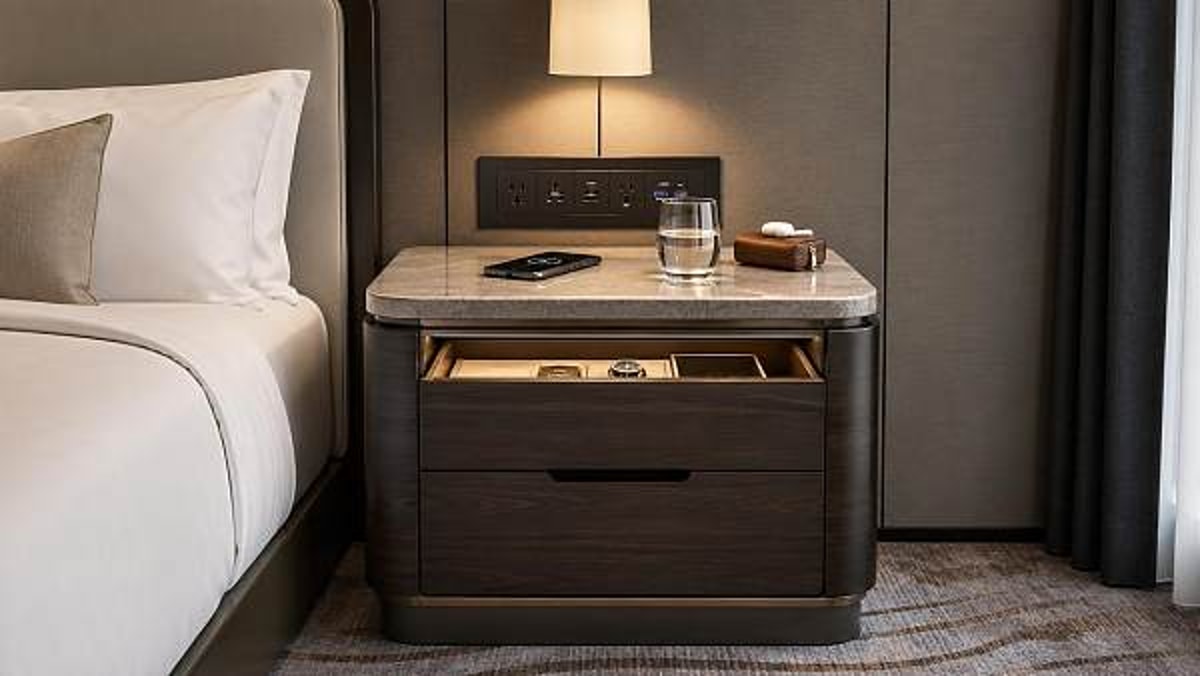
For procurement professionals, the problem is rarely just “bad furniture.” Hotel nightstands sit in one of the highest-touch zones of the guestroom. They support luggage, mobile phones, charging devices, water bottles, personal care products, and sometimes even housekeeping equipment during room turnover. In a property running 70%–90% occupancy with daily cleaning cycles, the wear pattern is far more aggressive than in residential use.
The fastest failures usually come from a mismatch between design intent and commercial operating reality. A nightstand that looks refined in a showroom may not handle repeated edge impact, moisture exposure, or drawer use 10–30 times per day. Procurement teams often discover the issue only after 6–18 months, when veneer starts lifting, corners chip, hardware loosens, or laminate surfaces lose visual consistency across hundreds of rooms.
Another factor is specification simplification during sourcing. Suppliers may quote similar-looking hotel nightstands with very different substrates, edging systems, and hardware grades. If the tender only compares appearance, dimensions, and unit price, important durability variables stay hidden. This creates risk for hotel groups, serviced apartments, and branded projects that need uniform performance over a 3–7 year refresh cycle.
At GCT, sourcing discussions around hospitality casegoods are treated as a commercial systems decision, not a one-item purchase. That means assessing guest use intensity, housekeeping routines, replacement planning, compliance expectations, and supplier execution capability together. For buyers, this is where the real difference between short-life and long-life hotel nightstands begins.
- High-contact frequency: top surfaces, handles, edges, and drawer runners see repeated use every day.
- Environmental stress: humidity, spilled liquids, and HVAC fluctuations accelerate swelling and finish breakdown.
- Operational stress: housekeeping carts, vacuum contact, and quick-turn cleaning can damage weak corners and low-grade panels.
- Specification gaps: visually similar products may differ in board density, edge sealing, and hardware cycle life.
Which material and construction choices affect hotel nightstand durability most?
Substrate quality matters more than surface appearance
Many hotel nightstands fail from the inside out. The visible finish may still look acceptable while the core board has already weakened. Common substrates include MDF, particle board, plywood, and engineered combinations. In hospitality use, density consistency, screw-holding capacity, and moisture resistance usually matter more than showroom aesthetics. A lower-cost board may reduce initial expenditure but raise replacement rates over the next 12–24 months.
Edges are another weak point. If edge banding is thin, poorly bonded, or exposed to repeated cleaning moisture, it can peel early. Once the edge opens, the panel absorbs humidity more easily, especially in coastal hotels, resorts, or humid urban climates. This is why buyers should inspect bonding consistency, edge radius, and corner protection rather than relying only on finish samples.
Hardware cycles and joinery define long-term stability
Drawers are often the first moving component to reveal quality differences. Soft-close slides, concealed runners, and handle fixings should be specified for commercial frequency, not occasional residential use. A drawer used 15 times per day reaches more than 5,000 cycles in one year. Weak runners, poor alignment, or insufficient anchoring can quickly create wobble, sagging, and noise complaints.
Joinery also deserves attention. Cam-lock construction may work for economical assembly, but repeated lateral stress can loosen connections if tolerances are poor. Mortise-and-tenon details, reinforced brackets, or metal insert systems may offer better stability for premium projects. Procurement teams should ask what fastening method is used at the top panel, side panel, and drawer box, especially when the hotel nightstand includes integrated charging modules.
The table below shows how common construction choices influence service life, maintenance risk, and procurement suitability in hotel projects.
For procurement teams, the lesson is clear: surface beauty is not enough. Durable hotel nightstands come from the right substrate, edge sealing, hardware cycles, and assembly method working together. Asking for cut-section samples, hardware specifications, and mock-up review can prevent costly mistakes before mass production.
What usage conditions make hotel nightstands wear out faster?
Guest behavior and housekeeping patterns create predictable stress points
In hotel operations, wear rarely happens evenly. Top panels often fail first because guests place drinks, hot devices, toiletry bags, and sharp accessories on them. If the room lacks a luggage bench or sufficient desk area, the nightstand becomes an overflow surface. This functional overload is especially common in compact business hotels and urban properties where guestrooms are designed under tight space constraints.
Housekeeping routines also matter. Strong cleaning chemicals, wet cloths left too long on seams, and repeated collision from vacuum heads or carts can damage finishes and corners. Nightstands positioned close to bathroom zones face additional humidity transfer. In some properties, overnight guest turnover combined with 20–30 minute room cleaning windows leads to handling that exposes weak construction quickly.
Electrical integration adds another layer of wear risk
Modern hotel nightstands increasingly include USB charging, wireless charging pads, lighting controls, and cable ports. These features improve guest convenience, but they also increase heat, cable pull stress, and installation complexity. If cable exits are poorly finished or modules are not securely mounted, panels may crack around cut-outs. Replacement becomes harder because the furniture and electrical components are no longer independent items.
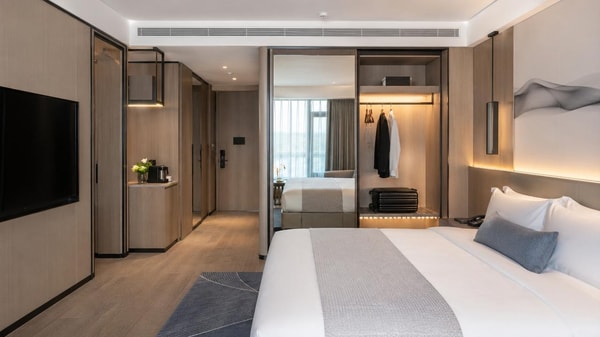
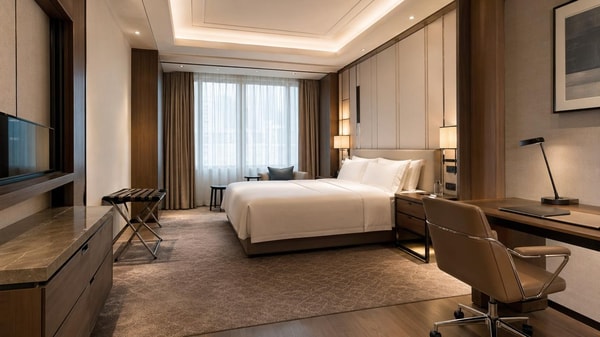
This is why procurement should review the room’s full use scenario instead of the furniture item alone. A hotel nightstand beside a king bed in a luxury suite has a different stress profile from one in a limited-service hotel or a long-stay room. The more accurately the use case is mapped during sourcing, the more durable the final specification tends to be.
- Compact rooms: higher chance of guests using the nightstand for luggage or food placement.
- Resort or coastal projects: greater moisture exposure and finish stress.
- High-turnover properties: more drawer cycles, more cleaning contact, and faster visible wear within 1–2 operating years.
- Tech-enabled rooms: cable ports, charging points, and control cut-outs require stronger detailing.
How should procurement teams evaluate hotel nightstands before placing a large order?
Use a commercial evaluation matrix, not a retail-style product comparison
A professional sourcing process should test at least 5 key dimensions: material stability, hardware durability, finish suitability, maintenance practicality, and supplier consistency. These are the areas where low-risk hotel nightstands separate themselves from attractive but short-lived options. Buyers should request technical drawings, bill of materials details, finish samples, edge details, and prototype review before approving production.
Lead time and replenishment planning are just as important. Typical project cycles for guestroom casegoods may run 4–8 weeks for sampling and approval, followed by 6–12 weeks for bulk production depending on customization level, quantity, and shipping route. If the supplier cannot maintain finish consistency across repeat orders, replacement units may not match existing room inventory, creating visible brand inconsistency.
The following table can help procurement teams compare hotel nightstands using commercial decision criteria rather than unit price alone.
This kind of matrix is particularly useful for owners, purchasing managers, and procurement consultants managing multi-property or cross-border projects. Through GCT’s sourcing intelligence approach, buyers can compare OEM and ODM options with more confidence, especially when balancing design expectations, budget ceilings, and operational durability.
A practical pre-order checklist for buyers
Before signing off on hotel nightstands for a full rollout, ask the supplier to support a 4-step validation process. First, confirm exact dimensions, cable cut-outs, and bedside clearance. Second, verify substrate and edge specifications. Third, inspect a physical sample or room mock-up. Fourth, align replacement policy, packaging standard, and replenishment lead time. This sequence reduces surprises during installation and later operation.
- Confirm room application: business hotel, resort, luxury suite, serviced apartment, or long-stay model.
- Check technical details: board type, finish build-up, edge sealing method, runner type, and integrated power module needs.
- Review logistics: knock-down or assembled delivery, packaging protection, installation readiness, and spare unit ratio.
- Plan after-sales support: replacement parts, repeat order color matching, and response window for defect claims.
What cost mistakes make cheaper hotel nightstands more expensive over time?
Low purchase price can hide high lifecycle cost
A frequent procurement error is comparing hotel nightstands only by initial quotation. In reality, total ownership cost includes freight, installation, maintenance labor, spare inventory, guestroom downtime, and aesthetic mismatch during replacement. A lower-cost item that starts showing defects after 9–15 months can become more expensive than a better-built option that maintains appearance for several operating cycles.
This is especially important for chain hotels and premium hospitality brands. Replacing visible bedside furniture room by room disrupts brand consistency. The direct item cost may be manageable, but the hidden cost includes inspection time, purchasing administration, storage coordination, and potentially out-of-order room days. Procurement teams should therefore model cost across 3 stages: acquisition, operation, and replenishment.
Alternatives can reduce wear without overspending
Not every project needs the same specification tier. Select-service hotels may prioritize easy-clean laminates and simple hardware replacement, while luxury properties may choose more complex finishes with reinforced detailing. In some cases, a hybrid approach works well: durable commercial laminate on the top surface, premium veneer on visible side faces, and upgraded runners for the drawer. This balances cost, appearance, and wear resistance.
Another smart option is standardizing 2–3 nightstand variants across room categories instead of fully unique units for every room type. This simplifies spare parts planning, reduces small-batch manufacturing complexity, and shortens repeat order lead times. For procurement, this is often more valuable than pursuing the lowest possible first price.
- Best for budget-sensitive projects: robust laminate finishes, simplified geometry, replaceable hardware.
- Best for premium projects: reinforced substrate, protected veneer system, carefully detailed electrical integration.
- Best for multi-property rollout: limited design variants, documented finish controls, repeatable packaging and replenishment planning.
FAQ: what do buyers often ask about hotel nightstands?
How long should hotel nightstands typically last?
There is no single universal number because service life depends on occupancy, room type, material choice, and housekeeping conditions. However, buyers commonly plan around a multi-year operating window rather than residential expectations. If visible defects appear within the first 6–18 months, that usually signals a material, finish, hardware, or usage-specification mismatch rather than normal aging.
What should procurement teams request from suppliers before approval?
Ask for a material breakdown, hardware description, finish sample, edge detail, shop drawing, and ideally a physical mock-up. For projects with integrated charging or lighting, request module cut-out details and installation coordination notes. If the order is large, batch consistency and replenishment capability should be discussed at the same time, not after delivery.
Are custom hotel nightstands always riskier than standard ones?
Not necessarily. Custom units can perform very well when engineering, material selection, and mock-up review are done properly. The risk rises when customization is design-led but not operation-led. Added cut-outs, floating structures, thin profiles, or unusual finishes should be evaluated against maintenance and usage intensity before approval.
What standards or compliance topics may matter?
Depending on market and project scope, buyers may need to review fire behavior requirements, formaldehyde emission expectations, electrical safety considerations for integrated charging, and general commercial furniture quality documentation. Requirements vary by country and project type, so alignment should happen early in the sourcing process, especially for international hospitality developments.
Why work with GCT when sourcing hotel nightstands for commercial projects?
Hotel nightstands may be one furniture category, but the purchasing decision touches design, durability, logistics, compliance, and long-term operational cost. GCT helps procurement teams approach this decision with broader commercial intelligence. Instead of reviewing suppliers in isolation, buyers can evaluate sourcing options through the lens of hospitality use, project complexity, and repeatability across multiple commercial environments.
For buyers handling new builds, refurbishment programs, or multi-site rollouts, GCT supports a more structured conversation around product selection, OEM or ODM capability, lead time planning, finish matching, and supply chain reliability. This is especially useful when hotel nightstands need to align with wider guestroom casegoods, smart-room features, or premium brand presentation standards.
You can contact GCT to discuss practical sourcing topics such as substrate options, edge detailing, charging integration, sample review, packaging approach, replenishment planning, and quotation comparison. If you are assessing multiple suppliers, we can also help frame the right evaluation criteria for performance, compliance coordination, customization scope, and delivery timing.
For procurement teams that need clearer decisions, faster validation, and fewer post-installation surprises, this kind of guided sourcing support can make hotel nightstands a controlled category rather than a recurring maintenance problem. Reach out to explore specification confirmation, product selection, custom solutions, sample support, expected lead times, certification alignment, and project-based quote discussions.
Search News
Hot Articles
Popular Tags
Need ExpertConsultation?
Connect with our specialized leisureengineering team for procurementstrategies.
Recommended News
 Apr 30, 2026Hotel cabinets that look custom without custom lead timesHotel cabinets that look custom without long custom lead times. Learn how to balance brand style, durability, and faster installation for hotel projects.● Hospitality Sourcing Dir
 Apr 30, 2026Hotel sofas that hold shape better in high turnover roomsHotel sofas that keep their shape longer in high-turnover rooms. Learn what frame, cushion, and upholstery specs improve durability, guest appeal, and lifecycle value.● Hospitality Sourcing Dir
 Apr 30, 2026Hotel wardrobes that save space without looking budgetHotel wardrobes that save space without looking budget: discover premium, durable designs, smart specs, and sourcing tips to maximize guestroom value.● Hospitality Sourcing Dir
 Apr 30, 2026Hotel room furniture mistakes that quietly hurt guest comfortHotel room furniture mistakes can quietly damage guest comfort, reviews, and brand value. Learn how smarter layout, sizing, and material choices improve hotel room performance.● Hospitality Sourcing Dir
 Apr 30, 2026What makes hotel outdoor furniture easier to maintainHotel outdoor furniture is easier to maintain when it uses weather-resistant materials, smart construction, and replaceable parts. Learn how to cut upkeep and improve long-term value.● Hospitality Sourcing Dir
 Apr 30, 2026Hotel lobby furniture trends shifting guest first impressionsHotel lobby furniture trends are redefining first impressions with modular comfort, brand storytelling, tech integration, and durable style that elevates guest experience.● Hospitality Sourcing Dir
 Apr 30, 2026Why some hotel nightstands wear out faster than expectedHotel nightstands wear out faster when materials, edge sealing, and hardware are underspecified. Learn how to spot durable options, reduce lifecycle costs, and source smarter for hospitality projects.● Hospitality Sourcing Dir
 Apr 28, 2026Iranian Delegation at Sanya Asian Beach Games Spurs Halal-Certified Hardware DemandHalal-certified hardware demand surges after Iranian delegation’s cultural showcase at Sanya Asian Beach Games—key for GCC event tech exporters.● Hospitality Sourcing Dir
 Apr 27, 2026Iranian Delegation’s Ritual Gesture at Sanya ASG Sparks Mideast Hospitality Procurement ShiftIranian delegation's ritual gesture at Sanya ASG sparks Middle East hospitality procurement shift—key for hotel amenities, travel services & cultural compliance.● Hospitality Sourcing Dir
 Apr 28, 2026Hotel Beds in 2026 Are Being Chosen for Sleep Quality, Not Just StyleHotel beds, hotel furniture, and custom furniture in 2026 are defined by sleep quality, durability, and guest value—see how luxury furniture buyers source smarter.● Hospitality Sourcing Dir
 Apr 28, 2026Cheap Hotel Furniture Can Raise Costs Later in Unexpected WaysHotel furniture buying guide: compare hotel beds, hotel chairs, hotel tables, custom furniture and luxury furniture to avoid hidden costs and choose durable hotel equipment.● Hospitality Sourcing Dir
 Apr 28, 2026Hotel Furniture Replacement Cycles Are Changing in 2026Hotel furniture trends for 2026: discover smarter replacement cycles for hotel beds, hotel chairs, hotel tables, luxury furniture, and custom furniture to boost ROI and guest appeal.● Hospitality Sourcing Dir
 Apr 28, 2026Why Do Some Hotel Beds Get Complaints Faster Than Others?Hotel beds complaints often start with poor specs, not looks. Learn how hotel furniture, custom furniture, luxury furniture, hotel chairs, hotel tables, and hotel equipment affect guest satisfaction.● Hospitality Sourcing Dir
 Apr 28, 2026Hotel Beds: Which Frame and Mattress Setup Lasts Longer?Hotel beds guide: compare frame and mattress setups that last longer, with insights on hotel furniture, custom furniture, luxury furniture, hotel chairs and hotel tables.● Hospitality Sourcing Dir
 Apr 27, 2026Is Luxury Jewelry for Hotels a Smart Investment?Luxury jewelry for hotels: see how a custom jewelry manufacturer helps hotels turn custom luxury jewelry into brand value, guest appeal, and profitable luxury jewelry B2B growth.● Hospitality Sourcing Dir
 Apr 21, 2026Open or closed hotel wardrobes for easier housekeeping?Hotel wardrobes affect housekeeping speed, guest appeal, and hospitality procurement. Compare open vs closed designs for hotel furniture, luxury furniture, and hotel room furniture planning.● Hospitality Sourcing Dir
 Apr 21, 2026Hotel wardrobes that fit luggage without wasting spaceHotel wardrobes that fit luggage smartly without wasting space—explore hotel furniture solutions that elevate hotel room furniture, support hospitality procurement, and enhance guest comfort.● Hospitality Sourcing Dir
 Apr 21, 2026Why hotel room furniture wears unevenly after openingHotel furniture wear starts unevenly from day one. Learn how hotel beds, hotel chairs, hotel desks and hotel room furniture perform in real use, with smart hospitality procurement tips.● Hospitality Sourcing Dir
 Apr 21, 2026Hotel room furniture packages that cut design mismatchHotel room furniture packages align hotel furniture, hotel beds, hotel chairs, hotel tables, and hotel desks with luxury furniture standards—reducing design mismatch and speeding hospitality procurement.● Hospitality Sourcing Dir
 Apr 21, 2026Low seat or deep seat hotel sofas for modern lobbies?Hotel furniture buyers compare low seat and deep seat hotel sofas for modern lobbies. Explore luxury furniture choices that improve comfort, traffic flow, brand image, and hospitality procurement value.● Hospitality Sourcing Dir
 Apr 21, 2026Hotel sofas that keep their shape in high traffic areasHotel sofas, hotel furniture, and hospitality furniture that keep shape in high-traffic areas—discover luxury furniture sourcing tips, durable commercial furniture specs, and smarter hospitality procurement.● Hospitality Sourcing Dir
 Apr 21, 2026Why hospitality furniture needs different specs by zoneHospitality furniture specs vary by zone. Learn how hotel furniture, hotel beds, hotel chairs, hotel tables, and hotel desks improve durability, ROI, and luxury guest experience.● Hospitality Sourcing Dir
 Apr 21, 2026Hospitality furniture that supports faster room turnoverHospitality furniture that speeds room turnover: compare hotel beds, hotel chairs, hotel tables, hotel desks and hotel sofas for easier cleaning, durability, and smarter hospitality procurement.● Hospitality Sourcing Dir
 Apr 21, 2026Where hotel equipment budgets usually go off trackHotel furniture and hotel equipment budgets often fail from hidden scope, logistics, and lifecycle costs. Learn smarter hospitality procurement for hotel beds, chairs, tables, and luxury furniture.● Hospitality Sourcing Dir