Is Luxury Jewelry for Hotels a Smart Investment?
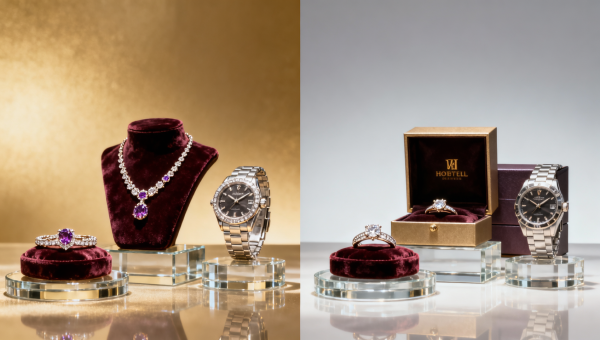
From boutique lobbies to flagship suites, luxury jewelry for hotels is becoming a strategic asset rather than a decorative extra. For buyers comparing high-end luxury jewelry, custom luxury jewelry, and luxury jewelry B2B options, the real question is not just prestige, but return on brand value, guest perception, and commercial differentiation. This guide explores whether partnering with a custom jewelry manufacturer can turn luxury jewelry for commercial spaces into a smart long-term investment.
For hotel groups, procurement teams, commercial evaluators, and regional distributors, the investment case is rarely about ornament alone. It is about whether jewelry can support premium positioning, strengthen retail revenue, improve gifting programs, or create a signature identity that guests remember after checkout. In a market where experiential spending continues to outperform standard room competition, jewelry has become a practical branding tool inside the wider luxury accessories category.
Within the watches, jewelry, and eyewear sector, hotel demand is also becoming more structured. Buyers are asking about OEM and ODM flexibility, metal and gemstone consistency, replenishment lead times, packaging standards, and the suitability of collections for spas, VIP lounges, branded boutiques, and executive gifting. That makes the sourcing decision more commercial than many suppliers assume.
Why Luxury Jewelry Is Moving From Decoration to Commercial Asset
A hotel does not invest in luxury jewelry for the same reason a private consumer buys a necklace or bracelet. In hospitality, jewelry can function across at least 4 revenue or branding layers: boutique retail, VIP gifting, event partnerships, and interior storytelling. A carefully developed collection can support average spend, reinforce visual identity, and create a more coherent luxury narrative from lobby to suite.
This shift is especially visible in upscale and five-star properties that aim to differentiate beyond room design. When every premium hotel can offer curated fragrance, upgraded linens, and digital concierge service, buyers look for assets that feel rarer and more ownable. Custom luxury jewelry gives hotels something harder to replicate, particularly when the design language reflects local culture, architecture, or brand codes.
The investment logic also improves when jewelry is integrated into multiple touchpoints. A collection used only in one display case may have limited impact. The same line, when adapted for boutique sales, conference gifts, wedding packages, and seasonal collaborations, can create better commercial leverage over 12 to 24 months.
For B2B buyers, the real question is not whether luxury jewelry looks impressive. It is whether the category can contribute to measurable business goals such as brand lift, guest engagement, upselling opportunities, distributor interest, or corporate partnership value. In many cases, the answer depends on how the sourcing model is structured from day one.
Where hotels actually use high-end jewelry
Luxury jewelry for hotels appears in more operational formats than many first-time buyers expect. Some properties carry compact collections of 20 to 80 SKUs in a boutique corner. Others commission limited runs of 50 to 300 units for opening events, presidential suite gifting, or branded loyalty milestones. Destination resorts often favor place-inspired pieces with stronger storytelling value.
- Guest-facing retail in lobby boutiques, spa shops, or lifestyle concept stores.
- Executive and diplomatic gifting for VIP check-ins, ownership meetings, and brand alliances.
- Wedding, anniversary, and honeymoon packages tied to premium room or event bookings.
- Co-branded capsule launches with fashion, eyewear, or fine dining partners.
What makes the investment smarter than standard décor
Unlike static décor, jewelry can be merchandised, replenished, refreshed, and monetized. A decorative sculpture may elevate a suite but produce no direct revenue. A branded jewelry line can generate sales, support events, and travel across properties. In commercial terms, it can operate as both an asset and a product category.
That dual value matters for procurement teams under pressure to justify premium spending. If a project budget includes jewelry, watches, or luxury accessories, decision-makers typically want a clear path to resale, guest conversion, or at least stronger rate positioning. This is where custom jewelry manufacturer selection becomes a high-impact decision rather than a simple sourcing task.
How Buyers Should Evaluate Return on Brand Value and Commercial Performance
Return on investment in luxury jewelry B2B programs is broader than gross margin. Hospitality buyers should assess 5 dimensions together: design relevance, revenue contribution, gifting effectiveness, inventory turnover, and reputational fit. A piece that sells modestly but becomes strongly associated with the hotel brand may still justify procurement if it supports higher-value guest perception.
In practice, many hotel groups review jewelry performance over a 6-month and 12-month window. The first period helps test guest response, display strategy, and packaging acceptance. The second period reveals whether the line can maintain repeat demand, support event activation, and scale across more than 1 property. This staggered review is more realistic than expecting immediate retail maturity in the first 30 days.
Procurement officers should also separate prestige cost from operating cost. A premium item may be acceptable if the supplier can stabilize plating quality, minimize return rates, and deliver replenishment within 3 to 6 weeks. By contrast, a lower-priced line can become expensive if defect rates, late delivery, or inconsistent gemstone matching create service friction.
The table below helps commercial buyers compare how different sourcing models affect investment quality in hotel settings.
The strongest takeaway is that custom programs usually outperform standard wholesale on strategic value, even when unit cost is higher. For hotels operating in the premium and luxury segment, the relevant benchmark is not the cheapest jewelry line but the option that best supports differentiation, operational consistency, and resale or gifting performance.
Key metrics procurement teams can track
- Sell-through rate by SKU within 60, 90, and 180 days.
- Average spend per guest for boutique and package-based jewelry offers.
- Reorder frequency and replenishment lead time by supplier.
- Return or defect rate, ideally kept below 2% to 3% for premium lines.
- Use rate in VIP gifting or event programs across the year.
These indicators help evaluators move the conversation away from subjective taste and toward sourcing discipline. They are particularly useful when comparing multiple vendors across regions or when presenting to finance, operations, and brand teams at the same time.
What to Look for in a Custom Jewelry Manufacturer for Hotel Projects
The supplier behind a hotel jewelry program must do more than make attractive pieces. In B2B hospitality, manufacturing capability needs to cover design translation, finish consistency, packaging control, quality assurance, and repeat supply. A manufacturer may perform well in fashion retail yet struggle with the service expectations of hotels, where timing, presentation, and specification accuracy are tighter.
At minimum, buyers should verify 6 operational areas: material options, craftsmanship range, prototype speed, MOQ structure, quality control workflow, and after-sales response. For example, a supplier that can deliver a first prototype in 10 to 21 days and bulk production in 4 to 8 weeks may be far easier to work with than one offering lower prices but poor scheduling visibility.
In the watches, jewelry, and eyewear business, finishing details are often where supplier quality shows up. Hotels should ask about plating thickness, stone setting method, anti-tarnish treatment, clasp durability, logo application, and gift-box construction. These are not cosmetic extras. They directly affect perceived value, in-room presentation, and the likelihood of guest complaints or returns.
The table below outlines practical sourcing criteria that buyers can use during supplier comparison and commercial evaluation.
A good custom jewelry manufacturer should also be able to speak the language of commercial rollout. That means discussing regional packaging adaptation, distributor support, branded inserts, seasonal drops, and replacement policy. Suppliers that only focus on product beauty often underperform once the hotel requires structured replenishment across multiple sites.
Questions to ask during supplier screening
Operational and technical questions
- Can the factory support custom jewelry, matching watches or accessories, and coordinated packaging under one project brief?
- What is the usual lead time for 50, 200, and 1,000-unit orders?
- How are color tone and plating consistency controlled across different batches?
- Is there a defined process for handling replacements, repairs, or missing components within 7 to 14 days?
These questions matter because hotel demand often starts small and then scales suddenly. Suppliers with disciplined systems are usually safer long-term partners than vendors who offer an attractive first quotation but cannot support expansion.
Implementation Models, Lead Times, and Risk Control in Luxury Jewelry B2B
Even the best product concept can fail if rollout is poorly managed. Hotels should treat luxury jewelry sourcing as a staged commercial program, not a one-time order. A practical structure usually includes 3 phases: concept and sampling, pilot deployment, and scaled replenishment. This sequence gives teams time to test guest response, refine packaging, and verify supplier consistency before increasing spend.
For most custom projects, sampling may take 2 to 4 weeks depending on complexity. Pilot production may add another 4 to 6 weeks, especially when jewelry boxes, sleeves, certificates, or event cards are customized alongside the pieces. If hotels require precious-metal upgrades, more intricate stone settings, or multi-property packaging variants, total preparation can extend to 8 to 12 weeks.
Risk control should begin before the first order is approved. A detailed specification sheet should define finish tone, dimensions, logo placement, packaging materials, accessory counts, and acceptable tolerances. In jewelry, a small inconsistency such as clasp tension, chain thickness, or stone alignment can significantly change perceived quality. Commercial buyers need written controls, not verbal assumptions.
The following framework helps buyers organize implementation and reduce preventable sourcing issues.
The most common sourcing mistakes are preventable. Hotels often under-specify packaging, fail to plan replenishment, or choose designs that look luxurious but are too fragile for gifting and travel. A smart investment depends not only on design but also on durability, logistics, and repeatability.
Common risk points in hotel jewelry procurement
- Over-ordering untested SKUs before confirming guest appeal through a 30 to 90-day pilot.
- Ignoring packaging protection, which can increase presentation defects during transport.
- Choosing overly trend-driven designs with a lifecycle shorter than one season.
- Approving samples without defining acceptable color or finish variation for bulk production.
Risk is reduced when procurement, design, retail, and operations teams collaborate early. For larger groups, a central sourcing brief with property-level feedback usually creates stronger results than allowing each site to improvise its own jewelry program.
Best-Fit Scenarios, Buyer Guidance, and Frequently Asked Questions
Luxury jewelry for hotels is not equally suitable for every property. The strongest fit tends to appear in five-star hotels, destination resorts, branded residences, heritage properties, and lifestyle hotels with strong retail culture. In these environments, jewelry can amplify guest experience rather than feel disconnected from the broader service model.
It is also a compelling category for distributors and agents serving hospitality buyers. Compared with bulky equipment categories, jewelry is easier to sample, easier to display, and more adaptable for seasonal or regional curation. That said, channel partners still need disciplined manufacturer selection to protect margin and reputation.
For commercial evaluators, the ideal starting point is a focused range rather than a large assortment. A launch portfolio of 12 to 25 SKUs, split across entry luxury, gifting, and signature pieces, often creates better control than opening with 50 or more designs. This helps the hotel learn what actually resonates before deeper investment.
FAQ: How should buyers assess whether the investment is justified?
How do we know if custom luxury jewelry fits our hotel brand?
Start with 3 checks: guest profile, brand story, and sales channel. If the property already sells premium accessories, hosts weddings or VIP events, or has a strong destination narrative, jewelry is usually a logical extension. If the hotel has no gifting strategy, no boutique space, and limited premium positioning, the business case is weaker.
What price architecture works best for hotel jewelry programs?
Many hotels benefit from a tiered structure with 3 levels: accessible giftable items, mid-range signature pieces, and a small number of premium statement products. This allows broader guest participation while preserving exclusivity. It also gives procurement teams a cleaner way to test conversion at different spending levels.
How long should we test before scaling the program?
A pilot period of 60 to 120 days is often sufficient to evaluate packaging durability, staff sell-through confidence, guest interest, and reorder logic. For resort hotels with heavier seasonality, a full peak-cycle review may be more useful than a short test during low occupancy months.
Should hotels source watches, jewelry, and eyewear together?
Only when the supplier or sourcing hub can manage category coherence. A coordinated accessories strategy can be powerful, especially for branded retail corners, but each category has different quality and merchandising demands. Jewelry often offers the fastest entry point because it requires less size complexity than eyewear and lower technical servicing than watches.
Luxury jewelry for hotels is a smart investment when it is treated as a commercial brand asset, not a decorative purchase. The right program can support revenue, deepen brand distinction, improve gifting value, and create a memorable guest touchpoint across multiple hotel functions. Success depends on disciplined supplier evaluation, realistic rollout planning, and designs that match both brand identity and operational needs.
For buyers, evaluators, and channel partners looking to source high-end luxury jewelry, custom luxury jewelry, or broader luxury jewelry B2B solutions, structured intelligence matters as much as product aesthetics. If you are planning a hotel boutique launch, VIP gifting line, or destination-inspired accessories program, now is the time to refine the sourcing brief, compare manufacturers carefully, and build a scalable specification framework.
To explore tailored sourcing options across jewelry and luxury accessories for hospitality, contact GCT for a customized solution, supplier matching support, and deeper guidance on commercial-fit product development.
Search News
Hot Articles
- Pro Stage AudioFIFA Adopts Chinese Mini-LED Displays for 2026 World Cup VAR SystemApr 24, 2026
- Outdoor RidesChina FA Warns Nanjing City Over Fan Conduct; ISO 20785 Compliance AcceleratesApr 24, 2026
- Pro Stage AudioFan Zhendong Visits Silicon Valley as MLTT Investor, AI Ping-Pong Tech Draws US InterestApr 24, 2026
Popular Tags
Need ExpertConsultation?
Connect with our specialized leisureengineering team for procurementstrategies.
Recommended News
 Apr 10, 2026RCEP Cuts ASEAN Hotel Furniture Tariffs to 0% for Chinese Bamboo ProductsRCEP cuts ASEAN hotel furniture tariffs to 0% for Chinese bamboo products. Explore how this benefits exporters, procurement teams & supply chains in Southeast Asia's booming hospitality sector.● Hospitality Sourcing Dir
 Apr 10, 2026US Hotel Association Updates 2026 Smart Room Tech Guidelines, Mandates UL 2900-2-2 CertificationUS Hotel Association mandates UL 2900-2-2 certification for smart room tech by 2026. Learn how this impacts IoT manufacturers and hotel chains' procurement strategies.● Hospitality Sourcing Dir
 Apr 10, 2026EU Mandates QR Codes for Hotel Linens: China Exporters Must Comply by April 2026EU mandates QR codes for hotel linens by 2026, impacting China's textile exporters. Learn compliance requirements for traceability, sustainability reporting, and supply chain adaptation.● Hospitality Sourcing Dir
 Apr 09, 2026Zibo Launches 'Treasure Shandong Through the Lens' Photo Tour, Themed Homestays Emerge as Cross-Border Marketing ToolDiscover Zibo's 'Treasure Shandong Through the Lens' photo tour featuring 32 themed homestays blending vintage cameras, Hanfu culture & industrial spaces. A groundbreaking cross-border marketing model attracting global influencers & platforms like Rakuten Travel.● Hospitality Sourcing Dir
 Apr 09, 2026Yangzhou Slender West Lake Flower Festival Opens, Blending Heritage and Tech for Luxury TourismDiscover the 2026 Yangzhou Slender West Lake Flower Festival, blending heritage crafts with AR technology for luxury tourism. Experience cultural performances, workshops, and themed stays attracting global travelers. Explore China's new era of experiential tourism.● Hospitality Sourcing Dir
 Apr 09, 2026New Team Travel Contracts Raise Compliance Standards for Overseas AgenciesNew team travel contracts enforce stricter compliance for overseas agencies, requiring rigorous vetting of Chinese suppliers. Learn how these 2026 regulations impact study tours, hotels, and global partnerships.● Hospitality Sourcing Dir
 Apr 09, 2026Shangyou County's Hotel Subsidy Policy Boosts China's MICE Tourism AppealShangyou County's 2026 hotel subsidy policy offers RMB 100 per room for MICE tourism, boosting China's appeal to international buyers. Discover how this strategic move enhances cost-effective accommodations for corporate events and study tours.● Hospitality Sourcing Dir
 Apr 27, 2026Is Luxury Jewelry for Hotels a Smart Investment?Luxury jewelry for hotels: see how a custom jewelry manufacturer helps hotels turn custom luxury jewelry into brand value, guest appeal, and profitable luxury jewelry B2B growth.● Hospitality Sourcing Dir
 Apr 21, 2026Open or closed hotel wardrobes for easier housekeeping?Hotel wardrobes affect housekeeping speed, guest appeal, and hospitality procurement. Compare open vs closed designs for hotel furniture, luxury furniture, and hotel room furniture planning.● Hospitality Sourcing Dir
 Apr 21, 2026Hotel wardrobes that fit luggage without wasting spaceHotel wardrobes that fit luggage smartly without wasting space—explore hotel furniture solutions that elevate hotel room furniture, support hospitality procurement, and enhance guest comfort.● Hospitality Sourcing Dir
 Apr 21, 2026Why hotel room furniture wears unevenly after openingHotel furniture wear starts unevenly from day one. Learn how hotel beds, hotel chairs, hotel desks and hotel room furniture perform in real use, with smart hospitality procurement tips.● Hospitality Sourcing Dir
 Apr 21, 2026Hotel room furniture packages that cut design mismatchHotel room furniture packages align hotel furniture, hotel beds, hotel chairs, hotel tables, and hotel desks with luxury furniture standards—reducing design mismatch and speeding hospitality procurement.● Hospitality Sourcing Dir
 Apr 21, 2026Low seat or deep seat hotel sofas for modern lobbies?Hotel furniture buyers compare low seat and deep seat hotel sofas for modern lobbies. Explore luxury furniture choices that improve comfort, traffic flow, brand image, and hospitality procurement value.● Hospitality Sourcing Dir
 Apr 21, 2026Hotel sofas that keep their shape in high traffic areasHotel sofas, hotel furniture, and hospitality furniture that keep shape in high-traffic areas—discover luxury furniture sourcing tips, durable commercial furniture specs, and smarter hospitality procurement.● Hospitality Sourcing Dir
 Apr 21, 2026Why hospitality furniture needs different specs by zoneHospitality furniture specs vary by zone. Learn how hotel furniture, hotel beds, hotel chairs, hotel tables, and hotel desks improve durability, ROI, and luxury guest experience.● Hospitality Sourcing Dir
 Apr 21, 2026Hospitality furniture that supports faster room turnoverHospitality furniture that speeds room turnover: compare hotel beds, hotel chairs, hotel tables, hotel desks and hotel sofas for easier cleaning, durability, and smarter hospitality procurement.● Hospitality Sourcing Dir
 Apr 21, 2026Where hotel equipment budgets usually go off trackHotel furniture and hotel equipment budgets often fail from hidden scope, logistics, and lifecycle costs. Learn smarter hospitality procurement for hotel beds, chairs, tables, and luxury furniture.● Hospitality Sourcing Dir
 Apr 21, 2026Hotel equipment upgrades that improve guest flow firstHotel equipment upgrades improve guest flow fast with hotel furniture, hotel beds, hotel chairs, catering equipment, and soundproofing materials—boost comfort, efficiency, and procurement ROI.● Hospitality Sourcing Dir
 Apr 21, 2026What shortens the life of commercial furniture in hotelsHotel furniture and commercial furniture wear out fast when hotel beds, hotel chairs, hotel tables, hotel desks, and hotel sofas face heavy use, poor maintenance, and weak materials. Learn smart hospitality procurement tips.● Hospitality Sourcing Dir
 Apr 21, 2026Commercial furniture trends hotels are actually adoptingCommercial furniture trends hotels are adopting: luxury furniture, hotel beds, hotel chairs, hotel tables and hotel sofas that improve hotel furniture sourcing, durability, and hospitality procurement value.● Hospitality Sourcing Dir
 Apr 21, 2026How to spot hotel furniture built for daily wearHotel furniture buying guide: learn how to assess hotel beds, hotel chairs, hotel tables, and hospitality furniture for daily wear, lower maintenance, and smarter hospitality procurement.● Hospitality Sourcing Dir
 Apr 21, 2026Hotel furniture mistakes that age a room too quicklyHotel furniture buying guide: avoid costly hotel beds, hotel chairs, and hotel room furniture mistakes. Discover luxury furniture tips for durable, brand-right hospitality procurement.● Hospitality Sourcing Dir
 Apr 21, 2026Why some soundproofing materials fail after installationLearn why soundproofing materials fail after installation in hotel furniture projects. Explore hotel beds, hotel sofas, hotel wardrobes and hospitality procurement tips for lasting acoustic performance.● Hospitality Sourcing Dir
 Apr 21, 2026Soundproofing materials that work best between guest roomsSoundproofing materials for hotel furniture projects: discover the best systems between guest rooms, from mineral wool to acoustic doors, to improve comfort, protect reviews, and support hospitality procurement.● Hospitality Sourcing Dir