Luxury Jewelry B2B: What Buyers Need First
In luxury jewelry B2B, the first thing serious buyers need is not inspiration—it is confidence. Before discussing design direction, gemstone mix, or margin structure, procurement teams and commercial buyers want proof that a supplier can deliver consistent quality, protect brand positioning, meet compliance requirements, and scale production without disrupting timelines. For buyers sourcing custom jewelry design, luxury jewelry wholesale, or high-end luxury jewelry for hotels, retail programs, or corporate gifting, the real starting point is verified capability.
That is the practical answer behind the question, “What buyers need first.” In this market, aesthetics open the conversation, but trust closes the deal. A beautiful catalog means little if the manufacturer cannot document materials, maintain finish consistency, support OEM/ODM development, or handle global delivery standards. Buyers evaluating long-term suppliers are usually looking for risk reduction as much as product excellence.
What is the core priority for luxury jewelry B2B buyers?
The first priority is sourcing confidence. In commercial terms, that means buyers need enough evidence to believe a supplier can reliably convert design intent into saleable, brand-appropriate product at the required quality level and production scale.
For information researchers, procurement managers, and business evaluators, this usually comes down to five questions:
- Can this supplier consistently produce luxury-grade quality?
- Can they customize products to fit our market, brand, or project requirements?
- Can they prove material authenticity and manufacturing control?
- Can they deliver on schedule for wholesale or project-based orders?
- Can they support a long-term commercial relationship, not just a sample run?
In other words, buyers do not begin with “What looks good?” They begin with “What is safe to buy at scale?” That distinction is especially important in luxury jewelry wholesale, where product quality directly affects brand reputation, customer trust, and downstream resale value.
Why product beauty alone is not enough in B2B jewelry sourcing
Luxury jewelry in a B2B setting is judged differently from jewelry in a pure consumer retail context. A distributor, hospitality buyer, or brand sourcing manager is not selecting for personal taste alone. They are assessing commercial fitness.
A commercially viable luxury jewelry supplier must show that the product is not only attractive, but also operationally reliable. That includes:
- Stable plating quality and surface finish consistency
- Stone-setting durability for regular wear or gifting use
- Material traceability for precious metals, stones, and decorative components
- Packaging standards suitable for premium presentation and logistics protection
- Production systems that minimize variation across batches
For example, a hotel group sourcing high-end luxury jewelry for VIP gifting may care less about trend novelty than about presentation consistency, elegant branding, and on-time delivery across multiple locations. A luxury retailer may place stronger emphasis on design exclusivity, finish precision, and repeatable quality across replenishment orders. In both cases, visual appeal matters—but only as part of a much larger sourcing decision.
What buyers evaluate first when comparing a custom jewelry manufacturer
When buyers compare suppliers, they usually look beyond the homepage and product photos very quickly. A serious custom jewelry manufacturer is expected to provide commercial evidence, not just creative claims.
The most useful first-stage evaluation points include:
1. Manufacturing credibility
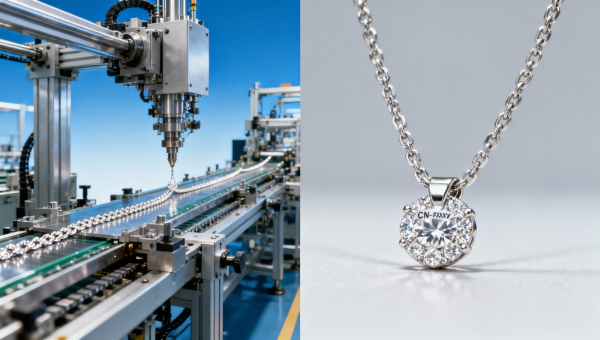
Buyers want to know whether the supplier is a true manufacturer, a trading intermediary, or a hybrid sourcing operator. This affects lead times, development control, pricing transparency, and problem resolution speed. Factories with in-house sampling, casting, stone setting, polishing, plating, and quality control often inspire more confidence than loosely coordinated outsourcing structures.
2. Custom development capability
Custom jewelry design is a major requirement in luxury B2B. Buyers often need adaptations in size, plating, stone selection, logo integration, packaging, seasonal themes, or regional market preferences. Suppliers should be able to explain their design-to-sample workflow clearly, including CAD support, prototyping, revision rounds, and approval checkpoints.
3. Quality verification
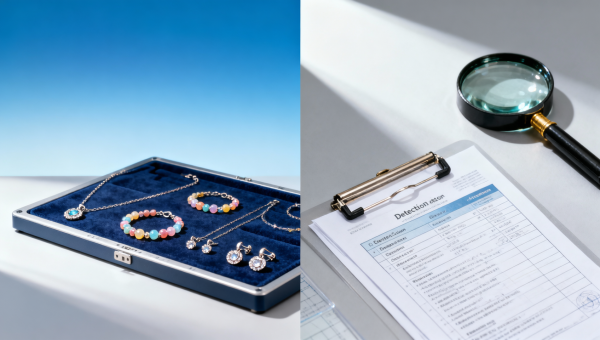
This is one of the most important decision factors. Buyers want documentation and process visibility. Depending on product positioning, that may include metal specifications, plating thickness information, gemstone grading references, QC checkpoints, and pre-shipment inspection procedures.
4. MOQ and scalability
Different buyers have different commercial models. A distributor may need scalable wholesale output. A luxury brand may begin with lower-volume custom development before rolling out larger orders. A capable supplier should be flexible enough to support sampling, pilot runs, and production growth without a major drop in quality control.
5. Export and compliance readiness
For international business, documentation, labeling, packaging compliance, and shipping coordination matter. Buyers want fewer surprises. Suppliers who understand export workflows reduce friction for procurement teams and accelerate internal approval.
How buyers reduce risk before placing a luxury jewelry wholesale order
Risk management is central to B2B jewelry procurement. Even when a supplier appears strong, experienced buyers usually validate the relationship step by step rather than committing immediately based on presentation materials.
Common risk-reduction steps include:
- Requesting samples from multiple product categories
- Comparing sample quality against approved specifications
- Testing communication responsiveness and revision discipline
- Reviewing production timelines for realism, not just speed
- Checking packaging quality and presentation standards
- Verifying prior export experience and project references
- Starting with a smaller trial order before scaling
This process is especially valuable for dealers, distributors, and agents, who may need to protect relationships with downstream retail or institutional clients. A failed delivery or quality inconsistency does not just hurt one order—it can damage channel trust.
For that reason, the best luxury jewelry wholesale partnerships are often built on gradual validation: sample approval, pilot production, repeat order performance, then strategic expansion.
What makes customization commercially valuable, not just visually attractive
In luxury jewelry B2B, customization should solve a business problem. Buyers are not asking for custom work simply to make products look different. They are using customization to strengthen positioning, exclusivity, gifting relevance, regional appeal, or retail differentiation.
Commercially useful customization may include:
- Brand-specific motifs, logos, or signature forms
- Hospitality gifting programs tailored to guest profiles
- Private-label collections for retailers and distributors
- Special packaging for premium events or corporate campaigns
- Regionally adapted color stories, symbols, or finishes
The key is whether the manufacturer can align design choices with target market intent. A good supplier does not just ask, “What style do you want?” They also ask, “Where will this product be sold, gifted, or displayed? What price architecture matters? What image should it support?”
That commercial awareness is what separates basic OEM execution from true B2B partnership.
For hotels, luxury brands, and corporate gifting programs, what matters most?
Different commercial buyers prioritize different outcomes, but the first need remains similar: dependable execution.
Hotels and hospitality groups
These buyers often want elegant, high-end luxury jewelry suitable for VIP gifts, loyalty programs, executive amenities, or boutique retail corners. They usually care about presentation, customization, reliability, and schedule discipline. They may also need coordinated packaging and brand alignment across multiple properties.
Luxury brands
Brand-led buyers usually focus on design integrity, finish precision, exclusivity protection, and long-term consistency. They tend to ask tougher questions about craftsmanship standards, material details, sampling accuracy, and the supplier’s ability to maintain premium perception across larger orders.
Corporate gifting buyers
These teams often need jewelry that feels premium but remains commercially manageable in terms of budget, lead time, packaging, and event coordination. The ideal supplier can recommend options that preserve a luxury feel without creating unnecessary production complexity.
In all three cases, the supplier’s value is not just in making jewelry. It is in translating a business objective into the right product solution.
How to tell if a supplier is ready for long-term B2B cooperation
Long-term suitability is one of the most overlooked evaluation areas. Many suppliers can produce a strong first sample. Fewer can support ongoing replenishment, evolving design needs, market adaptation, and multi-order coordination without quality drift.
Signs of a strong long-term partner include:
- Clear and structured communication during development
- Transparent discussion of lead times, limitations, and revisions
- Documented quality control procedures
- Ability to recommend practical alternatives when cost or timeline conflicts arise
- Consistency between quoted capability and actual sample output
- Understanding of brand positioning, channel needs, and commercial end use
By contrast, warning signs include vague answers, unrealistic delivery promises, inconsistent sample finishing, unclear sourcing origin, and poor handling of technical questions. In luxury jewelry B2B, small gaps in process often become large problems later.
What buyers should ask before moving to supplier shortlisting
Before finalizing a shortlist, buyers should ask a focused set of commercial and technical questions. This helps separate attractive suppliers from genuinely qualified ones.
- What parts of manufacturing are handled in-house?
- How do you manage custom jewelry design development and revisions?
- What quality checks are performed before shipment?
- How do you maintain finish consistency across repeat orders?
- What are your usual lead times for samples and production?
- Can you support premium packaging and brand-specific presentation?
- What export markets do you already serve?
- How do you handle material verification and production traceability?
- What is your approach to MOQ flexibility for new projects?
- Can you share examples relevant to luxury jewelry wholesale or branded gifting programs?
These questions are useful because they move the conversation away from generic sales language and toward operational truth.
Final takeaway: in luxury jewelry B2B, trust is the first product
Luxury jewelry B2B buyers need confidence before they need creativity. The first decision is rarely about selecting the most eye-catching design; it is about choosing a supplier capable of protecting quality, timing, customization accuracy, and brand value. For procurement teams, distributors, and business evaluators, the smartest sourcing approach is to treat supplier verification as the first stage of product selection.
A strong custom jewelry manufacturer should be able to prove craftsmanship, support commercially relevant customization, and deliver reliable wholesale execution across repeated orders. When that foundation is in place, design, exclusivity, and market differentiation can create real value. Without it, even beautiful jewelry becomes a sourcing risk.
For buyers entering or expanding in luxury jewelry wholesale, the clearest principle is simple: first secure the right manufacturing partner, then scale the right collection.
Search News
Hot Articles
- Pro Stage AudioFIFA Adopts Chinese Mini-LED Displays for 2026 World Cup VAR SystemApr 24, 2026
- Outdoor RidesChina FA Warns Nanjing City Over Fan Conduct; ISO 20785 Compliance AcceleratesApr 24, 2026
- Pro Stage AudioFan Zhendong Visits Silicon Valley as MLTT Investor, AI Ping-Pong Tech Draws US InterestApr 24, 2026
Popular Tags
Need ExpertConsultation?
Connect with our specialized leisureengineering team for procurementstrategies.
Recommended News
 Apr 23, 2026Texas Launches PFAS Probe Against Lululemon, Export Compliance Risks RisePFAS probe against Lululemon in Texas escalates export compliance risks for sportswear ODMs, testing labs & chemical suppliers — act now.● Luxury Retail Analyst
 Apr 21, 2026FDA Proposes Chinese Label Translation Requirement for Sports SupplementsFDA proposes Chinese label translation requirements for sports supplements—learn how protein powders, BCAAs & creatine brands can prepare for Q3 2026 compliance.● Luxury Retail Analyst
 Apr 21, 2026CPSC Urgent Alert: PFAS in Fitness Apparel Risks US Import DelaysPFAS in fitness apparel triggers CPSC alerts—avoid US import delays! Get CPSC-recognized PFAS testing, compliance tips & port detention prevention now.● Luxury Retail Analyst
 Apr 20, 2026US CPSC Alert: PFAS in Fitness Apparel May Delay US Import ClearancePFAS in fitness apparel may delay US import clearance—learn how the Texas AG probe & CPSC alert impact compliance, testing, and supply chains now.● Luxury Retail Analyst
 Apr 15, 2026FDA Updates Guidelines for Sports Nutrition Supplement Labels: Chinese Translations Must Be FDA-CertifiedFDA now requires Chinese translations on sports nutrition supplement labels to be FDA-certified. Learn how this impacts manufacturers, importers, and compliance timelines for US market access.● Luxury Retail Analyst
 Apr 14, 2026Japan Updates Jewelry Labeling Rules: Mandatory China Factory Codes from April 2026Japan's new jewelry labeling rules mandate 'Country of Origin + China Factory Code' (CN-FAC-XXXXX) from April 2026. Learn how this impacts Chinese exporters and Japanese importers in the $2.1B precious metals market.● Luxury Retail Analyst
 Apr 14, 2026RCEP Tariff Cuts Boost China's Optical Lens Exports to ASEANRCEP tariff cuts boost China's optical lens exports to ASEAN with 0% duties on CR-39 & polycarbonate lenses. Learn how this + faster logistics create new trade opportunities.● Luxury Retail Analyst
 Apr 14, 2026US CPSC Proposes Stricter Lead Limits in Children's Jewelry, Impacting Chinese ExportersUS CPSC proposes stricter lead limits (40ppm) in children's jewelry, impacting Chinese exporters with new compliance challenges. Learn how this 2026 regulation affects manufacturers & supply chains.● Luxury Retail Analyst
 Apr 14, 2026EU's Revised EN 14138:2026 Eyewear Nickel Standard Takes Effect, Impacting Chinese ExportersEU's EN 14138:2026 eyewear standard tightens nickel limits to 0.2μg/cm²/week, impacting Chinese exporters. Learn compliance strategies for EU market access.● Luxury Retail Analyst
 Apr 25, 2026Luxury Jewelry B2B in 2026: What Changes?Luxury jewelry B2B in 2026: explore custom jewelry design, custom jewelry manufacturer trends, luxury jewelry wholesale shifts, and how custom luxury jewelry drives faster, safer growth.● Luxury Retail Analyst
 Apr 25, 2026How to Grow a Luxury Accessories Online StoreLearn how to grow a luxury accessories online store with custom jewelry design, a trusted custom jewelry manufacturer, luxury accessories wholesale strategy, and high-end luxury jewelry that converts.● Luxury Retail Analyst
 Apr 25, 2026Custom Jewelry for Corporate Gifts That LastCustom jewelry for corporate gifts from a trusted custom jewelry manufacturer—discover custom jewelry design, high-end luxury jewelry, and scalable luxury jewelry B2B solutions.● Luxury Retail Analyst
 Apr 25, 2026What a Good Luxury Accessories Catalog IncludesLuxury accessories catalog guide covering custom jewelry design, high-end luxury jewelry, luxury accessories for men and women, and trusted luxury jewelry B2B sourcing insights.● Luxury Retail Analyst
 Apr 27, 2026Luxury Jewelry Manufacturer: Red Flags to KnowLuxury jewelry manufacturer warning signs every B2B buyer should know. Learn how to evaluate custom jewelry design, custom luxury jewelry, and luxury jewelry wholesale partners before costly mistakes.● Luxury Retail Analyst
 Apr 27, 2026Custom Jewelry for Weddings: Timeline GuideCustom jewelry for weddings made simple: learn timelines for custom jewelry design, choosing a custom jewelry manufacturer, and planning custom luxury jewelry with diamonds.● Luxury Retail Analyst
 Apr 27, 2026Luxury Jewelry Wholesale for New DistributorsLuxury jewelry wholesale guide for new distributors: compare custom jewelry manufacturer options, custom jewelry design support, and luxury jewelry B2B strategies to launch faster.● Luxury Retail Analyst
 Apr 27, 2026Custom Luxury Jewelry: OEM or Small Batch?Custom luxury jewelry sourcing guide: compare OEM vs small-batch with a custom jewelry manufacturer for custom jewelry design, cost control, quality, and scalable luxury jewelry B2B growth.● Luxury Retail Analyst
 Apr 27, 2026How to Price High-End Luxury Jewelry RightCustom jewelry design and high-end luxury jewelry pricing guide for B2B buyers—learn how a custom jewelry manufacturer sets value, margins, and wholesale strategy.● Luxury Retail Analyst
 Apr 27, 2026Luxury Accessories for Women by Price TierLuxury accessories for women by price tier: compare high-end luxury jewelry, luxury jewelry wholesale, and custom luxury jewelry from a trusted custom jewelry manufacturer for smarter B2B sourcing.● Luxury Retail Analyst
 Apr 27, 2026Luxury Accessories for Men: Classic or Trendy?Luxury accessories for men: classic or trendy? Explore custom jewelry design, high-end luxury jewelry, and how a luxury jewelry manufacturer helps buyers source smarter for growth.● Luxury Retail Analyst
 Apr 27, 2026How to Compare Custom Jewelry ManufacturersCompare every custom jewelry manufacturer with confidence. Learn how custom jewelry design, compliance, craftsmanship, MOQ, and luxury jewelry wholesale capabilities impact quality and growth.● Luxury Retail Analyst
 Apr 27, 20262026 Custom Jewelry Design Trends to WatchExplore 2026 custom jewelry design trends shaping B2B buying, from custom luxury jewelry and diamonds to luxury accessories for men and women with smarter sourcing insights.● Luxury Retail Analyst
 Apr 27, 2026Luxury Jewelry B2B: What Buyers Need FirstLuxury jewelry B2B starts with trust. Learn how a custom jewelry manufacturer supports custom jewelry design, luxury jewelry wholesale, and scalable high-end luxury jewelry sourcing.● Luxury Retail Analyst
 Apr 27, 2026How Luxury Brands Source Jewelry CollectionsCustom jewelry design and custom jewelry manufacturer insights for luxury brands: learn how high-end luxury jewelry, wholesale sourcing, and compliant supply chains drive profitable collections.● Luxury Retail Analyst