2026 Custom Jewelry Design Trends to Watch
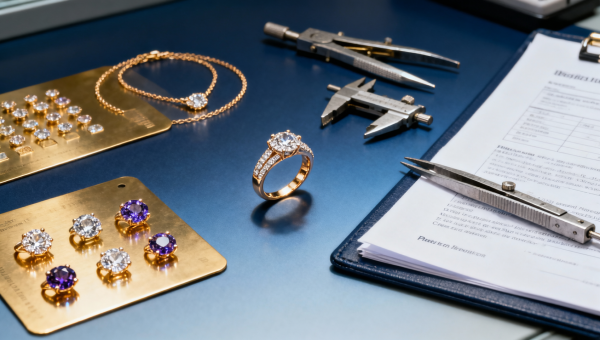
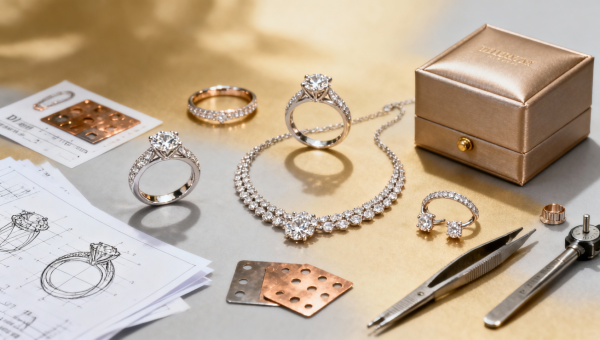
In 2026, custom jewelry design is no longer just a creative trend to admire from afar. For procurement teams, distributors, and brand decision-makers, it is becoming a practical sourcing signal: what styles will sell, which materials will hold margin, and how custom programs can support stronger differentiation in a crowded luxury market. The short answer is clear: the most important trends are not simply visual. They combine personalization, responsible sourcing, modular design, gender-fluid positioning, and better OEM/ODM execution. For B2B buyers evaluating custom luxury jewelry, custom jewelry with diamonds, and premium accessories for men and women, the real opportunity lies in choosing designs that balance aesthetics, manufacturability, brand fit, and commercial resilience.
What are B2B buyers really looking for in 2026 custom jewelry trends?
Most professional readers searching for 2026 custom jewelry design trends are not looking for runway commentary alone. They want to understand which directions are commercially viable and how those trends can be translated into sourcing decisions. In practical terms, buyers are asking four things:
- Which design directions are likely to attract premium consumers in 2026?
- Which trends can be customized efficiently for private label, OEM, or ODM programs?
- How can they judge quality, craftsmanship, and supplier capability before committing?
- Which product categories offer the best mix of differentiation, repeat demand, and margin protection?
That makes trend analysis especially relevant in the watches, jewelry, and eyewear space. A custom jewelry collection today may support boutique retail, hotel luxury retail corners, brand collaborations, gifting programs, or distributor portfolios. The strongest 2026 designs will be the ones that do more than look modern: they must also be scalable, story-driven, and operationally realistic.
Trend 1: Personalization is becoming the baseline, not the premium extra
One of the clearest shifts in custom jewelry design is that personalization is no longer a niche luxury feature. It is increasingly expected. Buyers are seeing demand for jewelry that reflects identity, milestones, relationships, and brand storytelling.
For B2B sourcing teams, this means custom programs should move beyond simple engraving. The market is responding better to layered personalization options such as:
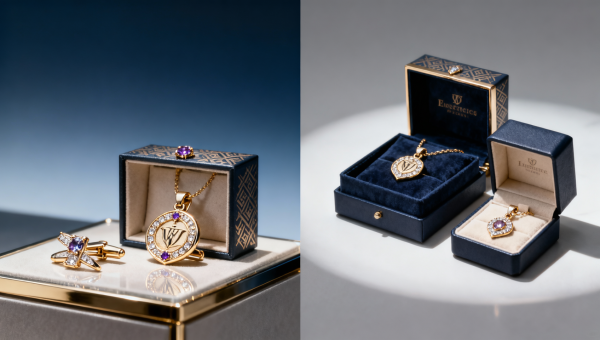
- Birthstones or meaningful gemstone selections
- Initials, coordinates, dates, and symbolic motifs
- Convertible components for different wearing styles
- Brand-specific icons adapted into fine or demi-fine jewelry
- Regional or cultural design customization for target markets
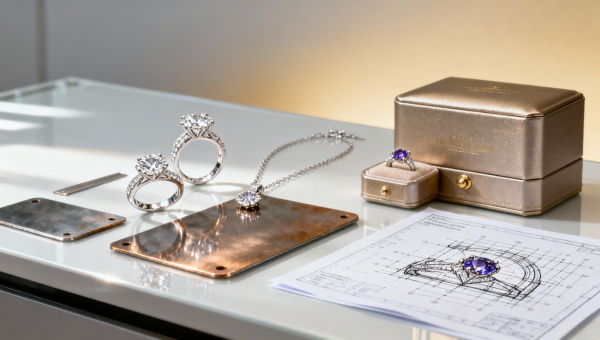
From a commercial standpoint, personalization works because it increases perceived exclusivity without always requiring a fully bespoke production model. Suppliers with flexible CAD development, mold management, and low-to-moderate MOQ customization are especially well positioned. For distributors and agents, this also creates a stronger pitch to downstream retailers who want exclusive assortments without developing collections from scratch.
Trend 2: Custom jewelry with diamonds is shifting toward smarter value positioning
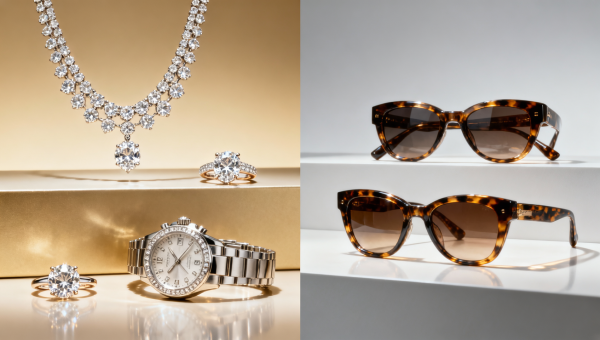
Diamonds remain central to high-end luxury jewelry, but the conversation in 2026 is becoming more nuanced. Buyers are increasingly evaluating not just diamond presence, but diamond strategy. That includes stone size, setting style, certification, origin transparency, and how diamonds are used to support overall design value.
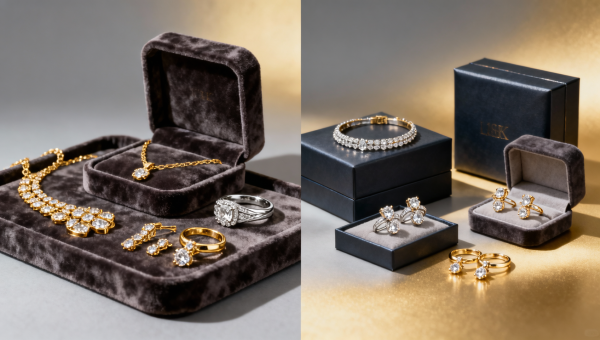
In custom jewelry with diamonds, several directions are gaining traction:
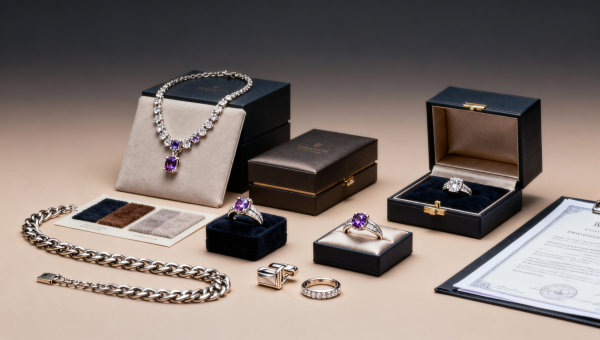
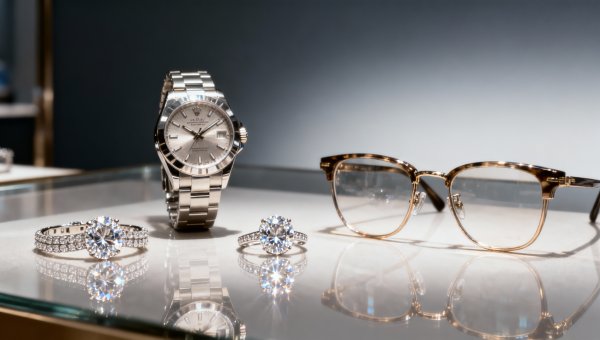
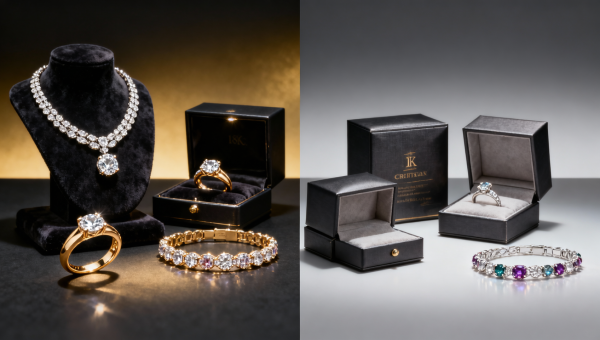
- Smaller, well-arranged stones that emphasize design sophistication over conspicuous size
- Mixed cuts and unexpected settings for a more contemporary visual signature
- Diamond accents paired with colored gemstones for stronger individuality
- Lab-grown diamond options for selected market segments and price architectures
- Clean, architectural settings that highlight craftsmanship and wearability
For procurement professionals, the key question is not whether diamond jewelry will remain relevant. It will. The more important issue is how to align diamond usage with target customer expectations and pricing strategy. In many markets, buyers are responding well to designs that feel refined and modern rather than purely status-driven. This creates room for collections that preserve luxury appeal while improving assortment flexibility.
Trend 3: Quiet luxury continues, but with stronger design identity
Quiet luxury is still shaping design language, but in 2026 it is evolving away from plain minimalism. The next stage is understated sophistication with recognizably intentional detail. Buyers should expect demand for pieces that feel exclusive without relying on oversized logos or excessive ornamentation.
This matters particularly for custom luxury jewelry programs serving premium retail, hospitality boutiques, and private-label channels. The most successful products often feature:
- Clean silhouettes with precise finishing
- Sculptural forms that look simple but require advanced craftsmanship
- Balanced use of precious metals and subtle stone placement
- Refined textures such as brushed gold, satin polish, or hand-finished surfaces
- Signature elements that are distinctive but not loud
For business evaluators, quiet luxury is attractive because it tends to age better than trend-heavy statement designs. It can support higher average selling prices, broader demographic appeal, and lower markdown risk. However, it also requires careful supplier assessment, because understated design exposes manufacturing flaws more easily than ornate styles do.
Trend 4: Gender-fluid and men’s luxury accessories are expanding the addressable market
One of the strongest commercial developments is the broadening of luxury jewelry beyond traditional women’s categories. Luxury accessories for men and gender-neutral buyers are becoming more important in both fashion-forward and classic markets.
In 2026, growth is expected in categories such as:
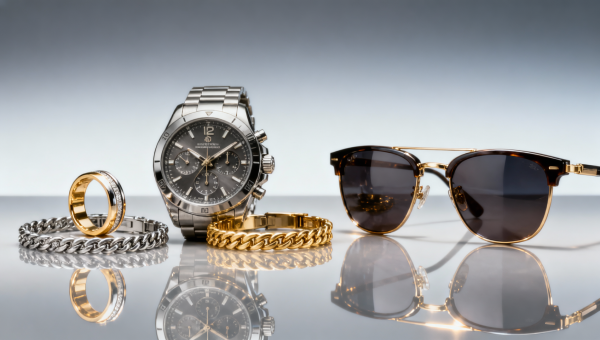
- Signet-inspired rings with modern engraving or gemstone accents
- Minimal cuffs, chains, and pendants designed for layered wear
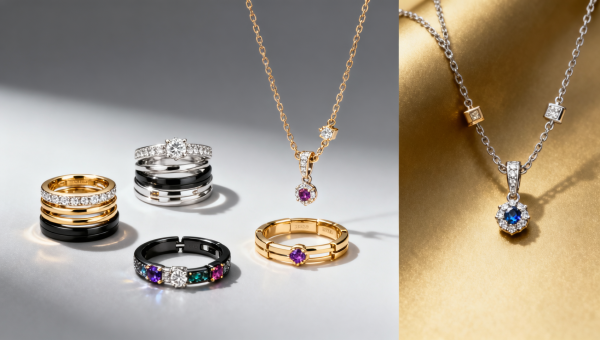
- Mixed-material pieces combining precious metals with leather, ceramic, titanium, or carbon fiber
- Unisex designs with modular sizing and styling
- Luxury jewelry that crosses into accessory gifting and executive positioning
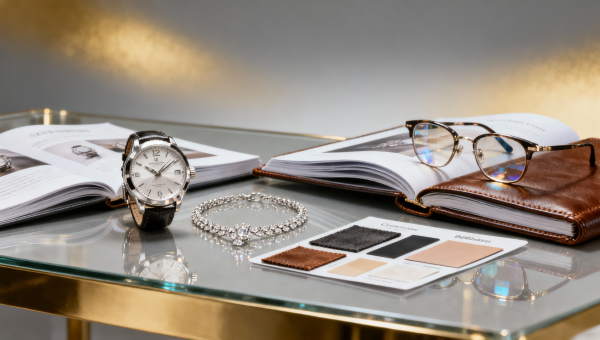
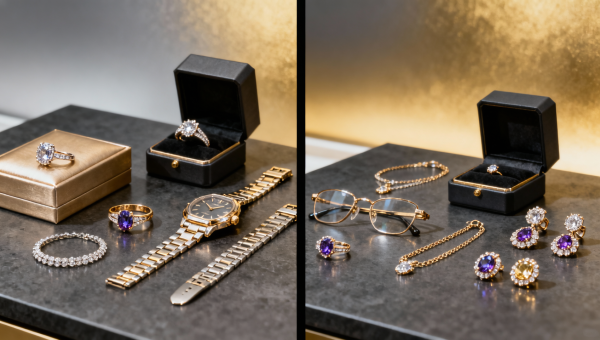
For distributors and sourcing teams, this is more than a style trend. It is a category expansion opportunity. Men’s and gender-fluid custom jewelry can diversify product mix, open corporate gifting channels, and create stronger cross-selling possibilities with watches, eyewear, and other luxury accessories. Suppliers that can develop masculine, unisex, and cross-category collections may offer better long-term partnership value than those focused narrowly on conventional women’s fine jewelry.
Trend 5: Color is returning through gemstones, enamel, and material contrast
After several cycles dominated by neutral precious metal looks, color is regaining importance. But the 2026 approach is more curated than purely exuberant. Instead of indiscriminate brightness, the market is favoring controlled color stories that support emotion, rarity, and collectability.
Areas to watch include:
- Colored gemstone capsules built around specific narratives or occasions
- Enamel accents used for modern heritage appeal
- Bi-color and tri-color metal combinations
- Black-and-gold, green-and-white, or deep blue contrasts for more editorial luxury positioning
- Seasonal custom programs with regional color preferences in mind
This trend matters commercially because color can refresh a collection without changing its structural design language too dramatically. For OEM/ODM development, that can mean lower development risk and faster adaptation to local markets. Buyers looking to test new assortments may find color-led customization more manageable than fully reinventing product architecture.
Trend 6: Responsible sourcing and traceability are becoming buying criteria, not marketing add-ons
In high-end jewelry, ethical claims are increasingly scrutinized. By 2026, many buyers will expect a clearer sourcing narrative covering metals, gemstones, labor standards, and production transparency. This is especially relevant for international distributors, procurement teams, and business evaluators who must assess supplier risk as well as product appeal.
Practical signals of a stronger supplier include:
- Clear disclosure on metal sourcing and recycled content where applicable
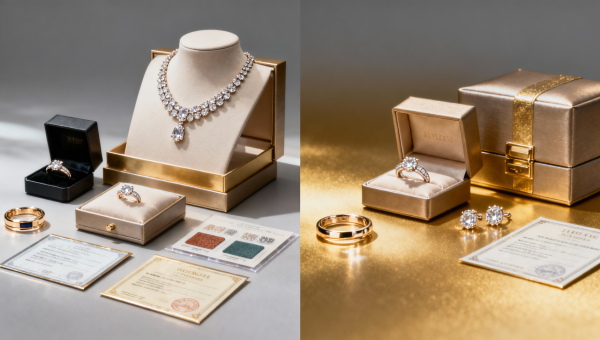
- Documentation related to gemstone origin or chain-of-custody processes
- Transparent use of natural versus lab-grown stones
- Stable manufacturing compliance systems
- Willingness to support customer due diligence with verifiable records
For buyers, responsible sourcing matters for two reasons. First, it affects brand trust and market acceptance. Second, it reduces reputational and operational risk. In luxury markets, sourcing credibility is increasingly tied to long-term business value. A beautiful product without traceability support may be harder to scale across premium channels.
Trend 7: Modular and versatile jewelry is winning because it supports repeat wear
Another major shift is toward jewelry that offers more than one styling outcome. End customers increasingly value versatility, and this preference is influencing custom jewelry development. Pieces that can convert, layer, detach, or adapt have stronger daily relevance and gifting appeal.
Examples include:
- Earrings with removable drops
- Pendants that can also function as charms
- Stackable ring systems
- Necklaces with adjustable lengths and interchangeable elements
- Brooch-inspired pieces that can attach to accessories or apparel
For B2B buyers, modularity can improve commercial performance in several ways. It increases perceived value, encourages collection-building, and supports upselling. It may also reduce assortment fatigue because one design platform can generate multiple SKUs. The key is ensuring that engineering, clasp quality, weight balance, and wear comfort are thoroughly validated during development.
How should buyers evaluate whether a trend is actually sourceable and profitable?
This is where many trend articles fall short. Knowing what is fashionable is useful, but buyers need a framework for deciding whether a trend can succeed in the real supply chain. When assessing custom luxury jewelry opportunities in 2026, consider the following criteria:
- Design-to-manufacturing fit: Can the design be produced consistently at the required quality level?
- Material risk: Are precious metal costs, gemstone sourcing, and lead times manageable?
- MOQ flexibility: Can the supplier support pilots, regional exclusives, or staged rollouts?
- Customization depth: Is the supplier offering true development capability or only surface-level variation?
- Quality assurance: Are stone setting, finishing, plating, and structural integrity properly controlled?
- Brand compatibility: Does the style fit the target customer and channel positioning?
- Margin logic: Is there enough perceived value to protect pricing and distributor economics?
Buyers should also request samples, development timelines, stone specifications, and metal details early in the process. A supplier that communicates well during prototype development is often a better long-term partner than one that only presents attractive visuals.
What sourcing risks should procurement teams watch in custom jewelry projects?
Trend-driven sourcing can create costly mistakes if buyers focus only on aesthetics. In custom jewelry, the most common risks usually appear in execution rather than concept. These include:
- Overly complex designs that are difficult to manufacture consistently
- Weak stone setting quality in custom jewelry with diamonds or colored gemstones
- Unclear plating standards or finish durability
- Long lead times caused by unstable gemstone or metal sourcing
- Poor sample-to-production consistency
- Insufficient documentation for compliance or origin claims
- Customization offers that are too limited to create true market differentiation
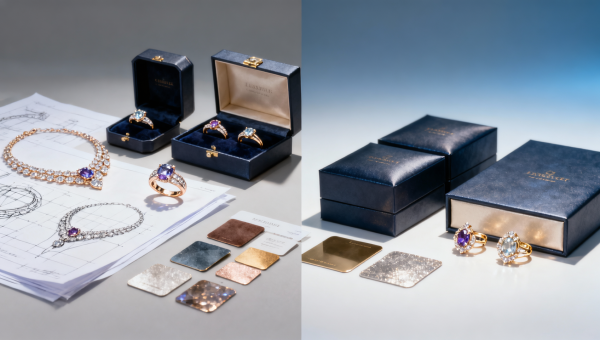
The best way to reduce these risks is through structured supplier evaluation. Review past project cases, sample quality, communication speed, technical drawings, CAD ability, and inspection processes. For larger programs, pilot orders are often more informative than presentations or catalogs.
Where is the strongest business value likely to come from in 2026?
For most commercial buyers, the strongest value will come from custom jewelry programs that combine three elements: distinctive but wearable design, flexible customization, and dependable production quality. That is especially true in segments where brands and distributors need differentiation without excessive inventory risk.
In practical terms, the highest-value opportunities are likely to include:
- Private-label collections with personalized storytelling
- Custom luxury jewelry capsules designed for premium retail or hospitality channels
- Diamond and gemstone programs with transparent positioning and modern styling
- Men’s and unisex luxury accessories with strong gifting potential
- Modular pieces that support repeat purchase and collection expansion
Suppliers that can combine design insight with OEM/ODM execution, material transparency, and low-friction communication will stand out. In a market where many products appear similar on the surface, operational reliability becomes part of the luxury value proposition.
Conclusion: the 2026 winners will balance style, customization, and sourcing discipline
The most important takeaway for 2026 is that custom jewelry design trends should not be viewed only as creative inspiration. For procurement professionals, distributors, and business evaluators, they are decision signals. The trends worth watching most closely are those that align customer desire with sourcing practicality: advanced personalization, smarter diamond use, quiet luxury with identity, growth in men’s and gender-fluid luxury accessories, curated color, responsible sourcing, and modular versatility.
If you are evaluating custom jewelry suppliers or planning a new collection, the right question is not simply “What is trending?” It is “Which trends can deliver long-term brand value, healthy margins, and reliable execution?” The businesses that answer that well will be in the strongest position to win in high-end luxury jewelry in 2026.
Search News
Hot Articles
- Pro Stage AudioFIFA Adopts Chinese Mini-LED Displays for 2026 World Cup VAR SystemApr 24, 2026
- Outdoor RidesChina FA Warns Nanjing City Over Fan Conduct; ISO 20785 Compliance AcceleratesApr 24, 2026
- Pro Stage AudioFan Zhendong Visits Silicon Valley as MLTT Investor, AI Ping-Pong Tech Draws US InterestApr 24, 2026
Popular Tags
Need ExpertConsultation?
Connect with our specialized leisureengineering team for procurementstrategies.
Recommended News
 Apr 23, 2026Texas Launches PFAS Probe Against Lululemon, Export Compliance Risks RisePFAS probe against Lululemon in Texas escalates export compliance risks for sportswear ODMs, testing labs & chemical suppliers — act now.● Luxury Retail Analyst
 Apr 21, 2026FDA Proposes Chinese Label Translation Requirement for Sports SupplementsFDA proposes Chinese label translation requirements for sports supplements—learn how protein powders, BCAAs & creatine brands can prepare for Q3 2026 compliance.● Luxury Retail Analyst
 Apr 21, 2026CPSC Urgent Alert: PFAS in Fitness Apparel Risks US Import DelaysPFAS in fitness apparel triggers CPSC alerts—avoid US import delays! Get CPSC-recognized PFAS testing, compliance tips & port detention prevention now.● Luxury Retail Analyst
 Apr 20, 2026US CPSC Alert: PFAS in Fitness Apparel May Delay US Import ClearancePFAS in fitness apparel may delay US import clearance—learn how the Texas AG probe & CPSC alert impact compliance, testing, and supply chains now.● Luxury Retail Analyst
 Apr 15, 2026FDA Updates Guidelines for Sports Nutrition Supplement Labels: Chinese Translations Must Be FDA-CertifiedFDA now requires Chinese translations on sports nutrition supplement labels to be FDA-certified. Learn how this impacts manufacturers, importers, and compliance timelines for US market access.● Luxury Retail Analyst
 Apr 14, 2026Japan Updates Jewelry Labeling Rules: Mandatory China Factory Codes from April 2026Japan's new jewelry labeling rules mandate 'Country of Origin + China Factory Code' (CN-FAC-XXXXX) from April 2026. Learn how this impacts Chinese exporters and Japanese importers in the $2.1B precious metals market.● Luxury Retail Analyst
 Apr 14, 2026RCEP Tariff Cuts Boost China's Optical Lens Exports to ASEANRCEP tariff cuts boost China's optical lens exports to ASEAN with 0% duties on CR-39 & polycarbonate lenses. Learn how this + faster logistics create new trade opportunities.● Luxury Retail Analyst
 Apr 14, 2026US CPSC Proposes Stricter Lead Limits in Children's Jewelry, Impacting Chinese ExportersUS CPSC proposes stricter lead limits (40ppm) in children's jewelry, impacting Chinese exporters with new compliance challenges. Learn how this 2026 regulation affects manufacturers & supply chains.● Luxury Retail Analyst
 Apr 14, 2026EU's Revised EN 14138:2026 Eyewear Nickel Standard Takes Effect, Impacting Chinese ExportersEU's EN 14138:2026 eyewear standard tightens nickel limits to 0.2μg/cm²/week, impacting Chinese exporters. Learn compliance strategies for EU market access.● Luxury Retail Analyst
 Apr 25, 2026Luxury Jewelry B2B in 2026: What Changes?Luxury jewelry B2B in 2026: explore custom jewelry design, custom jewelry manufacturer trends, luxury jewelry wholesale shifts, and how custom luxury jewelry drives faster, safer growth.● Luxury Retail Analyst
 Apr 25, 2026How to Grow a Luxury Accessories Online StoreLearn how to grow a luxury accessories online store with custom jewelry design, a trusted custom jewelry manufacturer, luxury accessories wholesale strategy, and high-end luxury jewelry that converts.● Luxury Retail Analyst
 Apr 25, 2026Custom Jewelry for Corporate Gifts That LastCustom jewelry for corporate gifts from a trusted custom jewelry manufacturer—discover custom jewelry design, high-end luxury jewelry, and scalable luxury jewelry B2B solutions.● Luxury Retail Analyst
 Apr 25, 2026What a Good Luxury Accessories Catalog IncludesLuxury accessories catalog guide covering custom jewelry design, high-end luxury jewelry, luxury accessories for men and women, and trusted luxury jewelry B2B sourcing insights.● Luxury Retail Analyst
 Apr 27, 2026Luxury Jewelry Manufacturer: Red Flags to KnowLuxury jewelry manufacturer warning signs every B2B buyer should know. Learn how to evaluate custom jewelry design, custom luxury jewelry, and luxury jewelry wholesale partners before costly mistakes.● Luxury Retail Analyst
 Apr 27, 2026Custom Jewelry for Weddings: Timeline GuideCustom jewelry for weddings made simple: learn timelines for custom jewelry design, choosing a custom jewelry manufacturer, and planning custom luxury jewelry with diamonds.● Luxury Retail Analyst
 Apr 27, 2026Luxury Jewelry Wholesale for New DistributorsLuxury jewelry wholesale guide for new distributors: compare custom jewelry manufacturer options, custom jewelry design support, and luxury jewelry B2B strategies to launch faster.● Luxury Retail Analyst
 Apr 27, 2026Custom Luxury Jewelry: OEM or Small Batch?Custom luxury jewelry sourcing guide: compare OEM vs small-batch with a custom jewelry manufacturer for custom jewelry design, cost control, quality, and scalable luxury jewelry B2B growth.● Luxury Retail Analyst
 Apr 27, 2026How to Price High-End Luxury Jewelry RightCustom jewelry design and high-end luxury jewelry pricing guide for B2B buyers—learn how a custom jewelry manufacturer sets value, margins, and wholesale strategy.● Luxury Retail Analyst
 Apr 27, 2026Luxury Accessories for Women by Price TierLuxury accessories for women by price tier: compare high-end luxury jewelry, luxury jewelry wholesale, and custom luxury jewelry from a trusted custom jewelry manufacturer for smarter B2B sourcing.● Luxury Retail Analyst
 Apr 27, 2026Luxury Accessories for Men: Classic or Trendy?Luxury accessories for men: classic or trendy? Explore custom jewelry design, high-end luxury jewelry, and how a luxury jewelry manufacturer helps buyers source smarter for growth.● Luxury Retail Analyst
 Apr 27, 2026How to Compare Custom Jewelry ManufacturersCompare every custom jewelry manufacturer with confidence. Learn how custom jewelry design, compliance, craftsmanship, MOQ, and luxury jewelry wholesale capabilities impact quality and growth.● Luxury Retail Analyst
 Apr 27, 20262026 Custom Jewelry Design Trends to WatchExplore 2026 custom jewelry design trends shaping B2B buying, from custom luxury jewelry and diamonds to luxury accessories for men and women with smarter sourcing insights.● Luxury Retail Analyst
 Apr 27, 2026Luxury Jewelry B2B: What Buyers Need FirstLuxury jewelry B2B starts with trust. Learn how a custom jewelry manufacturer supports custom jewelry design, luxury jewelry wholesale, and scalable high-end luxury jewelry sourcing.● Luxury Retail Analyst
 Apr 27, 2026How Luxury Brands Source Jewelry CollectionsCustom jewelry design and custom jewelry manufacturer insights for luxury brands: learn how high-end luxury jewelry, wholesale sourcing, and compliant supply chains drive profitable collections.● Luxury Retail Analyst