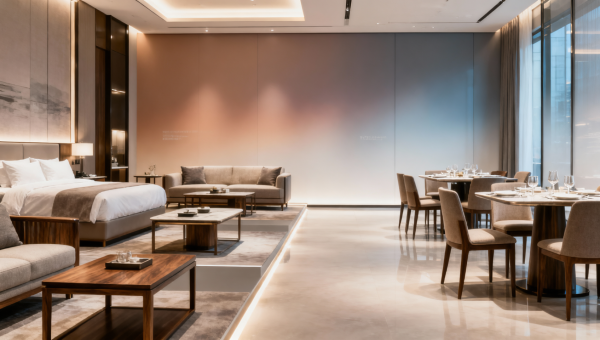
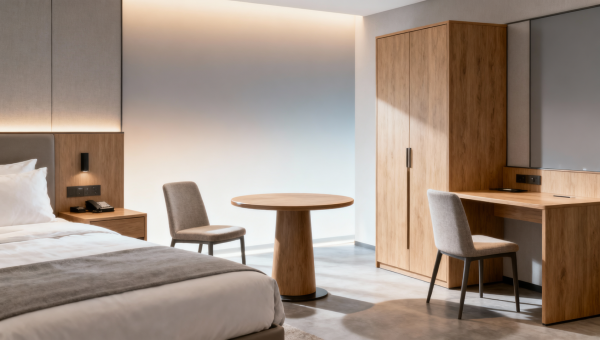
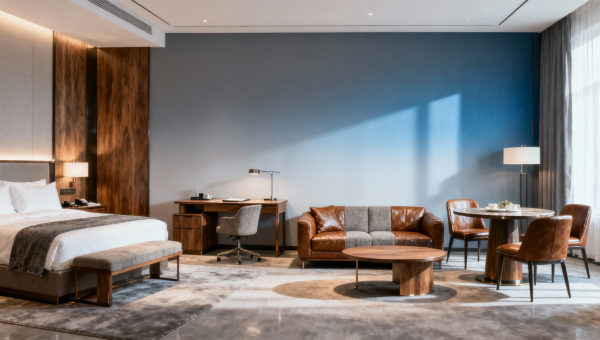
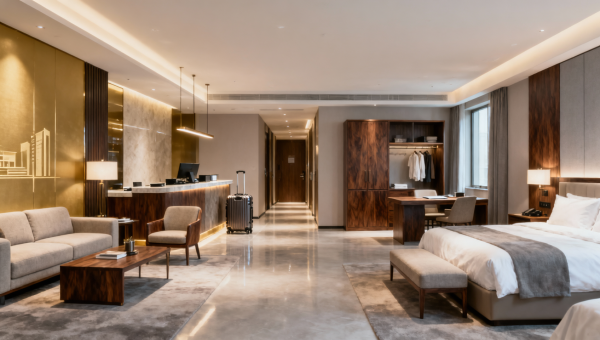
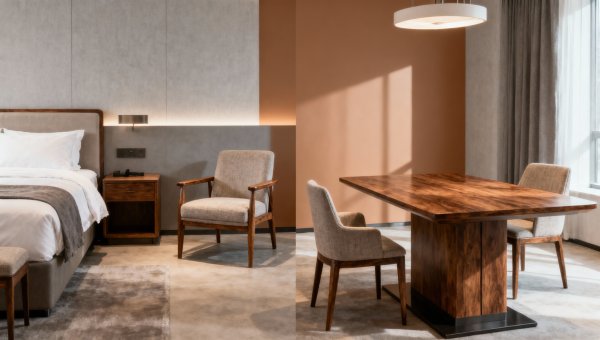
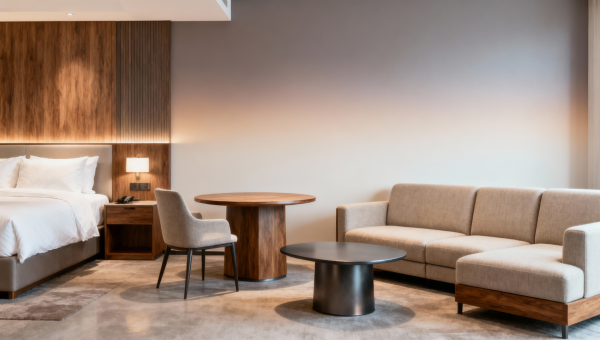
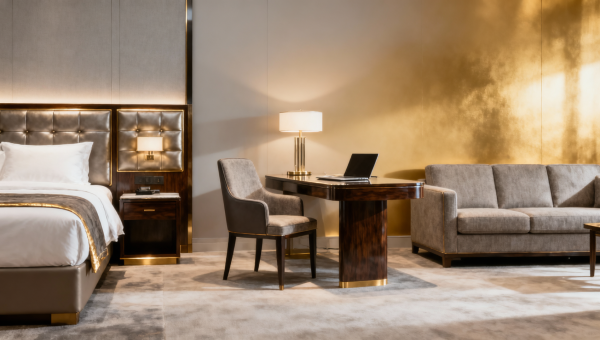
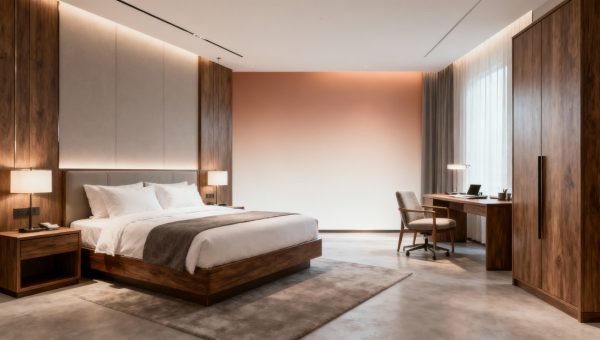
Hotel Furniture Replacement Cycles Are Changing in 2026
In 2026, hotel furniture replacement cycles are no longer following the old “replace everything every 5–7 years” logic. Operators are extending the life of some categories, accelerating upgrades in others, and making more segmented decisions based on guest impact, maintenance costs, brand positioning, and capital efficiency. For procurement teams, distributors, and commercial researchers, the key shift is this: hotel beds, hotel chairs, hotel tables, luxury furniture, and custom furniture are now being evaluated by performance and revenue contribution, not just age. That change is influencing sourcing decisions across the wider hotel equipment market and even adjacent outdoor and leisure categories such as park benches and amusement equipment.
Why hotel furniture replacement cycles are changing in 2026
The biggest reason is that hotel operators are under pressure from both sides. On one side, guests expect fresher, more comfortable, more design-conscious interiors. On the other, owners want tighter capex control, stronger ROI, and fewer unnecessary full-property replacements.
As a result, replacement timing is becoming more selective. High-touch, guest-visible items are being upgraded faster, while durable back-of-house or lower-impact pieces may remain in service longer. Instead of asking, “How old is this furniture?” buyers are asking, “Is this item still supporting brand standards, operational efficiency, and guest satisfaction?”
Several forces are driving this shift:
- Higher guest expectations: Guests notice mattress comfort, seating ergonomics, visible wear, finish quality, and charging-friendly furniture layouts more quickly than before.
- Lifecycle cost scrutiny: Buyers are comparing repair frequency, warranty performance, replacement part access, and cleaning durability.
- Brand differentiation: Hotels want furniture that reinforces a lifestyle, luxury, wellness, or smart-hospitality positioning.
- Supply chain learning: After years of sourcing disruption, procurement teams now prefer replacement planning that reduces emergency buying.
- Sustainability pressure: Asset life extension, refurbishable designs, recyclable materials, and lower-waste custom furniture programs are getting more attention.
What procurement teams and commercial buyers care about most
For target readers such as sourcing researchers, procurement managers, business evaluators, and channel partners, the main concern is not simply trend awareness. It is decision quality. They want to know when replacement is actually justified, where budget should go first, and how to avoid overspending on low-impact upgrades.
In practice, these buyers usually focus on five questions:
- Which furniture categories should be replaced sooner in 2026?
- Which categories can safely run longer without hurting guest experience or operating costs?
- How should ROI be measured for hotel furniture replacement?
- When does custom furniture create value, and when does it create unnecessary complexity?
- How can suppliers and distributors prove durability, compliance, and consistency at scale?
This means the most useful content is practical guidance: category-by-category replacement logic, sourcing criteria, risk signals, and commercial evaluation frameworks. Generic design commentary or broad statements about “industry innovation” are much less helpful unless they connect directly to purchasing decisions.
Which hotel furniture categories are being replaced faster
Not all furniture is moving on the same cycle. In 2026, faster replacement tends to happen in categories that directly affect sleep quality, first impressions, online reviews, and visible brand perception.
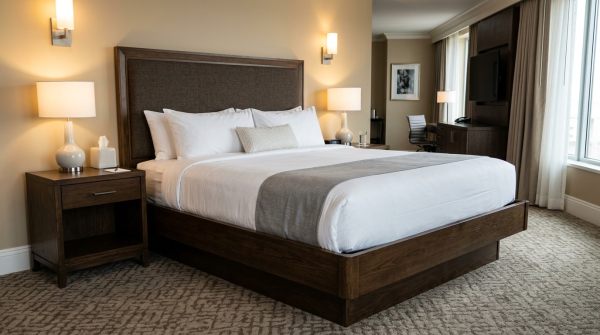
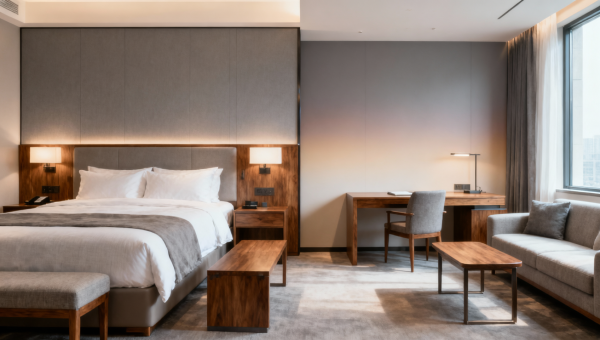
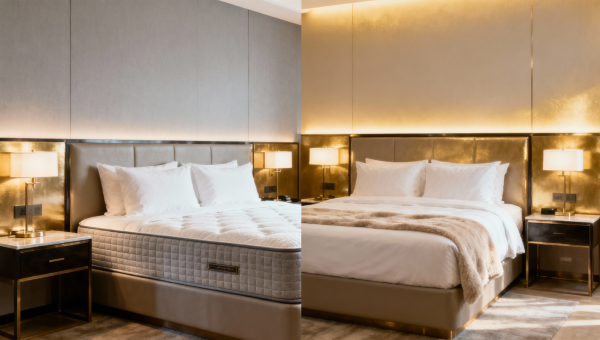
Hotel beds are one of the clearest examples. Mattress performance, sleep comfort, hygiene expectations, and sagging complaints have a direct guest-experience impact. Even where bed bases or headboards remain structurally sound, hotels may replace mattresses, upholstered components, or integrated tech features earlier than before.
Hotel chairs in guestrooms, lobbies, and food-service spaces are also under closer review. Upholstery wear, instability, scratches, stain retention, and poor ergonomics can age a property visually even if the rest of the room remains acceptable. Chairs often face heavy use and are now seen as both functional and image-critical assets.
Hotel tables in guestrooms, restaurants, and public areas are another category where replacement can accelerate, especially when old designs no longer support flexible guest behavior. Surfaces that scratch easily, laminate edges that fail, and layouts that do not support device charging or multi-use work-leisure habits become liabilities.
Luxury furniture in upper-tier hotels may move on an even faster aesthetic cycle, not because it fails structurally, but because premium brands compete through freshness, exclusivity, and design relevance. In this segment, perceived aging matters almost as much as physical wear.
Which categories may have longer replacement cycles
At the same time, 2026 is not only about faster replacement. It is also about smarter extension. Items with solid structural performance, lower guest visibility, or easier refurbishment may stay in service longer when supported by maintenance and component replacement.
This can include:
- Casegoods with durable substrates and repairable finishes
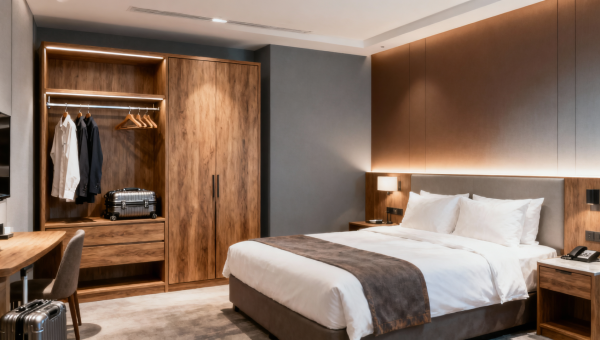
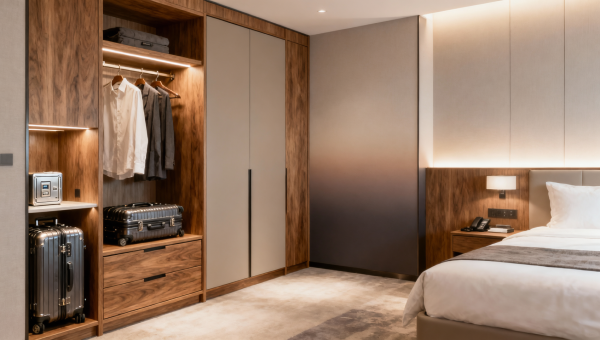
- Modular wardrobe or storage systems that can be resurfaced
- Outdoor furniture frames that support cushion-only refresh cycles
- Selected public-area pieces where upholstery, tops, or hardware can be renewed instead of replacing the entire unit
This is where spec quality matters. Furniture designed for maintenance access, component replacement, and commercial cleaning resistance often justifies longer cycles. For buyers, this supports a more balanced capex strategy: replace what guests notice most, extend what still performs well, and phase the program instead of forcing a full-property overhaul.
How to judge the right replacement timing instead of relying on old rules
The old calendar-based model is becoming less useful on its own. A better approach combines age with condition, usage intensity, guest feedback, and revenue relevance.
Procurement and evaluation teams should build a replacement scorecard around these factors:
- Guest impact: Does the item influence comfort, reviews, or brand perception?
- Operational burden: How often does it require repair, deep cleaning, or staff intervention?
- Safety and compliance: Are there issues related to fire standards, structural stability, or material performance?
- Visual aging: Does it make the property feel dated even if still usable?
- Total cost of ownership: Is ongoing maintenance now less efficient than replacement?
- Supply continuity: Can matching parts or finishes still be sourced?
A hotel furniture asset that scores high in guest impact and high in maintenance burden should move to the front of the replacement queue. One with low guest visibility and low service cost may remain in use longer, especially if refurbishment is possible.
How ROI is being calculated in 2026 hotel furniture decisions
ROI in hotel furniture replacement is no longer limited to purchase price versus useful life. Buyers increasingly evaluate direct and indirect returns.
Direct ROI includes:
- Reduced maintenance and repair costs
- Lower housekeeping difficulty or cleaning time
- Longer warranty-backed service intervals
- Better space utilization and operational flexibility
Indirect ROI includes:
- Better guest review performance
- Higher perceived room value
- Stronger brand consistency across locations
- Potential ADR support in competitive markets
- Lower reputational risk from visibly aging interiors
For business evaluators, the most important shift is that replacement is increasingly justified by performance outcomes, not only by depreciation schedules. A property may delay replacement if furniture remains commercially effective, or accelerate it if aging interiors are undermining revenue performance.
When custom furniture programs make sense
Custom furniture programs are gaining strategic relevance in 2026, but they are not automatically the right choice for every hotel project. They make the most sense when operators need one or more of the following:
- Brand-specific design language across multiple properties
- Space optimization for unusual room layouts
- Material or finish alignment with a luxury positioning
- Integrated functional features such as concealed charging, storage efficiency, or durable hospitality-grade detailing
- Better lifecycle control through standardized components and approved vendor networks
However, custom furniture also introduces risks: longer lead times, more sampling rounds, tighter quality-control requirements, and potential challenges in future matching or replenishment. For many buyers, the smart middle path is semi-custom sourcing: standardized structures with controlled finish, upholstery, or dimension adjustments.
This model can offer a better balance of differentiation, speed, and replacement consistency across hotel portfolios.
What suppliers, distributors, and sourcing partners need to prove
For distributors, agents, and manufacturers serving the hotel furniture market, 2026 creates opportunity, but buyers are becoming more demanding. It is no longer enough to present attractive catalogs. Commercial buyers want evidence.
The most persuasive supplier signals now include:
- Commercial project references in hospitality environments
- Testing and compliance documentation
- Material durability data and warranty clarity
- OEM/ODM capability for hotel group requirements
- Finish consistency across batches and replenishment orders
- Packaging and logistics reliability for global project rollouts
- Ability to support phased replacement rather than only full installations
This matters not only for hotel beds, hotel chairs, and hotel tables, but also for adjacent categories in broader commercial environments. Buyers comparing hotel equipment, outdoor park benches, or even certain amusement equipment programs are increasingly using the same logic: durability, maintenance profile, safety, design fit, and lifecycle value.
How broader commercial sourcing trends are influencing hotel furniture buying
One important market development is cross-category thinking. Procurement teams are learning from other commercial sectors where lifecycle planning has long been standard. Outdoor seating, public-space fixtures, and leisure environment equipment are often purchased with closer attention to weather resistance, vandal resistance, modularity, and replacement-part availability.
That mindset is influencing hospitality sourcing. Hotels are now more open to furniture specifications that emphasize:
- Modular replacement instead of full-unit disposal
- Stronger finish performance in high-use areas
- Easy-clean materials for labor efficiency
- Hybrid indoor-outdoor flexibility in resort environments
- Standardized procurement across multiple property types
For researchers and sourcing analysts, this is a key insight: hotel furniture replacement cycles are not changing in isolation. They are part of a broader commercial purchasing shift toward measurable asset performance and lifecycle optimization.
Practical buying advice for 2026 hotel furniture planning
If you are evaluating a sourcing or replacement strategy this year, focus less on blanket timelines and more on prioritization. A practical process looks like this:
- Audit by category: Separate hotel beds, hotel chairs, hotel tables, casegoods, lounge pieces, and outdoor items.
- Score by guest impact and operating burden: Replace what is both visible and costly to maintain.
- Compare replacement versus refurbishment: Do not assume full renewal is always the best option.
- Review standard versus custom furniture paths: Use custom only where brand or space value is clear.
- Validate supplier support: Ask about replenishment, matching capability, QC controls, and commercial references.
- Phase capex intelligently: Align faster-cycle categories with shorter refresh windows and slower-cycle categories with condition-based planning.
This approach helps procurement teams make better decisions under budget pressure while still protecting guest experience and asset value.
Conclusion
Hotel furniture replacement cycles are changing in 2026 because the market has moved beyond fixed schedules. Today, the right replacement decision depends on guest-facing impact, maintenance burden, lifecycle economics, brand positioning, and sourcing reliability. Hotel beds, hotel chairs, hotel tables, luxury furniture, and custom furniture programs now need to be evaluated as strategic commercial assets, not just room contents.
For procurement professionals, business evaluators, and channel partners, the clearest takeaway is simple: replace faster where furniture affects revenue, reviews, and brand perception; extend longer where performance remains strong; and choose suppliers who can support lifecycle value, not just initial delivery. That is the mindset shaping smarter hotel equipment sourcing in 2026 and beyond.
Search News
Hot Articles
- Stage Lighting & Truss2026 FIBA Women's World Cup Draw Sparks LED Timing Screen Upgrade DemandApr 28, 2026
- Pro Stage AudioKenyan Marathon WR Break Drives Demand for Timing Chips & Track SensorsApr 28, 2026
- Smart Campus Tech2026 Shanghai Smart Campus Expo: VR Teaching Devices Gain ITU & ISO/IEC 23053 CertificationApr 28, 2026
Popular Tags
Need ExpertConsultation?
Connect with our specialized leisureengineering team for procurementstrategies.
Recommended News
 Apr 28, 2026Iranian Delegation at Sanya Asian Beach Games Spurs Halal-Certified Hardware DemandHalal-certified hardware demand surges after Iranian delegation’s cultural showcase at Sanya Asian Beach Games—key for GCC event tech exporters.● Hospitality Sourcing Dir
 Apr 27, 2026Iranian Delegation’s Ritual Gesture at Sanya ASG Sparks Mideast Hospitality Procurement ShiftIranian delegation's ritual gesture at Sanya ASG sparks Middle East hospitality procurement shift—key for hotel amenities, travel services & cultural compliance.● Hospitality Sourcing Dir
 Apr 28, 2026Cheap Hotel Furniture Can Raise Costs Later in Unexpected WaysHotel furniture buying guide: compare hotel beds, hotel chairs, hotel tables, custom furniture and luxury furniture to avoid hidden costs and choose durable hotel equipment.● Hospitality Sourcing Dir
 Apr 28, 2026Hotel Furniture Replacement Cycles Are Changing in 2026Hotel furniture trends for 2026: discover smarter replacement cycles for hotel beds, hotel chairs, hotel tables, luxury furniture, and custom furniture to boost ROI and guest appeal.● Hospitality Sourcing Dir
 Apr 28, 2026Why Do Some Hotel Beds Get Complaints Faster Than Others?Hotel beds complaints often start with poor specs, not looks. Learn how hotel furniture, custom furniture, luxury furniture, hotel chairs, hotel tables, and hotel equipment affect guest satisfaction.● Hospitality Sourcing Dir
 Apr 28, 2026Hotel Beds: Which Frame and Mattress Setup Lasts Longer?Hotel beds guide: compare frame and mattress setups that last longer, with insights on hotel furniture, custom furniture, luxury furniture, hotel chairs and hotel tables.● Hospitality Sourcing Dir
 Apr 27, 2026Is Luxury Jewelry for Hotels a Smart Investment?Luxury jewelry for hotels: see how a custom jewelry manufacturer helps hotels turn custom luxury jewelry into brand value, guest appeal, and profitable luxury jewelry B2B growth.● Hospitality Sourcing Dir
 Apr 21, 2026Open or closed hotel wardrobes for easier housekeeping?Hotel wardrobes affect housekeeping speed, guest appeal, and hospitality procurement. Compare open vs closed designs for hotel furniture, luxury furniture, and hotel room furniture planning.● Hospitality Sourcing Dir
 Apr 21, 2026Hotel wardrobes that fit luggage without wasting spaceHotel wardrobes that fit luggage smartly without wasting space—explore hotel furniture solutions that elevate hotel room furniture, support hospitality procurement, and enhance guest comfort.● Hospitality Sourcing Dir
 Apr 21, 2026Why hotel room furniture wears unevenly after openingHotel furniture wear starts unevenly from day one. Learn how hotel beds, hotel chairs, hotel desks and hotel room furniture perform in real use, with smart hospitality procurement tips.● Hospitality Sourcing Dir
 Apr 21, 2026Hotel room furniture packages that cut design mismatchHotel room furniture packages align hotel furniture, hotel beds, hotel chairs, hotel tables, and hotel desks with luxury furniture standards—reducing design mismatch and speeding hospitality procurement.● Hospitality Sourcing Dir
 Apr 21, 2026Low seat or deep seat hotel sofas for modern lobbies?Hotel furniture buyers compare low seat and deep seat hotel sofas for modern lobbies. Explore luxury furniture choices that improve comfort, traffic flow, brand image, and hospitality procurement value.● Hospitality Sourcing Dir
 Apr 21, 2026Hotel sofas that keep their shape in high traffic areasHotel sofas, hotel furniture, and hospitality furniture that keep shape in high-traffic areas—discover luxury furniture sourcing tips, durable commercial furniture specs, and smarter hospitality procurement.● Hospitality Sourcing Dir
 Apr 21, 2026Why hospitality furniture needs different specs by zoneHospitality furniture specs vary by zone. Learn how hotel furniture, hotel beds, hotel chairs, hotel tables, and hotel desks improve durability, ROI, and luxury guest experience.● Hospitality Sourcing Dir
 Apr 21, 2026Hospitality furniture that supports faster room turnoverHospitality furniture that speeds room turnover: compare hotel beds, hotel chairs, hotel tables, hotel desks and hotel sofas for easier cleaning, durability, and smarter hospitality procurement.● Hospitality Sourcing Dir
 Apr 21, 2026Where hotel equipment budgets usually go off trackHotel furniture and hotel equipment budgets often fail from hidden scope, logistics, and lifecycle costs. Learn smarter hospitality procurement for hotel beds, chairs, tables, and luxury furniture.● Hospitality Sourcing Dir
 Apr 21, 2026Hotel equipment upgrades that improve guest flow firstHotel equipment upgrades improve guest flow fast with hotel furniture, hotel beds, hotel chairs, catering equipment, and soundproofing materials—boost comfort, efficiency, and procurement ROI.● Hospitality Sourcing Dir
 Apr 21, 2026What shortens the life of commercial furniture in hotelsHotel furniture and commercial furniture wear out fast when hotel beds, hotel chairs, hotel tables, hotel desks, and hotel sofas face heavy use, poor maintenance, and weak materials. Learn smart hospitality procurement tips.● Hospitality Sourcing Dir
 Apr 21, 2026Commercial furniture trends hotels are actually adoptingCommercial furniture trends hotels are adopting: luxury furniture, hotel beds, hotel chairs, hotel tables and hotel sofas that improve hotel furniture sourcing, durability, and hospitality procurement value.● Hospitality Sourcing Dir
 Apr 21, 2026How to spot hotel furniture built for daily wearHotel furniture buying guide: learn how to assess hotel beds, hotel chairs, hotel tables, and hospitality furniture for daily wear, lower maintenance, and smarter hospitality procurement.● Hospitality Sourcing Dir
 Apr 21, 2026Hotel furniture mistakes that age a room too quicklyHotel furniture buying guide: avoid costly hotel beds, hotel chairs, and hotel room furniture mistakes. Discover luxury furniture tips for durable, brand-right hospitality procurement.● Hospitality Sourcing Dir
 Apr 21, 2026Why some soundproofing materials fail after installationLearn why soundproofing materials fail after installation in hotel furniture projects. Explore hotel beds, hotel sofas, hotel wardrobes and hospitality procurement tips for lasting acoustic performance.● Hospitality Sourcing Dir
 Apr 21, 2026Soundproofing materials that work best between guest roomsSoundproofing materials for hotel furniture projects: discover the best systems between guest rooms, from mineral wool to acoustic doors, to improve comfort, protect reviews, and support hospitality procurement.● Hospitality Sourcing Dir
 Apr 21, 2026How firm should hotel beds be for mixed guest profiles?Hotel beds for mixed guest profiles: learn how hotel furniture and hospitality procurement teams balance comfort, durability, and luxury furniture standards to improve guest satisfaction.● Hospitality Sourcing Dir