Soundproofing materials that work better than thicker walls
Thicker walls do not always deliver better acoustic control. For technical evaluators comparing performance, cost, and installation efficiency, the right soundproofing materials can outperform mass alone by targeting vibration, resonance, and airborne noise more precisely. This article explores practical material options that help commercial spaces achieve quieter, more functional environments without relying on bulky wall construction.
In commercial procurement, acoustic decisions affect more than comfort. They shape guest satisfaction in hotels, speech privacy in offices and campuses, sound isolation in leisure venues, and listening quality in pro audio environments. For teams assessing build specifications, the question is rarely whether to reduce noise, but which soundproofing materials deliver the best balance of decibel reduction, fire safety, structural compatibility, and lifecycle cost.
Global buyers and technical evaluators also face practical limits: wall thickness may be capped by rentable floor area, retrofit schedules may allow only 7–21 days of installation, and imported systems must align with local compliance and maintenance realities. That is why material selection matters more than simply adding mass. The most effective assemblies combine density, decoupling, absorption, and damping in ways that thicker masonry alone cannot match.
Why thicker walls often underperform in commercial acoustic design
A thicker wall can improve sound reduction, but only to a point. If the assembly still has rigid connections, untreated cavities, or resonant surfaces, noise can travel through studs, slab edges, duct penetrations, and façade junctions. In many projects, 1 weak path can reduce the benefit of an otherwise heavy wall by 5–10 dB, which is enough to change a room from acceptable to problematic.
Technical evaluators should separate airborne noise, impact noise, and structure-borne vibration. A banquet hall beside a guest suite, for example, may require control of amplified music below 125 Hz as well as speech frequencies between 500 Hz and 2 kHz. Simply increasing wall thickness may help mid-frequency transmission, yet it often does little for low-frequency vibration unless damping and isolation layers are included.
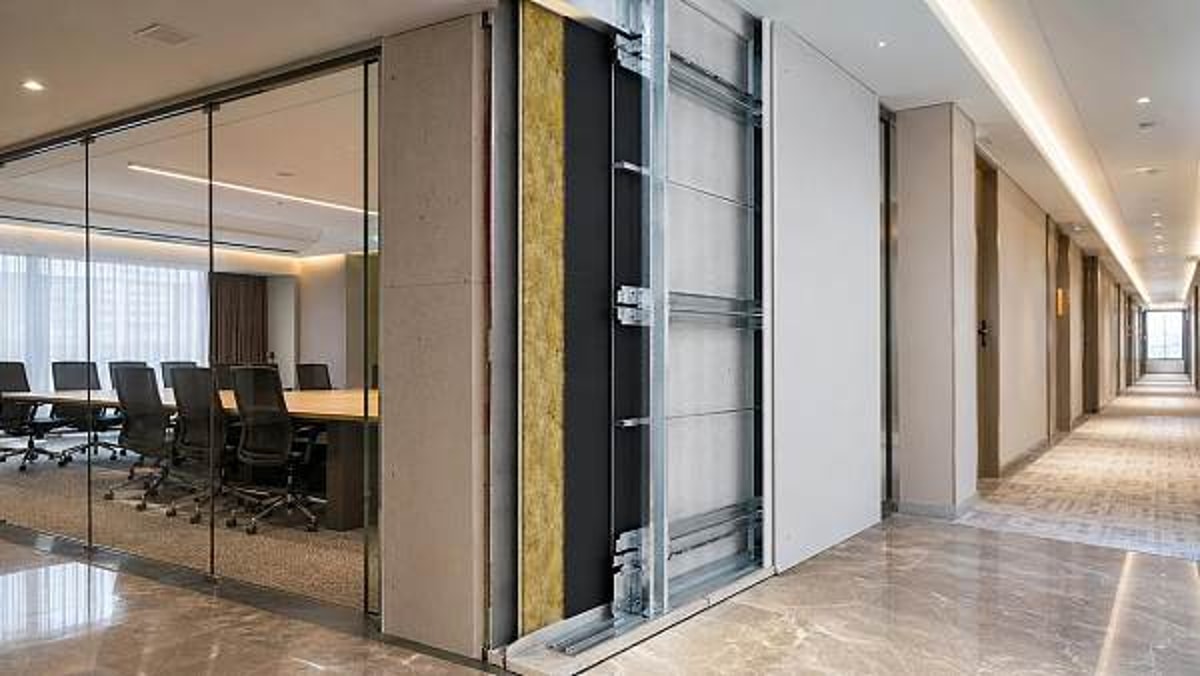
Another common issue is the law of diminishing returns. Doubling wall mass does not double performance. In practical terms, substantial gains often require system redesign rather than material repetition. A technically optimized partition with resilient channels, mineral wool, and damping compound can outperform a heavier single-leaf wall while using less depth and reducing load on the structure.
Where commercial projects lose acoustic performance
Acoustic failure is frequently tied to details rather than core wall materials. Evaluators should inspect service penetrations, suspended ceilings, glazing interfaces, and door frames as carefully as the wall itself. In mixed-use buildings, noise leakage through ceilings or access panels may account for 20% or more of perceived sound transfer.
- Rigid stud-to-board connections that transmit vibration directly into adjacent rooms.
- Unfilled wall cavities that allow resonance and reduce mid-frequency insulation.
- Back-to-back electrical boxes or unsealed pipe openings that create flanking paths.
- Lightweight doors or glazing systems that undermine otherwise strong partitions.
For hospitality, education, and leisure environments, specification errors also affect revenue. A hotel room with poor isolation may attract complaints within the first 30 days of operation. A training campus with speech leakage between classrooms can compromise concentration and privacy. These risks make soundproofing materials a technical procurement issue, not only an architectural finish decision.
Key performance metrics for evaluators
When comparing assemblies, use more than one metric. STC is widely used for airborne sound between rooms, but low-frequency sources such as subwoofers, HVAC vibration, or ride machinery often demand broader assessment. Assembly depth, fire classification, moisture resistance, and installation tolerance should be reviewed alongside target decibel reduction.
The table below shows why a wall’s apparent heaviness may not equal better acoustic control in real commercial conditions.
The main takeaway is clear: better results usually come from a layered acoustic strategy. For technical evaluation teams, this means reviewing soundproofing materials as part of a system rather than rating each product in isolation.
Soundproofing materials that typically work better than added wall mass
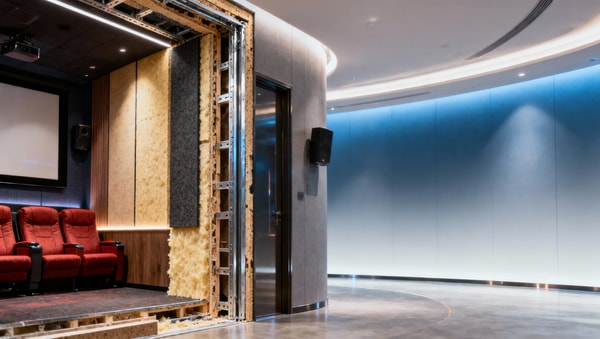
The most effective soundproofing materials do different jobs inside the same assembly. Dense boards help block airborne sound, porous insulation absorbs cavity resonance, damping layers convert vibration into low-level heat, and resilient connectors reduce direct mechanical transfer. When these functions are combined, performance can improve more efficiently than by adding another 50–100 mm of solid wall thickness.
Mineral wool is one of the most widely specified materials in commercial settings because it supports both acoustic absorption and fire performance. In stud walls and ceiling voids, densities around 40–80 kg/m³ are commonly used for acoustic applications. It does not block sound by itself, but it reduces internal resonance and improves the overall behavior of the partition.
Mass-loaded vinyl, constrained-layer damping products, and multi-layer gypsum assemblies are also widely adopted where depth is limited. A damping layer between boards can be especially valuable in conference rooms, music education spaces, and hotel entertainment areas where broad-spectrum isolation is needed without major loss of floor area.
Core material categories and their roles
Absorptive materials
Mineral wool and acoustic fiberglass reduce sound energy within cavities. They are particularly useful in metal stud partitions, raised floors, and suspended ceilings. For evaluators, the value is not just acoustic rating but also dimensional stability, low shrinkage risk, and compatibility with fire-resistance assemblies.
Damping materials
Damping compounds and viscoelastic sheets limit panel vibration. These materials are effective when low-frequency or amplified sound is involved. In hospitality and leisure fit-outs, damping can reduce the “drum effect” of lightweight walls and ceilings, especially where AV systems operate at variable volumes from 70 dB to over 95 dB.
Decoupling components
Resilient channels, acoustic clips, floating floor underlayments, and isolation pads are essential where vibration transfer is the main issue. These components can outperform heavier construction because they interrupt the mechanical path. In technical terms, reducing contact stiffness often produces more value than increasing wall density alone.
The table below compares several soundproofing materials by function, typical use, and evaluation focus.
For procurement teams, the best material is rarely a standalone product. It is the product that fits the intended assembly, local code requirements, and installation skill level. That is why test data should be read with build-up details, not only headline ratings.
How to evaluate soundproofing materials by commercial application
Material performance depends heavily on the environment. A luxury hotel, an open-plan office, an education campus, and a themed leisure facility all have different noise signatures and different tolerance thresholds. Technical evaluators should begin by mapping noise source, receiving space, operating hours, and acceptable disruption during installation.
In hotels, the highest priorities are often room-to-room speech privacy, corridor noise control, and isolation from plant rooms or entertainment areas. Typical target thinking may include stronger guest room partitions, acoustically sealed doors, and underlayment beneath hard flooring. In these cases, soundproofing materials must work together with joinery and MEP detailing.
In offices and educational facilities, speech intelligibility and confidentiality matter as much as sound isolation. It is not enough to block sound between rooms if the interior still suffers from reverberation above 0.8–1.2 seconds. Many projects therefore require a coordinated strategy that combines wall isolation with acoustic ceiling panels, floor treatments, and door perimeter sealing.
A simple four-step evaluation method
- Identify the dominant noise type: speech, music, machinery, impact, or mixed-spectrum activity.
- Set performance priorities: airborne isolation, low-frequency damping, vibration control, or interior absorption.
- Check project limits: maximum wall build-up, structural load, fire requirements, moisture exposure, and shutdown window.
- Compare materials using tested assembly data, installation risk, and lifecycle maintenance needs.
This method is especially useful in sourcing environments where suppliers may offer similar datasheets but different system reliability. A material that saves 15 mm of depth may be valuable in a high-rent urban property, while a product with easier phasing may be preferred in an occupied campus retrofit.
Application-specific guidance
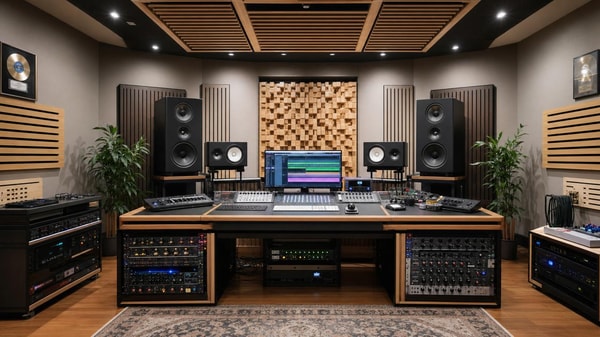
For pro audio rooms, rehearsal spaces, or instrument demonstration suites, evaluators should prioritize damping and decoupling over simple wall thickness. These environments generate concentrated low-frequency energy, and assemblies without resilient separation can transmit vibration into neighboring units even when the partition appears heavy.
For amusement and leisure parks, plant rooms, ride machinery spaces, and queue management areas may require a different mix of materials. Isolation pads, enclosure liners, and weather-tolerant acoustic barriers often matter more than conventional internal wall upgrades. Outdoor or semi-open conditions also require verification of durability over 3–5 year maintenance cycles.
For jewelry and luxury retail, acoustic design often supports premium customer experience. Quiet consultation rooms, secure back-office areas, and discreet transaction counters benefit from slim but high-performing soundproofing materials that preserve interior aesthetics. Here, hidden systems with low visual impact are often preferred over visibly thicker construction.
Procurement criteria, installation risks, and lifecycle value
Commercial buyers should not select soundproofing materials on acoustic rating alone. The practical procurement lens includes lead time, shipping form, installer familiarity, compliance documentation, and replacement or maintenance implications. A technically strong material can become a weak commercial choice if it delays handover by 2–4 weeks or requires specialist labor unavailable in the target market.
Installation quality has a direct impact on final performance. A well-designed system may lose substantial effectiveness through poor sealing, compressed insulation, incorrect clip spacing, or bridged resilient channels. For technical evaluators, this means asking not only “What is the product?” but also “How sensitive is the assembly to installer error?”
Lifecycle value is equally important. In busy commercial properties, service access matters. If a partition must be opened repeatedly for cabling or controls, some soundproofing materials will be easier to reinstate consistently than others. Maintenance teams should be able to preserve acoustic integrity without reconstructing large areas of wall or ceiling.
Procurement checklist for technical teams
- Request tested assembly information, not only single-product claims.
- Verify fire, moisture, and indoor air compatibility for the intended environment.
- Check material weight per m² and load implications for retrofit structures.
- Review installation tolerances, sealant requirements, and detail drawings.
- Confirm lead times, packing efficiency, and regional availability of accessories.
- Plan mock-up testing where speech privacy or low-frequency control is business-critical.
The table below helps compare sourcing and implementation factors that often influence total project success.
For sourcing teams working across borders, these practical filters reduce the risk of choosing materials that look strong on paper but are difficult to execute on site. The most dependable soundproofing materials are those backed by clear assembly documentation and realistic installation pathways.
Common mistakes, FAQs, and smarter specification decisions
One of the biggest mistakes is treating every noise problem as a wall problem. In practice, ceilings, floors, doors, glazing, and penetrations may determine final performance. Another common error is assuming that any acoustic insulation provides isolation. Many absorptive materials improve internal room acoustics but need mass and decoupling around them to stop transmission between spaces.
Technical evaluators should also be cautious with direct product-to-product comparisons. If one supplier provides a tested partition assembly and another offers only a material datasheet, the comparison is incomplete. Acoustic outcomes depend on the full build-up, installation sequence, and sealing detail, not just the nominal properties of one layer.
The following questions reflect frequent sourcing and specification concerns in commercial projects.
How do I choose between damping and added mass?
If the main issue is panel vibration or low-frequency energy, damping is often the better first investment. If the issue is basic speech leakage through a lightweight partition, added mass combined with cavity absorption may be sufficient. In many cases, the best result comes from a 3-part strategy: dense board, absorptive infill, and a resilient or damping layer.
Which soundproofing materials suit retrofit projects with limited shutdown time?
Retrofits usually favor systems that minimize demolition, wet trades, and structural loading. Mass-loaded vinyl, clip-and-channel systems, acoustic sealants, door upgrades, and cavity infill can often be phased more easily than rebuilding entire walls. For occupied commercial sites, installation windows of 3–10 nights may drive the decision as much as acoustic performance.
What should buyers verify before approving a supplier?
Ask for assembly drawings, material composition details, expected tolerances, accessory requirements, and recommended sequencing. Confirm whether local contractors can source matching sealants, channels, or pads. If the assembly depends on 4 or 5 proprietary components but only 2 are regionally available, implementation risk increases significantly.
Are thinner high-performance systems always more cost-effective?
Not always. Thin systems may save rentable area and speed fit-out, but some require tighter workmanship and more expensive accessories. Cost-effectiveness should be calculated across installation labor, downtime, floor area value, maintenance access, and risk of guest or occupant complaints after opening. The lowest material cost per m² is rarely the full picture.
For technical evaluators, the strongest specification decision is usually the one that aligns acoustic function, construction detail, and procurement reality. Better-performing soundproofing materials are those selected as part of a tested, buildable system that matches the commercial use case from day one.
In commercial environments, quieter spaces are created by engineering the right combination of mass, absorption, damping, and decoupling, not by assuming thicker walls will solve every noise problem. Hotels, offices, campuses, leisure venues, and premium retail settings all benefit when soundproofing materials are chosen according to noise type, installation constraints, and long-term operational demands.
For sourcing teams, specifiers, and technical review professionals, a disciplined evaluation process can reduce rework, improve user experience, and protect project value. If you are comparing material options for a new build or retrofit, GCT can help you assess commercially relevant acoustic solutions across global supply channels. Contact us to get a tailored sourcing strategy, discuss product details, or explore more solutions for performance-driven commercial spaces.
Search News
Hot Articles
Popular Tags
Need ExpertConsultation?
Connect with our specialized leisureengineering team for procurementstrategies.
Recommended News
 Apr 30, 2026Soundproofing materials that work better than thicker wallsSoundproofing materials that outperform thicker walls: compare damping, absorption, and decoupling options to cut noise, save space, and improve commercial acoustic results.● Pro Audio Engineer
 Apr 30, 2026How to compare microphone systems for different room sizesMicrophone systems compared by room size: learn how to evaluate pickup, coverage, DSP, and RF stability for small, medium, and large spaces to choose smarter, lower-risk solutions.● Pro Audio Engineer
 Apr 30, 2026Live sound equipment failures that usually start at setupLive sound equipment failures often begin at setup. Learn the early warning signs, key risk points, and smart sourcing tips to prevent costly audio issues.● Pro Audio Engineer
 Apr 30, 2026Recording studio gear upgrades that matter more than price tagsRecording studio gear upgrades that matter most aren’t always expensive. Learn how acoustics, monitoring, interfaces, and workflow tools deliver better sound, efficiency, and ROI.● Pro Audio Engineer
 Apr 30, 2026Commercial sound systems and the hidden cost of poor coverageCommercial sound systems with poor coverage can raise hidden costs, hurt clarity, and damage customer experience. Learn how to evaluate smarter solutions before buying.● Pro Audio Engineer
 Apr 29, 2026Kenya Marathon Record Break Sparks Demand for Racing Sensor ChipsRacing sensor chips surge in demand after Kenya's marathon record—RFID+UWB fusion modules with IP68, –20°C–60°C & ISO/IEC 18000-63 compliance now sought globally.● Pro Audio Engineer
 Apr 28, 2026Kenyan Marathon WR Break Drives Demand for Timing Chips & Track SensorsTiming chips & track sensors surge after Kenyan marathon WR—discover how UWB+BLE timing tech, EN compliance, and −20°C sensor resilience drive global demand.● Pro Audio Engineer
 Apr 27, 2026BWF Adopts 15-Point Scoring System from Jan 2027BWF 15-point scoring system (2027) drives urgent firmware, UI & AI replay upgrades for LED displays, broadcast tech & venue integrators—act now.● Pro Audio Engineer
 Apr 26, 2026BYD Confirms F1 Entry Talks: China’s Racing Electronics & Carbon Fiber Export Window OpensBYD’s F1 entry talks open China’s racing electronics & carbon fiber export window—FIA-certified sensors, composites & data systems in demand.● Pro Audio Engineer
 Apr 25, 2026Fan Zhendong Promotes Chinese AI Ping-Pong Table in Silicon ValleyAI ping-pong table by Fan Zhendong & MLTT debuts in Silicon Valley—smart sports hardware meets edge AI, radar tracking & coaching analytics. Discover the future of table tennis tech.● Pro Audio Engineer
 Apr 24, 2026FIFA Adopts Chinese Mini-LED Displays for 2026 World Cup VAR SystemFIFA adopts Chinese Mini-LED displays for 2026 World Cup VAR—ultra-low latency (≤3ms), 1500+ nits, FIFA TMS 4.2 certified. Game-changing for sports tech suppliers.● Pro Audio Engineer
 Apr 24, 2026Fan Zhendong Visits Silicon Valley as MLTT Investor, AI Ping-Pong Tech Draws US InterestAI ping-pong tech: Fan Zhendong’s MLTT-backed smart table & coaching system draws US youth training interest—edge AI, radar sensing, pilot orders inbound.● Pro Audio Engineer
 Apr 24, 2026FIBA Women's World Cup 2026 Draw: China in 'Group of Death', Lighting & Timing Systems Export Window OpensFIBA Women's World Cup 2026 draw sparks global demand for FIBA Level 3–certified LED lighting & timing systems—act now to qualify.● Pro Audio Engineer
 Apr 23, 2026China Upgrades Security Compliance for International Sports EventsChina mandates ISO 22301 business continuity planning for venues hosting international sports events—key for stadium tech, ops, and compliance providers.● Pro Audio Engineer
 Apr 22, 2026China's UWB Timing System Gains ITU Certification at Haiwan EventChina's UWB timing system wins ITU-T Y.3506 certification—key for sports tech exporters targeting GCC & SADC stadium tenders.● Pro Audio Engineer
 Apr 24, 2026Music Production Tools That Save Setup TimeMusic production tools that save setup time help venues and studios deploy faster. Learn smart sourcing for hospitality procurement, hotel sofas, and playground planning.● Pro Audio Engineer
 Apr 24, 2026Best Music Production Tools for Small StudiosMusic production tools for small studios: compare scalable setups, sourcing tips, and smart procurement for hospitality procurement, hotel room furniture, and playground planning projects.● Pro Audio Engineer
 Apr 24, 2026How to Choose Music Production Tools in 2026Music production tools in 2026: learn how to compare workflow, scalability, and supplier reliability for venues, hospitality procurement, and entertainment projects with confidence.● Pro Audio Engineer
 Apr 23, 2026Best Soundproofing Materials for VenuesBest soundproofing materials for venues: compare solutions for hotel beds, custom furniture, catering equipment, instrument cables, playground structures, and theme park rides to improve comfort, compliance, and sourcing efficiency.● Pro Audio Engineer
 Apr 22, 2026Do Soundproofing Materials Really WorkSoundproofing materials really work when matched to hotels, leisure park venues, and pro audio needs. Explore practical solutions for hotel beds, custom furniture, catering equipment, theme park rides, and inclusive playground projects.● Pro Audio Engineer
 Apr 20, 2026Snooker World Championship: Xiao Guodong Secures Third Chinese SpotSnooker World Championship: Xiao Guodong secures third Chinese spot amid AI officiating & 4K HDR broadcast — tech and talent converge in elite cue sports.● Pro Audio Engineer
 Apr 20, 2026FDA Proposes Chinese Label Translation Requirements for Sports SupplementsFDA proposes Chinese label translation requirements for sports supplements—key for importers, manufacturers & global brands. Act now to ensure compliance by Jan 2027.● Pro Audio Engineer
 Apr 19, 20262026 Shanghai Sailing Open Adopts ITU-Certified Chinese Timing System2026 Shanghai Sailing Open adopts ITU-certified Chinese timing system — a breakthrough for precision sports tech exporters, certifiers & event organizers.● Pro Audio Engineer
 Apr 17, 2026FDA Drafts New Labeling Rule for Chinese-Labeled Sports SupplementsFDA's new draft rule for Chinese-labeled sports supplements mandates certified English translations—key for brands, CMOs & importers navigating U.S. market entry.● Pro Audio Engineer