Choosing a playground contractor without missing red flags
Selecting a playground contractor is not just a pricing decision—it directly affects safety, compliance, project timelines, and long-term maintenance costs. For procurement teams, missing early red flags can lead to costly delays, liability risks, and poor installation quality. This guide explains how to evaluate a playground contractor with a sharper commercial lens, helping buyers identify warning signs before signing and secure a partner that meets both operational and safety expectations.
Why the Playground Contractor Market Is Changing Faster Than Many Buyers Expect
The selection criteria for a playground contractor have shifted noticeably over the last 3 to 5 years. Procurement teams are no longer comparing only installation quotes and equipment catalogs. They are now expected to evaluate compliance readiness, supply chain resilience, post-installation service capacity, and the contractor’s ability to work across mixed-use projects such as schools, hospitality properties, retail centers, and public leisure venues.
This change is driven by a broader trend in commercial development: play spaces are increasingly treated as experience assets rather than isolated site features. A hotel family zone, educational campus, or community retail destination may use a playground to improve dwell time, guest satisfaction, or tenant appeal. As a result, the wrong playground contractor can create ripple effects across multiple business functions, from insurance review and opening schedules to maintenance budgets over the next 5 to 10 years.
Another clear market signal is tighter scrutiny around documentation. Buyers now expect clearer installation methods, material traceability, warranty detail, and maintenance protocols. In practical terms, this means a playground contractor who looked acceptable in the past may now fail basic procurement review if they cannot provide structured submittals, realistic lead times in the 8 to 16 week range, or evidence of experience with international or local safety requirements.
Key signals behind this shift
- Commercial buyers are prioritizing lifecycle cost, not just initial supply and installation price.
- Project teams increasingly require coordination across civil works, surfacing, shade, drainage, and accessibility planning.
- Delays in imported components, coatings, hardware, or custom fabrication can affect opening dates by 4 to 12 weeks.
- Operators are more aware that poor installation quality can raise maintenance interventions within the first 12 to 24 months.
For procurement professionals, the implication is straightforward: choosing a playground contractor now requires a cross-functional review process. Safety, design, logistics, legal, and facilities management all have a stake in the final decision. A contractor that appears low-cost at bid stage may become expensive if documentation gaps, site coordination failures, or rework emerge after mobilization.
What Red Flags Are Becoming More Important in Today’s Procurement Environment
Some warning signs have always existed, but several are becoming more critical because projects are more complex and stakeholder expectations are higher. The most serious red flags often appear before contract award: vague technical proposals, inconsistent scope definitions, overly short installation commitments, or a reluctance to clarify responsibility for surfacing, anchoring, drainage, and inspections.
A capable playground contractor should be able to define what is included and excluded in clear commercial language. If the bid documents leave uncertainty around site preparation, fall-zone surfacing, local code checks, or equipment spacing, the procurement team may face later variation claims. In many projects, a 5% to 12% budget drift can come not from major design changes, but from poor scope alignment at the contractor selection stage.
Another high-risk signal is a weak after-sales framework. Many buyers focus heavily on delivery and installation, but the true test starts after handover. If a playground contractor cannot explain spare part availability, response time for repair requests, or routine inspection guidance, the buyer may inherit long-term operational exposure. For commercial environments with daily public use, even a 48 to 72 hour delay in resolving a safety issue can disrupt operations.
Common red flags procurement teams should document early
The table below summarizes recurring warning signs and why they matter commercially. These are not theoretical concerns; they often appear in bid reviews, supplier meetings, and pre-award clarifications when a playground contractor is under pressure to win the job quickly.
A single red flag does not always disqualify a playground contractor, but multiple weak signals should change the review level. Procurement teams should escalate such cases into a formal clarification round, request revised scope matrices, and involve operations or technical stakeholders before moving to award. This is especially important for projects with phased openings, public access, or integrated landscaping and civil works.
How to distinguish a manageable issue from a serious warning
- A manageable issue is usually specific, documented, and quickly corrected within 3 to 7 business days.
- A serious warning is often repeated, poorly explained, or linked to scope, safety, or delivery uncertainty.
- If the playground contractor avoids written clarification, the risk level should be treated as higher.
In current market conditions, transparency is one of the strongest indicators of reliability. Buyers should not reward speed of response alone; they should reward clarity, accountability, and evidence that the playground contractor can operate in a structured commercial environment.
Why Compliance, Documentation, and Site Coordination Now Matter More Than Before
The old procurement habit of treating playground installation as a simple fit-out package is becoming less practical. Today’s projects often require coordination with accessibility requirements, impact-attenuating surfacing, drainage design, perimeter safety, and ongoing inspection routines. This means the playground contractor must function not only as an installer, but also as a documentation partner and site coordinator.
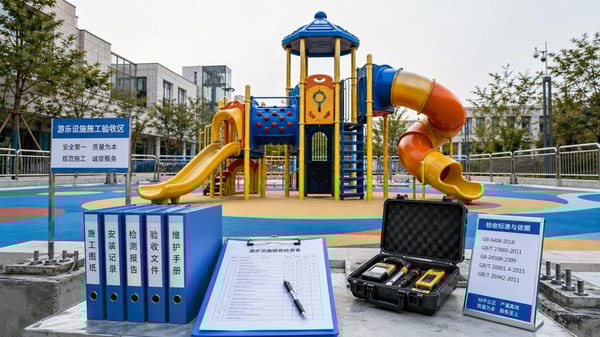
Compliance itself is not a single checkbox. Depending on the market, project type, and owner profile, buyers may need to review general safety standards, material suitability, anchoring methods, signage needs, and maintenance recommendations. Even where final local approval sits with another party, a qualified playground contractor should be able to provide organized technical files, drawings, and installation records that support review and handover.
Site coordination has also become more important because projects are increasingly compressed. A playground zone may sit within a broader development schedule involving paving, irrigation, lighting, fencing, and soft landscaping. If the playground contractor cannot sequence deliveries and installation around these dependencies, a delay of just 7 to 10 days in base preparation can cascade into missed launch dates or out-of-sequence work.
What better procurement teams now request before award
The following comparison shows how buyer expectations have matured. It helps procurement teams understand why a modern playground contractor review must go beyond brochure-level promises.
This change matters because procurement is now expected to protect operational continuity, not merely complete a purchase. A playground contractor who can support structured handover will usually reduce friction between procurement, facilities teams, and end users. In contrast, a contractor who cannot provide traceable information may shift hidden cost into maintenance, claims handling, and future refurbishment.
Questions worth asking during technical clarification
- Which elements are factory-fabricated, and which are site-dependent?
- What are the minimum site readiness conditions before installation starts?
- How long are replacement components typically available after handover—2 years, 5 years, or longer?
- What inspection and maintenance actions are expected in the first 30, 90, and 180 days?
These questions often reveal whether a playground contractor understands commercial accountability or is operating mainly as a transactional supplier. For procurement buyers, that distinction is increasingly important.
How Emerging Buyer Priorities Are Reshaping Contractor Evaluation
Buyers in hospitality, education, public projects, and mixed-use developments are changing what they value. A playground contractor is now judged against broader business outcomes: guest experience, inclusive design, weather resilience, maintainability, and downtime control. This trend is especially visible where play areas support family-oriented destinations or community engagement strategies.
One important shift is toward lifecycle visibility. Procurement teams increasingly ask what the site will cost to maintain over 3, 5, or 7 years rather than focusing only on the purchase order value. Surface wear, replacement hardware, finish degradation, and inspection intervals all influence total cost. A contractor that cannot discuss maintenance burden in practical terms may not be suitable for higher-traffic commercial sites.
Another shift is toward integrated responsibility. Many buyers prefer a playground contractor that can coordinate design intent, equipment supply, installation logic, and post-handover support instead of splitting these functions among too many parties. While single-source delivery is not always required, fragmented accountability often increases dispute risk when defects, delays, or performance issues appear.
Evaluation areas gaining weight in commercial tenders
- Responsiveness to RFIs and technical clarifications within 24 to 72 hours.
- Ability to support phased openings or segmented installation programs.
- Practical knowledge of outdoor durability, corrosion exposure, and surface drainage.
- Defined defect liability response process and reasonable spare parts planning.
What this means for different buyer groups
The impact of contractor quality is not the same for every organization. A school may prioritize child safety, inspection routines, and daily durability. A hotel may care more about aesthetics, guest perception, and fast corrective maintenance. A municipality may require stricter documentation, public-use resilience, and transparent tender compliance. In each case, the same playground contractor may not be equally suitable.
For this reason, procurement teams should score vendors against project-specific outcomes rather than relying on a generic approved supplier mindset. A contractor that performs well on a small private site may struggle with a multi-stakeholder public or hospitality project where coordination meetings, reporting frequency, and handover detail are significantly higher.
This is where procurement maturity becomes a competitive advantage. Teams that align technical requirements, operations input, and commercial controls before tender release are more likely to identify the right playground contractor early and avoid last-minute compromises.
A Practical Decision Framework for Spotting Risk Before Contract Award
A useful response to current market complexity is to evaluate each playground contractor through a structured decision framework. This helps procurement teams move beyond intuition and compare bidders on visible evidence. The most effective frameworks combine commercial fit, technical clarity, execution capability, and long-term support rather than treating price as the dominant factor.
In many mid-sized or large projects, a weighted review model can improve consistency. For example, a buyer might allocate 25% to technical compliance, 20% to project delivery and scheduling, 20% to lifecycle support, 20% to price, and 15% to communication quality and documentation completeness. The exact split will vary, but the principle remains the same: a playground contractor should be measured across the full business risk profile.
This approach also helps explain award decisions internally. If a bidder is not the cheapest but demonstrates clearer scope definition, better timeline realism, and stronger after-sales provisions, procurement can justify the decision with a defensible record. That is particularly important when the installation supports a public-facing asset with long-term liability implications.
Suggested pre-award review framework
The table below provides a practical way to compare a playground contractor before final selection. Buyers can adapt the scoring logic to project size, geography, and internal governance.
When this framework is used consistently, red flags become easier to identify and harder to ignore. It also reduces the chance that the procurement team will be influenced by polished sales presentations that are not backed by delivery discipline. A reliable playground contractor should score steadily across all four dimensions, not just one or two.
Fast internal checklist before issuing a purchase order
- Confirm that the commercial offer and technical submission describe the same scope.
- Verify who owns civil interfaces, surfacing coordination, and site acceptance criteria.
- Check whether lead times include fabrication, transit, customs, and weather-sensitive installation windows.
- Request a post-handover support outline covering the first 12 months.
If any of these points remain unresolved, the procurement team should pause rather than accelerate. In playground projects, unresolved detail rarely becomes easier after award.
How to Respond to the Trend: Better Questions, Stronger Supplier Screening, and Smarter Buying Decisions
The wider trend is clear: the role of a playground contractor is becoming more strategic in commercial development. Buyers are not simply procuring play equipment; they are protecting user safety, launch schedules, and asset performance. That means better procurement outcomes depend on earlier screening, clearer internal alignment, and more disciplined vendor evaluation.
For procurement teams, the best response is to upgrade the briefing process before bids are compared. Define the traffic profile, operating environment, maintenance expectations, aesthetic goals, and delivery constraints upfront. A playground contractor can only respond accurately if the buyer defines what success looks like. Ambiguous briefs often produce misleading quotes, and misleading quotes make red flags harder to detect.
It is also wise to involve operations, facilities, or project management teams before final award. A 60-minute technical review meeting can uncover interface issues that may not appear in a price sheet. This is particularly valuable for developments with multiple contractors on site, regional sourcing complexity, or a fixed opening deadline within the next 90 to 180 days.
Why choose us
At Global Commercial Trade, we support commercial buyers with a sourcing perspective that goes beyond basic vendor listings. If your team is assessing a playground contractor, we can help structure the decision around real procurement factors: scope alignment, supplier capability, timeline realism, compliance expectations, and long-term operational fit.
Our value is especially relevant for buyers managing hospitality, education, leisure, and mixed-use projects where the playground package affects broader commercial outcomes. We understand that selecting a playground contractor is rarely a standalone purchase. It is part of a larger investment in guest experience, safety management, and reliable asset delivery.
If you are comparing suppliers or trying to identify hidden risk before contract award, contact us for targeted support. We can help you review technical scope, compare sourcing options, discuss expected delivery cycles, examine certification and documentation requirements, and organize supplier questions around customization, maintenance, sample support, and quotation clarity. A better buying process starts with better visibility into the contractor behind the proposal.
Search News
Hot Articles
Popular Tags
Need ExpertConsultation?
Connect with our specialized leisureengineering team for procurementstrategies.
Recommended News
 Apr 30, 2026When a playground consultant saves more than an in-house planPlayground consultant advice can prevent costly design errors, compliance gaps, and vendor mistakes. See when expert support beats an in-house plan and protects budget.● Theme Park Strategist
 Apr 30, 2026A smarter playground layout starts with traffic flowPlayground layout starts with traffic flow. Discover how smarter circulation improves safety, accessibility, capacity, and long-term commercial performance.● Theme Park Strategist
 Apr 30, 2026Playground certification steps that delay launch datesPlayground certification delays can add weeks to launch dates. Learn the key bottlenecks, hidden compliance risks, and practical steps to keep projects on schedule.● Theme Park Strategist
 Apr 30, 2026Playground climbers that keep kids challenged without bottlenecksPlayground climbers that reduce bottlenecks keep more kids engaged, improve flow, and suit schools, resorts, parks, and leisure venues. Learn what to specify before you buy.● Theme Park Strategist
 Apr 30, 2026What playground inspection reports often reveal too latePlayground inspection reports often reveal hidden risks too late. Learn how to catch design, installation, and safety issues earlier to avoid delays, rework, and costly project setbacks.● Theme Park Strategist
 Apr 30, 2026Playground accessibility details that change real usabilityPlayground accessibility details shape real usability beyond ramps. Explore transfer points, sensory zones, sightlines, and circulation tips that help buyers choose truly inclusive play spaces.● Theme Park Strategist
 Apr 30, 2026Playground shade structures that improve comfort in hot seasonsPlayground shade structures improve comfort, safety, and usability in hot seasons. Explore smart, durable solutions for schools, parks, and commercial projects.● Theme Park Strategist
 Apr 30, 2026Commercial slides and the maintenance issues often overlookedCommercial slides often fail on maintenance, not design. Learn the overlooked wear, cleaning, access, and compliance issues that affect safety, uptime, and long-term cost.● Theme Park Strategist
 Apr 30, 2026Why playground theme matters more than many layouts suggestPlayground theme shapes engagement, brand value, and repeat visits more than many layouts suggest. Learn how to choose the right concept for hotels, malls, and family venues.● Theme Park Strategist
 Apr 30, 2026Outdoor play structures that stay engaging across age groupsOutdoor play structures that engage ages 2–12: discover how schools, parks, and resorts can choose safer, durable, multi-age designs that boost replay value and buyer confidence.● Theme Park Strategist
 Apr 30, 2026Choosing a playground contractor without missing red flagsPlayground contractor selection made smarter: learn how to spot red flags early, reduce safety and cost risks, and choose a reliable partner with confidence.● Theme Park Strategist
 Apr 30, 2026Playground planning errors that create costly redesigns laterPlayground planning mistakes can trigger costly redesigns, delays, and compliance issues. Learn how to avoid common risks and deliver safer, smarter projects on budget.● Theme Park Strategist
 Apr 30, 2026How playground fencing affects safety without feeling restrictivePlayground fencing shapes safety, visibility, and comfort. Discover how to choose secure, open-feel fencing that protects children without making play spaces feel closed in.● Theme Park Strategist
 Apr 29, 2026Adventure Playground Safety Mistakes to Avoid Before InstallationAdventure playground safety mistakes can delay opening and raise liability. Learn the key pre-installation checks for materials, site planning, surfacing, and compliance.● Theme Park Strategist
 Apr 29, 2026Chinese Tennis Robot Demand Rises in Europe After Zheng Qinwen's Madrid RunChinese tennis robot demand surges in Europe after Zheng Qinwen's Madrid Open run—CE-certified AI training systems now sought by German & Spanish academies.● Theme Park Strategist
 Apr 29, 2026Vietnam Mandates Child Finger-Trap Sensors for Indoor Play EquipmentVietnam mandates child finger-trap sensors for indoor play equipment—key compliance update for exporters, suppliers & certifiers. Act now before Oct 1, 2026.● Theme Park Strategist
 Apr 29, 2026CBA Guangdong’s Loss Spurs Export Inquiries for Indoor Playground EquipmentCBA Guangdong’s playoff loss sparks urgent export inquiries for EN1176-compliant indoor playground equipment — basketball-themed, rapid-assembly modules for ASEAN family entertainment centers.● Theme Park Strategist
 Apr 28, 2026Vietnam Mandates Child Hand-Trap Sensors for Indoor Play EquipmentVietnam mandates VILAS-certified hand-trap sensors for indoor play equipment—key for exporters, manufacturers & certifiers. Act before Oct 2026!● Theme Park Strategist
 Apr 29, 2026What to Review Before Buying a Trampoline ParkCompare trampoline park price, trampoline park cost, and trampoline park equipment before choosing a trampoline park supplier. Get expert tips on safety, layout, and sourcing.● Theme Park Strategist
 Apr 29, 2026How Much Does a Trampoline Park CostTrampoline park cost explained: compare trampoline park price, equipment quality, and supplier value. Learn what drives ROI before choosing a trampoline park for sale.● Theme Park Strategist
 Apr 29, 2026Safe Trampoline Park Equipment BasicsSafe trampoline park equipment basics: compare trampoline park supplier options, indoor playground design, durability, compliance, and total trampoline park cost before you buy.● Theme Park Strategist
 Apr 29, 2026How to Audit an Indoor Playground FactoryIndoor playground manufacturer audit guide: learn how to assess an indoor playground supplier, indoor playground design strength, safety, capacity, and trampoline park equipment quality before you buy.● Theme Park Strategist
 Apr 29, 2026Indoor Playground Supplier Pricing GuideIndoor playground supplier pricing guide: compare indoor playground manufacturer quotes, indoor playground design value, trampoline park equipment cost, and hidden fees before you buy.● Theme Park Strategist
 Apr 29, 2026Trampoline Park Supplier Checklist 2026Trampoline park supplier checklist 2026: compare trampoline park price, cost, equipment, and indoor playground design to choose a safer, smarter supplier for profitable projects.● Theme Park Strategist