What playground inspection reports often reveal too late
A playground inspection report should do more than confirm compliance—it should expose hidden risks before they turn into injuries, delays, or costly rework. Yet many project managers discover that playground inspection findings often surface too late, when design flaws, installation issues, or maintenance gaps are already affecting safety, budgets, and timelines. Understanding what these reports commonly reveal can help you make faster, smarter project decisions.
Why do playground inspection reports often reveal problems too late?
For project managers, a playground inspection is often scheduled near practical completion, handover, or the final acceptance stage. That timing creates a predictable problem: the report identifies non-conformities only after procurement, civil works, installation, and sometimes even client walkthroughs are already done. At that point, a 20 mm surfacing deviation, an incorrect entrapment gap, or a missing clearance zone is no longer a simple correction. It becomes a variation, a delay, and a coordination issue across multiple trades.
In many commercial and public-space projects, the inspection process is treated as a checkpoint rather than a management tool. The result is that the report tells you what failed, but not early enough to protect the program. A swing bay positioned too close to site furniture, a slide exit region that conflicts with drainage falls, or impact-attenuating surfacing installed before final equipment anchoring can all pass unnoticed for 6 to 12 weeks during construction. When the playground inspection finally occurs, the fix may require dismantling already completed work.
Another reason findings arrive late is fragmented responsibility. Designers may assume the supplier will verify fall heights. Installers may assume the civil contractor has met tolerance requirements. Owners may assume the inspection body will catch everything before handover. In reality, a playground inspection report frequently reveals coordination failures rather than isolated defects. For project leaders managing multi-party delivery, this is a risk signal that should be addressed at concept, shop drawing, installation, and pre-handover stages—not only at the end.
What does “too late” usually mean in practical project terms?
In practice, “too late” means one of four things: the defect affects opening dates, the correction cost exceeds the initial allowance, the issue changes the design intent, or the operator inherits a safety risk. Even a small defect can trigger a chain reaction. If post-installation testing shows the impact area is undersized, you may need to move edging, revise pathways, and reorder surfacing materials with a lead time of 2 to 6 weeks.
- Late findings often lead to rework across at least 2 trades, such as equipment installation and safety surfacing.
- Client-side approvals may need to be repeated if the corrective action changes appearance, access routes, or usable capacity.
- Insurance, operation, or opening permits may be held back until corrective measures are verified.
- Warranty discussions can become complex when design, manufacturing, installation, and maintenance responsibilities overlap.
For this reason, experienced teams treat playground inspection not as a single event, but as a staged review framework. That shift can reduce end-stage surprises and improve procurement confidence, especially in hospitality, education, mixed-use, and leisure developments where user safety and brand reputation are tightly linked.
What issues do playground inspection reports most commonly uncover?
A typical playground inspection report does not only focus on visible breakage. More often, it flags dimensional, installation, and operational risks that were built into the project long before the inspector arrived. These findings usually fall into a few recurring categories: impact attenuation, free space and clearance, entrapment risks, structural stability, hardware integrity, accessibility conflicts, and maintenance-related wear.
Project managers should pay particular attention to findings that point to systemic causes. For example, repeated comments about loose fixings may indicate rushed installation or an incomplete torque-check procedure. Uneven surfacing may reflect inadequate sub-base preparation rather than a defect in the top layer alone. Similarly, multiple non-compliances around use zones often signal early layout errors in the design package, not installer negligence at site level.
The table below summarizes the types of issues a playground inspection report often reveals, when they are typically discovered, and why they matter to commercial project delivery.
These findings matter because they affect more than safety. They influence cash flow, sequencing, and stakeholder confidence. In a commercial setting, even a 1- to 3-week delay linked to a failed playground inspection can affect tenant openings, school readiness, resort activation, or municipal handover commitments.
Which findings deserve the fastest escalation?
Not every observation requires the same response speed. Cosmetic issues may be scheduled, but hazards linked to fall protection, entrapment, structural integrity, and impact zones should be escalated immediately. These are the items most likely to stop approval or expose the operator to unacceptable risk.
Priority triggers after a playground inspection
- Any finding that restricts safe use of elevated equipment or dynamic play elements should be treated as a Day 0 issue.
- Repeated failures in the same category suggest a process gap, not a one-off snag, and usually justify a broader audit.
- Non-compliance affecting accessible routes or circulation can trigger redesign beyond the playground footprint itself.
- Any item requiring destructive rework should be reviewed against schedule float, procurement lead time, and contractual notice periods within 24 to 48 hours.
A fast triage process helps separate items that can be corrected during snagging from items that threaten completion milestones. That distinction is especially important when equipment has been imported, customized, or integrated into larger themed environments.
How can project managers tell whether a playground inspection issue started in design, sourcing, or installation?
One of the most useful ways to read a playground inspection report is to trace each finding back to its origin. This matters because corrective strategy depends on cause. If the problem began in layout planning, more site labor will not fix it. If the issue comes from inconsistent supplier documentation, redesign alone will not solve recurring site confusion. If the fault lies in installation sequence, the same team may repeat it across other play zones unless procedures change.
Design-stage issues usually appear as spacing conflicts, inadequate use zones, poor drainage relationships, inaccessible circulation, or clashes with surrounding site elements. Sourcing-stage issues often show up through incomplete technical submittals, unclear anchoring details, mismatched surfacing specifications, or components that do not align with local safety expectations. Installation-stage issues are more likely to involve level tolerances, fastening, alignment, foundation depth, and final assembly errors.
For buyers managing global sourcing, this distinction is critical. A playground inspection may expose that the imported play set itself is acceptable, but the translated installation guide omitted key clearance notes. It may show that the site contractor used a sub-base method more common in landscape works than in impact-tested play surfacing systems. Treating all findings as “installer issues” can lead to the wrong remedy and higher total project cost.
The comparison below can help teams assign responsibility more accurately before opening formal corrective action requests.
This type of root-cause reading helps managers protect both schedule and supplier relationships. It also supports clearer contract administration, especially when several vendors contribute to one play environment, such as equipment suppliers, surfacing contractors, shade structure fabricators, and landscape installers.
What documents should be checked before blaming any one party?
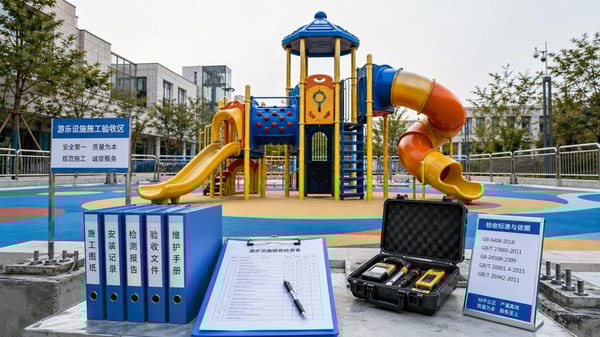
Before assigning liability after a playground inspection, review the approved layout, equipment data sheets, installation manuals, foundation details, surfacing specification, as-built survey, and pre-handover QA checklists. In many projects, the answer is hidden in version control. A supplier may have issued a revision 3 document, while the site team installed using revision 2.
- Confirm whether the inspected condition matches the last approved drawing set.
- Check whether equipment model substitutions altered critical dimensions, heights, or safety zones.
- Verify whether surfacing thickness and sub-base build-up reflect the specified system rather than a site assumption.
- Review whether pre-opening maintenance checks were completed 7 to 14 days before formal inspection.
This document-led approach prevents avoidable disputes and makes follow-up action more precise. It also improves future sourcing decisions, because it shows whether the issue came from product suitability, information quality, or execution discipline.
What are the most common misconceptions about playground inspection?
A major misconception is that a playground inspection only matters for public parks. In reality, inspection discipline is just as relevant in hotels, schools, family entertainment venues, residential developments, and retail-led leisure environments. Whenever children interact with climbing, swinging, sliding, or impact-prone elements, the project carries safety and operational exposure.
Another misconception is that a certificate or supplier declaration replaces local site verification. A compliant product can still fail in a non-compliant installation. If the terrain changes the accessible route, if adjacent furniture narrows the use zone, or if the surfacing build-up differs from the approved detail by even a modest margin, the final playground inspection may still identify actionable risk.
Some teams also assume that once the initial inspection passes, the risk has ended. That is not how most operating environments work. Wear, vandalism, weather exposure, settlement, and maintenance practices can all alter safety performance over time. For operators, a playground inspection should be understood as part of a lifecycle approach, with routine visual checks, periodic operational inspections, and annual or specialist reviews depending on site intensity and user volume.
Which myths create the most expensive mistakes?
- “If the equipment arrived certified, the site is compliant.” This ignores layout, installation, and surrounding conditions.
- “Inspection is only a handover formality.” This often results in no internal pre-inspection review and no contingency time.
- “Minor defects can wait until after opening.” In play environments, seemingly minor defects can escalate quickly under repeated daily use.
- “Maintenance can solve design issues.” Maintenance can manage wear, but it cannot fix fundamental spacing, height, or impact-zone errors.
The costliest mistakes usually happen when teams confuse product compliance with project compliance. For project managers, the safer assumption is that every imported or custom play installation needs staged verification at least 3 times: before order confirmation, during installation, and before public opening.
How can you use playground inspection earlier to reduce delays, rework, and cost?
The most effective strategy is to bring playground inspection thinking upstream. That does not always mean a formal external inspection at every step. It means embedding inspection criteria into design review, procurement, submittals, mock-up checks, installation hold points, and pre-handover verification. When you do this, the final report becomes confirmation rather than surprise.
A practical approach is to set milestone checks across the project timeline. For example, review use zones and fall heights at concept or IFC stage, confirm installation details before shipment, inspect foundations and surfacing build-up during site works, and conduct an internal readiness audit 5 to 10 working days before the external playground inspection. This phased method helps catch problems when correction is still affordable.
Commercial buyers and sourcing teams also benefit from pre-qualification. Ask whether the supplier provides technical layouts, installation sequencing guidance, maintenance manuals, spare parts support, and compatibility notes for surfacing systems. These details reduce the chance that a playground inspection uncovers avoidable mismatches between product intent and site reality.
What should a proactive inspection workflow look like?
The workflow below is useful for projects where schedule pressure, imported components, or custom design features increase delivery risk.
- Stage 1: Design review for clearances, fall heights, routes, and adjacent site elements before final procurement.
- Stage 2: Technical submittal review for equipment details, anchoring, surfacing compatibility, and maintenance requirements.
- Stage 3: In-progress site verification of foundations, levels, and surfacing preparation before equipment completion.
- Stage 4: Internal pre-handover check using the same categories likely to appear in the external playground inspection.
- Stage 5: Final independent review and close-out of observations with dated evidence and sign-off records.
How much time should be allowed before opening?
A sensible allowance is rarely less than 1 to 2 weeks between the first formal playground inspection and public opening. That buffer gives room for minor corrections, repeat testing if needed, and document close-out. On larger leisure, school, or resort projects, a 3- to 4-week window is often more realistic, especially when imported replacement parts or specialist surfacing contractors are involved.
Trying to compress inspection, rectification, and handover into the final 48 hours is one of the most common reasons safety observations become commercial disputes. For project managers, time contingency is not excess caution; it is part of responsible risk control.
What should you ask before selecting suppliers or planning the next playground inspection?
If you are sourcing playground systems or preparing a new project package, your questions should go beyond appearance and price. A better supplier discussion starts with technical clarity: What age group is the equipment intended for? What are the required use zones? What surfacing type and thickness are expected? How are anchoring details coordinated with local ground conditions? What maintenance intervals are recommended after opening?
You should also ask how the supplier supports inspection readiness. Can they provide layout validation before production? Do they issue installation manuals with dimensioned safety areas? Can they advise on common issues that cause a playground inspection to fail after shipment? For international procurement, it is especially useful to confirm drawing units, revision control, and documentation in the working language of the project team.
For project-based buyers in hospitality, education, or leisure sectors, these questions reduce uncertainty at the exact points where cost and liability tend to rise. They also make coordination easier between architects, procurement teams, contractors, operators, and maintenance staff after handover.
A quick FAQ decision guide for project teams
Use this short guide when preparing supplier discussions, reviewing technical documents, or planning the next playground inspection milestone.
These questions are simple, but they directly influence how smoothly a playground inspection proceeds. They also support more disciplined sourcing, particularly when buyers need a balance of design quality, compliance awareness, delivery predictability, and long-term operability.
Why choose us when your project needs sourcing support around playground inspection readiness?
Global Commercial Trade supports commercial buyers who need more than a product list. For playground and leisure-related procurement, the challenge is rarely limited to price. It is about aligning design intent, technical documentation, compliance expectations, manufacturing capability, installation coordination, and lifecycle usability across international supply chains. That is where better sourcing intelligence can reduce the risk of late playground inspection failures.
If you are managing a hotel family zone, an educational campus play area, a mixed-use amenity deck, or a leisure development, we can help you structure supplier conversations more effectively. That includes support around parameter confirmation, product selection direction, documentation completeness, lead time expectations, customization scope, and practical coordination points that often affect playground inspection outcomes.
Contact us if you want to discuss equipment selection, technical comparison, delivery cycle planning, custom sourcing options, certification-related document preparation, sample coordination, or quotation communication. A stronger project starts when inspection risk is considered early, not after the report arrives.
Search News
Hot Articles
Popular Tags
Need ExpertConsultation?
Connect with our specialized leisureengineering team for procurementstrategies.
Recommended News
 Apr 30, 2026When a playground consultant saves more than an in-house planPlayground consultant advice can prevent costly design errors, compliance gaps, and vendor mistakes. See when expert support beats an in-house plan and protects budget.● Theme Park Strategist
 Apr 30, 2026A smarter playground layout starts with traffic flowPlayground layout starts with traffic flow. Discover how smarter circulation improves safety, accessibility, capacity, and long-term commercial performance.● Theme Park Strategist
 Apr 30, 2026Playground certification steps that delay launch datesPlayground certification delays can add weeks to launch dates. Learn the key bottlenecks, hidden compliance risks, and practical steps to keep projects on schedule.● Theme Park Strategist
 Apr 30, 2026Playground climbers that keep kids challenged without bottlenecksPlayground climbers that reduce bottlenecks keep more kids engaged, improve flow, and suit schools, resorts, parks, and leisure venues. Learn what to specify before you buy.● Theme Park Strategist
 Apr 30, 2026What playground inspection reports often reveal too latePlayground inspection reports often reveal hidden risks too late. Learn how to catch design, installation, and safety issues earlier to avoid delays, rework, and costly project setbacks.● Theme Park Strategist
 Apr 30, 2026Playground accessibility details that change real usabilityPlayground accessibility details shape real usability beyond ramps. Explore transfer points, sensory zones, sightlines, and circulation tips that help buyers choose truly inclusive play spaces.● Theme Park Strategist
 Apr 30, 2026Playground shade structures that improve comfort in hot seasonsPlayground shade structures improve comfort, safety, and usability in hot seasons. Explore smart, durable solutions for schools, parks, and commercial projects.● Theme Park Strategist
 Apr 30, 2026Commercial slides and the maintenance issues often overlookedCommercial slides often fail on maintenance, not design. Learn the overlooked wear, cleaning, access, and compliance issues that affect safety, uptime, and long-term cost.● Theme Park Strategist
 Apr 30, 2026Why playground theme matters more than many layouts suggestPlayground theme shapes engagement, brand value, and repeat visits more than many layouts suggest. Learn how to choose the right concept for hotels, malls, and family venues.● Theme Park Strategist
 Apr 30, 2026Outdoor play structures that stay engaging across age groupsOutdoor play structures that engage ages 2–12: discover how schools, parks, and resorts can choose safer, durable, multi-age designs that boost replay value and buyer confidence.● Theme Park Strategist
 Apr 30, 2026Choosing a playground contractor without missing red flagsPlayground contractor selection made smarter: learn how to spot red flags early, reduce safety and cost risks, and choose a reliable partner with confidence.● Theme Park Strategist
 Apr 30, 2026Playground planning errors that create costly redesigns laterPlayground planning mistakes can trigger costly redesigns, delays, and compliance issues. Learn how to avoid common risks and deliver safer, smarter projects on budget.● Theme Park Strategist
 Apr 30, 2026How playground fencing affects safety without feeling restrictivePlayground fencing shapes safety, visibility, and comfort. Discover how to choose secure, open-feel fencing that protects children without making play spaces feel closed in.● Theme Park Strategist
 Apr 29, 2026Adventure Playground Safety Mistakes to Avoid Before InstallationAdventure playground safety mistakes can delay opening and raise liability. Learn the key pre-installation checks for materials, site planning, surfacing, and compliance.● Theme Park Strategist
 Apr 29, 2026Chinese Tennis Robot Demand Rises in Europe After Zheng Qinwen's Madrid RunChinese tennis robot demand surges in Europe after Zheng Qinwen's Madrid Open run—CE-certified AI training systems now sought by German & Spanish academies.● Theme Park Strategist
 Apr 29, 2026Vietnam Mandates Child Finger-Trap Sensors for Indoor Play EquipmentVietnam mandates child finger-trap sensors for indoor play equipment—key compliance update for exporters, suppliers & certifiers. Act now before Oct 1, 2026.● Theme Park Strategist
 Apr 29, 2026CBA Guangdong’s Loss Spurs Export Inquiries for Indoor Playground EquipmentCBA Guangdong’s playoff loss sparks urgent export inquiries for EN1176-compliant indoor playground equipment — basketball-themed, rapid-assembly modules for ASEAN family entertainment centers.● Theme Park Strategist
 Apr 28, 2026Vietnam Mandates Child Hand-Trap Sensors for Indoor Play EquipmentVietnam mandates VILAS-certified hand-trap sensors for indoor play equipment—key for exporters, manufacturers & certifiers. Act before Oct 2026!● Theme Park Strategist
 Apr 29, 2026What to Review Before Buying a Trampoline ParkCompare trampoline park price, trampoline park cost, and trampoline park equipment before choosing a trampoline park supplier. Get expert tips on safety, layout, and sourcing.● Theme Park Strategist
 Apr 29, 2026How Much Does a Trampoline Park CostTrampoline park cost explained: compare trampoline park price, equipment quality, and supplier value. Learn what drives ROI before choosing a trampoline park for sale.● Theme Park Strategist
 Apr 29, 2026Safe Trampoline Park Equipment BasicsSafe trampoline park equipment basics: compare trampoline park supplier options, indoor playground design, durability, compliance, and total trampoline park cost before you buy.● Theme Park Strategist
 Apr 29, 2026How to Audit an Indoor Playground FactoryIndoor playground manufacturer audit guide: learn how to assess an indoor playground supplier, indoor playground design strength, safety, capacity, and trampoline park equipment quality before you buy.● Theme Park Strategist
 Apr 29, 2026Indoor Playground Supplier Pricing GuideIndoor playground supplier pricing guide: compare indoor playground manufacturer quotes, indoor playground design value, trampoline park equipment cost, and hidden fees before you buy.● Theme Park Strategist
 Apr 29, 2026Trampoline Park Supplier Checklist 2026Trampoline park supplier checklist 2026: compare trampoline park price, cost, equipment, and indoor playground design to choose a safer, smarter supplier for profitable projects.● Theme Park Strategist