Playground climbers that keep kids challenged without bottlenecks
For project managers planning high-traffic play environments, choosing playground climbers that maintain challenge without causing bottlenecks is critical to safety, flow, and long-term value. The right design keeps more children engaged at once, supports varied skill levels, and reduces congestion around key access points. This article explores how to evaluate climber layouts that improve circulation, maximize play capacity, and meet commercial performance expectations.
Why scenario differences matter when selecting playground climbers
In commercial play projects, playground climbers are rarely judged by appearance alone. A climber that performs well in a destination resort may fail in a school courtyard, while a compact structure that suits an urban pocket park may underperform in a regional family entertainment venue. For project managers, the real question is not simply whether a climber looks engaging, but whether it can distribute users efficiently across peak periods of 30, 60, or even 120 minutes without creating choke points.
Bottlenecks usually appear where challenge and access overlap. A single net entrance, one narrow transfer platform, or a popular elevated element with only one route in and out can reduce usable capacity by 20% to 40% during busy periods. That matters in projects where footfall is high, supervision staff are limited, and user turnover affects overall site satisfaction. In these settings, playground climbers must be evaluated as circulation systems, not isolated pieces of equipment.
This is especially relevant across the broader commercial procurement landscape served by hospitality groups, educational campuses, leisure park operators, and mixed-use property developers. Each buyer type tends to prioritize a different balance of throughput, challenge progression, inclusivity, maintenance burden, and installation timing. A project manager who maps those priorities early can shorten design revisions, reduce post-install complaints, and improve long-term operational value over a service life that commonly spans 8 to 15 years.
What typically causes congestion in climber-focused play zones
- Single-point access systems where one ladder, ramp, or net feeds several elevated activities.
- Challenge features that attract repeated use but do not offer bypass routes for less confident children.
- Platforms sized for only 2 to 3 users, even though adjacent routes can deliver 6 to 10 users per minute.
- Poor separation between entry and exit paths, causing users to move against each other.
- Skill-level mismatch, where advanced elements slow down novice users and create queues behind them.
When reviewing playground climbers, managers should think in terms of simultaneous occupancy, route choice, and recovery space. A good commercial design allows children to climb, traverse, pause, and descend in multiple directions. That often means at least 2 to 4 access points, more than one elevation change route, and visible transitions that help users self-sort by confidence level before they enter a congested node.
Typical project scenarios and how climber requirements change
The most effective way to assess playground climbers is to compare them against actual operating environments. The table below highlights common scenarios faced by project managers and shows how capacity, supervision, user profile, and route planning priorities shift from one setting to another.
The comparison shows that the same playground climbers cannot be specified the same way for every site. A school needs rapid throughput and minimal waiting. A resort often benefits from sculptural net climbers or themed towers that encourage longer dwell time, but those still need enough alternate routes to avoid crowding. Municipal projects usually require the broadest tolerance for varying user behavior, including informal group play and uneven supervision.
Scenario 1: School and campus installations
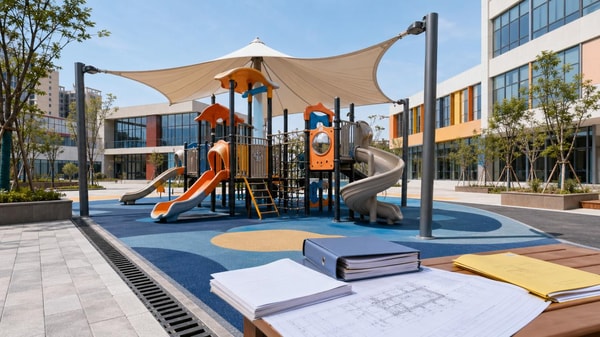
School environments place unusual pressure on playground climbers because use is concentrated. In a 20-minute break, a structure may receive more traffic than a hotel playground sees in 2 hours. This makes route redundancy essential. If one climber module has only a single ascent path and one descent path, even a well-built unit can feel overloaded within minutes when 25 to 40 children converge at once.
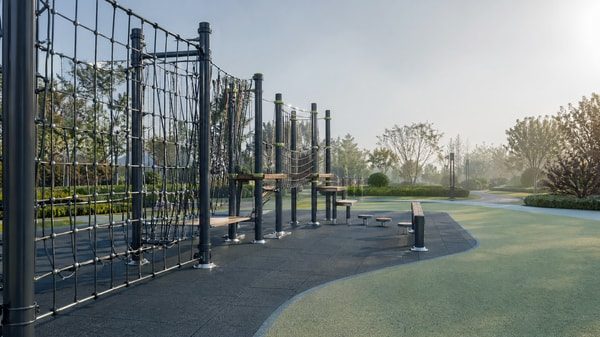
For these sites, project managers should look for linked climbing experiences rather than one dominant feature. Examples include a low-to-mid net sequence, a rotating challenge ladder zone, and a separate traverse wall that lets children spread laterally rather than stack vertically. The most successful layouts often create at least 3 independent challenge loops, allowing different age groups to self-select without blocking one another.
Another school-specific issue is supervision. Staff need clear sightlines, especially if the site serves more than one age band. Playground climbers with enclosed visual barriers or tightly wrapped tunnel sections can reduce line-of-sight control. In many campus projects, semi-open frames, angled nets, and transparent rope elements offer a better balance between challenge and oversight.
Best-fit features for school use
- At least 2 elevated access points for each main play tower or net volume.
- Transfer areas large enough for 4 to 6 children to pause without blocking movement.
- A mix of climb, traverse, and descend actions so queues do not concentrate on one challenge type.
- Age-zoned difficulty, such as lower reach intervals for younger users and steeper routes for older children.
Scenario 2: Hospitality, resort, and mixed-use commercial sites
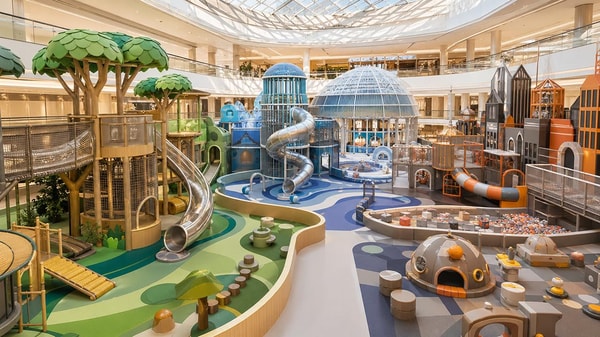
In hospitality projects, playground climbers contribute to guest perception as much as they do to play value. Families expect memorable equipment, but they also expect a calm, low-friction experience. A climber that constantly creates queues can undermine the premium atmosphere of a resort courtyard, rooftop family deck, or beach club recreation area, even if the equipment itself appears impressive.
Resort and mixed-use properties typically serve a wider age and confidence range than schools. On one afternoon, the same area may host toddlers with caregivers, independent children aged 6 to 10, and older siblings seeking more difficult challenges. For that reason, playground climbers in hospitality settings work best when they include parallel routes with visibly different difficulty levels rather than a single skill ladder that everyone must share.
Durability and finish quality also matter more here. Salt air, UV exposure, cleaning chemicals, and constant guest photography all raise expectations. Commercial buyers should ask not only about structural materials, but also about rope coatings, grip comfort, surface temperature behavior, and replacement lead times. A scenic resort play area may justify a 10 to 14 week custom production cycle if it improves visual integration and route efficiency at the same time.
Scenario 3: Public parks and leisure destinations
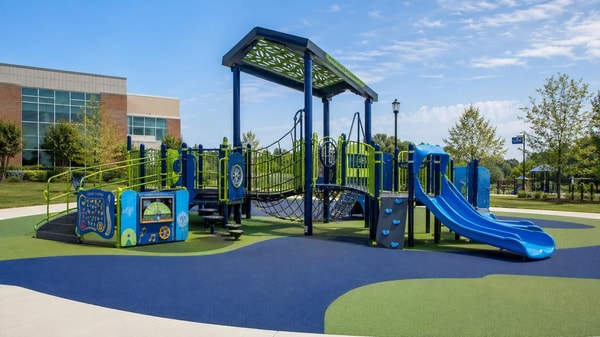
Municipal and leisure park environments bring the most unpredictable usage patterns. A neighborhood park may feel quiet on weekday mornings, then receive sustained crowding on weekends, holidays, and event days. In these conditions, playground climbers should absorb fluctuating traffic without relying on controlled user behavior. That means wider circulation logic, forgiving entry zones, and less dependence on a single advanced feature to create excitement.
Public sites also benefit from modular maintenance planning. When one rope bridge, connection node, or platform panel requires service, the rest of the climber should remain usable if possible. Project managers should look for layouts where a local repair does not shut down 50% of the challenge route. This is especially important where inspection cycles occur every 1 to 3 months and repair windows must fit public access schedules.
For destination leisure parks, visual impact can support attendance, but throughput still matters. Tall statement climbers can work well when paired with bypass options, side-entry traverses, and secondary features at ground level. Without those supporting elements, one signature structure may attract a line of waiting children while nearby space remains underused.
How to judge whether a climber layout will stay challenging without slowing traffic
Project managers need a practical method to evaluate playground climbers before procurement. Rather than focusing only on total footprint or headline age range, it is more useful to assess movement logic. The key is to estimate how children enter, pause, cross, and exit over repeated cycles. Even a compact climber can handle high use if it supports continuous motion and multiple skill pathways.
A useful review framework is to count route diversity, waiting space, and decision points. In many successful commercial installations, each major challenge zone offers at least 2 route options and one visible alternate path. This helps confident users move quickly while reducing pressure on children who need more time. If all users must complete the same sequence in the same order, queuing becomes much more likely.
It is also important to distinguish between real capacity and theoretical capacity. A supplier may indicate that a climber supports a certain number of users, but project performance depends on how those users distribute themselves. If 12 children can technically occupy the structure, yet 8 of them cluster around one vertical net, the site will still feel congested. Reviewing access geometry is therefore just as important as checking occupancy guidance.
A procurement checklist for high-flow climber selection
- Confirm the expected peak user load by age band, not just daily visitor totals.
- Count the number of independent entry points and identify whether any one point controls more than 30% of access.
- Check whether elevated pauses and transitions can hold at least 3 to 5 users without blocking movement.
- Review whether challenge levels are layered from easy to advanced rather than mixed into one forced path.
- Ask how inspections, part replacement, and temporary closures will affect usable play routes.
The table below can help compare layout characteristics during design review meetings, especially when multiple supplier proposals appear similar at first glance.
These ranges are not rigid design laws, but they are practical indicators. If a proposal shows several warning signs at once, the chance of user congestion increases. In commercial projects where satisfaction, supervision efficiency, and lifecycle value all matter, those warning signs deserve early adjustment before approvals, fabrication, and site works move forward.
Common scenario mistakes that reduce the value of playground climbers
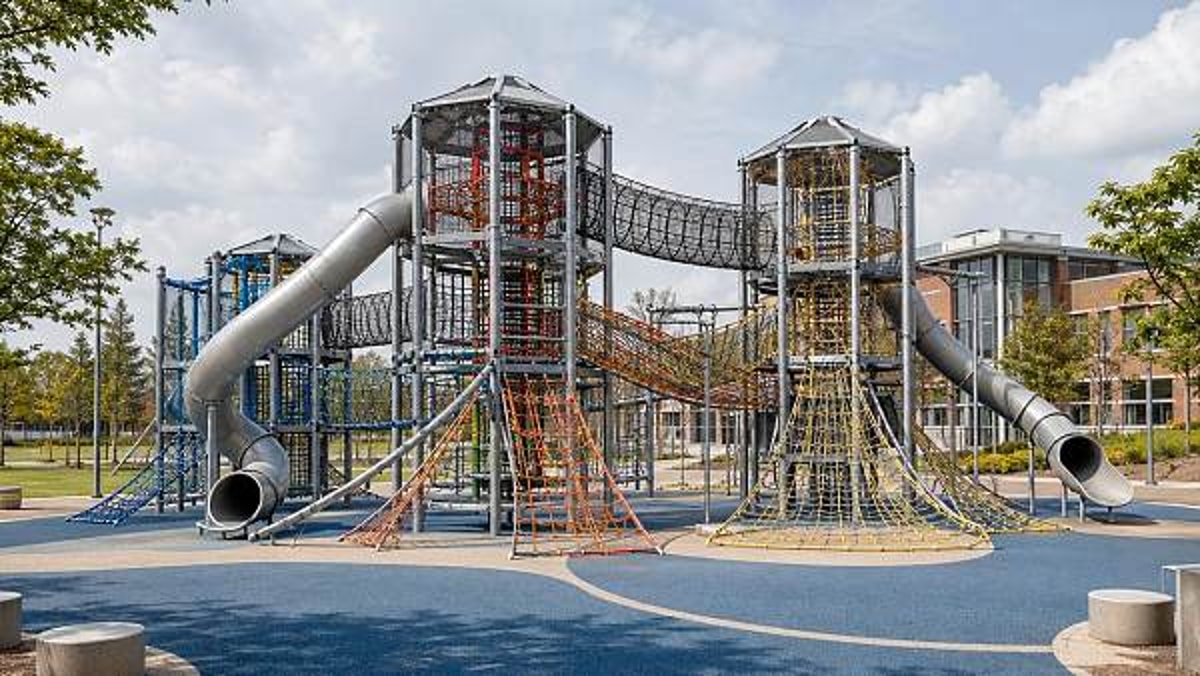
One of the most frequent mistakes is over-prioritizing height. Tall playground climbers can be visually striking, but if the vertical experience depends on only one ascent path, the structure may create a queue that feels longer than the actual wait time. This is particularly risky in projects where visible crowding affects guest perception, such as hotels, branded residential developments, and premium leisure sites.
Another mistake is underestimating mixed-age interaction. In many commercial settings, age ranges overlap more than buyers expect. A climber designed mainly for older children may still attract younger users, slowing the route and increasing hesitation at difficult transitions. Conversely, overly simple structures can lead older children to dominate the few challenging points available, causing localized conflict and wear.
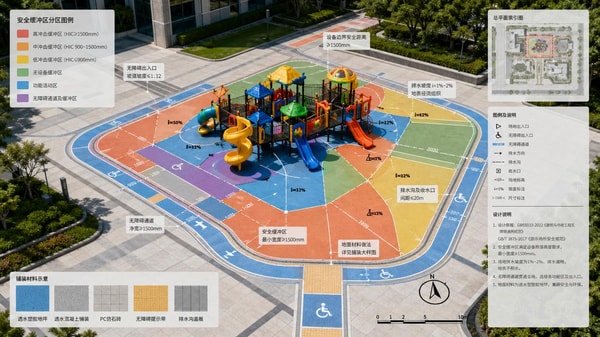
Procurement teams also sometimes treat surfacing, shade, and surrounding amenities as separate decisions, even though they directly influence climber use patterns. A well-designed climber can still bottleneck if nearby seating, stroller parking, or circulation paths push users toward one side of the structure. In outdoor environments, solar exposure can also make certain hand-contact surfaces less attractive at midday, shifting all traffic to shaded entry routes.
Red flags to catch before final approval
- The most exciting feature is accessible only through one route.
- There is no easy exit from advanced elements for hesitant users.
- The supplier layout drawing does not show how users move during peak occupancy.
- Maintenance access requires shutting down the central circulation route.
- The climber is specified without reviewing adjacent seating, fencing, surfacing, and approach paths.
When these issues appear, the solution is not always a larger structure. Often the better answer is a smarter distribution of challenge. A medium-scale climber with 3 well-planned routes may outperform a much larger unit with one signature entry. For project managers under budget and schedule pressure, that distinction can improve both procurement efficiency and post-opening performance.
How to move from scenario review to a reliable commercial specification
Once the project scenario is clear, the next step is to turn it into a specification brief that suppliers can answer accurately. For playground climbers, that brief should go beyond dimensions and materials. It should describe expected user mix, peak occupancy periods, supervision model, site climate, maintenance preferences, and any aesthetic integration requirements. In many cases, this reduces revision cycles and helps manufacturers recommend route layouts that fit the real operating environment.
A practical brief often includes 6 core topics: target age bands, estimated simultaneous users, preferred challenge types, accessible or inclusive play considerations, finish expectations, and installation constraints. It is also useful to state whether the site prioritizes fast turnover, extended dwell time, or balanced mixed use. That information affects whether a supplier proposes compact throughput-focused playground climbers or broader experiential systems with layered play zones.
Lead time planning should also be addressed early. Standard commercial climber systems may fit a shorter procurement window, while custom theming, special color matching, or site-specific engineering can extend delivery. Depending on project scope, design coordination, production, shipping, and installation can collectively take several weeks to a few months. Early clarification helps protect opening schedules and reduces last-minute substitutions that compromise circulation quality.
Why work with a sourcing-focused partner
For project managers handling commercial play areas as part of larger hospitality, education, or leisure developments, sourcing support is valuable because equipment selection is tied to broader project decisions. Material compatibility, compliance expectations, packaging, logistics coordination, and documentation readiness all affect whether the final installation meets operational needs. A sourcing-focused partner can help align playground climbers with the larger procurement strategy instead of treating them as a standalone purchase.
At Global Commercial Trade, we support buyers who need more than a catalog view. We help translate project scenarios into practical sourcing discussions, including parameter confirmation, product selection direction, custom layout considerations, estimated delivery timing, and common certification questions relevant to commercial environments. This is particularly useful when the goal is to compare multiple options while keeping flow performance, user challenge, and long-term maintenance in balance.
Contact us for project-specific evaluation
If you are assessing playground climbers for a school, resort, park, family venue, or mixed-use commercial project, contact us to discuss your operating scenario. We can help you review layout suitability, clarify key parameters, compare route configurations, estimate delivery timelines, and identify where customization may improve circulation.
You can also reach out for support on product selection, sample or material review, quotation discussions, installation planning factors, and general compliance considerations. If your priority is keeping children challenged without creating bottlenecks, a scenario-based sourcing conversation is the fastest way to move toward a more reliable commercial solution.
Search News
Hot Articles
Popular Tags
Need ExpertConsultation?
Connect with our specialized leisureengineering team for procurementstrategies.
Recommended News
 Apr 30, 2026When a playground consultant saves more than an in-house planPlayground consultant advice can prevent costly design errors, compliance gaps, and vendor mistakes. See when expert support beats an in-house plan and protects budget.● Theme Park Strategist
 Apr 30, 2026A smarter playground layout starts with traffic flowPlayground layout starts with traffic flow. Discover how smarter circulation improves safety, accessibility, capacity, and long-term commercial performance.● Theme Park Strategist
 Apr 30, 2026Playground certification steps that delay launch datesPlayground certification delays can add weeks to launch dates. Learn the key bottlenecks, hidden compliance risks, and practical steps to keep projects on schedule.● Theme Park Strategist
 Apr 30, 2026Playground climbers that keep kids challenged without bottlenecksPlayground climbers that reduce bottlenecks keep more kids engaged, improve flow, and suit schools, resorts, parks, and leisure venues. Learn what to specify before you buy.● Theme Park Strategist
 Apr 30, 2026What playground inspection reports often reveal too latePlayground inspection reports often reveal hidden risks too late. Learn how to catch design, installation, and safety issues earlier to avoid delays, rework, and costly project setbacks.● Theme Park Strategist
 Apr 30, 2026Playground accessibility details that change real usabilityPlayground accessibility details shape real usability beyond ramps. Explore transfer points, sensory zones, sightlines, and circulation tips that help buyers choose truly inclusive play spaces.● Theme Park Strategist
 Apr 30, 2026Playground shade structures that improve comfort in hot seasonsPlayground shade structures improve comfort, safety, and usability in hot seasons. Explore smart, durable solutions for schools, parks, and commercial projects.● Theme Park Strategist
 Apr 30, 2026Commercial slides and the maintenance issues often overlookedCommercial slides often fail on maintenance, not design. Learn the overlooked wear, cleaning, access, and compliance issues that affect safety, uptime, and long-term cost.● Theme Park Strategist
 Apr 30, 2026Why playground theme matters more than many layouts suggestPlayground theme shapes engagement, brand value, and repeat visits more than many layouts suggest. Learn how to choose the right concept for hotels, malls, and family venues.● Theme Park Strategist
 Apr 30, 2026Outdoor play structures that stay engaging across age groupsOutdoor play structures that engage ages 2–12: discover how schools, parks, and resorts can choose safer, durable, multi-age designs that boost replay value and buyer confidence.● Theme Park Strategist
 Apr 30, 2026Choosing a playground contractor without missing red flagsPlayground contractor selection made smarter: learn how to spot red flags early, reduce safety and cost risks, and choose a reliable partner with confidence.● Theme Park Strategist
 Apr 30, 2026Playground planning errors that create costly redesigns laterPlayground planning mistakes can trigger costly redesigns, delays, and compliance issues. Learn how to avoid common risks and deliver safer, smarter projects on budget.● Theme Park Strategist
 Apr 30, 2026How playground fencing affects safety without feeling restrictivePlayground fencing shapes safety, visibility, and comfort. Discover how to choose secure, open-feel fencing that protects children without making play spaces feel closed in.● Theme Park Strategist
 Apr 29, 2026Adventure Playground Safety Mistakes to Avoid Before InstallationAdventure playground safety mistakes can delay opening and raise liability. Learn the key pre-installation checks for materials, site planning, surfacing, and compliance.● Theme Park Strategist
 Apr 29, 2026Chinese Tennis Robot Demand Rises in Europe After Zheng Qinwen's Madrid RunChinese tennis robot demand surges in Europe after Zheng Qinwen's Madrid Open run—CE-certified AI training systems now sought by German & Spanish academies.● Theme Park Strategist
 Apr 29, 2026Vietnam Mandates Child Finger-Trap Sensors for Indoor Play EquipmentVietnam mandates child finger-trap sensors for indoor play equipment—key compliance update for exporters, suppliers & certifiers. Act now before Oct 1, 2026.● Theme Park Strategist
 Apr 29, 2026CBA Guangdong’s Loss Spurs Export Inquiries for Indoor Playground EquipmentCBA Guangdong’s playoff loss sparks urgent export inquiries for EN1176-compliant indoor playground equipment — basketball-themed, rapid-assembly modules for ASEAN family entertainment centers.● Theme Park Strategist
 Apr 28, 2026Vietnam Mandates Child Hand-Trap Sensors for Indoor Play EquipmentVietnam mandates VILAS-certified hand-trap sensors for indoor play equipment—key for exporters, manufacturers & certifiers. Act before Oct 2026!● Theme Park Strategist
 Apr 29, 2026What to Review Before Buying a Trampoline ParkCompare trampoline park price, trampoline park cost, and trampoline park equipment before choosing a trampoline park supplier. Get expert tips on safety, layout, and sourcing.● Theme Park Strategist
 Apr 29, 2026How Much Does a Trampoline Park CostTrampoline park cost explained: compare trampoline park price, equipment quality, and supplier value. Learn what drives ROI before choosing a trampoline park for sale.● Theme Park Strategist
 Apr 29, 2026Safe Trampoline Park Equipment BasicsSafe trampoline park equipment basics: compare trampoline park supplier options, indoor playground design, durability, compliance, and total trampoline park cost before you buy.● Theme Park Strategist
 Apr 29, 2026How to Audit an Indoor Playground FactoryIndoor playground manufacturer audit guide: learn how to assess an indoor playground supplier, indoor playground design strength, safety, capacity, and trampoline park equipment quality before you buy.● Theme Park Strategist
 Apr 29, 2026Indoor Playground Supplier Pricing GuideIndoor playground supplier pricing guide: compare indoor playground manufacturer quotes, indoor playground design value, trampoline park equipment cost, and hidden fees before you buy.● Theme Park Strategist
 Apr 29, 2026Trampoline Park Supplier Checklist 2026Trampoline park supplier checklist 2026: compare trampoline park price, cost, equipment, and indoor playground design to choose a safer, smarter supplier for profitable projects.● Theme Park Strategist