When a playground consultant saves more than an in-house plan
When procurement teams compare an internal playground concept with the cost of hiring a specialist, the cheapest option on paper is often the most expensive in delivery. In commercial playground projects, design errors, code gaps, supplier mismatch, and installation rework can quickly erase any apparent savings from keeping everything in-house. In many cases, a qualified playground consultant does not add cost so much as prevent avoidable cost.
That matters even more when buyers are working across public-use, hospitality, education, mixed-use, or leisure environments where safety, durability, insurance exposure, and user satisfaction all carry financial consequences. A consultant’s value is not just creativity. It is the ability to align concept, compliance, budget, product selection, and long-term maintenance before procurement commitments are locked in.
For purchasing professionals, the real question is not “Should we outsource design?” but “At what project size, risk level, and complexity does external expertise protect our budget better than an internal plan?” The answer is often sooner than expected. This article examines where a playground consultant creates measurable commercial value, how to assess whether your project needs one, and what procurement teams should expect from the engagement.
What buyers are really searching for when they consider a playground consultant
Behind the keyword “playground consultant,” most procurement-driven searches are not looking for general inspiration. They are looking for decision support. Buyers want to know whether hiring a specialist will reduce total project risk, improve supplier choices, support compliance, and avoid expensive mistakes that internal stakeholders may not see early enough.
That search intent is especially practical. A procurement manager may already have a facilities team, architect, landscape designer, or operations lead involved. What they need to understand is whether those resources are sufficient for a successful commercial playground outcome. In many cases, the hidden concern is simple: if something goes wrong after purchase, who could have prevented it?
The strongest content for this audience therefore focuses on business value, lifecycle cost, vendor qualification, standards interpretation, and fit-for-purpose design. Generic descriptions of “what a consultant does” are less useful than a clear explanation of where consultants save money, where in-house planning commonly fails, and how to evaluate return on specialist fees.
Why an in-house playground plan often looks cheaper than it really is
Internal teams usually start with advantages: they know the site, understand stakeholder expectations, and may already have established vendor relationships. On smaller, low-risk projects, that can be enough. The problem is that playground procurement is not only about buying equipment. It is about integrating user flow, impact areas, fall protection, accessibility, age zoning, material performance, maintenance access, and jurisdiction-specific standards into one coherent scope.
When an internal plan overlooks any of these points, the budget exposure starts multiplying. A design that fits physically but fails safety clearance requirements can trigger redesign. Equipment selected from multiple vendors may create installation conflicts. Surfaces specified without considering climate, drainage, or maintenance practices may degrade early. Even a seemingly minor accessibility oversight can force late-stage changes that affect foundations, surfacing, circulation paths, and approvals.
These are not rare exceptions. They are common project failures caused by treating playground sourcing like a simple equipment purchase rather than a systems-based commercial installation. Procurement teams often discover too late that the “cheap” in-house route priced only the initial buy, not the coordination risk, rework cost, liability exposure, and shortened asset life.
Where a playground consultant saves money in real commercial terms
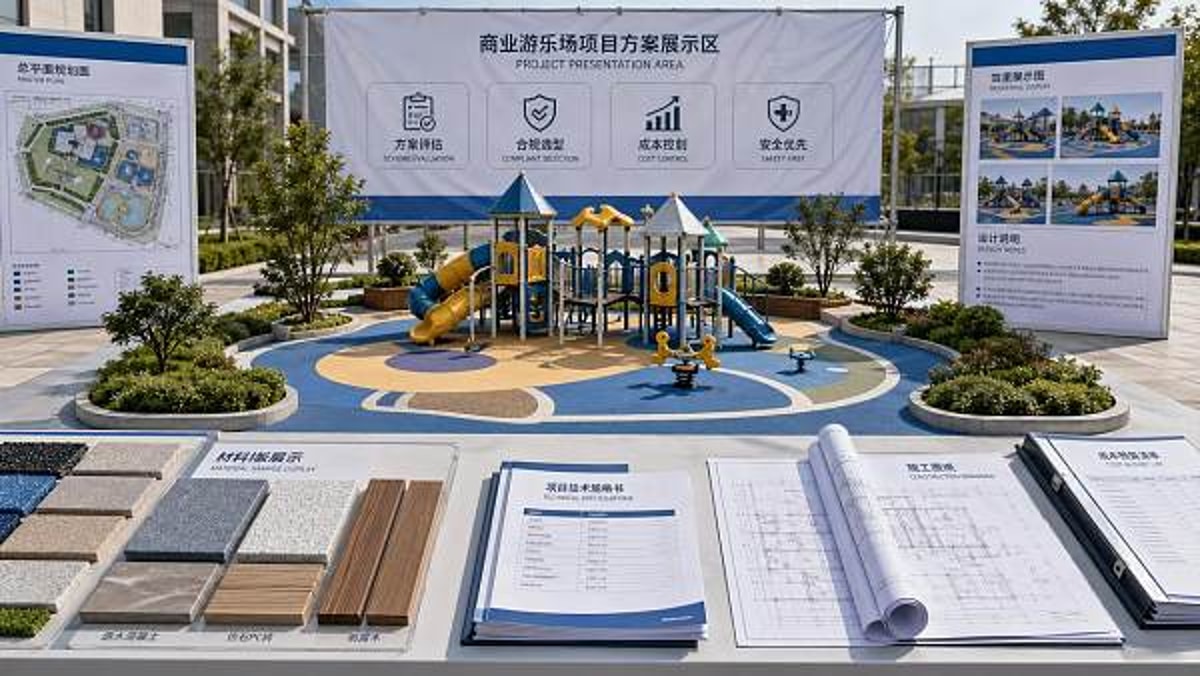
The first and most obvious area is error prevention. An experienced playground consultant identifies conflicts before tenders are issued or purchase orders are placed. This includes layout problems, incomplete specifications, age-group mismatches, weak durability assumptions, or noncompliant product combinations. Preventing one redesign cycle can offset a significant share of consulting fees.
The second savings area is supplier alignment. Procurement teams are frequently presented with attractive product catalogs, custom promises, and competing compliance claims. A consultant helps translate these offers into comparable commercial criteria: certification status, installation tolerance, spare-part strategy, lead-time realism, maintenance burden, and suitability for actual traffic levels. This reduces the risk of choosing a supplier that looks competitive on unit price but underperforms in operation.
The third area is lifecycle economics. A consultant should help buyers avoid overbuying where simpler specifications are sufficient, but also avoid underbuying where higher-traffic use, harsh weather, or a premium guest environment demands stronger materials and better finishing. The best value is not the lowest initial quote. It is the specification that delivers safe performance, acceptable maintenance cost, and the intended user experience across the asset’s useful life.
Compliance is where specialist input often pays for itself fastest
Commercial buyers rarely need a reminder that safety matters. What they do need is clarity on how safety translates into specification risk. Playground standards can involve complex requirements related to entrapment, head and neck openings, guardrails, surfacing performance, fall heights, spacing, access, and use zones. These requirements also vary by market, project type, and local enforcement practices.
An internal team may be highly competent in construction or procurement while still lacking deep familiarity with playground-specific interpretation. That gap matters because compliance is not always a simple yes-or-no question on a product sheet. It often depends on the relationship between the equipment, the surfacing, the layout, and the installation context. A certified-looking component can still create a noncompliant or unsafe overall scheme if integrated poorly.
A playground consultant brings practical interpretation, not just textbook knowledge. For procurement, this means fewer assumptions built into tender documents, stronger specification language, and a more defensible buying process. It also helps when dealing with insurers, operators, legal stakeholders, or client representatives who expect proof that the project was planned with due care.
Consultants improve vendor selection beyond price comparison
Many procurement teams already run robust quotation and tender processes. The challenge is that playground suppliers can be difficult to compare on a like-for-like basis. One vendor may offer impressive design flexibility, another stronger certifications, another shorter lead times, and another better pricing based on narrower scope assumptions. Without specialist review, the commercial comparison may miss major technical differences.
A good playground consultant helps normalize bids. They can identify where one supplier excluded installation details, where another assumed a different surfacing system, or where warranty language does not align with expected use intensity. This creates a cleaner commercial evaluation and reduces the chance of awarding to a vendor whose proposal only appears cheaper because critical scope elements are missing or unclear.
Consultants also help buyers assess manufacturing credibility. In global sourcing environments, this can include reviewing material specifications, fabrication methods, coatings, anchoring systems, spare-parts support, and documentation quality. For procurement teams sourcing internationally, that insight is crucial because supplier risk does not end at shipment. It continues through customs, installation, inspection, handover, and long-term serviceability.
When hiring a playground consultant makes the most sense
Not every project requires external advisory support. If the scope is small, standardized, and low-risk, and your organization has recent playground delivery experience, an internal process may be sufficient. But several conditions strongly favor bringing in a consultant. One is multi-stakeholder complexity, such as hospitality, municipality, education, retail, and developer interests all influencing the brief.
Another strong trigger is customization. The more the project departs from standard catalog equipment and moves toward branded, themed, or site-specific solutions, the more design coordination and technical review are needed. Custom work increases the chance of specification ambiguity, installation conflicts, and compliance interpretation issues. External expertise becomes less of a luxury and more of a control measure.
A third trigger is reputational exposure. Premium hotels, mixed-use destinations, private schools, leisure operators, and public-facing developments do not just need a compliant playground. They need one that performs operationally and reflects brand standards. In these environments, user dissatisfaction, visible wear, awkward circulation, or safety incidents can create far more damage than the consulting fee ever would.
How procurement teams should evaluate a playground consultant
The right consultant should offer more than conceptual sketches. Buyers should look for a track record in commercial or institutional projects similar in scale and use profile to their own. Relevant experience might include resorts, family entertainment venues, schools, municipalities, residential developments, or mixed-use public spaces. Project similarity matters because a consultant who understands real operating conditions will make stronger recommendations than one focused only on visual design.
Procurement should also examine technical depth. Ask how the consultant approaches standards, supplier review, accessibility, surfacing selection, maintenance planning, and installation coordination. Their value lies in connecting these issues early, not passing them downstream. A consultant who cannot explain how they reduce procurement risk in practical terms may be acting more like a designer than a strategic advisor.
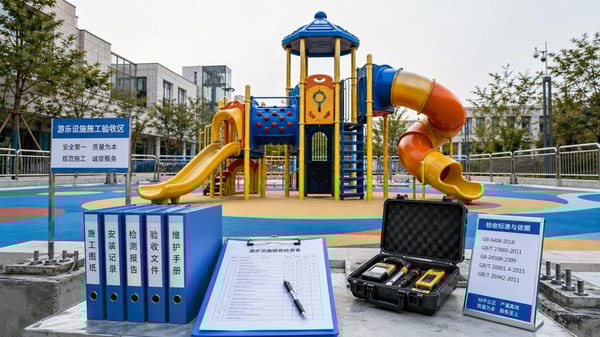
It is also worth clarifying deliverables in commercial language. What exactly will you receive: concept validation, specification support, vendor-neutral advice, bill-of-quantity guidance, tender review, shop-drawing review, site supervision, punch-list support, post-install inspection coordination? Defining outputs this way helps procurement compare proposals and avoid paying for a vague advisory role that leaves critical tasks uncovered.
Questions buyers should ask before appointing one
Start with the scope boundary. Ask where the consultant’s responsibility begins and ends, and how they coordinate with architects, landscape designers, engineers, project managers, and suppliers. Many project issues arise in the gaps between disciplines. The more clearly those interfaces are mapped, the less likely procurement will face claims that a problem belonged to someone else.
Next, ask how the consultant remains vendor-neutral. Some consultants are fully independent, while others have preferred manufacturer relationships. Neither model is automatically wrong, but procurement should understand the commercial implications. If recommendations are linked to certain suppliers, that should be transparent so buyers can assess whether the advice serves the project or the sales channel.
Finally, ask for examples of cost avoidance, not only completed projects. A mature consultant should be able to explain where they prevented redesign, challenged unsuitable materials, corrected scope gaps, or improved tender clarity. Procurement teams benefit from evidence of judgment under real project pressure, not just polished images of finished play areas.
Calculating ROI: a practical way to justify the fee internally
For internal approval, consultant fees should be compared against probable risk-adjusted savings, not just against the design line item. Start by estimating the cost of one redesign cycle, one delayed opening, one noncompliance correction, or one early replacement of a high-wear component. In commercial environments, even a small change order can equal or exceed advisory fees.
Then consider softer but still material savings: stronger tender competition because specifications are clearer, less internal time spent resolving technical disputes, fewer post-award ambiguities, and a more defensible procurement file. These factors are especially important in organizations where multiple departments influence the purchase and accountability is shared.
Procurement can also frame ROI in operational terms. If the consultant helps deliver a layout that improves user flow, reduces supervision blind spots, lowers maintenance interventions, or extends surfacing life, those gains continue after handover. A playground is not just a capital purchase; it is an operating asset. ROI should be measured over years, not just at contract award.
The strategic takeaway for commercial buyers
A playground consultant saves more than an in-house plan when the project involves real safety exposure, customization, multiple suppliers, demanding stakeholders, or meaningful brand and operational risk. Their value is strongest when they are engaged early enough to influence scope, standards, and supplier evaluation before expensive commitments are made.
For procurement teams, this is not a question of replacing internal capability. It is about reinforcing it where specialist knowledge changes financial outcomes. The best consultant does not complicate purchasing. They simplify it by turning uncertainty into clearer specifications, stronger vendor comparisons, better compliance confidence, and fewer unpleasant surprises during installation and operation.
In practical terms, if your organization is sourcing a commercial playground where failure would trigger redesign, liability concerns, reputational damage, or avoidable maintenance cost, external expertise is often the more economical choice. The smartest buy is not always the lowest bid or the quickest internal plan. It is the process that protects value from concept to commissioning.
Search News
Hot Articles
Popular Tags
Need ExpertConsultation?
Connect with our specialized leisureengineering team for procurementstrategies.
Recommended News
 Apr 30, 2026When a playground consultant saves more than an in-house planPlayground consultant advice can prevent costly design errors, compliance gaps, and vendor mistakes. See when expert support beats an in-house plan and protects budget.● Theme Park Strategist
 Apr 30, 2026A smarter playground layout starts with traffic flowPlayground layout starts with traffic flow. Discover how smarter circulation improves safety, accessibility, capacity, and long-term commercial performance.● Theme Park Strategist
 Apr 30, 2026Playground certification steps that delay launch datesPlayground certification delays can add weeks to launch dates. Learn the key bottlenecks, hidden compliance risks, and practical steps to keep projects on schedule.● Theme Park Strategist
 Apr 30, 2026Playground climbers that keep kids challenged without bottlenecksPlayground climbers that reduce bottlenecks keep more kids engaged, improve flow, and suit schools, resorts, parks, and leisure venues. Learn what to specify before you buy.● Theme Park Strategist
 Apr 30, 2026What playground inspection reports often reveal too latePlayground inspection reports often reveal hidden risks too late. Learn how to catch design, installation, and safety issues earlier to avoid delays, rework, and costly project setbacks.● Theme Park Strategist
 Apr 30, 2026Playground accessibility details that change real usabilityPlayground accessibility details shape real usability beyond ramps. Explore transfer points, sensory zones, sightlines, and circulation tips that help buyers choose truly inclusive play spaces.● Theme Park Strategist
 Apr 30, 2026Playground shade structures that improve comfort in hot seasonsPlayground shade structures improve comfort, safety, and usability in hot seasons. Explore smart, durable solutions for schools, parks, and commercial projects.● Theme Park Strategist
 Apr 30, 2026Commercial slides and the maintenance issues often overlookedCommercial slides often fail on maintenance, not design. Learn the overlooked wear, cleaning, access, and compliance issues that affect safety, uptime, and long-term cost.● Theme Park Strategist
 Apr 30, 2026Why playground theme matters more than many layouts suggestPlayground theme shapes engagement, brand value, and repeat visits more than many layouts suggest. Learn how to choose the right concept for hotels, malls, and family venues.● Theme Park Strategist
 Apr 30, 2026Outdoor play structures that stay engaging across age groupsOutdoor play structures that engage ages 2–12: discover how schools, parks, and resorts can choose safer, durable, multi-age designs that boost replay value and buyer confidence.● Theme Park Strategist
 Apr 30, 2026Choosing a playground contractor without missing red flagsPlayground contractor selection made smarter: learn how to spot red flags early, reduce safety and cost risks, and choose a reliable partner with confidence.● Theme Park Strategist
 Apr 30, 2026Playground planning errors that create costly redesigns laterPlayground planning mistakes can trigger costly redesigns, delays, and compliance issues. Learn how to avoid common risks and deliver safer, smarter projects on budget.● Theme Park Strategist
 Apr 30, 2026How playground fencing affects safety without feeling restrictivePlayground fencing shapes safety, visibility, and comfort. Discover how to choose secure, open-feel fencing that protects children without making play spaces feel closed in.● Theme Park Strategist
 Apr 29, 2026Adventure Playground Safety Mistakes to Avoid Before InstallationAdventure playground safety mistakes can delay opening and raise liability. Learn the key pre-installation checks for materials, site planning, surfacing, and compliance.● Theme Park Strategist
 Apr 29, 2026Chinese Tennis Robot Demand Rises in Europe After Zheng Qinwen's Madrid RunChinese tennis robot demand surges in Europe after Zheng Qinwen's Madrid Open run—CE-certified AI training systems now sought by German & Spanish academies.● Theme Park Strategist
 Apr 29, 2026Vietnam Mandates Child Finger-Trap Sensors for Indoor Play EquipmentVietnam mandates child finger-trap sensors for indoor play equipment—key compliance update for exporters, suppliers & certifiers. Act now before Oct 1, 2026.● Theme Park Strategist
 Apr 29, 2026CBA Guangdong’s Loss Spurs Export Inquiries for Indoor Playground EquipmentCBA Guangdong’s playoff loss sparks urgent export inquiries for EN1176-compliant indoor playground equipment — basketball-themed, rapid-assembly modules for ASEAN family entertainment centers.● Theme Park Strategist
 Apr 28, 2026Vietnam Mandates Child Hand-Trap Sensors for Indoor Play EquipmentVietnam mandates VILAS-certified hand-trap sensors for indoor play equipment—key for exporters, manufacturers & certifiers. Act before Oct 2026!● Theme Park Strategist
 Apr 29, 2026What to Review Before Buying a Trampoline ParkCompare trampoline park price, trampoline park cost, and trampoline park equipment before choosing a trampoline park supplier. Get expert tips on safety, layout, and sourcing.● Theme Park Strategist
 Apr 29, 2026How Much Does a Trampoline Park CostTrampoline park cost explained: compare trampoline park price, equipment quality, and supplier value. Learn what drives ROI before choosing a trampoline park for sale.● Theme Park Strategist
 Apr 29, 2026Safe Trampoline Park Equipment BasicsSafe trampoline park equipment basics: compare trampoline park supplier options, indoor playground design, durability, compliance, and total trampoline park cost before you buy.● Theme Park Strategist
 Apr 29, 2026How to Audit an Indoor Playground FactoryIndoor playground manufacturer audit guide: learn how to assess an indoor playground supplier, indoor playground design strength, safety, capacity, and trampoline park equipment quality before you buy.● Theme Park Strategist
 Apr 29, 2026Indoor Playground Supplier Pricing GuideIndoor playground supplier pricing guide: compare indoor playground manufacturer quotes, indoor playground design value, trampoline park equipment cost, and hidden fees before you buy.● Theme Park Strategist
 Apr 29, 2026Trampoline Park Supplier Checklist 2026Trampoline park supplier checklist 2026: compare trampoline park price, cost, equipment, and indoor playground design to choose a safer, smarter supplier for profitable projects.● Theme Park Strategist