What to Review Before Buying a Trampoline Park
Before comparing trampoline park price or negotiating with a trampoline park supplier, buyers should review safety standards, layout efficiency, maintenance needs, and total trampoline park cost. Whether you are evaluating trampoline park equipment, planning a trampoline park for sale project, or sourcing from an indoor playground supplier, this guide helps procurement teams and business decision-makers make informed, low-risk investment choices.
What should buyers evaluate first before buying a trampoline park?
A commercial trampoline park is not a single product purchase. It is a system decision involving visitor flow, safety zoning, frame engineering, padding quality, maintenance workload, and supplier execution. For procurement teams, the first review should focus on 4 core areas: compliance, layout, operating capacity, and lifecycle cost. Missing any one of these can turn an attractive quotation into a difficult long-term asset.
In the sports and entertainment sector, a trampoline park often serves mixed user groups, from children to teenagers and family visitors. That means equipment selection must support different jump intensity levels and operating hours. A venue open 7 days per week faces very different stress conditions from a seasonal play center, so initial evaluation should always match the intended business model rather than rely on catalog images alone.
Many buyers start with trampoline park cost, but cost should be reviewed in 3 layers: initial equipment price, installation and freight, and ongoing replacement or inspection expense. Springs, pads, jump mats, netting, and foam pit components all have different wear cycles. A lower upfront price may create higher downtime if spare parts are slow to supply or if maintenance instructions are incomplete.
For information researchers, distributors, and business evaluators, the early-stage question is simple: can this trampoline park supplier support a commercial project from planning to after-sales? Global Commercial Trade helps buyers reduce this uncertainty by connecting sourcing decisions with market intelligence, supplier screening logic, and project-oriented evaluation rather than one-dimensional price comparison.
A practical first-round screening checklist
- Confirm whether the trampoline park equipment is designed for commercial use, not residential use adapted for public operation.
- Review the target age range, user capacity per zone, and expected daily operating hours before discussing final configuration.
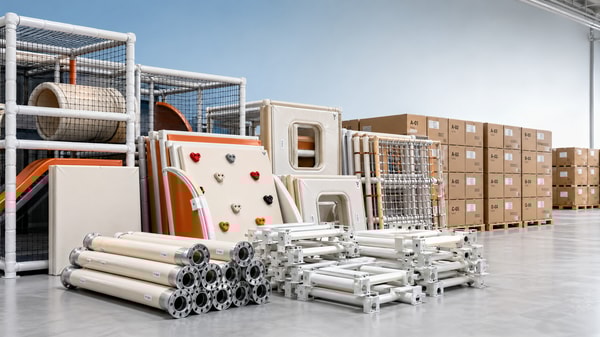
- Ask for layout drawings, component lists, maintenance recommendations, and packaging details in the first 7–15 days of supplier communication.
- Check whether the supplier can coordinate customization, replacement parts, and installation guidance for cross-border commercial projects.
This first screening stage is especially useful for distributors and agents that compare multiple factories. It reduces time spent on visually similar offers that differ significantly in structure, support scope, and commercial readiness.
Which safety and compliance points matter most in trampoline park procurement?
Safety is usually the most important review area, but many procurement teams treat it too generally. In practice, a safe trampoline park depends on how the full system works together: steel frame stability, jump mat tension, spring protection, impact padding, soft barriers, foam pit design, and circulation paths. Buyers should request technical clarification on these points before confirming deposit terms.
Commercial venues in different countries may require different documentation, but common review topics include structural material specifications, fire-related material considerations for indoor spaces, labeling, installation guidance, and routine inspection requirements. When a trampoline park supplier cannot explain which materials are used where, or how replacement intervals are managed, that is a procurement risk even before formal certification review begins.
Another common mistake is focusing only on the trampoline bed. Buyers should also examine edge protection, staircase access, handrails where needed, netting interfaces, wall padding coverage, and separation between active zones. In family entertainment centers, accidents often occur at transitions between zones rather than at the center of the jumping surface itself.
A well-organized sourcing process usually breaks compliance review into 3 stages: pre-quotation document check, pre-production design confirmation, and pre-shipment inspection. This sequence helps business evaluators avoid late-stage redesign costs and supports internal approval for capital expenditure.
Key compliance questions to raise with a trampoline park supplier
Before issuing a purchase order, ask the supplier to explain how they manage impact zones, component labeling, and maintenance instructions. The goal is not to collect marketing claims. The goal is to understand whether the factory works with repeatable commercial standards and whether the documentation is usable by installers, operators, and local compliance reviewers.
This table is useful during supplier comparison because it shifts the conversation from broad safety claims to verifiable review points. For distributors and sourcing managers, that makes quotation analysis more objective and easier to report internally.
Why layout safety is part of compliance, not just design
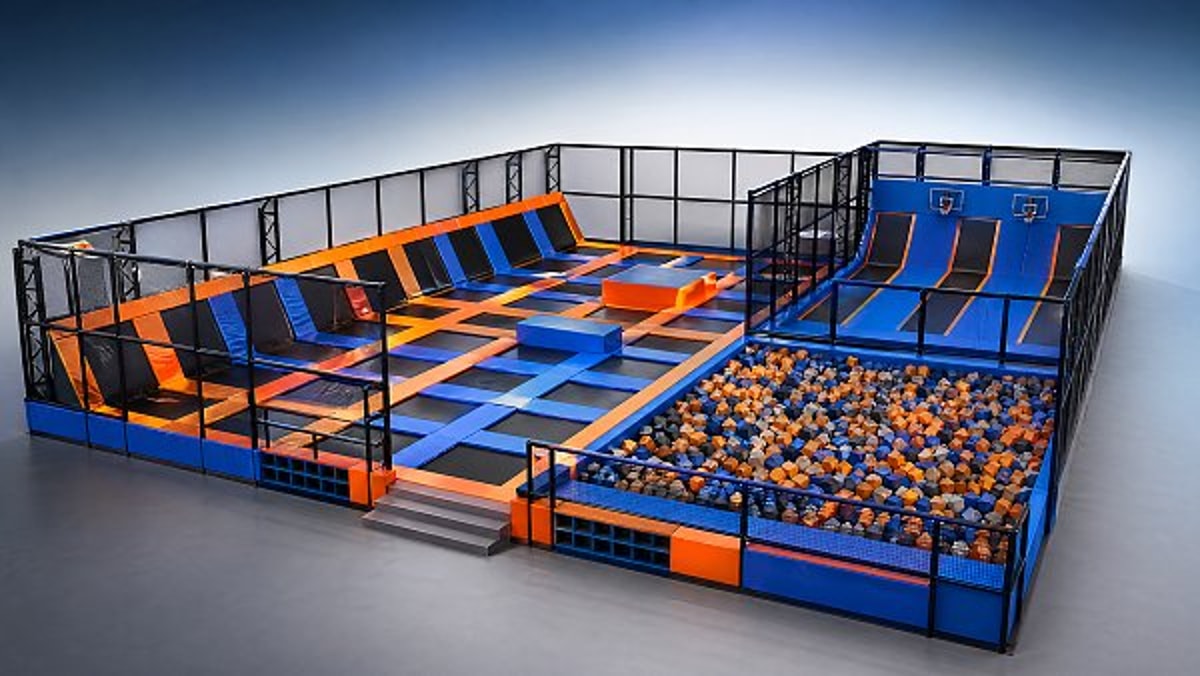
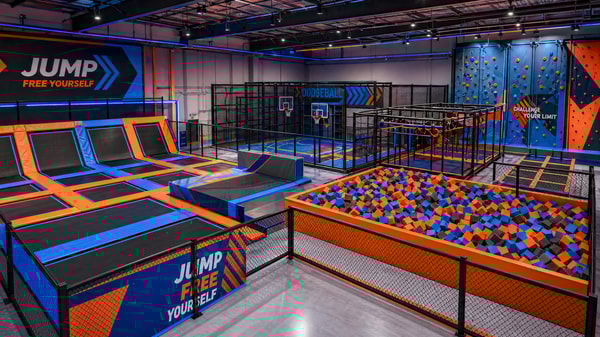
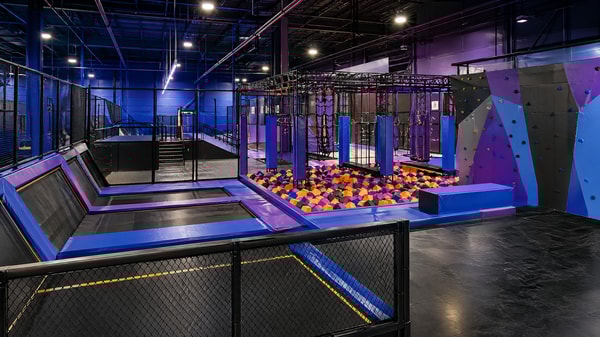
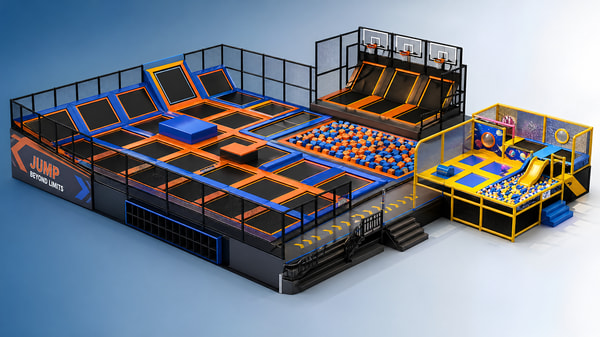
A trampoline park layout should separate high-impact activity areas from waiting zones and access paths. In compact venues, buyers should pay close attention to foam pit entry, dodgeball court boundaries, and staff visibility. Good design can reduce supervision pressure over 10–12 operating hours per day and improve user flow during peak periods.
If the project includes combined attractions such as climbing walls, ninja elements, soft play, or party rooms, zoning becomes even more important. This is where a sourcing platform with sector-specific knowledge can add value by helping buyers compare not just products, but integrated commercial experience solutions.
How do layout, capacity, and attraction mix affect business performance?
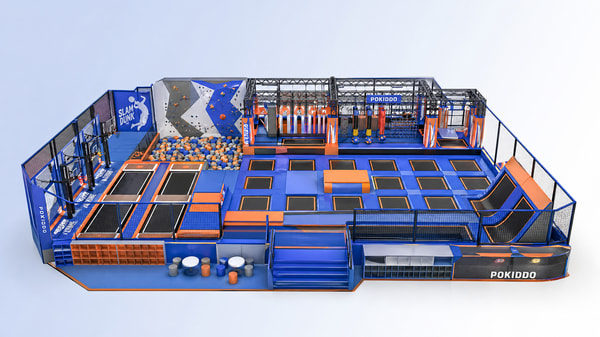
When reviewing a trampoline park for sale, buyers often focus on what fits physically inside the building. A better question is what layout supports revenue, supervision, and repeat visits. A good trampoline park layout balances active jump areas with circulation, spectator space, and monetizable functions such as party rooms, cafés, or redemption zones where applicable.
Typical project planning starts with 3 input categories: available ceiling height, net usable floor area, and target user profile. For example, a center designed mainly for children under 10 will use different attraction intensity and spacing than a teen-focused venue. Procurement teams should ask suppliers to show which modules are standard and which require custom engineering.
Capacity planning also affects total trampoline park cost. More zones may increase ticket appeal, but they also increase supervision points, wear surfaces, and replacement demand. A simplified layout can sometimes produce better long-term margins, especially in regional family entertainment venues where staffing efficiency matters as much as attraction count.
For commercial buyers, the strongest layouts are usually those that keep 4 functions aligned: safety control, customer circulation, visual impact, and maintenance access. GCT’s value in this stage is helping project teams connect equipment sourcing with broader commercial environment decisions rather than treating the park as an isolated purchase.
Comparing common trampoline park zone strategies
The right attraction mix depends on venue type, age positioning, and budget range. The comparison below can help procurement and distribution teams decide whether to prioritize versatility, throughput, or lower maintenance complexity.
This comparison shows that choosing more attraction types does not automatically create a better project. Each additional zone changes supervision, cleaning, replacement planning, and training requirements. For many buyers, the best solution is the one that supports the target customer profile within a manageable operating model.
Layout questions that should be answered before final quotation
- How much of the site is truly usable after columns, emergency routes, and reception functions are deducted?
- Does the ceiling height support the intended jump experience and visual openness of the commercial space?
- Can high-wear modules be positioned for easier inspection every week or every month?
- Is the attraction mix suitable for the expected ticketing model, birthday events, school groups, or distributor market needs?
These questions help transform a basic equipment conversation into a more complete business feasibility review, which is critical for procurement approval and commercial risk control.
How should buyers compare trampoline park cost beyond the initial quotation?
A trampoline park price sheet rarely reflects the full investment picture. Buyers should review the total delivered cost, which usually includes equipment, packaging, freight, customs-related charges where applicable, installation support, site preparation, and replacement planning. For cross-border B2B projects, the gap between factory price and operational launch cost can be substantial.
The most useful cost model is lifecycle-based. Break the project into 3 periods: pre-opening, the first 12 months of operation, and the medium-term replacement cycle. This helps procurement teams understand which components are consumable, which parts can be stocked locally, and which failures would create revenue loss through downtime.
Lead time also influences effective cost. A supplier offering a lower base price but requiring 8–12 weeks for production, plus unclear spare parts replenishment, may be less competitive than a supplier with stronger planning support and shorter after-sales response. For distributors, poor delivery timing can also affect dealer reputation and installation scheduling.
This is where GCT’s sourcing perspective is especially relevant. In commercial entertainment projects, pricing should be interpreted together with supplier responsiveness, documentation quality, customization capability, and supply chain reliability. A quote is only attractive when it remains workable through approval, shipment, installation, and operation.
A practical total-cost review table for trampoline park procurement
Use the following table to structure internal comparison between two or three trampoline park suppliers. It helps buyers avoid treating visible equipment cost as the only decision point.
A structured cost review makes it easier to defend a sourcing decision to finance teams and senior management. It also creates a stronger basis for negotiation, because buyers can discuss packaging, spare parts, and service scope separately instead of pressuring only the headline price.
Common hidden costs buyers overlook
- Replacement inventory for wear components during the first 6–12 months.
- Site modification costs related to floor leveling, access routes, or ceiling constraints.
- Operator training time and the need for clearer inspection procedures during launch.
- Delays caused by incomplete drawings, unclear packaging labels, or missing assembly guidance.
If these items are discussed early, the buying process becomes smoother and the apparent cost advantage of low-detail quotations becomes easier to challenge.
What questions should procurement teams ask about supplier capability and project execution?
Even high-quality trampoline park equipment can become a difficult purchase if the supplier lacks execution discipline. Procurement teams should review communication speed, drawing accuracy, packaging logic, customization handling, and after-sales process. In international B2B entertainment sourcing, project success often depends as much on process clarity as on hardware quality.
A reliable trampoline park supplier should be able to explain the project workflow in 4 steps: demand confirmation, layout and quotation, production and inspection, and shipment or installation coordination. If the process remains vague after several exchanges, buyers should expect similar ambiguity during order execution.
Distributors and agents should also assess market support. Can the supplier provide technical files for resale? Can they adapt a trampoline park for sale package to local market needs? Can they support mixed projects that combine trampoline park equipment with indoor playground elements? These questions matter when building a long-term product line rather than closing a single transaction.
GCT is positioned to support these evaluations because it focuses on commercial experience industries where procurement choices are tied to aesthetics, compliance, and supply reliability. For buyers who need more than a factory list, this sourcing framework helps identify partners capable of supporting sustained commercial deployment.
Supplier evaluation signals that deserve attention
- The supplier can provide a clear component breakdown and explain optional versus standard modules without changing terms repeatedly.
- Layout revisions can usually be discussed within a normal commercial cycle of several working days rather than remaining open-ended for weeks.
- After-sales answers include replacement logic, consumable parts planning, and documentation support, not only general promises.
- For export orders, packaging, labeling, and shipment preparation are described in a way that installers and warehouse teams can actually use.
FAQ for buyers reviewing a trampoline park project
The following questions reflect common search and procurement intent across information researchers, sourcing managers, and commercial evaluators.
How long does a commercial trampoline park project usually take?
Project timing varies by layout complexity, customization level, and shipping destination. In many commercial sourcing cases, buyers should reserve time for 3 phases: design confirmation, production, and logistics or installation preparation. A realistic schedule review is often more important than chasing the fastest promise, especially when site opening dates are fixed.
Is a lower trampoline park price always better for distributors?
Not necessarily. Distributors need margin, but they also need stable supply, consistent documentation, and manageable after-sales pressure. A lower initial price can create higher support cost if replacement parts are inconsistent or if local clients face commissioning problems. Commercial resale success depends on repeatability, not only procurement discount.
Can an indoor playground supplier also deliver a trampoline park?
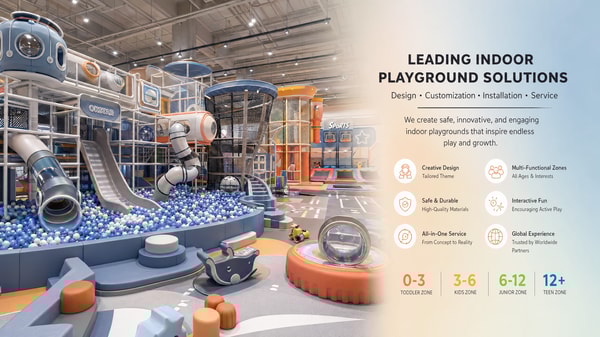
Sometimes yes, but buyers should verify whether the supplier truly understands trampoline park engineering and operational demands. Soft play and trampoline projects overlap in family entertainment, yet the structural loads, jump dynamics, and maintenance needs are different. A mixed-solution supplier should still demonstrate dedicated trampoline project competence.
What are the most common mistakes when buying a trampoline park for sale?
The most frequent errors are comparing quotes without a unified scope, ignoring maintenance cycles, overlooking supervision lines in the layout, and assuming that all commercial trampoline park equipment is functionally similar. Buyers can reduce these risks by reviewing 5 key check points: compliance, layout, cost layers, spare parts planning, and execution process.
Why work with a sourcing partner that understands commercial entertainment projects?
Buying a trampoline park is rarely a simple product search. It usually involves multiple stakeholders, including procurement teams, project investors, facility operators, distributors, and local market reviewers. A sourcing partner with focused knowledge of amusement and leisure parks can help align technical details with business feasibility, which shortens decision cycles and lowers miscommunication risk.
Global Commercial Trade supports buyers who need more than generic supplier listings. Its strength lies in connecting market insight, sector-focused sourcing logic, and commercial project evaluation across experience-driven industries. That matters when buyers need to compare trampoline park equipment, indoor playground supplier capabilities, customization feasibility, and compliance readiness in one decision framework.
If you are reviewing a trampoline park supplier, preparing a trampoline park for sale project, or comparing total trampoline park cost across several proposals, the next step should be structured consultation. Clarify 6 points early: layout requirements, target user group, desired attraction mix, compliance expectations, delivery timeline, and replacement support. These details improve quotation accuracy and reduce delays later in the process.
Contact GCT to discuss parameter confirmation, product selection, project scope, lead time expectations, customization options, certification-related questions, sample or material review where relevant, and quotation communication. For B2B buyers in sports and entertainment, informed sourcing decisions begin with better questions and better comparison logic.
Search News
Hot Articles
Popular Tags
Need ExpertConsultation?
Connect with our specialized leisureengineering team for procurementstrategies.
Recommended News
 Apr 29, 2026Adventure Playground Safety Mistakes to Avoid Before InstallationAdventure playground safety mistakes can delay opening and raise liability. Learn the key pre-installation checks for materials, site planning, surfacing, and compliance.● Theme Park Strategist
 Apr 29, 2026Chinese Tennis Robot Demand Rises in Europe After Zheng Qinwen's Madrid RunChinese tennis robot demand surges in Europe after Zheng Qinwen's Madrid Open run—CE-certified AI training systems now sought by German & Spanish academies.● Theme Park Strategist
 Apr 29, 2026Vietnam Mandates Child Finger-Trap Sensors for Indoor Play EquipmentVietnam mandates child finger-trap sensors for indoor play equipment—key compliance update for exporters, suppliers & certifiers. Act now before Oct 1, 2026.● Theme Park Strategist
 Apr 29, 2026CBA Guangdong’s Loss Spurs Export Inquiries for Indoor Playground EquipmentCBA Guangdong’s playoff loss sparks urgent export inquiries for EN1176-compliant indoor playground equipment — basketball-themed, rapid-assembly modules for ASEAN family entertainment centers.● Theme Park Strategist
 Apr 28, 2026Vietnam Mandates Child Hand-Trap Sensors for Indoor Play EquipmentVietnam mandates VILAS-certified hand-trap sensors for indoor play equipment—key for exporters, manufacturers & certifiers. Act before Oct 2026!● Theme Park Strategist
 Apr 29, 2026What to Review Before Buying a Trampoline ParkCompare trampoline park price, trampoline park cost, and trampoline park equipment before choosing a trampoline park supplier. Get expert tips on safety, layout, and sourcing.● Theme Park Strategist
 Apr 29, 2026How Much Does a Trampoline Park CostTrampoline park cost explained: compare trampoline park price, equipment quality, and supplier value. Learn what drives ROI before choosing a trampoline park for sale.● Theme Park Strategist
 Apr 29, 2026Safe Trampoline Park Equipment BasicsSafe trampoline park equipment basics: compare trampoline park supplier options, indoor playground design, durability, compliance, and total trampoline park cost before you buy.● Theme Park Strategist
 Apr 29, 2026How to Audit an Indoor Playground FactoryIndoor playground manufacturer audit guide: learn how to assess an indoor playground supplier, indoor playground design strength, safety, capacity, and trampoline park equipment quality before you buy.● Theme Park Strategist
 Apr 29, 2026Indoor Playground Supplier Pricing GuideIndoor playground supplier pricing guide: compare indoor playground manufacturer quotes, indoor playground design value, trampoline park equipment cost, and hidden fees before you buy.● Theme Park Strategist
 Apr 29, 2026Trampoline Park Supplier Checklist 2026Trampoline park supplier checklist 2026: compare trampoline park price, cost, equipment, and indoor playground design to choose a safer, smarter supplier for profitable projects.● Theme Park Strategist
 Apr 29, 2026Trampoline Park Price vs Long Term ValueTrampoline park price is only the start. Compare trampoline park cost, equipment quality, and supplier reliability to find safer, higher-ROI solutions with lasting commercial value.● Theme Park Strategist
![]() Apr 29, 2026Indoor Playground Design Mistakes to AvoidIndoor playground design mistakes can raise trampoline park cost and hurt ROI. Learn how to choose the right indoor playground supplier, manufacturer, and equipment for safer, smarter growth.● Theme Park Strategist
Apr 29, 2026Indoor Playground Design Mistakes to AvoidIndoor playground design mistakes can raise trampoline park cost and hurt ROI. Learn how to choose the right indoor playground supplier, manufacturer, and equipment for safer, smarter growth.● Theme Park Strategist Apr 29, 2026Is a Trampoline Park for Sale Worth ItTrampoline park for sale: compare trampoline park price, cost, equipment quality, and supplier support to judge ROI. See what smart buyers check before investing.● Theme Park Strategist
 Apr 29, 2026Trampoline Park Cost Breakdown for BuyersTrampoline park cost explained: compare trampoline park price, equipment quality, and supplier support to find a profitable trampoline park for sale with smart design and safer ROI.● Theme Park Strategist
 Apr 29, 2026What to Check in Trampoline Park EquipmentTrampoline park equipment guide: learn what to check from safety, layout, and materials to trampoline park cost, supplier selection, and indoor playground manufacturer support.● Theme Park Strategist
 Apr 29, 2026Indoor Playground Manufacturer Red FlagsIndoor playground manufacturer red flags: learn how to assess an indoor playground supplier, indoor playground design quality, trampoline park equipment, and hidden trampoline park cost before you buy.● Theme Park Strategist
 Apr 29, 2026How to Pick an Indoor Playground SupplierIndoor playground supplier guide: compare safety, design, quality, and lead times to choose the right indoor playground manufacturer or trampoline park supplier with confidence.● Theme Park Strategist
 Apr 29, 2026How to Compare Trampoline Park SuppliersCompare every trampoline park supplier by safety, design, service, and trampoline park cost. Learn how to choose reliable trampoline park equipment and indoor playground supplier solutions.● Theme Park Strategist
 Apr 29, 2026What Affects Trampoline Park Price MostTrampoline park price depends most on equipment quality, compliance, customization, and supplier strength. Learn what drives trampoline park cost and compare quotes with confidence.● Theme Park Strategist
 Apr 27, 2026Vietnam Mandates Child Finger-Trap Sensors for Indoor Play EquipmentVietnam mandates child finger-trap sensors for indoor play equipment starting Aug 1, 2026 — comply now to avoid delays, penalties & market access risks.● Theme Park Strategist
 Apr 26, 2026Fan Zhendong Visits SF as MLTT Investor; Chinese AI Ping Pong Tech Draws Silicon Valley InterestAI ping pong tech from China grabs Silicon Valley’s attention as Fan Zhendong, MLTT investor and Olympic champ, demos smart table tennis systems in SF—key for sports hardware, AI analytics & FDA-regulated fitness devices.● Theme Park Strategist
 Apr 26, 2026Vietnam Enforces Child Finger-Trap Sensors for Indoor Playground EquipmentChild finger-trap sensors now mandatory for indoor playground equipment in Vietnam—comply with QCVN 17:2026/BKHCN before import or sale.● Theme Park Strategist
 Apr 25, 2026Vietnam Mandates Child Finger-Trap Sensors for Indoor Play EquipmentVietnam mandates child finger-trap sensors for indoor play equipment—TCVN-certified, ≤0.3s response. Critical for importers, OEMs & compliance teams ahead of July 1, 2026 deadline.● Theme Park Strategist