String Instruments Compared: What Really Affects Tone and Durability
When evaluating string instruments for commercial purchase or institutional use, tone and durability depend on far more than brand reputation alone. From wood selection and construction methods to hardware quality and environmental stability, every detail influences long-term performance. This guide compares key factors that shape string instruments, helping technical evaluators make more informed sourcing and specification decisions.
Why do string instruments with similar specifications often sound and wear so differently?
This is usually the first question technical evaluators ask when comparing string instruments for schools, entertainment venues, rental fleets, orchestral programs, music retailers, or hospitality-based performance spaces. Two violins, guitars, cellos, or other string instruments may look nearly identical on a quotation sheet, yet perform very differently after 6 to 18 months of regular use. The reason is that tone and durability are controlled by a stack of interacting factors rather than a single headline specification.
In practical sourcing, the main performance drivers are material stability, structural design, assembly precision, hardware consistency, and environmental tolerance. A well-finished top plate or body shell may initially sound attractive, but if moisture response is poor or glue joints creep under seasonal movement, the instrument can lose projection, develop buzzing, or require repeated setup intervention. For institutional buyers, that means service cost, downtime, and player dissatisfaction can rise faster than expected.
For buyers in the sports and entertainment ecosystem, especially those supporting music education, venue programming, and leisure-driven commercial experiences, the real objective is not simply to purchase string instruments that sound good on day one. It is to identify instruments that maintain acceptable tonal balance, tuning stability, and physical integrity across repeated handling, variable humidity, and transport cycles that may occur weekly or even daily.
Which core variables should be checked first?
The fastest way to narrow risk is to check the variables that most directly affect both tone and lifespan. In many commercial buying programs, 5 to 7 checkpoints are enough to identify whether a product line is built for display value only or for sustained operational use. These checkpoints should be reviewed before cosmetic finish options or accessory bundles.
- Base material type: solid wood, laminated wood, engineered composites, or hybrid construction.
- Moisture behavior: dimensional stability under roughly 35% to 65% relative humidity.
- Joint quality: neck set, bridge fit, fingerboard seating, internal bracing, and seam consistency.
- Hardware grade: tuning machines, tailpieces, endpins, pegs, frets, nuts, saddles, and fasteners.
- Setup readiness: action height, intonation, string spacing, and response across all playable positions.
- Serviceability: ease of replacing strings, bridges, tuners, and wear parts over a 12- to 36-month cycle.
A recurring sourcing mistake is to separate “sound quality” from “durability” as if they were independent. In reality, an instrument that does not hold geometry will also struggle to hold tone. Neck movement, bridge drift, fret or fingerboard wear, and loose fittings gradually alter resonance and playability. For technical assessment teams, this is why inspection should combine acoustic testing with structural review.
How do materials affect the tone of string instruments in real use?
Material choice is one of the most discussed topics in string instruments, but the commercial question is not simply whether one wood species is “better” than another. The more useful question is how the material behaves in the intended use environment. For a conservatory, nuanced overtone response may be the top priority. For a hotel entertainment program or school fleet, the best material may be the one that keeps a predictable tonal profile after frequent handling and transport.
Solid woods often provide stronger acoustic complexity and dynamic response, especially in instruments where the top plate and back contribute heavily to resonance. However, they are usually more responsive to temperature and humidity shifts. Laminated constructions can sacrifice some tonal depth, yet they often deliver improved structural stability, making them practical for entry-level institutional inventories, rehearsal rooms, and environments with inconsistent climate control.
Engineered materials and composite components also deserve attention, particularly in leisure, training, and event-driven settings. While they may not replace traditional builds for high-level solo performance, they can reduce maintenance burdens and improve resistance to impact or seasonal movement. Technical evaluators should therefore compare tonal goals against maintenance conditions instead of judging materials in isolation.
What material trade-offs matter most during sourcing?
Before comparing suppliers, it helps to map material decisions to operating conditions. The table below summarizes how common construction approaches in string instruments typically influence tone, durability, and institutional suitability.
The key takeaway is that material selection should match deployment reality. If the instrument will move through rehearsal rooms, event storage, and transport cases several times per week, a highly sensitive build may create avoidable maintenance cost. If the goal is premium stage tone with controlled indoor conditions, solid wood may justify the added care requirements.
Does finish thickness matter?
Yes, finish thickness can affect both tone and wear resistance. A very heavy finish may slightly damp resonance, particularly on lightweight acoustic bodies or carved plates. An excessively thin finish may look appealing but provide limited protection against scratches, perspiration, and micro-climate exposure. In commercial sourcing, the target is not the thinnest finish possible, but a controlled finish system that protects the surface without excessively restricting vibration.
Technical teams should ask suppliers whether the finish is optimized for acoustics, resistance to handling, and repeatability between batches. For high-touch environments, surface durability over a 12- to 24-month period is often more relevant than showroom gloss alone.
Which construction details have the biggest impact on durability?
If materials define the potential of string instruments, construction quality determines whether that potential survives routine use. Durability failures in commercial settings rarely start as catastrophic breaks. More often, they begin as small inconsistencies: a poorly cut nut, uneven fretwork, a bridge foot that does not fully seat, pegs that slip, or adhesive lines that react poorly to humidity cycling. These details may appear minor during receiving inspection but often become service issues within one operating season.
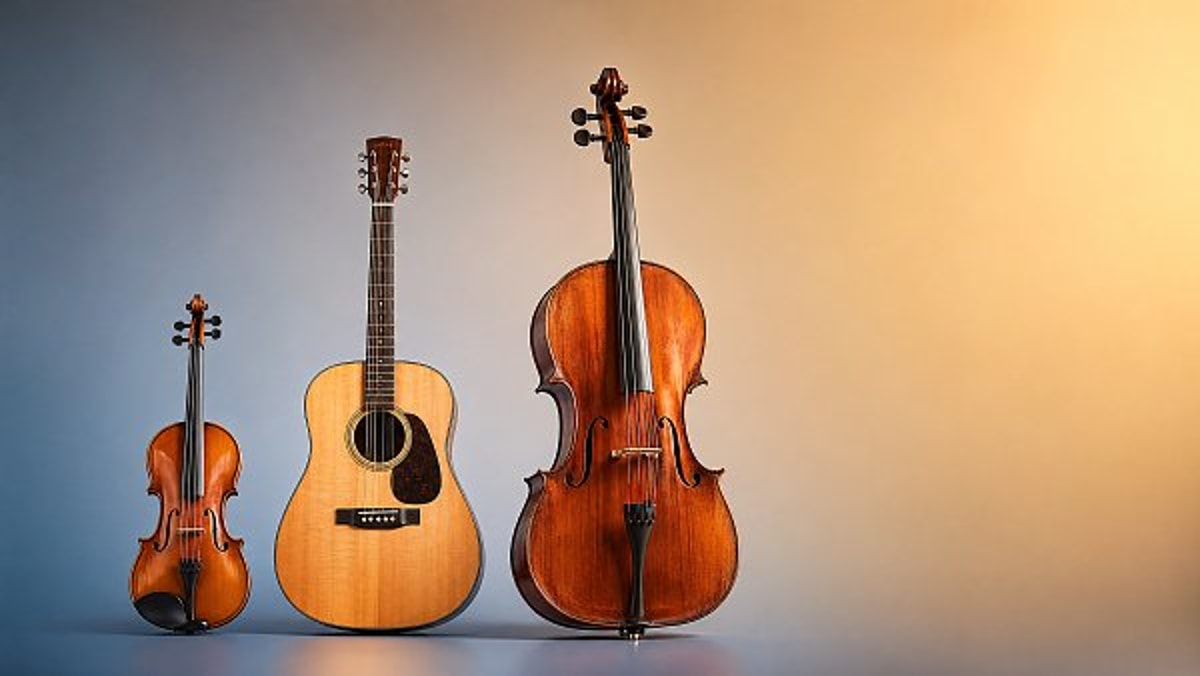
For bowed instruments, plate graduation consistency, neck angle, fingerboard dressing, seam integrity, and pegbox precision all matter. For plucked string instruments, top bracing layout, neck joint type, fret seating, saddle fit, and tuner mounting quality are critical. In both categories, accurate geometry affects not only structural life but also response, sustain, and tuning reliability.
Durability assessment should also consider the service environment. A conservatory instrument that stays in a controlled room may tolerate finer tolerances than a venue fleet used by rotating performers. When sourcing for entertainment operations, buyers should prioritize stable builds that remain playable after frequent string changes, transportation, and handling by users with different skill levels.
What should a technical evaluator inspect on receipt?
A structured inspection checklist helps procurement and quality teams compare incoming string instruments objectively. The list below is especially useful when receiving 10, 50, or 200 units across an institutional order.
- Check neck alignment and action consistency across the full playing range, not only open strings or first position.
- Inspect bridge fit, saddle seating, and hardware anchoring for gaps, tilt, or stress marks.
- Confirm seams, joints, and internal supports show no visible glue failure, separation, or uneven pressure marks.
- Test tuning stability after repeated tuning cycles of at least 3 to 5 full adjustments.
- Review finish uniformity around edges, corners, pegbox areas, and high-contact zones where early wear often appears.
- Listen for buzz, dead spots, weak projection bands, or wolf-like response anomalies under moderate playing force.
This process is valuable because many durability problems reveal themselves during basic handling rather than laboratory testing. Even a 15- to 20-minute inspection per unit can reduce future return rates and improve specification refinement for the next order cycle.
How do setup and hardware influence longevity?
Setup is often underestimated in bulk purchasing, yet it has an outsized effect on user satisfaction. Poor setup causes players to use more force, tune more aggressively, and handle the instrument less carefully, all of which accelerate wear. Hardware quality matters for the same reason. Inferior tuners, pegs, tailpiece mechanisms, or endpin systems may not fail immediately, but they increase maintenance frequency and create inconsistent playing conditions.
For long-life procurement, it is usually better to specify mid-grade hardware with consistent tolerances than to accept decorative upgrades that add little functional value. Technical evaluators should also verify parts availability. If replacement tuners, bridges, or standard setup components cannot be sourced within a practical 2- to 8-week window, the total cost of ownership rises quickly.
How should buyers compare string instruments for different entertainment and institutional scenarios?
Not all string instruments should be judged by the same standards. A premium recital instrument, a hospitality lounge performance instrument, a school-use violin, and a rental acoustic guitar can each be “right” for their purpose while scoring differently on tonal complexity, maintenance needs, and abuse tolerance. Technical evaluation becomes more reliable when each product is matched to a realistic use case.
In sports and entertainment-linked commercial settings, three demand patterns are common. First, there is performance-led demand, where tonal projection and player nuance matter most. Second, there is education or training demand, where consistency, replacement ease, and budget control are usually stronger priorities. Third, there is venue or leisure demand, where appearance, durability, and dependable operation under variable staffing often take precedence.
The comparison table below can help evaluators align string instruments with actual program requirements instead of relying on generic premium-versus-budget labels.
This comparison shows why “best” string instruments are always context-specific. The right specification is the one that supports the intended usage frequency, user skill range, storage conditions, and maintenance capacity. For institutional procurement, these factors are often more decisive than catalog-level prestige.
Should evaluators standardize one specification across all sites?
Not always. If the organization operates multiple locations, a two-tier strategy is often more efficient. For example, one specification can be used for high-traffic teaching or rental environments, while another supports showcase performance spaces. This reduces overspending where premium tone is not fully utilized and avoids under-specification where artistic quality matters.
A dual-specification model also helps with inventory planning. Spare parts, setup tools, and replacement schedules can still be standardized within each tier, keeping support manageable across a 12-month budgeting cycle.
What are the most common mistakes when evaluating tone and durability?
Many sourcing errors occur because teams evaluate string instruments under ideal conditions but deploy them in non-ideal ones. A sample tested in a quiet room with a skilled player may not represent how the same model behaves in a school, event venue, or rental turnover environment. That mismatch can lead to repeated complaints even when the original sample appeared promising.
Another common mistake is overvaluing surface appearance while underweighting service details. Decorative flame patterns, glossy finishes, or premium-looking fittings can distract from more important factors such as bridge fit, neck straightness, fret finishing, seam integrity, or part availability. For technical evaluators, the job is to distinguish presentation quality from operational quality.
Buyers also sometimes compare string instruments only by unit price rather than by lifecycle cost. An instrument that is 10% to 20% cheaper upfront may become more expensive after two seasonal adjustments, one bridge replacement, multiple tuner failures, or a higher return rate. In commercial settings, total service burden matters as much as initial procurement value.
Which red flags deserve immediate attention?
The following warning signs often indicate that a product line may struggle in commercial use, especially when purchased at volume.
- The supplier cannot clearly explain material composition, setup process, or consistency controls between batches.
- Sample units sound acceptable, but hardware operation feels rough, loose, or inconsistent after repeated tuning.
- The product requires immediate rework before normal play, suggesting weak outgoing setup standards.
- Replacement parts are proprietary or difficult to source, increasing downtime risk.
- The specification emphasizes cosmetics but provides little information on environmental tolerance or recommended storage range.
These red flags do not automatically disqualify a supplier, but they should trigger more detailed questioning, sample expansion, or pilot ordering before scaling to a larger contract.
Before placing an order, what questions should technical evaluators ask suppliers?
The best supplier conversations move beyond catalog descriptions. Technical evaluators should ask questions that reveal how string instruments are built, controlled, packed, and supported after delivery. This is especially important when sourcing internationally or for multi-site entertainment and educational operations, where consistency across shipments matters more than a single strong sample.
A useful pre-order discussion should cover at least six dimensions: construction details, setup standards, environmental recommendations, wear-part policy, packaging approach, and lead time structure. For many projects, sample preparation takes 2 to 6 weeks, while bulk production plus shipment may extend much longer depending on configuration, destination, and inspection steps. Clear communication at this stage reduces expensive assumptions later.
For procurement teams handling string instruments as part of broader commercial entertainment sourcing, the goal is to create a specification sheet that can be checked at order confirmation, pre-shipment review, and receiving inspection. That process turns subjective preference into measurable acceptance criteria.
Which questions are worth prioritizing?
The table below summarizes practical supplier questions and why each one matters in commercial evaluation.
These questions help technical teams compare suppliers on factors that directly affect operational performance. They also support cleaner internal communication between procurement, music department staff, venue operators, and maintenance teams.
How should evaluation move from sample to bulk order?
A staged approach is usually the safest. Begin with a small sample batch, test it across realistic users, and document any setup variation or tonal inconsistency. Then refine the specification before committing to volume. If possible, conduct the trial over several weeks rather than one afternoon, since some issues only emerge after tuning cycles, handling, and moderate climate change.
For bulk procurement, it is wise to define acceptable tolerance ranges, packaging requirements, and inspection points in writing. This reduces disputes and makes future reordering more reliable, especially when string instruments are part of a recurring institutional procurement program.
How can you make a confident sourcing decision on string instruments?
A confident decision comes from aligning three things: the tonal target, the use environment, and the maintenance capacity of the organization. String instruments should not be judged only by immediate sound, nor only by apparent ruggedness. The right balance depends on whether the instrument will support premium performance, regular teaching, venue-based entertainment, or mixed commercial use.
For technical evaluators, the most reliable path is to compare materials, construction, setup, hardware, and serviceability as one system. When those elements are reviewed together, differences in tone and durability become easier to predict. That leads to better specifications, fewer post-delivery surprises, and stronger long-term value.
At GCT, we support buyers who need more than a product list. We help commercial sourcing teams compare string instruments for educational projects, hospitality entertainment programs, leisure venues, and pro audio or musical instrument procurement workflows with a stronger focus on real-world performance.
Why choose us for sourcing support?
We understand that technical assessment teams need practical decision support, not vague marketing language. If you are comparing string instruments for tone, durability, environmental suitability, or lifecycle cost, we can help structure the evaluation around measurable sourcing criteria and commercial use scenarios.
- Confirm product parameters and construction details before quotation approval.
- Discuss model selection for performance spaces, schools, rentals, or venue entertainment use.
- Review lead times, sampling options, and batch consistency expectations.
- Explore custom specification needs, accessory matching, and packaging requirements.
- Clarify certification, documentation, and cross-border sourcing considerations where relevant.
- Request support for sample evaluation, comparative quotations, and long-term procurement planning.
If you need to confirm specific parameters, shortlist suitable string instruments, estimate delivery cycles, compare custom options, or discuss quotations, contact us for a more focused sourcing conversation. A clear brief at the start can save significant time, service cost, and specification risk later.
Search News
Hot Articles
Popular Tags
Need ExpertConsultation?
Connect with our specialized leisureengineering team for procurementstrategies.
Recommended News
 Apr 29, 2026String Instruments Compared: What Really Affects Tone and DurabilityString instruments compared for tone and durability: learn how materials, construction, hardware, and setup affect long-term performance for schools, venues, rentals, and sourcing teams.● Pro Audio Engineer
 Apr 29, 2026Wind Instruments Maintenance Tips That Prevent Costly RepairsWind instruments maintenance tips that help teams prevent leaks, corrosion, and pad failure. Learn practical care steps to reduce repair costs and keep instruments performance-ready.● Pro Audio Engineer
 Apr 29, 2026Percussion Instruments Buying Guide: Sound, Build, and ValuePercussion instruments buying guide for schools, venues, and studios—compare sound, build quality, durability, and total value to source smarter and avoid costly mistakes.● Pro Audio Engineer
 Apr 29, 2026How to Find Reliable Musical Instruments WholesaleMusical instruments wholesale made safer: learn how to vet a musical instruments manufacturer, compare suppliers, and source reliable musical instruments for schools and bands with confidence.● Pro Audio Engineer
 Apr 29, 2026Musical Instruments for Schools on BudgetMusical instruments for schools on a budget: compare musical instruments for bands, wholesale options, and how to choose a reliable musical instruments manufacturer for lasting value.● Pro Audio Engineer
 Apr 29, 2026OEM or ODM Musical Instruments ManufacturerFind the right musical instruments manufacturer for bands, schools, and wholesale buyers. Compare OEM vs ODM options, customization, quality control, and sourcing strategies.● Pro Audio Engineer
 Apr 29, 2026Which Musical Instruments Fit Small BandsMusical instruments for bands: explore smart lineups for schools, venues, and buyers comparing musical instruments wholesale and a trusted musical instruments manufacturer.● Pro Audio Engineer
 Apr 29, 2026Musical Instruments Wholesale Buying GuideMusical instruments wholesale guide for bands, schools, and distributors: compare musical instruments manufacturers, MOQ, quality, compliance, and sourcing strategies for smarter bulk buying.● Pro Audio Engineer
 Apr 29, 2026How to Source Musical Instruments for SchoolsMusical instruments for schools: learn how to compare musical instruments wholesale options, choose a trusted musical instruments manufacturer, and source durable musical instruments for bands with confidence.● Pro Audio Engineer
 Apr 29, 2026How to Choose a Musical Instruments ManufacturerFind the right musical instruments manufacturer for bands, schools, and wholesale buyers. Compare quality, OEM/ODM options, compliance, and lead times to source with confidence.● Pro Audio Engineer
 Apr 29, 2026How to Choose Musical Instruments for BandsMusical instruments for bands guide: compare musical instruments manufacturer options, wholesale terms, and musical instruments for schools to source durable, high-value solutions.● Pro Audio Engineer
 Apr 26, 2026Musical instruments manufacturer compliance: EU RoHS vs. US CPSIA documentation gapsMusical instruments manufacturer? Close EU RoHS vs. US CPSIA documentation gaps—critical for bands, schools & trampoline park suppliers. Avoid disqualification.● Pro Audio Engineer
 Apr 26, 2026High-quality musical instruments: why serial number verification matters for resale valueHigh-quality musical instruments for bands and schools rely on serial number verification to protect resale value, authenticity, and compliance—trusted by top suppliers worldwide.● Pro Audio Engineer
 Apr 26, 2026Musical instruments supplier lead times: why 8-week delivery now means ‘in stock’Musical instruments supplier lead times hit 8 weeks—now meaning 'in stock.' Compare trampoline park supplier, indoor playground manufacturer & more for assured readiness.● Pro Audio Engineer
 Apr 26, 2026Musical instruments for schools: what happens when warranty service requires shipping overseasMusical instruments for schools & bands: Avoid costly overseas warranty shipping. Discover high-quality, service-backed instruments from trusted manufacturers and suppliers.● Pro Audio Engineer
 Apr 26, 2026Musical instruments manufacturer transparency: where are your components really made?Discover how top musical instruments manufacturer & trampoline park supplier ensure component transparency—boost safety, compliance, and ROI for bands, schools, and indoor playground installations.● Pro Audio Engineer
 Apr 26, 2026Musical instruments for bands: why matching wood grain matters for live soundDiscover why matching wood grain in musical instruments for bands ensures superior live sound—key insight for schools, venues & suppliers seeking high quality musical instruments.● Pro Audio Engineer
 Apr 26, 2026Musical instruments supplier red flags—delayed shipping isn’t the worst signSpot red flags in musical instruments supplier, trampoline park supplier & indoor playground manufacturer—beyond delayed shipping. Ensure safety, compliance & quality.● Pro Audio Engineer
 Apr 26, 2026Musical instruments manufacturer vs. supplier: who handles warranty claims?Musical instruments manufacturer vs. supplier: who handles warranty claims? Discover how warranty authority impacts trampoline park safety, indoor playground installation & more.● Pro Audio Engineer
 Apr 26, 2026High-quality musical instruments: how to spot factory-refurbished units sold as newSpot high-quality musical instruments for bands & schools—avoid factory-refurbished units sold as new. Trusted insights on musical instruments manufacturer transparency, supplier accountability, and procurement safety.● Pro Audio Engineer
 Apr 26, 2026Musical instruments for schools—why budget models often cost more over timeMusical instruments for schools: Discover why budget models inflate long-term costs—durability, safety & TCO insights for bands, indoor playground suppliers, and trampoline park equipment buyers.● Pro Audio Engineer
 Apr 26, 2026Musical instruments for bands: why 'stage-ready' doesn’t always mean reliableDiscover why 'stage-ready' musical instruments for bands often fail commercially—and how top venues vet high quality musical instruments, trampoline park equipment, and indoor playground supplier reliability.● Pro Audio Engineer
 Apr 23, 2026Music Accessories Buyers Should Compare FirstMusic accessories buyers should compare quality, compatibility, and compliance first. Explore sourcing tips for hotel equipment, educational supplies, amusement equipment, and sensory playground projects.● Pro Audio Engineer
 Apr 23, 2026How to Source Reliable Music AccessoriesMusic accessories sourcing guide for buyers in commercial furniture, hotel equipment, educational supplies, and amusement equipment—learn how to verify quality, compliance, and reliable suppliers.● Pro Audio Engineer