Adventure Playground Safety Mistakes to Avoid Before Installation
Before installing an adventure playground, overlooking key safety factors can lead to costly compliance issues, operational risks, and long-term liability. For quality control and safety managers, identifying common mistakes early is essential to ensure durable materials, proper site planning, and adherence to international standards. This guide highlights the most critical adventure playground safety mistakes to avoid before installation, helping you build safer, more reliable recreational spaces.
Why do so many adventure playground projects fail at the pre-installation stage?
In the sports and entertainment sector, an adventure playground is rarely a simple product purchase. It is a risk-managed facility system that combines structure, movement, user flow, fall protection, maintenance access, and local compliance. Many failures happen before a single post is anchored because teams focus on visual appeal or budget speed, while safety planning, specification review, and site conditions remain under-assessed.
For quality control and safety managers, the main challenge is that pre-installation mistakes are often invisible during procurement. A supplier drawing may look complete, but critical details can still be missing: impact area calculations, material certificates, anti-corrosion treatments, load assumptions, or drainage requirements. Once the equipment arrives on site, correcting these gaps may add 2–6 weeks to the schedule and significantly increase project cost.
Adventure playground projects in hotels, schools, family leisure centers, mixed-use commercial spaces, and public parks each carry different operating pressures. A hospitality buyer may prioritize brand aesthetics. A school operator may focus on age segregation. A municipal developer may emphasize durability over a 5–10 year service cycle. Safety teams must align these priorities before installation starts, not after defects appear.
This is where Global Commercial Trade supports decision-makers. Instead of treating an adventure playground as a generic catalog item, GCT helps B2B buyers evaluate sourcing, specifications, supplier readiness, and commercial fit across amusement and leisure park applications. That approach reduces procurement blind spots and improves installation confidence.
The 4 pre-installation risk zones that deserve early review
- Design risk: unclear user age range, weak circulation planning, or underestimated fall zones around climbing, swinging, and balance elements.
- Material risk: unsuitable timber treatment, insufficient corrosion resistance, poor fastener quality, or plastics not matched to UV exposure and temperature variation.
- Site risk: unstable subgrade, poor drainage, slope issues, underground utility conflicts, or accessibility requirements not resolved before delivery.
- Compliance risk: missing standard references, incomplete test documents, or no independent understanding of local installation and inspection expectations.
If these 4 zones are checked during sourcing and technical review, many installation-stage surprises can be prevented. That is especially important when delivery windows are tight, such as 30–45 day commercial opening schedules or phased resort developments.
Which adventure playground safety mistakes create the highest liability exposure?
Not all mistakes carry the same level of risk. Some result in routine adjustment. Others can create immediate injury exposure, failed inspection, or expensive rework. For an adventure playground, the highest-risk errors usually affect user impact, entrapment, structural durability, and behavior under real operating loads rather than showroom conditions.
One common mistake is choosing equipment based on appearance without validating intended age group and challenge level. A climbing net or elevated platform suitable for older children may be placed in a mixed-age zone where supervision is inconsistent. This mismatch increases unsafe use patterns and makes it harder for safety managers to defend design decisions during incident review.
Another mistake is treating surfacing as a secondary package item. Whether the project uses engineered wood fiber, poured-in-place rubber, rubber tiles, sand, or another impact-attenuating surface, compatibility with fall height, drainage, maintenance frequency, and local climate must be reviewed early. Surfacing failure is often not caused by the material alone, but by poor edge detailing, base preparation, or thickness assumptions.
A third major mistake is underestimating environmental exposure. In coastal resorts, fastener corrosion and metal degradation need more scrutiny. In high-heat regions, surface temperatures and UV stability become more important. In freeze-thaw climates, anchoring, crack resistance, and water management can affect lifespan within the first 12–24 months.
High-priority mistakes to flag before installation approval
This table shows why adventure playground safety is a systems issue rather than a single equipment issue. The safest product can still perform poorly if layout, surfacing, civil works, and supplier documentation are disconnected.
A practical judgment rule for safety managers
If a specification cannot answer 5 key questions before installation, it is not ready: Who is the user group? What is the maximum fall height? Which surfacing system supports it? Which standards or local requirements apply? What are the maintenance intervals during the first 12 months? This simple filter often reveals hidden project weakness early.
How should you assess materials, structure, and site conditions before buying an adventure playground?
Quality control teams should not evaluate an adventure playground only at the finished-product level. Material selection, fastening details, structural interfaces, and site-specific assembly conditions all influence safety and service life. In many projects, procurement teams compare quotations line by line, but miss the deeper issue: two visually similar playground systems may differ substantially in long-term durability and inspection burden.
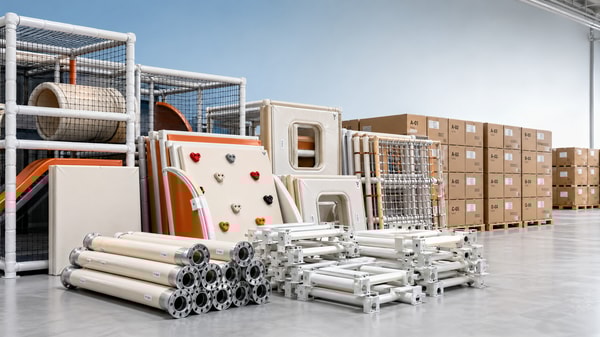
Start with material logic. Timber components should be reviewed for species, treatment method, cracking behavior, and moisture performance. Steel parts should be checked for corrosion protection suitable for inland, humid, or marine environments. Plastic panels and molded grips should be assessed for UV stability, wear resistance, and temperature sensitivity. Rope systems should be checked for internal reinforcement type and connector reliability.
Then review structural logic. Ask whether the system uses standardized modular joints or project-specific fabrication. Modular systems may simplify replacement and reduce downtime by 7–14 days when spare parts are needed. Custom structures may offer stronger visual branding, but they also require stricter drawing review, tolerance control, and installation supervision.
Finally, assess the site as part of the product. Uneven ground, drainage channels, retaining walls, hardscape edges, shade structures, and nearby traffic routes can all change how an adventure playground should be laid out. A site walk and drawing coordination session before final order approval can prevent expensive field improvisation.
Material and site review points that should appear on your checklist
- Check whether exposed metals, fasteners, and anchor systems are matched to the site’s humidity, salinity, and cleaning conditions.
- Confirm whether the surfacing base requires compaction, drainage layers, edge restraints, or curing time before the adventure playground can open.
- Review replacement practicality for ropes, panels, bearings, grips, and moving parts over a normal 1–3 year maintenance cycle.
- Verify whether the site plan protects clear access for maintenance staff, inspection equipment, and emergency response routes.
These checks matter because pre-installation decisions define not only launch safety, but also the cost and complexity of inspections performed every month, every quarter, or after severe weather events.
Adventure playground procurement comparison for safety-led buyers
When comparing multiple adventure playground options, it helps to separate visual design from safety performance and maintenance impact. The table below gives procurement and safety teams a practical framework.
This comparison is especially useful for resorts, schools, and commercial leisure operators balancing opening deadlines against long-term maintenance demands. The right adventure playground is not always the most complex one; it is the one that remains safe, inspectable, and supportable in daily operation.
What standards and compliance checks should be reviewed before installation?
Compliance should never be treated as a paperwork task completed after factory production. For an adventure playground, standards review needs to happen at concept stage, quotation stage, and pre-shipment stage. Different markets may reference different playground or public-use equipment frameworks, but the management principle stays the same: design intent, product specification, installation method, and inspection plan must align.
For safety managers, the practical question is not only whether a supplier mentions a standard, but whether the documentation package supports real verification. Typical documents may include general arrangement drawings, component lists, material descriptions, anchoring details, maintenance instructions, and inspection guidance. If these are fragmented, the compliance claim becomes difficult to defend.
It is also important to separate product compliance from site compliance. A supplier may provide a compliant adventure playground design, but the final installed condition can still fail because of unsuitable surfacing depth, incorrect assembly tolerances, poor drainage, or interference with adjacent structures. That is why many operators use a 3-stage acceptance process: document review, installation inspection, and post-installation operational check.
GCT adds value here by helping buyers compare supplier readiness, documentation quality, and sourcing reliability across international commercial projects. In cross-border procurement, this reduces the chance of receiving a technically attractive proposal that lacks the compliance clarity needed for opening approval.
Pre-installation compliance checklist for an adventure playground
- Confirm target user age bands and challenge profile are stated consistently across layout, elevation, and product schedule documents.
- Check that impact areas, free space, guardrails, barriers, and access points are shown clearly in reviewed drawings.
- Verify the surfacing system is matched to expected fall conditions and that base preparation requirements are documented.
- Request maintenance and inspection guidance covering daily observation, periodic inspection, and post-event checks after heavy use or severe weather.
- Review whether site installation tolerances, anchor details, and handover inspection steps are defined before delivery starts.
As a rule, if the supplier cannot support these 5 checkpoints in a coherent package, the adventure playground should not move directly into installation planning.
Typical timing that works in commercial projects
A practical sequence is to complete document review 2–3 weeks before shipment, site readiness inspection 5–7 days before installation, and final acceptance immediately after assembly and surfacing completion. This timing reduces rushed sign-off and helps teams resolve nonconformities while subcontractors are still mobilized.
How can safety managers avoid rework, delays, and hidden lifecycle cost?
Many adventure playground projects exceed budget not because the initial quote was inaccurate, but because lifecycle realities were ignored. Rework often begins with small omissions: no allowance for site leveling, no spare component planning, weak packaging logic for phased installation, or unclear responsibility between civil contractor and playground installer. These gaps can delay opening and increase total ownership cost.
The most effective way to control cost is not to buy the cheapest system. It is to reduce preventable variance. A durable adventure playground with clear documentation and maintainable parts may cost more upfront, but it can lower inspection burden, reduce replacement frequency, and shorten downtime over a 3–5 year operating period.
Safety teams should also examine whether the operator has the internal capacity to maintain the selected concept. A high-complexity rope course or themed climbing structure may require more specialized periodic checks than a modular low-height play system. If the site team lacks this capability, the specification should be simplified or external maintenance support should be planned from day one.
For B2B buyers, this is where sourcing intelligence matters. GCT helps procurement teams compare not only products, but also supplier responsiveness, documentation discipline, customization practicality, and project fit. That broad view is valuable when the adventure playground is part of a larger commercial environment such as a hotel, campus, leisure park, or destination retail complex.
A 6-point pre-installation control process
- Define user profile and operating scenario, including age range, traffic level, supervision model, and expected peak periods.
- Review technical drawings and surfacing requirements together, not as separate procurement packages.
- Match materials and finishes to climate, cleaning routines, and expected wear over at least the first 12–36 months.
- Check supplier documentation completeness before shipment, including parts list and maintenance instructions.
- Inspect site readiness, utilities, drainage, and access conditions before the installation crew is scheduled.
- Plan final acceptance around measurable checkpoints, not visual completion alone.
When this 6-step process is followed, teams usually gain better schedule control and fewer post-handover disputes. In complex commercial developments, that can be the difference between an on-time launch and a costly delayed opening.
FAQ: what do buyers and safety teams ask most about an adventure playground?
How early should safety review begin for an adventure playground?
Safety review should begin before supplier finalization, ideally during concept comparison. Once drawings are frozen and manufacturing starts, changing heights, clearances, surfacing assumptions, or access routes becomes more expensive. In most commercial projects, a review window of 2–4 weeks before production approval is far more efficient than trying to solve issues during installation.
What are the most overlooked hidden costs?
Common hidden costs include drainage correction, surfacing base preparation, custom spare parts, rework caused by incomplete anchor planning, and delayed opening due to failed final inspection. Another frequent cost driver is selecting an adventure playground that requires maintenance capability the operator does not yet have.
Is a custom-themed adventure playground always better for commercial spaces?
Not necessarily. Custom theming can improve branding and guest experience, especially in resorts and destination entertainment venues. However, it may also increase lead time, parts complexity, and approval workload. For many operators, a semi-custom solution provides a better balance between identity, safety control, and maintenance practicality.
What should be checked before shipment leaves the factory?
At minimum, confirm reviewed drawings, bill of materials, installation instructions, surfacing interface requirements, anchoring details, and maintenance guidance. Packaging sequence also matters. If the site is installing in phases over 7–10 days, mislabeled or mixed packaging can create avoidable delays and handling risk.
Why work with GCT when sourcing an adventure playground for a commercial project?
Commercial buyers do not just need product catalogs. They need sourcing clarity, supplier intelligence, and practical decision support. GCT serves this need by focusing on industries that shape commercial experiences, including amusement and leisure parks. That sector knowledge helps quality control and safety managers move beyond basic price comparison toward better specification and risk evaluation.
If your team is evaluating an adventure playground for a hotel, school, leisure venue, retail destination, or public recreation project, GCT can help you narrow the decision around the issues that matter most: material suitability, compliance expectations, customization feasibility, delivery timing, documentation readiness, and long-term maintenance burden.
You can consult GCT for several practical topics before installation: parameter confirmation for site conditions, product selection based on age group and traffic level, estimated delivery windows, support for custom design review, guidance on certification-related documentation, sample discussions for material evaluation, and quotation alignment across multiple supplier options.
When an adventure playground is sourced with stronger technical judgment at the beginning, projects open more smoothly and operate more safely afterward. For teams responsible for quality, compliance, and commercial reliability, that is the real value of informed sourcing.
Search News
Hot Articles
Popular Tags
Need ExpertConsultation?
Connect with our specialized leisureengineering team for procurementstrategies.
Recommended News
 Apr 29, 2026Adventure Playground Safety Mistakes to Avoid Before InstallationAdventure playground safety mistakes can delay opening and raise liability. Learn the key pre-installation checks for materials, site planning, surfacing, and compliance.● Theme Park Strategist
 Apr 29, 2026Chinese Tennis Robot Demand Rises in Europe After Zheng Qinwen's Madrid RunChinese tennis robot demand surges in Europe after Zheng Qinwen's Madrid Open run—CE-certified AI training systems now sought by German & Spanish academies.● Theme Park Strategist
 Apr 29, 2026Vietnam Mandates Child Finger-Trap Sensors for Indoor Play EquipmentVietnam mandates child finger-trap sensors for indoor play equipment—key compliance update for exporters, suppliers & certifiers. Act now before Oct 1, 2026.● Theme Park Strategist
 Apr 29, 2026CBA Guangdong’s Loss Spurs Export Inquiries for Indoor Playground EquipmentCBA Guangdong’s playoff loss sparks urgent export inquiries for EN1176-compliant indoor playground equipment — basketball-themed, rapid-assembly modules for ASEAN family entertainment centers.● Theme Park Strategist
 Apr 28, 2026Vietnam Mandates Child Hand-Trap Sensors for Indoor Play EquipmentVietnam mandates VILAS-certified hand-trap sensors for indoor play equipment—key for exporters, manufacturers & certifiers. Act before Oct 2026!● Theme Park Strategist
 Apr 29, 2026What to Review Before Buying a Trampoline ParkCompare trampoline park price, trampoline park cost, and trampoline park equipment before choosing a trampoline park supplier. Get expert tips on safety, layout, and sourcing.● Theme Park Strategist
 Apr 29, 2026How Much Does a Trampoline Park CostTrampoline park cost explained: compare trampoline park price, equipment quality, and supplier value. Learn what drives ROI before choosing a trampoline park for sale.● Theme Park Strategist
 Apr 29, 2026Safe Trampoline Park Equipment BasicsSafe trampoline park equipment basics: compare trampoline park supplier options, indoor playground design, durability, compliance, and total trampoline park cost before you buy.● Theme Park Strategist
 Apr 29, 2026How to Audit an Indoor Playground FactoryIndoor playground manufacturer audit guide: learn how to assess an indoor playground supplier, indoor playground design strength, safety, capacity, and trampoline park equipment quality before you buy.● Theme Park Strategist
 Apr 29, 2026Indoor Playground Supplier Pricing GuideIndoor playground supplier pricing guide: compare indoor playground manufacturer quotes, indoor playground design value, trampoline park equipment cost, and hidden fees before you buy.● Theme Park Strategist
 Apr 29, 2026Trampoline Park Supplier Checklist 2026Trampoline park supplier checklist 2026: compare trampoline park price, cost, equipment, and indoor playground design to choose a safer, smarter supplier for profitable projects.● Theme Park Strategist
 Apr 29, 2026Trampoline Park Price vs Long Term ValueTrampoline park price is only the start. Compare trampoline park cost, equipment quality, and supplier reliability to find safer, higher-ROI solutions with lasting commercial value.● Theme Park Strategist
![]() Apr 29, 2026Indoor Playground Design Mistakes to AvoidIndoor playground design mistakes can raise trampoline park cost and hurt ROI. Learn how to choose the right indoor playground supplier, manufacturer, and equipment for safer, smarter growth.● Theme Park Strategist
Apr 29, 2026Indoor Playground Design Mistakes to AvoidIndoor playground design mistakes can raise trampoline park cost and hurt ROI. Learn how to choose the right indoor playground supplier, manufacturer, and equipment for safer, smarter growth.● Theme Park Strategist Apr 29, 2026Is a Trampoline Park for Sale Worth ItTrampoline park for sale: compare trampoline park price, cost, equipment quality, and supplier support to judge ROI. See what smart buyers check before investing.● Theme Park Strategist
 Apr 29, 2026Trampoline Park Cost Breakdown for BuyersTrampoline park cost explained: compare trampoline park price, equipment quality, and supplier support to find a profitable trampoline park for sale with smart design and safer ROI.● Theme Park Strategist
 Apr 29, 2026What to Check in Trampoline Park EquipmentTrampoline park equipment guide: learn what to check from safety, layout, and materials to trampoline park cost, supplier selection, and indoor playground manufacturer support.● Theme Park Strategist
 Apr 29, 2026Indoor Playground Manufacturer Red FlagsIndoor playground manufacturer red flags: learn how to assess an indoor playground supplier, indoor playground design quality, trampoline park equipment, and hidden trampoline park cost before you buy.● Theme Park Strategist
 Apr 29, 2026How to Pick an Indoor Playground SupplierIndoor playground supplier guide: compare safety, design, quality, and lead times to choose the right indoor playground manufacturer or trampoline park supplier with confidence.● Theme Park Strategist
 Apr 29, 2026How to Compare Trampoline Park SuppliersCompare every trampoline park supplier by safety, design, service, and trampoline park cost. Learn how to choose reliable trampoline park equipment and indoor playground supplier solutions.● Theme Park Strategist
 Apr 29, 2026What Affects Trampoline Park Price MostTrampoline park price depends most on equipment quality, compliance, customization, and supplier strength. Learn what drives trampoline park cost and compare quotes with confidence.● Theme Park Strategist
 Apr 27, 2026Vietnam Mandates Child Finger-Trap Sensors for Indoor Play EquipmentVietnam mandates child finger-trap sensors for indoor play equipment starting Aug 1, 2026 — comply now to avoid delays, penalties & market access risks.● Theme Park Strategist
 Apr 26, 2026Fan Zhendong Visits SF as MLTT Investor; Chinese AI Ping Pong Tech Draws Silicon Valley InterestAI ping pong tech from China grabs Silicon Valley’s attention as Fan Zhendong, MLTT investor and Olympic champ, demos smart table tennis systems in SF—key for sports hardware, AI analytics & FDA-regulated fitness devices.● Theme Park Strategist
 Apr 26, 2026Vietnam Enforces Child Finger-Trap Sensors for Indoor Playground EquipmentChild finger-trap sensors now mandatory for indoor playground equipment in Vietnam—comply with QCVN 17:2026/BKHCN before import or sale.● Theme Park Strategist
 Apr 25, 2026Vietnam Mandates Child Finger-Trap Sensors for Indoor Play EquipmentVietnam mandates child finger-trap sensors for indoor play equipment—TCVN-certified, ≤0.3s response. Critical for importers, OEMs & compliance teams ahead of July 1, 2026 deadline.● Theme Park Strategist