Indoor Playground Manufacturer Red Flags
Choosing the wrong indoor playground manufacturer can lead to delayed openings, failed safety inspections, expensive redesigns, and long-term maintenance problems. For procurement teams, distributors, and commercial evaluators, the biggest risk is not usually the quoted price—it is the gap between what a supplier promises and what they can actually deliver. When comparing an indoor playground supplier, indoor playground design partner, or trampoline park equipment manufacturer, the smartest approach is to identify red flags early, before deposits are paid and layouts are locked.
This guide focuses on the warning signs that matter most in real commercial sourcing: compliance credibility, engineering depth, material quality, project execution, after-sales support, and total cost transparency. If a manufacturer performs poorly in several of these areas, the risk to your project is high—regardless of how attractive the catalog or quotation may look.
What buyers are really trying to avoid
Most buyers searching for indoor playground manufacturer red flags are not just looking for a generic checklist. They are trying to avoid five costly outcomes:
- Buying equipment that does not meet required safety standards
- Working with a supplier that cannot support custom commercial layouts
- Receiving poor-quality materials that age badly under heavy use
- Underestimating installation, maintenance, or trampoline park cost
- Choosing a factory that becomes unresponsive after payment or shipment
In practice, a strong supplier should be able to prove—not merely claim—its manufacturing consistency, testing process, design competence, and support capability. If proof is missing, that alone is a red flag.
Red flag #1: Vague or unverifiable safety compliance claims
Safety compliance should be one of the first filters in any indoor playground supplier evaluation. Many manufacturers mention standards on their website, but serious buyers need to verify exactly what has been tested, by whom, and for which product categories.
Warning signs include:
- Generic statements such as “meets international standards” without naming the standards
- Outdated or incomplete test reports
- Certificates that apply only to raw materials, not finished equipment systems
- Unclear compliance for target markets such as North America, Europe, the Middle East, or Australia
- Reluctance to share documentation before deposit payment
For commercial projects, buyers should request specific documentation related to structure, padding, fire performance, coatings, plastics, soft play components, and trampoline park equipment where relevant. A reliable manufacturer should also explain the difference between product testing, material testing, and factory quality control. If they blur these categories, proceed cautiously.
Red flag #2: Beautiful designs, but weak engineering behind them
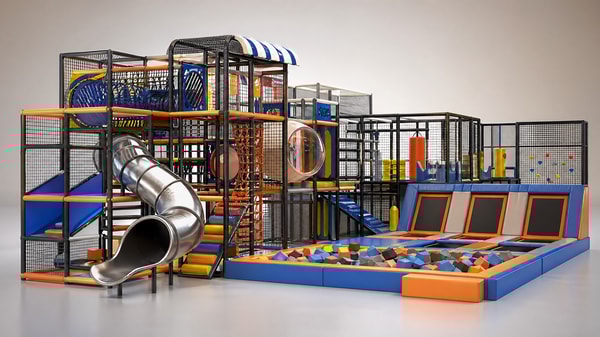
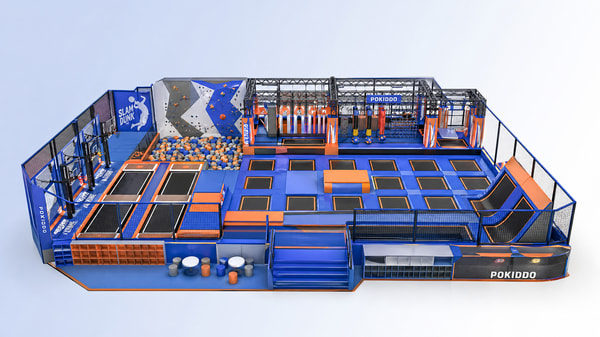
Indoor playground design is often the most visible part of a sales presentation, but attractive renderings do not guarantee manufacturability, durability, or safe user flow. Some suppliers overinvest in visual concepts while underinvesting in structural engineering and operational practicality.
Common warning signs include:
- Layouts that look impressive but ignore ceiling height, egress, or circulation constraints
- No discussion of age zoning, capacity planning, or supervision sightlines
- Inconsistent dimensions between concept drawings and production drawings
- No engineering explanation for load-bearing elements, anchoring, or impact zones
- Failure to adapt the design for local code requirements
A capable manufacturer should be able to discuss how the design performs in real operating conditions, not just how it looks in a proposal. This is especially important for trampoline parks, where user throughput, impact loads, and maintenance access affect both safety and business performance.
Red flag #3: Pricing that looks low because key costs are hidden
One of the most common sourcing mistakes is comparing only the headline equipment price. A low initial quote can conceal major downstream costs, making trampoline park cost or indoor playground project cost far higher than expected.
Look carefully for omissions such as:
- Shipping, duties, and local inland logistics
- Installation supervision or installer training
- Site preparation requirements
- Replacement parts and wear components
- Warranty exclusions
- Certification-related modifications for local approval
- Soft opening support and operational documentation
Ask suppliers for a full cost breakdown across design, manufacturing, packaging, freight, installation, compliance adjustments, and after-sales support. Professional manufacturers are usually more transparent about commercial realities. If a quote is much lower than competing offers, the key question is not “How did they save money?” but “What is missing?”
Red flag #4: No evidence of relevant commercial project experience
Not all playground manufacturers are equipped for commercial-scale projects. Some have experience only in small retail installations or basic export orders, yet market themselves as full-service partners for family entertainment centers, malls, hotels, or trampoline parks.
Be cautious if a supplier cannot provide:
- Case studies with project scope, region, and application type
- Photos of completed installations beyond showroom samples
- References from commercial buyers or distributors
- Examples of projects with similar scale or complexity
- Proof of custom OEM/ODM execution
For distributors and agents, this matters even more. Your reputation depends on whether the manufacturer can deliver consistently across different markets and customer expectations. A supplier with weak project history may still offer a good product for simple jobs, but that is different from being a reliable partner for complex commercial deployment.
Red flag #5: Poor material transparency and inconsistent quality standards
Commercial indoor playgrounds experience heavy daily wear. Material quality directly affects lifecycle cost, cleaning performance, user safety, and brand perception. If a manufacturer is unclear about what materials are used, quality inconsistency is a real risk.
Warning signs include:
- No clear specification sheet for steel, foam, PVC, plastics, netting, springs, or jump mats
- Inability to explain anti-rust treatment or surface finishing processes
- Sample quality that does not match catalog claims
- Visible inconsistency in welds, padding, stitching, or molded parts
- No discussion of cleaning durability or replacement cycle
A serious buyer should request material lists, finish details, and sample confirmation before final production approval. If possible, compare quality at both sample and shipment stages. In commercial sourcing, inconsistency is often a bigger problem than average quality.
Red flag #6: Weak communication during the quotation stage
The quotation stage often predicts the post-order experience. If a manufacturer is slow, evasive, or disorganized before winning the business, those issues usually become worse once production starts.
Pay attention to these signals:
- Long response times to technical questions
- Repeatedly changing answers from different sales contacts
- No clear version control for drawings and revisions
- Incomplete quotations that require repeated clarification
- Limited ability to discuss lead times, production planning, or export procedures
Good communication is not just a service preference; it is a risk indicator. Indoor playground projects involve many moving parts, from design confirmation to shipment coordination. Poor process discipline increases the chance of rework, delays, and disputes.
Red flag #7: No realistic after-sales support plan
After-sales support is where weak manufacturers are exposed. Even good equipment needs spare parts, maintenance guidance, and periodic problem-solving. For trampoline park equipment and large indoor playground systems, support quality affects uptime and customer safety.
Important questions to ask include:
- What spare parts are stocked and how quickly can they be supplied?
- Is there a recommended maintenance schedule?
- Can the supplier support remote troubleshooting?
- Are installation manuals and operating guidelines available in usable form?
- Who handles warranty claims and what is excluded?
If the supplier treats after-sales support as an afterthought, buyers should expect higher lifetime costs. This is particularly important for operators planning multi-site expansion, because service inconsistency becomes more expensive over time.
Red flag #8: Factory capability does not match sales claims
Some indoor playground suppliers are strong traders, some are real manufacturers, and some operate through mixed models. None of these structures are automatically bad, but buyers need clarity. Problems arise when sales claims suggest in-house capability that the company does not actually control.
Watch for signs such as:
- Factory photos that appear generic or inconsistent
- Little evidence of production workflow, QC checkpoints, or packaging control
- Unclear answers about what is made in-house versus outsourced
- Sudden lead time changes after technical confirmation
- No ability to support audits, video inspections, or third-party verification
For B2B buyers, supply chain reliability matters as much as product appearance. A manufacturer that lacks process control may struggle with quality consistency, delivery dates, or replacement parts compatibility later.
How to verify a manufacturer before you commit
The best defense against sourcing risk is a structured evaluation process. Instead of relying on brochures or price alone, buyers should score suppliers across the factors that affect long-term project success.
A practical verification checklist includes:
- Review compliance documents for target-market relevance
- Request detailed specifications and bill-of-material clarity
- Assess indoor playground design capability through real project examples
- Compare like-for-like cost breakdowns, not just headline pricing
- Evaluate communication quality and revision discipline
- Confirm manufacturing scope, QC process, and inspection options
- Check references or completed project evidence
- Clarify spare parts, warranty, and after-sales response commitments
For larger projects, it is wise to involve both technical reviewers and commercial decision-makers. Procurement may focus on cost and contractual clarity, while operations teams can identify design or maintenance issues that sales presentations overlook.
When a red flag is manageable—and when it is a deal breaker
Not every weakness should automatically eliminate a supplier. Some issues are manageable if they are transparent and correctable. For example, a newer manufacturer may have fewer global case studies but still demonstrate strong engineering discipline and responsive service.
However, the following are usually deal breakers:
- Unverifiable safety claims
- Inconsistent technical documentation
- Hidden cost structures
- Poor communication combined with custom project complexity
- No credible after-sales support framework
The key is pattern recognition. One minor issue may be manageable. Several red flags across compliance, engineering, pricing, and support usually indicate systemic risk.
Final takeaway for procurement teams and commercial buyers
When sourcing an indoor playground manufacturer, the biggest mistakes happen when buyers are impressed by visuals, distracted by low pricing, or rushed by aggressive sales timelines. The right supplier should be able to prove safety compliance, explain design logic, disclose total cost clearly, and support the project after installation.
For procurement professionals, distributors, and business evaluators, the most reliable decision framework is simple: verify claims, compare total lifecycle value, and treat weak transparency as a serious warning sign. A trustworthy indoor playground supplier is not just selling equipment—they are reducing operational risk, protecting your brand, and helping your project open on time with confidence.
Search News
Hot Articles
Popular Tags
Need ExpertConsultation?
Connect with our specialized leisureengineering team for procurementstrategies.
Recommended News
 Apr 29, 2026Adventure Playground Safety Mistakes to Avoid Before InstallationAdventure playground safety mistakes can delay opening and raise liability. Learn the key pre-installation checks for materials, site planning, surfacing, and compliance.● Theme Park Strategist
 Apr 29, 2026Chinese Tennis Robot Demand Rises in Europe After Zheng Qinwen's Madrid RunChinese tennis robot demand surges in Europe after Zheng Qinwen's Madrid Open run—CE-certified AI training systems now sought by German & Spanish academies.● Theme Park Strategist
 Apr 29, 2026Vietnam Mandates Child Finger-Trap Sensors for Indoor Play EquipmentVietnam mandates child finger-trap sensors for indoor play equipment—key compliance update for exporters, suppliers & certifiers. Act now before Oct 1, 2026.● Theme Park Strategist
 Apr 29, 2026CBA Guangdong’s Loss Spurs Export Inquiries for Indoor Playground EquipmentCBA Guangdong’s playoff loss sparks urgent export inquiries for EN1176-compliant indoor playground equipment — basketball-themed, rapid-assembly modules for ASEAN family entertainment centers.● Theme Park Strategist
 Apr 28, 2026Vietnam Mandates Child Hand-Trap Sensors for Indoor Play EquipmentVietnam mandates VILAS-certified hand-trap sensors for indoor play equipment—key for exporters, manufacturers & certifiers. Act before Oct 2026!● Theme Park Strategist
 Apr 29, 2026What to Review Before Buying a Trampoline ParkCompare trampoline park price, trampoline park cost, and trampoline park equipment before choosing a trampoline park supplier. Get expert tips on safety, layout, and sourcing.● Theme Park Strategist
 Apr 29, 2026How Much Does a Trampoline Park CostTrampoline park cost explained: compare trampoline park price, equipment quality, and supplier value. Learn what drives ROI before choosing a trampoline park for sale.● Theme Park Strategist
 Apr 29, 2026Safe Trampoline Park Equipment BasicsSafe trampoline park equipment basics: compare trampoline park supplier options, indoor playground design, durability, compliance, and total trampoline park cost before you buy.● Theme Park Strategist
 Apr 29, 2026How to Audit an Indoor Playground FactoryIndoor playground manufacturer audit guide: learn how to assess an indoor playground supplier, indoor playground design strength, safety, capacity, and trampoline park equipment quality before you buy.● Theme Park Strategist
 Apr 29, 2026Indoor Playground Supplier Pricing GuideIndoor playground supplier pricing guide: compare indoor playground manufacturer quotes, indoor playground design value, trampoline park equipment cost, and hidden fees before you buy.● Theme Park Strategist
 Apr 29, 2026Trampoline Park Supplier Checklist 2026Trampoline park supplier checklist 2026: compare trampoline park price, cost, equipment, and indoor playground design to choose a safer, smarter supplier for profitable projects.● Theme Park Strategist
 Apr 29, 2026Trampoline Park Price vs Long Term ValueTrampoline park price is only the start. Compare trampoline park cost, equipment quality, and supplier reliability to find safer, higher-ROI solutions with lasting commercial value.● Theme Park Strategist
![]() Apr 29, 2026Indoor Playground Design Mistakes to AvoidIndoor playground design mistakes can raise trampoline park cost and hurt ROI. Learn how to choose the right indoor playground supplier, manufacturer, and equipment for safer, smarter growth.● Theme Park Strategist
Apr 29, 2026Indoor Playground Design Mistakes to AvoidIndoor playground design mistakes can raise trampoline park cost and hurt ROI. Learn how to choose the right indoor playground supplier, manufacturer, and equipment for safer, smarter growth.● Theme Park Strategist Apr 29, 2026Is a Trampoline Park for Sale Worth ItTrampoline park for sale: compare trampoline park price, cost, equipment quality, and supplier support to judge ROI. See what smart buyers check before investing.● Theme Park Strategist
 Apr 29, 2026Trampoline Park Cost Breakdown for BuyersTrampoline park cost explained: compare trampoline park price, equipment quality, and supplier support to find a profitable trampoline park for sale with smart design and safer ROI.● Theme Park Strategist
 Apr 29, 2026What to Check in Trampoline Park EquipmentTrampoline park equipment guide: learn what to check from safety, layout, and materials to trampoline park cost, supplier selection, and indoor playground manufacturer support.● Theme Park Strategist
 Apr 29, 2026Indoor Playground Manufacturer Red FlagsIndoor playground manufacturer red flags: learn how to assess an indoor playground supplier, indoor playground design quality, trampoline park equipment, and hidden trampoline park cost before you buy.● Theme Park Strategist
 Apr 29, 2026How to Pick an Indoor Playground SupplierIndoor playground supplier guide: compare safety, design, quality, and lead times to choose the right indoor playground manufacturer or trampoline park supplier with confidence.● Theme Park Strategist
 Apr 29, 2026How to Compare Trampoline Park SuppliersCompare every trampoline park supplier by safety, design, service, and trampoline park cost. Learn how to choose reliable trampoline park equipment and indoor playground supplier solutions.● Theme Park Strategist
 Apr 29, 2026What Affects Trampoline Park Price MostTrampoline park price depends most on equipment quality, compliance, customization, and supplier strength. Learn what drives trampoline park cost and compare quotes with confidence.● Theme Park Strategist
 Apr 27, 2026Vietnam Mandates Child Finger-Trap Sensors for Indoor Play EquipmentVietnam mandates child finger-trap sensors for indoor play equipment starting Aug 1, 2026 — comply now to avoid delays, penalties & market access risks.● Theme Park Strategist
 Apr 26, 2026Fan Zhendong Visits SF as MLTT Investor; Chinese AI Ping Pong Tech Draws Silicon Valley InterestAI ping pong tech from China grabs Silicon Valley’s attention as Fan Zhendong, MLTT investor and Olympic champ, demos smart table tennis systems in SF—key for sports hardware, AI analytics & FDA-regulated fitness devices.● Theme Park Strategist
 Apr 26, 2026Vietnam Enforces Child Finger-Trap Sensors for Indoor Playground EquipmentChild finger-trap sensors now mandatory for indoor playground equipment in Vietnam—comply with QCVN 17:2026/BKHCN before import or sale.● Theme Park Strategist
 Apr 25, 2026Vietnam Mandates Child Finger-Trap Sensors for Indoor Play EquipmentVietnam mandates child finger-trap sensors for indoor play equipment—TCVN-certified, ≤0.3s response. Critical for importers, OEMs & compliance teams ahead of July 1, 2026 deadline.● Theme Park Strategist