Are Premium Arcade Games Worth It? A Cost vs Revenue Look
For finance approvers evaluating arcade games, the real question is not just upfront cost, but how quickly premium machines can translate into reliable revenue, stronger customer dwell time, and long-term ROI. In today’s experience-driven entertainment market, understanding the balance between capital investment, maintenance, pricing power, and earnings potential is essential before approving any purchase.
How Should Finance Teams Judge Premium Arcade Games?
In sports and entertainment venues, arcade games are no longer a side attraction. They often function as revenue anchors in family entertainment centers, hotel leisure zones, cinemas, holiday parks, bowling venues, and mixed-use amusement spaces. For a finance approver, the evaluation should move beyond sticker price and toward cash generation per square meter, expected uptime, operating life, and replacement risk across a 3–5 year horizon.
Premium arcade games usually cost more because they combine stronger cabinets, more reliable electronic assemblies, higher-impact audio-visual systems, branded or immersive gameplay, and better player retention. In practical terms, this means a machine may command a higher play price, maintain appeal for 18–36 months instead of fading after a single season, and reduce hidden losses caused by repeated service calls or inconsistent performance during peak weekends.
The finance question is therefore not “Is premium expensive?” but “Is premium economically efficient for this location?” A machine placed in a high-footfall entertainment environment may justify a higher capex because the same cabinet can process hundreds of paid sessions per week. In a lower-volume venue, that same machine may underperform if the pricing model, age profile, or layout does not support repeat play.
Three financial lenses that matter most
- Revenue velocity: estimate daily paid plays, average ticket price, and peak/off-peak utilization over 7-day and 30-day cycles.
- Lifecycle cost: include maintenance parts, technician visits, software updates, payment system integration, and downtime exposure.
- Commercial fit: check whether the game supports your venue’s audience, floor plan, power availability, safety policies, and staffing model.
Global Commercial Trade supports this type of decision by helping buyers compare sourcing options through a commercial lens, not only a catalog lens. For procurement leaders in amusement and leisure parks, the real advantage comes from aligning machine specification, supplier responsiveness, and compliance readiness before budget approval is signed.
Cost vs Revenue: Where Do Premium Arcade Games Actually Win?
The strongest argument for premium arcade games is not prestige. It is earnings resilience. In many venues, lower-cost machines appear attractive because they reduce capex in quarter one. However, if those machines attract fewer repeat plays, require more frequent repair every 1–3 months, or lose visual appeal within a year, the apparent savings can disappear quickly.
Premium units typically perform better in four commercial areas: pricing power, retention, uptime, and brand impact. A well-selected machine can justify a higher price per play, especially when it offers motion, multiplayer interaction, sports simulation, redemption value, or recognizable IP-style experience. Even a small increase in average play count per day can materially improve payback over 12–24 months.
For finance teams, a side-by-side comparison is more useful than broad claims. The table below shows a typical framework for comparing standard and premium arcade games in commercial entertainment settings. Figures are indicative ranges used for evaluation structure, not universal market prices.
The key takeaway is that premium arcade games tend to win when the venue has enough traffic to monetize the stronger play experience. If footfall is weak or the game does not match the audience, the premium advantage narrows. Financial approval should therefore connect machine quality with realistic throughput assumptions, not abstract desirability.
A simple ROI thinking model
A finance team can test any proposal using four variables: installed cost, average price per play, expected daily plays, and monthly downtime allowance. If a premium machine costs more but delivers 20–40% higher paid sessions and fewer service interruptions, the payback period may still be shorter than a lower-cost alternative. This is why revenue quality matters more than purchase price alone.
In practical procurement reviews, many operators model best case, base case, and conservative case over 12 months. This 3-scenario approach makes it easier to defend approval decisions internally, especially when budgets are tight or when multiple venue upgrades compete for the same capital pool.
Which Venue Scenarios Justify Premium Arcade Games?
Not every site needs top-tier arcade games. The best candidates are locations where entertainment is tied directly to dwell time, food and beverage spend, repeat visitation, or destination branding. In these environments, premium machines do more than collect coins or card credits. They help shape the customer journey and can support a broader spend ecosystem across the venue.
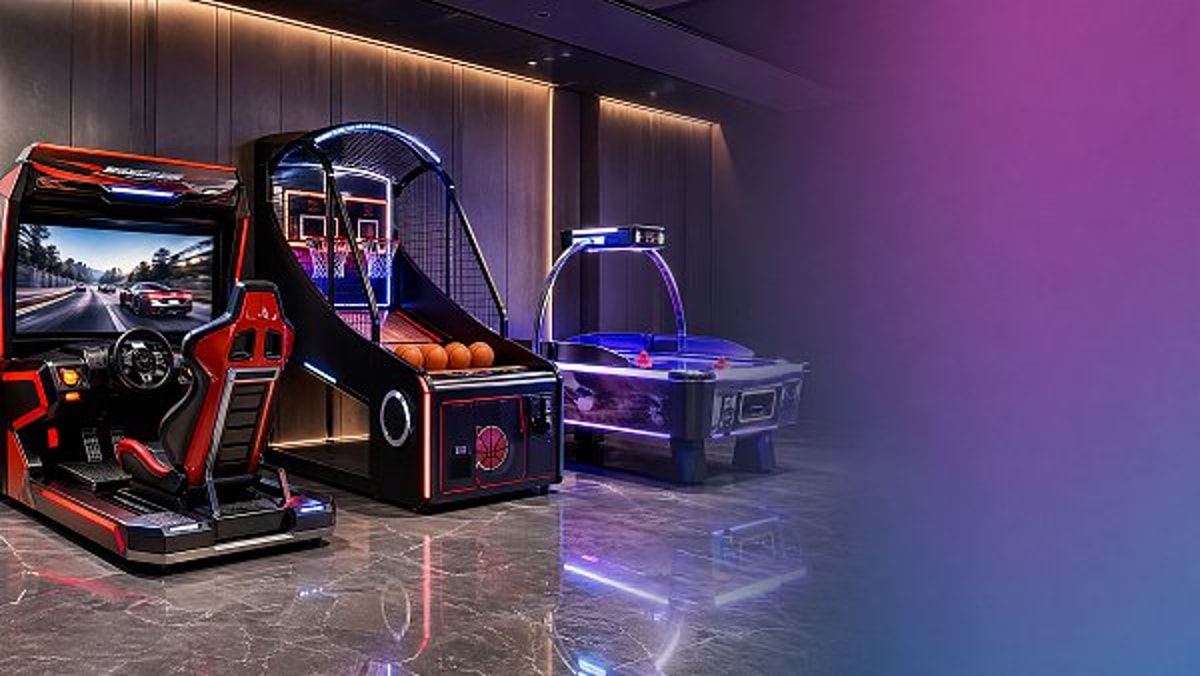
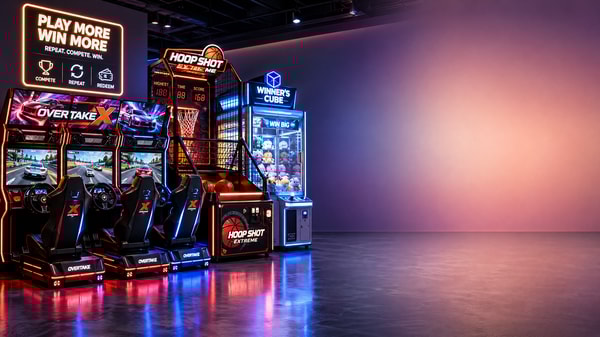
For example, sports bars with family zones may benefit from basketball, racing, air hockey, and interactive redemption games that hold guests before and after dining. Hotels and resorts may prefer compact, visually polished units with low noise leakage and durable card-payment integration. Family entertainment centers often prioritize multiplayer attraction power and high daily throughput across weekends, holidays, and school breaks.
The selection logic should also account for age profile, space efficiency, and staffing. A venue with 80–150 square meters for leisure equipment needs a different machine mix from a large amusement floor above 500 square meters. Premium arcade games work best when they are part of a balanced floor strategy rather than isolated trophy purchases.
Venue-fit comparison for finance approvers
The table below can help approval teams match arcade games to commercial scenarios more precisely.
This kind of scenario mapping reduces approval risk. A finance approver can quickly see whether a premium purchase is meant to maximize direct revenue, support guest retention, strengthen brand positioning, or serve a blended objective across all three. GCT’s value in this process is helping buyers compare supplier capability with actual venue use cases rather than generic sales promises.
Common signs a premium purchase is justified
- The venue has consistent traffic across 5–7 days per week and can sustain regular play volume.
- The machine supports higher pricing or stronger bundled spending with food, tickets, or loyalty programs.
- Downtime during weekends or holidays would cause meaningful revenue loss or guest dissatisfaction.
- The venue needs a stronger visual or experiential standard to match premium positioning.
What Should You Check Before Approving the Purchase?
Finance approval becomes easier when procurement uses a structured review process. For arcade games, the most expensive mistakes usually come from missing non-obvious details: power requirements, shipping dimensions, parts replacement lead time, local technical support, payment system compatibility, and warranty scope. A low quote can quickly become costly if installation delays push opening dates or if support is weak after commissioning.
A practical review should cover at least 5 core checkpoints: product configuration, operating cost, compliance readiness, vendor support, and revenue assumptions. Each point should be documented before purchase order release. For cross-border sourcing, finance teams should also ask whether the shipment requires partial assembly on arrival and whether the venue has the access route and electrical provision needed for the machine footprint.
Procurement checklist for arcade games
- Confirm operating model: coin, token, card, QR, or integrated venue payment. Revenue capture changes with the payment method.
- Verify power, dimensions, and noise profile. Some premium arcade games need more installation planning than standard cabinets.
- Review spare parts availability over 12–24 months, including screens, sensors, control components, and ticket systems if applicable.
- Check documentation for commercial use, such as electrical safety, user safety labeling, and operating instructions suitable for the destination market.
- Model payback using conservative assumptions on plays per day, not launch-month enthusiasm.
For many international buyers, compliance and sourcing clarity are as important as price. Depending on destination and venue policy, buyers may need to review standard electrical conformity, material safety considerations, and general commercial installation requirements. GCT helps bridge this gap by connecting sourcing conversations with practical procurement intelligence, which is particularly useful when multiple suppliers offer visually similar arcade games with very different service readiness.
Typical timelines finance teams should expect
For in-stock or standard-configured arcade games, sourcing and dispatch may move within 2–6 weeks depending on origin, inspection needs, and shipping mode. Customized branding, software adjustments, cabinet redesign, or payment integration can extend the cycle to 6–12 weeks. Budget planning should therefore include a realistic implementation window rather than assuming immediate revenue start.
What Risks Do Buyers Commonly Overlook?
One common misconception is that all arcade games with similar appearance will generate similar returns. In reality, play physics, sensor accuracy, cabinet durability, screen reliability, and software responsiveness can produce very different user experiences. In a sports and entertainment venue, even small quality gaps can reduce repeat use, especially when players compare machines side by side.
Another mistake is approving based only on purchase cost while excluding downtime cost. If a machine is unavailable for even 2–3 peak days per month, the lost revenue can outweigh the savings gained from choosing a cheaper unit. This matters most for venues with heavy traffic on weekends, holidays, and event nights, where every inactive machine affects both turnover and customer perception.
Frequent approval risks
- Underestimating after-sales response time for imported arcade games, especially when critical parts are not stocked locally.
- Ignoring floor productivity and buying oversized machines that limit total earning mix on the site.
- Choosing visually impressive games that do not match the venue’s age group or spending behavior.
- Failing to align warranty terms with real usage intensity, such as 10–12 operating hours per day in high-traffic settings.
A disciplined finance review should also ask whether there is a fallback plan. Can the supplier provide remote diagnostics? Are replacement parts available within a practical timeframe, such as 7–15 days for critical items? Is technical documentation clear enough for the local service team? These operational questions often decide whether a premium machine remains a premium asset or becomes an expensive headache.
FAQ for finance approvers
How quickly should arcade games pay back? Payback varies by venue traffic, game type, and price per play. Many buyers evaluate a 12–24 month range as a practical benchmark, then test conservative and base-case scenarios before approval.
Are premium arcade games always the right choice? No. They make the most sense where traffic, dwell time, and pricing support higher throughput. In lower-demand locations, a balanced mix of mid-range and premium machines may be financially smarter.
What matters more: capex or uptime? Both matter, but for busy entertainment venues, uptime often has greater long-term impact. A cheaper machine that fails repeatedly can produce a weaker return than a higher-cost model with more stable operation.
What should be requested before final approval? Ask for configuration details, operating requirements, warranty scope, spare parts planning, estimated lead time, packaging dimensions, and any documentation relevant to local commercial installation or safety review.
Why Work With GCT When Evaluating Arcade Games?
For finance approvers, the main challenge is not finding arcade games. It is filtering options with enough commercial intelligence to make a defensible investment decision. GCT supports buyers in sports and entertainment sectors by translating sourcing choices into procurement logic: venue fit, lifecycle thinking, compliance awareness, supplier capability, and revenue practicality.
This matters especially when a project involves hotels, leisure parks, mixed-use entertainment venues, or premium guest environments where aesthetics, safety, and operational continuity all affect approval. A machine that looks suitable in a brochure may still fail on dimensions, support structure, payment compatibility, or expected service burden. GCT helps buyers compare these variables before they become budget overruns.
What you can discuss with GCT
- Arcade games selection based on venue type, target audience, and earning model.
- Configuration confirmation, including cabinet size, power requirements, and payment options.
- Lead time planning for standard units, custom builds, and phased rollout projects.
- Questions around documentation, commercial installation needs, and practical compliance review.
- Quotation comparison, spare parts planning, and sourcing support for long-term operation.
If your team is weighing whether premium arcade games are worth the investment, the best next step is to review the project through both cost and revenue lenses at the same time. Share your target venue, expected user profile, budget range, desired launch window, and any certification or customization needs. GCT can help structure the evaluation so that finance, procurement, and operations reach a faster and more confident decision.
Search News
Hot Articles
Popular Tags
Need ExpertConsultation?
Connect with our specialized leisureengineering team for procurementstrategies.
Recommended News
 Apr 29, 2026Are Premium Arcade Games Worth It? A Cost vs Revenue LookArcade games can deliver strong ROI when premium quality boosts uptime, pricing power, and repeat play. See how finance teams compare cost vs revenue before investing.● Theme Park Strategist
 Apr 29, 2026How to Choose Arcade Games That Keep Players Coming BackArcade games that keep players coming back can boost dwell time, revenue, and loyalty. Discover how to choose high-replay machines that fit your venue and drive long-term results.● Theme Park Strategist
 Apr 29, 2026VR Sports Viewing Booth Demand Rises After Wu Yize vs. SelbyVR Sports Viewing Booth demand surges globally after Wu Yize’s win over Selby—key for exporters, OEMs & cert providers in ME, AU, CA.● Theme Park Strategist
 Apr 29, 2026NBA 3-2-1 Lottery Reform Drives VR Viewing Hardware DemandNBA 3-2-1 Lottery reform fuels VR viewing hardware demand—boosting sales of commercial VR pods, immersive systems & remote commentary terminals across North America, ME & SEA.● Theme Park Strategist
 Apr 28, 2026Global VR Fitness Device Export Prices Rise 12% — China Leads in Delivery ReliabilityVR fitness device export prices surge 12% globally — China leads in delivery reliability. Discover key compliance shifts, market impacts & strategic actions for exporters, OEMs & logistics providers.● Theme Park Strategist
 Apr 28, 2026Snooker World Championship 'China Derby' Drives VR Viewing DemandSnooker World Championship 'China Derby' drives surging VR viewing demand—boosting exports of VR pods, low-latency streaming & Dolby Atmos-certified AI audio solutions globally.● Theme Park Strategist
 Apr 28, 2026BWF 15-Point System to Launch in 2027: Impacts on Timing, Broadcast & Data SystemsBWF 15-point system launching in 2027 — impacts timing displays, broadcast encoders & data platforms. Discover compliance steps for OEMs, venues & AI video providers.● Theme Park Strategist
 Apr 27, 2026Snooker World Championship 'China Derby' Drives VR Viewing DemandVR viewing demand surges after Snooker World Championship 'China Derby' — key opportunity for VR hardware, localization & compliance firms in UK/EU markets.● Theme Park Strategist
 Apr 27, 2026Global VR Fitness Equipment Export Prices Rise 12.3% QoQVR fitness equipment export prices surge 12.3% QoQ — discover why IPX5, ISO 20685, and cloud readiness now drive premium pricing & market share.● Theme Park Strategist
 Apr 27, 2026SASO Updates EMC Rules for VR & Immersive Fitness Devices in Saudi ArabiaSASO EMC updates for VR & immersive fitness devices in Saudi Arabia—Class B compliance mandatory from 25 Apr 2026. Act now to avoid delays & ensure market access.● Theme Park Strategist
 Apr 26, 2026Global VR Fitness Equipment Export Prices Up 12% in Q1 2026VR fitness equipment export prices surge 12.3% in Q1 2026 — discover why reliability-driven pricing is reshaping global gym hardware procurement.● Theme Park Strategist
 Apr 26, 2026SASO Updates EMC Standard for VR Motion Devices in Saudi ArabiaSASO EMC standard update for VR motion devices in Saudi Arabia—Class B limits effective Oct 2026. Ensure compliance now to avoid customs delays & market access risks.● Theme Park Strategist
 Apr 26, 2026Snooker World Championship 'China Derby' Drives VR Viewing DemandSnooker World Championship 'China Derby' drives surging VR viewing demand—CE/UKCA-certified hardware, AI commentary & rapid logistics now critical for venues.● Theme Park Strategist
 Apr 25, 2026Global VR Fitness Equipment Export Prices Up 12% in Q1 2026VR fitness equipment export prices rose 12% in Q1 2026 — discover why $2,840/unit reflects rising value, not just cost, and how OTD leadership reshapes global sourcing.● Theme Park Strategist
 Apr 25, 2026SASO Updates EMC Standard for VR Haptic Devices in Saudi ArabiaSASO updates EMC standard SR 2305:2026 for VR haptic devices in Saudi Arabia—Class B compliance now mandatory for fitness pods & training stations. Act now to avoid port delays.● Theme Park Strategist
![]() Apr 25, 2026Vietnam Enforces Local Type Testing for Commercial VR Fitness CabinsVR fitness cabins for commercial use in Vietnam must now pass local type testing & TÜV SÜD-VN certification—key for exporters, distributors & OEMs. Act before April 24, 2026.● Theme Park Strategist
Apr 25, 2026Vietnam Enforces Local Type Testing for Commercial VR Fitness CabinsVR fitness cabins for commercial use in Vietnam must now pass local type testing & TÜV SÜD-VN certification—key for exporters, distributors & OEMs. Act before April 24, 2026.● Theme Park Strategist Apr 24, 2026Global VR Fitness Equipment Export Prices Up 12% QoQVR fitness equipment export prices surge 12% QoQ to $4,280 — driven by EU 2026/789 & UL 62368-1:Ed4 compliance. Key insight for exporters, suppliers & logistics teams.● Theme Park Strategist
 Apr 24, 2026Vietnam TUV SUD New Rule: VR Fitness Cabins Require Local Type TestVR fitness cabins entering Vietnam now require local type testing per new TUV SUD rule—impacting exporters, distributors & supply chains. Act now to avoid delays & added costs.● Theme Park Strategist
 Apr 24, 2026SASO Updates EMC Standard for VR Motion Devices in Saudi ArabiaSASO EMC update for VR motion devices in Saudi Arabia: Class B compliance now mandatory for fitness, entertainment & edutainment pods—avoid customs rejection!● Theme Park Strategist
 Apr 23, 2026Global VR Fitness Device Export Prices Rise 12% QoQVR fitness device export prices surge 12% QoQ to $3,820 — discover why IP65, AI calibration & 98.7% on-time delivery now define premium global supply.● Theme Park Strategist
 Apr 23, 2026Vietnam TUV SUD Enforces Local Type Testing for VR Fitness CabinsVR fitness cabins entering Vietnam must now undergo local TUV SUD type testing—mandatory from Apr 22, 2026. Learn costs, timelines & compliance steps.● Theme Park Strategist
 Apr 23, 2026SASO Updates EMC Standard for VR Motion Devices to Class BSASO Updates EMC Standard for VR Motion Devices to Class B: Critical compliance shift for VR fitness pods, AR/VR amusement systems & exporters targeting Saudi Arabia.● Theme Park Strategist
 Apr 22, 2026SASO Updates EMC Standard for VR Haptic Devices in Saudi ArabiaSASO EMC standard update for VR haptic devices in Saudi Arabia: Class B compliance required by July 1, 2026 — critical for VR treadmills, AR walls & training pods.● Theme Park Strategist
 Apr 22, 2026Global VR Fitness Device Export Price Up 12% in Q1 2026VR fitness device export prices surge 12% to $1,842/unit in Q1 2026 — discover why China’s 38-day lead times are reshaping global procurement strategies.● Theme Park Strategist