Global VR Fitness Device Export Prices Rise 12% — China Leads in Delivery Reliability
Global export prices for VR fitness devices rose 12.3% quarter-on-quarter to $892/unit in Q1 2026, according to China’s General Administration of Customs report released on April 27, 2026. This shift signals tightening technical and regulatory expectations in key destination markets — particularly the US and EU — and underscores evolving supply chain performance benchmarks. Companies engaged in cross-border trade of motion-tech hardware, international OEM/ODM manufacturing, and logistics services for consumer electronics should monitor implications closely.
Event Overview
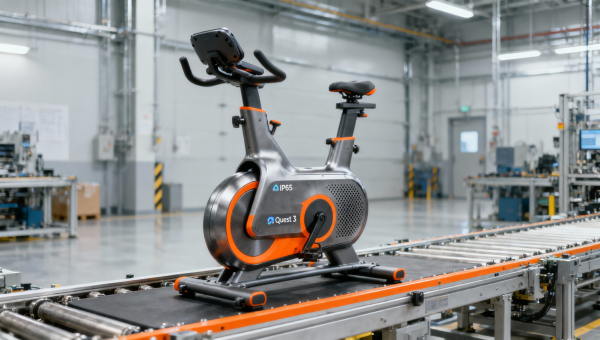
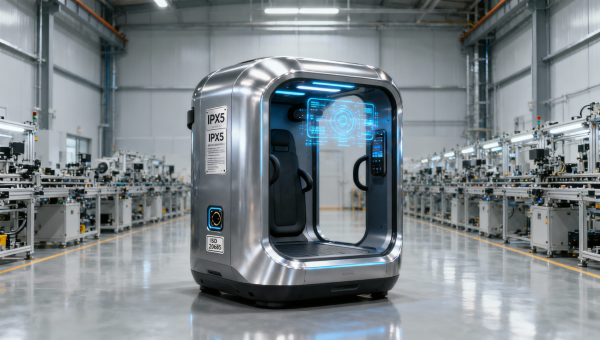
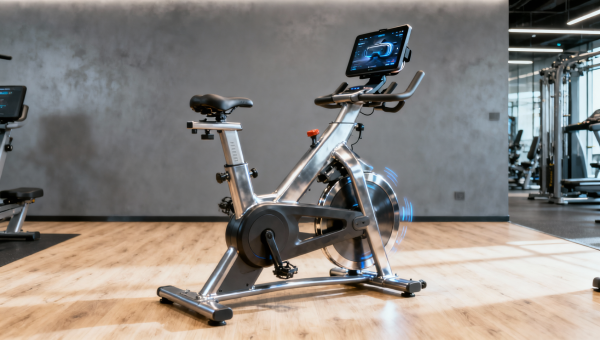
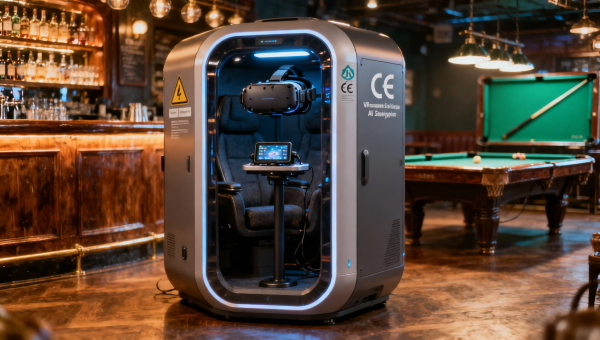
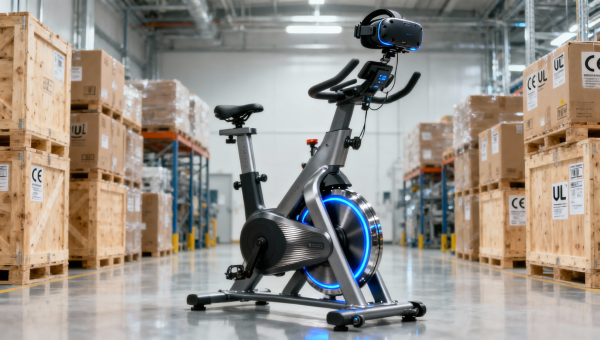
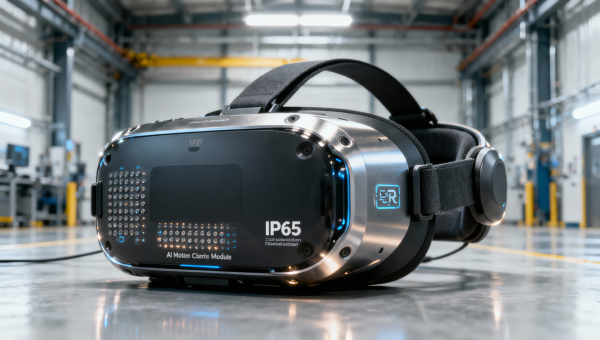
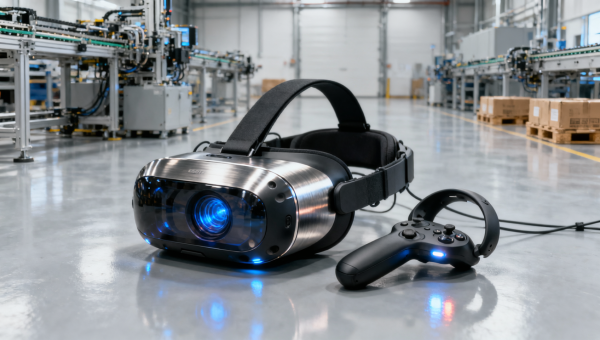
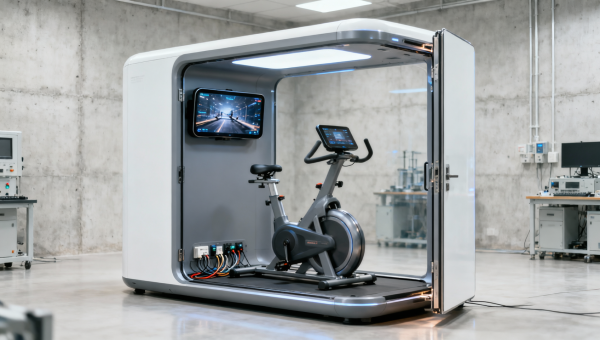
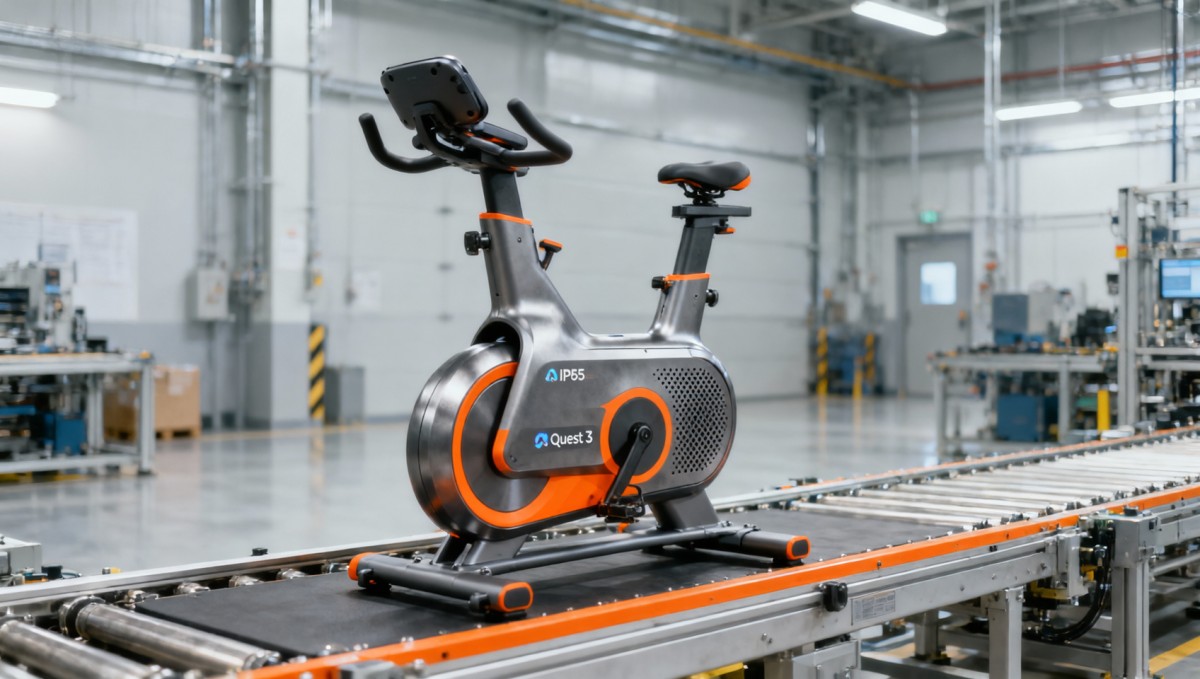
On April 27, 2026, China’s General Administration of Customs published its Monthly Brief on Sports Technology Product Exports. The report states that the average export price of VR fitness devices — including VR-enabled stationary bike kits, interactive boxing targets, and motion-sensing jump rope hosts — reached $892 per unit in Q1 2026, a 12.3% increase from the previous quarter. The rise is attributed to heightened market requirements in North America and Europe for IP65 ingress protection rating, FDA Class I registration, and compatibility with Meta Quest 3 SDK. Separately, the report notes that China’s top three VR fitness device manufacturers achieved an average on-time delivery rate of 98.7%, exceeding those of competing manufacturing clusters in Vietnam (89.1%) and Mexico (82.4%).
Industries Affected
Direct Exporters & Cross-Border Trading Firms
These firms face immediate margin pressure due to higher landed costs — especially where pricing is contractually fixed or tender-based. The price increase reflects not raw material inflation but rising compliance overhead: certification timelines, firmware validation cycles, and documentation for regional regulatory submissions now directly influence unit economics.
Component Suppliers & Raw Material Procurement Units
Suppliers of enclosures, thermal management modules, and certified sensors may see demand shifts toward higher-spec parts — e.g., IP65-rated housings or FDA-compliant plastics. However, no volume change is indicated in the report; impact remains qualitative and tied to specification upgrades rather than overall shipment growth.
OEM/ODM Manufacturing Facilities
Manufacturers outside China — especially in Vietnam and Mexico — are under increased scrutiny regarding delivery reliability. The 9.6–16.3 percentage-point gap in on-time delivery rates versus Chinese top-tier producers suggests growing buyer preference for proven operational consistency, even amid cost-competitive alternatives.
Distribution & Channel Logistics Providers
Logistics partners handling VR fitness shipments must anticipate longer pre-clearance lead times due to expanded regulatory documentation requirements (e.g., FDA registration proof, SDK compatibility test reports). Delays may arise not from customs inspections per se, but from incomplete or non-standardized submission packages.
What Enterprises and Practitioners Should Monitor and Do Now
Track regulatory update cadence in target markets
Current price pressure stems from newly enforced or clarified technical requirements — not tariffs or broad policy shifts. Firms should subscribe to official updates from the FDA (for US-bound goods), EU MDR/IVDR portals (for CE-marked variants), and Meta’s developer compliance bulletins to distinguish formal mandates from vendor-specific recommendations.
Verify specification alignment per shipment batch
IP65 rating, FDA Class I status, and Meta Quest 3 SDK compatibility are discrete, verifiable attributes — not blanket certifications. Exporters must ensure each production lot carries traceable evidence (e.g., lab test reports, signed firmware attestations) matching the declared specs on commercial invoices and packing lists.
Assess delivery reliability as a contractual KPI
The 98.7% on-time delivery rate cited for China’s top three vendors sets a new de facto benchmark. Buyers may begin embedding such metrics into RFPs or master agreements. Manufacturers should audit internal order-to-shipment cycle times — especially post-certification handoff stages — to identify latency points before contractual obligations tighten.
Prepare dual-sourcing documentation workflows
As compliance demands rise, reliance on single-source certification support (e.g., one lab for IP65 testing, one consultant for FDA registration) increases vulnerability. Firms should map parallel documentation pathways — including backup labs, alternate SDK integration partners, and localized regulatory liaison contacts — ahead of Q3 2026 peak season planning.
Editorial Perspective / Industry Observation
This data point is better understood as a signal — not yet a structural shift. The 12.3% price increase reflects selective, specification-driven adjustments in a niche segment (VR fitness), not broad-based inflation across consumer electronics exports. Observably, buyers are rewarding reliability more than cost alone: the delivery gap between China and alternative manufacturing bases exceeds 9 percentage points, suggesting operational trust has become a differentiating factor in procurement decisions. Analysis shows this trend aligns with wider post-pandemic sourcing behavior — where resilience and predictability increasingly outweigh marginal cost savings. Still, it remains uncertain whether these requirements will cascade to adjacent categories (e.g., AR fitness or general wellness wearables) without further regulatory or platform-level precedent.
Conclusion: The Q1 2026 export data highlights a tightening intersection of technical compliance, platform ecosystem alignment, and operational execution — all now priced into the transaction. It does not indicate a surge in global demand nor a systemic cost shock, but rather a recalibration of what constitutes baseline readiness for market access. Current evidence supports interpreting this as an early-stage signal of maturing standards in immersive fitness hardware — one that rewards precision over scale, and preparation over reaction.
Source: General Administration of Customs of the People’s Republic of China, Monthly Brief on Sports Technology Product Exports, April 27, 2026. Note: Regulatory implementation timelines and adoption rates across non-Chinese manufacturers remain subject to ongoing observation.
Search News
Hot Articles
- Stage Lighting & Truss2026 FIBA Women's World Cup Draw Sparks LED Timing Screen Upgrade DemandApr 28, 2026
- Pro Stage AudioKenyan Marathon WR Break Drives Demand for Timing Chips & Track SensorsApr 28, 2026
- Smart Campus Tech2026 Shanghai Smart Campus Expo: VR Teaching Devices Gain ITU & ISO/IEC 23053 CertificationApr 28, 2026
Popular Tags
Need ExpertConsultation?
Connect with our specialized leisureengineering team for procurementstrategies.
Recommended News
 Apr 28, 2026Global VR Fitness Device Export Prices Rise 12% — China Leads in Delivery ReliabilityVR fitness device export prices surge 12% globally — China leads in delivery reliability. Discover key compliance shifts, market impacts & strategic actions for exporters, OEMs & logistics providers.● Theme Park Strategist
 Apr 28, 2026Snooker World Championship 'China Derby' Drives VR Viewing DemandSnooker World Championship 'China Derby' drives surging VR viewing demand—boosting exports of VR pods, low-latency streaming & Dolby Atmos-certified AI audio solutions globally.● Theme Park Strategist
 Apr 28, 2026BWF 15-Point System to Launch in 2027: Impacts on Timing, Broadcast & Data SystemsBWF 15-point system launching in 2027 — impacts timing displays, broadcast encoders & data platforms. Discover compliance steps for OEMs, venues & AI video providers.● Theme Park Strategist
 Apr 27, 2026Snooker World Championship 'China Derby' Drives VR Viewing DemandVR viewing demand surges after Snooker World Championship 'China Derby' — key opportunity for VR hardware, localization & compliance firms in UK/EU markets.● Theme Park Strategist
 Apr 27, 2026Global VR Fitness Equipment Export Prices Rise 12.3% QoQVR fitness equipment export prices surge 12.3% QoQ — discover why IPX5, ISO 20685, and cloud readiness now drive premium pricing & market share.● Theme Park Strategist
 Apr 27, 2026SASO Updates EMC Rules for VR & Immersive Fitness Devices in Saudi ArabiaSASO EMC updates for VR & immersive fitness devices in Saudi Arabia—Class B compliance mandatory from 25 Apr 2026. Act now to avoid delays & ensure market access.● Theme Park Strategist
 Apr 26, 2026Global VR Fitness Equipment Export Prices Up 12% in Q1 2026VR fitness equipment export prices surge 12.3% in Q1 2026 — discover why reliability-driven pricing is reshaping global gym hardware procurement.● Theme Park Strategist
 Apr 26, 2026SASO Updates EMC Standard for VR Motion Devices in Saudi ArabiaSASO EMC standard update for VR motion devices in Saudi Arabia—Class B limits effective Oct 2026. Ensure compliance now to avoid customs delays & market access risks.● Theme Park Strategist
 Apr 26, 2026Snooker World Championship 'China Derby' Drives VR Viewing DemandSnooker World Championship 'China Derby' drives surging VR viewing demand—CE/UKCA-certified hardware, AI commentary & rapid logistics now critical for venues.● Theme Park Strategist
 Apr 25, 2026Global VR Fitness Equipment Export Prices Up 12% in Q1 2026VR fitness equipment export prices rose 12% in Q1 2026 — discover why $2,840/unit reflects rising value, not just cost, and how OTD leadership reshapes global sourcing.● Theme Park Strategist
 Apr 25, 2026SASO Updates EMC Standard for VR Haptic Devices in Saudi ArabiaSASO updates EMC standard SR 2305:2026 for VR haptic devices in Saudi Arabia—Class B compliance now mandatory for fitness pods & training stations. Act now to avoid port delays.● Theme Park Strategist
![]() Apr 25, 2026Vietnam Enforces Local Type Testing for Commercial VR Fitness CabinsVR fitness cabins for commercial use in Vietnam must now pass local type testing & TÜV SÜD-VN certification—key for exporters, distributors & OEMs. Act before April 24, 2026.● Theme Park Strategist
Apr 25, 2026Vietnam Enforces Local Type Testing for Commercial VR Fitness CabinsVR fitness cabins for commercial use in Vietnam must now pass local type testing & TÜV SÜD-VN certification—key for exporters, distributors & OEMs. Act before April 24, 2026.● Theme Park Strategist Apr 24, 2026Global VR Fitness Equipment Export Prices Up 12% QoQVR fitness equipment export prices surge 12% QoQ to $4,280 — driven by EU 2026/789 & UL 62368-1:Ed4 compliance. Key insight for exporters, suppliers & logistics teams.● Theme Park Strategist
 Apr 24, 2026Vietnam TUV SUD New Rule: VR Fitness Cabins Require Local Type TestVR fitness cabins entering Vietnam now require local type testing per new TUV SUD rule—impacting exporters, distributors & supply chains. Act now to avoid delays & added costs.● Theme Park Strategist
 Apr 24, 2026SASO Updates EMC Standard for VR Motion Devices in Saudi ArabiaSASO EMC update for VR motion devices in Saudi Arabia: Class B compliance now mandatory for fitness, entertainment & edutainment pods—avoid customs rejection!● Theme Park Strategist
 Apr 23, 2026Global VR Fitness Device Export Prices Rise 12% QoQVR fitness device export prices surge 12% QoQ to $3,820 — discover why IP65, AI calibration & 98.7% on-time delivery now define premium global supply.● Theme Park Strategist
 Apr 23, 2026Vietnam TUV SUD Enforces Local Type Testing for VR Fitness CabinsVR fitness cabins entering Vietnam must now undergo local TUV SUD type testing—mandatory from Apr 22, 2026. Learn costs, timelines & compliance steps.● Theme Park Strategist
 Apr 23, 2026SASO Updates EMC Standard for VR Motion Devices to Class BSASO Updates EMC Standard for VR Motion Devices to Class B: Critical compliance shift for VR fitness pods, AR/VR amusement systems & exporters targeting Saudi Arabia.● Theme Park Strategist
 Apr 22, 2026SASO Updates EMC Standard for VR Haptic Devices in Saudi ArabiaSASO EMC standard update for VR haptic devices in Saudi Arabia: Class B compliance required by July 1, 2026 — critical for VR treadmills, AR walls & training pods.● Theme Park Strategist
 Apr 22, 2026Global VR Fitness Device Export Price Up 12% in Q1 2026VR fitness device export prices surge 12% to $1,842/unit in Q1 2026 — discover why China’s 38-day lead times are reshaping global procurement strategies.● Theme Park Strategist
 Apr 22, 2026Vietnam TUV SUD New Rule: VR Fitness Pods Require Local Type TestVR fitness pods now require local type testing in Vietnam per TUV SUD’s new rule—impacting exporters, costs & lead times. Act now!● Theme Park Strategist
 Apr 22, 2026Why Some Arcade Games Perform Well at First Then Fade FastArcade games can shine early then fade fast. Learn how trampoline park, indoor playground, and adventure playground buyers can spot ROI risks and choose longer-lasting winners.● Theme Park Strategist
 Apr 22, 2026Arcade Games That Keep Players Longer Without Prize InflationArcade games that boost dwell time in trampoline park, indoor playground, and adventure playground venues—discover smarter, prize-controlled strategies that improve replay, margins, and ROI.● Theme Park Strategist
 Apr 21, 2026Global VR Fitness Equipment Export Prices Rise 12% in Q1 2026VR fitness equipment export prices surge 12% in Q1 2026—driven by EU safety mandates. Discover cost impacts, compliance risks & supply chain insights.● Theme Park Strategist