BWF 15-Point System to Launch in 2027: Impacts on Timing, Broadcast & Data Systems
On 26 April 2026, the Badminton World Federation (BWF) formally approved a major scoring rule reform — the transition from the current 21-point rally scoring system to a 15-point-per-game, best-of-three format, effective 1 January 2027. This change directly affects commercial LED timing displays, electronic line-calling systems, AI-powered multi-camera broadcast encoders, and tournament data platforms — prompting hardware logic updates, firmware revisions, and compatibility reassessments across global supply chains. Equipment manufacturers, ODM partners, and broadcast infrastructure providers are among the key stakeholders requiring immediate technical and procurement attention.
Event Overview
On 26 April 2026, the Badminton World Federation announced formal adoption of a new match format: 15 points per game, best-of-three sets, to be implemented globally for all BWF-sanctioned events starting 1 January 2027. The decision replaces the existing 21-point rally scoring system. No further implementation details — such as transitional timelines for domestic leagues or exceptions for junior/developmental events — have been publicly released by the BWF as of this date.
Industries Affected
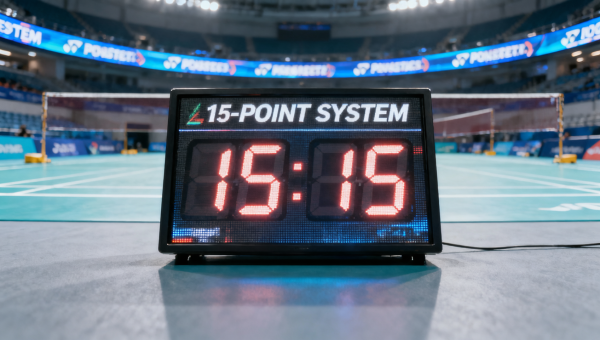
ODM/OEM Equipment Manufacturers: These firms supply timing screens, electronic umpiring hardware, and broadcast encoding units to international sports venues and federations. The shift requires re-engineering of firmware logic (e.g., set-end triggers, tie-break handling, service rotation algorithms), validation against BWF’s updated technical specifications, and recertification for export markets. Delivery lead times are reported to extend by 3–4 weeks due to required adaptation cycles.
Commercial Sports Venue Operators: Operators of paid-entry badminton facilities using integrated LED timing and scoring systems must assess compatibility with the new format. Legacy hardware may require firmware upgrades or full replacement — especially where embedded logic governs auto-reset, timeout management, or real-time statistics display.
AI Video Production & Broadcast Technology Providers: Multi-camera AI tracking and live encoding systems used in televised or streamed tournaments rely on frame-accurate scoring event detection (e.g., point completion, game end). The 15-point structure alters statistical pacing, timeout frequency, and average match duration — necessitating recalibration of AI models and metadata tagging protocols.
Global Distributors & Aftermarket Service Providers: Firms managing spare parts inventories, firmware update distribution, and on-site technical support for installed systems must now revise documentation, training modules, and remote diagnostics logic. Compatibility matrices for legacy vs. post-2027 hardware will become essential for customer advisory services.
Key Considerations and Recommended Actions
Monitor official BWF technical bulletins for firmware certification requirements
The BWF has not yet published detailed technical annexes specifying minimum latency thresholds, display refresh standards, or API schema changes for data integration. ODMs and integrators should track upcoming BWF Technical Committee releases — expected before Q3 2026 — to align development roadmaps.
Prioritize firmware adaptability testing for high-volume export models
Chinese-headquartered ODMs have begun internal adaptation work, but regional regulatory acceptance (e.g., CE marking updates in Europe, FCC compliance in North America) remains pending. Exporters should identify top-three destination markets by volume and verify whether local conformity assessments will require retesting under the new 15-point logic.
Distinguish between mandatory upgrade triggers and optional enhancements
Not all deployed systems require full replacement: some may only need software patches. However, devices with fixed-function logic (e.g., ASIC-based timers without upgradable firmware) will likely fall outside compliance scope. Assess installed base architecture — particularly pre-2022 hardware — to separate urgent replacements from phased updates.
Initiate cross-functional alignment across R&D, supply chain, and customer support teams
Lead-time extensions (3–4 weeks) imply earlier order placement for components with long procurement cycles (e.g., custom display drivers, certified SoCs). Concurrently, customer-facing teams should prepare standardized FAQs and compatibility checklists for distributors and venue operators ahead of Q4 2026 communications.
Editorial Perspective / Industry Observation
Observably, this rule change functions less as an isolated operational update and more as a structural signal — one that accelerates standardization pressure across sports technology infrastructure. While the 15-point format itself is a rules-level decision, its ripple effects expose dependencies between governance bodies (like BWF), hardware vendors, and broadcast ecosystems. Analysis shows that timing and data systems — historically treated as peripheral to gameplay — are now central to regulatory compliance. From an industry perspective, this marks a shift toward tighter coupling between sport administration and embedded tech stack lifecycle management. It is not yet a fully realized outcome; rather, it is an active trigger point requiring staged response across design, certification, and deployment phases.
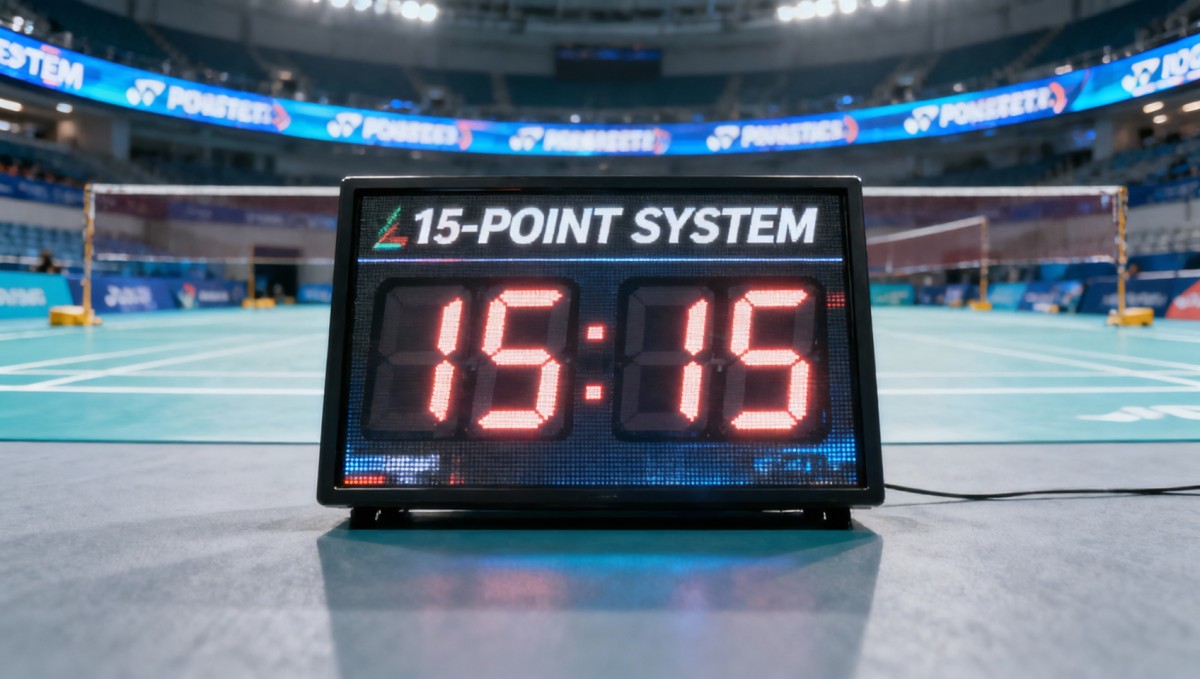
Conclusion: The BWF’s 2027 15-point system introduction is not merely a scoring adjustment — it is a functional reset for commercial sports technology systems tied to elite and semi-professional badminton. Its significance lies in the mandatory recalibration of embedded logic across multiple hardware categories, not in the rule change alone. Currently, it is best understood as a near-term compliance inflection point — one demanding coordinated technical, logistical, and communication planning — rather than a long-term strategic pivot.
Source: Badminton World Federation (BWF) official announcement, 26 April 2026. Note: Further technical specifications, certification frameworks, and transitional guidance remain pending and are subject to ongoing observation.
Search News
Hot Articles
- Stage Lighting & Truss2026 FIBA Women's World Cup Draw Sparks LED Timing Screen Upgrade DemandApr 28, 2026
- Pro Stage AudioKenyan Marathon WR Break Drives Demand for Timing Chips & Track SensorsApr 28, 2026
- Smart Campus Tech2026 Shanghai Smart Campus Expo: VR Teaching Devices Gain ITU & ISO/IEC 23053 CertificationApr 28, 2026
Popular Tags
Need ExpertConsultation?
Connect with our specialized leisureengineering team for procurementstrategies.
Recommended News
 Apr 28, 2026Global VR Fitness Device Export Prices Rise 12% — China Leads in Delivery ReliabilityVR fitness device export prices surge 12% globally — China leads in delivery reliability. Discover key compliance shifts, market impacts & strategic actions for exporters, OEMs & logistics providers.● Theme Park Strategist
 Apr 28, 2026Snooker World Championship 'China Derby' Drives VR Viewing DemandSnooker World Championship 'China Derby' drives surging VR viewing demand—boosting exports of VR pods, low-latency streaming & Dolby Atmos-certified AI audio solutions globally.● Theme Park Strategist
 Apr 28, 2026BWF 15-Point System to Launch in 2027: Impacts on Timing, Broadcast & Data SystemsBWF 15-point system launching in 2027 — impacts timing displays, broadcast encoders & data platforms. Discover compliance steps for OEMs, venues & AI video providers.● Theme Park Strategist
 Apr 27, 2026Snooker World Championship 'China Derby' Drives VR Viewing DemandVR viewing demand surges after Snooker World Championship 'China Derby' — key opportunity for VR hardware, localization & compliance firms in UK/EU markets.● Theme Park Strategist
 Apr 27, 2026Global VR Fitness Equipment Export Prices Rise 12.3% QoQVR fitness equipment export prices surge 12.3% QoQ — discover why IPX5, ISO 20685, and cloud readiness now drive premium pricing & market share.● Theme Park Strategist
 Apr 27, 2026SASO Updates EMC Rules for VR & Immersive Fitness Devices in Saudi ArabiaSASO EMC updates for VR & immersive fitness devices in Saudi Arabia—Class B compliance mandatory from 25 Apr 2026. Act now to avoid delays & ensure market access.● Theme Park Strategist
 Apr 26, 2026Global VR Fitness Equipment Export Prices Up 12% in Q1 2026VR fitness equipment export prices surge 12.3% in Q1 2026 — discover why reliability-driven pricing is reshaping global gym hardware procurement.● Theme Park Strategist
 Apr 26, 2026SASO Updates EMC Standard for VR Motion Devices in Saudi ArabiaSASO EMC standard update for VR motion devices in Saudi Arabia—Class B limits effective Oct 2026. Ensure compliance now to avoid customs delays & market access risks.● Theme Park Strategist
 Apr 26, 2026Snooker World Championship 'China Derby' Drives VR Viewing DemandSnooker World Championship 'China Derby' drives surging VR viewing demand—CE/UKCA-certified hardware, AI commentary & rapid logistics now critical for venues.● Theme Park Strategist
 Apr 25, 2026Global VR Fitness Equipment Export Prices Up 12% in Q1 2026VR fitness equipment export prices rose 12% in Q1 2026 — discover why $2,840/unit reflects rising value, not just cost, and how OTD leadership reshapes global sourcing.● Theme Park Strategist
 Apr 25, 2026SASO Updates EMC Standard for VR Haptic Devices in Saudi ArabiaSASO updates EMC standard SR 2305:2026 for VR haptic devices in Saudi Arabia—Class B compliance now mandatory for fitness pods & training stations. Act now to avoid port delays.● Theme Park Strategist
![]() Apr 25, 2026Vietnam Enforces Local Type Testing for Commercial VR Fitness CabinsVR fitness cabins for commercial use in Vietnam must now pass local type testing & TÜV SÜD-VN certification—key for exporters, distributors & OEMs. Act before April 24, 2026.● Theme Park Strategist
Apr 25, 2026Vietnam Enforces Local Type Testing for Commercial VR Fitness CabinsVR fitness cabins for commercial use in Vietnam must now pass local type testing & TÜV SÜD-VN certification—key for exporters, distributors & OEMs. Act before April 24, 2026.● Theme Park Strategist Apr 24, 2026Global VR Fitness Equipment Export Prices Up 12% QoQVR fitness equipment export prices surge 12% QoQ to $4,280 — driven by EU 2026/789 & UL 62368-1:Ed4 compliance. Key insight for exporters, suppliers & logistics teams.● Theme Park Strategist
 Apr 24, 2026Vietnam TUV SUD New Rule: VR Fitness Cabins Require Local Type TestVR fitness cabins entering Vietnam now require local type testing per new TUV SUD rule—impacting exporters, distributors & supply chains. Act now to avoid delays & added costs.● Theme Park Strategist
 Apr 24, 2026SASO Updates EMC Standard for VR Motion Devices in Saudi ArabiaSASO EMC update for VR motion devices in Saudi Arabia: Class B compliance now mandatory for fitness, entertainment & edutainment pods—avoid customs rejection!● Theme Park Strategist
 Apr 23, 2026Global VR Fitness Device Export Prices Rise 12% QoQVR fitness device export prices surge 12% QoQ to $3,820 — discover why IP65, AI calibration & 98.7% on-time delivery now define premium global supply.● Theme Park Strategist
 Apr 23, 2026Vietnam TUV SUD Enforces Local Type Testing for VR Fitness CabinsVR fitness cabins entering Vietnam must now undergo local TUV SUD type testing—mandatory from Apr 22, 2026. Learn costs, timelines & compliance steps.● Theme Park Strategist
 Apr 23, 2026SASO Updates EMC Standard for VR Motion Devices to Class BSASO Updates EMC Standard for VR Motion Devices to Class B: Critical compliance shift for VR fitness pods, AR/VR amusement systems & exporters targeting Saudi Arabia.● Theme Park Strategist
 Apr 22, 2026SASO Updates EMC Standard for VR Haptic Devices in Saudi ArabiaSASO EMC standard update for VR haptic devices in Saudi Arabia: Class B compliance required by July 1, 2026 — critical for VR treadmills, AR walls & training pods.● Theme Park Strategist
 Apr 22, 2026Global VR Fitness Device Export Price Up 12% in Q1 2026VR fitness device export prices surge 12% to $1,842/unit in Q1 2026 — discover why China’s 38-day lead times are reshaping global procurement strategies.● Theme Park Strategist
 Apr 22, 2026Vietnam TUV SUD New Rule: VR Fitness Pods Require Local Type TestVR fitness pods now require local type testing in Vietnam per TUV SUD’s new rule—impacting exporters, costs & lead times. Act now!● Theme Park Strategist
 Apr 22, 2026Why Some Arcade Games Perform Well at First Then Fade FastArcade games can shine early then fade fast. Learn how trampoline park, indoor playground, and adventure playground buyers can spot ROI risks and choose longer-lasting winners.● Theme Park Strategist
 Apr 22, 2026Arcade Games That Keep Players Longer Without Prize InflationArcade games that boost dwell time in trampoline park, indoor playground, and adventure playground venues—discover smarter, prize-controlled strategies that improve replay, margins, and ROI.● Theme Park Strategist
 Apr 21, 2026Global VR Fitness Equipment Export Prices Rise 12% in Q1 2026VR fitness equipment export prices surge 12% in Q1 2026—driven by EU safety mandates. Discover cost impacts, compliance risks & supply chain insights.● Theme Park Strategist