France to Host 2031 FIBA Basketball World Cup: LED Venue Screens & Timing Systems Export Opportunity
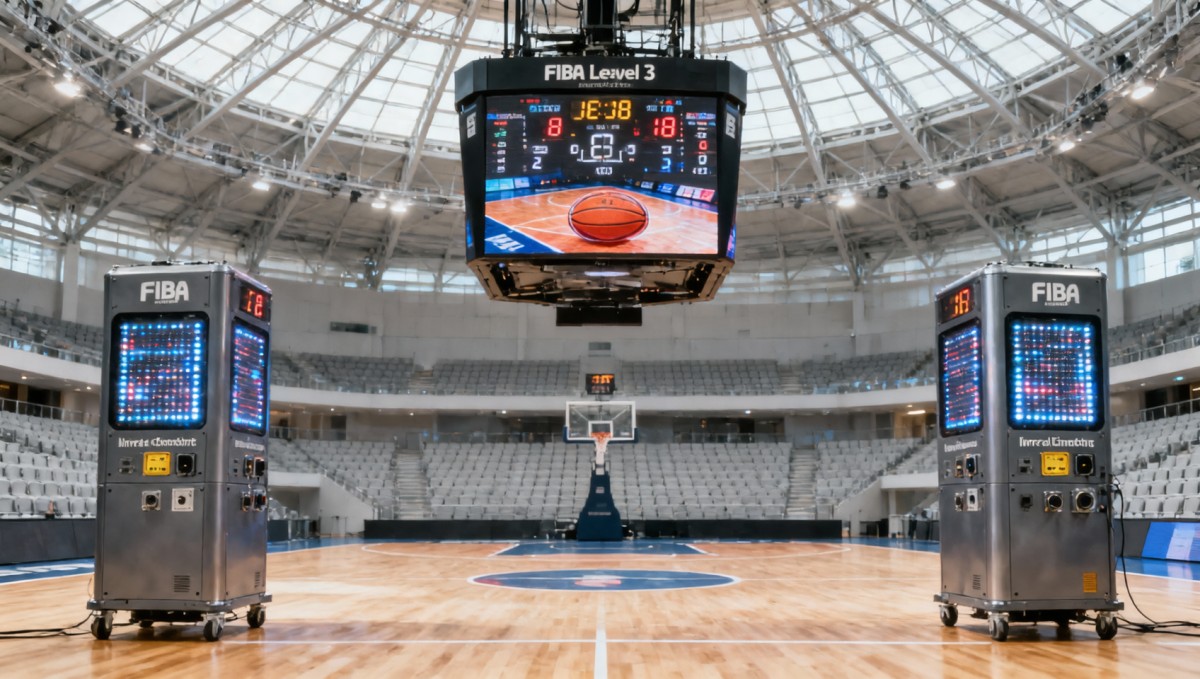
On April 22, 2026, FIBA officially awarded France hosting rights for the 2031 Men’s Basketball World Cup — triggering new procurement demand for FIBA Level 3–certified LED venue displays, mobile timing/scoreboard towers, and wireless infrared starting systems. This development is especially relevant for manufacturers and exporters of professional sports AV and timing infrastructure, as well as supply chain service providers supporting EU market entry.
Event Overview
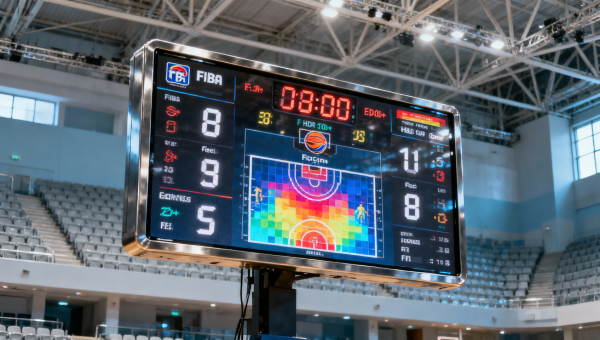
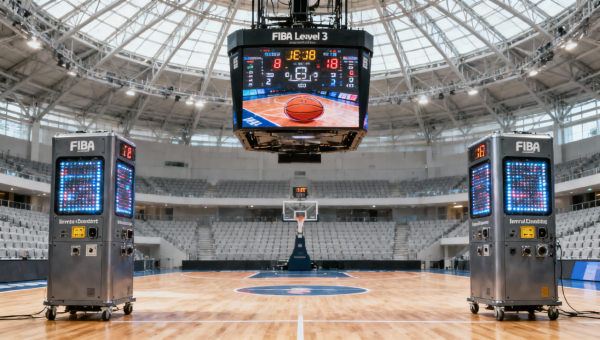
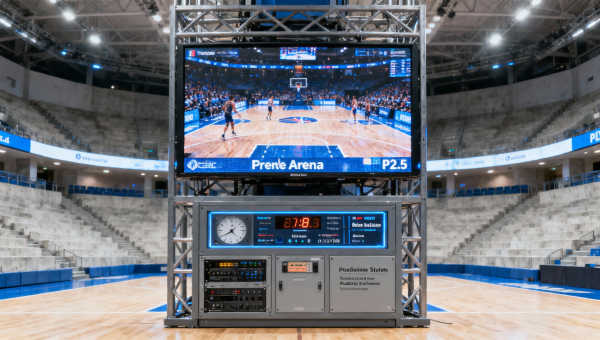
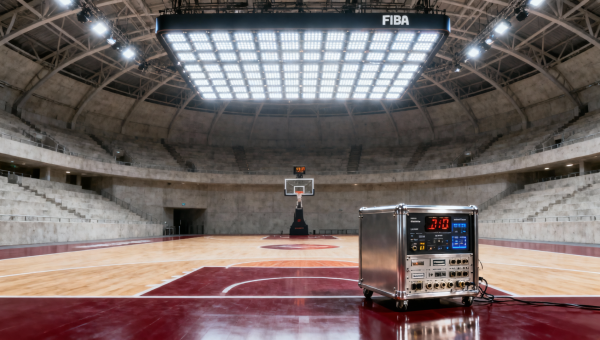
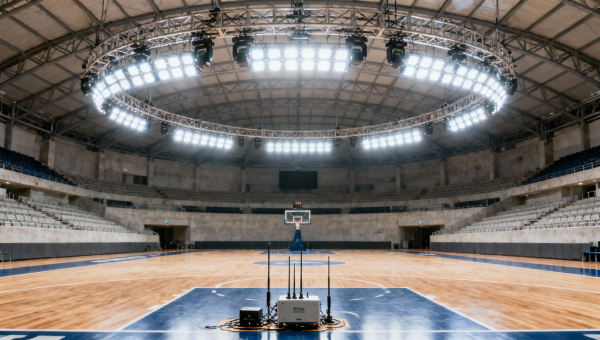
On April 22, 2026, FIBA announced that France will host the 2031 FIBA Men’s Basketball World Cup. The tournament will span 12 cities across France and involve construction or renovation of over 20 venues. FIBA has specified centralized procurement requirements for equipment meeting its Level 3 certification standard — including main LED video screens, mobile timing and scoreboard towers, and wireless infrared starting systems. Chinese suppliers holding valid FIBA certification have begun establishing localized European service teams; preliminary inquiry registrations from buyers increased 68% week-on-week.
Which Subsectors Are Affected
Direct Exporters of Certified Sports AV & Timing Equipment
These are manufacturers whose products already hold FIBA Level 3 certification (e.g., LED display modules, integrated timing/scoreboard systems). They face immediate tender eligibility opportunities but must meet strict on-site commissioning, compliance documentation, and after-sales response time requirements under FIBA’s technical specifications. Impact manifests in heightened demand for pre-qualified product listings, EU-based technical support staffing, and bilingual (English/French) operational documentation.
Component & Module Suppliers
Firms supplying certified subassemblies — such as high-brightness LED cabinets, IR emitter modules, or real-time timing processors — may see upstream order volume shifts if OEM partners scale production for French venue projects. However, no direct FIBA certification is required at this tier; impact is indirect and contingent on downstream integrator procurement decisions.
Supply Chain & Localization Service Providers
Logistics firms offering CE-compliant warehousing, customs clearance for sports electronics, and on-ground technical deployment services in France and neighboring markets are likely to experience rising inbound inquiries. The need for rapid-response local service teams — noted in the announcement — signals growing demand for EU-based operational capacity beyond just product export.
What Relevant Enterprises or Practitioners Should Focus On
Monitor official FIBA procurement timelines and tender release channels
FIBA has not yet published formal tender documents or deadlines. Current procurement language remains indicative. Enterprises should track FIBA’s official procurement portal and partner with French national federation (FFBB) communications channels rather than relying on early commercial speculation.
Prioritize readiness for FIBA Level 3 documentation and on-site verification
Level 3 certification involves not only product testing but also site-specific commissioning protocols, latency benchmarks (<100ms end-to-end), and multilingual operator interface compliance. Companies should verify their existing certification scope covers the exact configurations referenced in FIBA’s 2025 Technical Handbook — particularly for mobile towers and wireless start systems.
Distinguish between registration interest and binding procurement commitment
The reported +68% week-on-week increase in pre-registration inquiries reflects early market scanning, not confirmed orders. Analysis shows this metric correlates more strongly with vendor visibility efforts than with near-term revenue conversion. Firms should treat it as a lead-generation signal — not an indicator of imminent contract awards.
Begin aligning logistics and service capacity for French-language technical support
With venue work expected to ramp from 2028 onward, preparation windows for local team setup (e.g., hiring bilingual field engineers, securing service hubs in Lyon or Paris) are narrow. Delaying localization planning until tender issuance may constrain responsiveness during critical evaluation phases.
Editorial Perspective / Industry Observation
Observably, this announcement functions primarily as a forward-looking procurement signal — not an immediate procurement event. It confirms a multi-year infrastructure cycle ahead for certified sports technology vendors targeting Western Europe, but actual tender releases, budget allocations, and venue-level equipment specifications remain pending. From an industry perspective, the value lies less in short-term sales capture and more in strategic alignment: validating FIBA certification relevance, reinforcing EU service readiness, and calibrating R&D roadmaps toward modular, wireless, and low-latency architecture — all of which are increasingly emphasized in FIBA’s latest technical guidelines. Continued attention is warranted through 2027, when national federation implementation plans and venue construction schedules are expected to become public.
Conclusion
This announcement marks the formal opening of a structured, standards-driven export window for FIBA-certified sports venue technology — specifically targeting LED display and intelligent timing infrastructure. It does not represent an immediate tender or guaranteed contract pipeline. Rather, it serves as a mid-cycle calibration point: confirming long-term demand, highlighting certification and localization as non-negotiable enablers, and underscoring that responsiveness in the 2027–2029 planning phase will determine competitive positioning for 2031 delivery. For stakeholders, it is best understood as a milestone in a multi-year qualification process — not a trigger for immediate transactional action.
Information Sources
Main source: Official FIBA announcement dated April 22, 2026.
Note: Tender documents, venue-specific equipment lists, and national budget details have not yet been released and remain under observation.
Search News
Hot Articles
- Stage Lighting & Truss2026 FIBA Women's World Cup Draw Sparks LED Timing Screen Upgrade DemandApr 28, 2026
- Pro Stage AudioKenyan Marathon WR Break Drives Demand for Timing Chips & Track SensorsApr 28, 2026
- Smart Campus Tech2026 Shanghai Smart Campus Expo: VR Teaching Devices Gain ITU & ISO/IEC 23053 CertificationApr 28, 2026
Popular Tags
Need ExpertConsultation?
Connect with our specialized leisureengineering team for procurementstrategies.
Recommended News
 Apr 28, 20262026 FIBA Women's World Cup Draw Sparks LED Timing Screen Upgrade DemandFIBA Women's World Cup 2026 draw fuels urgent demand for FIBA Level 3 LED timing screens in Australia—HDMI 2.1a, GenLock & HDR10+ ready.● Pro Audio Engineer
 Apr 28, 2026France to Host 2031 FIBA Basketball World Cup: LED Venue Screens & Timing Systems Export OpportunityLED venue screens & timing systems export opportunity: France to host 2031 FIBA Basketball World Cup—unlock EU procurement for certified sports AV suppliers.● Pro Audio Engineer
 Apr 27, 20262026 FIBA Women's World Cup Draw Sets LED Timing Screen Requirements2026 FIBA Women's World Cup LED timing screen requirements are live — bilingual display, biometric visualization & FIBA API integration now mandatory for official venues.● Pro Audio Engineer
 Apr 27, 2026France to Host 2031 FIBA Basketball World Cup: LED Arena Screens & Smart Timing Systems Export OpportunityLED arena screens & smart timing systems export opportunity: France’s 2031 FIBA Basketball World Cup mandates P2.5 LED displays and AI foul detection—act now to align with 2029 compliance deadlines.● Pro Audio Engineer
 Apr 26, 2026FIFA Adopts Chinese Mini-LED Displays for 2026 World Cup VAR SystemFIFA adopts Chinese Mini-LED displays for 2026 World Cup VAR — ultra-HD, HDR10+, -20°C–60°C rugged performance. Key insight for AV exporters & certifiers.● Pro Audio Engineer
 Apr 26, 20262026 FIBA Women's World Cup Draw Spurs LED Timing Screen Export DemandFIBA Women's World Cup 2026 draw fuels global demand for certified LED timing screens—explore export opportunities, compliance essentials & multilingual UI requirements now.● Pro Audio Engineer
 Apr 25, 2026FIFA Adopts Chinese MicroLED Displays for 2026 World Cup VAR SystemFIFA VAR system adopts Chinese MicroLED displays for 2026 World Cup — ultra-low-latency, 240Hz+ certified tech. Game-changing for sports display exporters & broadcast integrators.● Pro Audio Engineer
 Apr 25, 20262026 FIBA Women's World Cup Draw Sparks Demand for Certified Arena Lighting & Timing SystemsFIBA Women's World Cup 2026 draw fuels global demand for certified arena lighting & timing systems—get FIBA-compliant, multi-standard solutions now.● Pro Audio Engineer
 Apr 25, 2026CCTV5 Snooker Broadcast Drives 37% Surge in Stage Lighting Export InquiriesCCTV5 snooker broadcast drives 37% surge in stage lighting export inquiries—UK, Germany & Australia lead demand for DMX512 & broadcast-ready LED fixtures.● Pro Audio Engineer
 Apr 24, 2026CCTV5 Snooker Broadcast Drives 37% Surge in Global Lighting Export InquiriesCCTV5 snooker broadcast drives 37% global lighting export inquiries—UK, Germany & UAE lead demand for stage lighting, DMX512 & LED follow-spots.● Pro Audio Engineer
 Apr 23, 20262026 FIBA Women's World Cup Draw Opens Export Window for Arena Lighting & Timing SystemsFIBA Women's World Cup 2026 draw unlocks export opportunities for FIBA Level 3 arena lighting & ITU-certified timing systems — act now.● Pro Audio Engineer
 Apr 23, 2026CCTV5 Snooker Broadcast Drives 37% Surge in Stage Lighting Export InquiriesCCTV5 snooker broadcast sparks 37% surge in global stage lighting export inquiries—UAE, Mexico & Indonesia lead demand for DMX512/IP65-compliant Chinese LED fixtures.● Pro Audio Engineer
 Apr 22, 2026Guangdong vs. Shanxi CBA Game Highlights Smart Arena LightingGuangdong vs. Shanxi CBA game showcased smart arena lighting — HDR-ready, UL/GB-certified, and proven for broadcast excellence. Key for lighting makers & stadium developers.● Pro Audio Engineer
 Apr 22, 2026CCTV5 Snooker Broadcast Drives 37% Rise in Lighting Export InquiriesCCTV5斯诺克直播引爆海外采购潮!LED摇头灯、DMX控制系统等专业舞台灯光出口询盘激增37%,低延迟与EMC Class B成关键门槛。立即洞察趋势→● Pro Audio Engineer
 Apr 21, 2026CCTV5 Snooker Broadcast Drives 37% Surge in Stage Lighting Export InquiriesCCTV5 snooker broadcast sparks 37% surge in global stage lighting export inquiries—key demand from Brazil, KSA & Indonesia for IP65, 20k-hr LED moving heads.● Pro Audio Engineer
 Apr 21, 2026Guangdong vs. Shanxi CBA Game Highlights Domestic Smart Arena LightingGuangdong vs. Shanxi CBA game spotlighted domestic smart arena lighting—EN 12193:2023-compliant, flicker-free 4K LED system powering global stadium upgrades.● Pro Audio Engineer
 Apr 20, 2026Guangdong vs. Shanxi CBA Game Highlights Domestic Smart Arena LightingGuangdong vs. Shanxi CBA game spotlighted China-made smart arena lighting—FIBA-certified, broadcast-ready LED system with <0.1s dimming & 5600K stability.● Pro Audio Engineer
 Apr 18, 2026JIS T 0601-2-77:2026 Enforces Tighter Laser Brightness Limits in JapanJIS T 0601-2-77:2026 enforces tighter laser brightness limits in Japan—35% stricter + instantaneous peak detection. Critical for stage laser exporters, integrators & distributors.● Pro Audio Engineer
 Apr 17, 2026JIS T 0601-2-77:2026 Enforces Stricter Laser Limits for Stage Equipment in JapanJIS T 0601-2-77:2026 enforces stricter laser limits for stage equipment in Japan — 35% lower MPE, AI beam monitoring required. Act now to comply.● Pro Audio Engineer
 Apr 16, 2026JIS T 0601-2-77:2026 Enforces New Audience Laser Limits in JapanJIS T 0601-2-77:2026 enforces strict new audience laser limits in Japan — ≤1.0 mW/cm² (0.25s). Critical for pro audio, stage lighting & laser exporters. Act now to ensure compliance.● Pro Audio Engineer
 Apr 17, 2026Stage lighting truss compatibility issues nobody checks before ordering hotel equipmentAvoid costly rework: Verify stage lighting truss compatibility with hotel equipment, amusement equipment, sensory playgrounds & commercial furniture—before you order.● Pro Audio Engineer
 Apr 15, 2026Stage lighting truss systems that ship pre-aligned — no on-site calibrationPre-aligned stage lighting truss systems for amusement equipment, sensory playgrounds & hotel entertainment — zero on-site calibration, certified safety & rapid deployment.● Pro Audio Engineer
 Apr 13, 2026Stage equipment rentals vs. buying: when the break-even point surprises youStage equipment rentals vs. buying? Discover when renting hotel desks, commercial playgrounds, microphone systems & more slashes TCO by 37–52%—get your free break-even analysis now!● Pro Audio Engineer
 Apr 13, 2026Stage equipment rigging specs—why ‘rated for 500kg’ doesn’t mean safe for your trussStage equipment rigging specs matter—especially for trampoline park manufacturers, commercial playgrounds & hospitality furniture. Don’t trust '500kg rated' labels alone.● Pro Audio Engineer