France to Host 2031 FIBA Basketball World Cup: LED Arena Screens & Smart Timing Systems Export Opportunity
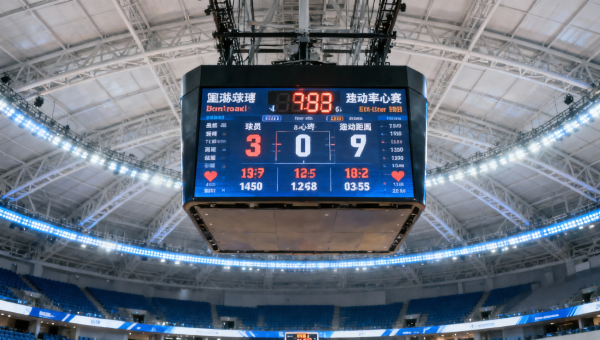
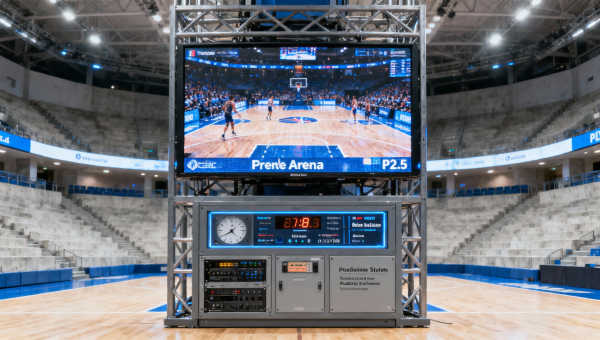
On April 22, 2026, FIBA officially awarded France hosting rights for the 2031 Men’s Basketball World Cup — triggering mandatory venue technology upgrades for LED arena displays (P2.5 or finer), AI-powered real-time foul detection timing systems, and multilingual accessibility modules by 2029. This development directly impacts manufacturers and service providers in professional audio-visual equipment, stage lighting & truss systems, and integrated sports venue infrastructure solutions.
Event Overview
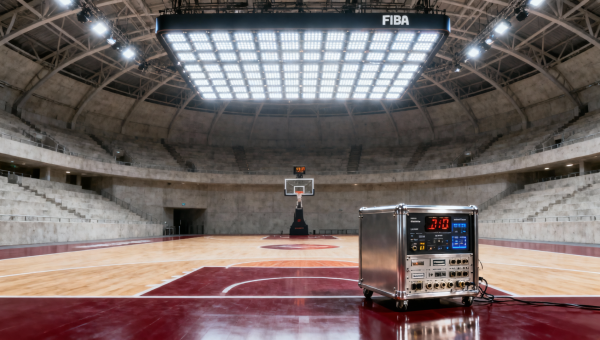
International Basketball Federation (FIBA) announced on April 22, 2026, that France will host the 2031 FIBA Men’s Basketball World Cup. Per the updated FIBA Venue Technical Manual, all host venues must complete installation and certification of three key systems by 2029: (1) full-perimeter LED video screens with pixel pitch ≤P2.5; (2) AI-enabled real-time foul recognition and game timing systems; and (3) multilingual, accessible audio announcement modules. Chinese enterprises specializing in Pro Stage Audio and Stage Lighting & Truss have begun establishing localized service networks in France.
Industries Affected
Direct Exporters of Professional AV Equipment
Manufacturers supplying LED display panels, control systems, and broadcast-grade video processing hardware are affected because FIBA’s technical requirements mandate specific performance thresholds (e.g., P2.5 resolution, seamless curvature, low latency). Compliance is a prerequisite for tender eligibility across all official venues.
Stage Lighting & Truss System Suppliers
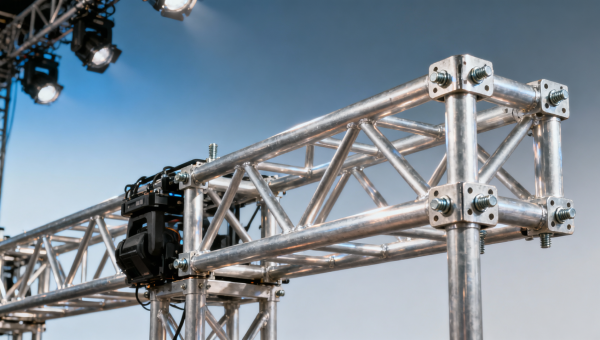
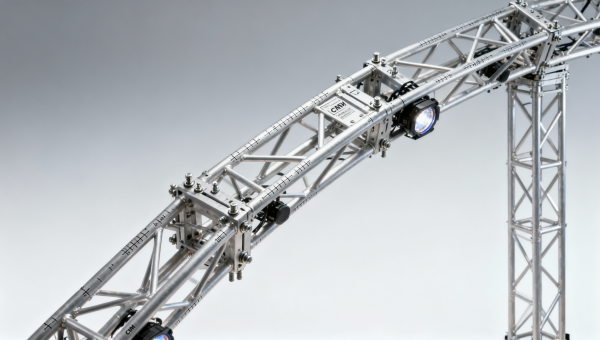
Companies producing structural support systems (e.g., motorized trusses, rigging hardware) and intelligent lighting controllers face impact due to integration demands: FIBA requires synchronized operation between lighting cues, timing signals, and screen content. Structural load specifications and mounting interface standards may be updated in upcoming French venue tender documents.
Smart Sports Timing & Analytics Providers
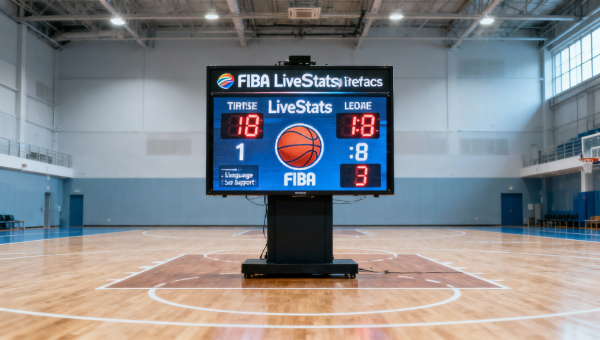
Vendors of game timing hardware and AI-based officiating assist tools are impacted as FIBA now explicitly requires AI-driven real-time foul identification — not just traditional clock and scoreboard functions. Certification against FIBA’s software validation protocol (expected to be published in late 2026) becomes essential.
Localization & After-Sales Service Providers
Firms offering on-site commissioning, multilingual technical support, and maintenance logistics are affected because FIBA mandates certified local presence for system validation and post-installation audits. The early establishment of French service networks by Chinese enterprises reflects this requirement — not voluntary expansion.
What Relevant Enterprises or Practitioners Should Focus On
Monitor FIBA’s official technical documentation updates
Current FIBA Venue Technical Manual references are preliminary. The final version — expected mid-2026 — will define test protocols, certification bodies, and compliance deadlines. Companies should track FIBA’s official communications rather than rely on summary reports.
Verify compatibility with French national infrastructure standards
FIBA’s global specs must align with French electrical safety (NF C 15-100), fire-rated cabling (CPR classification), and accessibility regulations (RGAA 4.1). Exporters should initiate pre-assessment with notified bodies accredited in France — not generic EU CE testing labs.
Distinguish between procurement timelines and technical readiness windows
The 2029 deadline applies to venue completion, not tender issuance. Major venue tenders are likely to launch in Q3–Q4 2027. Pre-qualification submissions (including proof of local service capability) may open as early as H1 2027 — ahead of formal RFPs.
Prepare for modular integration validation, not standalone product certification
FIBA evaluates system interoperability — e.g., whether timing data triggers screen animations and audio cues simultaneously. Suppliers should document API specifications, timestamp synchronization accuracy, and failover behavior across subsystems before engaging with integrators.
Editorial Perspective / Industry Observation
This announcement is best understood as a formal signal — not an immediate procurement trigger. Analysis来看, it confirms a multi-year, phased rollout: technical requirements are binding, but venue selection, budget allocation, and tender sequencing remain under national federation discretion. From industry angle, the 2026–2027 period is primarily about alignment — matching product roadmaps to FIBA’s validation pathway, not securing contracts. Current more relevant than sales outreach is technical documentation localization, notified body engagement, and integration testing capacity building.
Conclusion
This decision sets a defined, time-bound upgrade cycle for basketball arena infrastructure in France — with cascading implications for global suppliers of LED displays, intelligent timing systems, and venue integration services. It does not guarantee demand, but it does establish non-negotiable technical baselines and a clear regulatory timeline. For industry participants, the event is better interpreted as a framework-setting milestone — one that prioritizes technical readiness and local compliance over early commercial commitments.
Source Attribution
Main source: FIBA official announcement dated April 22, 2026; FIBA Venue Technical Manual (updated edition, publicly referenced in announcement); statements from Chinese Pro Stage Audio and Stage Lighting & Truss enterprises regarding local service network setup. Note: Final technical specifications, tender schedules, and certification procedures remain pending official publication and require ongoing monitoring.
Search News
Hot Articles
- Stage Lighting & Truss2026 FIBA Women's World Cup Draw Sets LED Timing Screen RequirementsApr 27, 2026
- Hotel Room AmenitiesIranian Delegation’s Ritual Gesture at Sanya ASG Sparks Mideast Hospitality Procurement ShiftApr 27, 2026
- Arcade & VR MachinesSnooker World Championship 'China Derby' Drives VR Viewing DemandApr 27, 2026
Popular Tags
Need ExpertConsultation?
Connect with our specialized leisureengineering team for procurementstrategies.
Recommended News
 Apr 27, 20262026 FIBA Women's World Cup Draw Sets LED Timing Screen Requirements2026 FIBA Women's World Cup LED timing screen requirements are live — bilingual display, biometric visualization & FIBA API integration now mandatory for official venues.● Pro Audio Engineer
 Apr 27, 2026France to Host 2031 FIBA Basketball World Cup: LED Arena Screens & Smart Timing Systems Export OpportunityLED arena screens & smart timing systems export opportunity: France’s 2031 FIBA Basketball World Cup mandates P2.5 LED displays and AI foul detection—act now to align with 2029 compliance deadlines.● Pro Audio Engineer
 Apr 26, 2026FIFA Adopts Chinese Mini-LED Displays for 2026 World Cup VAR SystemFIFA adopts Chinese Mini-LED displays for 2026 World Cup VAR — ultra-HD, HDR10+, -20°C–60°C rugged performance. Key insight for AV exporters & certifiers.● Pro Audio Engineer
 Apr 26, 20262026 FIBA Women's World Cup Draw Spurs LED Timing Screen Export DemandFIBA Women's World Cup 2026 draw fuels global demand for certified LED timing screens—explore export opportunities, compliance essentials & multilingual UI requirements now.● Pro Audio Engineer
 Apr 25, 2026FIFA Adopts Chinese MicroLED Displays for 2026 World Cup VAR SystemFIFA VAR system adopts Chinese MicroLED displays for 2026 World Cup — ultra-low-latency, 240Hz+ certified tech. Game-changing for sports display exporters & broadcast integrators.● Pro Audio Engineer
 Apr 25, 20262026 FIBA Women's World Cup Draw Sparks Demand for Certified Arena Lighting & Timing SystemsFIBA Women's World Cup 2026 draw fuels global demand for certified arena lighting & timing systems—get FIBA-compliant, multi-standard solutions now.● Pro Audio Engineer
 Apr 25, 2026CCTV5 Snooker Broadcast Drives 37% Surge in Stage Lighting Export InquiriesCCTV5 snooker broadcast drives 37% surge in stage lighting export inquiries—UK, Germany & Australia lead demand for DMX512 & broadcast-ready LED fixtures.● Pro Audio Engineer
 Apr 24, 2026CCTV5 Snooker Broadcast Drives 37% Surge in Global Lighting Export InquiriesCCTV5 snooker broadcast drives 37% global lighting export inquiries—UK, Germany & UAE lead demand for stage lighting, DMX512 & LED follow-spots.● Pro Audio Engineer
 Apr 23, 20262026 FIBA Women's World Cup Draw Opens Export Window for Arena Lighting & Timing SystemsFIBA Women's World Cup 2026 draw unlocks export opportunities for FIBA Level 3 arena lighting & ITU-certified timing systems — act now.● Pro Audio Engineer
 Apr 23, 2026CCTV5 Snooker Broadcast Drives 37% Surge in Stage Lighting Export InquiriesCCTV5 snooker broadcast sparks 37% surge in global stage lighting export inquiries—UAE, Mexico & Indonesia lead demand for DMX512/IP65-compliant Chinese LED fixtures.● Pro Audio Engineer
 Apr 22, 2026Guangdong vs. Shanxi CBA Game Highlights Smart Arena LightingGuangdong vs. Shanxi CBA game showcased smart arena lighting — HDR-ready, UL/GB-certified, and proven for broadcast excellence. Key for lighting makers & stadium developers.● Pro Audio Engineer
 Apr 22, 2026CCTV5 Snooker Broadcast Drives 37% Rise in Lighting Export InquiriesCCTV5斯诺克直播引爆海外采购潮!LED摇头灯、DMX控制系统等专业舞台灯光出口询盘激增37%,低延迟与EMC Class B成关键门槛。立即洞察趋势→● Pro Audio Engineer
 Apr 21, 2026CCTV5 Snooker Broadcast Drives 37% Surge in Stage Lighting Export InquiriesCCTV5 snooker broadcast sparks 37% surge in global stage lighting export inquiries—key demand from Brazil, KSA & Indonesia for IP65, 20k-hr LED moving heads.● Pro Audio Engineer
 Apr 21, 2026Guangdong vs. Shanxi CBA Game Highlights Domestic Smart Arena LightingGuangdong vs. Shanxi CBA game spotlighted domestic smart arena lighting—EN 12193:2023-compliant, flicker-free 4K LED system powering global stadium upgrades.● Pro Audio Engineer
 Apr 20, 2026Guangdong vs. Shanxi CBA Game Highlights Domestic Smart Arena LightingGuangdong vs. Shanxi CBA game spotlighted China-made smart arena lighting—FIBA-certified, broadcast-ready LED system with <0.1s dimming & 5600K stability.● Pro Audio Engineer
 Apr 18, 2026JIS T 0601-2-77:2026 Enforces Tighter Laser Brightness Limits in JapanJIS T 0601-2-77:2026 enforces tighter laser brightness limits in Japan—35% stricter + instantaneous peak detection. Critical for stage laser exporters, integrators & distributors.● Pro Audio Engineer
 Apr 17, 2026JIS T 0601-2-77:2026 Enforces Stricter Laser Limits for Stage Equipment in JapanJIS T 0601-2-77:2026 enforces stricter laser limits for stage equipment in Japan — 35% lower MPE, AI beam monitoring required. Act now to comply.● Pro Audio Engineer
 Apr 16, 2026JIS T 0601-2-77:2026 Enforces New Audience Laser Limits in JapanJIS T 0601-2-77:2026 enforces strict new audience laser limits in Japan — ≤1.0 mW/cm² (0.25s). Critical for pro audio, stage lighting & laser exporters. Act now to ensure compliance.● Pro Audio Engineer
 Apr 17, 2026Stage lighting truss compatibility issues nobody checks before ordering hotel equipmentAvoid costly rework: Verify stage lighting truss compatibility with hotel equipment, amusement equipment, sensory playgrounds & commercial furniture—before you order.● Pro Audio Engineer
 Apr 15, 2026Stage lighting truss systems that ship pre-aligned — no on-site calibrationPre-aligned stage lighting truss systems for amusement equipment, sensory playgrounds & hotel entertainment — zero on-site calibration, certified safety & rapid deployment.● Pro Audio Engineer
 Apr 13, 2026Stage equipment rentals vs. buying: when the break-even point surprises youStage equipment rentals vs. buying? Discover when renting hotel desks, commercial playgrounds, microphone systems & more slashes TCO by 37–52%—get your free break-even analysis now!● Pro Audio Engineer
 Apr 13, 2026Stage equipment rigging specs—why ‘rated for 500kg’ doesn’t mean safe for your trussStage equipment rigging specs matter—especially for trampoline park manufacturers, commercial playgrounds & hospitality furniture. Don’t trust '500kg rated' labels alone.● Pro Audio Engineer
 Apr 04, 2026Stage Lighting & Truss Projects Often Depend on Office Supplies Manufacturer Fasteners — Here’s Why They FitOffice supplies manufacturer fasteners trusted by stage lighting & truss projects—precision, ISO-certified, and B2B-ready. Discover top office supplies supplier, OEM, and exporter solutions.● Pro Audio Engineer
 Mar 30, 2026Amusement park lighting projects stall at the dimming curve—not the fixtureCommercial sourcing for amusement park lighting, playground development & compliance—solve dimming curve bottlenecks before procurement. Expert OEM/ODM insights.● Pro Audio Engineer