VR Sports Viewing Booth Demand Rises After Wu Yize vs. Selby
On April 27–28, 2026, Chinese snooker player Wu Yize’s 9–7 victory over world champion Mark Selby at the World Snooker Championship triggered a surge in global demand for commercial VR sports viewing solutions—particularly among distributors in the Middle East, Australia, and Canada. This event signals notable implications for VR hardware exporters, immersive media integrators, and certification-support service providers.
Event Overview
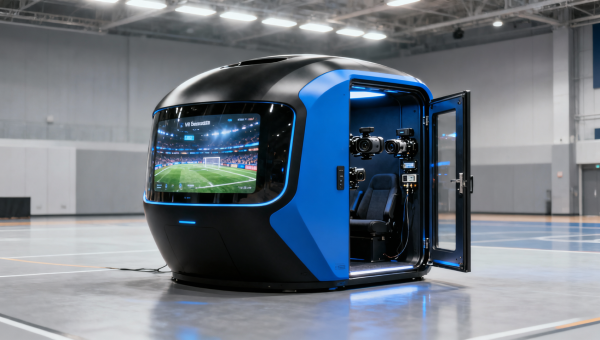
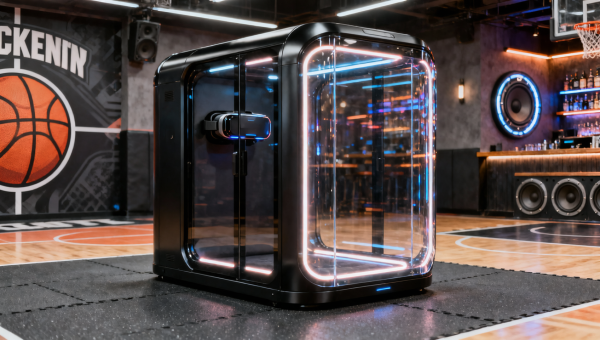
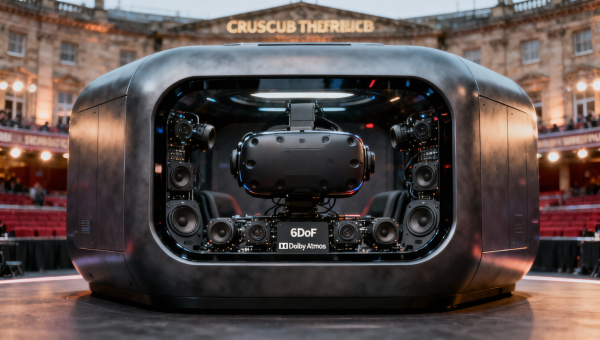
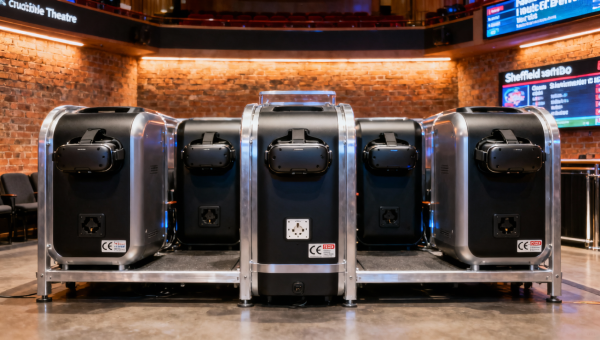
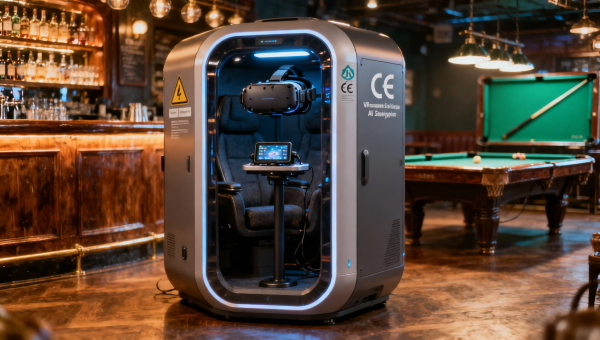
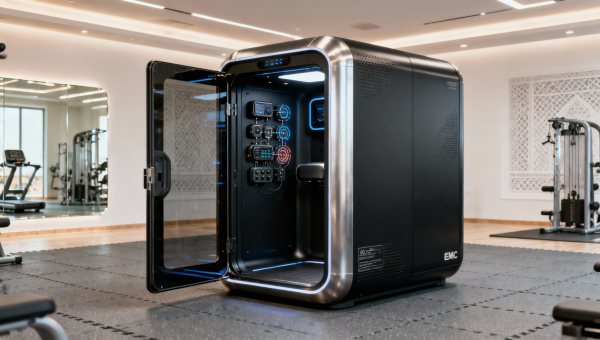
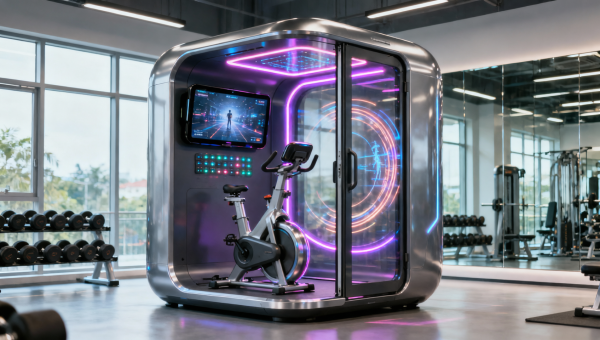
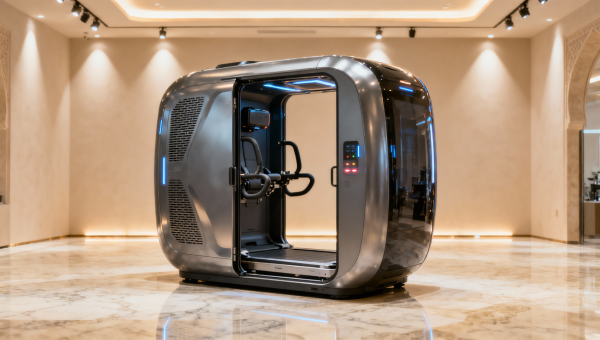
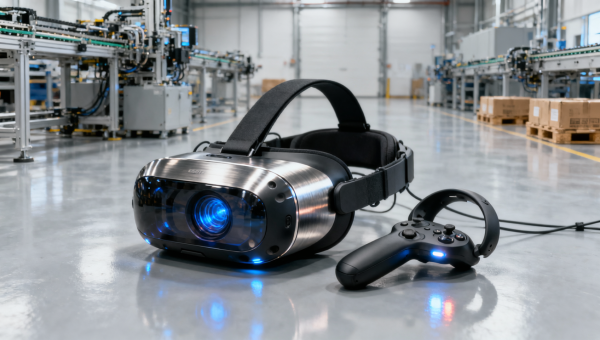
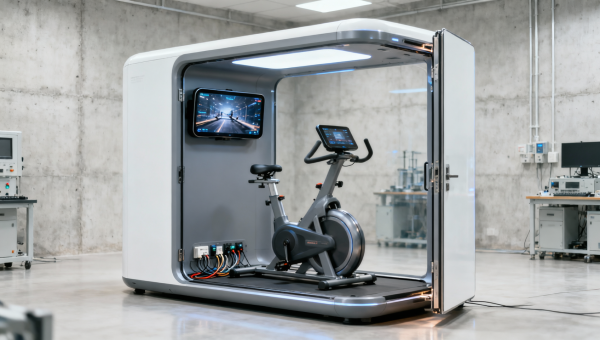
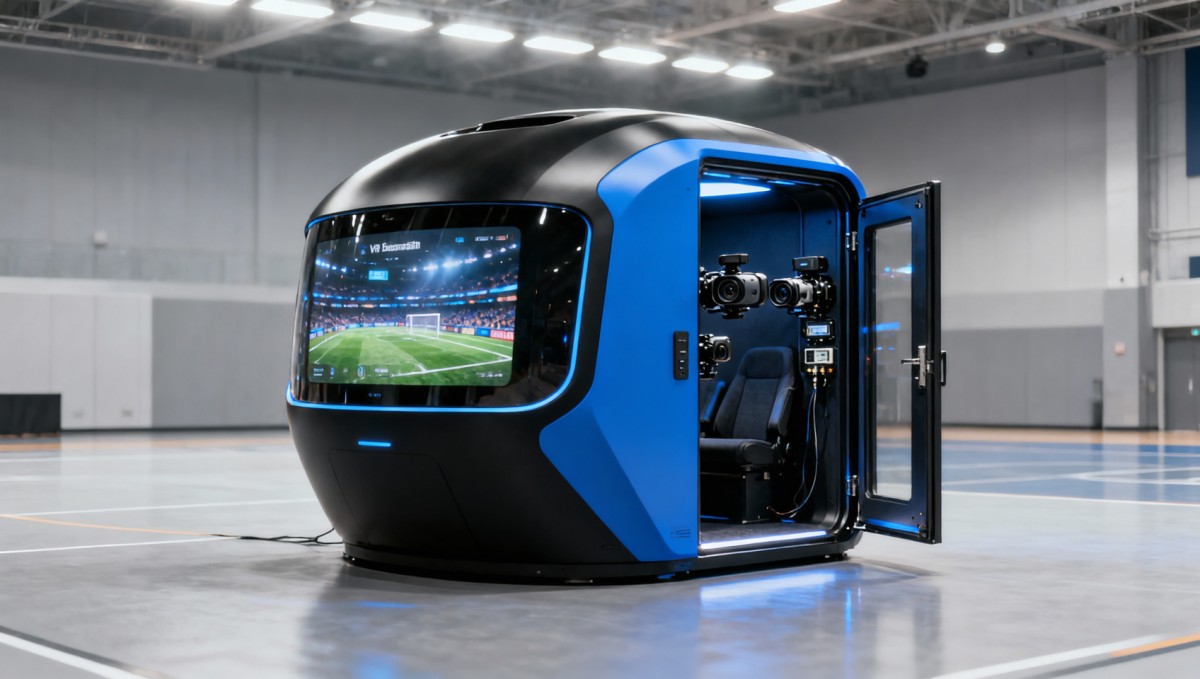
During the 16-to-8 round of the 2026 World Snooker Championship held on April 27–28, Chinese player Wu Yize defeated reigning world champion Mark Selby with a score of 9–7. Within 24 hours following the match, multiple VR equipment exporters based in Shenzhen and Dongguan reported urgent inquiry requests from distribution partners in the Middle East, Australia, and Canada. These inquiries specifically sought commercial VR viewing booths and OEM kits supporting bilingual real-time commentary embedding, AI-powered multi-angle tracking rendering, and stable video streaming at bandwidths under 5 Mbps. Buyers also requested complete regulatory documentation packages, including FCC, CE, and RCM certifications.
Which Subsectors Are Affected
Direct Export Trading Firms
Exporters handling end-to-end international sales of VR viewing systems face immediate pressure to validate compliance documentation and scale quotation response capacity. The urgency of recent inquiries—concentrated within a single 24-hour window—indicates heightened sensitivity to certification readiness and lead-time transparency.
VR Hardware Manufacturers & OEM Solution Providers
Manufacturers supplying turnkey VR viewing booths or modular kits must now prioritize integration capabilities for low-bandwidth streaming and multilingual audio layering. The request for AI-based multi-camera tracking rendering suggests growing demand for embedded edge-processing features—not just display hardware.
Certification & Compliance Support Services
Firms offering regulatory documentation preparation (e.g., FCC/CE/RCM technical files, test report coordination, labeling guidance) are seeing increased inbound activity. Inquiries explicitly named certification packages as a procurement requirement—not an optional add-on—indicating stricter buyer due diligence ahead of regional market entry.
What Relevant Businesses or Practitioners Should Focus On
Monitor official certification authority updates in target markets
Recent inquiries cited FCC (USA), CE (EU), and RCM (Australia/NZ) requirements. Analysis shows that minor revisions to RCM’s EMC standards took effect in March 2026, and updated CE marking guidance for multimedia equipment was published in Q1 2026. Exporters should verify alignment with these latest versions before finalizing documentation packages.
Prioritize verification of low-bandwidth streaming performance claims
Buyers emphasized stable operation below 5 Mbps—a threshold significantly lower than typical high-fidelity VR streaming benchmarks. From industry perspective, this reflects deployment constraints in venues with limited infrastructure (e.g., pubs, community centers, retail kiosks). Manufacturers should ensure lab-tested validation reports—rather than theoretical specs—are available for this use case.
Prepare bilingual commentary integration documentation
The repeated mention of “bilingual real-time commentary embedding” suggests buyers require clear technical pathways—not just API references—for integrating third-party audio feeds into VR playback engines. Current more suitable approach is to pre-validate integration with common broadcast middleware (e.g., vMix, OBS-compatible WebRTC ingest) and document latency benchmarks.
Assess OEM kit modularity against regional deployment needs
Inquiries included requests for both full-system booths and OEM kits. Observably, distributors in mid-tier markets often prefer configurable kits to localize assembly, branding, and after-sales support. Exporters should clarify whether their current BOMs include region-specific power supplies, mounting hardware, or language-pack-ready firmware partitions.
Editorial Perspective / Industry Observation
This incident is best understood not as isolated demand spike, but as an observable inflection point where live sports viewership behavior begins reshaping hardware specification expectations. Analysis shows that the convergence of athlete-driven audience engagement (Wu’s win), venue-constrained connectivity (low-bandwidth requirement), and regulatory-aware procurement (certification package emphasis) highlights a maturing phase in commercial VR adoption—not just for entertainment, but for distributed public viewing infrastructure. It more closely resembles an early signal of structural demand shift than a transient event-driven blip. Continued monitoring is warranted because buyer expectations around embedded AI rendering and multilingual interoperability are likely to persist across future sporting events.
Conclusion
While rooted in a specific sporting outcome, this development underscores how live-event viewership patterns increasingly influence hardware design priorities, compliance workflows, and channel partner capability expectations. It is currently more appropriate to interpret this as a diagnostic marker of evolving B2B buyer sophistication in immersive media hardware—rather than as a broad-based market expansion signal. Prudent response involves targeted readiness checks—not wholesale capacity scaling.
Information Sources
Main source: Direct feedback from multiple VR equipment exporters headquartered in Shenzhen and Dongguan, reported between April 28–29, 2026.
Note: Ongoing observation is recommended regarding whether similar inquiry patterns emerge ahead of other 2026 Q2 sporting events (e.g., UEFA Euro, Wimbledon).
Search News
Hot Articles
Popular Tags
Need ExpertConsultation?
Connect with our specialized leisureengineering team for procurementstrategies.
Recommended News
 Apr 29, 2026VR Sports Viewing Booth Demand Rises After Wu Yize vs. SelbyVR Sports Viewing Booth demand surges globally after Wu Yize’s win over Selby—key for exporters, OEMs & cert providers in ME, AU, CA.● Theme Park Strategist
 Apr 29, 2026NBA 3-2-1 Lottery Reform Drives VR Viewing Hardware DemandNBA 3-2-1 Lottery reform fuels VR viewing hardware demand—boosting sales of commercial VR pods, immersive systems & remote commentary terminals across North America, ME & SEA.● Theme Park Strategist
 Apr 28, 2026Global VR Fitness Device Export Prices Rise 12% — China Leads in Delivery ReliabilityVR fitness device export prices surge 12% globally — China leads in delivery reliability. Discover key compliance shifts, market impacts & strategic actions for exporters, OEMs & logistics providers.● Theme Park Strategist
 Apr 28, 2026Snooker World Championship 'China Derby' Drives VR Viewing DemandSnooker World Championship 'China Derby' drives surging VR viewing demand—boosting exports of VR pods, low-latency streaming & Dolby Atmos-certified AI audio solutions globally.● Theme Park Strategist
 Apr 28, 2026BWF 15-Point System to Launch in 2027: Impacts on Timing, Broadcast & Data SystemsBWF 15-point system launching in 2027 — impacts timing displays, broadcast encoders & data platforms. Discover compliance steps for OEMs, venues & AI video providers.● Theme Park Strategist
 Apr 27, 2026Snooker World Championship 'China Derby' Drives VR Viewing DemandVR viewing demand surges after Snooker World Championship 'China Derby' — key opportunity for VR hardware, localization & compliance firms in UK/EU markets.● Theme Park Strategist
 Apr 27, 2026Global VR Fitness Equipment Export Prices Rise 12.3% QoQVR fitness equipment export prices surge 12.3% QoQ — discover why IPX5, ISO 20685, and cloud readiness now drive premium pricing & market share.● Theme Park Strategist
 Apr 27, 2026SASO Updates EMC Rules for VR & Immersive Fitness Devices in Saudi ArabiaSASO EMC updates for VR & immersive fitness devices in Saudi Arabia—Class B compliance mandatory from 25 Apr 2026. Act now to avoid delays & ensure market access.● Theme Park Strategist
 Apr 26, 2026Global VR Fitness Equipment Export Prices Up 12% in Q1 2026VR fitness equipment export prices surge 12.3% in Q1 2026 — discover why reliability-driven pricing is reshaping global gym hardware procurement.● Theme Park Strategist
 Apr 26, 2026SASO Updates EMC Standard for VR Motion Devices in Saudi ArabiaSASO EMC standard update for VR motion devices in Saudi Arabia—Class B limits effective Oct 2026. Ensure compliance now to avoid customs delays & market access risks.● Theme Park Strategist
 Apr 26, 2026Snooker World Championship 'China Derby' Drives VR Viewing DemandSnooker World Championship 'China Derby' drives surging VR viewing demand—CE/UKCA-certified hardware, AI commentary & rapid logistics now critical for venues.● Theme Park Strategist
 Apr 25, 2026Global VR Fitness Equipment Export Prices Up 12% in Q1 2026VR fitness equipment export prices rose 12% in Q1 2026 — discover why $2,840/unit reflects rising value, not just cost, and how OTD leadership reshapes global sourcing.● Theme Park Strategist
 Apr 25, 2026SASO Updates EMC Standard for VR Haptic Devices in Saudi ArabiaSASO updates EMC standard SR 2305:2026 for VR haptic devices in Saudi Arabia—Class B compliance now mandatory for fitness pods & training stations. Act now to avoid port delays.● Theme Park Strategist
![]() Apr 25, 2026Vietnam Enforces Local Type Testing for Commercial VR Fitness CabinsVR fitness cabins for commercial use in Vietnam must now pass local type testing & TÜV SÜD-VN certification—key for exporters, distributors & OEMs. Act before April 24, 2026.● Theme Park Strategist
Apr 25, 2026Vietnam Enforces Local Type Testing for Commercial VR Fitness CabinsVR fitness cabins for commercial use in Vietnam must now pass local type testing & TÜV SÜD-VN certification—key for exporters, distributors & OEMs. Act before April 24, 2026.● Theme Park Strategist Apr 24, 2026Global VR Fitness Equipment Export Prices Up 12% QoQVR fitness equipment export prices surge 12% QoQ to $4,280 — driven by EU 2026/789 & UL 62368-1:Ed4 compliance. Key insight for exporters, suppliers & logistics teams.● Theme Park Strategist
 Apr 24, 2026Vietnam TUV SUD New Rule: VR Fitness Cabins Require Local Type TestVR fitness cabins entering Vietnam now require local type testing per new TUV SUD rule—impacting exporters, distributors & supply chains. Act now to avoid delays & added costs.● Theme Park Strategist
 Apr 24, 2026SASO Updates EMC Standard for VR Motion Devices in Saudi ArabiaSASO EMC update for VR motion devices in Saudi Arabia: Class B compliance now mandatory for fitness, entertainment & edutainment pods—avoid customs rejection!● Theme Park Strategist
 Apr 23, 2026Global VR Fitness Device Export Prices Rise 12% QoQVR fitness device export prices surge 12% QoQ to $3,820 — discover why IP65, AI calibration & 98.7% on-time delivery now define premium global supply.● Theme Park Strategist
 Apr 23, 2026Vietnam TUV SUD Enforces Local Type Testing for VR Fitness CabinsVR fitness cabins entering Vietnam must now undergo local TUV SUD type testing—mandatory from Apr 22, 2026. Learn costs, timelines & compliance steps.● Theme Park Strategist
 Apr 23, 2026SASO Updates EMC Standard for VR Motion Devices to Class BSASO Updates EMC Standard for VR Motion Devices to Class B: Critical compliance shift for VR fitness pods, AR/VR amusement systems & exporters targeting Saudi Arabia.● Theme Park Strategist
 Apr 22, 2026SASO Updates EMC Standard for VR Haptic Devices in Saudi ArabiaSASO EMC standard update for VR haptic devices in Saudi Arabia: Class B compliance required by July 1, 2026 — critical for VR treadmills, AR walls & training pods.● Theme Park Strategist
 Apr 22, 2026Global VR Fitness Device Export Price Up 12% in Q1 2026VR fitness device export prices surge 12% to $1,842/unit in Q1 2026 — discover why China’s 38-day lead times are reshaping global procurement strategies.● Theme Park Strategist
 Apr 22, 2026Vietnam TUV SUD New Rule: VR Fitness Pods Require Local Type TestVR fitness pods now require local type testing in Vietnam per TUV SUD’s new rule—impacting exporters, costs & lead times. Act now!● Theme Park Strategist
 Apr 22, 2026Why Some Arcade Games Perform Well at First Then Fade FastArcade games can shine early then fade fast. Learn how trampoline park, indoor playground, and adventure playground buyers can spot ROI risks and choose longer-lasting winners.● Theme Park Strategist