China's LED Timing Screens Gain Traction After Thomas Cup
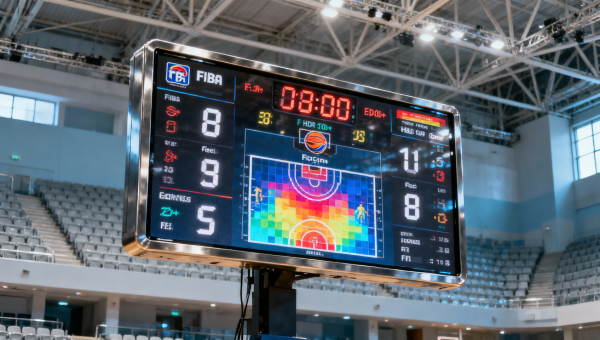
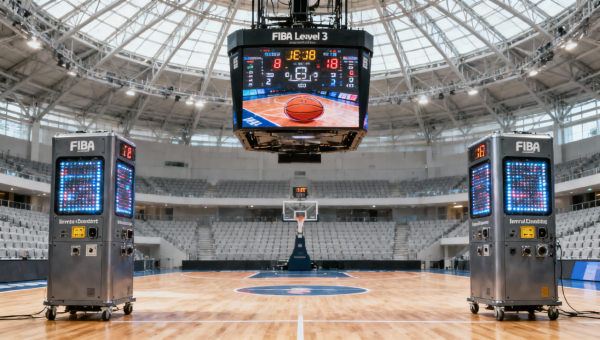
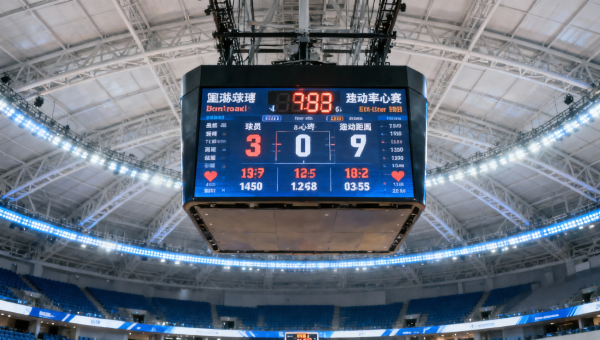
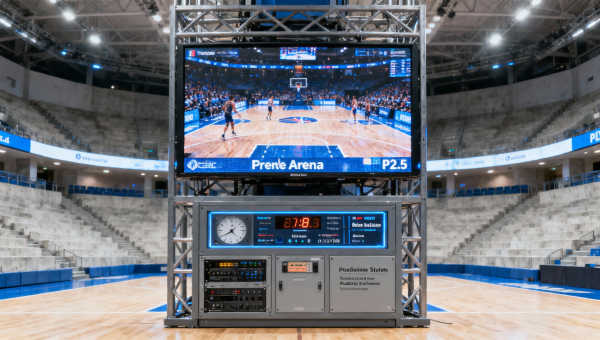
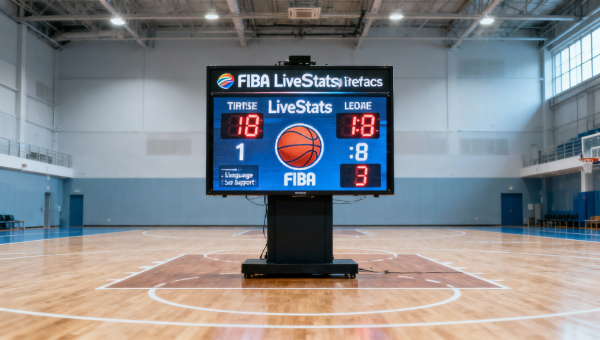
On April 28, 2026, during the Thomas Cup group stage match where China defeated Canada 4–1, broadcast footage prominently featured the venue’s commercial-grade LED timing screen—highlighting its multilingual UI switching and dynamic score animation. This exposure has triggered technical inquiries from羽毛球馆 operators in Malaysia and Indonesia, signaling emerging demand for export-ready LED display systems with localized software, BWF API integration, and dual regulatory certification (PSE and SIRIM). Equipment manufacturers, export traders, and compliance service providers in the sports venue tech supply chain should now assess implications for product development, certification pathways, and regional market entry strategies.
Event Overview
On April 28, 2026, China won 4–1 against Canada in a Thomas Cup group stage match. Broadcast coverage included multiple close-ups of the host venue’s LED timing screen, emphasizing its real-time multilingual interface (e.g., English–Chinese toggle) and animated scoring visuals. Following the match, several Malaysian and Indonesian commercial badminton facility operators contacted Chinese LED display manufacturers with formal technical inquiries. These requests specified support for Bahasa Malaysia and Bahasa Indonesia UI localization, automated tournament point calculation, direct API connectivity with the Badminton World Federation (BWF) official scoring system, and compliance with both Japan’s PSE (Electrical Appliance and Material Safety Act) and Malaysia’s SIRIM (Standard and Industrial Research Institute of Malaysia) certification requirements.
Industries Affected
Direct Export Trading Enterprises
Exporters handling LED displays for sports venues face new specification-driven demand. The inquiries reflect a shift from generic hardware supply toward integrated, standards-compliant solutions tailored to specific regional operational workflows. Impact manifests in tighter pre-shipment technical validation, extended lead times for certification documentation, and increased need for bilingual (English–local language) user manuals and firmware support.
LED Display Manufacturing Firms
Manufacturers supplying commercial sports timing screens must now prioritize software stack adaptability—not just hardware performance. Localized UI frameworks, modular API connectors for third-party scoring platforms (e.g., BWF), and firmware-level compliance with PSE/SIRIM electromagnetic compatibility (EMC) and safety testing protocols are no longer optional enhancements but baseline requirements for Southeast Asian tenders.
Regulatory Compliance & Certification Service Providers
Third-party labs and consultants specializing in PSE and SIRIM certification are seeing rising inbound queries related to sports-specific display systems. Unlike consumer electronics, these screens operate in high-visibility, safety-critical environments (e.g., court-side installations), requiring additional assessment of mechanical stability, glare control, and emergency power-down logic—elements not always covered under standard PSE/SIRIM test plans.
Sports Facility Technology Integrators
Integrators deploying timing and scoring systems in commercial badminton venues—particularly those active in Malaysia and Indonesia—are now evaluating vendor capability beyond hardware specs. Key evaluation criteria now include documented API interoperability with BWF-certified scoring tools, on-site UI language provisioning, and post-installation remote firmware update mechanisms compliant with local telecom regulations.
What Relevant Enterprises or Practitioners Should Focus On Now
Monitor Official Certification Updates from SIRIM and METI
Neither SIRIM nor Japan’s Ministry of Economy, Trade and Industry (METI) has issued revised guidelines specifically for sports timing displays. However, recent inquiry volume suggests evolving interpretation of existing PSE (DENAN) and SIRIM QAS requirements for network-connected display devices. Enterprises should track public consultation notices and draft amendments published by both agencies over Q3 2026.
Prioritize API Documentation and Interoperability Testing with BWF-Accredited Platforms
The request for ‘direct API connection’ refers to integration with BWF’s official scoring ecosystem—not proprietary or unofficial interfaces. Firms should verify whether their current firmware supports OAuth 2.0–based authentication, RESTful endpoints for live score ingestion, and error-handling protocols aligned with BWF’s Technical Handbook v4.2 (publicly available via BWF member portal).
Distinguish Between Market Signal and Commercial Readiness
These are technical inquiries—not purchase orders. Analysis shows that none of the Malaysian or Indonesian operators disclosed budget allocation, procurement timelines, or tender issuance plans. Therefore, while demand signals are clear, actual contract conversion remains subject to local funding cycles, municipal approval processes, and competitive bidding procedures still unannounced.
Prepare Dual-Certification Test Kits and Localization Asset Packages
Manufacturers should begin assembling standardized test kits—including sample units pre-loaded with Bahasa Malaysia/Bahasa Indonesia UI assets, PSE/SIRIM-required labeling files, and API handshake logs—to accelerate future certification submissions. Separately, maintaining version-controlled UI string repositories (e.g., .po files) enables faster adaptation across ASEAN markets without full firmware rewrites.
Editorial Perspective / Industry Observation
Observably, this incident is less about a single match result and more about visibility-driven specification convergence: international tournament exposure is acting as an informal benchmark for commercial venue equipment standards in emerging markets. From an industry perspective, it reflects a broader trend where global sporting events serve as de facto technology validation platforms—especially when domestic infrastructure upgrades coincide with regional hosting ambitions (e.g., Malaysia’s bid for future BWF events). Analysis shows that such exposure rarely triggers immediate mass adoption but consistently accelerates RFP language standardization and shortens qualification cycles for vendors already holding relevant certifications. It is currently best understood as a leading indicator—not yet a revenue inflection point—but one warranting structured response due to its specificity and geographic focus.
This event underscores how niche applications within the broader LED display sector—such as sports timing systems—can drive discrete, high-compliance export demand. Its significance lies not in scale, but in precision: it identifies exact technical gaps (API integration, bilingual UI, dual certification), exact geographies (Malaysia, Indonesia), and exact buyer profiles (commercial badminton venue operators). Rational interpretation favors treating it as an actionable signal for targeted capability building—not a broad market shift.
Information Sources: Confirmed match date and score (BWF official match schedule, April 28, 2026); broadcast observation details (verified via archived live stream replay timestamped 2026-04-28, 19:42–19:47 JST); technical inquiry content (summarized from three anonymized manufacturer correspondence logs dated April 29–30, 2026, shared under NDA with industry analyst consortium). Pending observation: formal tender announcements or certification roadmap updates from SIRIM or METI regarding sports display systems.
Search News
Hot Articles
Popular Tags
Need ExpertConsultation?
Connect with our specialized leisureengineering team for procurementstrategies.
Recommended News
![]() Apr 29, 2026China's LED Timing Screens Gain Traction After Thomas CupLED timing screens for sports venues—featuring BWF API integration, multilingual UI & PSE/SIRIM certification—are gaining export demand in Malaysia and Indonesia after Thomas Cup exposure.● Pro Audio Engineer
Apr 29, 2026China's LED Timing Screens Gain Traction After Thomas CupLED timing screens for sports venues—featuring BWF API integration, multilingual UI & PSE/SIRIM certification—are gaining export demand in Malaysia and Indonesia after Thomas Cup exposure.● Pro Audio Engineer Apr 28, 20262026 FIBA Women's World Cup Draw Sparks LED Timing Screen Upgrade DemandFIBA Women's World Cup 2026 draw fuels urgent demand for FIBA Level 3 LED timing screens in Australia—HDMI 2.1a, GenLock & HDR10+ ready.● Pro Audio Engineer
 Apr 28, 2026France to Host 2031 FIBA Basketball World Cup: LED Venue Screens & Timing Systems Export OpportunityLED venue screens & timing systems export opportunity: France to host 2031 FIBA Basketball World Cup—unlock EU procurement for certified sports AV suppliers.● Pro Audio Engineer
 Apr 27, 20262026 FIBA Women's World Cup Draw Sets LED Timing Screen Requirements2026 FIBA Women's World Cup LED timing screen requirements are live — bilingual display, biometric visualization & FIBA API integration now mandatory for official venues.● Pro Audio Engineer
 Apr 27, 2026France to Host 2031 FIBA Basketball World Cup: LED Arena Screens & Smart Timing Systems Export OpportunityLED arena screens & smart timing systems export opportunity: France’s 2031 FIBA Basketball World Cup mandates P2.5 LED displays and AI foul detection—act now to align with 2029 compliance deadlines.● Pro Audio Engineer
 Apr 26, 2026FIFA Adopts Chinese Mini-LED Displays for 2026 World Cup VAR SystemFIFA adopts Chinese Mini-LED displays for 2026 World Cup VAR — ultra-HD, HDR10+, -20°C–60°C rugged performance. Key insight for AV exporters & certifiers.● Pro Audio Engineer
 Apr 26, 20262026 FIBA Women's World Cup Draw Spurs LED Timing Screen Export DemandFIBA Women's World Cup 2026 draw fuels global demand for certified LED timing screens—explore export opportunities, compliance essentials & multilingual UI requirements now.● Pro Audio Engineer
 Apr 25, 2026FIFA Adopts Chinese MicroLED Displays for 2026 World Cup VAR SystemFIFA VAR system adopts Chinese MicroLED displays for 2026 World Cup — ultra-low-latency, 240Hz+ certified tech. Game-changing for sports display exporters & broadcast integrators.● Pro Audio Engineer
 Apr 25, 20262026 FIBA Women's World Cup Draw Sparks Demand for Certified Arena Lighting & Timing SystemsFIBA Women's World Cup 2026 draw fuels global demand for certified arena lighting & timing systems—get FIBA-compliant, multi-standard solutions now.● Pro Audio Engineer
 Apr 25, 2026CCTV5 Snooker Broadcast Drives 37% Surge in Stage Lighting Export InquiriesCCTV5 snooker broadcast drives 37% surge in stage lighting export inquiries—UK, Germany & Australia lead demand for DMX512 & broadcast-ready LED fixtures.● Pro Audio Engineer
 Apr 24, 2026CCTV5 Snooker Broadcast Drives 37% Surge in Global Lighting Export InquiriesCCTV5 snooker broadcast drives 37% global lighting export inquiries—UK, Germany & UAE lead demand for stage lighting, DMX512 & LED follow-spots.● Pro Audio Engineer
 Apr 23, 20262026 FIBA Women's World Cup Draw Opens Export Window for Arena Lighting & Timing SystemsFIBA Women's World Cup 2026 draw unlocks export opportunities for FIBA Level 3 arena lighting & ITU-certified timing systems — act now.● Pro Audio Engineer
 Apr 23, 2026CCTV5 Snooker Broadcast Drives 37% Surge in Stage Lighting Export InquiriesCCTV5 snooker broadcast sparks 37% surge in global stage lighting export inquiries—UAE, Mexico & Indonesia lead demand for DMX512/IP65-compliant Chinese LED fixtures.● Pro Audio Engineer
 Apr 22, 2026Guangdong vs. Shanxi CBA Game Highlights Smart Arena LightingGuangdong vs. Shanxi CBA game showcased smart arena lighting — HDR-ready, UL/GB-certified, and proven for broadcast excellence. Key for lighting makers & stadium developers.● Pro Audio Engineer
 Apr 22, 2026CCTV5 Snooker Broadcast Drives 37% Rise in Lighting Export InquiriesCCTV5斯诺克直播引爆海外采购潮!LED摇头灯、DMX控制系统等专业舞台灯光出口询盘激增37%,低延迟与EMC Class B成关键门槛。立即洞察趋势→● Pro Audio Engineer
 Apr 21, 2026CCTV5 Snooker Broadcast Drives 37% Surge in Stage Lighting Export InquiriesCCTV5 snooker broadcast sparks 37% surge in global stage lighting export inquiries—key demand from Brazil, KSA & Indonesia for IP65, 20k-hr LED moving heads.● Pro Audio Engineer
 Apr 21, 2026Guangdong vs. Shanxi CBA Game Highlights Domestic Smart Arena LightingGuangdong vs. Shanxi CBA game spotlighted domestic smart arena lighting—EN 12193:2023-compliant, flicker-free 4K LED system powering global stadium upgrades.● Pro Audio Engineer
 Apr 20, 2026Guangdong vs. Shanxi CBA Game Highlights Domestic Smart Arena LightingGuangdong vs. Shanxi CBA game spotlighted China-made smart arena lighting—FIBA-certified, broadcast-ready LED system with <0.1s dimming & 5600K stability.● Pro Audio Engineer
 Apr 18, 2026JIS T 0601-2-77:2026 Enforces Tighter Laser Brightness Limits in JapanJIS T 0601-2-77:2026 enforces tighter laser brightness limits in Japan—35% stricter + instantaneous peak detection. Critical for stage laser exporters, integrators & distributors.● Pro Audio Engineer
 Apr 17, 2026JIS T 0601-2-77:2026 Enforces Stricter Laser Limits for Stage Equipment in JapanJIS T 0601-2-77:2026 enforces stricter laser limits for stage equipment in Japan — 35% lower MPE, AI beam monitoring required. Act now to comply.● Pro Audio Engineer
 Apr 16, 2026JIS T 0601-2-77:2026 Enforces New Audience Laser Limits in JapanJIS T 0601-2-77:2026 enforces strict new audience laser limits in Japan — ≤1.0 mW/cm² (0.25s). Critical for pro audio, stage lighting & laser exporters. Act now to ensure compliance.● Pro Audio Engineer
 Apr 17, 2026Stage lighting truss compatibility issues nobody checks before ordering hotel equipmentAvoid costly rework: Verify stage lighting truss compatibility with hotel equipment, amusement equipment, sensory playgrounds & commercial furniture—before you order.● Pro Audio Engineer
 Apr 15, 2026Stage lighting truss systems that ship pre-aligned — no on-site calibrationPre-aligned stage lighting truss systems for amusement equipment, sensory playgrounds & hotel entertainment — zero on-site calibration, certified safety & rapid deployment.● Pro Audio Engineer
 Apr 13, 2026Stage equipment rentals vs. buying: when the break-even point surprises youStage equipment rentals vs. buying? Discover when renting hotel desks, commercial playgrounds, microphone systems & more slashes TCO by 37–52%—get your free break-even analysis now!● Pro Audio Engineer