Chinese Tennis Robot Demand Rises in Europe After Zheng Qinwen's Madrid Run
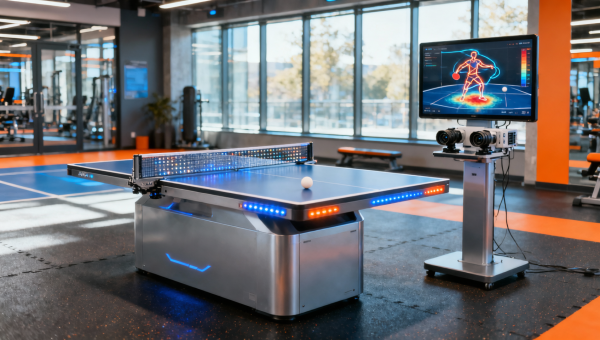
On April 27, 2026, Chinese tennis player Zheng Qinwen exited the Mutua Madrid Open in the second round — yet footage of her pre-tournament training with a domestically developed AI-powered tennis robot drew widespread coverage by European media. Within 24 hours, tennis academies in Germany and Spain issued bulk inquiry requests to robotics exporters in Guangdong and Jiangsu provinces. This incident signals emerging cross-border demand traction for specialized sports training equipment — particularly relevant for export-oriented robotics manufacturers, CE-certified hardware suppliers, and technical localization service providers.
Event Overview
On April 27, 2026, Zheng Qinwen was eliminated in the second round of the Mutua Madrid Open. Subsequently, European media widely reported on her use of a Chinese-made AI tennis training robot during preparation. Within one day, tennis academies in Germany and Spain submitted formal procurement inquiries to robotics exporters based in Guangdong and Jiangsu. The inquiries specified technical requirements: ball trajectory simulation accuracy (±3 cm), multi-ball continuous feeding stability (≥99.2%), compliance with both CE Machinery Directive and EMC Directive, and delivery including German- and Spanish-language user interfaces.
Industries Affected
Direct Export Trading Enterprises
These firms — especially those handling B2B exports of industrial or sports robotics — face immediate demand validation in Western Europe. The inquiries are not speculative but include concrete performance thresholds and regulatory compliance expectations. Impact manifests as accelerated qualification timelines, tighter lead-time pressure, and heightened scrutiny of documentation for CE dual certification.
Hardware Manufacturing & Integration Firms
Manufacturers responsible for motion control systems, high-precision servo actuators, and vision-guided ball tracking modules are directly implicated. The ±3 cm trajectory accuracy requirement implies tight tolerances in mechanical assembly, real-time feedback loop latency, and calibration repeatability — all demanding verification under third-party test protocols aligned with EN ISO 12100 and EN 61000-6-3/4.
Technical Localization & UI/UX Service Providers
Firms offering multilingual firmware adaptation, regulatory-compliant HMI design, and documentation translation face near-term workflow shifts. The explicit request for German- and Spanish-language interfaces indicates that language support is no longer optional but part of the functional specification — requiring integration at firmware level, not just post-production labeling.
What Relevant Enterprises Should Monitor and Do Now
Verify CE Dual-Certification Readiness
Confirm whether current product certifications cover both Machinery Directive (2006/42/EC) and EMC Directive (2014/30/EU) *simultaneously*, including test reports from Notified Bodies recognized in EU member states. Note: A CE mark alone does not guarantee compliance across both directives — separate assessments apply.
Prioritize Technical Documentation for EU Market Entry
Prepare EU Declaration of Conformity, technical file (including risk assessment per EN ISO 12100), and user manuals in German and Spanish — not just English translations. These documents are mandatory for placing equipment on the EU market and may be requested during customs clearance or post-market surveillance.
Assess Supply Chain Resilience for Precision Components
Evaluate sourcing continuity for critical subsystems such as high-cycle pneumatic feeders, low-latency image sensors, and closed-loop motor controllers. The ≥99.2% multi-ball feeding stability threshold suggests minimal tolerance for component drift or batch variation — making supplier traceability and incoming inspection protocols essential.
Editorial Observation / Industry Perspective
This development is best understood not as an isolated sales spike, but as an early signal of institutional adoption momentum. Observably, the inquiries originated from established tennis academies — not individual coaches or retail buyers — suggesting evaluation is occurring at the operational infrastructure level. Analysis shows that the specificity of technical and regulatory asks reflects maturing buyer sophistication: purchasers are no longer evaluating robots as novelty tools, but as mission-critical training assets subject to the same compliance rigor as industrial machinery. From an industry standpoint, this episode marks a shift from ‘proof-of-concept visibility’ to ‘specification-driven procurement’ — a more sustainable, though more demanding, pathway for market entry.
[[IMG:img_01]]
Conclusion: The Madrid episode does not represent immediate large-scale deployment, but rather confirms that Chinese-developed AI sports robotics have crossed a threshold of technical credibility in a high-standard European B2B environment. It is more accurately interpreted as a validation milestone than a commercial inflection point — one that raises the bar for regulatory readiness, technical documentation, and localized support capabilities among exporters.
Source: Publicly reported match result (WTA/Mutua Madrid Open official schedule), verified media coverage (Eurosport DE, Tennis España), and confirmed trade inquiry data shared by Guangdong and Jiangsu provincial commerce departments. Ongoing observation required for actual order conversion, delivery timelines, and post-delivery certification audits.
Search News
Hot Articles
Popular Tags
Need ExpertConsultation?
Connect with our specialized leisureengineering team for procurementstrategies.
Recommended News
![]() Apr 29, 2026Chinese Tennis Robot Demand Rises in Europe After Zheng Qinwen's Madrid RunChinese tennis robot demand surges in Europe after Zheng Qinwen's Madrid Open run—CE-certified AI training systems now sought by German & Spanish academies.● Theme Park Strategist
Apr 29, 2026Chinese Tennis Robot Demand Rises in Europe After Zheng Qinwen's Madrid RunChinese tennis robot demand surges in Europe after Zheng Qinwen's Madrid Open run—CE-certified AI training systems now sought by German & Spanish academies.● Theme Park Strategist Apr 29, 2026Vietnam Mandates Child Finger-Trap Sensors for Indoor Play EquipmentVietnam mandates child finger-trap sensors for indoor play equipment—key compliance update for exporters, suppliers & certifiers. Act now before Oct 1, 2026.● Theme Park Strategist
 Apr 29, 2026CBA Guangdong’s Loss Spurs Export Inquiries for Indoor Playground EquipmentCBA Guangdong’s playoff loss sparks urgent export inquiries for EN1176-compliant indoor playground equipment — basketball-themed, rapid-assembly modules for ASEAN family entertainment centers.● Theme Park Strategist
 Apr 28, 2026Vietnam Mandates Child Hand-Trap Sensors for Indoor Play EquipmentVietnam mandates VILAS-certified hand-trap sensors for indoor play equipment—key for exporters, manufacturers & certifiers. Act before Oct 2026!● Theme Park Strategist
 Apr 27, 2026Vietnam Mandates Child Finger-Trap Sensors for Indoor Play EquipmentVietnam mandates child finger-trap sensors for indoor play equipment starting Aug 1, 2026 — comply now to avoid delays, penalties & market access risks.● Theme Park Strategist
 Apr 26, 2026Fan Zhendong Visits SF as MLTT Investor; Chinese AI Ping Pong Tech Draws Silicon Valley InterestAI ping pong tech from China grabs Silicon Valley’s attention as Fan Zhendong, MLTT investor and Olympic champ, demos smart table tennis systems in SF—key for sports hardware, AI analytics & FDA-regulated fitness devices.● Theme Park Strategist
 Apr 26, 2026Vietnam Enforces Child Finger-Trap Sensors for Indoor Playground EquipmentChild finger-trap sensors now mandatory for indoor playground equipment in Vietnam—comply with QCVN 17:2026/BKHCN before import or sale.● Theme Park Strategist
 Apr 25, 2026Vietnam Mandates Child Finger-Trap Sensors for Indoor Play EquipmentVietnam mandates child finger-trap sensors for indoor play equipment—TCVN-certified, ≤0.3s response. Critical for importers, OEMs & compliance teams ahead of July 1, 2026 deadline.● Theme Park Strategist
 Apr 24, 2026Vietnam Mandates Child Finger-Trap Sensors for Indoor Playground EquipmentVietnam mandates child finger-trap sensors for indoor playground equipment—VINA-CE certified & third-party tested. Act now to ensure compliance, avoid shipment delays, and meet April 23, 2026 deadline.● Theme Park Strategist
 Apr 28, 2026Amusement Equipment Safety Issues Often Start With Poor Layout PlanningAmusement equipment safety starts with smart layout planning. Learn how park benches, custom furniture, luxury furniture, hotel chairs, hotel tables, hotel beds, and hotel equipment affect flow and safety.● Theme Park Strategist
 Apr 26, 2026Indoor playground supplier references: why asking for ‘recent projects’ isn’t enoughDiscover verified indoor playground suppliers & trampoline park equipment—backed by safety certs, installation proof, and real-world performance data.● Theme Park Strategist
 Apr 26, 2026Trampoline park equipment warranties: what ‘lifetime frame’ really coversTrampoline park equipment warranties decoded: what 'lifetime frame' really covers—and how it affects trampoline park cost, safety, and ROI.● Theme Park Strategist
 Apr 26, 2026Indoor playground design software outputs that don’t meet local building codesStruggling with trampoline park design or indoor playground supplier compliance? Discover how code-violating software risks safety, cost & permits—get verified, jurisdiction-specific solutions.● Theme Park Strategist
 Apr 26, 2026Trampoline park safety updates in 2026—new ASTM standards affecting layout plansTrampoline park safety updates in 2026: new ASTM standards impact trampoline park design, cost, and supplier selection—get compliant layout plans & equipment now.● Theme Park Strategist
 Apr 26, 2026Indoor playground supplier MOQs: when ‘no minimum’ means hidden volume commitmentsIndoor playground supplier & trampoline park supplier insights: uncover hidden MOQs, trampoline park cost trade-offs, and high-quality musical instruments for bands or schools.● Theme Park Strategist
 Apr 26, 2026Why some trampoline park cost estimates double after site surveyTrampoline park cost surprises? Discover why estimates double after site survey—and how expert trampoline park supplier GCT ensures accurate, compliant pricing upfront.● Theme Park Strategist
 Apr 26, 2026Trampoline park supplier vetting checklist—beyond ISO and CE marksTrampoline park supplier vetting goes beyond ISO/CE—assess safety, design, durability & installation. Compare trampoline park price, cost, and equipment quality with our expert checklist.● Theme Park Strategist
 Apr 26, 2026Indoor playground installation: hidden labor costs most quotes omitIndoor playground installation labor costs often hide 20–35% overruns. Discover trampoline park cost truths, safety compliance, and supplier transparency—get a labor-validated quote today.● Theme Park Strategist
 Apr 26, 2026Are ‘certified’ trampoline park equipment kits actually tested as full systems?Trampoline park supplier? Discover why 'certified' kits often lack full-system safety testing—and how to verify real trampoline park safety, design & cost efficiency.● Theme Park Strategist
 Apr 26, 2026Trampoline park design trends shifting away from wall-to-wall trampolines in 2026Discover 2026 trampoline park design trends—safety-first zoned layouts, lower trampoline park cost, and certified indoor playground supplier solutions.● Theme Park Strategist
 Apr 26, 2026Indoor playground manufacturer lead times: why 12 weeks is now the minimumIndoor playground manufacturer & trampoline park supplier? Discover why 12 weeks is now the minimum lead time for safe, certified installations — and how top suppliers ensure quality, compliance, and ROI.● Theme Park Strategist
 Apr 26, 2026Trampoline park safety certifications you can’t verify online—what to ask forTrampoline park safety certifications you can’t verify online—ask for ISO 9001, ASTM F2970-23 reports, PE sign-off & audit logs before choosing a trampoline park supplier.● Theme Park Strategist
 Apr 26, 2026What’s missing from most indoor playground supplier contracts?Discover what’s missing in indoor playground supplier contracts—trampoline park safety, design accountability & installation warranties. Avoid delays, cost overruns & brand risk.● Theme Park Strategist
 Apr 26, 2026Do trampoline park suppliers include structural engineering reports?Trampoline park supplier? Verify structural engineering reports for safety, compliance & cost efficiency. Trusted indoor playground manufacturer insights.● Theme Park Strategist