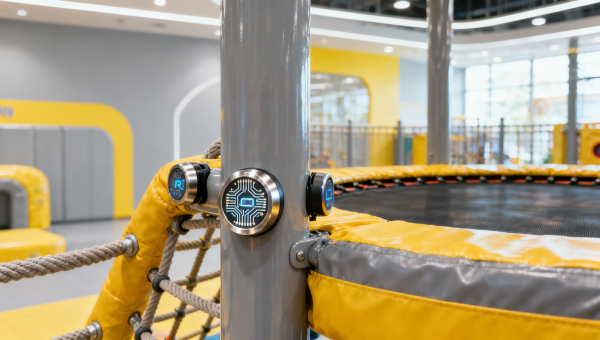
Vietnam Mandates Child Finger-Trap Sensors for Indoor Play Equipment
Vietnam’s Ministry of Industry and Trade (MOIT) issued Circular No. 28/2026/TT-BCT on April 24, 2026, mandating child finger-trap sensors for all commercial indoor playground equipment sold or imported into Vietnam starting August 1, 2026. This regulatory update directly impacts manufacturers, exporters, and distributors of indoor play systems — particularly those based in China supplying the Vietnamese market — by introducing new compliance requirements affecting bill-of-materials (BOM) costs and delivery timelines.
Event Overview
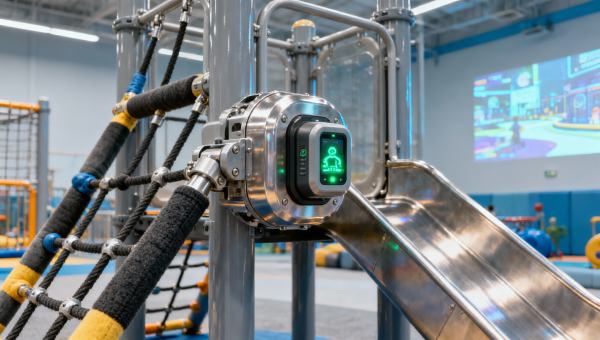
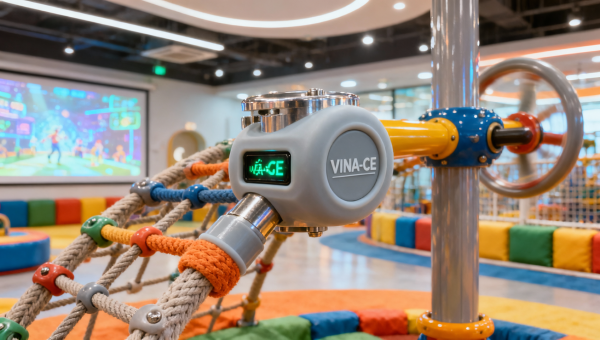
On April 24, 2026, Vietnam’s Ministry of Industry and Trade (MOIT) published Circular No. 28/2026/TT-BCT. Effective August 1, 2026, the circular requires all commercially deployed indoor playground equipment — including soft-climbing structures, interactive projection slides, and modular educational play systems — to be equipped with child finger-trap sensors compliant with national standard TCVN 12345:2025. Additionally, Vietnamese-language operational warning labels must be affixed to each unit.
Industries Affected
Export-Oriented Manufacturers (e.g., Chinese Indoor Playground OEMs/ODMs)
These firms supply finished indoor play systems to Vietnamese importers or operators. The requirement introduces new component specifications, testing validation, and labeling obligations — increasing per-unit production cost and extending lead time due to sensor integration, certification alignment, and bilingual documentation preparation.
Component Suppliers & Subcontractors
Suppliers of mechanical parts, control modules, or safety subsystems for indoor play equipment may face revised technical specifications from downstream clients. Demand for certified finger-trap sensors meeting TCVN 12345:2025 is expected to rise, though no official list of approved sensor models has been published as of the circular’s release.
Importers and Distributors in Vietnam
Local importers must verify conformity of incoming shipments before customs clearance and market placement. Non-compliant units risk rejection at port or post-import audit penalties. They also bear responsibility for ensuring Vietnamese-language warnings are correctly applied and legible — a logistical step previously not standardized across suppliers.
Third-Party Certification and Compliance Support Providers
Firms offering testing, documentation support, or regulatory advisory services for Vietnam market access may see increased demand for TCVN 12345:2025 verification. However, the availability of accredited local labs capable of validating sensor performance under this standard remains unconfirmed.
What Enterprises and Practitioners Should Monitor and Do Now
Track Official Guidance on Sensor Certification Pathways
TCVN 12345:2025 was referenced but not attached to the circular. Current more relevant is monitoring whether MOIT or the General Department of Vietnam Standards and Quality (STAMEQ) will issue implementation guidelines, recognized testing protocols, or lists of pre-approved sensors — all of which remain pending.
Review BOM and Lead-Time Assumptions for Key Product Lines
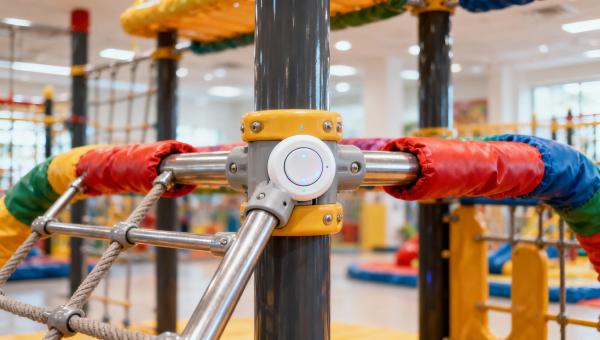
Manufacturers should identify which product families (e.g., soft-climbing frames with pinch-point joints, motorized slide actuators, or modular connection nodes) require sensor retrofitting. Assess whether existing suppliers can deliver compliant sensors within current production cycles — or if redesign and retooling is needed ahead of the August 2026 deadline.
Distinguish Between Regulatory Signal and Enforceable Requirement
The circular sets a clear effective date, but enforcement mechanisms — such as inspection frequency, penalty structure, or transitional provisions for stock already in transit — have not yet been detailed. Enterprises should treat this as a binding requirement while remaining alert to supplementary notices that clarify practical enforcement scope.
Prepare Documentation and Labeling Infrastructure Early
Ensuring accurate, durable, and regulation-compliant Vietnamese-language warning labels requires coordination across design, printing, packaging, and QA teams. Firms should initiate label template development and supplier qualification now, especially where bilingual labeling has not previously been part of standard export practice.
Editorial Perspective / Industry Observation
From an industry perspective, this circular signals Vietnam’s tightening of technical safety oversight for children’s public-use equipment — aligning more closely with EU EN 1176 and ASEAN harmonization trends. It is not merely procedural; it introduces a new hardware-level safety expectation previously absent from Vietnam’s indoor play equipment regulations. Analysis来看, this reflects a broader shift toward outcome-based compliance rather than prescriptive design rules alone. Observation来看, MOIT appears to be prioritizing injury prevention at the point of physical interaction — specifically targeting pinch/crush hazards common in moving or articulated play components. Current more relevant is recognizing this as both a near-term compliance milestone and a longer-term indicator of regulatory maturation in Vietnam’s consumer product safety framework.
This update does not yet represent full market access restriction — but it does raise the baseline for entry. For exporters, it underscores that Vietnam’s regulatory environment is evolving beyond basic customs classification and tariff application into functional safety assurance. It is better understood as an enforceable requirement with phased implementation, rather than a tentative proposal or voluntary best practice.
Conclusion
This regulatory change marks a concrete step in Vietnam’s formalization of safety expectations for commercial indoor play environments. Its significance lies not in novelty alone, but in its specificity: it mandates a defined technical solution (TCVN-compliant sensors) for a defined hazard (finger entrapment), backed by a fixed deadline. For stakeholders, the most rational interpretation is that this is a binding, actionable requirement — one requiring technical adaptation, supply chain coordination, and documentation readiness — rather than a symbolic policy gesture.
Source Attribution
Main source: Vietnam Ministry of Industry and Trade (MOIT), Circular No. 28/2026/TT-BCT, issued April 24, 2026.
Points requiring ongoing observation: official interpretation of TCVN 12345:2025 application scope, list of accredited testing bodies, and enforcement procedures for non-compliant consignments arriving before or after August 1, 2026.
Search News
Hot Articles
- Stage Lighting & Truss2026 FIBA Women's World Cup Draw Sets LED Timing Screen RequirementsApr 27, 2026
- Hotel Room AmenitiesIranian Delegation’s Ritual Gesture at Sanya ASG Sparks Mideast Hospitality Procurement ShiftApr 27, 2026
- Arcade & VR MachinesSnooker World Championship 'China Derby' Drives VR Viewing DemandApr 27, 2026
Popular Tags
Need ExpertConsultation?
Connect with our specialized leisureengineering team for procurementstrategies.
Recommended News
 Apr 27, 2026Vietnam Mandates Child Finger-Trap Sensors for Indoor Play EquipmentVietnam mandates child finger-trap sensors for indoor play equipment starting Aug 1, 2026 — comply now to avoid delays, penalties & market access risks.● Theme Park Strategist
 Apr 26, 2026Fan Zhendong Visits SF as MLTT Investor; Chinese AI Ping Pong Tech Draws Silicon Valley InterestAI ping pong tech from China grabs Silicon Valley’s attention as Fan Zhendong, MLTT investor and Olympic champ, demos smart table tennis systems in SF—key for sports hardware, AI analytics & FDA-regulated fitness devices.● Theme Park Strategist
 Apr 26, 2026Vietnam Enforces Child Finger-Trap Sensors for Indoor Playground EquipmentChild finger-trap sensors now mandatory for indoor playground equipment in Vietnam—comply with QCVN 17:2026/BKHCN before import or sale.● Theme Park Strategist
 Apr 25, 2026Vietnam Mandates Child Finger-Trap Sensors for Indoor Play EquipmentVietnam mandates child finger-trap sensors for indoor play equipment—TCVN-certified, ≤0.3s response. Critical for importers, OEMs & compliance teams ahead of July 1, 2026 deadline.● Theme Park Strategist
 Apr 24, 2026Vietnam Mandates Child Finger-Trap Sensors for Indoor Playground EquipmentVietnam mandates child finger-trap sensors for indoor playground equipment—VINA-CE certified & third-party tested. Act now to ensure compliance, avoid shipment delays, and meet April 23, 2026 deadline.● Theme Park Strategist
 Apr 26, 2026Indoor playground supplier references: why asking for ‘recent projects’ isn’t enoughDiscover verified indoor playground suppliers & trampoline park equipment—backed by safety certs, installation proof, and real-world performance data.● Theme Park Strategist
 Apr 26, 2026Trampoline park equipment warranties: what ‘lifetime frame’ really coversTrampoline park equipment warranties decoded: what 'lifetime frame' really covers—and how it affects trampoline park cost, safety, and ROI.● Theme Park Strategist
 Apr 26, 2026Indoor playground design software outputs that don’t meet local building codesStruggling with trampoline park design or indoor playground supplier compliance? Discover how code-violating software risks safety, cost & permits—get verified, jurisdiction-specific solutions.● Theme Park Strategist
 Apr 26, 2026Trampoline park safety updates in 2026—new ASTM standards affecting layout plansTrampoline park safety updates in 2026: new ASTM standards impact trampoline park design, cost, and supplier selection—get compliant layout plans & equipment now.● Theme Park Strategist
 Apr 26, 2026Indoor playground supplier MOQs: when ‘no minimum’ means hidden volume commitmentsIndoor playground supplier & trampoline park supplier insights: uncover hidden MOQs, trampoline park cost trade-offs, and high-quality musical instruments for bands or schools.● Theme Park Strategist
 Apr 26, 2026Why some trampoline park cost estimates double after site surveyTrampoline park cost surprises? Discover why estimates double after site survey—and how expert trampoline park supplier GCT ensures accurate, compliant pricing upfront.● Theme Park Strategist
 Apr 26, 2026Trampoline park supplier vetting checklist—beyond ISO and CE marksTrampoline park supplier vetting goes beyond ISO/CE—assess safety, design, durability & installation. Compare trampoline park price, cost, and equipment quality with our expert checklist.● Theme Park Strategist
 Apr 26, 2026Indoor playground installation: hidden labor costs most quotes omitIndoor playground installation labor costs often hide 20–35% overruns. Discover trampoline park cost truths, safety compliance, and supplier transparency—get a labor-validated quote today.● Theme Park Strategist
 Apr 26, 2026Are ‘certified’ trampoline park equipment kits actually tested as full systems?Trampoline park supplier? Discover why 'certified' kits often lack full-system safety testing—and how to verify real trampoline park safety, design & cost efficiency.● Theme Park Strategist
 Apr 26, 2026Trampoline park design trends shifting away from wall-to-wall trampolines in 2026Discover 2026 trampoline park design trends—safety-first zoned layouts, lower trampoline park cost, and certified indoor playground supplier solutions.● Theme Park Strategist
 Apr 26, 2026Indoor playground manufacturer lead times: why 12 weeks is now the minimumIndoor playground manufacturer & trampoline park supplier? Discover why 12 weeks is now the minimum lead time for safe, certified installations — and how top suppliers ensure quality, compliance, and ROI.● Theme Park Strategist
 Apr 26, 2026Trampoline park safety certifications you can’t verify online—what to ask forTrampoline park safety certifications you can’t verify online—ask for ISO 9001, ASTM F2970-23 reports, PE sign-off & audit logs before choosing a trampoline park supplier.● Theme Park Strategist
 Apr 26, 2026What’s missing from most indoor playground supplier contracts?Discover what’s missing in indoor playground supplier contracts—trampoline park safety, design accountability & installation warranties. Avoid delays, cost overruns & brand risk.● Theme Park Strategist
 Apr 26, 2026Do trampoline park suppliers include structural engineering reports?Trampoline park supplier? Verify structural engineering reports for safety, compliance & cost efficiency. Trusted indoor playground manufacturer insights.● Theme Park Strategist
 Apr 23, 2026Fan Zhendong Visits Silicon Valley as MLTT Investor, AI Ping-Pong Tech Draws AttentionAI ping-pong tech takes center stage as Fan Zhendong visits Silicon Valley as MLTT investor—key for smart sports hardware, AI coaching platforms & SaaS providers.● Theme Park Strategist
 Apr 23, 2026Vietnam Mandates Child Finger-Trap Sensors for Indoor Play EquipmentChild finger-trap sensors now mandatory for indoor play equipment in Vietnam—learn how QCVN 121:2026 impacts exporters, manufacturers & suppliers ahead of July 1, 2026 enforcement.● Theme Park Strategist
 Apr 22, 2026Vietnam Mandates Child Finger-Trap Sensors for Indoor Playground EquipmentVietnam mandates child finger-trap sensors for indoor playground equipment—comply with QCVN 128:2026 & TCVN 9350:2023 before Oct 2026!● Theme Park Strategist
 Apr 24, 2026Which Playground Supplier Suits Your Project?Playground supplier selection starts with safety, playground planning, and playground surfacing. Learn how to compare compliance, support, and total value for smarter procurement.● Theme Park Strategist
 Apr 24, 2026Playground Safety Surfacing: Cost vs ValuePlayground safety surfacing cost vs value explained: compare playground surfacing options, compliance, maintenance, and ROI for smarter playground planning and supplier decisions.● Theme Park Strategist