Vietnam Mandates Child Finger-Trap Sensors for Indoor Play Equipment
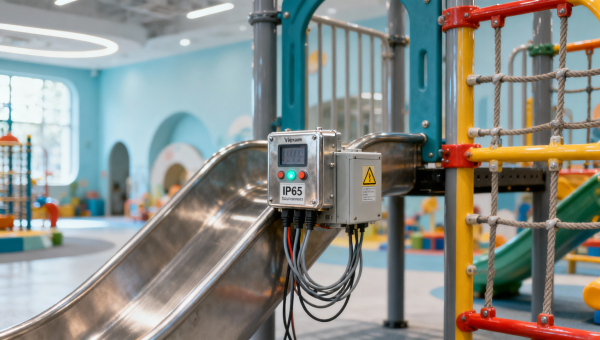
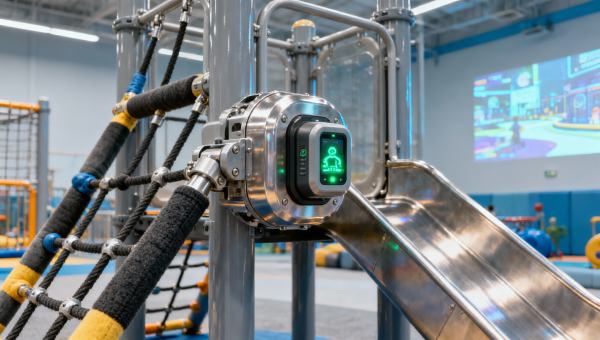
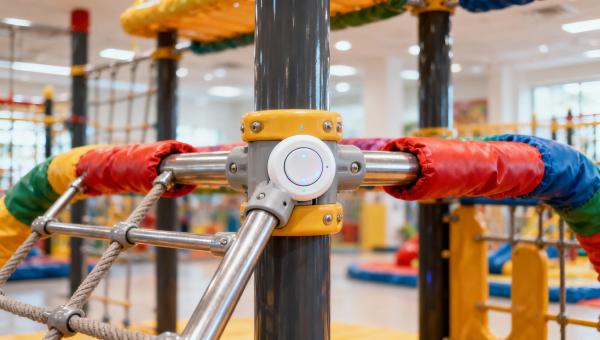
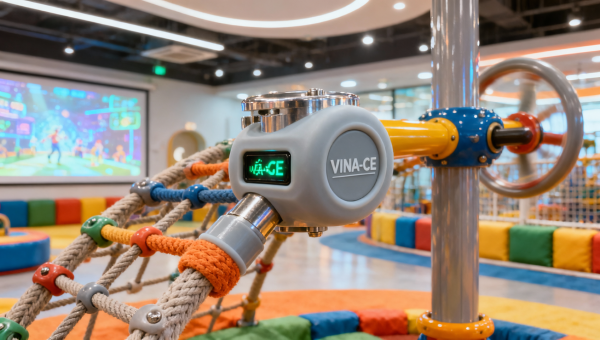
On April 28, 2026, Vietnam’s Standard Metrology and Quality Authority (STAMEQ) issued Revision QCVN 11:2026/BKHCN, mandating child finger-trap sensors on all commercial indoor playground equipment—including climbing frames, slide assemblies, and interactive ball pits—for both imported and domestically produced units. Effective October 1, 2026, this update directly affects Chinese manufacturers and exporters of playground equipment, triggering immediate considerations around production line adaptation, certification timelines, and compliance costs.
Event Overview
On April 28, 2026, STAMEQ published the revised national technical regulation QCVN 11:2026/BKHCN. The revision requires that all commercial indoor playground equipment sold or deployed in Vietnam must be equipped with child finger-trap sensors meeting IEC 61508 SIL2 functional safety requirements. The requirement applies to both imported and domestically manufactured equipment and takes effect on October 1, 2026. No further implementation guidance or transitional provisions beyond this date have been publicly released.
Industries Affected by Segment
Export-oriented Manufacturing Enterprises
Manufacturers—especially those in China exporting to Vietnam—are directly impacted because the sensor integration requires hardware redesign, firmware updates, and revalidation of mechanical safety interfaces. Impact manifests in extended lead times, recalibration of assembly workflows, and potential inventory write-offs for pre-compliance units.
Component Suppliers & Sensor Module Providers
Suppliers of safety-critical electronic modules face increased demand for IEC 61508 SIL2-certified sensors compatible with low-voltage DC playground control systems. However, only a limited number of globally available sensor models meet both IEC 61508 SIL2 and UL/IEC dual-certification readiness—creating a bottleneck in sourcing and validation cycles.
Third-party Certification & Testing Service Providers
Testing labs accredited for IEC 61508 functional safety assessment—particularly those with UL recognition—will see rising inquiry volumes from Vietnamese importers and Chinese exporters. Demand is concentrated on pre-submission reviews, failure mode analysis (FMEA), and SIL verification reports aligned with QCVN 11:2026/BKHCN Annex B requirements.
Distribution & Import Compliance Agents
Local Vietnamese import agents and customs brokers must now verify sensor installation evidence and SIL2 documentation prior to clearance. Non-compliant shipments risk detention or rejection at Ho Chi Minh City or Hai Phong ports starting October 1, 2026—adding pressure to pre-arrival document audits and technical file preparation.
Key Focus Areas and Recommended Actions for Stakeholders
Monitor Official Clarifications from STAMEQ and Vietnamese Customs
STAMEQ has not yet published application guidelines, test protocols, or accepted laboratory lists for SIL2 verification under QCVN 11:2026/BKHCN. Stakeholders should track STAMEQ’s official portal and Vietnam Ministry of Science and Technology announcements for updates on conformity assessment procedures before Q3 2026.
Prioritize Sensor Modules with UL/IEC Dual-Certification Readiness
Given the stated recommendation for UL/IEC dual certification pre-review, manufacturers should shortlist sensor vendors whose technical dossiers already include preliminary SIL2 compliance evidence per IEC 61508 Part 2 & 3—and confirm whether their existing product certifications cover typical playground operating conditions (e.g., ambient humidity, vibration, intermittent power).
Validate Production Line Integration Before August 2026
With the October 1, 2026 enforcement date, sensor retrofitting and full-system safety validation require minimum 8–10 weeks. Factories should complete pilot integration trials, functional testing, and internal audit documentation by early August 2026 to allow buffer time for third-party lab scheduling and report issuance.
Update Technical Documentation and Labeling Ahead of Shipment
New labeling requirements—including SIL2 compliance statements, sensor model identifiers, and traceable calibration records—must appear on equipment nameplates and user manuals. Exporters should revise bilingual (English/Vietnamese) technical files now to avoid port-side corrections or rework requests.
Editorial Perspective / Industry Observation
Observably, this regulatory revision signals Vietnam’s broader shift toward harmonizing playground safety standards with international functional safety frameworks—not just mechanical requirements. It reflects growing institutional capacity within STAMEQ to enforce electronics-integrated safety criteria, particularly for children’s products. Analysis shows this is less an isolated compliance event and more a leading indicator: similar sensor mandates may follow in neighboring ASEAN markets adopting QCVN-aligned frameworks. From an industry perspective, it underscores how functional safety is becoming a non-negotiable layer—not an optional upgrade—in export-ready playground systems targeting regulated Southeast Asian markets.
Current interpretation favors treating QCVN 11:2026/BKHCN as an operational signal rather than a finalized outcome. While the legal effective date is fixed, real-world enforcement cadence, acceptable evidence formats, and post-clearance surveillance frequency remain unconfirmed. Continuous monitoring—not reactive compliance—is the more adaptive posture.
Conclusion
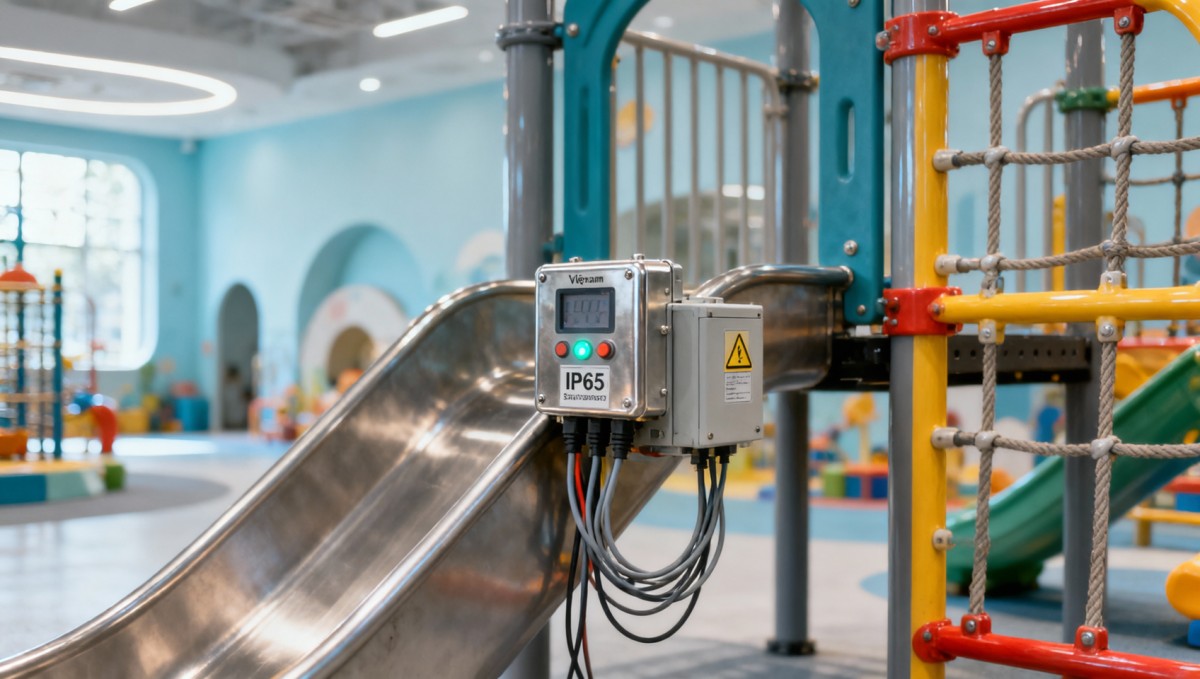
QCVN 11:2026/BKHCN marks a structural tightening of safety expectations for commercial indoor playground equipment in Vietnam—not merely an incremental update. Its significance lies in elevating functional safety (specifically anti-crush/finger-trap protection via certified sensors) to a mandatory, verifiable requirement. For exporters and suppliers, this is best understood not as a one-time certification hurdle, but as a new baseline capability: integrating SIL2-grade sensing into electromechanical playground design and documentation workflows. A measured, phased response—centered on sensor qualification, timeline buffer, and documentation alignment—is more appropriate than urgent overhauls.
Information Source
Primary source: Vietnam Standard Metrology and Quality Authority (STAMEQ), QCVN 11:2026/BKHCN revision, published April 28, 2026.
Note: Implementation guidance, approved test laboratories, and enforcement protocols remain pending official release and are subject to ongoing observation.
Search News
Hot Articles
Popular Tags
Need ExpertConsultation?
Connect with our specialized leisureengineering team for procurementstrategies.
Recommended News
![]() Apr 29, 2026Chinese Tennis Robot Demand Rises in Europe After Zheng Qinwen's Madrid RunChinese tennis robot demand surges in Europe after Zheng Qinwen's Madrid Open run—CE-certified AI training systems now sought by German & Spanish academies.● Theme Park Strategist
Apr 29, 2026Chinese Tennis Robot Demand Rises in Europe After Zheng Qinwen's Madrid RunChinese tennis robot demand surges in Europe after Zheng Qinwen's Madrid Open run—CE-certified AI training systems now sought by German & Spanish academies.● Theme Park Strategist Apr 29, 2026Vietnam Mandates Child Finger-Trap Sensors for Indoor Play EquipmentVietnam mandates child finger-trap sensors for indoor play equipment—key compliance update for exporters, suppliers & certifiers. Act now before Oct 1, 2026.● Theme Park Strategist
 Apr 29, 2026CBA Guangdong’s Loss Spurs Export Inquiries for Indoor Playground EquipmentCBA Guangdong’s playoff loss sparks urgent export inquiries for EN1176-compliant indoor playground equipment — basketball-themed, rapid-assembly modules for ASEAN family entertainment centers.● Theme Park Strategist
 Apr 28, 2026Vietnam Mandates Child Hand-Trap Sensors for Indoor Play EquipmentVietnam mandates VILAS-certified hand-trap sensors for indoor play equipment—key for exporters, manufacturers & certifiers. Act before Oct 2026!● Theme Park Strategist
 Apr 27, 2026Vietnam Mandates Child Finger-Trap Sensors for Indoor Play EquipmentVietnam mandates child finger-trap sensors for indoor play equipment starting Aug 1, 2026 — comply now to avoid delays, penalties & market access risks.● Theme Park Strategist
 Apr 26, 2026Fan Zhendong Visits SF as MLTT Investor; Chinese AI Ping Pong Tech Draws Silicon Valley InterestAI ping pong tech from China grabs Silicon Valley’s attention as Fan Zhendong, MLTT investor and Olympic champ, demos smart table tennis systems in SF—key for sports hardware, AI analytics & FDA-regulated fitness devices.● Theme Park Strategist
 Apr 26, 2026Vietnam Enforces Child Finger-Trap Sensors for Indoor Playground EquipmentChild finger-trap sensors now mandatory for indoor playground equipment in Vietnam—comply with QCVN 17:2026/BKHCN before import or sale.● Theme Park Strategist
 Apr 25, 2026Vietnam Mandates Child Finger-Trap Sensors for Indoor Play EquipmentVietnam mandates child finger-trap sensors for indoor play equipment—TCVN-certified, ≤0.3s response. Critical for importers, OEMs & compliance teams ahead of July 1, 2026 deadline.● Theme Park Strategist
 Apr 24, 2026Vietnam Mandates Child Finger-Trap Sensors for Indoor Playground EquipmentVietnam mandates child finger-trap sensors for indoor playground equipment—VINA-CE certified & third-party tested. Act now to ensure compliance, avoid shipment delays, and meet April 23, 2026 deadline.● Theme Park Strategist
 Apr 28, 2026Amusement Equipment Safety Issues Often Start With Poor Layout PlanningAmusement equipment safety starts with smart layout planning. Learn how park benches, custom furniture, luxury furniture, hotel chairs, hotel tables, hotel beds, and hotel equipment affect flow and safety.● Theme Park Strategist
 Apr 26, 2026Indoor playground supplier references: why asking for ‘recent projects’ isn’t enoughDiscover verified indoor playground suppliers & trampoline park equipment—backed by safety certs, installation proof, and real-world performance data.● Theme Park Strategist
 Apr 26, 2026Trampoline park equipment warranties: what ‘lifetime frame’ really coversTrampoline park equipment warranties decoded: what 'lifetime frame' really covers—and how it affects trampoline park cost, safety, and ROI.● Theme Park Strategist
 Apr 26, 2026Indoor playground design software outputs that don’t meet local building codesStruggling with trampoline park design or indoor playground supplier compliance? Discover how code-violating software risks safety, cost & permits—get verified, jurisdiction-specific solutions.● Theme Park Strategist
 Apr 26, 2026Trampoline park safety updates in 2026—new ASTM standards affecting layout plansTrampoline park safety updates in 2026: new ASTM standards impact trampoline park design, cost, and supplier selection—get compliant layout plans & equipment now.● Theme Park Strategist
 Apr 26, 2026Indoor playground supplier MOQs: when ‘no minimum’ means hidden volume commitmentsIndoor playground supplier & trampoline park supplier insights: uncover hidden MOQs, trampoline park cost trade-offs, and high-quality musical instruments for bands or schools.● Theme Park Strategist
 Apr 26, 2026Why some trampoline park cost estimates double after site surveyTrampoline park cost surprises? Discover why estimates double after site survey—and how expert trampoline park supplier GCT ensures accurate, compliant pricing upfront.● Theme Park Strategist
 Apr 26, 2026Trampoline park supplier vetting checklist—beyond ISO and CE marksTrampoline park supplier vetting goes beyond ISO/CE—assess safety, design, durability & installation. Compare trampoline park price, cost, and equipment quality with our expert checklist.● Theme Park Strategist
 Apr 26, 2026Indoor playground installation: hidden labor costs most quotes omitIndoor playground installation labor costs often hide 20–35% overruns. Discover trampoline park cost truths, safety compliance, and supplier transparency—get a labor-validated quote today.● Theme Park Strategist
 Apr 26, 2026Are ‘certified’ trampoline park equipment kits actually tested as full systems?Trampoline park supplier? Discover why 'certified' kits often lack full-system safety testing—and how to verify real trampoline park safety, design & cost efficiency.● Theme Park Strategist
 Apr 26, 2026Trampoline park design trends shifting away from wall-to-wall trampolines in 2026Discover 2026 trampoline park design trends—safety-first zoned layouts, lower trampoline park cost, and certified indoor playground supplier solutions.● Theme Park Strategist
 Apr 26, 2026Indoor playground manufacturer lead times: why 12 weeks is now the minimumIndoor playground manufacturer & trampoline park supplier? Discover why 12 weeks is now the minimum lead time for safe, certified installations — and how top suppliers ensure quality, compliance, and ROI.● Theme Park Strategist
 Apr 26, 2026Trampoline park safety certifications you can’t verify online—what to ask forTrampoline park safety certifications you can’t verify online—ask for ISO 9001, ASTM F2970-23 reports, PE sign-off & audit logs before choosing a trampoline park supplier.● Theme Park Strategist
 Apr 26, 2026What’s missing from most indoor playground supplier contracts?Discover what’s missing in indoor playground supplier contracts—trampoline park safety, design accountability & installation warranties. Avoid delays, cost overruns & brand risk.● Theme Park Strategist
 Apr 26, 2026Do trampoline park suppliers include structural engineering reports?Trampoline park supplier? Verify structural engineering reports for safety, compliance & cost efficiency. Trusted indoor playground manufacturer insights.● Theme Park Strategist