Safe Trampoline Park Equipment Basics
Choosing safe trampoline park equipment is less about finding the lowest trampoline park price and more about reducing long-term operational risk. For procurement teams, investors, and distributors, the right buying decision usually comes down to three factors: verified safety compliance, equipment durability under commercial traffic, and a supplier’s ability to support layout, installation, and after-sales service. If a trampoline park supplier cannot clearly explain standards, material specifications, maintenance needs, and total lifecycle cost, the offer may be cheap upfront but expensive in downtime, repairs, liability, and lost customer trust.
This guide explains the practical basics buyers should review before comparing quotes from a trampoline park supplier, indoor playground supplier, or indoor playground manufacturer. It focuses on what matters most in commercial sourcing: compliance, structural quality, design suitability, realistic budgeting, and how to evaluate whether a product package is truly safe and commercially viable.
What buyers really need to check first in safe trampoline park equipment
For commercial buyers, “safe” is not a marketing word. It must be supported by engineering details, material documentation, test reports, and installation quality. Before discussing colors, themes, or add-on attractions, review these fundamentals:
- Applicable safety standards: Ask which regional or international standards the equipment is designed to meet and request supporting documentation.
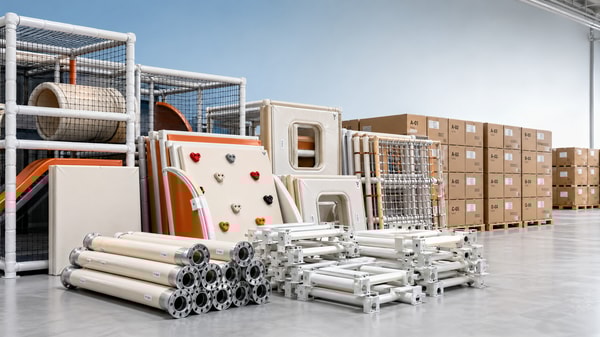
- Frame and structure quality: The steel frame, welds, anti-corrosion treatment, and anchor design affect stability and service life.
- Padding and impact protection: Commercial-grade padding should resist compression, tearing, and surface cracking under repeated use.
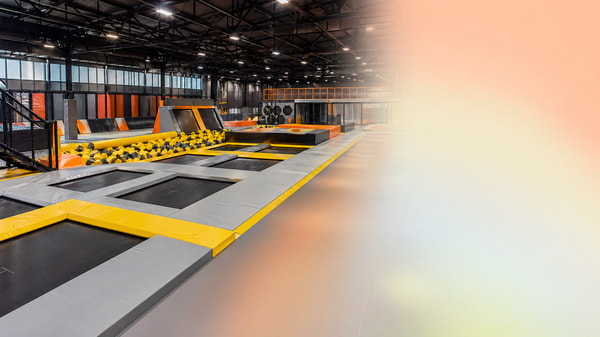
- Jumping mat and spring system: Performance and safety depend on tensile strength, stitch quality, spring protection, and load distribution.
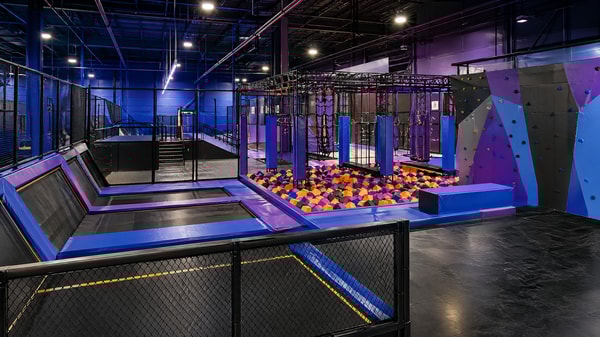
- Netting and enclosure systems: These should be durable, properly tensioned, and designed to reduce fall or collision risk.
- Installation and inspection process: Even certified equipment can become unsafe if installed incorrectly or without post-installation checks.
A reliable indoor playground manufacturer or trampoline park supplier should present these details proactively, not only after repeated follow-up.
Which safety standards and certifications matter most
Different markets apply different regulatory expectations, so buyers should match sourcing decisions to the destination country and project type. In practice, the most important point is not whether a supplier mentions a standard, but whether the supplied equipment package, materials, and production process can be documented against it.
When evaluating offers, ask for:
- Product test reports for relevant components such as foam, padding, netting, and structural materials
- Material certifications related to fire resistance, toxicity, and durability where applicable
- Factory quality management evidence showing consistent production controls
- Installation guidance and inspection records to support safe commissioning
- Maintenance manuals that define daily, weekly, and periodic inspection requirements
Procurement and business evaluation teams should also confirm whether the supplier has experience delivering to comparable jurisdictions. A supplier familiar with export documentation, compliance expectations, and project acceptance requirements can reduce approval delays and costly redesigns.
How to judge equipment durability in a high-traffic commercial environment
In a trampoline park, safety and durability are closely linked. Equipment that wears quickly often becomes a safety issue long before full replacement is planned. This is why buyers should assess not just product appearance, but commercial endurance.
Key durability checkpoints include:
- Steel thickness and finish: Heavier-duty frames with proper anti-rust treatment generally perform better in long-term use.
- Weld consistency: Poor welding can create weak points under repeated dynamic loads.
- Mat fabric quality: Commercial jump mats should maintain elasticity while resisting tearing and edge fatigue.
- Foam and padding density: Low-quality foam compresses early, reducing impact protection and increasing replacement frequency.
- Surface materials: PVC and covering materials should resist abrasion, sweat, cleaning chemicals, and UV exposure where relevant.
- Replaceable component design: Good systems allow efficient replacement of high-wear parts without major shutdowns.
For buyers comparing suppliers, one useful question is: What are the expected replacement cycles for pads, springs, mats, and netting under normal commercial use? The answer provides a much clearer view of long-term value than an attractive initial quote alone.
How indoor playground design affects trampoline park safety
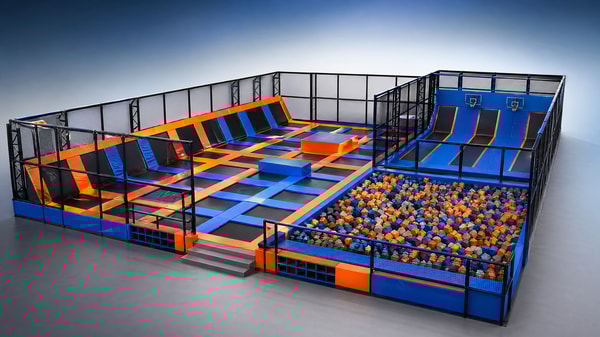
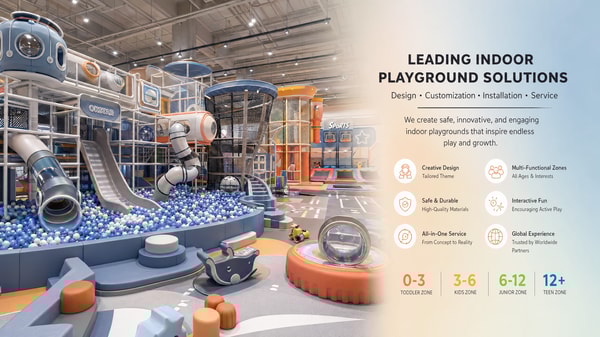
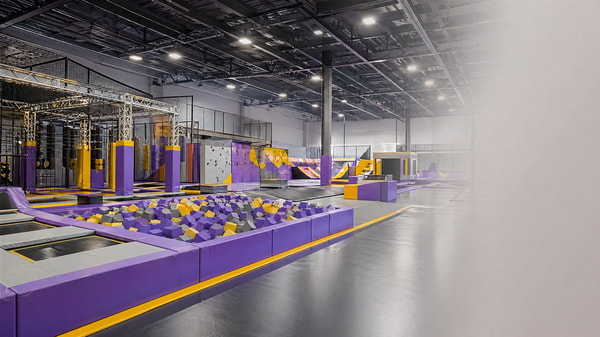
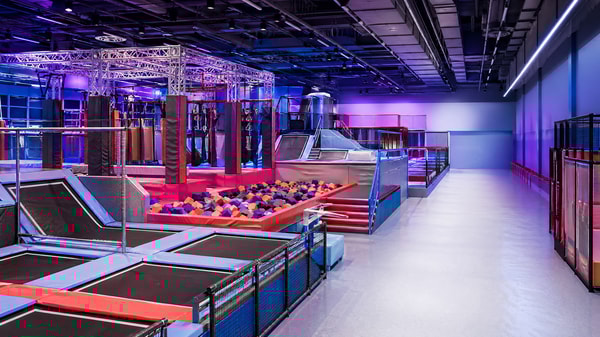
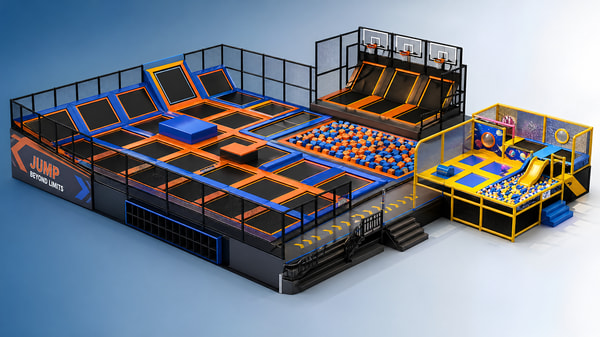
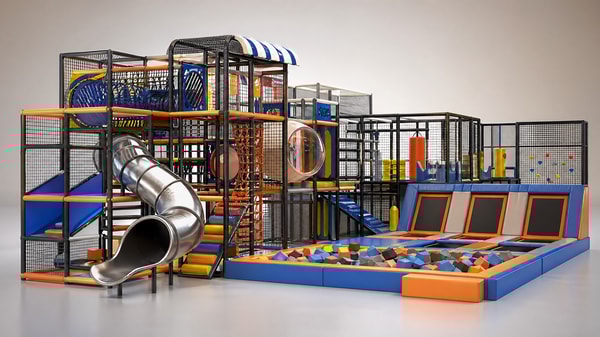
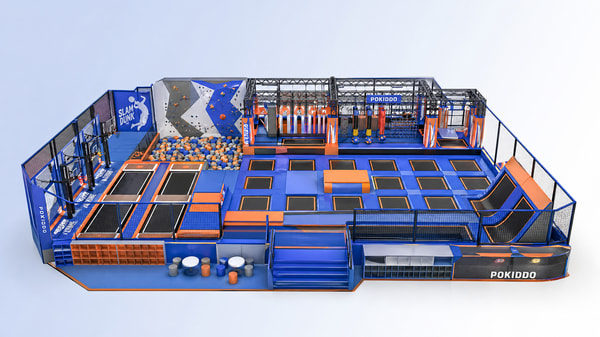
Safe trampoline park equipment does not operate in isolation. Layout planning, circulation paths, age zoning, visibility, and activity separation all influence risk. This is where indoor playground design becomes commercially important.
A strong design should account for:
- User flow: Entry, queuing, jumping, and exit areas should reduce congestion and uncontrolled crossover.
- Age and skill segmentation: Toddler zones, family play areas, and high-intensity zones should be separated.
- Clear sightlines: Staff must be able to supervise key activity areas easily.
- Adequate spacing: Impact zones, run-up areas, and circulation lanes should not be compressed to maximize capacity unrealistically.
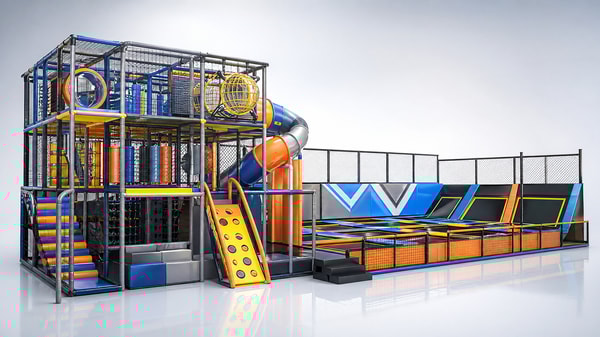
- Integrated soft play and trampoline areas: If the site includes both attractions, transitions should be safe and intuitive.
- Emergency access: Staff need clear routes for intervention, cleaning, and evacuation.
For multi-attraction venues, buyers often compare a trampoline park supplier with an indoor playground supplier that can deliver integrated concepts. The best option depends on whether the project prioritizes specialized trampoline performance, mixed-family entertainment, or a balanced hybrid model.
What drives total trampoline park cost beyond the initial quote
Many first-time buyers focus heavily on trampoline park price, but the true decision should be based on total trampoline park cost across the full project lifecycle. A lower equipment quote may hide additional spending in logistics, installation, maintenance, spare parts, or operational inefficiency.
Typical cost components include:
- Equipment package cost: Core trampoline zones, obstacle modules, foam pits, climbing units, airbags, or soft play elements
- Customization and branding: Theme colors, branded graphics, custom dimensions, and specialized features
- Freight and import charges: Shipping mode, destination port, duties, inland delivery, and customs clearance
- Installation and commissioning: On-site assembly, local labor coordination, supervision, and safety checks
- Facility preparation: Flooring, ceiling height adaptation, HVAC considerations, power needs, and fire safety integration
- Maintenance and spare parts: Replacement mats, pads, springs, netting, and wear components
- Downtime costs: Lost revenue when repairs or part shortages interrupt operations
For commercial comparison, ask suppliers to provide a cost structure that distinguishes between one-time capital expenditure and ongoing operating expenditure. This makes supplier evaluation much more realistic, especially for investors and procurement teams preparing ROI models.
How to compare a trampoline park supplier or indoor playground manufacturer
Not all suppliers offer the same value, even when product renderings look similar. A professional sourcing review should combine technical, commercial, and operational criteria.
Use the following checklist when comparing vendors:
- Project experience: Have they completed similar commercial entertainment projects in your target market?
- Design capability: Can they adapt layouts to site constraints, local code requirements, and target customer groups?
- Documentation quality: Are drawings, specifications, manuals, and compliance files complete and clear?
- Production consistency: Do they have stable quality control processes and visible factory capability?
- Lead time reliability: Can they deliver according to project schedule without quality compromise?
- After-sales support: Will they supply spare parts, troubleshooting guidance, and maintenance recommendations promptly?
- Communication efficiency: Do they answer technical questions directly and transparently?
Distributors and agents should also assess whether the manufacturer can support localized documentation, branding cooperation, and repeat-order consistency. A strong product is only commercially scalable if support systems are equally dependable.
Common sourcing mistakes that create safety and profitability problems
Many avoidable problems begin during the buying stage. The most common mistakes include:
- Choosing by price alone without verifying material grade, compliance status, or replacement costs
- Overdesigning the venue by packing in too many attractions and reducing safe circulation space
- Ignoring maintenance planning until after opening, which leads to delayed repairs and higher risk exposure
- Accepting incomplete technical documents that make installation and inspection harder
- Underestimating local regulations related to fire safety, building integration, occupancy, and operational approvals
- Buying from suppliers without proven commercial references in trampoline or indoor play projects
These issues affect more than safety. They also influence insurance discussions, operational uptime, customer reviews, and long-term brand credibility.
A practical buying framework for commercial decision-makers
For information researchers, procurement staff, and business evaluators, a structured review process can make supplier selection far more efficient. A practical framework is:
- Define the venue model: trampoline-focused, hybrid family entertainment, or integrated indoor playground design.
- Confirm market and compliance requirements: identify applicable safety and import expectations before requesting final quotations.
- Shortlist qualified suppliers: compare a specialized trampoline park supplier and relevant indoor playground manufacturer options.
- Review design proposals: assess traffic flow, zoning, supervision visibility, and risk points.
- Check technical and material documentation: do not proceed on visuals alone.
- Model total trampoline park cost: include equipment, logistics, installation, maintenance, and spare parts.
- Validate after-sales capability: confirm support response times and replacement part availability.
- Make a lifecycle-based decision: choose the offer that best balances safety, reliability, user experience, and commercial return.
This approach helps buyers avoid short-term thinking and supports more defensible sourcing decisions internally.
Conclusion: safe equipment is a sourcing decision, not just a product feature
Safe trampoline park equipment starts with good engineering, but commercial safety depends just as much on supplier selection, indoor playground design, compliance documentation, and maintenance planning. For B2B buyers, the smartest purchase is rarely the cheapest quote. It is the solution that can demonstrate reliable standards, withstand heavy use, fit the operating model, and control total trampoline park cost over time.
When comparing a trampoline park supplier, indoor playground supplier, or indoor playground manufacturer, focus on proof rather than promises. If the supplier can clearly support safety, durability, layout logic, and long-term serviceability, you are much closer to building a profitable, credible, and safety-first entertainment project.
- commercial sourcing
- indoor playground
- playground design
- playground manufacturer
- playground supplier
- trampoline park
- trampoline park equipment
- trampoline park supplier
- trampoline park safety
- trampoline park cost
- trampoline park price
- indoor playground design
- indoor playground manufacturer
- indoor playground supplier
Search News
Hot Articles
Popular Tags
Need ExpertConsultation?
Connect with our specialized leisureengineering team for procurementstrategies.
Recommended News
 Apr 29, 2026Adventure Playground Safety Mistakes to Avoid Before InstallationAdventure playground safety mistakes can delay opening and raise liability. Learn the key pre-installation checks for materials, site planning, surfacing, and compliance.● Theme Park Strategist
 Apr 29, 2026Chinese Tennis Robot Demand Rises in Europe After Zheng Qinwen's Madrid RunChinese tennis robot demand surges in Europe after Zheng Qinwen's Madrid Open run—CE-certified AI training systems now sought by German & Spanish academies.● Theme Park Strategist
 Apr 29, 2026Vietnam Mandates Child Finger-Trap Sensors for Indoor Play EquipmentVietnam mandates child finger-trap sensors for indoor play equipment—key compliance update for exporters, suppliers & certifiers. Act now before Oct 1, 2026.● Theme Park Strategist
 Apr 29, 2026CBA Guangdong’s Loss Spurs Export Inquiries for Indoor Playground EquipmentCBA Guangdong’s playoff loss sparks urgent export inquiries for EN1176-compliant indoor playground equipment — basketball-themed, rapid-assembly modules for ASEAN family entertainment centers.● Theme Park Strategist
 Apr 28, 2026Vietnam Mandates Child Hand-Trap Sensors for Indoor Play EquipmentVietnam mandates VILAS-certified hand-trap sensors for indoor play equipment—key for exporters, manufacturers & certifiers. Act before Oct 2026!● Theme Park Strategist
 Apr 29, 2026What to Review Before Buying a Trampoline ParkCompare trampoline park price, trampoline park cost, and trampoline park equipment before choosing a trampoline park supplier. Get expert tips on safety, layout, and sourcing.● Theme Park Strategist
 Apr 29, 2026How Much Does a Trampoline Park CostTrampoline park cost explained: compare trampoline park price, equipment quality, and supplier value. Learn what drives ROI before choosing a trampoline park for sale.● Theme Park Strategist
 Apr 29, 2026Safe Trampoline Park Equipment BasicsSafe trampoline park equipment basics: compare trampoline park supplier options, indoor playground design, durability, compliance, and total trampoline park cost before you buy.● Theme Park Strategist
 Apr 29, 2026How to Audit an Indoor Playground FactoryIndoor playground manufacturer audit guide: learn how to assess an indoor playground supplier, indoor playground design strength, safety, capacity, and trampoline park equipment quality before you buy.● Theme Park Strategist
 Apr 29, 2026Indoor Playground Supplier Pricing GuideIndoor playground supplier pricing guide: compare indoor playground manufacturer quotes, indoor playground design value, trampoline park equipment cost, and hidden fees before you buy.● Theme Park Strategist
 Apr 29, 2026Trampoline Park Supplier Checklist 2026Trampoline park supplier checklist 2026: compare trampoline park price, cost, equipment, and indoor playground design to choose a safer, smarter supplier for profitable projects.● Theme Park Strategist
 Apr 29, 2026Trampoline Park Price vs Long Term ValueTrampoline park price is only the start. Compare trampoline park cost, equipment quality, and supplier reliability to find safer, higher-ROI solutions with lasting commercial value.● Theme Park Strategist
![]() Apr 29, 2026Indoor Playground Design Mistakes to AvoidIndoor playground design mistakes can raise trampoline park cost and hurt ROI. Learn how to choose the right indoor playground supplier, manufacturer, and equipment for safer, smarter growth.● Theme Park Strategist
Apr 29, 2026Indoor Playground Design Mistakes to AvoidIndoor playground design mistakes can raise trampoline park cost and hurt ROI. Learn how to choose the right indoor playground supplier, manufacturer, and equipment for safer, smarter growth.● Theme Park Strategist Apr 29, 2026Is a Trampoline Park for Sale Worth ItTrampoline park for sale: compare trampoline park price, cost, equipment quality, and supplier support to judge ROI. See what smart buyers check before investing.● Theme Park Strategist
 Apr 29, 2026Trampoline Park Cost Breakdown for BuyersTrampoline park cost explained: compare trampoline park price, equipment quality, and supplier support to find a profitable trampoline park for sale with smart design and safer ROI.● Theme Park Strategist
 Apr 29, 2026What to Check in Trampoline Park EquipmentTrampoline park equipment guide: learn what to check from safety, layout, and materials to trampoline park cost, supplier selection, and indoor playground manufacturer support.● Theme Park Strategist
 Apr 29, 2026Indoor Playground Manufacturer Red FlagsIndoor playground manufacturer red flags: learn how to assess an indoor playground supplier, indoor playground design quality, trampoline park equipment, and hidden trampoline park cost before you buy.● Theme Park Strategist
 Apr 29, 2026How to Pick an Indoor Playground SupplierIndoor playground supplier guide: compare safety, design, quality, and lead times to choose the right indoor playground manufacturer or trampoline park supplier with confidence.● Theme Park Strategist
 Apr 29, 2026How to Compare Trampoline Park SuppliersCompare every trampoline park supplier by safety, design, service, and trampoline park cost. Learn how to choose reliable trampoline park equipment and indoor playground supplier solutions.● Theme Park Strategist
 Apr 29, 2026What Affects Trampoline Park Price MostTrampoline park price depends most on equipment quality, compliance, customization, and supplier strength. Learn what drives trampoline park cost and compare quotes with confidence.● Theme Park Strategist
 Apr 27, 2026Vietnam Mandates Child Finger-Trap Sensors for Indoor Play EquipmentVietnam mandates child finger-trap sensors for indoor play equipment starting Aug 1, 2026 — comply now to avoid delays, penalties & market access risks.● Theme Park Strategist
 Apr 26, 2026Fan Zhendong Visits SF as MLTT Investor; Chinese AI Ping Pong Tech Draws Silicon Valley InterestAI ping pong tech from China grabs Silicon Valley’s attention as Fan Zhendong, MLTT investor and Olympic champ, demos smart table tennis systems in SF—key for sports hardware, AI analytics & FDA-regulated fitness devices.● Theme Park Strategist
 Apr 26, 2026Vietnam Enforces Child Finger-Trap Sensors for Indoor Playground EquipmentChild finger-trap sensors now mandatory for indoor playground equipment in Vietnam—comply with QCVN 17:2026/BKHCN before import or sale.● Theme Park Strategist
 Apr 25, 2026Vietnam Mandates Child Finger-Trap Sensors for Indoor Play EquipmentVietnam mandates child finger-trap sensors for indoor play equipment—TCVN-certified, ≤0.3s response. Critical for importers, OEMs & compliance teams ahead of July 1, 2026 deadline.● Theme Park Strategist