Indoor Playground Design Mistakes to Avoid
A smart indoor playground design can improve safety, increase repeat visits, and protect long-term ROI. But many projects run into avoidable problems long before opening day: poor zoning, weak traffic flow, underestimating maintenance, or choosing equipment based on price instead of lifecycle value. For buyers comparing an indoor playground supplier or indoor playground manufacturer, the biggest design mistakes are rarely cosmetic. They usually affect compliance, capacity, guest experience, staffing efficiency, and future profitability. This guide explains the most important mistakes to avoid so you can make better sourcing and planning decisions before committing to trampoline park equipment or calculating overall trampoline park cost.
What is the biggest indoor playground design mistake?
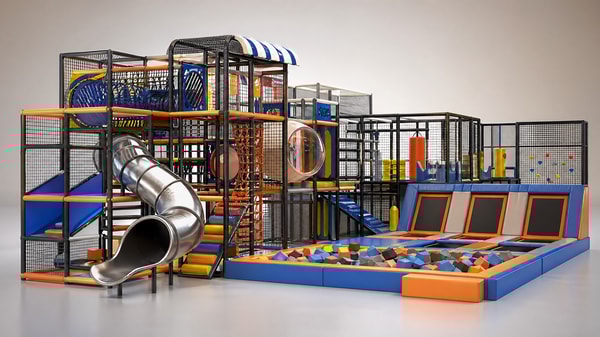
The most common and costly mistake is treating indoor playground design as an equipment selection exercise instead of a business planning process. Many buyers start by comparing slides, soft play structures, or trampoline park equipment layouts without first defining user age mix, target capacity, traffic patterns, local safety codes, cleaning needs, staffing model, and expected revenue per square meter.
When this happens, the final space may look attractive on paper but perform poorly in operation. Typical outcomes include congestion at peak times, underused zones, higher supervision costs, safety conflicts between age groups, and expensive post-installation changes. The best projects begin with operational logic first, then equipment selection second.
Ignoring age zoning and user segmentation
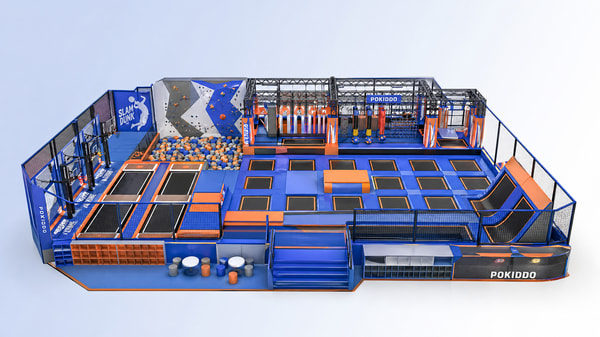
Not every indoor playground serves the same audience. A layout designed for toddlers, school-age children, family entertainment centers, or mixed-age trampoline venues must reflect very different risk profiles and play behaviors. One of the most serious design mistakes is combining all users into a single open-play concept without effective zoning.
Buyers should ask:
- Will toddlers have a protected, low-impact area separated from high-energy users?
- Are there clear transitions between soft play, climbing, ninja-style activities, and trampoline areas?
- Can parents visually supervise different age groups without crossing active circulation routes?
- Does the design reduce collision risk between small children and older, faster users?
Strong zoning improves safety and also supports commercial performance. Families stay longer when younger children can play comfortably, and older children are more engaged when challenge levels feel appropriate. If a supplier cannot explain how the design supports age-based behavior, that is a warning sign.
Underestimating circulation, queueing, and capacity pressure
Many operators focus on play features but fail to model how people will move through the venue. In practice, guest flow can determine whether an indoor playground feels exciting or chaotic. Narrow transitions, blind corners, crowded entry points, and bottlenecks near popular attractions create operational stress and a poor visitor experience.
This issue is especially important when evaluating trampoline park cost, because a low initial equipment quote can hide capacity limitations that reduce revenue later. A cheaper layout that handles fewer visitors per hour may be more expensive in business terms than a better-planned design with a higher upfront cost.
Key circulation questions include:
- How do guests enter, check in, store shoes or belongings, and move into play zones?
- Where do queues form during peak weekends or holidays?
- Can staff monitor bottlenecks easily?
- Is there enough space between attractions for safe movement and emergency access?
- Do party rooms, café seating, and spectator areas interrupt core traffic flow?
Procurement teams should request not only layout drawings but also capacity assumptions and flow logic from the indoor playground manufacturer.
Choosing equipment before confirming safety and compliance requirements
Another major mistake is falling in love with a concept design before checking whether the system can meet local and export-market safety requirements. Compliance is not something to solve after design approval. It should shape the design from the start.
Requirements vary by country and project type, but buyers commonly need to verify:
- Applicable playground and amusement safety standards
- Material fire performance requirements
- Padding, netting, fall height, and impact attenuation details
- Accessibility expectations
- Structural calculations and load-bearing documentation
- Inspection, installation, and maintenance procedures
For commercial buyers, the real risk is not just legal exposure. Non-compliant design can delay opening, affect insurance, increase retrofit cost, and damage brand reputation. A credible indoor playground supplier should provide documentation discipline, not only attractive renderings.
Designing for visual impact but not for supervision
Some layouts prioritize dramatic forms, dense structures, or immersive themes at the expense of sightlines. This creates hidden corners and blind spots that make supervision difficult. For operators, poor visibility increases staffing pressure and risk management challenges.
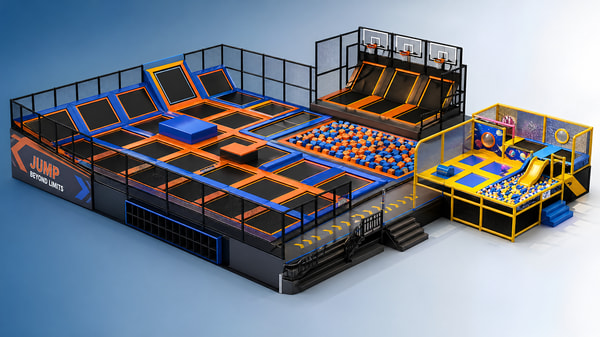
Good design balances excitement with control. Staff should be able to monitor key zones without excessive repositioning, and parents should have reasonable visual access to younger children. This matters even more in multi-attraction sites that combine soft play with trampoline park equipment, climbing elements, or interactive digital features.
When reviewing a plan, look beyond the 3D concept. Ask where staff stand, what they can see, where incidents are most likely to happen, and how fast they can respond. A beautiful venue that requires excessive labor to supervise can quickly weaken operating margins.
Overlooking maintenance, cleaning, and parts replacement
Many first-time buyers underestimate how much daily operations depend on maintainability. Surfaces, foam elements, nets, pads, grip areas, and interactive systems all face heavy wear. If equipment is difficult to clean, inspect, or replace, the venue may suffer from higher downtime and faster visual deterioration.
This is where evaluating an indoor playground manufacturer on lifecycle value becomes more important than comparing only the purchase price. Buyers should assess:
- Ease of routine cleaning and sanitation
- Access points for inspection and repair
- Spare parts availability and lead times
- Material durability in high-traffic conditions
- Warranty scope and exclusions
- Technical support after installation
A design that appears cost-efficient upfront can become expensive if the operator must frequently close sections for repair or replace custom parts with long lead times.
Failing to align the layout with revenue strategy
Not every square meter should be evaluated only by play density. Commercial success depends on how the venue supports actual revenue streams. One of the biggest planning mistakes is building a play environment without mapping it to monetization.
For example, does the layout support:
- General admission and timed sessions?
- Birthday parties and private events?
- Food and beverage sales?
- Premium attraction upgrades?
- Retail add-ons such as socks, merchandise, or accessories?
- Repeat visits through membership or loyalty programs?
A profitable indoor playground design often includes party spaces, parent dwell areas, check-in efficiency, and high-visibility zones that encourage spending. If all floor area is allocated to active play without commercial support functions, revenue potential may be limited even if visitor numbers are strong.
Using a copy-paste concept that does not fit the local market
Buyers sometimes select a standard package because it is faster or appears less risky. But a design that performs well in one city, mall type, or demographic segment may not work in another. Climate, real estate cost, cultural preferences, family size, consumer spending patterns, and competitor mix all influence what the right facility should look like.
For sourcing and business evaluation teams, this means the right question is not “What is the best indoor playground design?” but “What design best fits this specific market and operating model?” A good supplier should adapt the concept to ceiling height, lease constraints, target age range, local code requirements, and expected customer volume.
If the proposal feels generic, the commercial case may be weak. Standardization can help cost control, but only when it does not compromise market fit.
Misjudging the true trampoline park cost
Many buyers underestimate total project cost because they focus on equipment price alone. In reality, trampoline park cost usually includes far more than the main attractions. Site preparation, flooring, structural reinforcement, lighting, branding, HVAC implications, fire systems, installation, freight, taxes, inspections, and staff training can all materially affect budget.
Design mistakes often increase these costs later. For example, a poorly planned layout may require rework to improve emergency access, reconfigure queue areas, or add separation between age groups. These changes are much more expensive after fabrication or installation has started.
To compare proposals accurately, buyers should build a full-scope cost model that includes:
- Equipment and customization
- Shipping and import-related expenses
- Installation and commissioning
- Compliance testing and certification support
- Civil, MEP, and fit-out adjustments
- Operating labor impact
- Maintenance and replacement forecast
- Revenue assumptions by capacity and usage pattern
This broader view helps procurement teams avoid selecting a low-quote project that performs poorly over time.
Choosing a supplier based only on price or visuals
For commercial projects, supplier selection is as important as the design itself. A low-cost indoor playground supplier may offer appealing renderings and aggressive pricing, but weak engineering support, inconsistent production quality, limited documentation, or poor post-sale service can create significant risk.
Serious buyers should evaluate suppliers on multiple dimensions:
- Project references in similar commercial environments
- Manufacturing quality control systems
- Ability to customize for local requirements
- Compliance documentation and testing records
- Installation guidance and training support
- Spare parts and long-term service capacity
- Communication speed and technical clarity
An experienced indoor playground manufacturer should be able to explain not only what they build, but why the layout supports safer operations, better throughput, and stronger lifecycle ROI.
Not planning for future upgrades and operational flexibility
A final mistake is designing the venue as a fixed concept with no room for evolution. Customer expectations change, competitive pressure increases, and operators often discover after launch which zones perform best. If the design does not allow modular updates, attraction refreshes, or seasonal reconfiguration, the venue may become outdated faster than expected.
Flexible planning can include modular structures, adaptable party rooms, scalable digital features, and space for future attraction upgrades. This is especially valuable for distributors, investors, and commercial evaluators looking at long-term asset performance rather than opening-day appeal.
Ask whether the layout can support future changes without full demolition. A slightly more strategic design upfront can preserve value for years.
How buyers can reduce indoor playground design risk before ordering
Before committing to any project, procurement and evaluation teams should use a practical checklist:
- Define target users, peak capacity, and revenue model first
- Review age zoning and collision-risk separation carefully
- Validate traffic flow, queue points, and supervision sightlines
- Confirm safety, fire, and local compliance requirements early
- Analyze total trampoline park cost, not just equipment quote
- Assess maintenance burden and spare parts availability
- Check supplier references, documents, and after-sales support
- Ensure the concept can adapt to future upgrades
This process helps buyers move from a product-led decision to a commercially intelligent sourcing decision.
Conclusion
The most costly indoor playground design mistakes are usually not about colors, themes, or feature count. They come from weak planning: poor zoning, bad traffic flow, limited supervision visibility, overlooked compliance, unrealistic cost assumptions, and supplier selection based on surface-level comparisons. For commercial buyers, the right indoor playground supplier or indoor playground manufacturer should help solve these issues before production begins.
If you are evaluating trampoline park equipment or estimating trampoline park cost, the best investment is not necessarily the cheapest design. It is the one that delivers safety, operational efficiency, customer satisfaction, and long-term revenue performance with fewer surprises after launch.
Search News
Hot Articles
Popular Tags
Need ExpertConsultation?
Connect with our specialized leisureengineering team for procurementstrategies.
Recommended News
 Apr 29, 2026Adventure Playground Safety Mistakes to Avoid Before InstallationAdventure playground safety mistakes can delay opening and raise liability. Learn the key pre-installation checks for materials, site planning, surfacing, and compliance.● Theme Park Strategist
 Apr 29, 2026Chinese Tennis Robot Demand Rises in Europe After Zheng Qinwen's Madrid RunChinese tennis robot demand surges in Europe after Zheng Qinwen's Madrid Open run—CE-certified AI training systems now sought by German & Spanish academies.● Theme Park Strategist
 Apr 29, 2026Vietnam Mandates Child Finger-Trap Sensors for Indoor Play EquipmentVietnam mandates child finger-trap sensors for indoor play equipment—key compliance update for exporters, suppliers & certifiers. Act now before Oct 1, 2026.● Theme Park Strategist
 Apr 29, 2026CBA Guangdong’s Loss Spurs Export Inquiries for Indoor Playground EquipmentCBA Guangdong’s playoff loss sparks urgent export inquiries for EN1176-compliant indoor playground equipment — basketball-themed, rapid-assembly modules for ASEAN family entertainment centers.● Theme Park Strategist
 Apr 28, 2026Vietnam Mandates Child Hand-Trap Sensors for Indoor Play EquipmentVietnam mandates VILAS-certified hand-trap sensors for indoor play equipment—key for exporters, manufacturers & certifiers. Act before Oct 2026!● Theme Park Strategist
 Apr 29, 2026What to Review Before Buying a Trampoline ParkCompare trampoline park price, trampoline park cost, and trampoline park equipment before choosing a trampoline park supplier. Get expert tips on safety, layout, and sourcing.● Theme Park Strategist
 Apr 29, 2026How Much Does a Trampoline Park CostTrampoline park cost explained: compare trampoline park price, equipment quality, and supplier value. Learn what drives ROI before choosing a trampoline park for sale.● Theme Park Strategist
 Apr 29, 2026Safe Trampoline Park Equipment BasicsSafe trampoline park equipment basics: compare trampoline park supplier options, indoor playground design, durability, compliance, and total trampoline park cost before you buy.● Theme Park Strategist
 Apr 29, 2026How to Audit an Indoor Playground FactoryIndoor playground manufacturer audit guide: learn how to assess an indoor playground supplier, indoor playground design strength, safety, capacity, and trampoline park equipment quality before you buy.● Theme Park Strategist
 Apr 29, 2026Indoor Playground Supplier Pricing GuideIndoor playground supplier pricing guide: compare indoor playground manufacturer quotes, indoor playground design value, trampoline park equipment cost, and hidden fees before you buy.● Theme Park Strategist
 Apr 29, 2026Trampoline Park Supplier Checklist 2026Trampoline park supplier checklist 2026: compare trampoline park price, cost, equipment, and indoor playground design to choose a safer, smarter supplier for profitable projects.● Theme Park Strategist
 Apr 29, 2026Trampoline Park Price vs Long Term ValueTrampoline park price is only the start. Compare trampoline park cost, equipment quality, and supplier reliability to find safer, higher-ROI solutions with lasting commercial value.● Theme Park Strategist
![]() Apr 29, 2026Indoor Playground Design Mistakes to AvoidIndoor playground design mistakes can raise trampoline park cost and hurt ROI. Learn how to choose the right indoor playground supplier, manufacturer, and equipment for safer, smarter growth.● Theme Park Strategist
Apr 29, 2026Indoor Playground Design Mistakes to AvoidIndoor playground design mistakes can raise trampoline park cost and hurt ROI. Learn how to choose the right indoor playground supplier, manufacturer, and equipment for safer, smarter growth.● Theme Park Strategist Apr 29, 2026Is a Trampoline Park for Sale Worth ItTrampoline park for sale: compare trampoline park price, cost, equipment quality, and supplier support to judge ROI. See what smart buyers check before investing.● Theme Park Strategist
 Apr 29, 2026Trampoline Park Cost Breakdown for BuyersTrampoline park cost explained: compare trampoline park price, equipment quality, and supplier support to find a profitable trampoline park for sale with smart design and safer ROI.● Theme Park Strategist
 Apr 29, 2026What to Check in Trampoline Park EquipmentTrampoline park equipment guide: learn what to check from safety, layout, and materials to trampoline park cost, supplier selection, and indoor playground manufacturer support.● Theme Park Strategist
 Apr 29, 2026Indoor Playground Manufacturer Red FlagsIndoor playground manufacturer red flags: learn how to assess an indoor playground supplier, indoor playground design quality, trampoline park equipment, and hidden trampoline park cost before you buy.● Theme Park Strategist
 Apr 29, 2026How to Pick an Indoor Playground SupplierIndoor playground supplier guide: compare safety, design, quality, and lead times to choose the right indoor playground manufacturer or trampoline park supplier with confidence.● Theme Park Strategist
 Apr 29, 2026How to Compare Trampoline Park SuppliersCompare every trampoline park supplier by safety, design, service, and trampoline park cost. Learn how to choose reliable trampoline park equipment and indoor playground supplier solutions.● Theme Park Strategist
 Apr 29, 2026What Affects Trampoline Park Price MostTrampoline park price depends most on equipment quality, compliance, customization, and supplier strength. Learn what drives trampoline park cost and compare quotes with confidence.● Theme Park Strategist
 Apr 27, 2026Vietnam Mandates Child Finger-Trap Sensors for Indoor Play EquipmentVietnam mandates child finger-trap sensors for indoor play equipment starting Aug 1, 2026 — comply now to avoid delays, penalties & market access risks.● Theme Park Strategist
 Apr 26, 2026Fan Zhendong Visits SF as MLTT Investor; Chinese AI Ping Pong Tech Draws Silicon Valley InterestAI ping pong tech from China grabs Silicon Valley’s attention as Fan Zhendong, MLTT investor and Olympic champ, demos smart table tennis systems in SF—key for sports hardware, AI analytics & FDA-regulated fitness devices.● Theme Park Strategist
 Apr 26, 2026Vietnam Enforces Child Finger-Trap Sensors for Indoor Playground EquipmentChild finger-trap sensors now mandatory for indoor playground equipment in Vietnam—comply with QCVN 17:2026/BKHCN before import or sale.● Theme Park Strategist
 Apr 25, 2026Vietnam Mandates Child Finger-Trap Sensors for Indoor Play EquipmentVietnam mandates child finger-trap sensors for indoor play equipment—TCVN-certified, ≤0.3s response. Critical for importers, OEMs & compliance teams ahead of July 1, 2026 deadline.● Theme Park Strategist