Musical Instruments Wholesale Buying Guide
Navigating musical instruments wholesale requires more than comparing prices. For buyers sourcing musical instruments for bands, musical instruments for schools, or evaluating a musical instruments manufacturer, the right strategy combines product quality, compliance, MOQ flexibility, and supply chain reliability. This guide helps procurement teams, distributors, and commercial evaluators identify dependable suppliers and make smarter bulk purchasing decisions.
What makes musical instruments wholesale different from ordinary product sourcing?
In the sports and entertainment sector, musical instruments wholesale sits at the intersection of performance reliability, user safety, and commercial presentation. A buyer is rarely purchasing a single item for one end user. More often, the order supports a school music program, a live venue, a rental fleet, a retail chain, or a distributor portfolio. That changes the decision criteria immediately.
Unlike many commodity categories, musical instruments must be assessed across at least 4 dimensions: tonal consistency, structural durability, compliance documentation, and after-sales support. For example, a school may prioritize impact resistance and easy maintenance, while a distributor may focus on margin structure, repeatable quality across batches, and packaging suitability for cross-border shipping.
Wholesale buying also involves broader supply chain risks. Typical lead times can range from 15–45 days for standard production and 45–90 days for OEM or ODM projects, depending on material sourcing, factory workload, and customization depth. Buyers who only compare unit price often miss the cost impact of delays, rejection rates, and inconsistent product finish.
This is where structured intelligence matters. GCT supports buyers by connecting product evaluation with commercial use cases, supplier capability checks, and procurement logic. For institutions, importers, and regional dealers, the goal is not simply to buy instruments in bulk. The goal is to build a dependable supply program with lower risk and better commercial control.
Common wholesale buyer profiles and what they usually prioritize
- Schools and educational buyers often look for beginner-friendly instruments, repairability, and stable quality across 20–200 unit orders.
- Bands, venues, and entertainment operators usually need roadworthy construction, consistent tuning stability, and shorter replenishment cycles.
- Distributors and resellers pay close attention to MOQ, branding options, packaging standards, spare parts support, and dealer-friendly pricing tiers.
- Commercial evaluators focus on factory transparency, production controls, compliance records, and whether the supplier can support repeat orders over 2–4 seasons.
Which musical instruments fit which commercial buying scenarios?
The right wholesale assortment depends on where the instruments will be used and who will play them. A venue, school, retail reseller, and hospitality entertainment project all have different durability expectations, budget ceilings, and service requirements. Segmenting by use case helps buyers avoid over-specifying entry products or under-specifying commercial-grade instruments.
For education-focused purchasing, replacement frequency and ease of maintenance usually matter more than premium cosmetics. In contrast, for hotel lounges, themed entertainment spaces, and branded commercial experiences, appearance, finish quality, and acoustic character may carry more weight because the instrument contributes to the environment as well as the performance.
Distributors should also evaluate product mix by demand band. A practical catalog often includes 3 levels: entry-level for volume, mid-tier for better dealer margin, and selected premium models for brand positioning. This structure allows better inventory planning over quarterly purchasing cycles and reduces exposure to slow-moving stock.
The table below maps common commercial scenarios to instrument priorities, helping procurement teams compare fit before discussing price, customization, or annual contracts with a musical instruments manufacturer.
The main takeaway is simple: the best musical instruments wholesale plan is scenario-led, not catalog-led. If the instruments serve learning, rental use, resale, or premium entertainment environments, the specification should follow that reality. GCT helps buyers translate these operational requirements into shortlists that are easier to compare and easier to defend internally.
A practical 3-tier assortment strategy
Many distributors and institutional buyers reduce procurement friction by building a 3-tier assortment. Tier 1 supports high-volume demand. Tier 2 improves user experience and resale value. Tier 3 captures premium projects or specialist users. This method makes forecasting easier and limits the risk of carrying one-dimensional inventory.
How the tiers usually work
- Tier 1: Basic specification, simpler finish, standard packaging, suitable for tenders and entry programs.
- Tier 2: Better materials or components, improved playability, stronger repeat-order potential.
- Tier 3: Premium aesthetics or enhanced performance, often used in hospitality, showcase retail, or branded projects.
How should buyers evaluate a musical instruments manufacturer?
A capable musical instruments manufacturer should be judged on more than brochures and sample photos. Buyers should verify whether the supplier can maintain consistency across production lots, communicate clearly about materials and construction, and support long-term procurement. A polished sample is useful, but repeatability across 50, 200, or 500 units is what defines wholesale reliability.
The first screen usually covers 5 checkpoints: product category specialization, MOQ range, sample process, export packaging, and documentation responsiveness. If a factory cannot answer basic questions within 2–5 working days, that often signals future coordination issues during production, quality review, or shipment preparation.
The second screen should focus on manufacturing depth. Some suppliers are genuine factories with process control over woodworking, assembly, hardware fitting, or finishing. Others mainly act as traders. Neither model is automatically wrong, but the buyer needs clarity because it affects lead time control, customization flexibility, and problem resolution speed.
For international sourcing teams, GCT’s value lies in turning these checks into a structured evaluation path. That is especially useful when assessing multiple suppliers across Asia or other manufacturing regions, where outward product similarity can hide major differences in production discipline and service capability.
Before placing a bulk order for musical instruments wholesale, buyers should compare suppliers using a practical scorecard rather than relying on impressions. The table below highlights the most useful dimensions for procurement, commercial evaluation, and distributor onboarding.
A strong supplier profile is balanced rather than extreme. A manufacturer with very low price but weak communication can become more expensive over a 6–12 month supply period. Conversely, a moderately priced supplier with clear technical answers, transparent lead times, and stable quality often delivers better total procurement value.
Questions to ask before approving a supplier
- Can you provide a sample timeline, and how many days are needed for evaluation revisions?
- What is the normal lead time for repeat orders versus first-time custom orders?
- Which components or materials are sourced externally, and how does that affect delivery reliability?
- Can packaging be upgraded for distributor warehousing, e-commerce handling, or export transit?
- What after-sales support is available for spare parts, replacements, or defect claims?
What should procurement teams compare beyond unit price?
In musical instruments wholesale, the lowest quote often hides the highest downstream cost. Procurement teams should look at total landed value, not just ex-factory pricing. That includes packaging integrity, defect risk, accessory completeness, setup time, replacement parts access, and the operational cost of dealing with inconsistent shipments.
A useful commercial comparison normally includes 6 cost layers: base unit price, tooling or customization charges, packaging upgrades, sample fees, logistics, and post-sale risk allowance. When these layers are reviewed together, the “cheapest” offer frequently moves into the middle of the pack, especially if warranty handling or replacement freight becomes necessary.
Buyers should also compare alternatives by market positioning. For example, a school procurement program may accept standard finish options if the supplier offers easier part replacement and faster replenishment. A distributor entering a premium retail channel may accept a higher cost if the instrument appearance and brand customization create stronger dealer demand and lower markdown pressure.
The comparison below gives procurement teams a practical framework for judging cost versus purchasing suitability across common wholesale sourcing options.
For many buyers, the best route is phased sourcing. Start with a pilot order, review defect rates and market response over 30–90 days, then scale into repeat batches. This approach lowers risk, improves specification clarity, and gives both buyer and manufacturer time to align on packaging, setup, and forecast planning.
A 4-step procurement decision process
- Step 1: Define the target scenario, user level, and price band before requesting quotations.
- Step 2: Compare 2–4 suppliers using the same specification sheet and packaging request.
- Step 3: Approve samples only after checking finish, setup, labeling, and accessory completeness.
- Step 4: Use the first batch to validate defect handling, delivery discipline, and reorder readiness.
Which compliance and quality points are often overlooked?
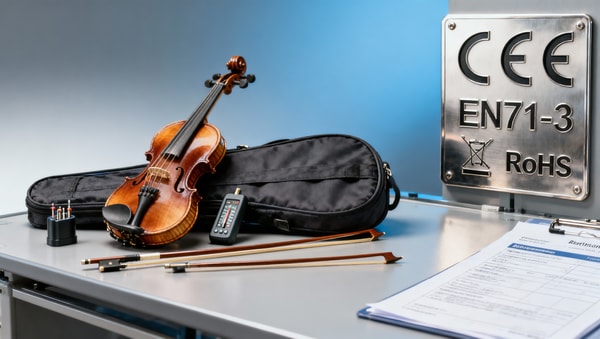
Compliance in musical instruments wholesale is not only about formal certification. It also includes labeling, material transparency, packaging safety, and market-specific documentation. Depending on the product type and destination market, buyers may need to review electrical safety for powered instruments, chemical restrictions for coatings or components, and proper language or importer labeling.
This becomes especially important for schools, public projects, and institutional tenders. Procurement officers often need 3 categories of confirmation: product specification sheets, packaging and labeling details, and supplier declarations for relevant materials or electrical parts. Missing even one of these can delay customs clearance or internal approval.
Quality control should be treated as a process, not a final event. A practical review usually covers pre-production confirmation, in-process checks, and pre-shipment inspection. That 3-stage approach helps buyers catch avoidable issues such as finish inconsistency, hardware mismatch, poor packing, or incomplete accessories before the goods leave the factory.
GCT helps procurement and evaluation teams focus on commercially useful compliance questions rather than generic checklists. That means clarifying what documentation is relevant for the instrument category, destination market, and sales channel, especially when instruments are sold through schools, retail distributors, or hospitality entertainment projects.
5 checks that reduce import and usage risk
- Confirm whether the product includes electrical components and what market-specific safety requirements may apply.
- Review material and finish declarations for coatings, adhesives, plastics, and metal parts where relevant.
- Check carton strength, inner protection, and drop-sensitive areas for long-distance export transit.
- Verify carton marks, product labels, manuals, and importer information before bulk production starts.
- Set an acceptable quality threshold and define defect reporting timing within 7–14 days after receipt.
Why this matters for distributors
Distributors often absorb the operational consequences of poor documentation and inconsistent quality. A single issue at customs, a mislabeled accessory set, or a run of unstable components can affect dealer trust for an entire season. In a competitive market, preventing these problems is usually more profitable than negotiating a slightly lower unit price.
FAQ: practical questions buyers ask about musical instruments wholesale
How do I choose between a trader and a musical instruments manufacturer?
Start with your priorities. If you need broad assortment access, a trader may help consolidate categories. If you need stronger control over specification, branding, or repeat-order consistency, a manufacturer may be a better fit. In either case, ask who manages production, who handles inspection, and who is responsible if a batch fails your agreed standard.
What MOQ is reasonable for first-time wholesale buying?
That depends on the product type and customization level. Standard models may support lower trial quantities, while OEM runs usually require higher MOQ to justify setup and packaging changes. For new distributor programs, a pilot order that can be reviewed within one sales cycle is often the safest starting point.
How long does delivery usually take?
Standard products often move faster than custom projects. A realistic planning range is 15–45 days for regular production and 45–90 days for customized orders, not including international shipping. Buyers should also ask about peak-season congestion, material shortages, and approval delays for branded packaging or modified specifications.
What are the most common mistakes in musical instruments wholesale?
The most common mistakes are buying only on price, approving samples without checking packaging, ignoring replacement part availability, and assuming all “factory” suppliers offer the same level of process control. Another frequent problem is failing to match product grade to the actual use scenario, which leads to premature wear, customer complaints, or unnecessary overspending.
What should commercial evaluators request before final approval?
Request a clear product specification, packaging details, sample confirmation record, lead-time statement, and any relevant compliance or material documents for your market. If the order includes private labeling, also confirm artwork approval timing, carton marking rules, and the process for handling defects or shortages after arrival.
Why work with GCT when sourcing musical instruments in bulk?
Bulk sourcing decisions in the sports and entertainment sector are rarely simple. Buyers must balance performance needs, commercial presentation, compliance, logistics, and supplier credibility. GCT helps reduce that complexity by combining sourcing intelligence with category-specific evaluation logic for pro audio and musical instruments procurement.
For information researchers, GCT provides a faster path from scattered market data to actionable supplier screening. For procurement teams, the value lies in clearer comparison criteria, stronger scenario matching, and better preparation before quotation rounds. For distributors and agents, GCT supports more strategic conversations around MOQ planning, OEM options, and long-term assortment building.
If you are comparing musical instruments wholesale programs, evaluating a musical instruments manufacturer, or building a category plan for schools, venues, dealers, or hospitality entertainment projects, it is worth starting with a structured review. That may include 3–5 shortlisted suppliers, a sample validation plan, documentation checks, and a first-order risk map tied to lead time, packaging, and service support.
You can contact GCT for practical support on product selection, specification confirmation, MOQ assessment, OEM or ODM options, expected delivery cycles, packaging requirements, sample arrangements, compliance-related questions, and quotation communication. This makes the buying process more efficient and gives your team a stronger basis for commercial approval and supplier negotiation.
What you can discuss with us
- Which instruments fit your target market, channel, or end-use environment.
- How to compare supplier offers across quality, MOQ, delivery, and customization.
- What sample process, packaging standard, and document set should be requested before bulk order approval.
- How to plan phased purchasing, private-label development, and repeat-order execution with lower risk.
Search News
Hot Articles
Popular Tags
Need ExpertConsultation?
Connect with our specialized leisureengineering team for procurementstrategies.
Recommended News
 Apr 29, 2026String Instruments Compared: What Really Affects Tone and DurabilityString instruments compared for tone and durability: learn how materials, construction, hardware, and setup affect long-term performance for schools, venues, rentals, and sourcing teams.● Pro Audio Engineer
 Apr 29, 2026Wind Instruments Maintenance Tips That Prevent Costly RepairsWind instruments maintenance tips that help teams prevent leaks, corrosion, and pad failure. Learn practical care steps to reduce repair costs and keep instruments performance-ready.● Pro Audio Engineer
 Apr 29, 2026Percussion Instruments Buying Guide: Sound, Build, and ValuePercussion instruments buying guide for schools, venues, and studios—compare sound, build quality, durability, and total value to source smarter and avoid costly mistakes.● Pro Audio Engineer
 Apr 29, 2026How to Find Reliable Musical Instruments WholesaleMusical instruments wholesale made safer: learn how to vet a musical instruments manufacturer, compare suppliers, and source reliable musical instruments for schools and bands with confidence.● Pro Audio Engineer
 Apr 29, 2026Musical Instruments for Schools on BudgetMusical instruments for schools on a budget: compare musical instruments for bands, wholesale options, and how to choose a reliable musical instruments manufacturer for lasting value.● Pro Audio Engineer
 Apr 29, 2026OEM or ODM Musical Instruments ManufacturerFind the right musical instruments manufacturer for bands, schools, and wholesale buyers. Compare OEM vs ODM options, customization, quality control, and sourcing strategies.● Pro Audio Engineer
 Apr 29, 2026Which Musical Instruments Fit Small BandsMusical instruments for bands: explore smart lineups for schools, venues, and buyers comparing musical instruments wholesale and a trusted musical instruments manufacturer.● Pro Audio Engineer
 Apr 29, 2026Musical Instruments Wholesale Buying GuideMusical instruments wholesale guide for bands, schools, and distributors: compare musical instruments manufacturers, MOQ, quality, compliance, and sourcing strategies for smarter bulk buying.● Pro Audio Engineer
 Apr 29, 2026How to Source Musical Instruments for SchoolsMusical instruments for schools: learn how to compare musical instruments wholesale options, choose a trusted musical instruments manufacturer, and source durable musical instruments for bands with confidence.● Pro Audio Engineer
 Apr 29, 2026How to Choose a Musical Instruments ManufacturerFind the right musical instruments manufacturer for bands, schools, and wholesale buyers. Compare quality, OEM/ODM options, compliance, and lead times to source with confidence.● Pro Audio Engineer
 Apr 29, 2026How to Choose Musical Instruments for BandsMusical instruments for bands guide: compare musical instruments manufacturer options, wholesale terms, and musical instruments for schools to source durable, high-value solutions.● Pro Audio Engineer
 Apr 26, 2026Musical instruments manufacturer compliance: EU RoHS vs. US CPSIA documentation gapsMusical instruments manufacturer? Close EU RoHS vs. US CPSIA documentation gaps—critical for bands, schools & trampoline park suppliers. Avoid disqualification.● Pro Audio Engineer
 Apr 26, 2026High-quality musical instruments: why serial number verification matters for resale valueHigh-quality musical instruments for bands and schools rely on serial number verification to protect resale value, authenticity, and compliance—trusted by top suppliers worldwide.● Pro Audio Engineer
 Apr 26, 2026Musical instruments supplier lead times: why 8-week delivery now means ‘in stock’Musical instruments supplier lead times hit 8 weeks—now meaning 'in stock.' Compare trampoline park supplier, indoor playground manufacturer & more for assured readiness.● Pro Audio Engineer
 Apr 26, 2026Musical instruments for schools: what happens when warranty service requires shipping overseasMusical instruments for schools & bands: Avoid costly overseas warranty shipping. Discover high-quality, service-backed instruments from trusted manufacturers and suppliers.● Pro Audio Engineer
 Apr 26, 2026Musical instruments manufacturer transparency: where are your components really made?Discover how top musical instruments manufacturer & trampoline park supplier ensure component transparency—boost safety, compliance, and ROI for bands, schools, and indoor playground installations.● Pro Audio Engineer
 Apr 26, 2026Musical instruments for bands: why matching wood grain matters for live soundDiscover why matching wood grain in musical instruments for bands ensures superior live sound—key insight for schools, venues & suppliers seeking high quality musical instruments.● Pro Audio Engineer
 Apr 26, 2026Musical instruments supplier red flags—delayed shipping isn’t the worst signSpot red flags in musical instruments supplier, trampoline park supplier & indoor playground manufacturer—beyond delayed shipping. Ensure safety, compliance & quality.● Pro Audio Engineer
 Apr 26, 2026Musical instruments manufacturer vs. supplier: who handles warranty claims?Musical instruments manufacturer vs. supplier: who handles warranty claims? Discover how warranty authority impacts trampoline park safety, indoor playground installation & more.● Pro Audio Engineer
 Apr 26, 2026High-quality musical instruments: how to spot factory-refurbished units sold as newSpot high-quality musical instruments for bands & schools—avoid factory-refurbished units sold as new. Trusted insights on musical instruments manufacturer transparency, supplier accountability, and procurement safety.● Pro Audio Engineer
 Apr 26, 2026Musical instruments for schools—why budget models often cost more over timeMusical instruments for schools: Discover why budget models inflate long-term costs—durability, safety & TCO insights for bands, indoor playground suppliers, and trampoline park equipment buyers.● Pro Audio Engineer
 Apr 26, 2026Musical instruments for bands: why 'stage-ready' doesn’t always mean reliableDiscover why 'stage-ready' musical instruments for bands often fail commercially—and how top venues vet high quality musical instruments, trampoline park equipment, and indoor playground supplier reliability.● Pro Audio Engineer
 Apr 23, 2026Music Accessories Buyers Should Compare FirstMusic accessories buyers should compare quality, compatibility, and compliance first. Explore sourcing tips for hotel equipment, educational supplies, amusement equipment, and sensory playground projects.● Pro Audio Engineer
 Apr 23, 2026How to Source Reliable Music AccessoriesMusic accessories sourcing guide for buyers in commercial furniture, hotel equipment, educational supplies, and amusement equipment—learn how to verify quality, compliance, and reliable suppliers.● Pro Audio Engineer