Trampoline Park Price vs Long Term Value
When comparing trampoline park price, the most important question is not “Which quote is lowest?” but “Which option will perform best over five to ten years?” For commercial buyers, a lower initial trampoline park cost can quickly become expensive if it leads to more downtime, higher maintenance, shorter equipment life, safety issues, or weaker visitor retention. In contrast, a higher-quality system from a reliable trampoline park supplier or indoor playground supplier often delivers stronger long-term value through durability, compliance, operational efficiency, and better guest experience.
For procurement teams, investors, distributors, and commercial evaluators, the right buying decision comes from understanding total cost of ownership, not just purchase price. This article breaks down how to assess trampoline park equipment from a long-term business perspective so you can make a safer and more profitable sourcing decision.
What Buyers Really Mean When They Search “Trampoline Park Price”
In B2B purchasing, “price” rarely means the invoice amount alone. Most buyers searching this topic are trying to answer a broader commercial question: what level of investment creates the best return with manageable risk?
That search intent usually includes several concerns at once:
- How much does a trampoline park actually cost to build or upgrade?
- Why do quotes from different suppliers vary so much?
- Is higher-priced equipment genuinely better, or just more branded?
- What hidden costs appear after installation?
- How do safety, maintenance, and lifespan affect ROI?
- Which trampoline park supplier is more reliable over the long term?
For serious commercial buyers, the answer is clear: the best option is usually the one that balances upfront spend with operational performance, compliance confidence, and repeat revenue potential.
Why the Lowest Trampoline Park Cost Is Often the Most Expensive Choice
Low-price offers can look attractive in early budget reviews, especially when procurement teams are under pressure to control capital expenditure. But trampoline park equipment is not a commodity purchase. If quality, engineering, or after-sales support is weak, the business may absorb hidden costs for years.
Common long-term problems linked to low-cost procurement include:
- Faster wear on trampoline beds, springs, pads, frames, and soft play structures
- Higher frequency of repairs and part replacement
- Longer downtime that reduces ticket revenue
- Higher labor burden for inspection and maintenance
- Safety complaints, accident exposure, or insurance pressure
- Poor visual appeal that hurts repeat visits
- Difficulty sourcing compatible replacement parts
In other words, a cheaper quote may reduce the initial purchase line but increase the operating burden across the full lifecycle of the attraction.
How to Compare Trampoline Park Price the Right Way: Total Cost of Ownership
A better procurement method is to compare total cost of ownership rather than purchase price alone. This gives buyers a more realistic financial picture.
When evaluating trampoline park cost, include these categories:
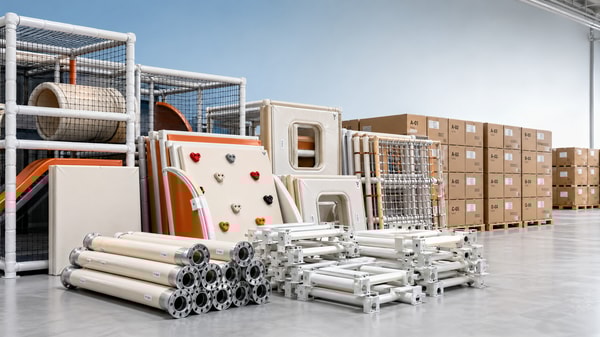
- Initial equipment cost: frames, mats, springs, pads, climbing elements, obstacle features, foam pits, airbags, and accessories
- Shipping and logistics: international freight, customs, packaging, inland transport, insurance
- Installation: on-site assembly, supervision, local labor, anchoring, fit-out coordination
- Compliance and testing: safety certification, documentation, inspection readiness
- Maintenance: routine checks, replacement components, service intervals
- Downtime risk: lost ticket sales during closures or repairs
- Lifecycle replacement: expected years before major renovation or reinvestment
- Guest appeal: how well the park design supports repeat traffic and pricing power
If one supplier is 15% more expensive upfront but delivers 30% lower maintenance burden, longer usable life, and better attendance performance, that supplier may represent the better commercial decision.
What Actually Drives Price Differences Between Suppliers
Large differences in trampoline park price usually come from real differences in product quality, engineering depth, and service scope. Buyers should avoid assuming that all systems are equivalent.
The most common price drivers include:
1. Material quality
Steel thickness, anti-corrosion treatment, welding quality, fabric strength, foam density, and protective padding materials all influence durability and safety performance.
2. Structural engineering
Commercial trampoline park equipment must withstand high-frequency use. Better engineering reduces deformation, loosening, and early failure under repeated dynamic loads.
3. Safety design
Impact zones, protective barriers, pad coverage, fall control, spacing, and age-appropriate layout design directly affect risk management. Stronger safety design may increase purchase cost but reduce legal and operational exposure.
4. Customization level
OEM and ODM design work, branded color schemes, venue-specific dimensions, thematic integration, and mixed attraction modules all influence cost.
5. Standards and certifications
Suppliers able to meet recognized international safety expectations often operate with stricter production controls and documentation systems, which can increase price but improve trustworthiness.
6. Service package
Some quotes include 3D layout planning, installation guidance, spare parts planning, training, warranty support, and after-sales response. Others do not.
How Long-Term Value Shows Up in Real Business Performance
Long-term value is not an abstract concept. It appears in measurable business outcomes. For operators and investors, better trampoline park equipment can support stronger returns in several ways.
Higher uptime
A park that stays open consistently can maximize weekends, school holidays, and event bookings. Fewer closures mean more stable cash flow.
Lower maintenance costs
Durable components and well-designed systems reduce emergency repairs, technician time, and replacement frequency.
Better customer experience
Guests notice cleanliness, bounce quality, visual appeal, and whether attractions feel modern and safe. Better experience supports repeat visits, positive reviews, and group bookings.
Stronger pricing power
Premium facilities can often justify higher ticket prices, party packages, membership plans, or corporate event rates.
Longer renovation cycle
If equipment remains attractive and structurally sound for longer, operators can delay major reinvestment and improve return on capital.
Safety and Compliance Are Part of the Value Equation, Not an Extra
For procurement teams and business evaluators, safety should be treated as a financial issue as much as a technical one. A park that looks inexpensive at the sourcing stage may become costly if it creates compliance concerns, insurance complications, or reputation damage.
When reviewing a trampoline park supplier or indoor playground supplier, ask for:
- Detailed material specifications
- Testing reports or quality control records
- Production process information
- Installation manuals and maintenance guidelines
- Warranty terms
- Evidence of export experience for regulated markets
- Project references in comparable commercial environments
A supplier that can clearly document safety performance and manufacturing consistency usually presents lower long-term operational risk.
How to Evaluate a Trampoline Park Supplier Beyond the Quote
Choosing the right supplier is often more important than choosing the lowest number. Buyers should assess the supplier as a long-term operating partner, not just a manufacturer.
Key evaluation criteria include:
Project experience
Has the supplier delivered commercial trampoline parks at similar scale? Experience with family entertainment centers, shopping malls, sports venues, or mixed indoor leisure spaces matters.
Design capability
Can the supplier optimize traffic flow, age zoning, attraction mix, and space utilization? Good design affects both revenue and safety.
Manufacturing consistency
Does the factory have stable quality systems and repeatable output? This is critical for large orders and future expansion.
After-sales responsiveness
Can they support spare parts, remote troubleshooting, and technical guidance after installation? Delayed support can directly impact operations.
Customization and branding support
For distributors and commercial developers, the ability to adapt products to local market needs is a major advantage.
Supply chain reliability
Can the supplier meet deadlines and maintain communication across production, packaging, shipping, and documentation? Late delivery can affect launch schedules and leasing commitments.
Questions Procurement Teams Should Ask Before Approving a Purchase
To avoid focusing too narrowly on headline price, procurement teams should use a value-based checklist during supplier comparison.
- What is the expected service life of major components?
- Which parts are considered wear items, and how often are they replaced?
- What is included in warranty coverage, and what is excluded?
- How fast can replacement parts be shipped?
- What maintenance workload should operators expect monthly and annually?
- What safety documentation is available?
- Can the supplier provide case studies from similar projects?
- What installation support is included in the price?
- How does the design improve visitor flow, capacity, and monetization?
- What costs are likely after year one, year three, and year five?
These questions help shift the buying conversation from “What does it cost today?” to “What will it cost and deliver over time?”
For Distributors and Commercial Resellers, Value Also Means Marketability
Distributors, agents, and resellers need to think one step further. The right trampoline park equipment is not only easier to sell but also easier to support in the local market.
Higher long-term value products often provide:
- Fewer customer complaints after installation
- Stronger project references for future sales
- Better reputation in competitive tenders
- Lower service burden for local teams
- Greater flexibility for customized commercial proposals
For channel partners, a reliable indoor playground supplier or trampoline park supplier can become a strategic asset rather than a transactional vendor.
When It Makes Sense to Spend More Upfront
Paying more upfront is usually justified when the project depends on long operating hours, high guest volume, premium brand positioning, or strict safety expectations.
This is especially true for:
- Large family entertainment centers
- Shopping mall anchor attractions
- Indoor sports and recreation complexes
- Branded franchise concepts
- Projects targeting repeat memberships and party/event revenue
- Markets with strong regulatory or insurance scrutiny
In these cases, equipment quality and supplier reliability are directly linked to revenue stability, customer trust, and asset longevity.
Final Verdict: Price Matters, but Value Wins
Trampoline park price is important, but it should never be the only decision factor. For commercial buyers, the smarter metric is long-term value: how well the equipment performs, how safely it operates, how much maintenance it requires, how long it remains attractive, and how effectively it supports revenue generation.
A low initial trampoline park cost may help short-term budgeting, but a well-engineered solution from a dependable trampoline park supplier often delivers better ROI through durability, compliance, lower downtime, and stronger visitor appeal. The most successful buyers compare total lifecycle performance, not just first-year spending.
If your team is sourcing trampoline park equipment, the best decision is usually not the cheapest quote on paper. It is the option that protects your business model, supports operational efficiency, and creates sustainable commercial value over time.
Search News
Hot Articles
Popular Tags
Need ExpertConsultation?
Connect with our specialized leisureengineering team for procurementstrategies.
Recommended News
 Apr 29, 2026Adventure Playground Safety Mistakes to Avoid Before InstallationAdventure playground safety mistakes can delay opening and raise liability. Learn the key pre-installation checks for materials, site planning, surfacing, and compliance.● Theme Park Strategist
 Apr 29, 2026Chinese Tennis Robot Demand Rises in Europe After Zheng Qinwen's Madrid RunChinese tennis robot demand surges in Europe after Zheng Qinwen's Madrid Open run—CE-certified AI training systems now sought by German & Spanish academies.● Theme Park Strategist
 Apr 29, 2026Vietnam Mandates Child Finger-Trap Sensors for Indoor Play EquipmentVietnam mandates child finger-trap sensors for indoor play equipment—key compliance update for exporters, suppliers & certifiers. Act now before Oct 1, 2026.● Theme Park Strategist
 Apr 29, 2026CBA Guangdong’s Loss Spurs Export Inquiries for Indoor Playground EquipmentCBA Guangdong’s playoff loss sparks urgent export inquiries for EN1176-compliant indoor playground equipment — basketball-themed, rapid-assembly modules for ASEAN family entertainment centers.● Theme Park Strategist
 Apr 28, 2026Vietnam Mandates Child Hand-Trap Sensors for Indoor Play EquipmentVietnam mandates VILAS-certified hand-trap sensors for indoor play equipment—key for exporters, manufacturers & certifiers. Act before Oct 2026!● Theme Park Strategist
 Apr 29, 2026What to Review Before Buying a Trampoline ParkCompare trampoline park price, trampoline park cost, and trampoline park equipment before choosing a trampoline park supplier. Get expert tips on safety, layout, and sourcing.● Theme Park Strategist
 Apr 29, 2026How Much Does a Trampoline Park CostTrampoline park cost explained: compare trampoline park price, equipment quality, and supplier value. Learn what drives ROI before choosing a trampoline park for sale.● Theme Park Strategist
 Apr 29, 2026Safe Trampoline Park Equipment BasicsSafe trampoline park equipment basics: compare trampoline park supplier options, indoor playground design, durability, compliance, and total trampoline park cost before you buy.● Theme Park Strategist
 Apr 29, 2026How to Audit an Indoor Playground FactoryIndoor playground manufacturer audit guide: learn how to assess an indoor playground supplier, indoor playground design strength, safety, capacity, and trampoline park equipment quality before you buy.● Theme Park Strategist
 Apr 29, 2026Indoor Playground Supplier Pricing GuideIndoor playground supplier pricing guide: compare indoor playground manufacturer quotes, indoor playground design value, trampoline park equipment cost, and hidden fees before you buy.● Theme Park Strategist
 Apr 29, 2026Trampoline Park Supplier Checklist 2026Trampoline park supplier checklist 2026: compare trampoline park price, cost, equipment, and indoor playground design to choose a safer, smarter supplier for profitable projects.● Theme Park Strategist
 Apr 29, 2026Trampoline Park Price vs Long Term ValueTrampoline park price is only the start. Compare trampoline park cost, equipment quality, and supplier reliability to find safer, higher-ROI solutions with lasting commercial value.● Theme Park Strategist
![]() Apr 29, 2026Indoor Playground Design Mistakes to AvoidIndoor playground design mistakes can raise trampoline park cost and hurt ROI. Learn how to choose the right indoor playground supplier, manufacturer, and equipment for safer, smarter growth.● Theme Park Strategist
Apr 29, 2026Indoor Playground Design Mistakes to AvoidIndoor playground design mistakes can raise trampoline park cost and hurt ROI. Learn how to choose the right indoor playground supplier, manufacturer, and equipment for safer, smarter growth.● Theme Park Strategist Apr 29, 2026Is a Trampoline Park for Sale Worth ItTrampoline park for sale: compare trampoline park price, cost, equipment quality, and supplier support to judge ROI. See what smart buyers check before investing.● Theme Park Strategist
 Apr 29, 2026Trampoline Park Cost Breakdown for BuyersTrampoline park cost explained: compare trampoline park price, equipment quality, and supplier support to find a profitable trampoline park for sale with smart design and safer ROI.● Theme Park Strategist
 Apr 29, 2026What to Check in Trampoline Park EquipmentTrampoline park equipment guide: learn what to check from safety, layout, and materials to trampoline park cost, supplier selection, and indoor playground manufacturer support.● Theme Park Strategist
 Apr 29, 2026Indoor Playground Manufacturer Red FlagsIndoor playground manufacturer red flags: learn how to assess an indoor playground supplier, indoor playground design quality, trampoline park equipment, and hidden trampoline park cost before you buy.● Theme Park Strategist
 Apr 29, 2026How to Pick an Indoor Playground SupplierIndoor playground supplier guide: compare safety, design, quality, and lead times to choose the right indoor playground manufacturer or trampoline park supplier with confidence.● Theme Park Strategist
 Apr 29, 2026How to Compare Trampoline Park SuppliersCompare every trampoline park supplier by safety, design, service, and trampoline park cost. Learn how to choose reliable trampoline park equipment and indoor playground supplier solutions.● Theme Park Strategist
 Apr 29, 2026What Affects Trampoline Park Price MostTrampoline park price depends most on equipment quality, compliance, customization, and supplier strength. Learn what drives trampoline park cost and compare quotes with confidence.● Theme Park Strategist
 Apr 27, 2026Vietnam Mandates Child Finger-Trap Sensors for Indoor Play EquipmentVietnam mandates child finger-trap sensors for indoor play equipment starting Aug 1, 2026 — comply now to avoid delays, penalties & market access risks.● Theme Park Strategist
 Apr 26, 2026Fan Zhendong Visits SF as MLTT Investor; Chinese AI Ping Pong Tech Draws Silicon Valley InterestAI ping pong tech from China grabs Silicon Valley’s attention as Fan Zhendong, MLTT investor and Olympic champ, demos smart table tennis systems in SF—key for sports hardware, AI analytics & FDA-regulated fitness devices.● Theme Park Strategist
 Apr 26, 2026Vietnam Enforces Child Finger-Trap Sensors for Indoor Playground EquipmentChild finger-trap sensors now mandatory for indoor playground equipment in Vietnam—comply with QCVN 17:2026/BKHCN before import or sale.● Theme Park Strategist
 Apr 25, 2026Vietnam Mandates Child Finger-Trap Sensors for Indoor Play EquipmentVietnam mandates child finger-trap sensors for indoor play equipment—TCVN-certified, ≤0.3s response. Critical for importers, OEMs & compliance teams ahead of July 1, 2026 deadline.● Theme Park Strategist