Custom Jewelry Manufacturer MOQ Questions
For buyers comparing a custom jewelry manufacturer, MOQ is more than a number—it shapes pricing, design flexibility, and supply chain risk. Whether sourcing luxury accessories for men or luxury accessories for women, procurement teams need clear benchmarks to evaluate suppliers, negotiate smarter terms, and align production with commercial goals. This guide helps information researchers, distributors, and sourcing professionals assess MOQ questions with greater confidence.
MOQ is not just a factory rule—it is a commercial signal
When buyers ask about minimum order quantity, the real question is usually broader: How flexible is this custom jewelry manufacturer, and what does that flexibility cost? MOQ affects unit price, mold fees, sampling options, inventory exposure, launch speed, and the feasibility of customization.
For procurement teams, a low MOQ is not automatically better. In custom jewelry, very low minimums can mean higher per-unit cost, limited material options, fewer finishing choices, or reduced production priority. On the other hand, a very high MOQ may create inventory pressure, cash-flow strain, and slower product testing.
The best evaluation approach is to treat MOQ as a decision point tied to three business questions:
- Is the order volume realistic for your sales channel or project timeline?
- Does the MOQ align with the level of customization required?
- What trade-offs in pricing, lead time, and quality control come with that MOQ?
For distributors, agents, and commercial buyers, MOQ should be reviewed together with target market, reorder probability, product lifecycle, and brand positioning—not in isolation.
What buyers actually want to know when asking MOQ questions
Most searchers looking up “Custom Jewelry Manufacturer MOQ Questions” are not simply asking for a definition. They are trying to evaluate supplier fit and reduce sourcing risk. In practice, the most common concerns are:
- What is the standard MOQ for custom jewelry?
- Why do different manufacturers quote very different minimums?
- Can MOQ be negotiated for first orders, sampling, or mixed styles?
- What hidden conditions sit behind a low MOQ offer?
- How should buyers compare MOQ against price breaks and production quality?
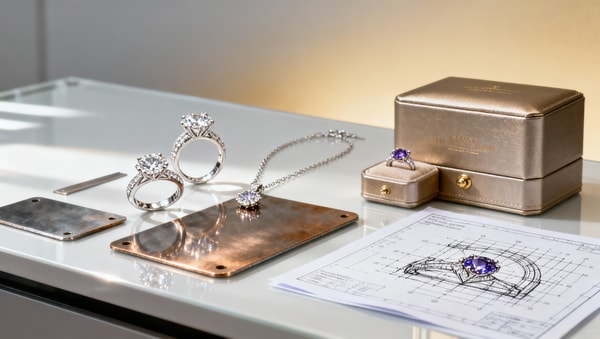
These are valid concerns because jewelry manufacturing often involves multiple cost layers: design development, CAD work, mold creation, stone sourcing, plating setup, logo application, packaging, and final inspection. A factory’s MOQ often reflects how it spreads those fixed costs across units.
That is why two suppliers can both claim to offer “custom jewelry manufacturing” while one requires 50 pieces and another requires 500. The difference is not always about attitude—it is often about process capability, material sourcing model, workshop efficiency, and target customer segment.
Typical MOQ ranges in custom jewelry manufacturing
There is no single universal MOQ, but buyers can use broad market ranges as a reference point. Actual numbers vary by material, complexity, and supplier type.
- Brass, stainless steel, or alloy fashion jewelry: often 50–300 pieces per design
- Sterling silver custom jewelry: often 30–100 pieces per design, depending on stone setting and finish
- Gold vermeil or higher-end plated jewelry: often 50–200 pieces because of plating and finishing setup
- Solid gold or fine jewelry: MOQ may be lower in unit count, but with higher minimum order value
- Highly customized branded collections: MOQ may be tied to mold count, total SKU volume, or annual commitment rather than one style alone
Buyers should also note that MOQ can be expressed in different ways:
- Per style
- Per color or finish
- Per stone variation
- Per order total
- Per production run
This distinction matters. A supplier quoting “100 pieces MOQ” may mean 100 pieces per design, or 100 total pieces split across several styles. Those are very different commercial conditions.
Why manufacturers set MOQ in the first place
Understanding the manufacturer’s logic helps buyers negotiate more effectively. MOQ usually exists for one or more of these reasons:
- Setup cost recovery: CAD development, mold making, casting preparation, polishing setup, or plating line adjustments
- Material purchasing thresholds: gemstone lots, chain components, clasps, precious metals, and packaging materials often have their own supplier minimums
- Production efficiency: small custom runs interrupt workflow and reduce line utilization
- Quality consistency: extremely small runs can make process control less economical
- Commercial prioritization: factories serving premium B2B buyers may not allocate capacity to very small orders
For buyers, this means MOQ is often more flexible when the issue is production planning rather than raw material constraints. If the barrier is packaging, branding, or finish variation, a supplier may be able to offer alternatives that reduce the minimum.
How to tell whether a low MOQ offer is really a good deal
A low MOQ is attractive, especially for market testing or new collection launches. But procurement teams should look beyond the headline number. Ask these questions:
- Is the unit price significantly higher at the low MOQ tier?
- Are mold fees, sampling charges, or logo charges billed separately?
- Does the low MOQ exclude certain materials or finishing options?
- Will the factory assign the same quality control standard to small orders?
- Is lead time longer because small runs are inserted between larger jobs?
In some cases, a supplier advertises a low MOQ to win inquiries, but the practical offer is less favorable once all conditions are disclosed. For example, buyers may find that:
- The plating thickness is downgraded at lower volumes
- Stone options are limited to in-stock grades
- Custom packaging requires a separate MOQ
- Mixed-SKU flexibility applies only to base designs, not full customization
The right question is not “Who has the lowest MOQ?” but rather “Which manufacturer offers an MOQ structure that supports our margins, branding, and replenishment plan?”
Questions procurement teams should ask every custom jewelry manufacturer
To compare suppliers properly, buyers should standardize their inquiry process. The following questions reveal whether MOQ terms are genuinely workable:
- Is the MOQ based on style, material, finish, or total order value?
- Can multiple sizes or colors be combined under one MOQ?
- Does the MOQ include custom logo, engraving, or branded packaging?
- What sampling fees apply before bulk production?
- Are there separate MOQs for gift boxes, pouches, cards, or tags?
- What are the price breaks at higher quantities?
- Can the first order MOQ differ from repeat-order MOQ?
- Can deadstock or in-stock components reduce the minimum?
- What quality assurance process is used for small runs?
- What happens if raw material costs change before reorder?
These questions help buyers move the conversation from generic sales claims to operational details. This is especially important for business evaluation teams comparing several suppliers across different sourcing regions.
When MOQ is negotiable—and when it usually is not
MOQ is often negotiable, but not in every scenario. Buyers have a better chance of gaining flexibility when:
- The design uses existing molds or standard components
- The manufacturer already stocks the required materials
- The buyer accepts fewer finish or packaging variations
- The order is part of a larger sourcing program or long-term account
- The buyer agrees to a higher unit price for the first run
MOQ is usually less negotiable when:
- The project requires fully custom molds
- Precious materials must be specially purchased
- Special gemstone grading or certification is required
- Branded packaging has separate supplier minimums
- The production calendar is already full
A practical strategy is to negotiate commercial flexibility instead of only volume reduction. For example, buyers may request:
- Mixed styles under one collection MOQ
- Lower first-order MOQ with confirmed reorder targets
- Shared packaging formats across SKUs
- Use of stock chains, clasps, or stones for pilot runs
This approach often produces better results than simply demanding a smaller number.
How MOQ should differ for luxury accessories for men and women
MOQ planning should also reflect product category and market behavior. For buyers sourcing luxury accessories for men, order structures may differ from luxury accessories for women due to assortment depth, trend velocity, and repeat-purchase patterns.
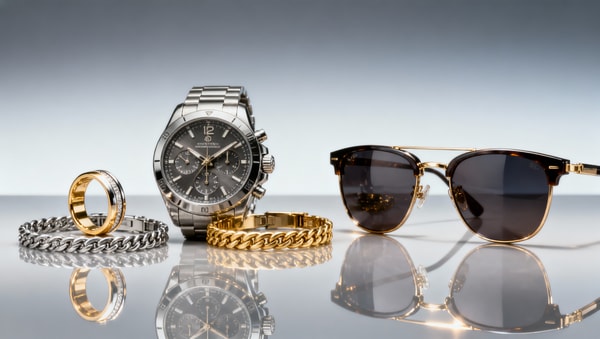
Men’s luxury accessories may support more focused SKU planning if the collection centers on classic bracelets, cufflinks, signet rings, or chain pieces with stable styling. In that case, slightly higher MOQ per core style may be commercially acceptable because replenishment is more predictable.
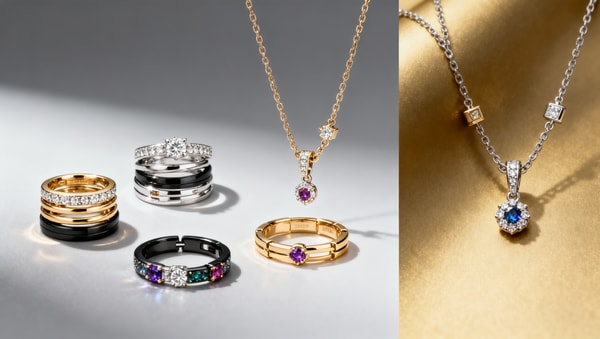
Women’s luxury accessories may require more assortment breadth across finishes, stones, lengths, or trend-led silhouettes. Here, buyers often need greater MOQ flexibility so they can test more designs with lower inventory risk.
That does not mean one category always needs lower minimums than the other. It means buyers should align MOQ with:
- SKU count per collection
- Seasonality and trend sensitivity
- Expected reorder cadence
- Display and merchandising strategy
- Target margin by channel
A capable custom jewelry manufacturer should be able to discuss MOQ in the context of your category strategy rather than offering a one-size-fits-all answer.
Red flags that suggest MOQ terms may create future sourcing problems
During supplier evaluation, watch for warning signs that MOQ discussions are masking deeper issues:
- MOQ answers are vague or inconsistent across sales representatives
- The supplier cannot explain what cost factors drive the minimum
- Very low MOQ is offered without corresponding clarity on price and lead time
- The factory avoids discussing repeat-order policy
- There is no distinction between sample, pilot order, and bulk production terms
- Packaging, labeling, or compliance requirements are treated as afterthoughts
These signs may indicate weak internal coordination, limited production planning discipline, or a sales-first approach that can create problems after deposit payment. For procurement professionals, transparency is usually a stronger predictor of supplier reliability than a highly attractive MOQ headline.
A simple framework for comparing manufacturers on MOQ
To make decisions more objective, buyers can use a practical comparison framework across shortlisted suppliers. Score each manufacturer on the following:
- MOQ flexibility: Can the supplier support pilot runs, mixed SKUs, or phased launches?
- Total landed cost logic: Are the pricing tiers commercially reasonable at each volume band?
- Customization fit: Does the MOQ still allow the branding and finishing standards you need?
- Operational transparency: Are setup fees, lead times, and packaging minimums clearly documented?
- Reorder suitability: Can the supplier support replenishment without forcing excessive inventory?
- Quality confidence: Is there evidence of stable QC performance on custom or lower-volume orders?
This framework helps business evaluation teams avoid overemphasizing one variable. A manufacturer with a moderately higher MOQ may still be the better partner if pricing, consistency, and reorder structure are stronger.
Final takeaway for buyers evaluating custom jewelry MOQ
MOQ should be treated as a strategic sourcing variable, not just a negotiation obstacle. The right custom jewelry manufacturer will explain how minimums connect to materials, production efficiency, customization depth, and commercial value. For buyers, the goal is not simply to secure the smallest possible order quantity, but to find a workable balance between flexibility, cost control, design integrity, and supply reliability.
If you are comparing suppliers for luxury accessories for men or luxury accessories for women, ask whether the MOQ supports your actual sales model, assortment plan, and reorder expectations. A clear, transparent MOQ structure is often a sign of a more mature and dependable manufacturing partner.
In short: the best MOQ is the one that protects both your margins and your inventory risk while keeping quality and brand positioning intact.
Search News
Hot Articles
Popular Tags
Need ExpertConsultation?
Connect with our specialized leisureengineering team for procurementstrategies.
Recommended News
 Apr 29, 2026Luxury Accessories for Women That SellLuxury accessories for women that sell: learn how a custom jewelry manufacturer helps buyers source premium, giftable collections with quality, margin, and reliable supply.● Luxury Retail Analyst
 Apr 29, 2026How Men Choose Luxury Accessories TodayLuxury accessories for men are chosen for craftsmanship, trust, and value. See how a custom jewelry manufacturer helps brands meet modern demand and drive premium sales.● Luxury Retail Analyst
![]() Apr 29, 2026Custom Jewelry Manufacturer MOQ QuestionsCustom jewelry manufacturer MOQ questions answered: compare costs, flexibility, and sourcing risk for luxury accessories for men and luxury accessories for women.● Luxury Retail Analyst
Apr 29, 2026Custom Jewelry Manufacturer MOQ QuestionsCustom jewelry manufacturer MOQ questions answered: compare costs, flexibility, and sourcing risk for luxury accessories for men and luxury accessories for women.● Luxury Retail Analyst Apr 29, 2026Luxury Accessories for Women Worth StockingLuxury accessories for women worth stocking: learn how to choose a custom jewelry manufacturer, compare luxury accessories for men, and source profitable premium retail lines.● Luxury Retail Analyst
 Apr 29, 2026Best Luxury Accessories for Men in 2026Luxury accessories for men in 2026: explore premium trends, custom jewelry manufacturer insights, sourcing tips, and smart retail strategies for sports and entertainment buyers.● Luxury Retail Analyst
 Apr 29, 2026How to Vet a Custom Jewelry ManufacturerCustom jewelry manufacturer vetting guide for sports and entertainment buyers—compare MOQ, compliance, delivery, and quality for luxury accessories for men and women.● Luxury Retail Analyst
 Apr 25, 2026Luxury Jewelry B2B in 2026: What Changes?Luxury jewelry B2B in 2026: explore custom jewelry design, custom jewelry manufacturer trends, luxury jewelry wholesale shifts, and how custom luxury jewelry drives faster, safer growth.● Luxury Retail Analyst
 Apr 25, 2026How to Grow a Luxury Accessories Online StoreLearn how to grow a luxury accessories online store with custom jewelry design, a trusted custom jewelry manufacturer, luxury accessories wholesale strategy, and high-end luxury jewelry that converts.● Luxury Retail Analyst
 Apr 25, 2026Custom Jewelry for Corporate Gifts That LastCustom jewelry for corporate gifts from a trusted custom jewelry manufacturer—discover custom jewelry design, high-end luxury jewelry, and scalable luxury jewelry B2B solutions.● Luxury Retail Analyst
 Apr 25, 2026What a Good Luxury Accessories Catalog IncludesLuxury accessories catalog guide covering custom jewelry design, high-end luxury jewelry, luxury accessories for men and women, and trusted luxury jewelry B2B sourcing insights.● Luxury Retail Analyst
 Apr 27, 2026Custom Jewelry with Diamonds: Lab or Natural?Custom jewelry with diamonds: compare lab-grown and natural options for custom jewelry design, pricing, sourcing, and brand fit. A smart guide for luxury jewelry B2B buyers.● Luxury Retail Analyst
 Apr 27, 2026Luxury Accessories Wholesale: How to Start SmallLuxury accessories wholesale made simple: learn custom jewelry design, choose a reliable custom jewelry manufacturer, and build profitable luxury accessories for men and women with low-risk B2B sourcing.● Luxury Retail Analyst
 Apr 27, 2026Luxury Jewelry Manufacturer: Red Flags to KnowLuxury jewelry manufacturer warning signs every B2B buyer should know. Learn how to evaluate custom jewelry design, custom luxury jewelry, and luxury jewelry wholesale partners before costly mistakes.● Luxury Retail Analyst
 Apr 27, 2026Custom Jewelry for Weddings: Timeline GuideCustom jewelry for weddings made simple: learn timelines for custom jewelry design, choosing a custom jewelry manufacturer, and planning custom luxury jewelry with diamonds.● Luxury Retail Analyst
 Apr 27, 2026Luxury Jewelry Wholesale for New DistributorsLuxury jewelry wholesale guide for new distributors: compare custom jewelry manufacturer options, custom jewelry design support, and luxury jewelry B2B strategies to launch faster.● Luxury Retail Analyst
 Apr 27, 2026Custom Luxury Jewelry: OEM or Small Batch?Custom luxury jewelry sourcing guide: compare OEM vs small-batch with a custom jewelry manufacturer for custom jewelry design, cost control, quality, and scalable luxury jewelry B2B growth.● Luxury Retail Analyst
 Apr 27, 2026How to Price High-End Luxury Jewelry RightCustom jewelry design and high-end luxury jewelry pricing guide for B2B buyers—learn how a custom jewelry manufacturer sets value, margins, and wholesale strategy.● Luxury Retail Analyst
 Apr 27, 2026Luxury Accessories for Women by Price TierLuxury accessories for women by price tier: compare high-end luxury jewelry, luxury jewelry wholesale, and custom luxury jewelry from a trusted custom jewelry manufacturer for smarter B2B sourcing.● Luxury Retail Analyst
 Apr 27, 2026Luxury Accessories for Men: Classic or Trendy?Luxury accessories for men: classic or trendy? Explore custom jewelry design, high-end luxury jewelry, and how a luxury jewelry manufacturer helps buyers source smarter for growth.● Luxury Retail Analyst
 Apr 27, 2026How to Compare Custom Jewelry ManufacturersCompare every custom jewelry manufacturer with confidence. Learn how custom jewelry design, compliance, craftsmanship, MOQ, and luxury jewelry wholesale capabilities impact quality and growth.● Luxury Retail Analyst
 Apr 27, 20262026 Custom Jewelry Design Trends to WatchExplore 2026 custom jewelry design trends shaping B2B buying, from custom luxury jewelry and diamonds to luxury accessories for men and women with smarter sourcing insights.● Luxury Retail Analyst
 Apr 27, 2026Luxury Jewelry B2B: What Buyers Need FirstLuxury jewelry B2B starts with trust. Learn how a custom jewelry manufacturer supports custom jewelry design, luxury jewelry wholesale, and scalable high-end luxury jewelry sourcing.● Luxury Retail Analyst
 Apr 27, 2026How Luxury Brands Source Jewelry CollectionsCustom jewelry design and custom jewelry manufacturer insights for luxury brands: learn how high-end luxury jewelry, wholesale sourcing, and compliant supply chains drive profitable collections.● Luxury Retail Analyst
 Apr 27, 2026Luxury Accessories Online Store: What Converts?Luxury accessories online store insights for B2B buyers: explore custom jewelry design, luxury jewelry manufacturer strengths, wholesale strategy, and what truly drives high-end conversions.● Luxury Retail Analyst