Luxury Accessories Wholesale: How to Start Small
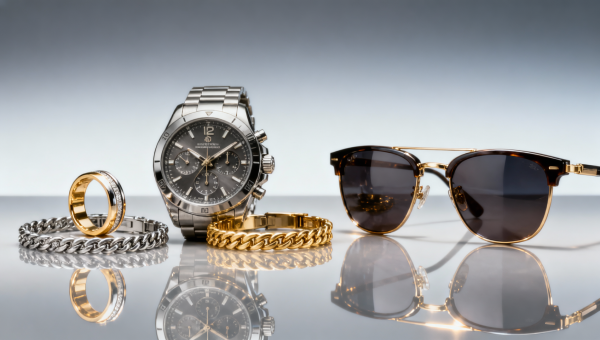
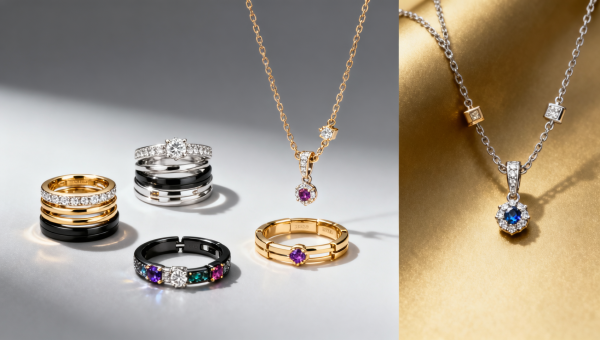
Entering luxury accessories wholesale does not require a massive budget if you choose the right niche, supplier, and market strategy. From custom jewelry design and custom luxury jewelry to luxury accessories for men and luxury accessories for women, small buyers can build profitable B2B opportunities step by step. This guide explores how to source smart, evaluate a custom jewelry manufacturer, and position high-end luxury jewelry for commercial buyers, distributors, and growing retail brands.
Why starting small works in luxury accessories wholesale
For many first-time buyers, the biggest misconception is that luxury accessories wholesale only works at high volume. In practice, small and medium B2B buyers often start with focused assortments, limited SKUs, and narrow customer segments. In watches, jewelry, and eyewear, a smaller opening order can reduce dead stock, shorten testing cycles, and improve cash flow during the first 60–120 days.
This approach is especially useful for information researchers, procurement teams, commercial evaluators, and distributors who need evidence before scaling. Instead of buying across 20 product lines, a buyer may begin with 3 categories: custom jewelry design, premium eyewear accessories, and giftable men’s or women’s luxury accessories. That makes product validation more manageable and supplier communication clearer.
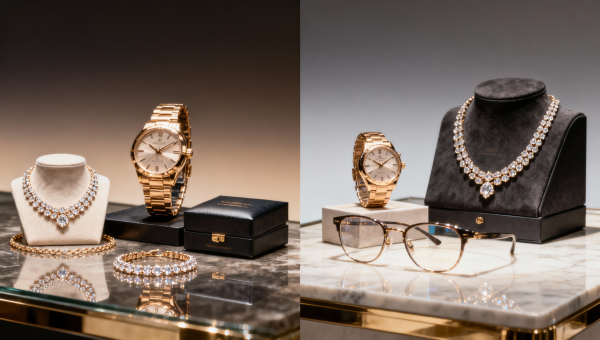
Small-batch sourcing also fits modern specialty retail and hospitality channels. Boutique hotels, museum stores, airport retail, concept stores, and premium gift distributors often need curated collections rather than bulk commodity inventory. A narrow but well-positioned luxury accessories wholesale strategy can therefore create stronger sell-through than a broad but unfocused assortment.
Global Commercial Trade supports this model by helping buyers compare sourcing logic, supplier readiness, product positioning, and commercial viability. For B2B buyers entering jewelry and luxury accessories, the right start is rarely the biggest order. It is usually the most controlled order, backed by clear specification, lead-time planning, and channel fit.
What a low-risk launch usually looks like
- Start with 5–15 core SKUs instead of a full collection, especially if you are testing a new distributor territory or retail concept.
- Use 1–2 material directions, such as sterling silver tone jewelry or acetate eyewear accessories, to simplify sampling and presentation.
- Set a review point after the first 8–12 weeks to measure reorder speed, margin resilience, and packaging feedback.
- Prioritize suppliers that can support OEM or ODM adjustments in small production runs, not only mass production.
Which luxury accessories niches are easiest to enter first?
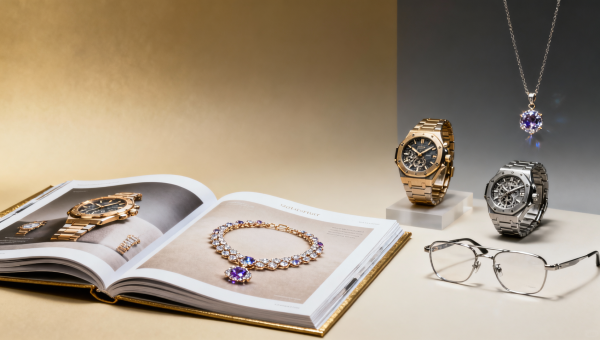
Not every product category is equally suitable for a small buyer. The most practical entry point is a niche with stable demand, manageable compliance requirements, and clear visual identity. In the watches, jewelry, and eyewear sector, jewelry-related accessories often offer lower initial complexity than precision watches, while eyewear chains, cases, and premium optical accessories can complement seasonal collections.
Luxury accessories for men and luxury accessories for women should not be selected only by trend appeal. Buyers need to evaluate display efficiency, average order value, seasonality, gift potential, and customization range. For example, engraved jewelry or logo-ready packaging may create stronger B2B differentiation than generic fashion pieces that compete only on price.
A practical market entry usually combines 1 hero category with 1 supporting category. A distributor may lead with custom luxury jewelry, then add eyewear storage accessories or premium watch straps as cross-sell items. This allows the catalog to feel complete without creating excessive inventory exposure or a long supplier onboarding process.
The table below helps compare common starting categories for luxury accessories wholesale from the perspective of budget sensitivity, customization depth, and commercial flexibility.
For small buyers, custom jewelry design and premium accessory add-ons often offer the best balance between differentiation and manageable sourcing. Precision watches can still be attractive, but they usually require tighter quality control, movement verification, after-sales planning, and a stronger warranty structure from day one.
How to narrow your first niche
A useful filter is to review 4 factors before requesting samples: target channel, expected reorder frequency, packaging expectations, and acceptable lead time. If your buyers need replenishment every 30–45 days, avoid categories with complicated mold approval or unstable decoration processes.
Another filter is shelf logic. Ask whether the item works as a counter display product, a giftable boxed item, or a collection-led product requiring multiple coordinated SKUs. Small businesses usually scale faster with products that can sell individually and still look premium in compact displays.
How to evaluate a custom jewelry manufacturer without overbuying
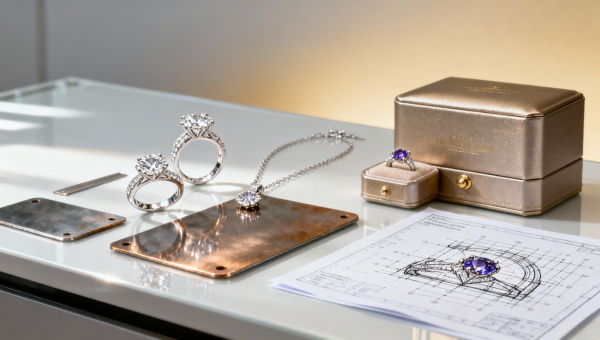
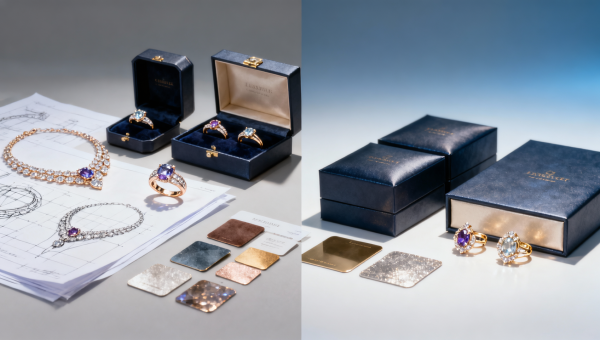
A custom jewelry manufacturer may present excellent photos, but commercial buyers need to verify process capability, not just aesthetics. The key is to check whether the supplier can consistently handle your required finish, material standard, minimum order quantity, sampling speed, and packaging detail. For small runs, flexibility can matter more than total factory size.
Most small buyers should examine the first 3 stages closely: concept review, prototype sampling, and pilot production. A sample cycle of 7–21 days is common depending on complexity, while pilot production can take 2–5 weeks. If the supplier cannot define these stages clearly, scaling later may become difficult.
You should also ask how the supplier handles finish consistency across batches. In custom luxury jewelry, small tone variations in plating, stone setting alignment, clasp mechanics, or logo placement can affect premium positioning. The problem is not always catastrophic failure; often it is inconsistency that weakens distributor confidence and retail presentation.
The next table outlines a practical B2B screening framework for comparing a custom jewelry manufacturer before committing to broader luxury accessories wholesale cooperation.
The strongest suppliers do not just say they make custom luxury jewelry. They explain the process in measurable steps, identify limits early, and help the buyer understand what can be adjusted without damaging cost or lead time. That level of transparency is particularly valuable for dealers and distributors who need predictable replenishment.
A practical 4-step screening checklist
- Request a specification sheet with materials, finish description, dimensions, closure details, and packaging format.
- Review 2–3 sample references with close-up photos or physical samples to assess detail consistency.
- Confirm lead time by stage: sampling, approval, production, packing, and shipment preparation.
- Ask how nonconforming pieces are handled before dispatch and after arrival.
What many new buyers overlook
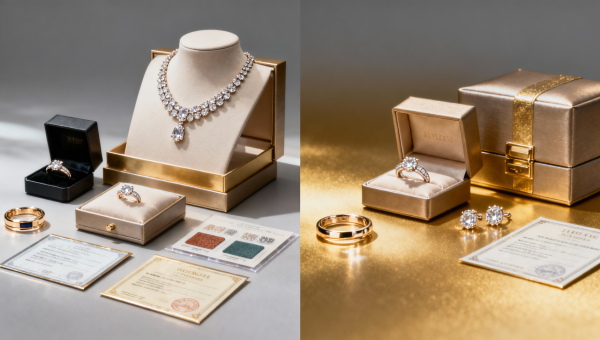
Packaging compatibility is often overlooked. A necklace, bracelet, eyewear chain, or watch accessory may look attractive in a sample photo but fail commercially if the box dimensions, barcode placement, insert stability, or protective wrap are not optimized for transport and shelf display. These details affect damaged-arrival rates and retail presentation immediately.
Another oversight is reorder discipline. If your first assortment contains too many finishes or too many similar styles, replenishment becomes fragmented. Small buyers usually do better with a disciplined ratio, such as 60% evergreen pieces, 30% trend-led designs, and 10% experimental items.
Procurement guide: what to compare before placing your first order
Procurement in luxury accessories wholesale is not only about unit price. It is a balance of landed cost, visual consistency, sales fit, and supplier responsiveness. Especially in jewelry, watches, and eyewear, a lower ex-factory quote may become expensive if rejects, delayed approvals, or weak packaging increase after-sales work.
Buyers should compare at least 5 dimensions: product specification, sample quality, minimum order quantity, lead time, and compliance support. A commercial evaluator may add packaging durability, replacement policy, and labeling accuracy. For distributors, the ability to maintain batch continuity over 2–3 reorder cycles is often more important than a small initial discount.
For custom jewelry design and custom luxury jewelry, one more factor matters: revision efficiency. If each modification requires a full restart, development slows and hidden costs rise. Buyers with limited budgets should prioritize suppliers who can explain where design changes are simple, where tooling is required, and where tolerances are tight.
The following table organizes the most relevant first-order decision points for small and growing B2B buyers.
A disciplined comparison model helps prevent emotional buying. In premium categories, visual appeal matters, but so do consistency and channel suitability. A product that photographs well but arrives with unstable clasps, scratched lenses, or inconsistent plating quickly loses commercial value.
Compliance and specification points worth checking
Depending on market destination, buyers may need to review material declarations, labeling information, packaging conformity, and product safety expectations relevant to jewelry and accessories. The exact requirement varies by region, but commercial buyers should always ask suppliers what documentation can be supported and at what stage it can be prepared.
This is where GCT adds value for procurement and evaluation teams. Instead of treating sourcing as a single transaction, GCT frames it as a structured commercial process that connects product concept, supplier capability, operational reliability, and international market readiness. That perspective is useful when a buyer must justify vendor selection internally.
Cost control, alternatives, and realistic scaling paths
If your budget is tight, the best savings usually come from specification discipline rather than chasing the lowest quoted price. In custom luxury jewelry, cost is affected by material choice, finish complexity, stone setting method, packaging style, and order volume structure. Removing one costly decorative step can sometimes preserve the premium look better than lowering the base material quality.
A good strategy is to separate launch products into 3 tiers: image builders, volume drivers, and entry-level add-ons. Image builders establish brand position. Volume drivers support repeat orders. Add-ons increase basket value with lower risk. This structure allows a small distributor or retail buyer to control budget while still presenting a complete luxury accessories wholesale collection.
Alternative materials and construction methods can also help. For example, buyers may explore simpler stone configurations, fewer color variants, standardized inserts, or shared packaging dimensions across multiple SKUs. These changes can reduce procurement complexity over the first 1–2 production cycles without undermining the perceived value of high-end luxury jewelry.
Scaling should happen after measurable signals appear, such as stable reorder behavior over 2 cycles, lower sample revision rates, or positive feedback from channel partners. Rapid SKU expansion before those signals often creates hidden costs in warehousing, replacement handling, and visual merchandising.
Low-budget scaling options that still feel premium
- Use one signature packaging family across several products to simplify presentation and replenishment.
- Launch with modular collections, where 1 design language supports earrings, pendants, bracelets, or eyewear add-ons.
- Limit finish choices in the first season to reduce batch variance and approval delays.
- Negotiate phased ordering, where the first batch is conservative and the second batch depends on pre-agreed reorder terms.
When not to scale yet
Do not expand too early if defect reasons are still unclear, if sample-to-production consistency is unstable, or if your target channel has not validated price acceptance. These are common warning signs in custom jewelry design projects and premium accessory launches. Growth is safer when operational friction is already understood.
It is also wise to pause scaling if lead times regularly exceed the agreed range by more than 1–2 weeks. Delays matter in seasonal gifting, travel retail, and event-driven sales. The more premium the positioning, the more damaging inconsistent delivery can become.
FAQ for first-time buyers, distributors, and evaluators
How do I choose between custom luxury jewelry and ready-made wholesale lines?
Choose custom luxury jewelry when channel differentiation, brand identity, and packaging control matter more than speed alone. Choose ready-made wholesale lines when you need faster market entry, lower development effort, and simpler assortment testing. Many small buyers use a hybrid model: 70% ready-to-order pieces and 30% custom jewelry design for exclusivity.
What lead time should I expect for a small first order?
A common range is 1–3 weeks for sampling and 2–6 weeks for production, depending on complexity, approval speed, and packaging requirements. Orders involving molds, special finishes, or multiple packaging formats can take longer. Buyers should ask for a stage-by-stage timeline rather than one broad promise.
What matters most when comparing luxury accessories for men and luxury accessories for women?
Look at turnover logic, gifting behavior, display format, and return sensitivity. Men’s ranges often benefit from year-round gift positioning and simpler styling. Women’s ranges may offer stronger seasonal appeal and visual storytelling, but can require tighter SKU management and trend selection.
What are the most common mistakes in luxury accessories wholesale?
The most common mistakes are overbuying too many SKUs, approving samples without full packaging review, ignoring batch consistency, and selecting suppliers only by price. Another frequent issue is weak product positioning. Even high-end luxury jewelry needs a clear channel strategy, not just attractive design.
Why work with GCT when building a small but scalable sourcing plan
Small buyers often need more than a supplier list. They need a structured way to compare categories, assess a custom jewelry manufacturer, understand sourcing trade-offs, and prepare a practical rollout plan. GCT is built for that decision environment, especially in jewelry and luxury accessories where product perception, consistency, and procurement discipline are tightly connected.
Because GCT focuses on commercial sourcing intelligence, buyers can approach watches, jewelry, and eyewear opportunities with stronger evaluation logic. This is valuable for procurement teams managing limited budgets, commercial reviewers preparing internal comparisons, and distributors seeking brand-ready products without taking unnecessary inventory risk.
If you are planning to start small in luxury accessories wholesale, the next step should be specific. Define your target segment, preferred price architecture, packaging level, and timeline. Then compare supplier options against those commercial needs rather than against generic catalog claims.
You can contact GCT to discuss product selection, supplier screening, sampling expectations, custom jewelry design feasibility, lead-time planning, packaging direction, compliance questions, and quotation structure. This is the fastest way to turn a cautious first order into a controlled and scalable B2B program.
Search News
Hot Articles
- Stage Lighting & Truss2026 FIBA Women's World Cup Draw Sets LED Timing Screen RequirementsApr 27, 2026
- Hotel Room AmenitiesIranian Delegation’s Ritual Gesture at Sanya ASG Sparks Mideast Hospitality Procurement ShiftApr 27, 2026
- Arcade & VR MachinesSnooker World Championship 'China Derby' Drives VR Viewing DemandApr 27, 2026
Popular Tags
Need ExpertConsultation?
Connect with our specialized leisureengineering team for procurementstrategies.
Recommended News
 Apr 25, 2026Luxury Jewelry B2B in 2026: What Changes?Luxury jewelry B2B in 2026: explore custom jewelry design, custom jewelry manufacturer trends, luxury jewelry wholesale shifts, and how custom luxury jewelry drives faster, safer growth.● Luxury Retail Analyst
 Apr 25, 2026How to Grow a Luxury Accessories Online StoreLearn how to grow a luxury accessories online store with custom jewelry design, a trusted custom jewelry manufacturer, luxury accessories wholesale strategy, and high-end luxury jewelry that converts.● Luxury Retail Analyst
 Apr 25, 2026Custom Jewelry for Corporate Gifts That LastCustom jewelry for corporate gifts from a trusted custom jewelry manufacturer—discover custom jewelry design, high-end luxury jewelry, and scalable luxury jewelry B2B solutions.● Luxury Retail Analyst
 Apr 25, 2026What a Good Luxury Accessories Catalog IncludesLuxury accessories catalog guide covering custom jewelry design, high-end luxury jewelry, luxury accessories for men and women, and trusted luxury jewelry B2B sourcing insights.● Luxury Retail Analyst
 Apr 27, 2026Custom Jewelry with Diamonds: Lab or Natural?Custom jewelry with diamonds: compare lab-grown and natural options for custom jewelry design, pricing, sourcing, and brand fit. A smart guide for luxury jewelry B2B buyers.● Luxury Retail Analyst
 Apr 27, 2026Luxury Accessories Wholesale: How to Start SmallLuxury accessories wholesale made simple: learn custom jewelry design, choose a reliable custom jewelry manufacturer, and build profitable luxury accessories for men and women with low-risk B2B sourcing.● Luxury Retail Analyst
 Apr 27, 2026Luxury Jewelry Manufacturer: Red Flags to KnowLuxury jewelry manufacturer warning signs every B2B buyer should know. Learn how to evaluate custom jewelry design, custom luxury jewelry, and luxury jewelry wholesale partners before costly mistakes.● Luxury Retail Analyst
 Apr 27, 2026Custom Jewelry for Weddings: Timeline GuideCustom jewelry for weddings made simple: learn timelines for custom jewelry design, choosing a custom jewelry manufacturer, and planning custom luxury jewelry with diamonds.● Luxury Retail Analyst
 Apr 27, 2026Luxury Jewelry Wholesale for New DistributorsLuxury jewelry wholesale guide for new distributors: compare custom jewelry manufacturer options, custom jewelry design support, and luxury jewelry B2B strategies to launch faster.● Luxury Retail Analyst
 Apr 27, 2026Custom Luxury Jewelry: OEM or Small Batch?Custom luxury jewelry sourcing guide: compare OEM vs small-batch with a custom jewelry manufacturer for custom jewelry design, cost control, quality, and scalable luxury jewelry B2B growth.● Luxury Retail Analyst
 Apr 27, 2026How to Price High-End Luxury Jewelry RightCustom jewelry design and high-end luxury jewelry pricing guide for B2B buyers—learn how a custom jewelry manufacturer sets value, margins, and wholesale strategy.● Luxury Retail Analyst
 Apr 27, 2026Luxury Accessories for Women by Price TierLuxury accessories for women by price tier: compare high-end luxury jewelry, luxury jewelry wholesale, and custom luxury jewelry from a trusted custom jewelry manufacturer for smarter B2B sourcing.● Luxury Retail Analyst
 Apr 27, 2026Luxury Accessories for Men: Classic or Trendy?Luxury accessories for men: classic or trendy? Explore custom jewelry design, high-end luxury jewelry, and how a luxury jewelry manufacturer helps buyers source smarter for growth.● Luxury Retail Analyst
 Apr 27, 2026How to Compare Custom Jewelry ManufacturersCompare every custom jewelry manufacturer with confidence. Learn how custom jewelry design, compliance, craftsmanship, MOQ, and luxury jewelry wholesale capabilities impact quality and growth.● Luxury Retail Analyst
 Apr 27, 20262026 Custom Jewelry Design Trends to WatchExplore 2026 custom jewelry design trends shaping B2B buying, from custom luxury jewelry and diamonds to luxury accessories for men and women with smarter sourcing insights.● Luxury Retail Analyst
 Apr 27, 2026Luxury Jewelry B2B: What Buyers Need FirstLuxury jewelry B2B starts with trust. Learn how a custom jewelry manufacturer supports custom jewelry design, luxury jewelry wholesale, and scalable high-end luxury jewelry sourcing.● Luxury Retail Analyst
 Apr 27, 2026How Luxury Brands Source Jewelry CollectionsCustom jewelry design and custom jewelry manufacturer insights for luxury brands: learn how high-end luxury jewelry, wholesale sourcing, and compliant supply chains drive profitable collections.● Luxury Retail Analyst
 Apr 27, 2026Luxury Accessories Online Store: What Converts?Luxury accessories online store insights for B2B buyers: explore custom jewelry design, luxury jewelry manufacturer strengths, wholesale strategy, and what truly drives high-end conversions.● Luxury Retail Analyst
 Apr 27, 2026Custom Jewelry for Corporate Gifts: Good Fit?Custom jewelry for corporate gifts: learn when custom jewelry design and a trusted custom jewelry manufacturer create high-end luxury jewelry that elevates VIP gifting and luxury jewelry B2B value.● Luxury Retail Analyst
 Apr 27, 2026How to Build a Luxury Accessories CatalogLuxury accessories catalog guide covering custom jewelry design, custom jewelry manufacturer insights, high-end luxury jewelry sourcing, and luxury accessories wholesale strategies for B2B buyers.● Luxury Retail Analyst
 Apr 27, 2026Custom Jewelry with Diamonds: Key Quality ChecksCustom jewelry with diamonds: learn the key quality checks in custom jewelry design, from grading and metal purity to craftsmanship and supplier review for confident B2B sourcing.● Luxury Retail Analyst
 Apr 27, 2026Luxury Accessories Wholesale: Common Buying RisksLuxury accessories wholesale guide: avoid common sourcing risks, verify a custom jewelry manufacturer, and secure high-end luxury jewelry quality, compliance, and reliable B2B supply.● Luxury Retail Analyst
 Apr 27, 2026How to Vet a Luxury Jewelry ManufacturerCustom jewelry manufacturer vetting guide: learn how to assess custom jewelry design, high-end luxury jewelry quality, lead times, and luxury jewelry B2B fit before you buy.● Luxury Retail Analyst
 Apr 26, 2026Custom Jewelry for Weddings: Where to Start?Custom jewelry for weddings starts with strategy. Explore custom jewelry design, choosing a custom jewelry manufacturer, and sourcing high-end luxury jewelry that balances quality, scalability, and profit.● Luxury Retail Analyst