Custom Jewelry for Corporate Gifts: Good Fit?
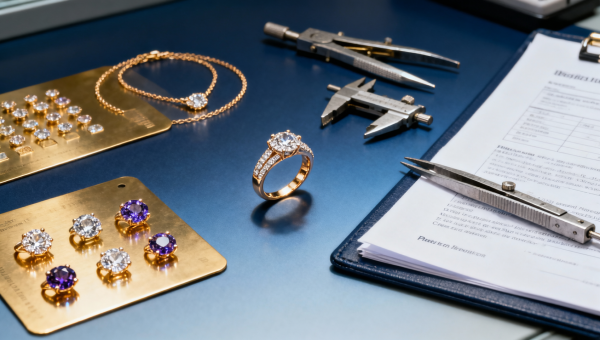
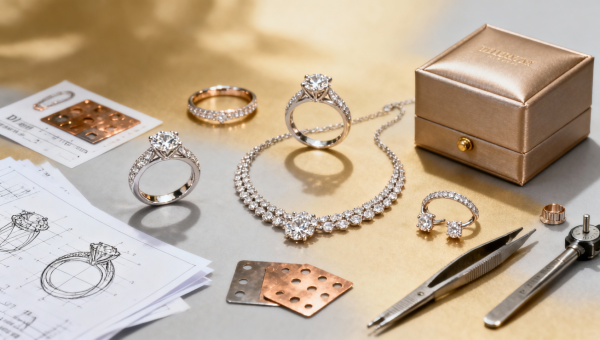
Is custom jewelry for corporate gifts a smart investment for modern brands? In many cases, yes—but only when the gifting objective is strategic rather than purely promotional. For procurement teams, brand managers, and commercial buyers evaluating custom jewelry design, custom luxury jewelry, and luxury jewelry B2B sourcing, the real question is not whether jewelry is attractive, but whether it can justify its cost through stronger brand perception, better client retention, and reliable execution. When sourced from a capable custom jewelry manufacturer, corporate jewelry gifts can become a high-impact asset for VIP engagement, executive gifting, distributor incentives, and premium brand experiences. When sourced poorly, they can quickly turn into a budget-heavy risk with limited business return.
This article explains when custom jewelry for corporate gifts is a good fit, what buyers should evaluate before investing, and how to assess commercial value, quality, and supplier readiness in a B2B sourcing context.
Who Is Custom Jewelry for Corporate Gifts Really a Good Fit For?
Custom jewelry works best for companies that need a gift to do more than simply “show appreciation.” It is particularly suitable for brands that operate in premium, relationship-driven, or image-sensitive environments. That includes luxury retail groups, hospitality brands, real estate developers, private banking networks, automotive premium divisions, executive event organizers, and companies managing high-value partner relationships.
For these businesses, a generic gift often fails to create distinction. A thoughtfully developed piece of custom luxury jewelry can communicate exclusivity, permanence, and emotional value in a way that standard corporate merchandise cannot. Jewelry is also highly relevant when the recipient group is relatively small, carefully selected, and commercially important—such as top-tier clients, senior partners, distributors, or internal award recipients.
However, custom jewelry is usually not the right fit for mass promotional campaigns, price-sensitive gifting programs, or audiences that prefer practical utility over symbolic value. If the gifting objective is broad reach at low cost, alternatives such as branded accessories, leather goods, or functional executive products may deliver better efficiency.
What Business Value Can Custom Jewelry Deliver Beyond Aesthetic Appeal?
For business buyers, the value of corporate jewelry gifting should be measured in commercial terms, not sentiment alone. The strongest use case is brand elevation. A refined custom jewelry gift can reinforce a company’s premium identity and create a more memorable brand touchpoint than conventional items.
There are several practical business advantages:
- Higher perceived value: Jewelry often feels more personal and prestigious than standard branded gifts, even at similar budget tiers.
- Longer retention: Unlike consumables or disposable merchandise, quality jewelry may be kept, worn, and remembered for years.
- Stronger relationship signaling: A custom-made piece suggests intention, selectivity, and investment in the relationship.
- Better alignment with luxury positioning: For premium brands, custom high-end jewelry can support the same emotional language as the core business.
- Storytelling potential: Jewelry can incorporate heritage, milestones, brand motifs, or event themes in a subtle and collectible format.
That said, the return on investment depends heavily on context. A corporate gift does not need to generate direct revenue immediately, but it should support relationship depth, brand memorability, or stakeholder loyalty in a measurable way. Buyers should define success in advance—such as client retention, event impact, partner engagement, or executive perception.
When Is Custom Jewelry Not a Smart Corporate Gift Investment?
Custom jewelry is not automatically a smart choice simply because it looks luxurious. It becomes a poor fit when there is a mismatch between recipient expectations, campaign purpose, and sourcing capability.
Common situations where it may underperform include:
- Large-volume gifting programs with tight cost ceilings
- Recipients with unclear size, style, or wearability preferences
- Campaigns requiring very fast turnaround without prototyping time
- Brands without a premium identity or clear gifting strategy
- Suppliers unable to guarantee consistency, plating durability, or packaging quality
Another common mistake is over-branding. Corporate jewelry should not look like a promotional badge disguised as luxury. If logos are too dominant or design execution feels inexpensive, the gift can lose both personal appeal and brand credibility. In luxury jewelry B2B projects, subtle branding usually outperforms overt branding.
What Types of Corporate Gift Programs Benefit Most from Custom Jewelry?
Not all gifting scenarios justify custom jewelry, but several high-value business applications do.
VIP client gifting: For top customers, private clients, or invitation-only events, jewelry can create a stronger emotional and prestige-led connection than standard gift boxes.
Executive and board-level gifts: Custom jewelry can be an excellent option for commemorative leadership milestones, retirement recognition, or strategic partnership anniversaries.
Distributor and channel incentives: For dealers, agents, or long-term commercial partners, jewelry gifts can function as symbolic recognition tied to performance or loyalty.
Hospitality and luxury event programs: Premium hotels, branded residences, and private events may use jewelry as part of curated guest experiences, launch gifts, or membership rewards.
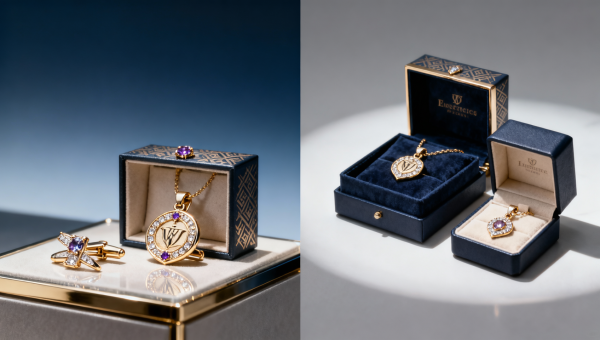
Corporate milestone collections: Anniversary pins, pendants, cufflinks, charms, or bespoke keepsakes can mark brand heritage, acquisitions, openings, or limited-edition campaigns.
The strongest programs usually share one trait: the gift is tied to a meaningful moment, not distributed as a routine obligation.
How Should Buyers Evaluate a Custom Jewelry Manufacturer?
For procurement and sourcing teams, supplier capability is the single biggest factor in determining whether custom jewelry for corporate gifts will succeed. A qualified custom jewelry manufacturer should offer more than production capacity. They should demonstrate design translation skills, material transparency, consistent finishing standards, and professional B2B project management.
Key evaluation points include:
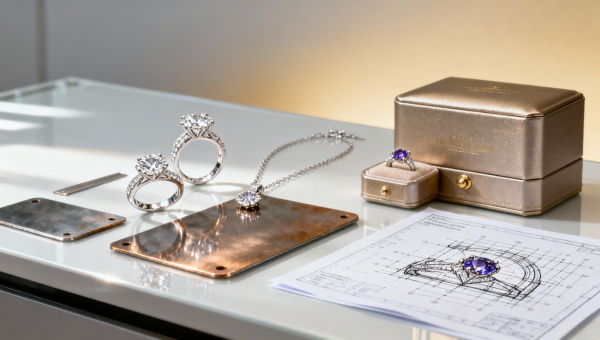
- OEM/ODM experience: Can the supplier develop from concept, sketch, CAD, or brand brief?
- Material options: Do they offer sterling silver, brass, stainless steel, gold vermeil, solid gold, lab-grown stones, natural gemstones, or other suitable materials?
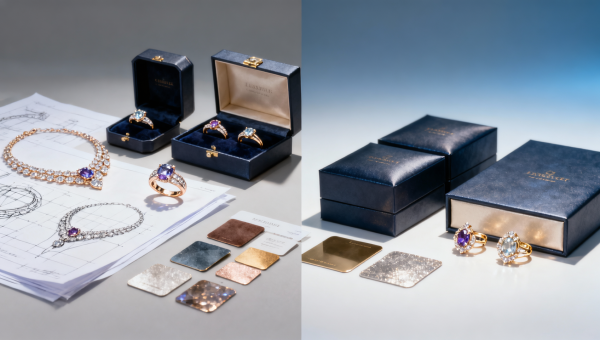
- Sampling and prototyping: Is there a reliable sample approval process before full production?
- Quality control: How do they manage stone setting, plating thickness, polishing, color consistency, and defect inspection?
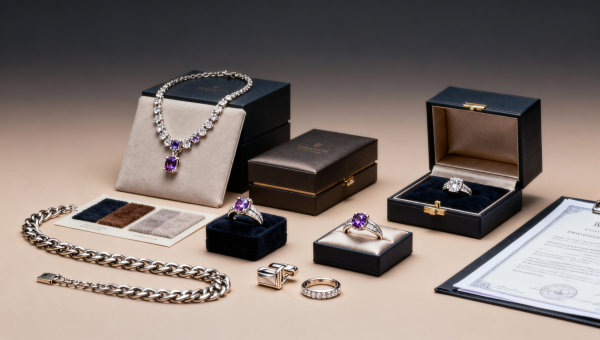
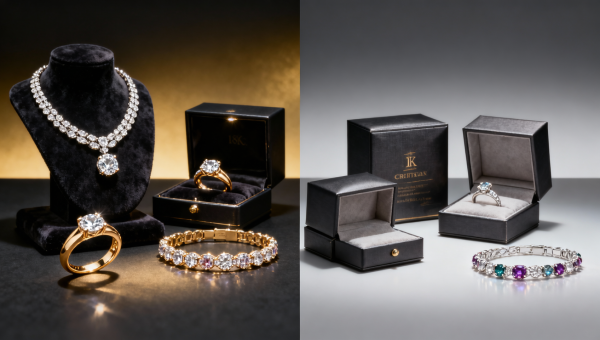
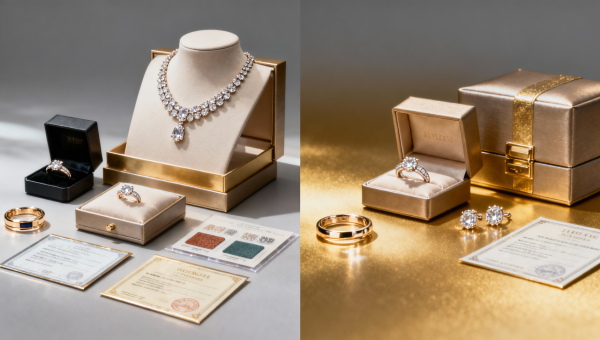
- Packaging integration: Can they deliver presentation boxes, certificates, pouches, and brand-aligned unboxing solutions?
- Compliance and documentation: Can they support metal composition declarations, testing requirements, and destination-market regulations?
- Lead times and MOQs: Are minimums and production schedules realistic for corporate campaign timelines?
- Past B2B references: Have they handled corporate, retail, hospitality, or luxury brand projects before?
For international buyers, communication discipline is equally important. Delays often come not from manufacturing itself, but from unclear revisions, incomplete approval steps, or weak expectation setting during development.
What Quality Standards Matter Most in Luxury Jewelry B2B Sourcing?
In luxury jewelry B2B procurement, quality is not just about appearance in a sample photo. It includes durability, consistency, comfort, finish, and packaging presentation at delivery scale.
Commercial buyers should pay close attention to the following:
- Plating performance: Thin or inconsistent plating can quickly undermine perceived value.
- Metal base quality: The underlying metal affects weight, skin compatibility, longevity, and finish stability.
- Stone security: Loose settings are unacceptable in corporate gifting because they create immediate trust issues.
- Polish and edge finishing: Premium pieces should feel refined in hand, not sharp or lightweight in a cheap way.
- Brand presentation: A well-made piece can still disappoint if packaging feels generic or low-end.
- Batch consistency: Corporate orders require visual uniformity across units, especially for event or VIP distribution.
Requesting pre-production samples and approved golden samples is a practical step. If the supplier cannot maintain sample-to-batch consistency, the project carries reputational risk.
How Can Buyers Balance Budget, Perceived Value, and Brand Positioning?
One of the biggest misconceptions is that custom luxury jewelry always requires extremely high budgets. In reality, perceived value often depends more on design intelligence, finish quality, and presentation than on raw material cost alone.
For example, a well-designed sterling silver charm, gold-plated pendant, custom lapel pin, or elegant cufflink set may outperform a more expensive but poorly designed item. Buyers should begin with the gifting objective and target perception, then work backward into materials and production specifications.
A useful approach is to segment gift tiers:
- Top-tier VIP gifts: precious metals, gemstone accents, premium packaging, limited-edition storytelling
- Mid-tier executive gifts: silver, vermeil, polished branded motifs, elegant presentation
- Recognition or event gifts: quality fashion jewelry or metal accessories with strong design and controlled branding
This tiered approach helps companies preserve luxury signaling without applying a single high-cost standard to every recipient group.
What Design Principles Make Corporate Jewelry Feel Premium Instead of Promotional?
The best corporate jewelry design does not look like merchandise. It looks like jewelry first, branding second. This distinction matters because the recipient should feel they are receiving something wearable and desirable, not a logo vehicle.
Design principles that usually work well include:
- Subtle integration of brand symbols rather than oversized logos
- Timeless forms over trend-driven novelty
- Universal wearability across different personal styles
- Meaningful references to brand history, architecture, icons, or milestones
- Premium packaging that completes the emotional experience
For corporate programs, simplicity often scales better than complexity. Overly intricate designs can increase defects, delays, and cost while reducing broad recipient appeal.
What Risks Should Procurement Teams Watch for Before Placing an Order?
Even a promising custom jewelry project can fail if key commercial risks are ignored. Buyers should assess not just design attractiveness, but supply chain discipline.
Main risk areas include:
- Unclear specs: vague briefs often lead to mismatched expectations on size, weight, color, and finish
- Inadequate testing: issues such as tarnishing, allergy sensitivity, or plating wear may only appear after delivery
- Timeline compression: custom jewelry needs time for design, CAD, samples, revisions, and production
- Hidden cost changes: mold fees, packaging upgrades, stone substitutions, or freight costs can affect total budget
- Poor packaging protection: even good products can arrive damaged if presentation and transit packaging are weak
- Supplier overpromising: some factories accept luxury projects without actually having luxury-level finishing capability
To reduce risk, buyers should insist on written specifications, approved samples, quality checkpoints, and clear delivery terms.
How Should Buyers Decide If Custom Jewelry Is the Right Corporate Gift Choice?
A practical decision framework is to ask five questions:
- Is the recipient commercially important enough to justify a premium gift?
- Does the brand benefit from a luxury or emotional gifting format?
- Can the design be made wearable, tasteful, and not overly promotional?
- Is there enough time and budget to source quality properly?
- Does the chosen custom jewelry manufacturer have verified B2B capability?
If the answer to most of these is yes, custom jewelry can be a strong strategic fit. If several answers are no, buyers may be better served by another premium gift category.
Conclusion: Is Custom Jewelry for Corporate Gifts a Good Fit?
Custom jewelry for corporate gifts is a good fit when the objective is premium relationship-building, executive recognition, VIP engagement, or luxury brand reinforcement. It is especially effective for companies that need a gift to express exclusivity, permanence, and thoughtful brand identity rather than mass-market promotion.
For procurement professionals, commercial evaluators, and sourcing teams, the decision should be based on business relevance, recipient value, quality standards, and supplier reliability—not just visual appeal. A capable custom jewelry manufacturer can help translate brand intent into a tangible, high-end luxury jewelry product that feels memorable and commercially aligned. But success depends on disciplined sourcing, realistic expectations, and strong design judgment.
In short: custom jewelry is not the right corporate gift for every program, but for the right audience and occasion, it can deliver a level of prestige and brand impact that few other gift categories can match.
Search News
Hot Articles
- Pro Stage AudioFIFA Adopts Chinese Mini-LED Displays for 2026 World Cup VAR SystemApr 24, 2026
- Outdoor RidesChina FA Warns Nanjing City Over Fan Conduct; ISO 20785 Compliance AcceleratesApr 24, 2026
- Pro Stage AudioFan Zhendong Visits Silicon Valley as MLTT Investor, AI Ping-Pong Tech Draws US InterestApr 24, 2026
Popular Tags
Need ExpertConsultation?
Connect with our specialized leisureengineering team for procurementstrategies.
Recommended News
 Apr 23, 2026Texas Launches PFAS Probe Against Lululemon, Export Compliance Risks RisePFAS probe against Lululemon in Texas escalates export compliance risks for sportswear ODMs, testing labs & chemical suppliers — act now.● Luxury Retail Analyst
 Apr 21, 2026FDA Proposes Chinese Label Translation Requirement for Sports SupplementsFDA proposes Chinese label translation requirements for sports supplements—learn how protein powders, BCAAs & creatine brands can prepare for Q3 2026 compliance.● Luxury Retail Analyst
 Apr 21, 2026CPSC Urgent Alert: PFAS in Fitness Apparel Risks US Import DelaysPFAS in fitness apparel triggers CPSC alerts—avoid US import delays! Get CPSC-recognized PFAS testing, compliance tips & port detention prevention now.● Luxury Retail Analyst
 Apr 20, 2026US CPSC Alert: PFAS in Fitness Apparel May Delay US Import ClearancePFAS in fitness apparel may delay US import clearance—learn how the Texas AG probe & CPSC alert impact compliance, testing, and supply chains now.● Luxury Retail Analyst
 Apr 15, 2026FDA Updates Guidelines for Sports Nutrition Supplement Labels: Chinese Translations Must Be FDA-CertifiedFDA now requires Chinese translations on sports nutrition supplement labels to be FDA-certified. Learn how this impacts manufacturers, importers, and compliance timelines for US market access.● Luxury Retail Analyst
 Apr 14, 2026Japan Updates Jewelry Labeling Rules: Mandatory China Factory Codes from April 2026Japan's new jewelry labeling rules mandate 'Country of Origin + China Factory Code' (CN-FAC-XXXXX) from April 2026. Learn how this impacts Chinese exporters and Japanese importers in the $2.1B precious metals market.● Luxury Retail Analyst
 Apr 14, 2026RCEP Tariff Cuts Boost China's Optical Lens Exports to ASEANRCEP tariff cuts boost China's optical lens exports to ASEAN with 0% duties on CR-39 & polycarbonate lenses. Learn how this + faster logistics create new trade opportunities.● Luxury Retail Analyst
 Apr 14, 2026US CPSC Proposes Stricter Lead Limits in Children's Jewelry, Impacting Chinese ExportersUS CPSC proposes stricter lead limits (40ppm) in children's jewelry, impacting Chinese exporters with new compliance challenges. Learn how this 2026 regulation affects manufacturers & supply chains.● Luxury Retail Analyst
 Apr 14, 2026EU's Revised EN 14138:2026 Eyewear Nickel Standard Takes Effect, Impacting Chinese ExportersEU's EN 14138:2026 eyewear standard tightens nickel limits to 0.2μg/cm²/week, impacting Chinese exporters. Learn compliance strategies for EU market access.● Luxury Retail Analyst
 Apr 25, 2026Luxury Jewelry B2B in 2026: What Changes?Luxury jewelry B2B in 2026: explore custom jewelry design, custom jewelry manufacturer trends, luxury jewelry wholesale shifts, and how custom luxury jewelry drives faster, safer growth.● Luxury Retail Analyst
 Apr 25, 2026How to Grow a Luxury Accessories Online StoreLearn how to grow a luxury accessories online store with custom jewelry design, a trusted custom jewelry manufacturer, luxury accessories wholesale strategy, and high-end luxury jewelry that converts.● Luxury Retail Analyst
 Apr 25, 2026Custom Jewelry for Corporate Gifts That LastCustom jewelry for corporate gifts from a trusted custom jewelry manufacturer—discover custom jewelry design, high-end luxury jewelry, and scalable luxury jewelry B2B solutions.● Luxury Retail Analyst
 Apr 25, 2026What a Good Luxury Accessories Catalog IncludesLuxury accessories catalog guide covering custom jewelry design, high-end luxury jewelry, luxury accessories for men and women, and trusted luxury jewelry B2B sourcing insights.● Luxury Retail Analyst
 Apr 27, 2026Luxury Jewelry Manufacturer: Red Flags to KnowLuxury jewelry manufacturer warning signs every B2B buyer should know. Learn how to evaluate custom jewelry design, custom luxury jewelry, and luxury jewelry wholesale partners before costly mistakes.● Luxury Retail Analyst
 Apr 27, 2026Custom Jewelry for Weddings: Timeline GuideCustom jewelry for weddings made simple: learn timelines for custom jewelry design, choosing a custom jewelry manufacturer, and planning custom luxury jewelry with diamonds.● Luxury Retail Analyst
 Apr 27, 2026Luxury Jewelry Wholesale for New DistributorsLuxury jewelry wholesale guide for new distributors: compare custom jewelry manufacturer options, custom jewelry design support, and luxury jewelry B2B strategies to launch faster.● Luxury Retail Analyst
 Apr 27, 2026Custom Luxury Jewelry: OEM or Small Batch?Custom luxury jewelry sourcing guide: compare OEM vs small-batch with a custom jewelry manufacturer for custom jewelry design, cost control, quality, and scalable luxury jewelry B2B growth.● Luxury Retail Analyst
 Apr 27, 2026How to Price High-End Luxury Jewelry RightCustom jewelry design and high-end luxury jewelry pricing guide for B2B buyers—learn how a custom jewelry manufacturer sets value, margins, and wholesale strategy.● Luxury Retail Analyst
 Apr 27, 2026Luxury Accessories for Women by Price TierLuxury accessories for women by price tier: compare high-end luxury jewelry, luxury jewelry wholesale, and custom luxury jewelry from a trusted custom jewelry manufacturer for smarter B2B sourcing.● Luxury Retail Analyst
 Apr 27, 2026Luxury Accessories for Men: Classic or Trendy?Luxury accessories for men: classic or trendy? Explore custom jewelry design, high-end luxury jewelry, and how a luxury jewelry manufacturer helps buyers source smarter for growth.● Luxury Retail Analyst
 Apr 27, 2026How to Compare Custom Jewelry ManufacturersCompare every custom jewelry manufacturer with confidence. Learn how custom jewelry design, compliance, craftsmanship, MOQ, and luxury jewelry wholesale capabilities impact quality and growth.● Luxury Retail Analyst
 Apr 27, 20262026 Custom Jewelry Design Trends to WatchExplore 2026 custom jewelry design trends shaping B2B buying, from custom luxury jewelry and diamonds to luxury accessories for men and women with smarter sourcing insights.● Luxury Retail Analyst
 Apr 27, 2026Luxury Jewelry B2B: What Buyers Need FirstLuxury jewelry B2B starts with trust. Learn how a custom jewelry manufacturer supports custom jewelry design, luxury jewelry wholesale, and scalable high-end luxury jewelry sourcing.● Luxury Retail Analyst
 Apr 27, 2026How Luxury Brands Source Jewelry CollectionsCustom jewelry design and custom jewelry manufacturer insights for luxury brands: learn how high-end luxury jewelry, wholesale sourcing, and compliant supply chains drive profitable collections.● Luxury Retail Analyst