Custom Jewelry with Diamonds: Lab or Natural?
Choosing custom jewelry with diamonds means balancing aesthetics, unit economics, brand positioning, and buyer expectations. For procurement teams, distributors, and luxury decision-makers, the short answer is this: lab-grown diamonds usually win on price flexibility, supply consistency, and sustainability messaging, while natural diamonds remain stronger for heritage positioning, rarity narratives, and ultra-premium resale-oriented collections. The right choice depends less on which diamond is “better” and more on your target market, margin model, and brand story.
In custom jewelry design, the lab-grown versus natural diamond decision affects product development, MOQ planning, retail pricing, customer perception, and long-term commercial strategy. This guide compares both options from a B2B and sourcing perspective so buyers can make informed decisions with less uncertainty.
What buyers really need to decide first
Before comparing technical features, commercial buyers should define the role the diamond jewelry line will play in the business. A wedding jewelry program, a private-label fine jewelry collection, and a high-end boutique statement series do not need the same diamond strategy.
The most important first questions are:
- Who is the end customer: value-conscious, sustainability-driven, status-oriented, or investment-minded?
- Is the collection intended for volume sales, bespoke commissions, or brand image enhancement?
- What matters more: higher perceived rarity or stronger price accessibility?
- Will the collection compete on emotional storytelling, ethical sourcing claims, or design customization?
- How much pricing flexibility is needed across different markets and channels?
For most commercial programs, the diamond choice should follow merchandising logic, not personal preference. When buyers start with category goals, the lab-grown versus natural decision becomes much clearer.
Lab-grown vs natural diamonds: the commercial difference in simple terms
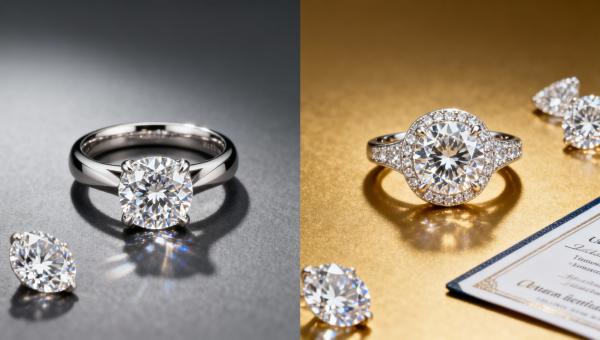
Both lab-grown and natural diamonds are real diamonds. They have the same core crystal structure and can offer comparable visual beauty when assessed by cut, color, clarity, and carat. The difference is origin: natural diamonds form underground over billions of years, while lab-grown diamonds are created in controlled production environments using advanced technology.
From a B2B sourcing perspective, that origin difference creates distinct commercial outcomes:
- Lab-grown diamonds typically offer lower acquisition cost, better size affordability, more flexible assortment building, and stronger appeal for buyers prioritizing modern value and sustainability messaging.
- Natural diamonds typically support stronger rarity perception, classic luxury positioning, and brand narratives tied to heritage, exclusivity, and long-term prestige.
So the question is not whether one is authentic and the other is not. The real question is which origin better supports the commercial objective of the jewelry line.
When lab-grown diamonds make more sense for custom jewelry programs
Lab-grown diamonds are often the stronger choice for brands and buyers focused on design freedom, margin control, and accessible luxury. In custom jewelry, they make it easier to deliver larger center stones, more elaborate designs, or matching sets without pushing retail prices beyond target market expectations.
Lab-grown diamonds are especially effective in these scenarios:
- Custom jewelry for weddings where buyers want larger visual impact at a more attainable price
- DTC or omnichannel jewelry brands targeting younger, research-driven consumers
- Private-label collections that need consistent specs and predictable sourcing
- Promotional luxury programs where appearance and value matter more than rarity narrative
- Markets with sustainability sensitivity where responsible sourcing claims influence purchase behavior
For distributors and agents, lab-grown diamonds can also simplify assortment planning. A broader range of commercially viable size and quality combinations often allows better response to market trends and retailer requests.
The key business advantage is flexibility. If your custom jewelry strategy depends on balancing premium appearance with controlled costs, lab-grown diamonds can unlock stronger merchandising options.
When natural diamonds remain the better fit
Natural diamonds still hold a powerful position in luxury jewelry, especially where rarity and emotional symbolism are central to the sale. For some customers, the geological origin and exclusivity of a natural diamond remain part of the product’s meaning. That perception can be commercially valuable.
Natural diamonds are often better suited for:
- High-luxury or heritage-oriented brands that rely on traditional prestige cues
- Bespoke fine jewelry houses serving clients who value rarity and origin story
- Collections aimed at legacy gifting where customers associate natural diamonds with timeless significance
- Retail environments where sales narratives around rarity and exclusivity support higher price points
- Markets where consumer trust in natural diamonds is still structurally stronger than for lab-grown options
For business evaluators, natural diamonds are not simply a legacy category. They remain relevant where brand elevation, luxury signaling, and traditional desirability are major revenue drivers.
Cost, margins, and pricing strategy: where the choice becomes practical
For procurement and sourcing teams, cost structure is usually the most immediate concern. Lab-grown diamonds generally cost less than natural diamonds of similar visual characteristics, which changes the economics of custom jewelry significantly.
This lower cost can create several commercial advantages:
- Higher perceived value at a given retail price
- Ability to offer larger stones within target budget bands
- Improved flexibility in promotional pricing
- Better options for tiered product lines
- Potentially stronger gross margin performance in certain segments
However, lower input cost does not automatically mean better business results. Buyers must also consider price stability, consumer expectations, and category positioning. If a brand built on exclusivity moves too aggressively into lower-cost lab-grown programs without clear segmentation, it may dilute perceived prestige.
Natural diamonds, while more expensive, may support stronger top-line price justification in specific luxury contexts. Their cost burden can be commercially viable when the customer is paying for narrative, rarity, and status as much as for physical beauty.
The best approach is not to ask which option is cheaper, but which option creates the healthiest margin structure without weakening brand value.
How end-customer perception affects sell-through
Customer perception is often the deciding factor in whether a custom jewelry program succeeds. Lab-grown diamonds perform well with customers who prioritize smart spending, modern values, design impact, and transparency. Natural diamonds continue to appeal to customers who associate luxury with scarcity, tradition, and long-established symbolism.
That means B2B buyers should map diamond origin to customer mindset:
- Lab-grown buyer profile: research-driven, price-aware, open to innovation, often younger, often interested in sustainability and customization
- Natural diamond buyer profile: prestige-driven, symbolism-oriented, often more traditional in fine jewelry expectations, more likely to value rarity language
For dealers and distributors, the risk is assuming one message fits all channels. It does not. The same product story that works in an online custom jewelry environment may fail in a conservative luxury retail setting. Sell-through improves when the merchandising story is aligned with what the customer already believes jewelry should represent.
Quality, certification, and sourcing checks buyers should not overlook
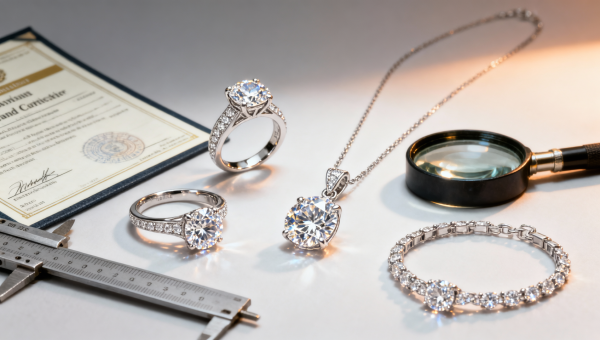
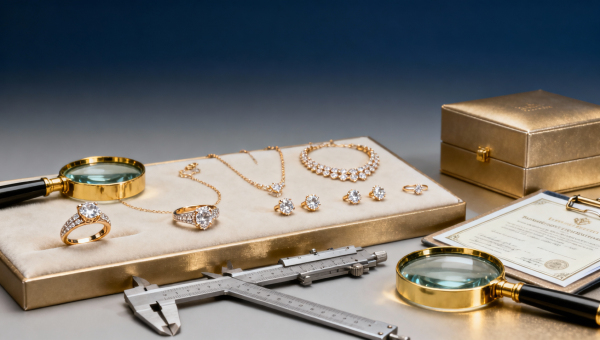
Whether choosing lab-grown or natural diamonds, professional buyers need disciplined quality control and documentation review. The most common sourcing mistake is focusing too heavily on origin and not enough on execution standards.
Critical checkpoints include:
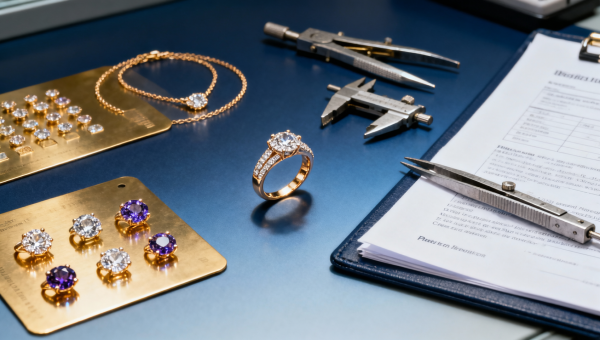
- Diamond grading consistency from recognized labs
- Full disclosure of stone origin
- Cut quality, which strongly affects visual performance
- Matching standards for pairs and multi-stone layouts
- Traceability documentation where required by the market
- Manufacturing tolerances for settings and finished jewelry
- OEM/ODM capacity for repeat orders and design revisions
In custom jewelry B2B programs, supplier reliability matters as much as the stone itself. A technically beautiful diamond does not solve delayed production, inconsistent grading, weak setting craftsmanship, or poor communication during customization.
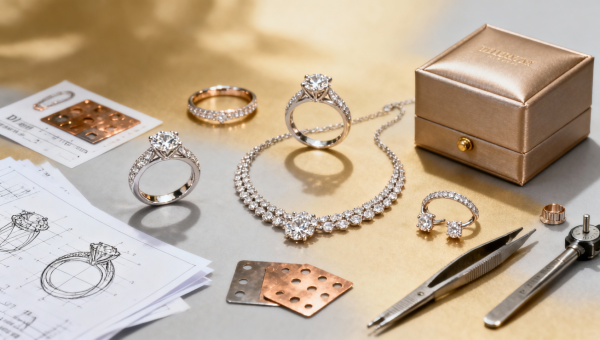
For procurement teams, supplier evaluation should include not only stone sourcing capability but also CAD development, sample accuracy, after-sales support, packaging consistency, and ability to meet destination market compliance requirements.
Sustainability and ethics: useful value driver, but not a substitute for strategy
Sustainability is a meaningful consideration, especially in sectors where buyers and end consumers actively compare ethical sourcing claims. Lab-grown diamonds are often positioned as a more responsible option, particularly in relation to reduced mining dependence and clearer modern traceability narratives.
That said, sustainability messaging should be used carefully. Commercial buyers should avoid oversimplified claims and instead focus on documented sourcing standards, production transparency, and honest communication. Natural diamond suppliers may also provide strong responsible sourcing frameworks, depending on origin and chain-of-custody practices.
In other words, sustainability can strengthen a custom jewelry offering, but it should support a broader business case rather than serve as the only reason for choosing one diamond category.
A practical framework for choosing between lab-grown and natural diamonds
If your team is comparing options for a custom jewelry line, this decision framework can help:
- Define the collection goal. Is it volume growth, luxury image building, wedding conversion, or bespoke high-ticket sales?
- Identify the end-customer expectation. Are they seeking value, rarity, sustainability, or traditional prestige?
- Set target price architecture. Determine entry, mid, and premium price bands before finalizing stone type.
- Evaluate margin resilience. Model sourcing cost, retail pricing, channel discounting, and inventory exposure.
- Review supplier capability. Confirm grading integrity, manufacturing quality, lead times, and repeat-order reliability.
- Align messaging with product reality. Make sure the sales story matches what the product genuinely delivers.
In many cases, the smartest solution is not either-or. Some brands use a dual-track model: lab-grown diamonds for accessible custom jewelry and natural diamonds for flagship or heirloom-positioned collections. This segmented strategy can increase market coverage without forcing one product philosophy across all customer groups.
Final answer: which is better for custom jewelry with diamonds?
For most price-sensitive, design-led, and scalable custom jewelry programs, lab-grown diamonds offer the stronger commercial advantage. They help buyers manage costs, expand customization options, and serve modern consumer preferences more effectively. For premium heritage positioning, rarity storytelling, and ultra-luxury applications, natural diamonds still hold distinct brand value.
The best choice depends on the customer you want to win, the margin structure you need to protect, and the story your brand is qualified to tell. Buyers who treat this as a strategic merchandising decision rather than a simple material comparison will make better sourcing choices and build more resilient jewelry programs.
In short, choose lab-grown when flexibility, value, and contemporary appeal matter most. Choose natural when exclusivity, legacy, and traditional luxury perception are central to the sale. If your market spans both, a segmented portfolio may be the most commercially effective path.
Search News
Hot Articles
- Stage Lighting & Truss2026 FIBA Women's World Cup Draw Sets LED Timing Screen RequirementsApr 27, 2026
- Hotel Room AmenitiesIranian Delegation’s Ritual Gesture at Sanya ASG Sparks Mideast Hospitality Procurement ShiftApr 27, 2026
- Arcade & VR MachinesSnooker World Championship 'China Derby' Drives VR Viewing DemandApr 27, 2026
Popular Tags
Need ExpertConsultation?
Connect with our specialized leisureengineering team for procurementstrategies.
Recommended News
 Apr 25, 2026Luxury Jewelry B2B in 2026: What Changes?Luxury jewelry B2B in 2026: explore custom jewelry design, custom jewelry manufacturer trends, luxury jewelry wholesale shifts, and how custom luxury jewelry drives faster, safer growth.● Luxury Retail Analyst
 Apr 25, 2026How to Grow a Luxury Accessories Online StoreLearn how to grow a luxury accessories online store with custom jewelry design, a trusted custom jewelry manufacturer, luxury accessories wholesale strategy, and high-end luxury jewelry that converts.● Luxury Retail Analyst
 Apr 25, 2026Custom Jewelry for Corporate Gifts That LastCustom jewelry for corporate gifts from a trusted custom jewelry manufacturer—discover custom jewelry design, high-end luxury jewelry, and scalable luxury jewelry B2B solutions.● Luxury Retail Analyst
 Apr 25, 2026What a Good Luxury Accessories Catalog IncludesLuxury accessories catalog guide covering custom jewelry design, high-end luxury jewelry, luxury accessories for men and women, and trusted luxury jewelry B2B sourcing insights.● Luxury Retail Analyst
 Apr 27, 2026Custom Jewelry with Diamonds: Lab or Natural?Custom jewelry with diamonds: compare lab-grown and natural options for custom jewelry design, pricing, sourcing, and brand fit. A smart guide for luxury jewelry B2B buyers.● Luxury Retail Analyst
 Apr 27, 2026Luxury Accessories Wholesale: How to Start SmallLuxury accessories wholesale made simple: learn custom jewelry design, choose a reliable custom jewelry manufacturer, and build profitable luxury accessories for men and women with low-risk B2B sourcing.● Luxury Retail Analyst
 Apr 27, 2026Luxury Jewelry Manufacturer: Red Flags to KnowLuxury jewelry manufacturer warning signs every B2B buyer should know. Learn how to evaluate custom jewelry design, custom luxury jewelry, and luxury jewelry wholesale partners before costly mistakes.● Luxury Retail Analyst
 Apr 27, 2026Custom Jewelry for Weddings: Timeline GuideCustom jewelry for weddings made simple: learn timelines for custom jewelry design, choosing a custom jewelry manufacturer, and planning custom luxury jewelry with diamonds.● Luxury Retail Analyst
 Apr 27, 2026Luxury Jewelry Wholesale for New DistributorsLuxury jewelry wholesale guide for new distributors: compare custom jewelry manufacturer options, custom jewelry design support, and luxury jewelry B2B strategies to launch faster.● Luxury Retail Analyst
 Apr 27, 2026Custom Luxury Jewelry: OEM or Small Batch?Custom luxury jewelry sourcing guide: compare OEM vs small-batch with a custom jewelry manufacturer for custom jewelry design, cost control, quality, and scalable luxury jewelry B2B growth.● Luxury Retail Analyst
 Apr 27, 2026How to Price High-End Luxury Jewelry RightCustom jewelry design and high-end luxury jewelry pricing guide for B2B buyers—learn how a custom jewelry manufacturer sets value, margins, and wholesale strategy.● Luxury Retail Analyst
 Apr 27, 2026Luxury Accessories for Women by Price TierLuxury accessories for women by price tier: compare high-end luxury jewelry, luxury jewelry wholesale, and custom luxury jewelry from a trusted custom jewelry manufacturer for smarter B2B sourcing.● Luxury Retail Analyst
 Apr 27, 2026Luxury Accessories for Men: Classic or Trendy?Luxury accessories for men: classic or trendy? Explore custom jewelry design, high-end luxury jewelry, and how a luxury jewelry manufacturer helps buyers source smarter for growth.● Luxury Retail Analyst
 Apr 27, 2026How to Compare Custom Jewelry ManufacturersCompare every custom jewelry manufacturer with confidence. Learn how custom jewelry design, compliance, craftsmanship, MOQ, and luxury jewelry wholesale capabilities impact quality and growth.● Luxury Retail Analyst
 Apr 27, 20262026 Custom Jewelry Design Trends to WatchExplore 2026 custom jewelry design trends shaping B2B buying, from custom luxury jewelry and diamonds to luxury accessories for men and women with smarter sourcing insights.● Luxury Retail Analyst
 Apr 27, 2026Luxury Jewelry B2B: What Buyers Need FirstLuxury jewelry B2B starts with trust. Learn how a custom jewelry manufacturer supports custom jewelry design, luxury jewelry wholesale, and scalable high-end luxury jewelry sourcing.● Luxury Retail Analyst
 Apr 27, 2026How Luxury Brands Source Jewelry CollectionsCustom jewelry design and custom jewelry manufacturer insights for luxury brands: learn how high-end luxury jewelry, wholesale sourcing, and compliant supply chains drive profitable collections.● Luxury Retail Analyst
 Apr 27, 2026Luxury Accessories Online Store: What Converts?Luxury accessories online store insights for B2B buyers: explore custom jewelry design, luxury jewelry manufacturer strengths, wholesale strategy, and what truly drives high-end conversions.● Luxury Retail Analyst
 Apr 27, 2026Custom Jewelry for Corporate Gifts: Good Fit?Custom jewelry for corporate gifts: learn when custom jewelry design and a trusted custom jewelry manufacturer create high-end luxury jewelry that elevates VIP gifting and luxury jewelry B2B value.● Luxury Retail Analyst
 Apr 27, 2026How to Build a Luxury Accessories CatalogLuxury accessories catalog guide covering custom jewelry design, custom jewelry manufacturer insights, high-end luxury jewelry sourcing, and luxury accessories wholesale strategies for B2B buyers.● Luxury Retail Analyst
 Apr 27, 2026Custom Jewelry with Diamonds: Key Quality ChecksCustom jewelry with diamonds: learn the key quality checks in custom jewelry design, from grading and metal purity to craftsmanship and supplier review for confident B2B sourcing.● Luxury Retail Analyst
 Apr 27, 2026Luxury Accessories Wholesale: Common Buying RisksLuxury accessories wholesale guide: avoid common sourcing risks, verify a custom jewelry manufacturer, and secure high-end luxury jewelry quality, compliance, and reliable B2B supply.● Luxury Retail Analyst
 Apr 27, 2026How to Vet a Luxury Jewelry ManufacturerCustom jewelry manufacturer vetting guide: learn how to assess custom jewelry design, high-end luxury jewelry quality, lead times, and luxury jewelry B2B fit before you buy.● Luxury Retail Analyst
 Apr 26, 2026Custom Jewelry for Weddings: Where to Start?Custom jewelry for weddings starts with strategy. Explore custom jewelry design, choosing a custom jewelry manufacturer, and sourcing high-end luxury jewelry that balances quality, scalability, and profit.● Luxury Retail Analyst