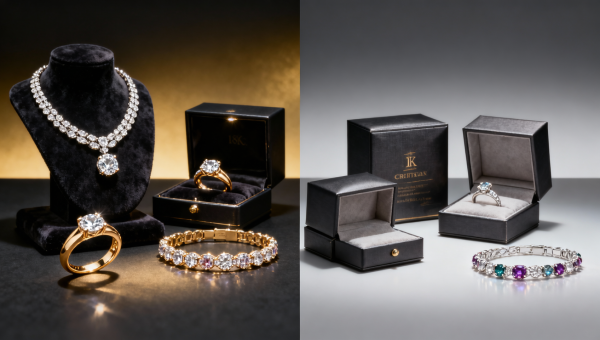
Custom Jewelry with Diamonds: Key Quality Checks
For buyers evaluating custom jewelry with diamonds, quality starts long before the final polish. From stone grading and metal purity to craftsmanship and supplier credibility, every detail affects value, brand image, and long-term satisfaction. This guide explains the key checks behind custom jewelry design, helping procurement teams, distributors, and luxury jewelry B2B decision-makers source high-end luxury jewelry with greater confidence.
In commercial sourcing, a diamond ring, pendant, bracelet, or bespoke collection is rarely judged on appearance alone. Buyers must balance gemstone quality, design consistency, production reliability, and after-sales traceability. For distributors, retail chains, and private-label programs, even a small deviation in stone matching or metal finish can affect sell-through, margin control, and customer trust.
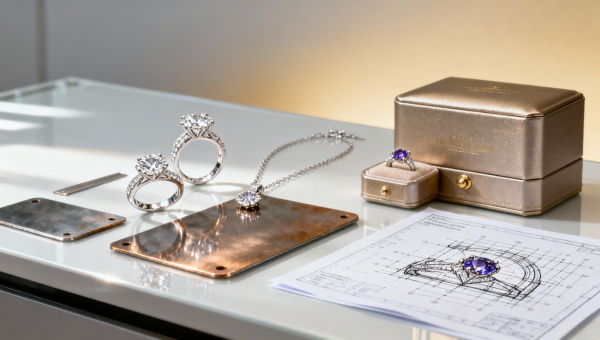
That is why quality checks in custom jewelry with diamonds should be approached as a structured procurement process rather than a visual inspection at the end. From CAD approval and sample review to final QC and documentation, each checkpoint reduces risk across design, manufacturing, and delivery.
Diamond Quality Starts with Grading Consistency
The first checkpoint in custom jewelry design is the diamond itself. In B2B orders, buyers often evaluate not just one stone, but batches of 20, 50, or 200 pieces that must maintain consistent visual standards. A supplier that cannot control grading consistency may deliver products that look mismatched under store lighting, photography, or daily wear conditions.
Most procurement teams use the 4Cs as the baseline: cut, color, clarity, and carat weight. However, for commercial orders, consistency between stones is often more important than chasing the top grade in every category. For example, a well-matched set of F-G color, VS1-VS2 clarity diamonds can perform better in a collection than mixed stones with wider color variation from D to H.
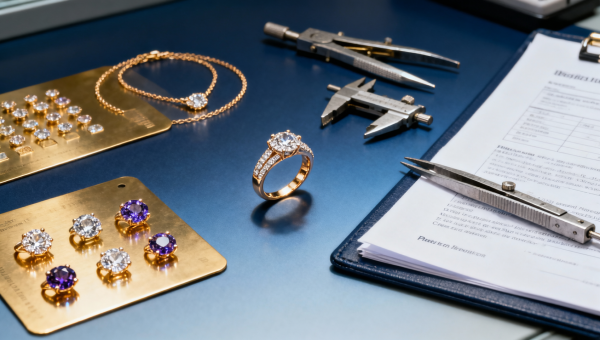
Cut quality deserves particular attention because it directly affects brilliance. In custom diamond jewelry, a poorly cut 0.30 ct stone may look less lively than a well-cut 0.25 ct stone. Buyers should request clear grading references, especially for melee diamonds under 0.10 ct, where visual uniformity is difficult to control without strict sorting standards.
Key grading checks for procurement teams
When assessing diamonds for OEM or ODM jewelry projects, it is useful to confirm grading policy before sample approval. This avoids disputes later in production, especially when repeat orders are expected every 3–6 months.
- Confirm acceptable color range, such as D-F for premium lines or G-H for accessible luxury collections.
- Define clarity tolerance, for example VVS to VS for center stones and SI to VS for small accent stones.
- Check whether cut grading is documented for stones above 0.30 ct and how melee matching is handled.
- Ask if natural, lab-grown, or mixed sourcing is involved, and require full disclosure.
The table below outlines practical diamond quality checkpoints often used in commercial jewelry sourcing.
For buyers comparing multiple suppliers, the strongest partner is usually not the one offering the highest paper grade at the lowest quote. It is the one that can repeatedly deliver stones with controlled variation, transparent disclosure, and reliable documentation across every production lot.
Metal Purity, Structural Integrity, and Wear Performance
A beautiful diamond cannot compensate for weak metal quality. In custom high-end luxury jewelry, metal purity affects not only value perception but also durability, skin compatibility, and long-term finish. For commercial buyers, the core issue is whether the final piece can withstand transport, retail handling, fittings, and daily wear without early failure.
Common precious metal options include 18K gold, 14K gold, platinum, and sterling silver for selected categories. In diamond jewelry, 18K gold is often preferred because it offers a balance between purity and strength, especially for prong settings. Platinum provides excellent durability and premium positioning, but it may increase production cost and weight by 15%–30% depending on design.
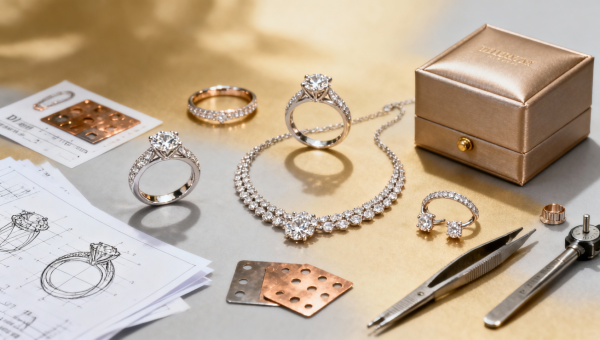
Buyers should also evaluate wall thickness, shank strength, clasp security, and soldering quality. A ring with a highly delicate profile may look elegant in CAD renderings, but if prongs are too thin or the bridge area is under-engineered, the return rate can rise quickly. Structural reviews are especially important when pieces are designed for high-wear channels such as bridal, daily luxury, or department store distribution.
Practical metal and structure checks
Before mass production, procurement teams should request specification confirmation on both purity and construction. Sampling alone is not enough if the approved sample and bulk production use different process controls.
- Verify the declared metal standard, such as 18K gold or Pt950, and ask how purity is controlled during casting.
- Check critical dimensions in millimeters, including prong thickness, ring shank width, chain gauge, and clasp components.
- Review finishing layers such as rhodium plating, especially for white gold pieces intended for premium retail display.
- Confirm whether stress-prone parts undergo reinforcement or hand assembly checks.
The following table helps buyers compare material and durability considerations commonly seen in custom jewelry with diamonds.
A strong sourcing decision links metal choice to channel strategy. A boutique private-label line may prioritize 18K craftsmanship and low-volume exclusivity, while a regional distributor may need 14K designs that remain durable across 500–1,000 units per season. The right material is not universal; it depends on customer profile, margin target, and wear expectations.
Craftsmanship Checks in Custom Jewelry Design and Manufacturing
In custom jewelry with diamonds, craftsmanship determines whether a design concept becomes a commercial success or a warranty problem. Even when diamonds and metals are acceptable on paper, poor execution can lead to loose stones, uneven setting, rough edges, porosity, and finishing defects that reduce perceived luxury value.
For B2B buyers, craftsmanship should be evaluated in 3 stages: pre-production development, pilot sample review, and final bulk inspection. Each stage has a different purpose. Development confirms whether the design can be manufactured; pilot sampling checks wearability and visual quality; final QC verifies that production remains aligned with the approved standard.
Stone setting is one of the most critical areas. Prong, bezel, pavé, channel, and halo settings each carry different risks. Pavé designs, for example, require tight consistency in seat cutting and stone matching. A batch may look fine under normal light, but under magnification a buyer may find irregular spacing or misaligned rows. Such issues are highly visible in e-commerce product photography.
Visible and hidden craftsmanship indicators
Experienced procurement teams often inspect not just the visible surface but also areas that reveal process discipline. These details help separate skilled manufacturers from suppliers that outsource uncontrolled production steps.
- Check under-gallery and interior finishing for smoothness, burrs, and polish access.
- Inspect stone seats and prongs under magnification to identify imbalance or weak contact points.
- Review symmetry across paired products such as stud earrings or matched bands.
- Confirm clasp tension, hinge movement, and solder cleanliness in bracelets and necklaces.
- Look for porosity, visible casting pits, and over-polishing that may thin critical areas.
Recommended acceptance criteria for bulk orders
A practical inspection framework can reduce disputes and speed up shipment release. Many buyers define AQL-style internal standards even when the supplier uses its own QC method. Common checkpoints include zero tolerance for loose center stones, a low tolerance for visible scratches on top surfaces, and dimensional variance limits within agreed millimeter ranges.
For example, ring size tolerance may be controlled within commercial norms, while paired earrings should show close visual symmetry when viewed at 20–30 cm. If polished pieces are intended for high-end display, buyers may also request 100% inspection on top-facing surfaces and random sampling on hidden areas. This extra step is especially useful for orders above 300 units.
Well-managed craftsmanship review protects not just product quality but brand positioning. In luxury jewelry B2B channels, small defects can quickly become reputational problems when distributors, retailers, and end customers compare products side by side.
Documentation, Supplier Credibility, and Production Traceability
A custom diamond jewelry supplier should be assessed as carefully as the product itself. In international trade, documentation and traceability are essential because procurement risk often appears after the sample stage. A strong supplier can explain stone sourcing, production sequence, inspection method, packaging standards, and lead time control in a clear and repeatable way.
For center stones above certain size thresholds, buyers may request independent grading documentation when relevant to the sales channel. For smaller stones, the supplier should still provide a written quality declaration with defined color and clarity ranges. Traceability is equally important for metal claims, plating processes, and final shipment records, especially when goods move across multiple distributors or regional markets.
Lead time transparency matters in B2B custom projects. A realistic timeline may include 7–14 days for CAD and revisions, 2–4 weeks for sample making, and 4–8 weeks for bulk production depending on complexity, stone availability, and order size. Buyers should be cautious when suppliers promise unusually short cycles without clarifying process constraints.
Supplier evaluation checklist
Before confirming a partnership, it helps to compare vendors using a structured matrix rather than relying on price and sample appearance alone.
This comparison shows why procurement teams should score suppliers across at least 4 dimensions: product quality, documentation, delivery reliability, and communication discipline. A lower-priced vendor can become more expensive if rework, returns, or launch delays disrupt a seasonal program.
Why credibility matters for distributors and agents
Distributors and agents carry reputational exposure because they stand between the manufacturer and the end customer. If a supplier cannot support claims with clear records, channel partners may struggle with warranty handling, retailer training, and resale confidence. In premium categories, traceable sourcing and stable documentation are often as important as design appeal.
Commercial Buying Tips: From Sample Approval to Final Delivery
The strongest purchasing outcomes usually come from a disciplined workflow. In custom jewelry design projects, many problems can be prevented by defining approval checkpoints before the first sample is made. This is particularly relevant for chain retailers, hospitality gift programs, luxury concept stores, and regional distributors managing multiple SKUs.
A practical workflow often involves 5 stages: brief confirmation, CAD review, physical sample approval, pilot or pre-production verification, and final shipment inspection. Each stage should record not only design acceptance but also measurable criteria such as metal standard, stone range, weight tolerance, and packaging format. If one step is skipped, the buyer may lose control over the final output.
Packaging and presentation should also be reviewed early. Premium diamond jewelry may require anti-scratch packing, tamper-aware labeling, barcode integration, or branded presentation boxes depending on the sales channel. For export projects, outer carton protection and inventory labeling are not minor details; they affect receiving efficiency and damage rates during transit.
A practical B2B control process
The process below is useful for buyers who need to compare suppliers or manage repeat orders with fewer quality surprises.
- Define the target market, price band, and required material standard before quotation.
- Approve CAD with dimensions, stone sizes, estimated metal weight, and setting type.
- Review physical sample under normal light and magnification, not photos alone.
- Lock the approved sample as the production reference for all future lots.
- Inspect final goods by appearance, stone security, metal marks, and packaging accuracy before shipment.
Common sourcing mistakes to avoid
- Approving samples without written stone quality ranges or metal assumptions.
- Comparing quotes without checking whether suppliers used the same carat weight and purity basis.
- Focusing on front-view appearance while ignoring clasp strength, underside finishing, or prong durability.
- Skipping a final QC plan for orders with more than 100 units or multiple SKU variations.
For buyers operating in high-value channels, consistency across repeat orders often matters more than a one-time attractive sample. A supplier that can deliver stable quality over 2, 3, or 4 seasonal replenishments supports healthier margins and fewer channel conflicts.
FAQ for Buyers of Custom Jewelry with Diamonds
How do I compare two custom jewelry suppliers fairly?
Use the same specification sheet for both suppliers. Include metal type, purity, target weight range, stone count, diamond quality range, setting style, and finishing requirement. Without a shared basis, one quote may appear 10%–20% lower simply because it uses lighter gold weight or lower clarity stones.
What is a reasonable lead time for custom diamond jewelry?
For many commercial projects, 1–2 weeks for design and CAD confirmation, 2–4 weeks for sample making, and 4–8 weeks for production is a practical range. Complex stone layouts, platinum construction, or high-volume holiday orders may require longer planning.
Should buyers always request the highest diamond grade?
Not necessarily. In many B2B programs, a controlled range such as F-G/VS or G-H/VS-SI offers stronger commercial balance than paying for top grades that may not materially improve sell-through. The better strategy is to align grade with brand positioning, viewing distance, and price architecture.
What are the most overlooked quality risks?
The most commonly overlooked areas are stone matching in multi-stone designs, weak prongs, inconsistent rhodium finish, porosity in cast parts, and unclear bulk-to-sample control. These issues may not be obvious in one sample but can emerge across 50–500 units.
Sourcing custom jewelry with diamonds is not only a matter of selecting attractive designs. It requires disciplined checks across diamond grading, metal quality, craftsmanship, supplier credibility, and delivery control. Buyers who define quality standards early and document them clearly are better positioned to protect brand image, reduce returns, and build stronger commercial partnerships.
For procurement teams, distributors, agents, and business evaluators seeking dependable guidance in jewelry and luxury accessory sourcing, a structured quality review can turn a complex purchase into a confident decision. If you are planning a custom diamond jewelry project, now is the right time to refine specifications, compare suppliers carefully, and secure a sourcing strategy aligned with your market goals.
To explore tailored sourcing support, product detail reviews, or custom jewelry solutions for your channel, contact GCT to discuss your requirements and move your next collection forward with greater clarity.
Search News
Hot Articles
- Pro Stage AudioFIFA Adopts Chinese Mini-LED Displays for 2026 World Cup VAR SystemApr 24, 2026
- Outdoor RidesChina FA Warns Nanjing City Over Fan Conduct; ISO 20785 Compliance AcceleratesApr 24, 2026
- Pro Stage AudioFan Zhendong Visits Silicon Valley as MLTT Investor, AI Ping-Pong Tech Draws US InterestApr 24, 2026
Popular Tags
Need ExpertConsultation?
Connect with our specialized leisureengineering team for procurementstrategies.
Recommended News
 Apr 23, 2026Texas Launches PFAS Probe Against Lululemon, Export Compliance Risks RisePFAS probe against Lululemon in Texas escalates export compliance risks for sportswear ODMs, testing labs & chemical suppliers — act now.● Luxury Retail Analyst
 Apr 21, 2026FDA Proposes Chinese Label Translation Requirement for Sports SupplementsFDA proposes Chinese label translation requirements for sports supplements—learn how protein powders, BCAAs & creatine brands can prepare for Q3 2026 compliance.● Luxury Retail Analyst
 Apr 21, 2026CPSC Urgent Alert: PFAS in Fitness Apparel Risks US Import DelaysPFAS in fitness apparel triggers CPSC alerts—avoid US import delays! Get CPSC-recognized PFAS testing, compliance tips & port detention prevention now.● Luxury Retail Analyst
 Apr 20, 2026US CPSC Alert: PFAS in Fitness Apparel May Delay US Import ClearancePFAS in fitness apparel may delay US import clearance—learn how the Texas AG probe & CPSC alert impact compliance, testing, and supply chains now.● Luxury Retail Analyst
 Apr 15, 2026FDA Updates Guidelines for Sports Nutrition Supplement Labels: Chinese Translations Must Be FDA-CertifiedFDA now requires Chinese translations on sports nutrition supplement labels to be FDA-certified. Learn how this impacts manufacturers, importers, and compliance timelines for US market access.● Luxury Retail Analyst
 Apr 14, 2026Japan Updates Jewelry Labeling Rules: Mandatory China Factory Codes from April 2026Japan's new jewelry labeling rules mandate 'Country of Origin + China Factory Code' (CN-FAC-XXXXX) from April 2026. Learn how this impacts Chinese exporters and Japanese importers in the $2.1B precious metals market.● Luxury Retail Analyst
 Apr 14, 2026RCEP Tariff Cuts Boost China's Optical Lens Exports to ASEANRCEP tariff cuts boost China's optical lens exports to ASEAN with 0% duties on CR-39 & polycarbonate lenses. Learn how this + faster logistics create new trade opportunities.● Luxury Retail Analyst
 Apr 14, 2026US CPSC Proposes Stricter Lead Limits in Children's Jewelry, Impacting Chinese ExportersUS CPSC proposes stricter lead limits (40ppm) in children's jewelry, impacting Chinese exporters with new compliance challenges. Learn how this 2026 regulation affects manufacturers & supply chains.● Luxury Retail Analyst
 Apr 14, 2026EU's Revised EN 14138:2026 Eyewear Nickel Standard Takes Effect, Impacting Chinese ExportersEU's EN 14138:2026 eyewear standard tightens nickel limits to 0.2μg/cm²/week, impacting Chinese exporters. Learn compliance strategies for EU market access.● Luxury Retail Analyst
 Apr 25, 2026Luxury Jewelry B2B in 2026: What Changes?Luxury jewelry B2B in 2026: explore custom jewelry design, custom jewelry manufacturer trends, luxury jewelry wholesale shifts, and how custom luxury jewelry drives faster, safer growth.● Luxury Retail Analyst
 Apr 25, 2026How to Grow a Luxury Accessories Online StoreLearn how to grow a luxury accessories online store with custom jewelry design, a trusted custom jewelry manufacturer, luxury accessories wholesale strategy, and high-end luxury jewelry that converts.● Luxury Retail Analyst
 Apr 25, 2026Custom Jewelry for Corporate Gifts That LastCustom jewelry for corporate gifts from a trusted custom jewelry manufacturer—discover custom jewelry design, high-end luxury jewelry, and scalable luxury jewelry B2B solutions.● Luxury Retail Analyst
 Apr 25, 2026What a Good Luxury Accessories Catalog IncludesLuxury accessories catalog guide covering custom jewelry design, high-end luxury jewelry, luxury accessories for men and women, and trusted luxury jewelry B2B sourcing insights.● Luxury Retail Analyst
 Apr 27, 2026Luxury Jewelry Manufacturer: Red Flags to KnowLuxury jewelry manufacturer warning signs every B2B buyer should know. Learn how to evaluate custom jewelry design, custom luxury jewelry, and luxury jewelry wholesale partners before costly mistakes.● Luxury Retail Analyst
 Apr 27, 2026Custom Jewelry for Weddings: Timeline GuideCustom jewelry for weddings made simple: learn timelines for custom jewelry design, choosing a custom jewelry manufacturer, and planning custom luxury jewelry with diamonds.● Luxury Retail Analyst
 Apr 27, 2026Luxury Jewelry Wholesale for New DistributorsLuxury jewelry wholesale guide for new distributors: compare custom jewelry manufacturer options, custom jewelry design support, and luxury jewelry B2B strategies to launch faster.● Luxury Retail Analyst
 Apr 27, 2026Custom Luxury Jewelry: OEM or Small Batch?Custom luxury jewelry sourcing guide: compare OEM vs small-batch with a custom jewelry manufacturer for custom jewelry design, cost control, quality, and scalable luxury jewelry B2B growth.● Luxury Retail Analyst
 Apr 27, 2026How to Price High-End Luxury Jewelry RightCustom jewelry design and high-end luxury jewelry pricing guide for B2B buyers—learn how a custom jewelry manufacturer sets value, margins, and wholesale strategy.● Luxury Retail Analyst
 Apr 27, 2026Luxury Accessories for Women by Price TierLuxury accessories for women by price tier: compare high-end luxury jewelry, luxury jewelry wholesale, and custom luxury jewelry from a trusted custom jewelry manufacturer for smarter B2B sourcing.● Luxury Retail Analyst
 Apr 27, 2026Luxury Accessories for Men: Classic or Trendy?Luxury accessories for men: classic or trendy? Explore custom jewelry design, high-end luxury jewelry, and how a luxury jewelry manufacturer helps buyers source smarter for growth.● Luxury Retail Analyst
 Apr 27, 2026How to Compare Custom Jewelry ManufacturersCompare every custom jewelry manufacturer with confidence. Learn how custom jewelry design, compliance, craftsmanship, MOQ, and luxury jewelry wholesale capabilities impact quality and growth.● Luxury Retail Analyst
 Apr 27, 20262026 Custom Jewelry Design Trends to WatchExplore 2026 custom jewelry design trends shaping B2B buying, from custom luxury jewelry and diamonds to luxury accessories for men and women with smarter sourcing insights.● Luxury Retail Analyst
 Apr 27, 2026Luxury Jewelry B2B: What Buyers Need FirstLuxury jewelry B2B starts with trust. Learn how a custom jewelry manufacturer supports custom jewelry design, luxury jewelry wholesale, and scalable high-end luxury jewelry sourcing.● Luxury Retail Analyst
 Apr 27, 2026How Luxury Brands Source Jewelry CollectionsCustom jewelry design and custom jewelry manufacturer insights for luxury brands: learn how high-end luxury jewelry, wholesale sourcing, and compliant supply chains drive profitable collections.● Luxury Retail Analyst