How to Vet a Custom Jewelry Manufacturer
Choosing the right custom jewelry manufacturer is critical for buyers sourcing luxury accessories for men and luxury accessories for women at scale. From design capability and material traceability to MOQ flexibility, compliance, and export experience, proper vetting reduces risk and protects brand value. This guide helps procurement teams, distributors, and commercial evaluators identify reliable manufacturing partners with confidence.
Why manufacturer vetting matters in sports and entertainment procurement
In sports and entertainment, custom jewelry is rarely a simple fashion item. It often supports merchandise programs, VIP gifting, artist collaborations, event retail, theme venue branding, athlete capsules, and licensed collections. That means a custom jewelry manufacturer must balance visual impact with repeatable production, deadline discipline, and export readiness. For B2B buyers, weak vetting can lead to inconsistent plating, late launches, damaged packaging, or disputes over metal content and stone quality.
The pressure is higher when production ties to a fixed commercial calendar. A championship campaign, music tour, park seasonal launch, or branded fan experience may have only 6–12 weeks from sample approval to first shipment. If the factory cannot hold tolerances, manage approvals, or support staged delivery, the commercial loss is larger than the unit cost difference. Procurement teams therefore need a screening process that looks beyond catalog images and headline pricing.
For distributors, agents, and sourcing evaluators, the real question is not only who can make custom jewelry, but who can manufacture it under commercial conditions. That includes stable sourcing, documented quality checks, packaging compliance, and communication habits that fit multi-country projects. Global Commercial Trade focuses on this decision layer by helping buyers compare suppliers using practical criteria tied to real procurement outcomes rather than generic marketing claims.
A strong vetting process usually covers 5 core areas: design translation, material control, production capacity, compliance readiness, and delivery reliability. If even 1 of these areas is weak, the supplier may still perform for small artisan orders but struggle in retail programs, branded rollouts, or licensed collections. For sports and entertainment buyers, this distinction is essential because demand spikes, launch dates, and reputation risk are all more intense than in casual low-volume purchasing.
Where custom jewelry is used in experience-driven commercial programs
- Arena and stadium merchandise, where branded pendants, rings, bracelets, or commemorative pins support fan spending during short event windows.
- Music and entertainment licensing, where artist identity, packaging detail, and anti-counterfeit controls matter as much as appearance.
- Theme parks, resorts, and leisure retail, where custom jewelry often serves souvenir, premium membership, or limited-edition gift channels.
- Corporate hospitality and sponsor gifting, where low to mid-volume runs may require premium finishing, branded presentation boxes, and fast sample turnaround in 7–15 days.
How to evaluate a custom jewelry manufacturer before requesting a quotation
Before comparing prices, buyers should first confirm whether a custom jewelry manufacturer fits the project profile. A factory that excels in silver casting may not be ideal for stainless steel merch jewelry. A workshop that handles 300 handcrafted pieces may not manage 10,000 units for venue retail. Procurement teams should define the target segment first: precious, demi-fine, fashion-luxury, licensed gifting, or high-volume branded accessories.
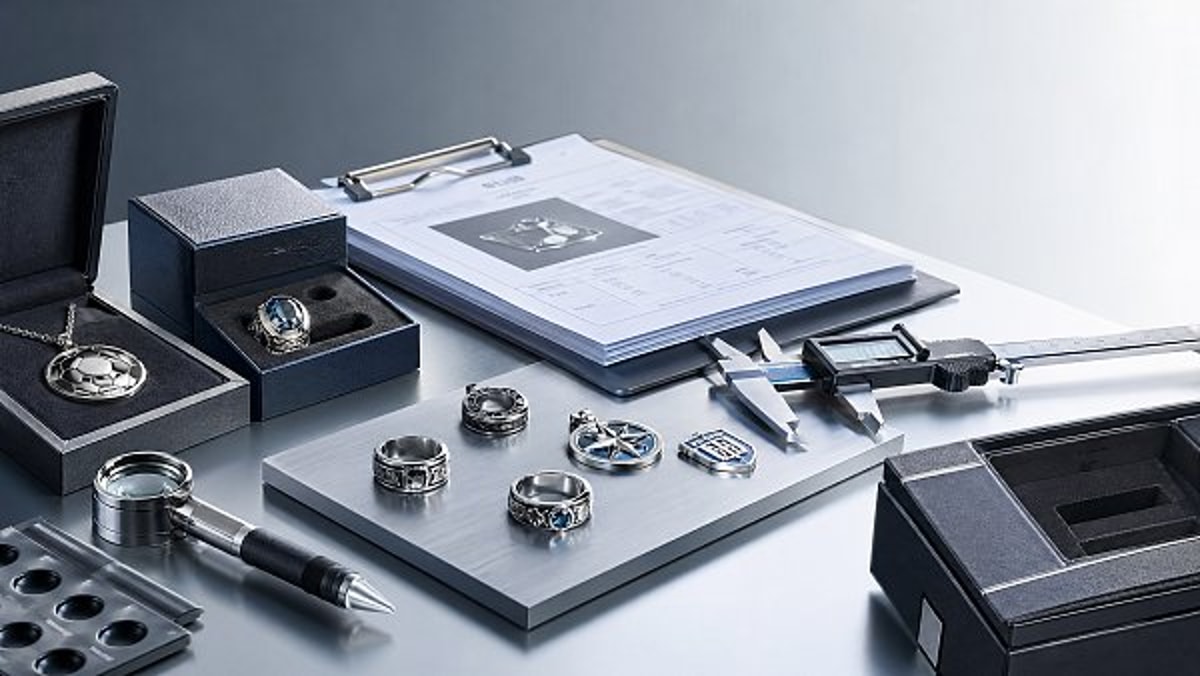
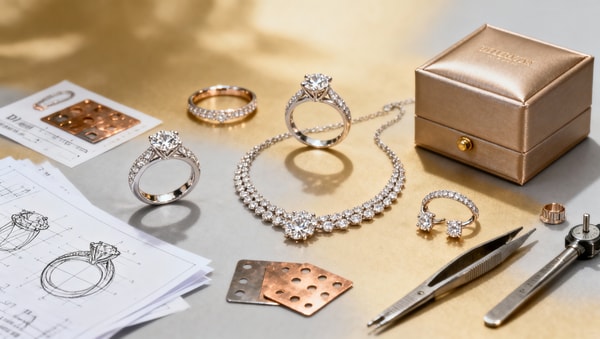
The next step is to verify capability through evidence, not promises. Ask for sample categories, production photos, finishing options, packaging examples, and a typical development timeline. For a new custom jewelry manufacturer, the most useful proof is process clarity. Can the supplier explain mold development, stone setting method, plating thickness approach, and inspection sequence in a structured way? Clear answers often indicate operational maturity.
Commercial buyers should also check how the supplier manages communication and revisions. In custom programs, 2–3 rounds of artwork confirmation are common, and changes to logo depth, clasp type, or packaging insert can affect tooling and lead time. If the factory lacks version control or a dedicated project contact, errors become more likely. This is especially risky for licensed entertainment goods, where approvals may come from brand, legal, and merchandising teams.
An effective pre-quotation review can eliminate unsuitable factories early. It saves time, reduces sample waste, and gives distributors better leverage when comparing suppliers across countries. The table below summarizes key vetting dimensions that matter before commercial negotiation begins.
This framework helps buyers compare suppliers on operational fitness, not only price. In many sports and entertainment projects, the difference between a usable supplier and a risky one appears in process details such as revision handling, carton marking, or pack-out consistency rather than in the base unit quotation.
A 4-step pre-screening checklist
- Confirm product match: identify whether the factory mainly produces sterling silver, brass, stainless steel, zinc alloy, or mixed-material custom jewelry.
- Review sample evidence: request at least 3 comparable projects in a similar finish, complexity, and packaging level.
- Check project management: verify who handles artwork approval, sample comments, production updates, and shipping documentation.
- Validate scale and timing: ask for a typical sample lead time of 7–21 days and bulk production windows of 3–6 weeks, depending on material and volume.
Which technical and compliance points should buyers verify?
A custom jewelry manufacturer should be evaluated on both visible finish and hidden process control. For commercial jewelry, the technical risks usually sit in casting quality, soldering strength, plating consistency, stone security, clasp performance, and logo sharpness. Entertainment and leisure retail programs often involve frequent handling, so pieces need to survive transport, store display, and customer wear without obvious defects.
Material disclosure matters as well. Buyers should ask whether the product base is sterling silver, brass, stainless steel, or alloy, and whether plating includes gold tone, rhodium tone, rose tone, or other decorative finishes. If the project uses recycled inputs, synthetic stones, cubic zirconia, enamel, or leather elements, the supplier should explain source categories and matching consistency. This helps evaluators align price, positioning, and claim language.
Compliance checks are especially important for international sales. Requirements vary by destination market, product composition, and labeling format. A reliable custom jewelry manufacturer should be able to discuss general issues such as heavy metal restrictions, product labeling, packaging material declarations, and shipment documentation. Even when third-party testing is arranged by the buyer, the factory must understand sample preparation and production consistency.
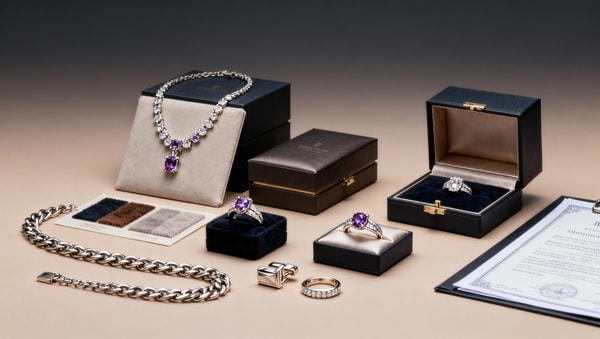
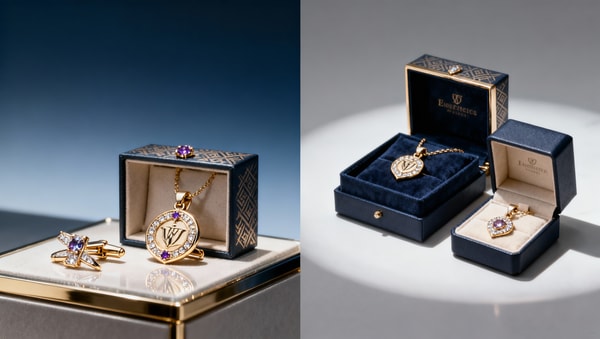
In sports and entertainment channels, packaging is not a minor detail. A ring for premium hospitality gifting, a concert necklace in branded retail, and a theme park souvenir bracelet all need different pack-out logic. Insert cards, barcodes, tamper labels, and transit protection can determine sell-through and return rates. The table below shows common technical and compliance checks that should be reviewed during supplier qualification.
These checks do not require buyers to over-engineer every order. They simply create a documented baseline. When a supplier can explain process flow, inspection points, and compliance support clearly, commercial buyers gain a better basis for approval, negotiation, and long-term vendor planning.
Technical questions worth asking in the first factory meeting
Production and finish control
Ask how the custom jewelry manufacturer controls color consistency across batches, especially when the order includes gold-tone sets, matching earrings, or repeated monthly shipments. For branded merchandise, visual mismatch between batch 1 and batch 2 can create retail complaints even if the product is technically acceptable.
Assembly and durability
Confirm how jump rings, clasps, pin backs, and stone settings are checked. Products sold in active venues or travel-heavy resort channels face rougher handling than jewelry sold in a quiet boutique environment. A manufacturer that understands this will often recommend stronger findings or safer packaging formats.
Documentation and labeling
Verify whether the supplier can support SKU labeling, carton marks, polybag warnings where applicable, barcode placement, and country-specific retailer requirements. These details are often the difference between a smooth launch and warehouse rejection.
How to compare MOQ, cost structure, and delivery risk
Price comparison only works when the quotation structure is transparent. A low unit price from a custom jewelry manufacturer may exclude mold charges, plating upgrades, logo tooling, gift box assembly, spare components, or inspection services. Buyers should therefore compare total landed sourcing logic, not just piece cost. This is especially important for event retail and licensed entertainment collections where packaging and timing can carry more value than small unit savings.
MOQ also needs context. Some manufacturers quote low MOQs for a single SKU but require higher totals for mixed finishes or branded packaging. Others can support pilot runs of 100–300 pieces yet become inefficient above several thousand units. Procurement teams should separate trial quantity, launch quantity, and replenishment quantity. This reveals whether the supplier can support the full commercial lifecycle rather than one isolated order.
Delivery risk should be reviewed in 3 stages: sample approval, bulk production, and export dispatch. Delays often happen at the handoff between stages, especially when artwork revisions, packaging changes, or testing requests are introduced late. Buyers can reduce this risk by asking suppliers to present milestone dates in a simple calendar with critical dependencies clearly marked.
The comparison table below can help sourcing teams score supplier fit beyond headline pricing. It is useful for distributors, procurement officers, and commercial evaluators who need to justify vendor selection internally.
For many commercial buyers, the best custom jewelry manufacturer is not the cheapest one. It is the supplier that can protect launch timing, match the target quality tier, and maintain consistency from first sample to repeat order. This is where structured comparison creates real value.
Cost questions buyers should not skip
- Is tooling charged once, or does each size, logo variation, or finish require separate mold costs?
- Does the quotation include branded pouches, boxes, inserts, stickers, and barcode labels?
- What happens to price if the order moves from 300 pieces to 3,000 pieces or if SKUs are split across 5 styles?
- Can the supplier support phased shipping for launches in different venues or countries over 2–4 weeks?
Common mistakes when vetting a custom jewelry manufacturer
One common mistake is approving a supplier based on attractive samples alone. Samples are important, but they do not prove repeatability. A factory may produce excellent hand-finished prototypes yet struggle to maintain the same quality across 2,000 units packed for retail. Buyers should always ask how sample quality is translated into production control, including inspection checkpoints and packaging standards.
Another mistake is treating compliance as a final step instead of an early screening topic. If the destination market requires specific material restrictions or labeling information, those conditions can influence material choice, component selection, and packaging format from day 1. Late discovery often causes rework, delayed shipments, or cost increases. Commercial evaluators should surface these requirements before mold approval whenever possible.
Buyers also underestimate communication risk. In cross-border sourcing, a slow or unclear reply can delay approvals by several days at each stage. Across 4–6 decision points, that can easily turn into a 1–2 week slip. For sports and entertainment projects with fixed launch dates, communication discipline is not a soft factor. It is part of delivery capability.
Finally, some procurement teams compare manufacturers without adjusting for channel needs. Jewelry for a luxury hospitality gift set, a stadium impulse-buy display, and a licensed music collection should not be sourced with the same quality and packaging assumptions. The right manufacturer is the one aligned with the commercial use case, target buyer, and operational constraints.
FAQ for buyers, distributors, and sourcing evaluators
How do I know if a custom jewelry manufacturer can handle branded entertainment merchandise?
Ask for evidence of structured approvals, logo detail control, packaging coordination, and repeat-order consistency. Branded entertainment merchandise often requires 2–3 approval rounds, mixed SKUs, and launch-linked deadlines. A qualified supplier should explain how artwork, samples, packaging, and dispatch are coordinated across one project timeline.
What is a realistic timeline for custom jewelry sampling and production?
For many projects, sample development takes about 7–21 days, while bulk production commonly takes 3–6 weeks after final approval. Complex stone setting, premium packaging, or multiple finish options can extend this. Buyers should ask for stage-based timing rather than one general promise.
What should distributors pay attention to besides unit price?
Focus on MOQ flexibility, packaging readiness, labeling support, defect handling, and communication speed. Distributors often manage multiple resellers or channel partners, so clear carton marking, barcode accuracy, and replenishment reliability can be just as important as the initial product quotation.
When is a factory audit or video review useful?
It becomes useful when the order value is significant, when the program involves licensed IP, or when you expect ongoing seasonal business. Even a focused remote review of production flow, finishing area, QC process, and packaging setup can help confirm whether the custom jewelry manufacturer is suitable for commercial-scale cooperation.
Why work with GCT when sourcing a custom jewelry manufacturer?
Global Commercial Trade supports buyers who need more than a basic supplier list. In jewelry and luxury accessories for sports and entertainment, the challenge is often not finding factories, but identifying which custom jewelry manufacturer can meet the specific demands of merchandise programs, hospitality gifting, branded retail, and multi-market distribution. That requires informed screening criteria, category understanding, and commercial context.
GCT helps procurement teams, distributors, and business evaluators narrow supplier options using practical sourcing logic. That includes matching project type to likely manufacturing capability, clarifying questions to ask during qualification, and highlighting risk points around lead time, compliance readiness, packaging, and export coordination. This approach is especially useful when buyers must compare several suppliers in a short decision window.
If you are planning a new jewelry line for event retail, a luxury accessories rollout for men or women, a VIP gift program, or a licensed entertainment collection, GCT can help you assess supplier fit before you commit to samples or production. A better front-end review often saves weeks in sourcing time and reduces avoidable revisions during development.
Contact GCT to discuss product selection, custom jewelry manufacturer screening, MOQ planning, sample support, packaging requirements, export documentation, certification considerations, delivery scheduling, and quotation comparison. If you already have drawings, target materials, or launch dates, those details can be reviewed early to improve sourcing accuracy and shorten the path to a reliable manufacturing partner.
Search News
Hot Articles
Popular Tags
Need ExpertConsultation?
Connect with our specialized leisureengineering team for procurementstrategies.
Recommended News
 Apr 29, 2026Luxury Accessories for Women That SellLuxury accessories for women that sell: learn how a custom jewelry manufacturer helps buyers source premium, giftable collections with quality, margin, and reliable supply.● Luxury Retail Analyst
 Apr 29, 2026How Men Choose Luxury Accessories TodayLuxury accessories for men are chosen for craftsmanship, trust, and value. See how a custom jewelry manufacturer helps brands meet modern demand and drive premium sales.● Luxury Retail Analyst
![]() Apr 29, 2026Custom Jewelry Manufacturer MOQ QuestionsCustom jewelry manufacturer MOQ questions answered: compare costs, flexibility, and sourcing risk for luxury accessories for men and luxury accessories for women.● Luxury Retail Analyst
Apr 29, 2026Custom Jewelry Manufacturer MOQ QuestionsCustom jewelry manufacturer MOQ questions answered: compare costs, flexibility, and sourcing risk for luxury accessories for men and luxury accessories for women.● Luxury Retail Analyst Apr 29, 2026Luxury Accessories for Women Worth StockingLuxury accessories for women worth stocking: learn how to choose a custom jewelry manufacturer, compare luxury accessories for men, and source profitable premium retail lines.● Luxury Retail Analyst
 Apr 29, 2026Best Luxury Accessories for Men in 2026Luxury accessories for men in 2026: explore premium trends, custom jewelry manufacturer insights, sourcing tips, and smart retail strategies for sports and entertainment buyers.● Luxury Retail Analyst
 Apr 29, 2026How to Vet a Custom Jewelry ManufacturerCustom jewelry manufacturer vetting guide for sports and entertainment buyers—compare MOQ, compliance, delivery, and quality for luxury accessories for men and women.● Luxury Retail Analyst
 Apr 25, 2026Luxury Jewelry B2B in 2026: What Changes?Luxury jewelry B2B in 2026: explore custom jewelry design, custom jewelry manufacturer trends, luxury jewelry wholesale shifts, and how custom luxury jewelry drives faster, safer growth.● Luxury Retail Analyst
 Apr 25, 2026How to Grow a Luxury Accessories Online StoreLearn how to grow a luxury accessories online store with custom jewelry design, a trusted custom jewelry manufacturer, luxury accessories wholesale strategy, and high-end luxury jewelry that converts.● Luxury Retail Analyst
 Apr 25, 2026Custom Jewelry for Corporate Gifts That LastCustom jewelry for corporate gifts from a trusted custom jewelry manufacturer—discover custom jewelry design, high-end luxury jewelry, and scalable luxury jewelry B2B solutions.● Luxury Retail Analyst
 Apr 25, 2026What a Good Luxury Accessories Catalog IncludesLuxury accessories catalog guide covering custom jewelry design, high-end luxury jewelry, luxury accessories for men and women, and trusted luxury jewelry B2B sourcing insights.● Luxury Retail Analyst
 Apr 27, 2026Custom Jewelry with Diamonds: Lab or Natural?Custom jewelry with diamonds: compare lab-grown and natural options for custom jewelry design, pricing, sourcing, and brand fit. A smart guide for luxury jewelry B2B buyers.● Luxury Retail Analyst
 Apr 27, 2026Luxury Accessories Wholesale: How to Start SmallLuxury accessories wholesale made simple: learn custom jewelry design, choose a reliable custom jewelry manufacturer, and build profitable luxury accessories for men and women with low-risk B2B sourcing.● Luxury Retail Analyst
 Apr 27, 2026Luxury Jewelry Manufacturer: Red Flags to KnowLuxury jewelry manufacturer warning signs every B2B buyer should know. Learn how to evaluate custom jewelry design, custom luxury jewelry, and luxury jewelry wholesale partners before costly mistakes.● Luxury Retail Analyst
 Apr 27, 2026Custom Jewelry for Weddings: Timeline GuideCustom jewelry for weddings made simple: learn timelines for custom jewelry design, choosing a custom jewelry manufacturer, and planning custom luxury jewelry with diamonds.● Luxury Retail Analyst
 Apr 27, 2026Luxury Jewelry Wholesale for New DistributorsLuxury jewelry wholesale guide for new distributors: compare custom jewelry manufacturer options, custom jewelry design support, and luxury jewelry B2B strategies to launch faster.● Luxury Retail Analyst
 Apr 27, 2026Custom Luxury Jewelry: OEM or Small Batch?Custom luxury jewelry sourcing guide: compare OEM vs small-batch with a custom jewelry manufacturer for custom jewelry design, cost control, quality, and scalable luxury jewelry B2B growth.● Luxury Retail Analyst
 Apr 27, 2026How to Price High-End Luxury Jewelry RightCustom jewelry design and high-end luxury jewelry pricing guide for B2B buyers—learn how a custom jewelry manufacturer sets value, margins, and wholesale strategy.● Luxury Retail Analyst
 Apr 27, 2026Luxury Accessories for Women by Price TierLuxury accessories for women by price tier: compare high-end luxury jewelry, luxury jewelry wholesale, and custom luxury jewelry from a trusted custom jewelry manufacturer for smarter B2B sourcing.● Luxury Retail Analyst
 Apr 27, 2026Luxury Accessories for Men: Classic or Trendy?Luxury accessories for men: classic or trendy? Explore custom jewelry design, high-end luxury jewelry, and how a luxury jewelry manufacturer helps buyers source smarter for growth.● Luxury Retail Analyst
 Apr 27, 2026How to Compare Custom Jewelry ManufacturersCompare every custom jewelry manufacturer with confidence. Learn how custom jewelry design, compliance, craftsmanship, MOQ, and luxury jewelry wholesale capabilities impact quality and growth.● Luxury Retail Analyst
 Apr 27, 20262026 Custom Jewelry Design Trends to WatchExplore 2026 custom jewelry design trends shaping B2B buying, from custom luxury jewelry and diamonds to luxury accessories for men and women with smarter sourcing insights.● Luxury Retail Analyst
 Apr 27, 2026Luxury Jewelry B2B: What Buyers Need FirstLuxury jewelry B2B starts with trust. Learn how a custom jewelry manufacturer supports custom jewelry design, luxury jewelry wholesale, and scalable high-end luxury jewelry sourcing.● Luxury Retail Analyst
 Apr 27, 2026How Luxury Brands Source Jewelry CollectionsCustom jewelry design and custom jewelry manufacturer insights for luxury brands: learn how high-end luxury jewelry, wholesale sourcing, and compliant supply chains drive profitable collections.● Luxury Retail Analyst
 Apr 27, 2026Luxury Accessories Online Store: What Converts?Luxury accessories online store insights for B2B buyers: explore custom jewelry design, luxury jewelry manufacturer strengths, wholesale strategy, and what truly drives high-end conversions.● Luxury Retail Analyst