What to Check in Trampoline Park Equipment
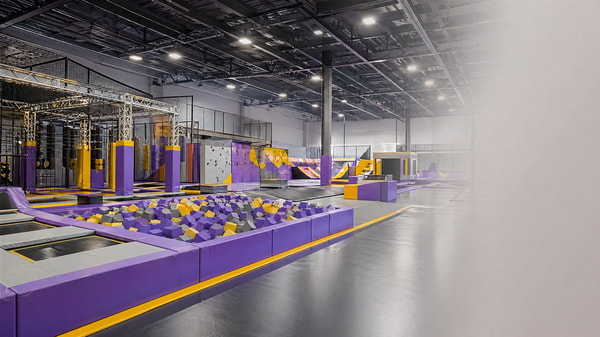
Choosing the right trampoline park equipment means looking beyond appearance to safety standards, material durability, layout efficiency, and long-term operating value. Whether you are comparing a trampoline park supplier, reviewing trampoline park cost, or planning with an indoor playground manufacturer, knowing what to check first helps buyers reduce risk and make smarter commercial decisions.
For researchers, procurement teams, commercial evaluators, and regional distributors, the buying decision is rarely about a single trampoline bed. It is about how the full equipment package performs across safety, guest flow, maintenance cycles, spare parts support, and revenue potential over 3 to 7 years of operation.
In the amusement and leisure park sector, poor equipment selection can create avoidable downtime, higher insurance exposure, and expensive retrofit work within the first 12 to 24 months. A structured evaluation process helps buyers compare suppliers more accurately and align equipment specifications with site size, age group, and operating model.
Safety Compliance Should Be the First Filter
When assessing trampoline park equipment, safety compliance is the first checkpoint because it affects installation approval, operating risk, and brand reputation. A visually impressive layout has little value if frame protection, impact areas, and structural integrity do not match the standards expected in commercial indoor entertainment projects.
Commercial buyers should ask the trampoline park supplier to explain which testing protocols, materials, and design tolerances are used for key areas such as trampoline beds, spring covers, safety pads, wall protection, foam pits, and elevated platforms. It is not enough to request a certificate list. The supplier should also clarify how those standards are implemented in production and installation.
In practical sourcing terms, buyers should inspect impact absorption zones, frame edge padding thickness, anti-slip access routes, netting tension, and the separation between different play intensities. A children’s zone and a performance jump zone should not be treated as the same risk category, especially when user age can range from 3 years to adult participants.
Core Safety Points to Verify
- Padding coverage over springs, frames, and hard contact points, with no exposed steel in user reach zones.
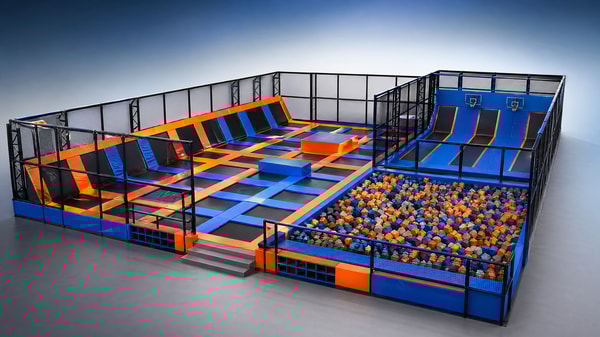
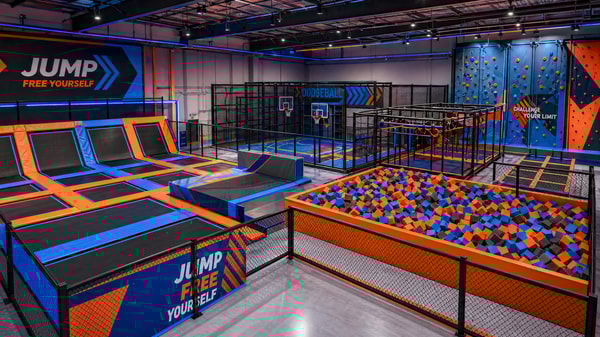
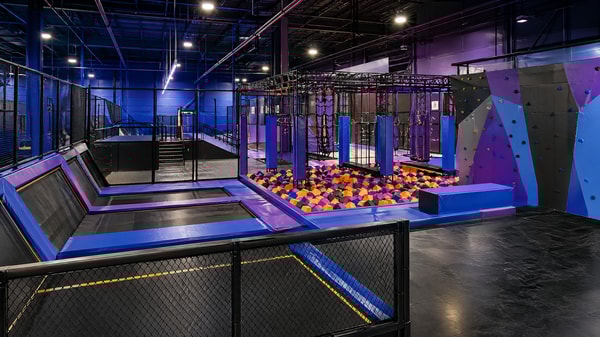
- Clear zone separation between open jump, dodgeball, slam dunk, foam pit, ninja course, and toddler areas.
- Anchor and frame stability suitable for repeated commercial use, not just light-duty family entertainment use.
- Entry, exit, and staff observation points designed to reduce blind spots and crowd collisions during peak hours.
A useful early-stage method is to ask for a 4-part safety package: material specifications, structural drawings, zone risk map, and maintenance checklist. If a supplier cannot provide these documents within 7 to 10 business days, that may indicate limited engineering depth or weak project support.
The table below can help procurement teams compare safety review priorities before moving to price negotiation.
The main takeaway is simple: a serious buyer should verify engineering evidence, not just marketing claims. If a supplier can explain safety details by zone, by user type, and by maintenance cycle, it is usually a stronger sign of commercial readiness than a low initial quote.
Material Quality and Durability Drive Lifetime Cost
A common procurement mistake is to focus heavily on upfront trampoline park cost while underestimating replacement frequency. In a high-traffic venue, wear components such as jump mats, springs, padding covers, foam blocks, and grip surfaces may experience intense daily use for 8 to 12 hours, especially on weekends and holidays.
For that reason, buyers should evaluate equipment not only by appearance, but by the durability profile of each major component. The best commercial trampoline park equipment is designed for repeated loading cycles, easy cleaning, and modular replacement. This lowers maintenance downtime and reduces the cost of partial refurbishment after 18 to 36 months.
Ask suppliers to break down the material stack for each area. For example, frame tubing thickness, galvanizing or powder-coating treatment, mat weave strength, foam density, PVC cover weight, and anti-microbial or anti-slip finishing can all affect operating life. A distributor or investor should also ask how quickly spare parts can be shipped and whether replacement components remain consistent across future batches.
Durability Questions That Influence ROI
- What are the typical replacement intervals for mats, pads, springs, and foam elements under commercial use?
- Can high-wear zones be replaced separately, or must the full unit be removed and rebuilt?
- What cleaning chemicals or disinfecting routines are compatible with the cover materials?
- What spare parts lead time applies for urgent replenishment: 7 days, 15 days, or 30 days?
The next table provides a practical comparison framework for evaluating material-related durability in an indoor trampoline park project.
For commercial buyers, durability is a financial issue as much as a technical one. Equipment with a 10% to 15% higher purchase price may still be the better value if it extends replacement intervals, lowers labor input, and reduces unscheduled closures over a multi-year operating cycle.
Layout Planning Affects Capacity, Revenue, and Risk
Even strong equipment can underperform if the layout is poorly planned. In trampoline parks, the arrangement of jump zones, circulation paths, waiting areas, and staff positions directly affects hourly throughput, supervision efficiency, and accident exposure. This is why buyers should evaluate design capability alongside manufacturing quality.
A good indoor playground manufacturer or trampoline park supplier should review site dimensions, ceiling height, column positions, emergency exits, and expected customer mix before presenting the final concept. A 600-square-meter park targeting family traffic requires a different zoning strategy from a 2,000-square-meter park designed for youth groups, parties, and team activities.
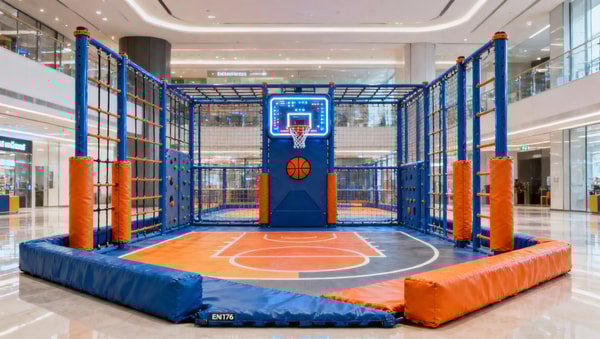
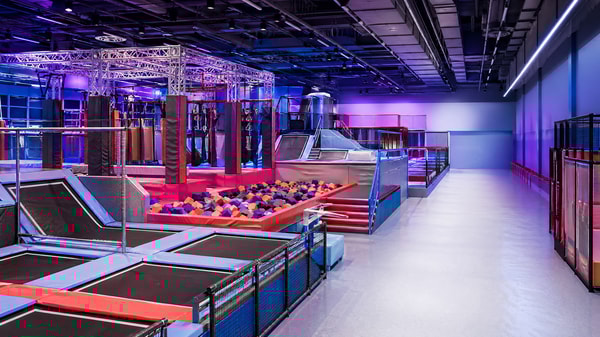
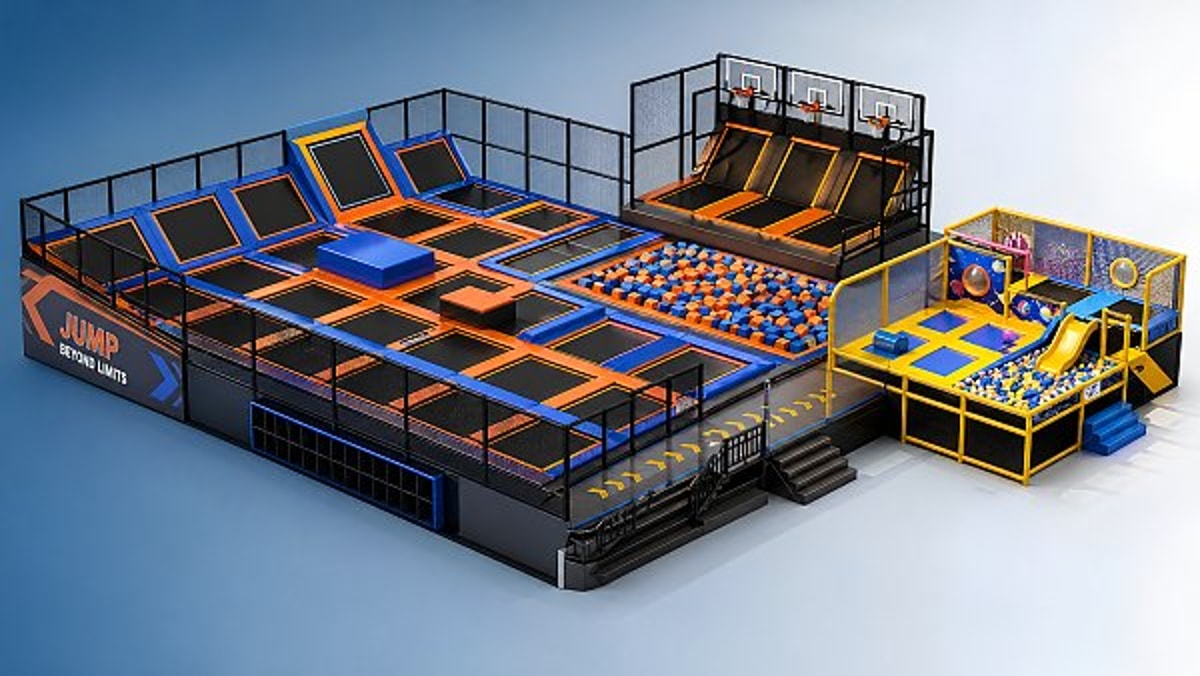
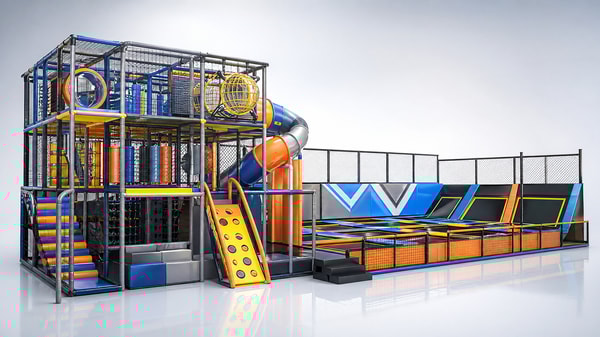
The most efficient layouts balance three goals at once: user excitement, safe separation, and commercial monetization. Buyers should check whether the design includes high-traffic anchors such as open jump areas, challenge zones, basketball lanes, wipeout or obstacle elements, and dedicated toddler sections without creating operational bottlenecks.
Key Layout Ratios to Discuss
As a rule of thumb, operators often review the percentage split between main jumping, feature attractions, circulation, and support space. While every site differs, a practical planning discussion may include 35% to 50% open trampoline area, 20% to 30% add-on attractions, and 15% to 25% circulation and support space.
Questions for Site Planning
- How many users can the park safely host per session, and how does that change during peak weekends?
- Are there enough staff observation points to monitor 4 to 6 active zones without blind corners?
- Does the layout create smooth movement from check-in to lockers, briefing zone, play area, and exit?
- Can the design support birthday parties, school groups, or corporate events without interrupting general admission traffic?
The table below shows how different feature choices can influence layout performance and operating complexity.
A strong layout should not just fill the floor. It should support customer flow, staffing efficiency, and repeat visits. This is where an experienced supplier can create value far beyond the equipment list by helping the buyer convert square meters into sustainable revenue.
Supplier Capability Matters as Much as Equipment Specification
In B2B purchasing, the quality of the trampoline park supplier often determines whether the project stays on schedule and within budget. Two suppliers may offer similar-looking renderings, but their engineering support, installation planning, documentation quality, and after-sales responsiveness can vary significantly.
Procurement teams should evaluate supplier capability across at least 5 areas: design review, manufacturing transparency, project management, installation guidance, and spare parts support. This is especially important for overseas sourcing, where delays in documentation or missing components can add 2 to 6 weeks to opening timelines.
A dependable supplier should provide a structured quotation package rather than a simple price list. That package should include scope definition, equipment zoning, material notes, exclusions, estimated lead time, installation responsibilities, and recommendations for local site preparation such as flooring condition, electrical access, and ceiling clearance.
Supplier Evaluation Checklist
- Confirm whether the supplier can adapt designs to local code, mall restrictions, or custom branding requirements.
- Ask for a production schedule showing key stages such as drawing approval, fabrication, packing, and shipment.
- Verify whether installation is supervised remotely, supported on-site, or handled by a third-party partner.
- Check the normal response time for technical issues and spare parts requests after park opening.
For many projects, standard commercial lead time may fall in the 4 to 10 week range after final drawing confirmation, depending on customization level, feature count, and shipment destination. Buyers should also ask whether packaging is organized by installation sequence, because poor packing logic can slow assembly and increase labor cost on site.
Common Procurement Risks
- Approving a concept rendering before reviewing detailed structural drawings and bill of materials.
- Comparing quotations without confirming whether freight, installation tools, or spare items are included.
- Ignoring local service support until after opening, when even a small parts issue can interrupt operations.
- Choosing solely by headline price without measuring warranty scope and replacement accessibility.
For distributors and agents, supplier capability is even more critical because repeat orders depend on consistency. A supplier that communicates clearly, documents thoroughly, and supports post-installation needs is usually better positioned for long-term channel partnerships than one offering only aggressive pricing.
Maintenance Planning, Operating Cost, and Buyer FAQs
A commercial trampoline park is not a one-time purchase. It is an operating asset that requires inspection, cleaning, component rotation, and periodic replacement planning. Buyers should therefore include maintenance strategy in the original sourcing decision instead of treating it as an afterthought.
At minimum, operators should plan daily visual checks, weekly fastener and padding checks, and monthly deeper inspections of springs, mat tension, frame connections, and high-wear landings. In busy parks, some zones may need review every 200 to 300 user sessions, especially where repeated jumping concentrates load in a limited area.
A good supplier should support this process with maintenance manuals, recommended spare parts lists, and replacement guidance by zone. That support can help procurement managers estimate total cost more realistically and reduce emergency shutdown risk during peak school holiday periods.
Typical Maintenance Planning Table
The following table offers a simple framework buyers can use when comparing serviceability and operating burden between different trampoline park equipment proposals.
The key lesson is that serviceability should be priced into procurement decisions from day one. Equipment that is easy to inspect, clean, and repair often delivers a more stable guest experience and a lower total ownership burden over time.
How should buyers compare trampoline park cost?
Do not compare only the purchase price per square meter. Review at least 6 cost layers: equipment scope, customization, freight, installation, spare parts, and expected replacement cycle. A lower quote may exclude key accessories, higher-grade materials, or post-installation support.
How long does commercial trampoline park equipment usually take to deliver?
For standard projects, production may take roughly 4 to 8 weeks after drawing approval, while more customized parks can extend to 8 to 10 weeks or longer. Buyers should add time for shipping, customs, site readiness, and installation coordination before setting an opening date.
What is a common mistake when working with an indoor playground manufacturer?
One common mistake is assuming that trampoline areas can be planned like generic soft play. Trampoline parks involve different impact loads, supervision needs, and zoning logic. Buyers should request a design review focused specifically on jump dynamics, circulation, and age separation.
What should distributors or agents ask before representing a supplier?
They should ask about customization range, documentation support, project response speed, spare parts policy, and consistency across repeat batches. A strong channel supplier should make it easier to quote, localize, install, and support projects over multiple orders, not just close one transaction.
The best trampoline park equipment decisions come from checking safety, materials, layout logic, supplier capability, and maintenance planning as one complete commercial system. For researchers, buyers, and business evaluators, this approach reduces hidden risk and improves long-term operating value.
If you are comparing a trampoline park supplier, reviewing trampoline park cost, or planning a new venue with an indoor playground manufacturer, a structured sourcing review will help you move faster with fewer surprises. Contact us to discuss your project goals, request a tailored equipment assessment, or explore more commercial amusement solutions suited to your market.
Search News
Hot Articles
Popular Tags
Need ExpertConsultation?
Connect with our specialized leisureengineering team for procurementstrategies.
Recommended News
 Apr 29, 2026Adventure Playground Safety Mistakes to Avoid Before InstallationAdventure playground safety mistakes can delay opening and raise liability. Learn the key pre-installation checks for materials, site planning, surfacing, and compliance.● Theme Park Strategist
 Apr 29, 2026Chinese Tennis Robot Demand Rises in Europe After Zheng Qinwen's Madrid RunChinese tennis robot demand surges in Europe after Zheng Qinwen's Madrid Open run—CE-certified AI training systems now sought by German & Spanish academies.● Theme Park Strategist
 Apr 29, 2026Vietnam Mandates Child Finger-Trap Sensors for Indoor Play EquipmentVietnam mandates child finger-trap sensors for indoor play equipment—key compliance update for exporters, suppliers & certifiers. Act now before Oct 1, 2026.● Theme Park Strategist
 Apr 29, 2026CBA Guangdong’s Loss Spurs Export Inquiries for Indoor Playground EquipmentCBA Guangdong’s playoff loss sparks urgent export inquiries for EN1176-compliant indoor playground equipment — basketball-themed, rapid-assembly modules for ASEAN family entertainment centers.● Theme Park Strategist
 Apr 28, 2026Vietnam Mandates Child Hand-Trap Sensors for Indoor Play EquipmentVietnam mandates VILAS-certified hand-trap sensors for indoor play equipment—key for exporters, manufacturers & certifiers. Act before Oct 2026!● Theme Park Strategist
 Apr 29, 2026What to Review Before Buying a Trampoline ParkCompare trampoline park price, trampoline park cost, and trampoline park equipment before choosing a trampoline park supplier. Get expert tips on safety, layout, and sourcing.● Theme Park Strategist
 Apr 29, 2026How Much Does a Trampoline Park CostTrampoline park cost explained: compare trampoline park price, equipment quality, and supplier value. Learn what drives ROI before choosing a trampoline park for sale.● Theme Park Strategist
 Apr 29, 2026Safe Trampoline Park Equipment BasicsSafe trampoline park equipment basics: compare trampoline park supplier options, indoor playground design, durability, compliance, and total trampoline park cost before you buy.● Theme Park Strategist
 Apr 29, 2026How to Audit an Indoor Playground FactoryIndoor playground manufacturer audit guide: learn how to assess an indoor playground supplier, indoor playground design strength, safety, capacity, and trampoline park equipment quality before you buy.● Theme Park Strategist
 Apr 29, 2026Indoor Playground Supplier Pricing GuideIndoor playground supplier pricing guide: compare indoor playground manufacturer quotes, indoor playground design value, trampoline park equipment cost, and hidden fees before you buy.● Theme Park Strategist
 Apr 29, 2026Trampoline Park Supplier Checklist 2026Trampoline park supplier checklist 2026: compare trampoline park price, cost, equipment, and indoor playground design to choose a safer, smarter supplier for profitable projects.● Theme Park Strategist
 Apr 29, 2026Trampoline Park Price vs Long Term ValueTrampoline park price is only the start. Compare trampoline park cost, equipment quality, and supplier reliability to find safer, higher-ROI solutions with lasting commercial value.● Theme Park Strategist
![]() Apr 29, 2026Indoor Playground Design Mistakes to AvoidIndoor playground design mistakes can raise trampoline park cost and hurt ROI. Learn how to choose the right indoor playground supplier, manufacturer, and equipment for safer, smarter growth.● Theme Park Strategist
Apr 29, 2026Indoor Playground Design Mistakes to AvoidIndoor playground design mistakes can raise trampoline park cost and hurt ROI. Learn how to choose the right indoor playground supplier, manufacturer, and equipment for safer, smarter growth.● Theme Park Strategist Apr 29, 2026Is a Trampoline Park for Sale Worth ItTrampoline park for sale: compare trampoline park price, cost, equipment quality, and supplier support to judge ROI. See what smart buyers check before investing.● Theme Park Strategist
 Apr 29, 2026Trampoline Park Cost Breakdown for BuyersTrampoline park cost explained: compare trampoline park price, equipment quality, and supplier support to find a profitable trampoline park for sale with smart design and safer ROI.● Theme Park Strategist
 Apr 29, 2026What to Check in Trampoline Park EquipmentTrampoline park equipment guide: learn what to check from safety, layout, and materials to trampoline park cost, supplier selection, and indoor playground manufacturer support.● Theme Park Strategist
 Apr 29, 2026Indoor Playground Manufacturer Red FlagsIndoor playground manufacturer red flags: learn how to assess an indoor playground supplier, indoor playground design quality, trampoline park equipment, and hidden trampoline park cost before you buy.● Theme Park Strategist
 Apr 29, 2026How to Pick an Indoor Playground SupplierIndoor playground supplier guide: compare safety, design, quality, and lead times to choose the right indoor playground manufacturer or trampoline park supplier with confidence.● Theme Park Strategist
 Apr 29, 2026How to Compare Trampoline Park SuppliersCompare every trampoline park supplier by safety, design, service, and trampoline park cost. Learn how to choose reliable trampoline park equipment and indoor playground supplier solutions.● Theme Park Strategist
 Apr 29, 2026What Affects Trampoline Park Price MostTrampoline park price depends most on equipment quality, compliance, customization, and supplier strength. Learn what drives trampoline park cost and compare quotes with confidence.● Theme Park Strategist
 Apr 27, 2026Vietnam Mandates Child Finger-Trap Sensors for Indoor Play EquipmentVietnam mandates child finger-trap sensors for indoor play equipment starting Aug 1, 2026 — comply now to avoid delays, penalties & market access risks.● Theme Park Strategist
 Apr 26, 2026Fan Zhendong Visits SF as MLTT Investor; Chinese AI Ping Pong Tech Draws Silicon Valley InterestAI ping pong tech from China grabs Silicon Valley’s attention as Fan Zhendong, MLTT investor and Olympic champ, demos smart table tennis systems in SF—key for sports hardware, AI analytics & FDA-regulated fitness devices.● Theme Park Strategist
 Apr 26, 2026Vietnam Enforces Child Finger-Trap Sensors for Indoor Playground EquipmentChild finger-trap sensors now mandatory for indoor playground equipment in Vietnam—comply with QCVN 17:2026/BKHCN before import or sale.● Theme Park Strategist
 Apr 25, 2026Vietnam Mandates Child Finger-Trap Sensors for Indoor Play EquipmentVietnam mandates child finger-trap sensors for indoor play equipment—TCVN-certified, ≤0.3s response. Critical for importers, OEMs & compliance teams ahead of July 1, 2026 deadline.● Theme Park Strategist