Commercial slides and the maintenance issues often overlooked
Commercial slides are often judged by speed, appearance, and user appeal, yet the real project risks usually emerge in maintenance planning. For project managers and engineering leads, overlooking wear points, cleaning access, component lifespan, and compliance checks can lead to costly downtime and safety concerns. Understanding these commonly missed maintenance issues helps ensure commercial slides remain reliable, efficient, and fit for long-term operational demands.
In hospitality venues, leisure parks, mixed-use retail, family entertainment centers, and public-use commercial environments, commercial slides are exposed to far more stress than many procurement teams estimate at the design stage. High traffic volumes, wet-dry cycling, cleaning chemicals, UV exposure, and repeated impact loads can turn a visually impressive installation into a maintenance-heavy asset within 12 to 24 months if lifecycle planning is weak.
For project leaders, the priority is not just selecting a slide that fits the concept design. The stronger decision is choosing a system that can be inspected quickly, serviced safely, and returned to operation with minimal disruption. That means evaluating commercial slides as long-term infrastructure, not one-time decorative equipment.
Why maintenance is where commercial slide projects succeed or fail
Many slide projects begin with strong attention to geometry, finish, installation footprint, and user throughput. Maintenance access is often treated as a secondary issue, especially when the slide is integrated into a hotel recreation area, rooftop leisure zone, children’s activity floor, or branded attraction. In practice, maintenance complexity can affect operating cost more than the initial specification difference between two similar systems.
A commercial slide may operate for 8 to 14 hours per day in peak periods, with traffic fluctuating from low weekday use to high weekend or holiday surges. Under those conditions, even small oversights become repetitive failures. Fastener loosening, surface abrasion, drainage pooling, joint movement, and inadequate cleaning reach can each trigger service interruptions that consume labor hours and raise safety exposure.
Project managers should also recognize that downtime rarely stays isolated to the slide itself. In a hospitality or leisure setting, a closed attraction can affect guest flow, complaints, staffing allocation, and even online reviews. A shutdown of 24 to 72 hours may not sound severe in engineering terms, but it can be commercially significant in guest-facing operations.
The hidden cost categories often missed in early planning
When buyers compare commercial slides, they often focus on capital expenditure, theme integration, and installation schedule. A more complete budget should include at least 6 maintenance variables: inspection labor, cleaning time, replacement parts, fall-protection access, shutdown frequency, and compliance documentation. These items influence total cost of ownership over a 3-year to 7-year operating horizon.
- Routine inspection intervals, often weekly for visual checks and monthly for fastening, joints, and support review.
- Cleaning requirements, especially where body oils, chlorinated water, soap residue, or food contamination are common.
- Wear-part replacement cycles, which may range from 6 months to 36 months depending on material and usage intensity.
- Staff training needs for lockout, access control, incident logging, and reopening procedures.
The difference between a maintainable and difficult-to-maintain slide is not always visible in concept renderings. It appears later in service corridors, underside clearance, flange accessibility, removable panel design, and the practical ability to inspect key points without dismantling adjacent finishes.
The maintenance issues most frequently overlooked
The most common maintenance failures in commercial slides are rarely dramatic at first. They develop as minor defects that remain unnoticed because the attraction still looks attractive and appears operational. For engineering teams, the priority is to identify which issues accelerate under repetitive use and which can affect user safety, hygiene, or structural stability.
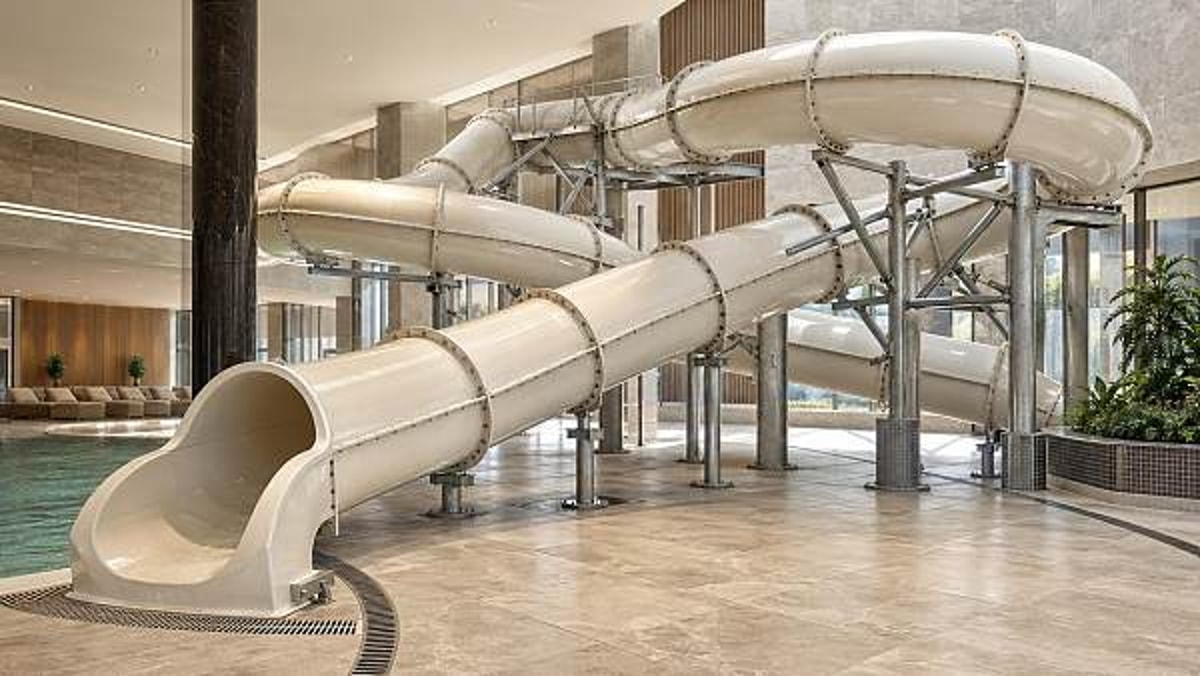
Surface wear is one of the first weak points. On FRP, stainless steel, coated metal, or lined slide channels, repeated friction can create rough patches, discoloration, seam exposure, or reduced glide consistency. In wet-use environments, this can alter speed profiles and user behavior. In dry-use commercial slides, it can increase snag risk and visible finish degradation within 9 to 18 months if maintenance is inconsistent.
Another neglected issue is cleaning access. If turns, enclosed sections, or support interfaces are difficult to reach, teams may shorten cleaning procedures. That leads to residue buildup, microbial risk in humid zones, and cosmetic decline that undermines premium guest experience. For high-traffic venues, surfaces may need light daily cleaning and deeper weekly or biweekly treatment depending on environment and usage density.
Wear points that deserve routine inspection
Not all slide sections age at the same rate. Transition points, entry lips, exit zones, curves with concentrated contact, and support connection areas typically wear faster than straight mid-sections. Maintenance plans should therefore prioritize condition-based inspection rather than assuming a uniform degradation pattern.
- Entry and launch zones, where repetitive impact and foot contact stress the top section.
- Curve apex areas, where lateral forces and friction can accelerate coating or surface wear.
- Section joints and flange interfaces, where alignment shift of even a few millimeters can affect ride quality.
- Exit areas, where water, debris, and user braking generate concentrated abrasion and cleaning demand.
The table below summarizes typical overlooked maintenance issues in commercial slides and the operational consequences project managers should anticipate during procurement and planning.
The key lesson is that maintenance risk usually starts at interfaces rather than at the center of the slide body. Buyers who review access, drainage, and joint serviceability during specification can reduce corrective work later and improve reopening speed after routine inspections.
Design-stage decisions that reduce long-term maintenance burden
For project managers, the easiest maintenance problem to solve is the one removed before fabrication begins. During concept review and supplier evaluation, commercial slides should be assessed not only for visual integration but also for service access, material behavior, support layout, and documentation quality. This is especially important for bespoke installations in hotels, branded leisure spaces, and architecturally constrained interiors.
One practical benchmark is access time. If routine visual inspection of key points takes more than 20 to 30 minutes per cycle because technicians need ladders, temporary closures, or partial dismantling, the design is likely under-optimized. Likewise, if a cleaning team cannot reach the full inner surface without specialized tools or unsafe positioning, cleaning quality and frequency will usually decline over time.
Material selection also matters. Stainless steel, FRP, and hybrid-finish commercial slides each offer advantages, but maintenance planning should consider scratch visibility, chemical resistance, UV response, local repairability, and joint treatment. A premium appearance at handover is not enough if the chosen finish becomes difficult to restore after one heavy season of use.
Specification checkpoints before purchase approval
A robust procurement review should ask the supplier for practical service information, not just product visuals and structural drawings. The goal is to understand how the slide will behave after 100, 1,000, and 10,000 usage cycles, and how quickly a local team can inspect or service it without specialist intervention.
- Request a clear maintenance matrix showing daily, weekly, monthly, and annual tasks.
- Confirm recommended cleaning agents and any chemical restrictions that could affect coatings or seals.
- Verify accessibility of joints, supports, drainage points, and concealed spaces.
- Ask for typical replacement intervals for wear components and seal-related items.
- Review inspection documentation templates for incident logging and compliance tracking.
Comparing maintenance-friendly specification options
The table below provides a practical comparison framework that engineering teams can use when assessing commercial slides from multiple suppliers during early-stage procurement.
This comparison is especially useful for B2B buyers managing multi-stakeholder approvals. It turns maintenance from an abstract concern into measurable procurement criteria, helping teams justify why two visually similar commercial slides may present very different operational outcomes.
Building a workable inspection and service program
Even the best-designed commercial slides require a disciplined inspection program. The practical objective is to catch minor issues before they force closure. A workable maintenance program should be simple enough for site teams to follow, but detailed enough to support engineering oversight and external review when needed.
A common mistake is relying on informal visual checks without fixed criteria. Instead, operators should divide service into four layers: pre-opening daily checks, weekly condition review, monthly technical inspection, and annual deep assessment. Depending on venue intensity, high-traffic installations may also need an additional midweek review during seasonal peaks.
Documentation matters as much as the inspection itself. If a venue cannot show when a commercial slide was checked, what defect was found, how it was corrected, and who approved reopening, operational accountability becomes weak. That is a risk for internal governance and for any safety inquiry following an incident.
A practical inspection schedule for project and operations teams
The table below outlines a realistic maintenance rhythm that can be adjusted based on traffic, exposure conditions, and whether the slide is wet-use, dry-use, indoor, or outdoor.
For most venues, the highest return comes from consistency rather than complexity. A 10-minute daily check and a disciplined 30- to 45-minute weekly review can prevent many faults from escalating into multi-day closures. The exact schedule should reflect actual use volume, not assumptions made at handover.
Common service program gaps
- Maintenance responsibility is split between operations, housekeeping, and engineering with no single sign-off owner.
- Spare parts are not defined during procurement, leading to 2 to 8 week delays for simple corrective work.
- Cleaning teams use unsuitable chemicals that shorten finish life or discolor components.
- Incident logs record guest complaints but not the underlying technical condition of the slide.
These gaps are preventable if project handover includes training, task ownership, and a documented parts list. For commercial slides in premium environments, service readiness should be treated as part of commissioning, not as an afterthought after opening.
Procurement, supplier coordination, and lifecycle planning
From a sourcing perspective, the quality of after-sales coordination can be just as important as the physical build of the commercial slide. Project teams should verify how technical support will work after installation, who provides maintenance guidance, what documentation is included, and how replacement components are handled across borders if the project is part of an international procurement program.
This is especially relevant in B2B commercial sourcing, where owners, consultants, operators, and fabricators may be located in different regions. Without clear support pathways, even a minor issue can become a chain of delayed emails, unclear accountability, and unplanned closure. A practical supplier discussion should cover response windows, spare recommendations, inspection guidance, and escalation procedures.
For project managers overseeing hotel, leisure, or specialty commercial environments, lifecycle readiness should be reviewed alongside delivery timelines. A slide delivered on schedule but lacking service clarity is not fully project-ready. Long-term performance depends on parts continuity, technical transparency, and the ability to train local teams effectively.
Questions buyers should ask before issuing a final order
- Which parts are considered consumable or high-wear, and what are the normal replacement intervals?
- Can the supplier provide a 12-month and 24-month maintenance roadmap based on expected traffic levels?
- What is the expected lead time for critical replacement items: 7 days, 14 days, or longer?
- Is there a clear method statement for cleaning, inspection access, temporary closure, and reopening approval?
- What documentation supports local compliance review and ongoing operational recordkeeping?
These questions help buyers move beyond appearance-led selection. They also support better cross-functional alignment between procurement, engineering, and operations teams, which is often where commercial slide projects experience avoidable friction after launch.
FAQ for project managers and engineering leads
How often should commercial slides be professionally reviewed?
A sensible baseline is daily pre-opening checks, weekly condition inspections, monthly technical review, and an annual comprehensive assessment. If usage is intense or the environment is wet, outdoor, or chemically exposed, inspection frequency may need to increase during peak seasons.
What is the most overlooked design issue during procurement?
Access is often the biggest blind spot. If technicians cannot safely reach joints, supports, and concealed sections within a reasonable time, maintenance quality will suffer. Good access design reduces labor time, shortens downtime, and improves inspection reliability.
Do all commercial slides require the same maintenance approach?
No. Maintenance depends on slide material, indoor or outdoor placement, wet or dry operation, user volume, and integration complexity. A compact indoor retail attraction may require a very different cleaning and inspection plan from a high-throughput resort or amusement installation.
What should be included in handover documents?
At minimum, buyers should request maintenance schedules, approved cleaning guidance, parts lists, inspection check forms, shutdown criteria, and contact pathways for technical support. These documents make commercial slides easier to manage over the full operating lifecycle.
Commercial slides can be strong commercial assets when they are specified and managed with operational realism. For project managers and engineering leads, the real differentiator is not just how the slide looks on opening day, but how efficiently it can be inspected, cleaned, repaired, and kept compliant over the next 3 to 5 years. If you are evaluating suppliers, planning a new installation, or reviewing lifecycle risks in an existing venue, now is the right time to align design, maintenance, and sourcing strategy. Contact us to explore tailored commercial slide sourcing guidance, maintenance-focused specification support, and broader solutions for commercial leisure and hospitality projects.
Search News
Hot Articles
Popular Tags
Need ExpertConsultation?
Connect with our specialized leisureengineering team for procurementstrategies.
Recommended News
 Apr 30, 2026When a playground consultant saves more than an in-house planPlayground consultant advice can prevent costly design errors, compliance gaps, and vendor mistakes. See when expert support beats an in-house plan and protects budget.● Theme Park Strategist
 Apr 30, 2026A smarter playground layout starts with traffic flowPlayground layout starts with traffic flow. Discover how smarter circulation improves safety, accessibility, capacity, and long-term commercial performance.● Theme Park Strategist
 Apr 30, 2026Playground certification steps that delay launch datesPlayground certification delays can add weeks to launch dates. Learn the key bottlenecks, hidden compliance risks, and practical steps to keep projects on schedule.● Theme Park Strategist
 Apr 30, 2026Playground climbers that keep kids challenged without bottlenecksPlayground climbers that reduce bottlenecks keep more kids engaged, improve flow, and suit schools, resorts, parks, and leisure venues. Learn what to specify before you buy.● Theme Park Strategist
 Apr 30, 2026What playground inspection reports often reveal too latePlayground inspection reports often reveal hidden risks too late. Learn how to catch design, installation, and safety issues earlier to avoid delays, rework, and costly project setbacks.● Theme Park Strategist
 Apr 30, 2026Playground accessibility details that change real usabilityPlayground accessibility details shape real usability beyond ramps. Explore transfer points, sensory zones, sightlines, and circulation tips that help buyers choose truly inclusive play spaces.● Theme Park Strategist
 Apr 30, 2026Playground shade structures that improve comfort in hot seasonsPlayground shade structures improve comfort, safety, and usability in hot seasons. Explore smart, durable solutions for schools, parks, and commercial projects.● Theme Park Strategist
 Apr 30, 2026Commercial slides and the maintenance issues often overlookedCommercial slides often fail on maintenance, not design. Learn the overlooked wear, cleaning, access, and compliance issues that affect safety, uptime, and long-term cost.● Theme Park Strategist
 Apr 30, 2026Why playground theme matters more than many layouts suggestPlayground theme shapes engagement, brand value, and repeat visits more than many layouts suggest. Learn how to choose the right concept for hotels, malls, and family venues.● Theme Park Strategist
 Apr 30, 2026Outdoor play structures that stay engaging across age groupsOutdoor play structures that engage ages 2–12: discover how schools, parks, and resorts can choose safer, durable, multi-age designs that boost replay value and buyer confidence.● Theme Park Strategist
 Apr 30, 2026Choosing a playground contractor without missing red flagsPlayground contractor selection made smarter: learn how to spot red flags early, reduce safety and cost risks, and choose a reliable partner with confidence.● Theme Park Strategist
 Apr 30, 2026Playground planning errors that create costly redesigns laterPlayground planning mistakes can trigger costly redesigns, delays, and compliance issues. Learn how to avoid common risks and deliver safer, smarter projects on budget.● Theme Park Strategist
 Apr 30, 2026How playground fencing affects safety without feeling restrictivePlayground fencing shapes safety, visibility, and comfort. Discover how to choose secure, open-feel fencing that protects children without making play spaces feel closed in.● Theme Park Strategist
 Apr 29, 2026Adventure Playground Safety Mistakes to Avoid Before InstallationAdventure playground safety mistakes can delay opening and raise liability. Learn the key pre-installation checks for materials, site planning, surfacing, and compliance.● Theme Park Strategist
 Apr 29, 2026Chinese Tennis Robot Demand Rises in Europe After Zheng Qinwen's Madrid RunChinese tennis robot demand surges in Europe after Zheng Qinwen's Madrid Open run—CE-certified AI training systems now sought by German & Spanish academies.● Theme Park Strategist
 Apr 29, 2026Vietnam Mandates Child Finger-Trap Sensors for Indoor Play EquipmentVietnam mandates child finger-trap sensors for indoor play equipment—key compliance update for exporters, suppliers & certifiers. Act now before Oct 1, 2026.● Theme Park Strategist
 Apr 29, 2026CBA Guangdong’s Loss Spurs Export Inquiries for Indoor Playground EquipmentCBA Guangdong’s playoff loss sparks urgent export inquiries for EN1176-compliant indoor playground equipment — basketball-themed, rapid-assembly modules for ASEAN family entertainment centers.● Theme Park Strategist
 Apr 28, 2026Vietnam Mandates Child Hand-Trap Sensors for Indoor Play EquipmentVietnam mandates VILAS-certified hand-trap sensors for indoor play equipment—key for exporters, manufacturers & certifiers. Act before Oct 2026!● Theme Park Strategist
 Apr 29, 2026What to Review Before Buying a Trampoline ParkCompare trampoline park price, trampoline park cost, and trampoline park equipment before choosing a trampoline park supplier. Get expert tips on safety, layout, and sourcing.● Theme Park Strategist
 Apr 29, 2026How Much Does a Trampoline Park CostTrampoline park cost explained: compare trampoline park price, equipment quality, and supplier value. Learn what drives ROI before choosing a trampoline park for sale.● Theme Park Strategist
 Apr 29, 2026Safe Trampoline Park Equipment BasicsSafe trampoline park equipment basics: compare trampoline park supplier options, indoor playground design, durability, compliance, and total trampoline park cost before you buy.● Theme Park Strategist
 Apr 29, 2026How to Audit an Indoor Playground FactoryIndoor playground manufacturer audit guide: learn how to assess an indoor playground supplier, indoor playground design strength, safety, capacity, and trampoline park equipment quality before you buy.● Theme Park Strategist
 Apr 29, 2026Indoor Playground Supplier Pricing GuideIndoor playground supplier pricing guide: compare indoor playground manufacturer quotes, indoor playground design value, trampoline park equipment cost, and hidden fees before you buy.● Theme Park Strategist
 Apr 29, 2026Trampoline Park Supplier Checklist 2026Trampoline park supplier checklist 2026: compare trampoline park price, cost, equipment, and indoor playground design to choose a safer, smarter supplier for profitable projects.● Theme Park Strategist