Why playground theme matters more than many layouts suggest
Many buyers focus on footprint, equipment mix, and budget, yet playground theme often has a greater impact on visitor engagement, brand identity, and long-term commercial value. For information researchers comparing design strategies, understanding how theme shapes user experience, safety perception, and repeat traffic is essential before evaluating layouts alone.
Why scenario differences matter before judging playground theme
In commercial leisure projects, playground theme is rarely a decorative afterthought. It affects how quickly visitors understand the space, how long families stay, how operators position pricing, and how developers present the project to investors or tenants. A 300-square-meter indoor play corner inside a mall has very different priorities from a 3,000-square-meter destination family entertainment center, even if both use similar play towers, slides, or soft play elements.
For information researchers, the key issue is not whether a theme looks attractive in isolation. The real question is whether that theme supports the commercial purpose of the site. In hospitality, a nature-inspired playground theme may strengthen the property’s premium image. In mixed-use retail, a bright and highly visible concept may be more valuable because it improves wayfinding and impulse visits within the first 5 to 15 seconds of customer attention.
This is why layouts alone can mislead decision-making. Two projects with identical circulation, safety zones, and equipment counts may perform differently if one theme aligns with customer expectations and the other does not. Theme influences visitor psychology, photo-sharing behavior, age appeal, seasonal adaptability, and even maintenance planning over a 3- to 7-year operating cycle.
What researchers should compare first
Before discussing aesthetic direction, it helps to compare projects across business scenarios. That keeps the review practical and avoids overvaluing visual novelty. In commercial sourcing, the most useful evaluation path usually begins with use case, target age group, dwell-time goal, cleaning frequency, and expected refresh cycle.
- Identify the primary setting: hotel, mall, school-support space, municipal leisure venue, or destination park.
- Define the core user mix, such as ages 2–5, 5–8, 8–12, or mixed family groups.
- Estimate visit duration targets, for example 20-minute turnover play or 90-minute immersive stay.
- Review maintenance and operational realities, including daily sanitization, staffing level, and replacement intervals.
Once these conditions are clear, playground theme becomes a strategic design variable rather than a purely creative choice. That is the point where buyers, operators, and sourcing teams can compare options with stronger commercial discipline.
Typical application scenarios where playground theme changes the business outcome
The same playground theme will not perform equally well across all commercial settings. Below is a practical scenario comparison that helps researchers judge where themed play has the highest value and where simpler design may be sufficient.
The table shows that playground theme is most commercially sensitive in hospitality, retail, and destination entertainment. In these settings, the theme contributes not only to visual appeal but also to revenue logic. In more public-use environments, the value of theme still exists, but the tolerance for high-maintenance or trend-driven concepts is often lower.
Scenario 1: hospitality spaces need brand-consistent themes
Hotels and resorts usually benefit from a playground theme that extends the property narrative. A coastal resort may prefer marine exploration, while a mountain retreat may use forest or adventure motifs. The objective is not to create the loudest visual statement, but to make the children’s area feel intentionally connected to the guest journey from lobby to family suite to leisure amenities.
In this scenario, buyers should look closely at materials, color restraint, tactile comfort, and acoustic effect. A luxury property often needs a theme that reads as premium within 2 to 3 meters, not merely exciting from far away. That means surface finish, edge treatment, lighting integration, and cleanability can matter as much as the story concept itself.
Another factor is age layering. Resorts frequently serve mixed family groups, so the same playground theme should support toddlers, younger children, and older siblings without feeling fragmented. Practical zoning within a 100- to 500-square-meter hospitality play area often works better than a single visual gesture with little functional depth.
Scenario 2: retail projects need visibility and fast recognition
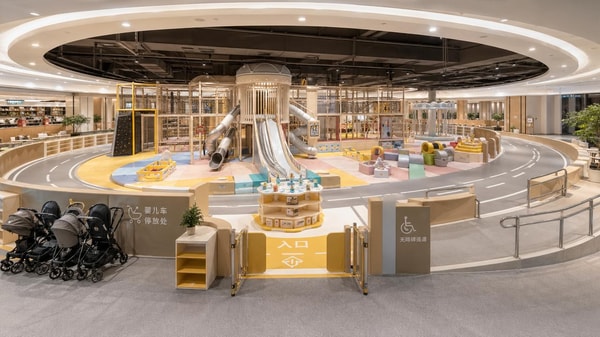
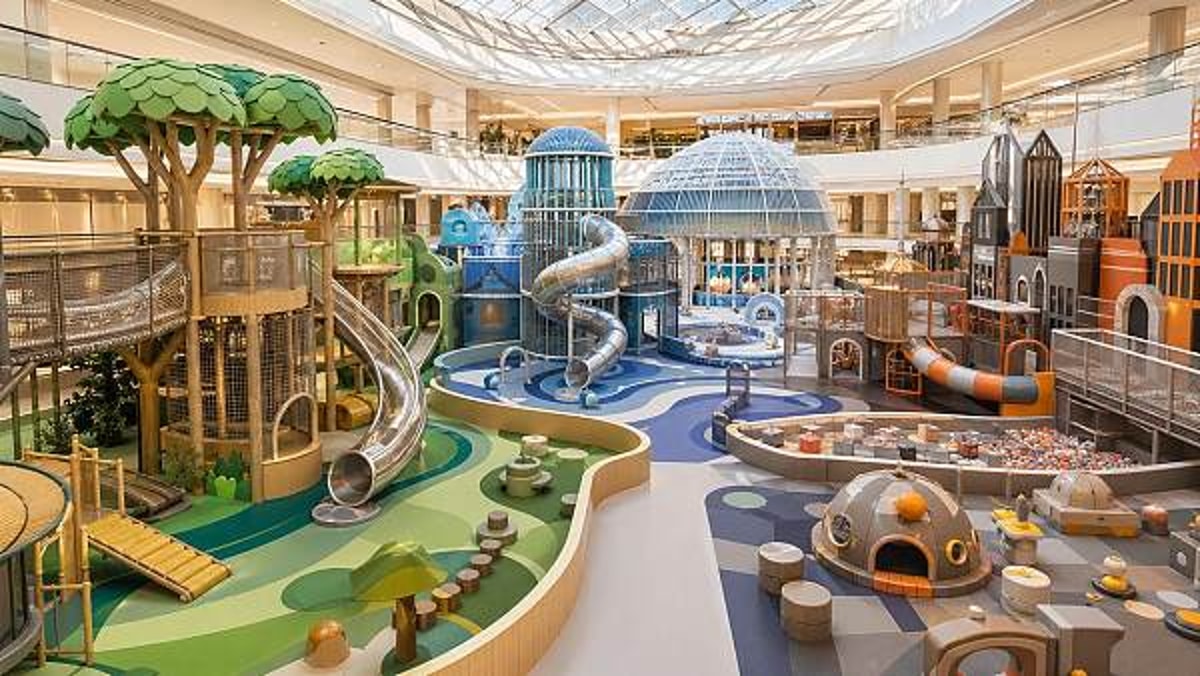
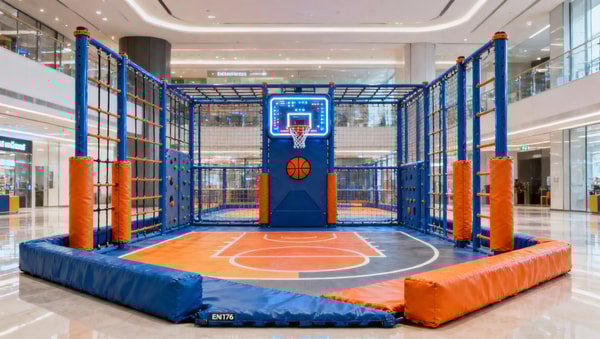
In shopping centers, the best playground theme often does one thing very well: it attracts attention quickly. Families passing by need to understand the play offer almost instantly. Strong silhouettes, visible icon elements, and color mapping that reads well across open atriums or corridors can improve stop rate more effectively than intricate narrative design hidden inside the play zone.
Mall operators also need flexibility. A playground theme tied too tightly to one short-lived trend can become dated in 12 to 24 months, especially if tenant refresh cycles are frequent. Semi-timeless themes such as urban adventure, transport, exploration, or abstract nature tend to adapt better to seasonal events, promotions, and co-branding activities.
For this setting, researchers should test whether the theme supports queue flow, parent seating visibility, and social media sharing. A good retail playground theme does not only entertain children; it should also create a comfortable decision point for adults who are balancing shopping time, supervision, and spending choices.
Scenario 3: destination play venues need immersive storytelling
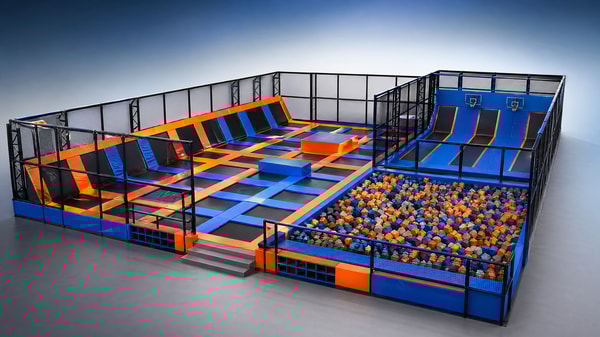
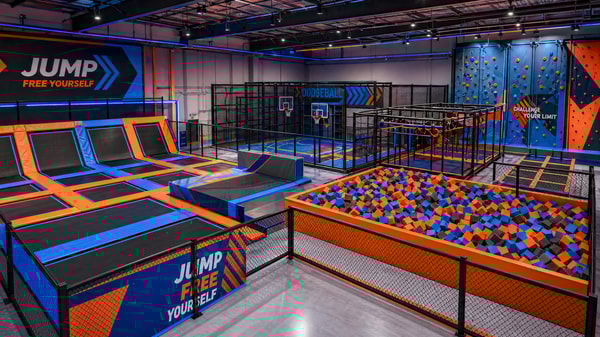
Standalone family entertainment centers, branded leisure parks, and premium indoor amusement venues usually need more depth from a playground theme. In this environment, theme can support ticket value, party packages, educational overlays, and return visits. A layered concept with multiple zones, challenge sequences, and story anchors often creates better replayability than a purely decorative skin.
Because stay time may extend from 60 minutes to 3 hours, visual consistency must be matched by functional stamina. Themed landmarks should guide circulation, not block it. Interactive nodes should justify their footprint. If the concept uses fantasy, science, jungle, ocean, or space motifs, each motif should influence activity design rather than simply appear in graphics.
This scenario often justifies higher customization, but it also raises procurement complexity. Fabrication lead times may extend to 8 to 16 weeks depending on finish detail, imported components, and compliance review. For researchers comparing suppliers, that is where design ambition must be tested against schedule realism.
How user groups change the right playground theme decision
A playground theme that works for one age profile may underperform for another. Information researchers should compare not only venue type but also user behavior. Age mix affects color intensity, challenge level, interpretive storytelling, risk perception, and supervision needs.
Age-led design is more important than trend-led design
Children aged 2–5 typically respond best to clear forms, friendly characters, low-height play cues, and strong visual reassurance. In that segment, a playground theme should communicate safety and accessibility. Overly dark, crowded, or conceptually abstract environments can reduce comfort for both children and caregivers, even if the layout is technically sound.
For ages 5–8, imaginative themes often perform well because children begin to value role-play, discovery, and task-based movement. Pirate, explorer, rescue, transport, or fantasy village concepts can work when they connect directly to climbing, sliding, crawling, and sensory play. The theme should help children invent play narratives, not interrupt movement with excessive decoration.
For older children, roughly 8–12, the wrong playground theme can feel childish even if the equipment is challenging. In these cases, more sophisticated visual language, competitive elements, digital interaction zones, or sport-adventure hybrids may be stronger. A theme must preserve a sense of progression, especially in venues aiming for repeat family visits every 4 to 8 weeks.
Practical user-group comparison
The following comparison helps clarify how the same playground theme should be adjusted for different audience profiles rather than copied unchanged from one project to another.
This comparison shows why playground theme decisions should be tied to user behavior mapping. A buyer who only reviews renderings may miss whether the concept actually supports the intended audience. That is especially important when one venue expects weekday school-group traffic but weekend family-party demand.
Common mismatches: when a playground theme looks strong but performs weakly
One of the most common procurement mistakes is choosing a playground theme because it looks impressive in presentations but does not suit the operating model. In sourcing and commercial planning, mismatch usually appears in four areas: maintenance burden, age confusion, poor brand fit, or weak revenue support.
Mismatch 1: high visual complexity, low operational practicality
A heavily customized playground theme may increase cleaning time, spare-part complexity, and refurbishment cost. Decorative layers, textured surfaces, enclosed props, and special finishes can be appealing at launch but difficult to maintain after 6 to 12 months of heavy use. In high-frequency venues, practical durability should be reviewed as carefully as the concept story.
Researchers should ask whether the theme depends on materials that scratch easily, colors that show wear quickly, or complex forms that limit inspection access. For commercial buyers, lifecycle cost matters as much as initial fabrication cost, especially where daily throughput is high.
This does not mean simple is always better. It means the right playground theme should balance visual identity with cleaning, supervision, and replacement realities. If a venue needs daily wipe-down and weekly deeper maintenance, every decorative decision should support that rhythm.
Mismatch 2: the theme promises one experience but the layout delivers another
A space-themed concept that lacks exploration zones, or an adventure jungle with little climbing sequence, creates disappointment. Visitors notice when the playground theme suggests discovery but the actual play path is repetitive. This weakens repeat appeal and reduces the value of marketing visuals.
The most effective projects connect each thematic promise to at least one physical behavior: climbing, balancing, role-play, hide-and-seek, sensory touch, or social cooperation. If those links are absent, the theme becomes superficial branding rather than a usable experience layer.
For information researchers, this is a useful screening method. Count how many core play functions clearly match the theme narrative. If the number is low, the design may not justify higher custom investment.
Mismatch 3: visual appeal to adults but weak confidence for caregivers
Some playground theme concepts are designed for visual drama, yet caregivers may perceive them as less safe, less visible, or harder to supervise. Dark tunnels, overly enclosed themed structures, and intense color blocking can make adults uncertain, even when technical safety provisions are in place.
In commercial reality, perceived safety strongly affects conversion. If adults hesitate for even 20 to 30 seconds before entry, the project may lose spontaneous visits. Clear sightlines, visible staff points, age labeling, and familiar design cues can improve confidence without reducing thematic quality.
That is why many successful operators treat playground theme as part emotional design and part trust design. The best concepts welcome both the child who wants excitement and the adult who needs reassurance.
How to evaluate the right playground theme for your project
If you are researching options across suppliers, concepts, or project types, it helps to use a structured evaluation path. This avoids making decisions based only on visuals and makes it easier to compare proposals from OEM, ODM, or custom fabrication partners.
A practical review sequence for sourcing teams
- Define the venue scenario, expected user profile, and average stay target.
- List 3 to 5 non-negotiable operational conditions such as cleaning frequency, supervision model, and budget band.
- Shortlist 2 to 4 playground theme directions that match the commercial position of the site.
- Check whether each theme supports real play behaviors, not only decorative style.
- Review lead time, replaceable components, compliance pathway, and future refresh potential.
In international sourcing, buyers should also confirm whether finishes, padding systems, structural materials, and signage can be adapted to local project requirements. While exact compliance needs vary by market, it is common to review safety surfacing, flammability considerations, material durability, and age-appropriate use labeling during specification.
Decision checkpoints that save time later
The most efficient teams test a playground theme against a small set of decision checkpoints early in the process. This reduces redesign loops and helps align designers, operators, and procurement managers before fabrication begins.
- Will the theme still look commercially relevant after 24 to 36 months?
- Can the concept be expanded, refreshed, or partially replaced without rebuilding the entire space?
- Does the theme improve visitor confidence as well as excitement?
- Is the visual language appropriate for the property, tenant mix, or destination positioning?
- Are custom elements justified by expected revenue, branding, or differentiation value?
A well-judged playground theme should support the business model over time, not only improve opening-day impressions. That is especially important in integrated commercial developments where play spaces influence hospitality value, retail dwell time, and family brand perception at once.
Why work with us when comparing playground theme options
Global Commercial Trade supports buyers, developers, hospitality groups, and sourcing teams that need clearer judgment across commercial leisure and family-oriented project categories. When evaluating playground theme strategies, many researchers are not just comparing colors or shapes. They are comparing supplier fit, project feasibility, customization depth, lead times, and long-term operating value.
Our industry focus helps connect design questions with sourcing realities. If you are reviewing concepts for a resort kids club, mall family zone, indoor amusement venue, or mixed-use commercial project, we can help organize the evaluation around practical factors such as product selection, theme suitability by scenario, manufacturing scope, delivery timeline, and documentation requirements.
You can contact us to discuss parameter confirmation, supplier matching, customization options, estimated production cycles, material direction, sample support, and quotation communication. If your team is still deciding whether a bold playground theme or a more flexible concept is right for your business setting, we can help narrow the options based on your target users, commercial goals, and sourcing priorities.
Search News
Hot Articles
Popular Tags
Need ExpertConsultation?
Connect with our specialized leisureengineering team for procurementstrategies.
Recommended News
 Apr 30, 2026When a playground consultant saves more than an in-house planPlayground consultant advice can prevent costly design errors, compliance gaps, and vendor mistakes. See when expert support beats an in-house plan and protects budget.● Theme Park Strategist
 Apr 30, 2026A smarter playground layout starts with traffic flowPlayground layout starts with traffic flow. Discover how smarter circulation improves safety, accessibility, capacity, and long-term commercial performance.● Theme Park Strategist
 Apr 30, 2026Playground certification steps that delay launch datesPlayground certification delays can add weeks to launch dates. Learn the key bottlenecks, hidden compliance risks, and practical steps to keep projects on schedule.● Theme Park Strategist
 Apr 30, 2026Playground climbers that keep kids challenged without bottlenecksPlayground climbers that reduce bottlenecks keep more kids engaged, improve flow, and suit schools, resorts, parks, and leisure venues. Learn what to specify before you buy.● Theme Park Strategist
 Apr 30, 2026What playground inspection reports often reveal too latePlayground inspection reports often reveal hidden risks too late. Learn how to catch design, installation, and safety issues earlier to avoid delays, rework, and costly project setbacks.● Theme Park Strategist
 Apr 30, 2026Playground accessibility details that change real usabilityPlayground accessibility details shape real usability beyond ramps. Explore transfer points, sensory zones, sightlines, and circulation tips that help buyers choose truly inclusive play spaces.● Theme Park Strategist
 Apr 30, 2026Playground shade structures that improve comfort in hot seasonsPlayground shade structures improve comfort, safety, and usability in hot seasons. Explore smart, durable solutions for schools, parks, and commercial projects.● Theme Park Strategist
 Apr 30, 2026Commercial slides and the maintenance issues often overlookedCommercial slides often fail on maintenance, not design. Learn the overlooked wear, cleaning, access, and compliance issues that affect safety, uptime, and long-term cost.● Theme Park Strategist
 Apr 30, 2026Why playground theme matters more than many layouts suggestPlayground theme shapes engagement, brand value, and repeat visits more than many layouts suggest. Learn how to choose the right concept for hotels, malls, and family venues.● Theme Park Strategist
 Apr 30, 2026Outdoor play structures that stay engaging across age groupsOutdoor play structures that engage ages 2–12: discover how schools, parks, and resorts can choose safer, durable, multi-age designs that boost replay value and buyer confidence.● Theme Park Strategist
 Apr 30, 2026Choosing a playground contractor without missing red flagsPlayground contractor selection made smarter: learn how to spot red flags early, reduce safety and cost risks, and choose a reliable partner with confidence.● Theme Park Strategist
 Apr 30, 2026Playground planning errors that create costly redesigns laterPlayground planning mistakes can trigger costly redesigns, delays, and compliance issues. Learn how to avoid common risks and deliver safer, smarter projects on budget.● Theme Park Strategist
 Apr 30, 2026How playground fencing affects safety without feeling restrictivePlayground fencing shapes safety, visibility, and comfort. Discover how to choose secure, open-feel fencing that protects children without making play spaces feel closed in.● Theme Park Strategist
 Apr 29, 2026Adventure Playground Safety Mistakes to Avoid Before InstallationAdventure playground safety mistakes can delay opening and raise liability. Learn the key pre-installation checks for materials, site planning, surfacing, and compliance.● Theme Park Strategist
 Apr 29, 2026Chinese Tennis Robot Demand Rises in Europe After Zheng Qinwen's Madrid RunChinese tennis robot demand surges in Europe after Zheng Qinwen's Madrid Open run—CE-certified AI training systems now sought by German & Spanish academies.● Theme Park Strategist
 Apr 29, 2026Vietnam Mandates Child Finger-Trap Sensors for Indoor Play EquipmentVietnam mandates child finger-trap sensors for indoor play equipment—key compliance update for exporters, suppliers & certifiers. Act now before Oct 1, 2026.● Theme Park Strategist
 Apr 29, 2026CBA Guangdong’s Loss Spurs Export Inquiries for Indoor Playground EquipmentCBA Guangdong’s playoff loss sparks urgent export inquiries for EN1176-compliant indoor playground equipment — basketball-themed, rapid-assembly modules for ASEAN family entertainment centers.● Theme Park Strategist
 Apr 28, 2026Vietnam Mandates Child Hand-Trap Sensors for Indoor Play EquipmentVietnam mandates VILAS-certified hand-trap sensors for indoor play equipment—key for exporters, manufacturers & certifiers. Act before Oct 2026!● Theme Park Strategist
 Apr 29, 2026What to Review Before Buying a Trampoline ParkCompare trampoline park price, trampoline park cost, and trampoline park equipment before choosing a trampoline park supplier. Get expert tips on safety, layout, and sourcing.● Theme Park Strategist
 Apr 29, 2026How Much Does a Trampoline Park CostTrampoline park cost explained: compare trampoline park price, equipment quality, and supplier value. Learn what drives ROI before choosing a trampoline park for sale.● Theme Park Strategist
 Apr 29, 2026Safe Trampoline Park Equipment BasicsSafe trampoline park equipment basics: compare trampoline park supplier options, indoor playground design, durability, compliance, and total trampoline park cost before you buy.● Theme Park Strategist
 Apr 29, 2026How to Audit an Indoor Playground FactoryIndoor playground manufacturer audit guide: learn how to assess an indoor playground supplier, indoor playground design strength, safety, capacity, and trampoline park equipment quality before you buy.● Theme Park Strategist
 Apr 29, 2026Indoor Playground Supplier Pricing GuideIndoor playground supplier pricing guide: compare indoor playground manufacturer quotes, indoor playground design value, trampoline park equipment cost, and hidden fees before you buy.● Theme Park Strategist
 Apr 29, 2026Trampoline Park Supplier Checklist 2026Trampoline park supplier checklist 2026: compare trampoline park price, cost, equipment, and indoor playground design to choose a safer, smarter supplier for profitable projects.● Theme Park Strategist