Playground accessibility details that change real usability
Playground accessibility is often judged by ramps and surface materials, but real usability depends on the small design details that shape how children, caregivers, and operators move through the space. From transfer points and sensory elements to sightlines and inclusive circulation, these overlooked factors can determine whether a playground is truly welcoming or only technically compliant.
Why playground accessibility is being judged more critically now
Across commercial leisure spaces, municipal projects, education campuses, hospitality properties, and mixed-use developments, expectations around playground accessibility are shifting. Buyers are no longer satisfied with a checklist that covers only entry ramps and a few transfer stations. In the last 3 to 5 years, project teams have become more attentive to what happens after arrival: how children circulate, how caregivers supervise, how sensory-sensitive users regulate themselves, and how maintenance teams keep access routes functional through daily wear.
This change matters for information researchers because accessible play design now influences broader procurement decisions. A hotel family zone, a destination leisure park, or an education-linked public space may compare 4 to 6 vendors not only on equipment style and budget, but also on inclusive usability, lifecycle upkeep, compliance interpretation, and site-specific adaptability. As a result, playground accessibility has become a design-performance topic rather than a narrow compliance topic.
Another signal is that operators increasingly view accessible play as part of customer experience management. If a site offers access in theory but families encounter narrow turning areas, confusing circulation, or poor visual supervision, usability fails in the first 10 to 15 minutes of use. That affects dwell time, satisfaction, repeat visits, and reputation, especially in commercial environments where every amenity contributes to perceived quality.
The shift from compliance-first to usability-first thinking
The market is gradually moving from “Can users enter?” to “Can users participate with dignity, independence, and safety?” That distinction changes specification priorities. A technically accessible route may still feel unusable if the path leads to only 1 or 2 isolated play events while the rest of the playground remains socially or physically disconnected. Inclusive value is stronger when access connects to a meaningful percentage of the play experience.
For sourcing teams, this means product review must include transition quality, sensory diversity, resting intervals, hand support continuity, and the relationship between active and quiet zones. In practical terms, a 300 to 800 square meter commercial playground needs more than a compliant entrance; it needs a circulation logic that works for different bodies, ages, and support needs across the entire site.
- More buyers are evaluating user journey quality, not just individual accessible components.
- Caregiver participation is gaining weight in design review, especially in family hospitality and public recreation.
- Lifecycle maintenance is becoming part of accessibility planning, because worn surfaces and blocked routes quickly reduce real usability.
Where the strongest demand signals are coming from
The strongest signals often come from projects that depend on shared public experience: resort developments, shopping-linked entertainment zones, educational campuses, and urban renewal schemes. These buyers usually operate with multi-stakeholder review cycles of 6 to 16 weeks, and accessible play is judged by architects, procurement teams, operators, and community representatives together. That layered review process exposes small usability flaws that might have been overlooked in simpler bids.
The following table summarizes how expectations around playground accessibility are changing in real project environments.
The practical implication is clear: playground accessibility is now reviewed as an ongoing experience system. For commercial buyers and sourcing partners, this widens the specification brief and raises the importance of early-stage usability questions.
The small design details driving the biggest usability differences
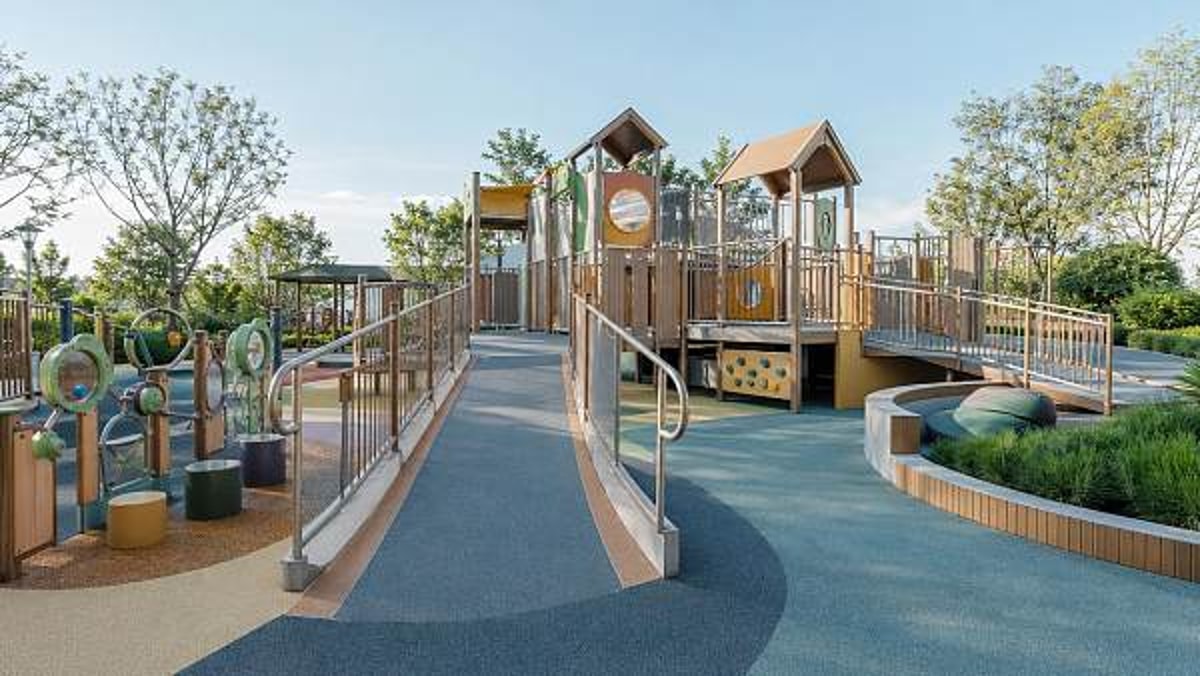
The most decisive accessibility issues are often subtle. A transfer platform that is technically present but awkwardly aligned can discourage use. A route that meets minimum clearance but creates congestion at turning points can isolate mobility device users. A sensory panel placed beside a noisy circulation choke point may be available but not comfortable. In many projects, these “minor” details determine whether playground accessibility works for 60 minutes of play or fails after 5 minutes of frustration.
Commercial and institutional buyers are therefore asking more detailed design questions during supplier evaluation. They want to know whether elevated play can be reached through multiple methods, whether quiet spaces are truly buffered, and whether visual communication between child and caregiver is preserved across key areas. A site can include 10 accessible features and still underperform if those features are disconnected from one another.
This is especially relevant in amusement and leisure environments, where inclusive design must coexist with aesthetics, branding, throughput, and durability. High-traffic sites may see hundreds of user interactions per day on a single route. Under these conditions, geometry, spacing, and material transitions matter as much as the headline equipment pieces.
Details that deserve more attention in specification reviews
- Transfer points should support predictable body positioning and should not force awkward side approaches.
- Circulation loops work better when users can move through the playground without repeated dead ends or backtracking.
- Rest opportunities every short interval are helpful in medium and large layouts, particularly where routes exceed 20 to 30 meters.
- Sensory zones need separation from high-noise activity if they are intended for regulation, not just stimulation.
- Caregiver seating should support direct sightlines rather than being placed only at the perimeter.
Common usability friction points
One common friction point is over-reliance on one accessible route. If maintenance issues, crowding, or wayfinding confusion affect that route, a large portion of the playground becomes functionally unavailable. Another issue is the uneven relationship between ground-level and elevated activities. When accessible features are concentrated only at grade, children may still be separated socially from peers using the main play structure above.
The table below highlights detail-level design elements that frequently change real-world usability more than buyers first expect.
For researchers comparing suppliers or design concepts, these questions are useful because they shift discussion from generic inclusive claims to measurable usability conditions. That creates better alignment between design intent, procurement language, and final installation results.
What is pushing the market toward deeper accessibility planning
Several forces are driving this broader understanding of playground accessibility. One is the rise of experience-led commercial spaces. In hospitality, mixed-use retail, and leisure destinations, every public feature is expected to serve a wider audience and support longer dwell times. If families perceive a space as selectively usable, the project loses value beyond the playground itself.
A second driver is design coordination complexity. More projects now involve landscape architects, play specialists, accessibility consultants, operators, and procurement teams in parallel. When more disciplines review a scheme, overlooked details become visible earlier. That tends to raise expectations around route continuity, sensory moderation, and social inclusion rather than merely code interpretation.
A third factor is lifecycle economics. Accessible surfaces, handholds, transfer systems, and edge conditions must remain reliable over years, not just at handover. If resurfacing is required every 3 to 7 years, or if heavy seasonal wear changes level transitions, real accessibility can decline quickly. Buyers increasingly ask how design choices affect inspection workload, spare parts planning, and long-term usability retention.
Key drivers behind the change
The market pressure is not coming from one source alone. It is a combination of user expectation, operational practicality, and project accountability. For information researchers, this means future-ready sourcing decisions should examine not only whether a solution can be installed, but whether it can continue performing under variable climate, traffic, and maintenance conditions.
- Experience-driven developments want inclusive play to support brand value and visitor satisfaction.
- Institutional buyers need designs that hold up under repeated public use and periodic inspections.
- Procurement teams need clearer technical language to compare supplier proposals consistently.
- Communities increasingly evaluate whether access leads to real participation, not symbolic provision.
Why this matters across the broader commercial supply chain
For a sourcing platform serving commercial spaces and specialty environments, this trend is important because it links design, manufacturing, and procurement more closely than before. A supplier may offer durable components, but if those components cannot be configured for inclusive circulation or adapted to site-specific grade changes, the bid may be less competitive. Conversely, manufacturers who can discuss tolerances, modular options, material transitions, and maintenance intervals often stand out in more sophisticated projects.
This is where market intelligence becomes practical. The question is no longer only “Which playground equipment is available?” but “Which solutions are better positioned for the next wave of accessibility expectations in commercial and public play environments?”
How the changes affect buyers, operators, and suppliers differently
The consequences of evolving playground accessibility expectations are not evenly distributed. Buyers face more detailed evaluation work. Operators take on greater responsibility for ongoing route usability and supervision quality. Suppliers must explain design intent with more precision and provide clearer technical documentation. Each group is affected in a different phase of the project cycle, from concept review to post-installation management.
For buyers, the main challenge is avoiding false confidence. A proposal can look accessible in a presentation but reveal functional gaps when route diagrams, turning spaces, caregiver positions, and sensory conditions are studied together. For operators, the challenge is keeping accessible elements usable through daily cleaning, weather exposure, and high traffic. For suppliers, the challenge is translating inclusive claims into practical planning support.
In many commercial projects, these issues surface at three key points: pre-bid specification, design coordination, and final acceptance. Missing clarity at any of those stages can create cost revisions, delivery delays of 2 to 8 weeks, or post-installation changes that are more expensive than early adjustments.
Impact by stakeholder group
The table below shows how the same accessibility trend creates different decision pressures across the project chain.
For researchers, this framework helps clarify why playground accessibility should be assessed through multiple viewpoints. A strong solution should not only satisfy design intent, but also remain practical for purchasing teams, end users, and site operators over the long term.
Questions that better proposals now need to answer
- How much of the play value is meaningfully reachable, not just visually available?
- What are the recommended inspection and maintenance intervals for high-contact accessible elements?
- Can the design be adapted to local slope, climate, and traffic volume without reducing inclusive circulation?
- What documentation supports interpretation of accessible use beyond basic layout drawings?
As these questions become more common, vendors that communicate clearly and early are more likely to build confidence with specifiers and buyers in the commercial recreation market.
What to watch next when evaluating playground accessibility
The next phase of market maturity will likely focus on how accessibility is integrated from concept stage rather than corrected later. This means buyers should pay attention to design narratives, not just equipment lists. If a proposal explains how users arrive, orient, regulate, participate, rest, and leave, it is usually more advanced than a proposal that only highlights feature counts.
Another area to watch is the balance between customization and standardization. Customized structures can improve spatial fit and brand identity, but they also require careful review of transfer geometry, surface transitions, and maintenance replacement logic. Standard modular systems may offer easier documentation and faster lead times of 4 to 12 weeks, while custom builds may require longer coordination windows. Neither path is automatically better; the better choice depends on site complexity and operational capacity.
Researchers should also monitor how inclusive play is being discussed in adjacent sectors such as hospitality outdoor amenities, campus environments, and destination leisure projects. These sectors often influence specification language earlier than the broader market, especially where user experience and premium positioning are major priorities.
A practical evaluation checklist for current projects
- Map the full user journey from site approach to play participation, not just the entrance condition.
- Check whether at least several major play experiences are inclusively connected rather than isolated.
- Review sensory and quiet-space placement in relation to noise, motion, and crowd flow.
- Ask for maintenance assumptions covering surface wear, hardware inspection, and route continuity.
- Compare supplier responses on drawings, not only marketing language or rendered visuals.
Why early judgment saves later cost
In accessibility-sensitive projects, late corrections are often more disruptive than initial refinements. A small adjustment during design coordination can avoid surfacing changes, route relocation, or feature replacement after installation. For procurement teams, this is one of the strongest reasons to study playground accessibility as a strategic planning issue rather than a final approval issue.
The broader trend is clear: real usability is becoming the standard by which accessible play environments are judged. Projects that respond early to this shift are better positioned to create spaces that work for users, hold up operationally, and remain competitive in modern commercial and public developments.
Why choose us for deeper sourcing and specification support
If you are researching playground accessibility for a hospitality project, leisure development, campus environment, or public-facing commercial space, we can help you move beyond general concepts and into decision-ready detail. Our focus is on connecting buyers, specifiers, and manufacturers through practical sourcing intelligence that reflects real commercial project needs.
We can support you in comparing inclusive play solutions, clarifying specification priorities, and identifying the design details that most affect usability, maintenance, and long-term value. Whether you are reviewing OEM or ODM capabilities, checking site-fit options, or narrowing a supplier shortlist, the goal is to help you make stronger judgments earlier in the process.
Contact us if you want to discuss parameter confirmation, product selection, delivery timelines, custom design options, certification-related considerations, sample support, or quotation planning. If your project involves playground accessibility in a commercial or institutional setting, we can help you evaluate which details deserve the closest attention before procurement moves forward.
Search News
Hot Articles
Popular Tags
Need ExpertConsultation?
Connect with our specialized leisureengineering team for procurementstrategies.
Recommended News
 Apr 30, 2026When a playground consultant saves more than an in-house planPlayground consultant advice can prevent costly design errors, compliance gaps, and vendor mistakes. See when expert support beats an in-house plan and protects budget.● Theme Park Strategist
 Apr 30, 2026A smarter playground layout starts with traffic flowPlayground layout starts with traffic flow. Discover how smarter circulation improves safety, accessibility, capacity, and long-term commercial performance.● Theme Park Strategist
 Apr 30, 2026Playground certification steps that delay launch datesPlayground certification delays can add weeks to launch dates. Learn the key bottlenecks, hidden compliance risks, and practical steps to keep projects on schedule.● Theme Park Strategist
 Apr 30, 2026Playground climbers that keep kids challenged without bottlenecksPlayground climbers that reduce bottlenecks keep more kids engaged, improve flow, and suit schools, resorts, parks, and leisure venues. Learn what to specify before you buy.● Theme Park Strategist
 Apr 30, 2026What playground inspection reports often reveal too latePlayground inspection reports often reveal hidden risks too late. Learn how to catch design, installation, and safety issues earlier to avoid delays, rework, and costly project setbacks.● Theme Park Strategist
 Apr 30, 2026Playground accessibility details that change real usabilityPlayground accessibility details shape real usability beyond ramps. Explore transfer points, sensory zones, sightlines, and circulation tips that help buyers choose truly inclusive play spaces.● Theme Park Strategist
 Apr 30, 2026Playground shade structures that improve comfort in hot seasonsPlayground shade structures improve comfort, safety, and usability in hot seasons. Explore smart, durable solutions for schools, parks, and commercial projects.● Theme Park Strategist
 Apr 30, 2026Commercial slides and the maintenance issues often overlookedCommercial slides often fail on maintenance, not design. Learn the overlooked wear, cleaning, access, and compliance issues that affect safety, uptime, and long-term cost.● Theme Park Strategist
 Apr 30, 2026Why playground theme matters more than many layouts suggestPlayground theme shapes engagement, brand value, and repeat visits more than many layouts suggest. Learn how to choose the right concept for hotels, malls, and family venues.● Theme Park Strategist
 Apr 30, 2026Outdoor play structures that stay engaging across age groupsOutdoor play structures that engage ages 2–12: discover how schools, parks, and resorts can choose safer, durable, multi-age designs that boost replay value and buyer confidence.● Theme Park Strategist
 Apr 30, 2026Choosing a playground contractor without missing red flagsPlayground contractor selection made smarter: learn how to spot red flags early, reduce safety and cost risks, and choose a reliable partner with confidence.● Theme Park Strategist
 Apr 30, 2026Playground planning errors that create costly redesigns laterPlayground planning mistakes can trigger costly redesigns, delays, and compliance issues. Learn how to avoid common risks and deliver safer, smarter projects on budget.● Theme Park Strategist
 Apr 30, 2026How playground fencing affects safety without feeling restrictivePlayground fencing shapes safety, visibility, and comfort. Discover how to choose secure, open-feel fencing that protects children without making play spaces feel closed in.● Theme Park Strategist
 Apr 29, 2026Adventure Playground Safety Mistakes to Avoid Before InstallationAdventure playground safety mistakes can delay opening and raise liability. Learn the key pre-installation checks for materials, site planning, surfacing, and compliance.● Theme Park Strategist
 Apr 29, 2026Chinese Tennis Robot Demand Rises in Europe After Zheng Qinwen's Madrid RunChinese tennis robot demand surges in Europe after Zheng Qinwen's Madrid Open run—CE-certified AI training systems now sought by German & Spanish academies.● Theme Park Strategist
 Apr 29, 2026Vietnam Mandates Child Finger-Trap Sensors for Indoor Play EquipmentVietnam mandates child finger-trap sensors for indoor play equipment—key compliance update for exporters, suppliers & certifiers. Act now before Oct 1, 2026.● Theme Park Strategist
 Apr 29, 2026CBA Guangdong’s Loss Spurs Export Inquiries for Indoor Playground EquipmentCBA Guangdong’s playoff loss sparks urgent export inquiries for EN1176-compliant indoor playground equipment — basketball-themed, rapid-assembly modules for ASEAN family entertainment centers.● Theme Park Strategist
 Apr 28, 2026Vietnam Mandates Child Hand-Trap Sensors for Indoor Play EquipmentVietnam mandates VILAS-certified hand-trap sensors for indoor play equipment—key for exporters, manufacturers & certifiers. Act before Oct 2026!● Theme Park Strategist
 Apr 29, 2026What to Review Before Buying a Trampoline ParkCompare trampoline park price, trampoline park cost, and trampoline park equipment before choosing a trampoline park supplier. Get expert tips on safety, layout, and sourcing.● Theme Park Strategist
 Apr 29, 2026How Much Does a Trampoline Park CostTrampoline park cost explained: compare trampoline park price, equipment quality, and supplier value. Learn what drives ROI before choosing a trampoline park for sale.● Theme Park Strategist
 Apr 29, 2026Safe Trampoline Park Equipment BasicsSafe trampoline park equipment basics: compare trampoline park supplier options, indoor playground design, durability, compliance, and total trampoline park cost before you buy.● Theme Park Strategist
 Apr 29, 2026How to Audit an Indoor Playground FactoryIndoor playground manufacturer audit guide: learn how to assess an indoor playground supplier, indoor playground design strength, safety, capacity, and trampoline park equipment quality before you buy.● Theme Park Strategist
 Apr 29, 2026Indoor Playground Supplier Pricing GuideIndoor playground supplier pricing guide: compare indoor playground manufacturer quotes, indoor playground design value, trampoline park equipment cost, and hidden fees before you buy.● Theme Park Strategist
 Apr 29, 2026Trampoline Park Supplier Checklist 2026Trampoline park supplier checklist 2026: compare trampoline park price, cost, equipment, and indoor playground design to choose a safer, smarter supplier for profitable projects.● Theme Park Strategist