A smarter playground layout starts with traffic flow
A smarter playground layout does more than arrange equipment—it shapes how people move, queue, interact, and stay safe. For technical evaluators, understanding traffic flow is essential to balancing user capacity, compliance, accessibility, and long-term operational efficiency. This article explores how circulation planning can turn a playground into a more functional, scalable, and commercially effective environment.
Why traffic flow is becoming the starting point of modern playground layout
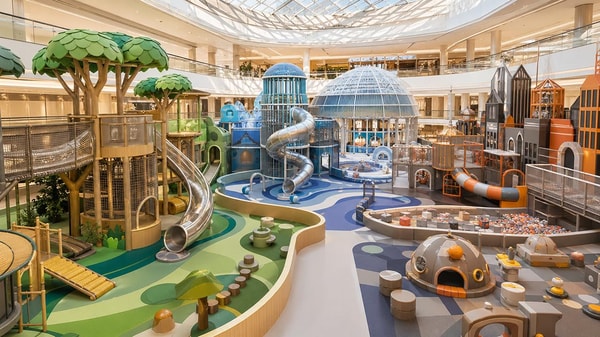
Across commercial leisure projects, the discussion around playground layout is shifting from isolated equipment selection to system-level circulation design. This change is visible in indoor family entertainment centers, hotel recreation zones, mixed-use retail environments, school-adjacent play areas, and destination leisure parks. Technical evaluators are being asked to judge not only whether a slide, tower, or climbing feature fits the footprint, but whether the full route network can support smooth movement during peak periods, often within operating windows of 8 to 14 hours per day.
The reason is straightforward: user behavior has changed. Parents stay longer, children move less predictably between zones, and operators want higher throughput without creating congestion. In a compact site of 300 to 1,000 square meters, even a 1.2-meter bottleneck near a popular feature can reduce practical capacity far more than a simple equipment count would suggest. A playground layout that ignores circulation may look balanced on paper yet underperform once queueing, supervision, and stroller access are considered.
This matters even more in the broader commercial sourcing environment served by GCT, where buyers evaluate long-term operating value rather than one-time installation cost alone. In many projects, traffic flow now influences at least five procurement decisions: equipment spacing, surfacing transitions, barrier specification, maintenance access, and evacuation planning. As a result, the strongest playground layout concepts are increasingly judged by movement logic before visual density.
Signals that the market is changing
Several practical signals show this trend. First, project teams are asking for earlier circulation simulations during concept design, often before final equipment models are locked. Second, operators increasingly request separate paths for active play, caregiver observation, and service access. Third, more tenders now ask suppliers to comment on accessibility and queue behavior, not just material quality and safety zones. These are not cosmetic add-ons; they reflect a more operational view of playground layout.
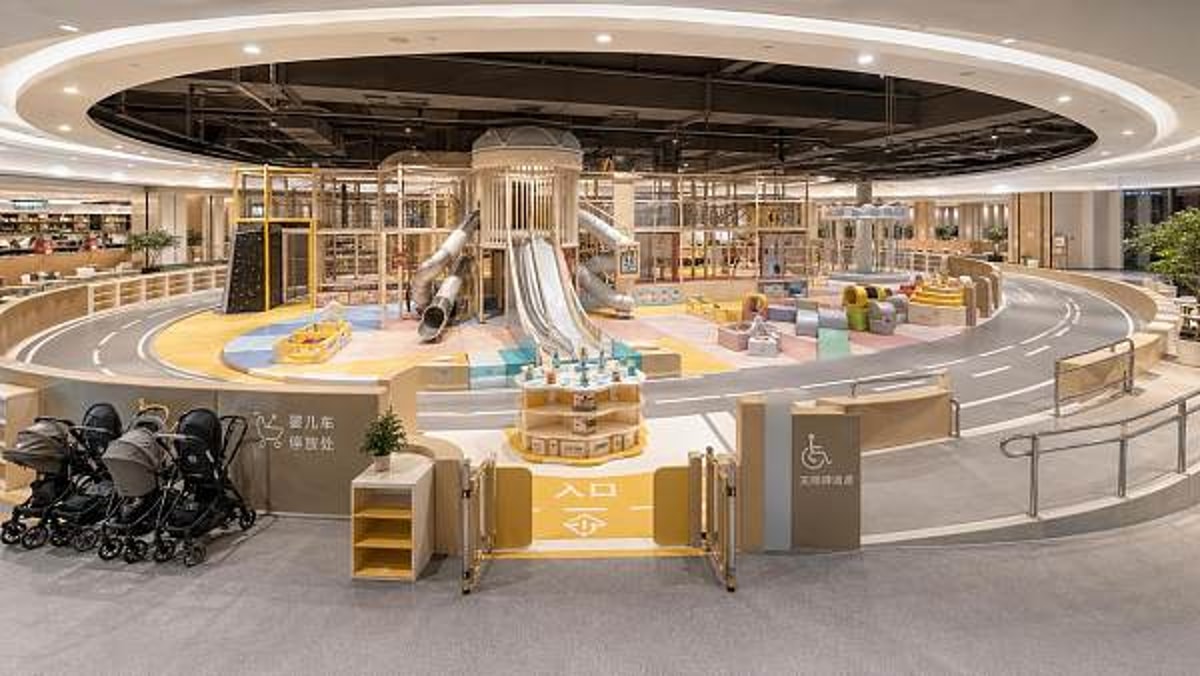
Another signal is the growing importance of multi-use commercial sites. A playground embedded in a hotel, retail atrium, education campus, or leisure complex cannot be assessed in isolation. It must absorb visitors arriving from parking, lobbies, food zones, washrooms, and adjacent attractions. That means the traffic flow question begins outside the play area itself, often extending 20 to 50 meters beyond the first equipment line.
For technical evaluators, the implication is clear: a future-ready playground layout is no longer just a spatial composition. It is a circulation framework with measurable effects on safety, supervision, turnover, cleaning frequency, and user satisfaction.
The trend below summarizes how evaluation priorities are moving in commercial playground planning.
This shift does not mean equipment quality matters less. It means quality is now expected, while traffic flow becomes the differentiator that separates a workable playground layout from one that performs well under real commercial conditions.
What is driving the new emphasis on flow-based playground layout
The first driver is user density. Many operators are trying to increase revenue per square meter without creating a cramped environment. That creates tension between capacity and comfort. A layout that places three high-demand features within one shared approach path may technically fit inside the footprint, yet it concentrates movement into a single corridor. In practice, a route that should support two-way travel may become a stop-start queue zone within 15 to 30 minutes of peak arrival.
The second driver is compliance complexity. Technical evaluators often review projects against multiple layers of expectation: local building rules, general playground safety practices, accessibility considerations, operator maintenance needs, and emergency egress logic. Even where exact standards vary by country, the design direction is similar. Dead ends, abrupt elevation changes, blind corners, and narrow transitions are receiving more scrutiny because they increase supervision difficulty and can slow evacuation.
The third driver is mixed-age use. A playground layout that serves toddlers, school-age children, and family groups at the same time needs managed separation without creating isolation. If low-speed sensory play and high-energy climbing are placed too close together, crossing behavior increases. If they are too far apart, caregivers split attention and circulation becomes inefficient. The challenge is not only zoning, but how zones connect across a 3-step, 5-step, or continuous loop movement pattern.
Operational pressure is shaping design choices
Operators now expect the playground layout to support cleaning, inspection, and reset tasks with less disruption. A service route that allows staff to reach wear points, entry controls, or soft-play modules in under 3 minutes can materially improve operational rhythm. By contrast, layouts that force staff to move through active play routes during busy periods increase interruption and incident exposure.
There is also a stronger commercial link between circulation and visitor dwell. In hospitality and retail settings, smoother traffic flow can encourage families to stay longer while reducing visible crowding. This is particularly important when playgrounds sit near food service, waiting lounges, or branded retail zones. A playground layout that produces calm observation areas and intuitive route sequencing may support secondary spend more effectively than one that maximizes equipment count alone.
For sourcing teams, this means layout review must connect spatial design with downstream business outcomes. Technical evaluation is no longer a pass-fail exercise on dimensions. It is increasingly a predictive exercise focused on how the site will operate after 6 months, 12 months, and multiple seasonal peaks.
Key drivers technical evaluators should track
- Higher visitor density in compact footprints, especially indoor venues below 800 square meters.
- Greater demand for inclusive movement paths, with accessible routes needing to reach meaningful play experiences rather than only the entry point.
- More frequent operator requests for queue control, supervised lines of sight, and controlled transitions between age groups.
- Lifecycle pressure to simplify maintenance circulation, inspection intervals, and component replacement access.
Taken together, these drivers explain why traffic flow is becoming the first technical question in playground layout planning rather than a late-stage adjustment.
How traffic flow changes the evaluation framework for safety, access, and capacity
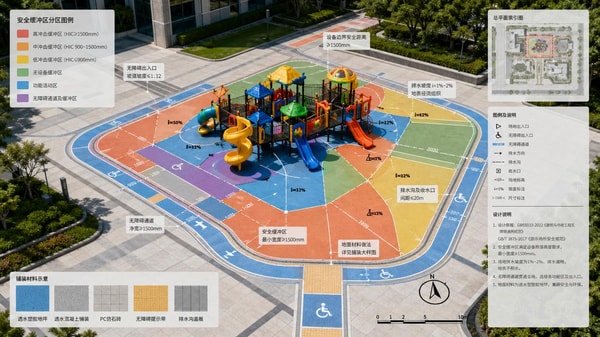
When traffic flow is treated as a primary design variable, technical evaluation becomes more precise. Instead of reviewing a static arrangement, evaluators can test route logic: where users enter, where they pause, where they reverse direction, and where supervision may fail. In most commercial projects, 4 to 7 recurring route types deserve attention: main entry flow, caregiver circulation, internal loop movement, queue formation, accessible approach, service access, and emergency exit movement.
Safety improves when conflict points are reduced. For example, the exit of a slide should not discharge directly into the main path to a climbing feature. Similarly, trampoline-style activity, spinning play, or fast descent elements should not sit immediately beside passive waiting zones. A strong playground layout separates high-velocity release points from low-speed gathering points by distance, barrier logic, or directional change.
Capacity also becomes easier to estimate. Instead of assuming every square meter contributes equally, evaluators can distinguish usable play space from circulation-dependent space. In many layouts, 20% to 35% of the footprint functions mainly as transition, waiting, supervision, or route distribution. Ignoring that share leads to inflated capacity assumptions and underestimation of peak crowding.
Typical pressure points in a commercial playground layout
Most underperforming layouts fail in predictable places. Entry zones become congested because check-in, shoe change, stroller parking, and first-choice equipment are stacked together. Internal intersections become confusing because one route serves both crossing traffic and waiting users. Observation zones lose value because support columns, themed facades, or overbuilt barriers block key lines of sight.
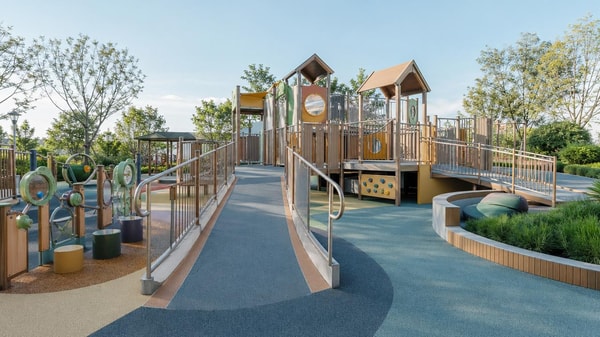
Accessibility reviews reveal another common weakness. A route may meet a minimum width target yet still perform poorly if turning spaces, surface changes, or threshold details create friction. Technical evaluators should look beyond compliance statements and ask whether a user can move continuously between entry, rest point, and at least one meaningful play sequence without detour or assistance beyond normal supervision.
Maintenance is also tied to flow. If routine inspection points are buried behind active nodes, staff will either interrupt guest circulation or delay service tasks. In a high-use venue, even a 10-minute delay repeated several times per day affects operations. That is why a practical playground layout includes hidden or low-conflict service paths wherever possible.
The table below helps technical evaluators connect traffic flow with common review outcomes.
A traffic-aware evaluation framework does not replace traditional safety review. It sharpens it by showing where real operational stress is likely to appear first.
What technical evaluators should examine first in a smarter playground layout
For many projects, the fastest way to improve decision quality is to review the playground layout in sequence rather than by object list. Start with arrival, move through circulation, then test occupation at peak use, and finally review service and exit logic. This method helps teams identify whether the site works as a system instead of a collection of attractive but disconnected components.
A useful early benchmark is route hierarchy. Every layout should distinguish primary routes from secondary routes and localized play pockets. If all paths look equal, users self-organize poorly, and queueing behavior becomes unpredictable. In medium-sized installations, primary movement paths commonly need more generous width and visual clarity than local access points to avoid confusion and backtracking.
Another priority is age-zone transition. Technical evaluators should test whether users can pass between toddler, family, and high-activity zones without repeatedly cutting across each other. This is especially important when the playground layout is intended to support both free play and scheduled group use, such as school visits, hotel event programs, or private bookings.
A practical review checklist
- Map the top 3 demand generators and confirm they do not share a single narrow approach.
- Trace at least 2 accessible routes from entry to active and low-intensity play points.
- Review queue formation at slide entries, climbing access, and interactive nodes during a simulated 15-minute peak period.
- Check whether caregivers can supervise critical intersections without changing position every few seconds.
- Confirm staff can reach inspection and cleaning points without crossing the busiest active route each time.
This kind of checklist supports faster alignment between sourcing, design, operations, and compliance teams. It also helps compare supplier proposals more objectively, especially when several designs use similar equipment but different circulation strategies.
Questions worth asking suppliers and planners
Ask how the proposed playground layout manages peak occupancy rather than average occupancy. Ask where queue spillover will go when a signature feature becomes the dominant draw. Ask how circulation changes if one zone is temporarily closed for maintenance. These questions reveal whether the layout was designed for real operations or only for initial presentation.
It is also useful to ask for route-based annotations on the plan. Even simple markings for entry, pause, wait, observe, cross, and exit can expose weak points quickly. For technical evaluators, these operational overlays often provide more decision value than additional decorative renderings.
In short, a smarter playground layout is evaluated by movement quality, not just by equipment density or theme appeal.
How to prepare for the next phase of layout planning and sourcing
Looking ahead, the strongest projects will likely integrate traffic flow analysis earlier, often during concept planning instead of post-design correction. For buyers, this changes the sourcing sequence. It becomes more effective to shortlist partners who can discuss circulation logic, zoning priorities, accessible movement, and operational maintenance in the same conversation as materials, manufacturing, and lead times.
This shift is particularly relevant for cross-border commercial procurement. When equipment is sourced globally, later design revisions can extend lead times by several weeks and complicate coordination across suppliers. A well-tested playground layout reduces that risk by identifying route conflicts before fabrication details are frozen. In many projects, this can protect installation schedules in the 8- to 16-week planning and delivery window commonly seen in commercial fit-out programs.
Technical evaluators should also monitor how digital planning tools are being used. Not every project requires advanced simulation, but even basic occupancy scenarios and path overlays can improve decision clarity. The key is not technology for its own sake; it is whether the chosen method exposes how people will actually move, stop, wait, and supervise within the proposed playground layout.
Why this matters across commercial sectors
The traffic flow perspective is relevant beyond standalone leisure parks. Hotels need play zones that coexist with lobby circulation and family service areas. Educational and mixed-use campuses need safe transitions between learning, waiting, and recreation. Retail environments need layouts that attract families without blocking adjacent commercial paths. In all of these cases, the playground layout acts as part of a broader experience system.
That is why commercial buyers increasingly seek partners who understand both product sourcing and operational context. A supplier may offer acceptable components, but if the layout logic does not support traffic flow, the project can still underdeliver. For decision-makers, the better question is not only “What equipment fits?” but “What circulation pattern performs best for this site, this audience, and this operating model?”
As the market continues to favor experience-led spaces, traffic-aware planning will become a stronger differentiator in commercial playground development. The earlier this is addressed, the easier it becomes to align safety, accessibility, budget, and long-term usability.
Why choose us for playground layout insight and sourcing support
At GCT, we support technical evaluators and commercial buyers who need more than a simple product list. We help connect playground layout decisions with broader sourcing priorities such as circulation planning, compliance expectations, material suitability, manufacturing coordination, and long-term operating practicality. This is especially valuable when a project sits inside a hotel, retail, education, or leisure environment with multiple user flows to manage.
If you are comparing design directions or supplier capabilities, we can help you clarify the issues that most affect project performance: parameter confirmation for route widths and zoning logic, product selection aligned with user density, expected delivery timelines, customization feasibility, certification-related documentation needs, sample support, and quotation communication across global sourcing channels.
Contact us if you want to assess how traffic flow should influence your next playground layout, whether you are at concept stage, specification review, or supplier comparison stage. A focused discussion at the right time can reduce redesign risk, improve procurement clarity, and help your project move forward with stronger technical confidence.
Search News
Hot Articles
Popular Tags
Need ExpertConsultation?
Connect with our specialized leisureengineering team for procurementstrategies.
Recommended News
 Apr 30, 2026When a playground consultant saves more than an in-house planPlayground consultant advice can prevent costly design errors, compliance gaps, and vendor mistakes. See when expert support beats an in-house plan and protects budget.● Theme Park Strategist
 Apr 30, 2026A smarter playground layout starts with traffic flowPlayground layout starts with traffic flow. Discover how smarter circulation improves safety, accessibility, capacity, and long-term commercial performance.● Theme Park Strategist
 Apr 30, 2026Playground certification steps that delay launch datesPlayground certification delays can add weeks to launch dates. Learn the key bottlenecks, hidden compliance risks, and practical steps to keep projects on schedule.● Theme Park Strategist
 Apr 30, 2026Playground climbers that keep kids challenged without bottlenecksPlayground climbers that reduce bottlenecks keep more kids engaged, improve flow, and suit schools, resorts, parks, and leisure venues. Learn what to specify before you buy.● Theme Park Strategist
 Apr 30, 2026What playground inspection reports often reveal too latePlayground inspection reports often reveal hidden risks too late. Learn how to catch design, installation, and safety issues earlier to avoid delays, rework, and costly project setbacks.● Theme Park Strategist
 Apr 30, 2026Playground accessibility details that change real usabilityPlayground accessibility details shape real usability beyond ramps. Explore transfer points, sensory zones, sightlines, and circulation tips that help buyers choose truly inclusive play spaces.● Theme Park Strategist
 Apr 30, 2026Playground shade structures that improve comfort in hot seasonsPlayground shade structures improve comfort, safety, and usability in hot seasons. Explore smart, durable solutions for schools, parks, and commercial projects.● Theme Park Strategist
 Apr 30, 2026Commercial slides and the maintenance issues often overlookedCommercial slides often fail on maintenance, not design. Learn the overlooked wear, cleaning, access, and compliance issues that affect safety, uptime, and long-term cost.● Theme Park Strategist
 Apr 30, 2026Why playground theme matters more than many layouts suggestPlayground theme shapes engagement, brand value, and repeat visits more than many layouts suggest. Learn how to choose the right concept for hotels, malls, and family venues.● Theme Park Strategist
 Apr 30, 2026Outdoor play structures that stay engaging across age groupsOutdoor play structures that engage ages 2–12: discover how schools, parks, and resorts can choose safer, durable, multi-age designs that boost replay value and buyer confidence.● Theme Park Strategist
 Apr 30, 2026Choosing a playground contractor without missing red flagsPlayground contractor selection made smarter: learn how to spot red flags early, reduce safety and cost risks, and choose a reliable partner with confidence.● Theme Park Strategist
 Apr 30, 2026Playground planning errors that create costly redesigns laterPlayground planning mistakes can trigger costly redesigns, delays, and compliance issues. Learn how to avoid common risks and deliver safer, smarter projects on budget.● Theme Park Strategist
 Apr 30, 2026How playground fencing affects safety without feeling restrictivePlayground fencing shapes safety, visibility, and comfort. Discover how to choose secure, open-feel fencing that protects children without making play spaces feel closed in.● Theme Park Strategist
 Apr 29, 2026Adventure Playground Safety Mistakes to Avoid Before InstallationAdventure playground safety mistakes can delay opening and raise liability. Learn the key pre-installation checks for materials, site planning, surfacing, and compliance.● Theme Park Strategist
 Apr 29, 2026Chinese Tennis Robot Demand Rises in Europe After Zheng Qinwen's Madrid RunChinese tennis robot demand surges in Europe after Zheng Qinwen's Madrid Open run—CE-certified AI training systems now sought by German & Spanish academies.● Theme Park Strategist
 Apr 29, 2026Vietnam Mandates Child Finger-Trap Sensors for Indoor Play EquipmentVietnam mandates child finger-trap sensors for indoor play equipment—key compliance update for exporters, suppliers & certifiers. Act now before Oct 1, 2026.● Theme Park Strategist
 Apr 29, 2026CBA Guangdong’s Loss Spurs Export Inquiries for Indoor Playground EquipmentCBA Guangdong’s playoff loss sparks urgent export inquiries for EN1176-compliant indoor playground equipment — basketball-themed, rapid-assembly modules for ASEAN family entertainment centers.● Theme Park Strategist
 Apr 28, 2026Vietnam Mandates Child Hand-Trap Sensors for Indoor Play EquipmentVietnam mandates VILAS-certified hand-trap sensors for indoor play equipment—key for exporters, manufacturers & certifiers. Act before Oct 2026!● Theme Park Strategist
 Apr 29, 2026What to Review Before Buying a Trampoline ParkCompare trampoline park price, trampoline park cost, and trampoline park equipment before choosing a trampoline park supplier. Get expert tips on safety, layout, and sourcing.● Theme Park Strategist
 Apr 29, 2026How Much Does a Trampoline Park CostTrampoline park cost explained: compare trampoline park price, equipment quality, and supplier value. Learn what drives ROI before choosing a trampoline park for sale.● Theme Park Strategist
 Apr 29, 2026Safe Trampoline Park Equipment BasicsSafe trampoline park equipment basics: compare trampoline park supplier options, indoor playground design, durability, compliance, and total trampoline park cost before you buy.● Theme Park Strategist
 Apr 29, 2026How to Audit an Indoor Playground FactoryIndoor playground manufacturer audit guide: learn how to assess an indoor playground supplier, indoor playground design strength, safety, capacity, and trampoline park equipment quality before you buy.● Theme Park Strategist
 Apr 29, 2026Indoor Playground Supplier Pricing GuideIndoor playground supplier pricing guide: compare indoor playground manufacturer quotes, indoor playground design value, trampoline park equipment cost, and hidden fees before you buy.● Theme Park Strategist
 Apr 29, 2026Trampoline Park Supplier Checklist 2026Trampoline park supplier checklist 2026: compare trampoline park price, cost, equipment, and indoor playground design to choose a safer, smarter supplier for profitable projects.● Theme Park Strategist