Outdoor play structures that stay engaging across age groups
Choosing outdoor play structures that truly engage children of different ages is a challenge for schools, parks, and commercial venues alike. The right design must balance safety, durability, developmental value, and long-term appeal. This guide explores what makes multi-age play spaces successful and how buyers can evaluate options that deliver inclusive, lasting experiences.
Why age-mixed play environments require a different buying approach
Not all outdoor play structures perform equally well when toddlers, early primary-age children, and older users share the same site. A school courtyard, municipal park, resort family zone, or mixed-use retail destination may serve children from 2 to 12 years old in a single day. In these settings, the decision is not simply about installing more slides or climbing panels. It is about shaping a play sequence that remains safe, attractive, and developmentally relevant across multiple age bands.
For information researchers and commercial buyers, the key issue is that usage patterns vary by scenario. In a neighborhood park, dwell time may range from 20 to 90 minutes, while in a hotel or leisure venue, users often rotate in shorter bursts of 10 to 30 minutes. A school may prioritize supervised circulation and curriculum-linked physical development, whereas a public developer may focus on throughput, vandal resistance, and maintenance intervals of 3 to 6 months. These differences directly affect configuration choices.
Multi-age engagement usually comes from layered challenge, not one-size-fits-all equipment. Effective outdoor play structures often combine low-level sensory activity, mid-level social play, and higher-level physical challenge within one connected environment. Buyers who define the site by user mix, supervision level, expected traffic, and replacement horizon are more likely to avoid underused installations after the first 12 to 24 months.
What commercial decision-makers should assess first
Before reviewing catalogs or custom concepts, it helps to identify the operational context. A well-performing installation usually reflects four basic realities: who uses the space, how long they stay, how often the site is supervised, and what maintenance capacity exists on site. These four factors often matter more than visual theme alone.
- Age distribution: common planning bands include 2–5, 5–8, and 8–12 years, with each group needing different challenge levels and access heights.
- Traffic intensity: low-use hospitality zones may see dozens of users per day, while public parks can face several hundred during peak weekends.
- Site supervision: directly supervised school settings allow more structured play sequencing than unsupervised public spaces.
- Lifecycle expectations: many buyers target a serviceable life of 8 to 15 years, which affects materials, coatings, and modular replacement options.
This early framework is especially important in cross-border sourcing and commercial procurement. In global projects, decisions around compliance references, spare parts availability, lead times of 6 to 14 weeks, and adaptation to climate exposure often determine whether outdoor play structures remain cost-effective beyond installation.
Typical scenarios where outdoor play structures must serve multiple age groups
The most practical way to evaluate outdoor play structures is by application scenario. The same tower-and-slide concept may succeed in one environment and fail in another because user flow, operator goals, and available space differ. Below is a comparison of three common scenarios where age-spanning engagement is a core requirement.
The table shows that outdoor play structures are not judged only by features, but by fit. A school may want challenge progression that supports repeated use across a 180-day academic year, while a hospitality venue often values immediate attractiveness and intuitive play within a smaller footprint. Public projects usually need the broadest tolerance for user variability.
Scenario 1: Schools and educational campuses
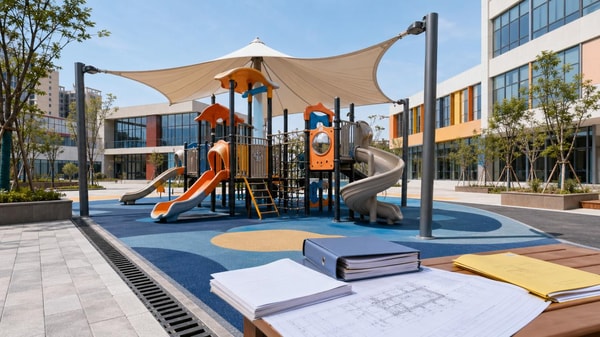
School buyers usually need outdoor play structures that support repeated use without becoming predictable too quickly. Because the same children return 5 days a week, engagement depends on multiple routes, varied climbing difficulty, and opportunities for cooperative play. Age overlap often occurs during recess transitions, so clear low, medium, and advanced challenge zones can reduce conflict and support smoother supervision.
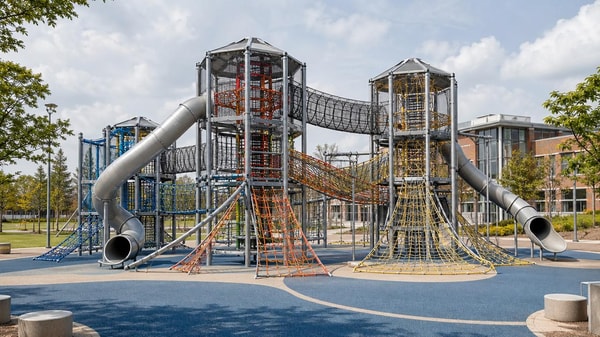
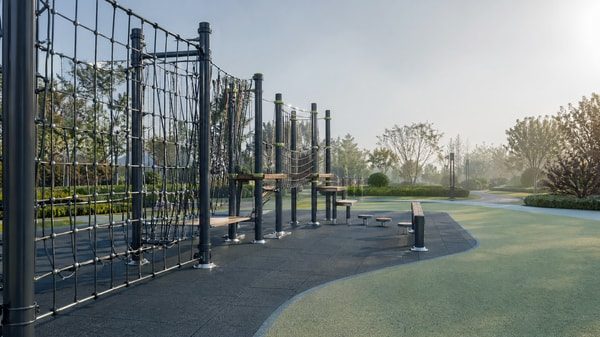
For campuses serving ages 3 to 10 or 4 to 12, modular systems often work better than single-feature pieces. Ground-level sensory panels, transfer points, low decks, net climbers, overhead events, and balancing elements can be arranged to create progression. The goal is to let younger users participate safely while older children still find a meaningful physical test.
Educational settings also benefit from layout discipline. Sightlines, surfacing continuity, and circulation between entry and exit points are especially important. A structure that looks exciting but causes bottlenecks at one ladder or slide quickly loses value during peak recess windows of 15 to 30 minutes.
What schools often overlook
- Too much emphasis on maximum capacity without reviewing actual recess rotation schedules.
- Insufficient variety in upper-body, balance, and social play functions.
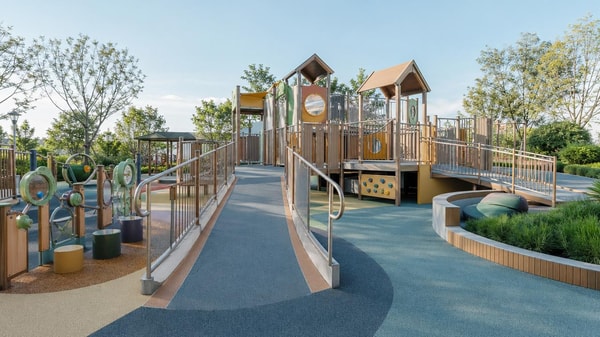
- Limited inclusive features for children who engage less with high-intensity climbing.
In practice, outdoor play structures for schools should encourage at least 3 distinct forms of play behavior: physical challenge, imaginative interaction, and social cooperation. That blend helps extend relevance as student confidence and skill levels change over the school year.
Scenario 2: Public parks and community developments
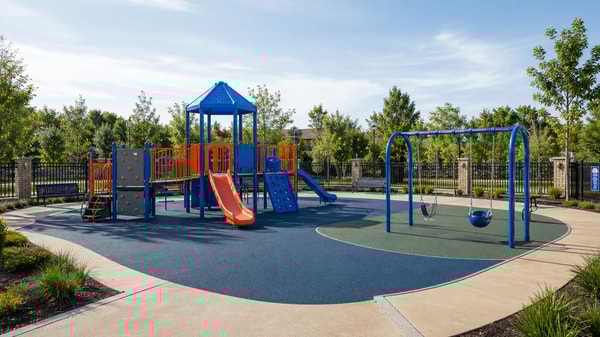
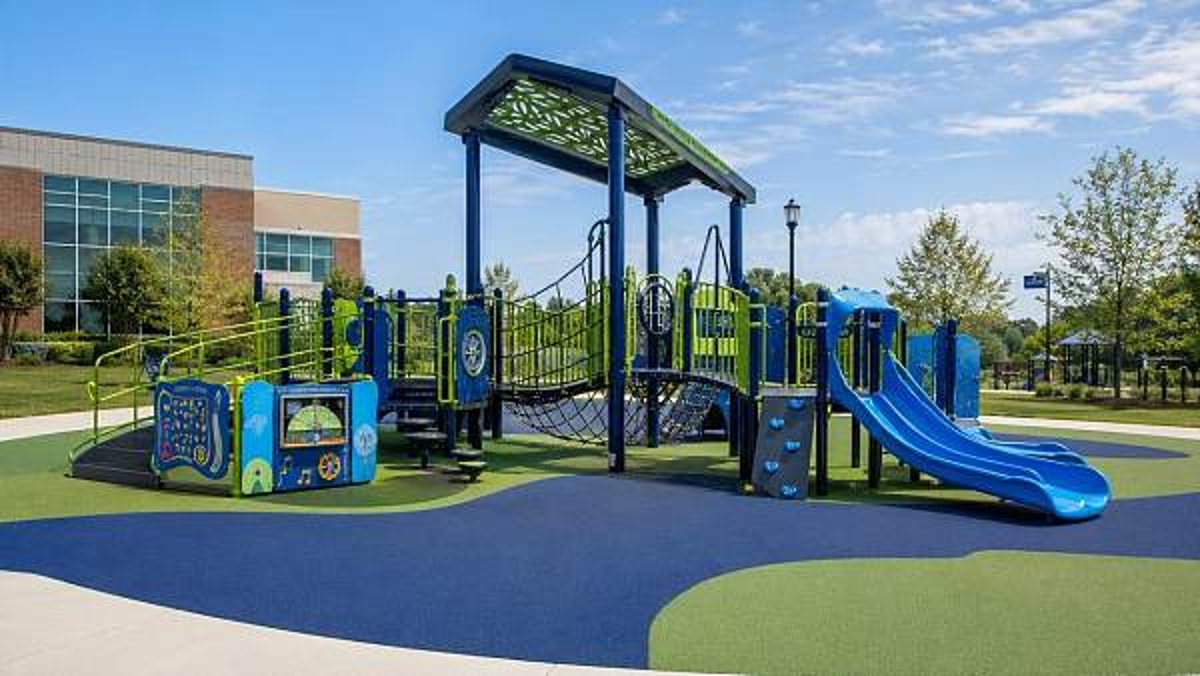
Public parks face a wider behavioral range than most other sites. Visitors may include toddlers with caregivers, siblings aged 6 and 10, and preteens seeking more demanding movement. In this scenario, outdoor play structures need a zoning strategy that keeps age groups connected visually without forcing them into the same risk level.
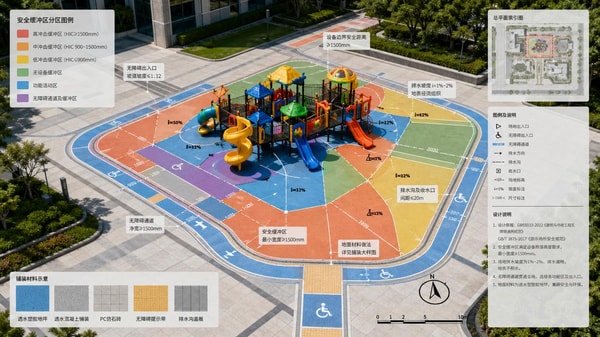
A practical layout often combines a lower-height area for early childhood, a central shared zone with collaborative features, and a more challenging perimeter or elevated route for older children. This can work within footprints as small as 80 to 150 square meters for local parks, while larger municipal projects may spread across 200 square meters or more depending on circulation and surfacing scope.
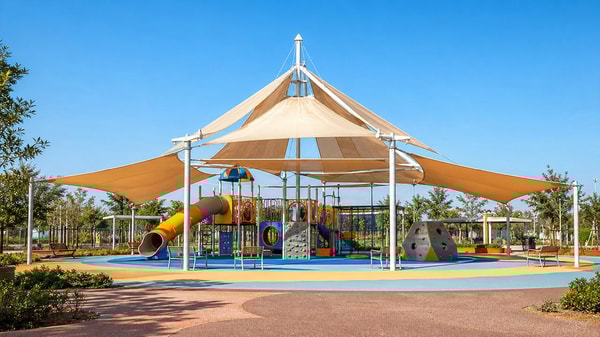
Because supervision may be inconsistent, durability and predictability matter. Buyers should pay attention to connection design, edge finishing, weather resistance, and ease of routine inspection. Outdoor play structures in public spaces typically need stronger tolerance for UV exposure, wet conditions, and high weekend usage than equipment installed in controlled private environments.
Scenario 3: Hotels, resorts, retail and leisure venues
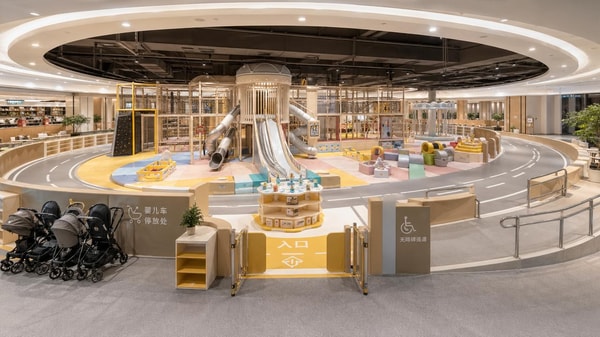
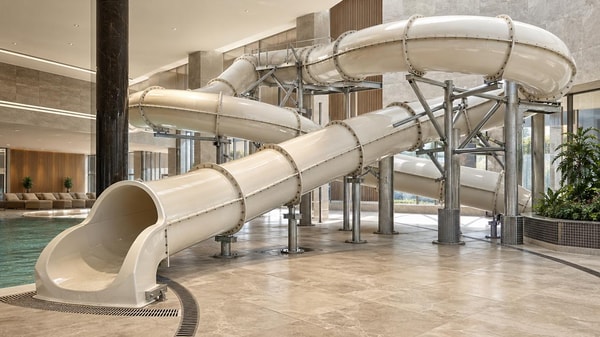
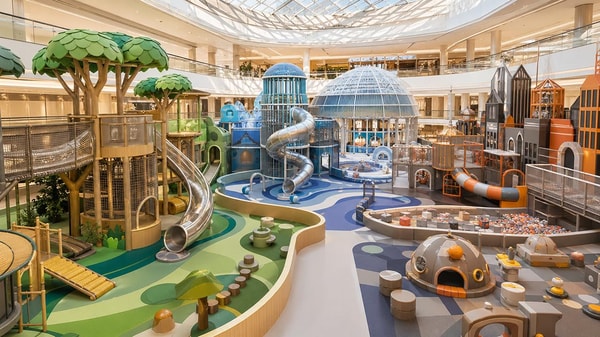
In hospitality and commercial leisure settings, the role of outdoor play structures is slightly different. Here, the equipment supports guest satisfaction, family-friendly positioning, and time-on-site rather than daily developmental programming. Play zones are often adjacent to dining terraces, pool decks, family recreation lawns, or destination retail environments.
These projects usually benefit from compact systems that deliver immediate engagement in 10 to 20 minutes, while still rewarding longer family visits. Visual quality matters because the play area becomes part of the property atmosphere. Buyers may prefer integrated color strategy, cleaner silhouettes, and lower-maintenance materials that align with broader landscape or brand aesthetics.
Unlike schools, hospitality operators often want lower acoustic disruption, easier housekeeping around the play zone, and less reliance on intensive supervision. Outdoor play structures in these settings should minimize congestion and support family co-presence, allowing younger and older children to stay in one zone without overwhelming each other.
How requirements change from one scenario to another
Once the application scenario is clear, the next step is translating it into specification logic. Buyers often compare outdoor play structures by appearance, but specification quality usually comes down to challenge range, footprint efficiency, material choice, and maintenance burden. The differences below help narrow options more effectively.
For many projects, the right solution is not the most complex one. Outdoor play structures that score well in mixed-age use often offer moderate height variation, several access routes, and a balance of motion, climbing, and role-play functions. Overly specialized features can narrow the user range, while overly simple platforms can lose relevance too quickly.
Key specification areas to verify
Whether sourcing locally or internationally, buyers should validate a small set of practical specification categories early in the process. This reduces redesign risk and helps keep procurement aligned with site conditions, installation timing, and end-user expectations.
- Age coverage: confirm intended user bands rather than assuming universal suitability.
- Footprint and fall zone: review total area required, not just structure dimensions.
- Material system: compare coated metal, engineered plastic, rope, timber-look, and mixed-material assemblies based on climate and upkeep.
- Installation conditions: identify surface preparation, anchoring needs, and any site access constraints.
- Supportability: ask about spare part lead times, component replacement, and maintenance guidance over 5 to 10 years.
These checks are especially useful for commercial buyers working across multiple property types. A sourcing partner that understands hospitality, public-space, and institutional requirements can help compare outdoor play structures not only by product category, but by business use case.
How to judge whether a multi-age concept will stay engaging
The most common reason outdoor play structures lose appeal is that they offer only one type of reward. If all engagement depends on a single slide, children age out quickly or queue too heavily around one feature. A stronger concept gives users multiple reasons to return, with challenge and discovery spread across the structure.
For mixed-age success, look for at least 4 engagement layers: accessible ground interaction, low-risk climbing, social or imaginative play nodes, and one or more advanced movement elements. This does not require a huge installation. Even within a mid-sized play system, layered play value can outperform a larger but less varied design.
Replay value also depends on how children can use the structure differently as they grow. Outdoor play structures that support side entry, alternate routes, climbing loops, and pause points generally age better than linear systems with one start and one finish. In practical terms, they remain relevant for a broader 3- to 5-year user span.
Signs of good long-term engagement
- More than one route to elevated zones, reducing repetition and queues.
- A mix of active and calm play elements, supporting different confidence levels.
- Clear opportunities for both independent and cooperative use.
- Features that suit short visits and extended play sessions equally well.
Common misjudgments during sourcing
One frequent mistake is buying outdoor play structures based on age claims alone without checking behavior fit. A product labeled for broad ages may still favor either very young users or older climbers in practice. Another mistake is underestimating the role of access flow. If younger children must cross advanced routes to reach simple features, the installation may appear inclusive on paper but work poorly on site.
Buyers also sometimes prioritize theme graphics over physical variety. Visual identity supports attraction, but engagement is sustained by movement options, sensory feedback, and social interaction. For high-value projects, reviewing layouts with operators, educators, or site managers before final approval can prevent expensive mismatch.
A practical sourcing checklist for buyers comparing outdoor play structures
When evaluating suppliers or concepts, a structured review process helps turn broad research into a shortlist. This is particularly useful for developers, procurement teams, and international buyers balancing product quality with compliance, timeline, and total installed value.
Questions to ask before requesting a quotation
Start with site facts: total area, target age mix, expected daily volume, climate exposure, and preferred maintenance interval. Then ask how the proposed outdoor play structures address those realities. A supplier should be able to explain not only dimensions and materials, but why a specific configuration fits the scenario.
It is also helpful to confirm what is included in the offer. In many projects, cost differences come from surfacing scope, freight terms, installation assumptions, anchoring systems, or customization depth. Lead time can range from 4 to 16 weeks depending on stock status, finish requirements, and project complexity, so timeline clarity matters early.
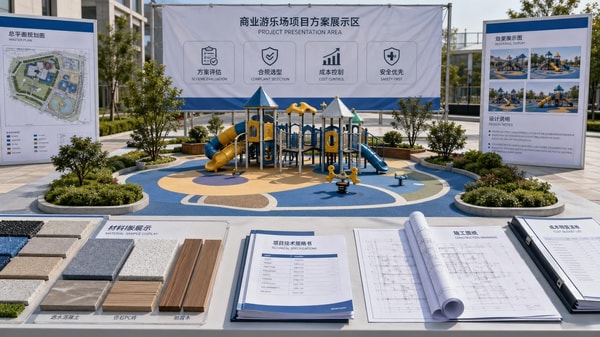
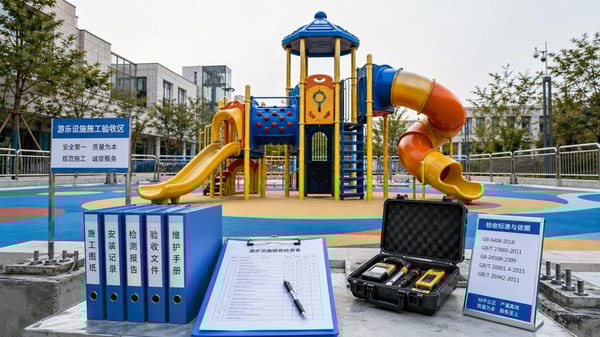
For buyers serving public institutions, hospitality groups, or leisure operators, commercial documentation quality is part of the decision. Clear drawings, age recommendations, maintenance guidance, and material descriptions make comparison easier and reduce downstream approval delays.
Shortlist criteria
- Does the concept support at least two or three age-related play experiences within one zone?
- Is the structure easy to understand for first-time users while still rewarding repeat visits?
- Are maintenance, replacement, and after-sales considerations realistic for your team?
- Can the supplier adapt finishes, layout, or features to fit site branding and operational needs?
A strong procurement decision usually comes from matching outdoor play structures to actual use conditions, not to generic market positioning. The best outcomes are achieved when design appeal, age spread, lifecycle practicality, and business purpose are reviewed together.
Why work with us on outdoor play structures for complex commercial scenarios
For buyers navigating schools, public projects, hospitality environments, or multi-property sourcing programs, comparing outdoor play structures can become time-consuming very quickly. The challenge is not simply finding products. It is finding options that match user mix, operating model, design expectations, and supply requirements across different markets.
Global Commercial Trade supports this process by helping buyers assess commercial-fit factors that matter in real procurement: product selection logic, scenario suitability, customization direction, documentation quality, sourcing communication, and delivery planning. Whether you are narrowing concepts for a school expansion, a community park, or a family-oriented leisure venue, we help translate broad market research into more practical decision steps.
If you are comparing outdoor play structures, contact us to discuss parameter confirmation, age-range planning, application-specific product selection, delivery cycles, customization options, certification-related requirements, sample or material review support, and quotation coordination. A clearer brief at the start usually leads to a better-fit play environment and a smoother project rollout.
Search News
Hot Articles
Popular Tags
Need ExpertConsultation?
Connect with our specialized leisureengineering team for procurementstrategies.
Recommended News
 Apr 30, 2026When a playground consultant saves more than an in-house planPlayground consultant advice can prevent costly design errors, compliance gaps, and vendor mistakes. See when expert support beats an in-house plan and protects budget.● Theme Park Strategist
 Apr 30, 2026A smarter playground layout starts with traffic flowPlayground layout starts with traffic flow. Discover how smarter circulation improves safety, accessibility, capacity, and long-term commercial performance.● Theme Park Strategist
 Apr 30, 2026Playground certification steps that delay launch datesPlayground certification delays can add weeks to launch dates. Learn the key bottlenecks, hidden compliance risks, and practical steps to keep projects on schedule.● Theme Park Strategist
 Apr 30, 2026Playground climbers that keep kids challenged without bottlenecksPlayground climbers that reduce bottlenecks keep more kids engaged, improve flow, and suit schools, resorts, parks, and leisure venues. Learn what to specify before you buy.● Theme Park Strategist
 Apr 30, 2026What playground inspection reports often reveal too latePlayground inspection reports often reveal hidden risks too late. Learn how to catch design, installation, and safety issues earlier to avoid delays, rework, and costly project setbacks.● Theme Park Strategist
 Apr 30, 2026Playground accessibility details that change real usabilityPlayground accessibility details shape real usability beyond ramps. Explore transfer points, sensory zones, sightlines, and circulation tips that help buyers choose truly inclusive play spaces.● Theme Park Strategist
 Apr 30, 2026Playground shade structures that improve comfort in hot seasonsPlayground shade structures improve comfort, safety, and usability in hot seasons. Explore smart, durable solutions for schools, parks, and commercial projects.● Theme Park Strategist
 Apr 30, 2026Commercial slides and the maintenance issues often overlookedCommercial slides often fail on maintenance, not design. Learn the overlooked wear, cleaning, access, and compliance issues that affect safety, uptime, and long-term cost.● Theme Park Strategist
 Apr 30, 2026Why playground theme matters more than many layouts suggestPlayground theme shapes engagement, brand value, and repeat visits more than many layouts suggest. Learn how to choose the right concept for hotels, malls, and family venues.● Theme Park Strategist
 Apr 30, 2026Outdoor play structures that stay engaging across age groupsOutdoor play structures that engage ages 2–12: discover how schools, parks, and resorts can choose safer, durable, multi-age designs that boost replay value and buyer confidence.● Theme Park Strategist
 Apr 30, 2026Choosing a playground contractor without missing red flagsPlayground contractor selection made smarter: learn how to spot red flags early, reduce safety and cost risks, and choose a reliable partner with confidence.● Theme Park Strategist
 Apr 30, 2026Playground planning errors that create costly redesigns laterPlayground planning mistakes can trigger costly redesigns, delays, and compliance issues. Learn how to avoid common risks and deliver safer, smarter projects on budget.● Theme Park Strategist
 Apr 30, 2026How playground fencing affects safety without feeling restrictivePlayground fencing shapes safety, visibility, and comfort. Discover how to choose secure, open-feel fencing that protects children without making play spaces feel closed in.● Theme Park Strategist
 Apr 29, 2026Adventure Playground Safety Mistakes to Avoid Before InstallationAdventure playground safety mistakes can delay opening and raise liability. Learn the key pre-installation checks for materials, site planning, surfacing, and compliance.● Theme Park Strategist
 Apr 29, 2026Chinese Tennis Robot Demand Rises in Europe After Zheng Qinwen's Madrid RunChinese tennis robot demand surges in Europe after Zheng Qinwen's Madrid Open run—CE-certified AI training systems now sought by German & Spanish academies.● Theme Park Strategist
 Apr 29, 2026Vietnam Mandates Child Finger-Trap Sensors for Indoor Play EquipmentVietnam mandates child finger-trap sensors for indoor play equipment—key compliance update for exporters, suppliers & certifiers. Act now before Oct 1, 2026.● Theme Park Strategist
 Apr 29, 2026CBA Guangdong’s Loss Spurs Export Inquiries for Indoor Playground EquipmentCBA Guangdong’s playoff loss sparks urgent export inquiries for EN1176-compliant indoor playground equipment — basketball-themed, rapid-assembly modules for ASEAN family entertainment centers.● Theme Park Strategist
 Apr 28, 2026Vietnam Mandates Child Hand-Trap Sensors for Indoor Play EquipmentVietnam mandates VILAS-certified hand-trap sensors for indoor play equipment—key for exporters, manufacturers & certifiers. Act before Oct 2026!● Theme Park Strategist
 Apr 29, 2026What to Review Before Buying a Trampoline ParkCompare trampoline park price, trampoline park cost, and trampoline park equipment before choosing a trampoline park supplier. Get expert tips on safety, layout, and sourcing.● Theme Park Strategist
 Apr 29, 2026How Much Does a Trampoline Park CostTrampoline park cost explained: compare trampoline park price, equipment quality, and supplier value. Learn what drives ROI before choosing a trampoline park for sale.● Theme Park Strategist
 Apr 29, 2026Safe Trampoline Park Equipment BasicsSafe trampoline park equipment basics: compare trampoline park supplier options, indoor playground design, durability, compliance, and total trampoline park cost before you buy.● Theme Park Strategist
 Apr 29, 2026How to Audit an Indoor Playground FactoryIndoor playground manufacturer audit guide: learn how to assess an indoor playground supplier, indoor playground design strength, safety, capacity, and trampoline park equipment quality before you buy.● Theme Park Strategist
 Apr 29, 2026Indoor Playground Supplier Pricing GuideIndoor playground supplier pricing guide: compare indoor playground manufacturer quotes, indoor playground design value, trampoline park equipment cost, and hidden fees before you buy.● Theme Park Strategist
 Apr 29, 2026Trampoline Park Supplier Checklist 2026Trampoline park supplier checklist 2026: compare trampoline park price, cost, equipment, and indoor playground design to choose a safer, smarter supplier for profitable projects.● Theme Park Strategist