Playground planning errors that create costly redesigns later
Poor playground planning often looks manageable on paper, but small early mistakes can trigger expensive redesigns, compliance delays, and construction conflicts later. For project managers and engineering leads, the biggest risk is not usually one dramatic failure. It is a chain of avoidable decisions made too early, with too little operational, safety, or supplier input. In most cases, redesign costs come from coordination gaps rather than from the playground equipment itself.
If you are responsible for delivery, budget control, or technical oversight, the core judgment is straightforward: good playground planning is less about choosing attractive equipment and more about aligning site conditions, user flow, safety standards, installation realities, and maintenance needs before procurement starts. When those elements are addressed early, projects move faster and perform better. When they are missed, late-stage revisions become expensive and highly disruptive.
This article focuses on the planning errors that most often create downstream redesigns in commercial playground projects. It is written for project managers and engineering leads who need practical guidance, clearer risk signals, and better decision points during concept development, specification, sourcing, and pre-construction coordination.
Why playground redesigns happen so often after the concept stage
Many playground projects begin with a visually strong concept and a reasonable preliminary budget. The problem is that concept approval can create a false sense of readiness. Once technical drawings, safety clearances, drainage plans, civil works, surfacing details, accessibility requirements, and supplier constraints are reviewed together, hidden conflicts start to appear. At that point, what looked like a complete design is revealed to be only partially resolved.
For project managers, this is where playground planning becomes a risk management discipline rather than a design exercise. Redesigns usually happen because key planning assumptions were never tested against real site conditions, real user density, real maintenance access, or the actual installation sequence. In commercial settings such as schools, mixed-use developments, hospitality properties, or leisure destinations, those oversights quickly affect procurement timelines and contractor coordination.
The most costly revisions are rarely isolated. A change in one area often triggers changes elsewhere. For example, correcting fall zone spacing may alter the equipment layout, which can affect pathways, drainage slopes, shade structures, lighting plans, and even the foundation schedule. Understanding this chain reaction early is what separates efficient delivery from expensive rework.
Planning around equipment first instead of site realities
One of the most common playground planning mistakes is selecting equipment too early and trying to make the site fit the product afterward. This usually happens when stakeholders prioritize appearance, age-group appeal, or signature features before fully understanding topography, utilities, access constraints, setbacks, sun exposure, and water movement. The result is a layout that may work in a catalog but not on the ground.
For engineering leads, site-first planning is essential. Even a small grade difference can affect accessibility routes, retaining needs, drainage behavior, and surfacing depth. Underground utilities may restrict footings or limit where high-load structures can be installed. Nearby roads, parking edges, and emergency access routes can also change where activity zones should be placed. If these conditions are discovered late, re-engineering becomes unavoidable.
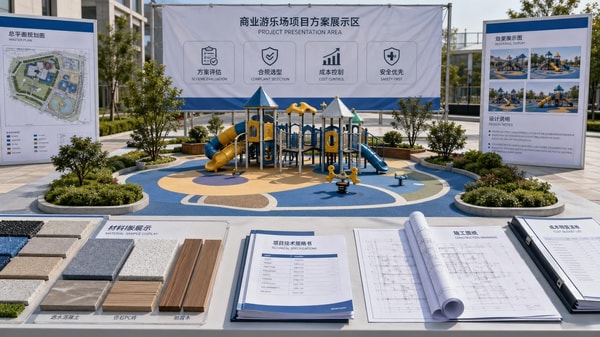
The practical solution is to lock in a site validation phase before equipment selection is finalized. That phase should include a topographic review, utility mapping, circulation analysis, sun and shade study, and preliminary civil coordination. A high-performing playground concept is not the one with the most features. It is the one that works with the site from the start and avoids forcing redesigns into later stages.
Underestimating safety clearances, use zones, and code interpretation
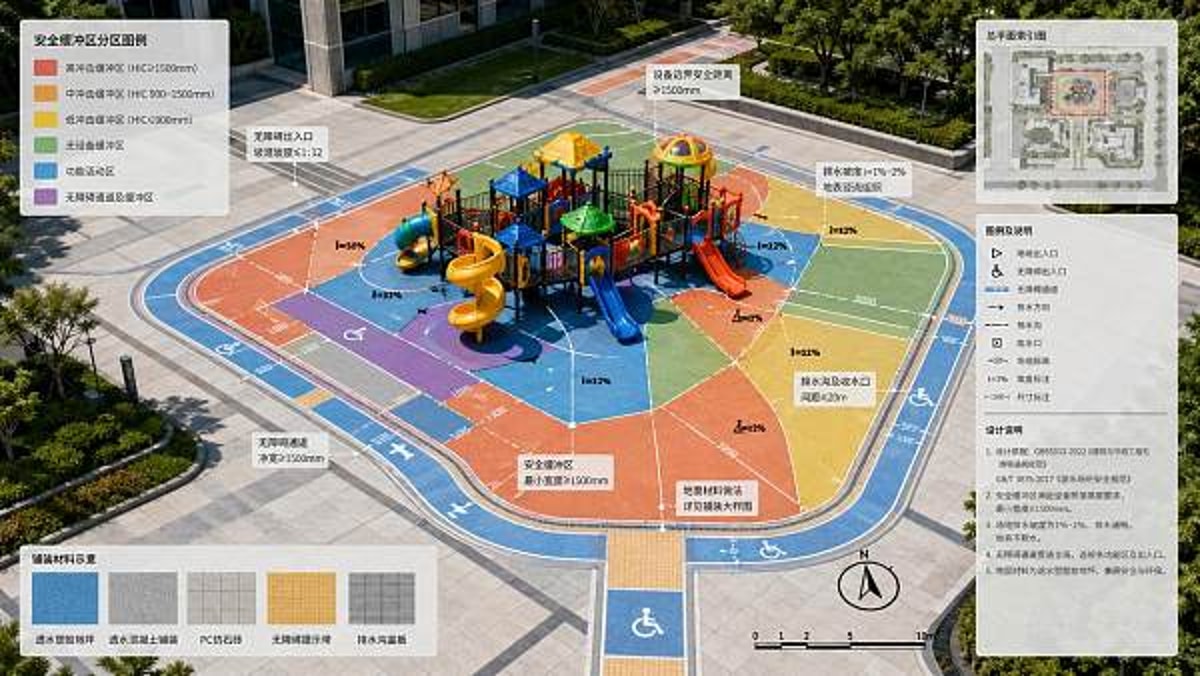
Safety compliance problems are a major source of redesign cost because they often appear after investment has already been made in a preferred layout. Project teams may assume that if each piece of equipment is compliant on its own, the full playground arrangement will also be compliant. In reality, use zones, circulation paths, supervision sightlines, impact areas, and barrier relationships must be evaluated as a whole system.
This issue becomes more complex in international or multi-market projects where standards, certification expectations, and local review practices differ. A layout that passes an internal design review may still fail under jurisdiction-specific requirements or independent inspection. Late corrections can involve moving equipment, increasing spacing, changing surfacing extents, or replacing selected components entirely. These are not minor edits once procurement and groundwork have started.
For project managers, the key is to treat compliance as an early design input, not a final checkpoint. That means involving qualified safety reviewers during planning, confirming the applicable standards before specifications are issued, and checking how surfacing, elevations, guardrails, transfer access, and use zones interact in the actual layout. In effective playground planning, compliance is not a box to tick at the end. It is part of the structure of the project from day one.
Ignoring circulation, supervision, and real user behavior
A playground may be technically compliant and still perform badly if circulation and user flow are not planned properly. This is one of the most overlooked issues in commercial projects because the focus tends to stay on equipment count, theme, and budget. But once a space opens, real usage patterns quickly expose planning weaknesses. Congestion at entries, conflicts between age groups, blocked supervision lines, and awkward queueing zones all reduce the functionality of the site.
For schools, parks, hospitality venues, and destination leisure environments, circulation mistakes can create operational and liability concerns. If caregivers or staff cannot clearly supervise key activity areas, project owners may later request barriers, route adjustments, or layout modifications. If high-energy elements are too close to toddler zones or rest areas, the user mix becomes difficult to manage. These are problems that often require redesign not because the equipment is defective, but because the planning did not reflect human behavior.
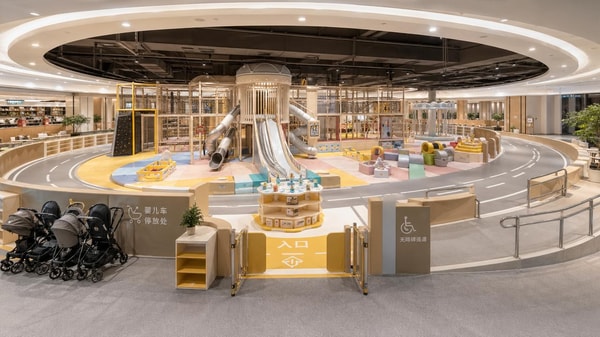
Strong playground planning should map how children and supervising adults will enter, pause, watch, move, and exit. It should also account for strollers, wheelchairs, service access, shaded waiting areas, and the likely peak density of users. Reviewing user scenarios at planning stage is often far cheaper than trying to correct flow conflicts after construction documents are complete.
Leaving accessibility too late in the process
Accessibility is another area where late-stage correction becomes expensive very quickly. Many teams still treat it as an adjustment layer added after the main concept is defined. That approach almost always leads to compromise. Accessible routes, transfer points, surfacing transitions, inclusive play opportunities, edge protection, and approach gradients need to be embedded into the layout logic from the beginning.
When accessibility is postponed, the project team may discover that route widths do not work, slopes exceed acceptable ranges, surfacing systems are incompatible, or inclusive play elements are isolated rather than integrated. Fixing these issues can require civil design revisions, larger footprints, different foundations, or alternate product selection. In other words, accessibility oversights do not stay small. They spread into multiple work packages.
For project leaders, the right question is not simply whether an accessible component exists. It is whether the overall playground experience is usable, connected, and operationally realistic for a broad range of users. Good playground planning integrates inclusive use as a design principle, which reduces later correction and creates a stronger long-term asset for owners and operators.
Failing to coordinate surfacing, drainage, and civil works
Some of the most expensive redesigns happen below the equipment line, where teams underestimate how closely playground systems depend on civil coordination. Safety surfacing, sub-base preparation, water runoff, edge detailing, root protection, and foundation placement all influence whether the design can actually be built and maintained. If these disciplines are coordinated too late, equipment layouts may need to shift or structural details may need to be revised.
Drainage is particularly important. Water pooling in fall zones, at accessible routes, or around footings creates performance issues that can lead to premature wear, safety concerns, and owner complaints. Yet drainage is often treated as a generic site issue rather than a playground-specific planning priority. In reality, the choice of surfacing system, local climate, slope conditions, and adjacent hardscape all affect how water behaves in and around the play area.
Project managers should require early coordination between equipment suppliers, landscape designers, civil engineers, and installers. Details such as surfacing depth, containment edges, transitions, anchoring requirements, and maintenance access should be resolved before final procurement. This is one of the clearest examples of how disciplined playground planning protects both capital cost and long-term operating performance.
Choosing suppliers without validating installation and documentation capability
In commercial procurement, supplier evaluation is often focused on product aesthetics, unit pricing, and lead time. Those factors matter, but they are not enough. A supplier that offers attractive equipment may still create major redesign risk if documentation is incomplete, installation guidance is weak, certification is unclear, or dimensional coordination is inconsistent across the package. Late clarification requests then force changes into drawings, schedules, or site preparation work.
For global buyers and project teams sourcing across markets, this risk increases. Differences in terminology, standards references, tolerances, materials, and quality control documentation can produce misunderstandings that only become visible during shop drawing review or site installation. At that point, changing a layout or substituting components affects not just cost, but also sequencing and contractor productivity.
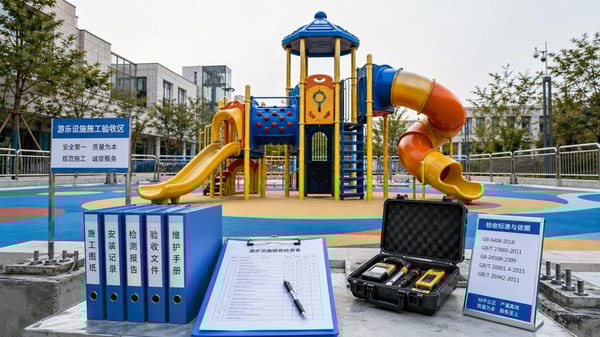
Stronger playground planning includes supplier due diligence beyond price comparison. Ask whether the supplier can provide verified compliance documents, clear foundation details, coordinated layout drawings, surfacing integration requirements, spare parts support, and realistic installation sequencing information. A lower-cost package can become far more expensive if the project team has to redesign around supplier limitations later.
Not planning for maintenance, inspection, and lifecycle performance
Another common error is designing the playground only for opening day. Commercial owners, schools, municipalities, and hospitality operators will live with the asset for years, which means maintenance access, replacement logistics, wear patterns, inspection routines, and climate durability should influence planning decisions early. If they do not, owners may request changes after handover or during commissioning because the site is too difficult or too costly to maintain.
This issue often appears in dense or highly customized layouts. Equipment may be placed too closely for safe inspection access, surfacing edges may be difficult to repair, drainage points may be blocked by design features, or frequently used components may require disassembly to service. These are not always reasons to reject a concept, but they are reasons to plan more carefully before finalizing the design.
For project managers, lifecycle thinking improves both stakeholder confidence and budget discipline. A design that is slightly simpler but easier to inspect, clean, repair, and certify over time may deliver far better value than a visually ambitious concept that creates recurring operational burden. Effective playground planning connects capital delivery with lifecycle performance, not just installation completion.
How project teams can reduce redesign risk before procurement
The best way to avoid expensive revisions is to create a structured decision process before specifications are locked. First, confirm the project brief in operational terms: user groups, supervision model, expected throughput, accessibility goals, maintenance resources, and compliance framework. Then test the concept against real site data, not ideal assumptions. This avoids the common trap of advancing a design that has never been fully coordinated.
Second, run an interdisciplinary review before final supplier selection. That review should include design, civil, safety, accessibility, installation, and procurement perspectives. The purpose is not to slow the project down. It is to expose conflicts while they are still affordable to fix. In many cases, one coordination meeting at the right time can prevent weeks of redesign later.
Third, use procurement checkpoints that require complete technical information. Do not approve a playground package based only on renderings and marketing sheets. Require layout dimensions, use zone mapping, foundation guidance, surfacing requirements, compliance documentation, and installation sequencing notes. Good playground planning becomes measurable when decision-makers insist on evidence rather than assumptions.
What a well-planned playground project looks like in practice
Well-planned projects do not necessarily have the largest budgets or the most elaborate equipment packages. What they share is alignment. The site supports the concept, the concept supports the user profile, the technical documents support construction, and the supplier package supports installation and maintenance. This alignment reduces redesign because fewer hidden conflicts remain unresolved when the project moves into procurement and site execution.
From a project leadership perspective, success usually looks quiet. There are fewer emergency drawing revisions, fewer supplier disputes, fewer field improvisations, and fewer owner concerns about compliance or usability. Budget control improves not because nothing changes, but because changes are identified earlier, priced more accurately, and managed before they disrupt the critical path.
That is why playground planning should be treated as a front-end commercial discipline as much as a design activity. The earlier teams connect aesthetics, engineering, compliance, sourcing, and operations, the lower the chance that a promising scheme turns into an expensive redesign problem.
Conclusion
Costly playground redesigns rarely come from one obvious mistake. They usually grow from early planning gaps around site fit, safety zoning, accessibility, drainage, circulation, supplier capability, and lifecycle practicality. For project managers and engineering leads, the main lesson is clear: most late-stage problems can be traced back to decisions made before the project had enough coordinated information behind them.
Better playground planning does not mean overcomplicating the process. It means asking the right questions early, validating assumptions, and making sure design intent can survive real-world compliance, construction, and operational demands. When teams do that well, they protect budgets, reduce schedule risk, and deliver playground environments that perform as intended long after installation is complete.
In commercial projects where reputation, safety, and long-term value all matter, careful planning is not an optional extra. It is the most cost-effective way to avoid redesign later.
Search News
Hot Articles
Popular Tags
Need ExpertConsultation?
Connect with our specialized leisureengineering team for procurementstrategies.
Recommended News
 Apr 30, 2026When a playground consultant saves more than an in-house planPlayground consultant advice can prevent costly design errors, compliance gaps, and vendor mistakes. See when expert support beats an in-house plan and protects budget.● Theme Park Strategist
 Apr 30, 2026A smarter playground layout starts with traffic flowPlayground layout starts with traffic flow. Discover how smarter circulation improves safety, accessibility, capacity, and long-term commercial performance.● Theme Park Strategist
 Apr 30, 2026Playground certification steps that delay launch datesPlayground certification delays can add weeks to launch dates. Learn the key bottlenecks, hidden compliance risks, and practical steps to keep projects on schedule.● Theme Park Strategist
 Apr 30, 2026Playground climbers that keep kids challenged without bottlenecksPlayground climbers that reduce bottlenecks keep more kids engaged, improve flow, and suit schools, resorts, parks, and leisure venues. Learn what to specify before you buy.● Theme Park Strategist
 Apr 30, 2026What playground inspection reports often reveal too latePlayground inspection reports often reveal hidden risks too late. Learn how to catch design, installation, and safety issues earlier to avoid delays, rework, and costly project setbacks.● Theme Park Strategist
 Apr 30, 2026Playground accessibility details that change real usabilityPlayground accessibility details shape real usability beyond ramps. Explore transfer points, sensory zones, sightlines, and circulation tips that help buyers choose truly inclusive play spaces.● Theme Park Strategist
 Apr 30, 2026Playground shade structures that improve comfort in hot seasonsPlayground shade structures improve comfort, safety, and usability in hot seasons. Explore smart, durable solutions for schools, parks, and commercial projects.● Theme Park Strategist
 Apr 30, 2026Commercial slides and the maintenance issues often overlookedCommercial slides often fail on maintenance, not design. Learn the overlooked wear, cleaning, access, and compliance issues that affect safety, uptime, and long-term cost.● Theme Park Strategist
 Apr 30, 2026Why playground theme matters more than many layouts suggestPlayground theme shapes engagement, brand value, and repeat visits more than many layouts suggest. Learn how to choose the right concept for hotels, malls, and family venues.● Theme Park Strategist
 Apr 30, 2026Outdoor play structures that stay engaging across age groupsOutdoor play structures that engage ages 2–12: discover how schools, parks, and resorts can choose safer, durable, multi-age designs that boost replay value and buyer confidence.● Theme Park Strategist
 Apr 30, 2026Choosing a playground contractor without missing red flagsPlayground contractor selection made smarter: learn how to spot red flags early, reduce safety and cost risks, and choose a reliable partner with confidence.● Theme Park Strategist
 Apr 30, 2026Playground planning errors that create costly redesigns laterPlayground planning mistakes can trigger costly redesigns, delays, and compliance issues. Learn how to avoid common risks and deliver safer, smarter projects on budget.● Theme Park Strategist
 Apr 30, 2026How playground fencing affects safety without feeling restrictivePlayground fencing shapes safety, visibility, and comfort. Discover how to choose secure, open-feel fencing that protects children without making play spaces feel closed in.● Theme Park Strategist
 Apr 29, 2026Adventure Playground Safety Mistakes to Avoid Before InstallationAdventure playground safety mistakes can delay opening and raise liability. Learn the key pre-installation checks for materials, site planning, surfacing, and compliance.● Theme Park Strategist
 Apr 29, 2026Chinese Tennis Robot Demand Rises in Europe After Zheng Qinwen's Madrid RunChinese tennis robot demand surges in Europe after Zheng Qinwen's Madrid Open run—CE-certified AI training systems now sought by German & Spanish academies.● Theme Park Strategist
 Apr 29, 2026Vietnam Mandates Child Finger-Trap Sensors for Indoor Play EquipmentVietnam mandates child finger-trap sensors for indoor play equipment—key compliance update for exporters, suppliers & certifiers. Act now before Oct 1, 2026.● Theme Park Strategist
 Apr 29, 2026CBA Guangdong’s Loss Spurs Export Inquiries for Indoor Playground EquipmentCBA Guangdong’s playoff loss sparks urgent export inquiries for EN1176-compliant indoor playground equipment — basketball-themed, rapid-assembly modules for ASEAN family entertainment centers.● Theme Park Strategist
 Apr 28, 2026Vietnam Mandates Child Hand-Trap Sensors for Indoor Play EquipmentVietnam mandates VILAS-certified hand-trap sensors for indoor play equipment—key for exporters, manufacturers & certifiers. Act before Oct 2026!● Theme Park Strategist
 Apr 29, 2026What to Review Before Buying a Trampoline ParkCompare trampoline park price, trampoline park cost, and trampoline park equipment before choosing a trampoline park supplier. Get expert tips on safety, layout, and sourcing.● Theme Park Strategist
 Apr 29, 2026How Much Does a Trampoline Park CostTrampoline park cost explained: compare trampoline park price, equipment quality, and supplier value. Learn what drives ROI before choosing a trampoline park for sale.● Theme Park Strategist
 Apr 29, 2026Safe Trampoline Park Equipment BasicsSafe trampoline park equipment basics: compare trampoline park supplier options, indoor playground design, durability, compliance, and total trampoline park cost before you buy.● Theme Park Strategist
 Apr 29, 2026How to Audit an Indoor Playground FactoryIndoor playground manufacturer audit guide: learn how to assess an indoor playground supplier, indoor playground design strength, safety, capacity, and trampoline park equipment quality before you buy.● Theme Park Strategist
 Apr 29, 2026Indoor Playground Supplier Pricing GuideIndoor playground supplier pricing guide: compare indoor playground manufacturer quotes, indoor playground design value, trampoline park equipment cost, and hidden fees before you buy.● Theme Park Strategist
 Apr 29, 2026Trampoline Park Supplier Checklist 2026Trampoline park supplier checklist 2026: compare trampoline park price, cost, equipment, and indoor playground design to choose a safer, smarter supplier for profitable projects.● Theme Park Strategist