Theme park rides with shorter queues and stronger repeat appeal
For project managers and engineering leads, selecting theme park rides is no longer just about headline thrills. Rides with shorter queues and stronger repeat appeal can improve guest flow, raise per-visitor value, and support long-term operational efficiency. This article explores how smarter ride planning, capacity design, and experience strategy help commercial parks balance investment risk with sustainable attendance growth.
Why project teams should assess theme park rides with a checklist first
For a project manager, the biggest mistake in ride planning is evaluating theme park rides only by visual impact or top speed. A ride that photographs well but processes too few guests per hour can create 35 to 70 minute queues during peak windows, reduce circulation to nearby retail, and increase pressure on staffing. A checklist approach helps teams compare operational value before design freeze, procurement, and site coordination begin.
This matters even more in mixed-use leisure developments, regional parks, and indoor entertainment formats where land, utilities, and capex must work harder. In many projects, the difference between a high-friction ride lineup and a balanced one is not the number of attractions, but whether each ride supports a clear capacity role: anchor, family throughput, weather buffer, or repeat-play experience. That role should be defined within the first 4 to 8 weeks of concept planning.
Shorter queues do not mean low demand. In well-planned theme park rides, shorter queues usually result from better hourly capacity, faster load cycles, smart restraint systems, or distributed attraction zoning. Strong repeat appeal also does not always require a major coaster. It often comes from variable ride sequences, interactive layers, family accessibility, and low psychological barriers to re-ride within the same visit.
The first screening questions to ask
- What is the practical hourly throughput under realistic loading conditions rather than ideal brochure conditions?
- Can the ride attract first-time riders and still encourage at least 2 or more repeat cycles from family or teen segments?
- Does the ride support the park’s target dwell time, zoning logic, and nearby food, retail, or event programming?
- How sensitive is the attraction to downtime, weather exposure, staffing skill level, and evacuation complexity?
Using these screening questions early allows owners, designers, and sourcing teams to narrow the field before they spend time on detailed engineering review. For commercial buyers working across multiple international supply markets, this also creates a cleaner framework for comparing OEM proposals, safety documentation, lead times, and installation requirements.
Core checklist: what to verify before selecting theme park rides
The most useful selection method is to score theme park rides across capacity, repeatability, footprint efficiency, maintenance burden, and audience fit. Project teams should avoid single-factor decisions because queue performance is shaped by multiple design variables working together. A ride with a moderate thrill level but a 45 to 75 second dispatch interval may outperform a larger signature attraction in guest satisfaction over a full operating season.
Before tendering, create a technical and commercial review sheet that combines guest experience goals with engineering constraints. This avoids late-stage conflicts between architects, MEP planners, ride suppliers, and operations teams. It also improves procurement accuracy when comparing transport splits, foundation loads, spare parts packages, and commissioning scope.
The table below gives a practical evaluation framework for project managers comparing theme park rides intended to reduce queue pressure while keeping repeat demand high.
A useful pattern appears here: the best-performing theme park rides in commercial terms are not always the most extreme. They are the ones that convert available space and staffing into steady throughput while remaining easy to re-ride. That is especially important in regional parks where attendance can peak sharply on weekends but soften midweek.
Priority checklist for engineering and procurement teams
- Confirm design throughput using realistic load assumptions, including child seating assistance, restraint checks, and mobility accommodation time.
- Review utility loads, foundation interfaces, wind or indoor clearance constraints, and service access before final equipment shortlist.
- Check supplier scope boundaries for installation, commissioning, operator training, spare parts, and warranty response time.
- Map queue overflow behavior during 90th percentile attendance days so the ride does not block circulation or retail frontage.
- Verify applicable safety and inspection expectations in the destination market before import, assembly, and testing plans are fixed.
If these five items are checked early, sourcing discussions become more precise and redesign risk is lower. For global buyers, that precision is valuable because ride lead times can range from roughly 4 months for simpler attractions to 12 months or more for highly customized systems.
Which ride types often deliver shorter queues and stronger repeat appeal
Not every park needs the same mix of theme park rides. A destination resort with multi-day stays can support larger headliner attractions, while a city-edge family park may benefit more from medium-capacity rides that guests revisit several times in one afternoon. The practical selection question is not which ride is most exciting, but which ride best matches attendance pattern, demographic mix, and land efficiency.
In many projects, family rides, rotating attractions, trackless dark rides, water-light interactivity, and motion-based simulation formats perform well because they reduce intimidation and widen the age range. Repeat appeal tends to increase when the experience changes subtly by seat position, route variation, game score, or thematic sequence.
The table below compares common ride categories through the lens of queue behavior and re-ride value. These are not fixed outcomes, because execution quality matters, but they are useful decision cues during early planning.
For many parks, the most commercially efficient lineup includes one or two signature attractions supported by a larger layer of theme park rides that absorb attendance and encourage immediate re-rides. This reduces congestion concentration and can improve guest perception even if total attendance remains unchanged.
How ride choice changes by project type
Regional family parks
These projects often benefit from ride systems that can serve broad height bands, run 8 to 12 operating hours on busy days, and maintain simple loading. Repeat appeal matters because guests may purchase annual passes or return several times per year, so approachable theme park rides usually outperform overly niche thrill investments.
Indoor parks and mall-based leisure venues
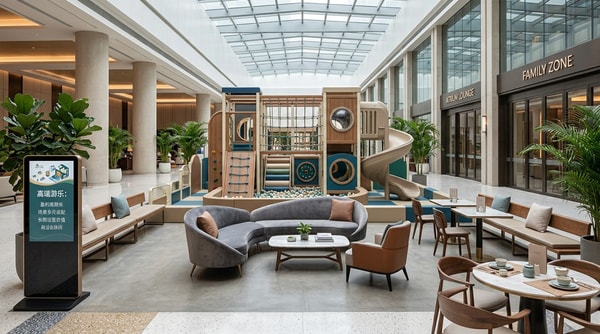
Indoor environments place greater pressure on footprint efficiency, acoustics, MEP routing, and queue storage. Here, project teams often prioritize compact theme park rides with controllable operating environments, lower weather risk, and stronger family replay value. Interactive or media-driven attractions can be especially effective when space is limited.
Destination resorts
Larger resorts can justify a broader attraction hierarchy, but even here, queue management should not depend only on one blockbuster ride. Supporting theme park rides that process guests efficiently across morning, afternoon, and evening windows help distribute crowds and protect satisfaction scores across the full stay experience.
Common items that project teams overlook during planning
When queue performance disappoints, the root cause is often not the ride concept itself but overlooked details in layout, operations, or procurement scope. These gaps typically emerge between design development and installation, when correcting them becomes more expensive. A preventive review should be built into the project calendar before civil works, before fabrication approval, and again before commissioning.
One common issue is relying on nominal capacity without accounting for guest behavior. If 15% to 25% of riders need additional loading assistance, if loose article handling is unresolved, or if seat belt checks are awkwardly positioned, actual throughput may drop significantly. A second issue is underestimating the role of pre-show, shade, ventilation, and queue entertainment in how guests perceive wait time.
Another overlooked point is lifecycle support. Some theme park rides look efficient during purchase comparison but create spare parts delays, specialist technician dependency, or software maintenance issues after opening. For parks outside major ride service hubs, supportability can be as important as ride design.
Risk reminders to add to your review file
- Do not accept capacity figures without understanding whether they are theoretical maximums or sustained operational averages.
- Check evacuation access, control room visibility, and maintenance clearances before architectural packages are frozen.
- Review consumables, replacement intervals, and local technician availability for at least the first 12 to 24 months.
- Plan for shaded, ventilated, or weather-protected queue areas if peak waits may exceed 20 to 30 minutes.
- Coordinate ride exit placement with food, retail, and circulation so re-rides do not conflict with cross-traffic.
These are small decisions compared with the headline purchase, but they often determine whether theme park rides feel efficient after opening. Strong repeat appeal depends on operational smoothness, not only on creative design.
Execution plan: how to move from shortlist to workable sourcing decision
Once the shortlist is defined, project teams should move into a structured decision sequence. This reduces change orders, protects scheduling, and makes supplier comparison more meaningful. In global sourcing projects, the best results usually come when commercial, technical, and operational reviews happen together rather than in separate handoffs.
A practical process is to start with concept-fit scoring, then technical compliance review, then lifecycle cost validation, and only then final commercial negotiation. This order matters because a lower initial quote on theme park rides can become less competitive if it adds civil complexity, imported service dependence, or long downtime risk.
For most developments, a 6-step implementation path gives enough control without slowing procurement unnecessarily.
Recommended implementation checklist
- Define the role of each ride in the attraction mix: headliner, throughput support, indoor buffer, youth draw, or family repeat driver.
- Prepare a data sheet covering target hourly capacity, footprint envelope, rider profile, utility limits, and queue storage assumptions.
- Request supplier submissions that include scope split, lead time range, installation method, training plan, and spare parts recommendation.
- Run an operations review using peak-day scenarios, including staffing count, dispatch discipline, cleaning intervals, and guest assistance needs.
- Compare lifecycle implications over the first 3 to 5 years, not only acquisition cost.
- Lock final decisions only after site interface, compliance, and maintenance access are confirmed in coordinated drawings.
This method helps commercial buyers avoid a common trap: selecting theme park rides that look strong individually but do not perform as a system. A park succeeds when the lineup collectively balances queue distribution, audience coverage, and repeat use across the day.
Why choose us for theme park rides sourcing and planning support
For project managers and engineering leads, the challenge is rarely finding suppliers. The challenge is comparing theme park rides across technical fit, throughput logic, commercial reliability, and long-term support without losing time in fragmented communication. That is where a specialized sourcing and intelligence partner adds value.
Global Commercial Trade supports commercial buyers who need structured insight across amusement and leisure park procurement, especially when projects involve international sourcing, customized requirements, or cross-functional review. We focus on practical decision support: what to verify, which trade-offs matter most, and how to align attraction planning with real operating goals.
If you are evaluating theme park rides for a new park, expansion phase, or redevelopment plan, contact us to discuss parameter confirmation, product selection, delivery schedule expectations, customization options, safety and compliance considerations, sample documentation, and quotation comparison. Early consultation can help your team narrow the shortlist faster and build a ride mix that supports shorter queues, stronger repeat appeal, and more dependable project outcomes.
Search News
Hot Articles
Popular Tags
Need ExpertConsultation?
Connect with our specialized leisureengineering team for procurementstrategies.
Recommended News
 Apr 30, 2026Water park equipment choices that affect downtime the mostWater park equipment choices can make or break uptime. Learn which pumps, controls, filtration, and material specs reduce downtime, cut maintenance risk, and improve sourcing decisions.● Theme Park Strategist
 Apr 30, 2026Theme park rides with shorter queues and stronger repeat appealTheme park rides with shorter queues and stronger repeat appeal: learn how smarter capacity, ride mix, and sourcing decisions can improve guest flow, ROI, and park performance.● Theme Park Strategist
 Apr 29, 2026Asian Beach Games Boost Demand for UV-Resistant Beach Sports EquipmentUV-resistant beach sports equipment demand surges after China's gold sweep at Sanya Asian Beach Games—key for exporters targeting Middle East markets.● Theme Park Strategist
 Apr 28, 2026Asia Beach Games Boost Export Inquiries for Commercial Sand Sports EquipmentCommercial sand sports equipment exporters see 210% surge in inquiries amid Asia Beach Games—IP68, ISO 22301 & maritime packaging demand spikes from KSA, UAE, Indonesia, Thailand.● Theme Park Strategist
 Apr 27, 2026Asia Beach Games Boost Demand for Portable Sand Sports EquipmentPortable sand sports equipment demand surges 217% amid Asia Beach Games—discover UV-resistant, anchor-stable volleyball & soccer systems for export.● Theme Park Strategist
 Apr 26, 2026China FA Warns Nanjing City Over Fan Conduct; Security Compliance Tightens for International MatchesChina FA warns Nanjing City over fan conduct—key alert for venues, security providers & tech integrators ahead of June 30, 2026 compliance deadline.● Theme Park Strategist
 Apr 25, 2026China FA Warns Nanjing City Over Fan Conduct, Ups Security RulesChina FA warns Nanjing City over fan conduct—new AI security, drone countermeasures & spectrum monitoring now mandated for AFC matches.● Theme Park Strategist
 Apr 24, 2026China FA Warns Nanjing City Over Fan Conduct; ISO 20785 Compliance AcceleratesISO 20785 compliance accelerates as China FA warns Nanjing City over fan conduct—key for sports security integrators targeting Middle East & SEA tenders.● Theme Park Strategist
 Apr 28, 2026How Long Does Amusement Equipment Really Stay Profitable?Amusement equipment profitability lasts 5–12 years. Compare lifecycle ROI with park benches, luxury furniture, hotel beds, custom furniture, hotel furniture, hotel chairs, hotel tables, and hotel equipment.● Theme Park Strategist
 Apr 24, 2026How to Source Park Trash Cans That LastPark trash cans sourcing guide: compare durable materials, supplier options, capacity, and lifecycle cost for playground planning, hospitality procurement, and safer outdoor spaces.● Theme Park Strategist
 Apr 24, 2026Park Trash Cans: What Specs Matter Most?Park trash cans buying guide: compare material, capacity, maintenance, and safety specs for playground planning, playground surfacing, and hospitality procurement projects.● Theme Park Strategist
 Apr 24, 2026What to Check Before Buying Amusement EquipmentAmusement equipment buyers: check playground safety, playground borders, playground climbers, and sensory playground features before purchase to reduce risk and improve long-term value.● Theme Park Strategist
 Apr 24, 2026Amusement Equipment: Buy New or Used?Amusement equipment buying guide: compare new vs. used options for playground climbers, playground borders, sensory playground design, and playground safety to reduce risk and improve ROI.● Theme Park Strategist
 Apr 23, 2026Amusement Equipment Upgrades That Change Guest ExperienceAmusement equipment upgrades improve guest experience with sensory playground features, playground climbers, playground safety, playground borders, and smart commercial furniture solutions.● Theme Park Strategist
 Apr 23, 2026Amusement Equipment Safety Issues Often Missed at InstallAmusement equipment and playground safety start at install. Learn how sensory playground, playground borders, and playground climbers affect compliance, durability, and safer commercial projects.● Theme Park Strategist
 Apr 25, 2026Theme Park Rides That Cut MaintenanceTheme park rides that cut maintenance: compare durable theme park rides, playground structures, inclusive playground and playground swings for leisure park projects. Learn how smart materials and supplier support reduce downtime and lifecycle costs.● Theme Park Strategist
 Apr 25, 2026How to Plan a Profitable Leisure ParkLearn how to build a profitable leisure park with smart theme park rides, inclusive playground design, playground structures, catering equipment, custom furniture, hotel beds, and more.● Theme Park Strategist
 Apr 23, 2026Playground Swings for Parks or SchoolsPlayground swings for parks or schools: compare durable playground structures, inclusive playground options, and leisure park solutions with expert sourcing tips for safer, smarter buying.● Theme Park Strategist
 Apr 22, 2026How to Compare Theme Park RidesCompare theme park rides for safety, capacity, and ROI in a leisure park, while aligning playground structures, inclusive playground zones, and playground swings with smarter sourcing.● Theme Park Strategist
 Apr 22, 2026Is a Leisure Park Worth the InvestmentLeisure park investment guide: compare theme park rides, playground structures, inclusive playground design, swings, soundproofing materials, and custom furniture for stronger returns.● Theme Park Strategist
 Apr 22, 2026Adventure Playground Ideas That Work in Small Outdoor SpacesAdventure playground ideas for small outdoor spaces: compare layouts, indoor playground and trampoline park concepts, plus arcade games and musical instruments features to boost family appeal.● Theme Park Strategist
 Apr 22, 2026Adventure Playground Features That Improve Safety Without Feeling BoringAdventure playground and indoor playground safety features that keep fun high—compare trampoline park layouts, arcade games, and smart design tips for safer, more engaging venues.● Theme Park Strategist
 Apr 20, 2026China's Smart Timing System Gains ITU Certification at Shanghai Bike EventChina's smart timing system wins ITU-T L.1800 certification — the first Chinese sports timing platform approved for UCI-accredited cycling events. Discover how it reshapes reliability, security & global competitiveness in sports tech.● Theme Park Strategist
 Apr 18, 20262026 Shanghai Sailing Open Adopts Domestic Smart Timing System2026 Shanghai Sailing Open adopts China's first ITU-R M.2412–certified smart timing system — a game-changer for marine sports exporters, integrators & event organizers worldwide.● Theme Park Strategist