How to Plan a Profitable Leisure Park
Planning a profitable leisure park is not mainly about choosing the biggest rides or following design trends. For most developers, buyers, and commercial evaluators, the real question is simpler: can this park attract the right visitors, operate safely, and generate stable revenue after capital costs, maintenance, staffing, and seasonal fluctuations are factored in? The answer depends on how well the concept, site layout, equipment sourcing, and revenue model work together from the start.
This guide focuses on the commercial side of leisure park planning. It looks at how to define a viable park concept, evaluate demand, select equipment, manage safety and compliance, and build supporting amenities that increase visitor spend. From amusement rides and inclusive playground design to catering equipment, custom furniture, hotel beds for on-site accommodation, soundproofing materials, and instrument cables for live entertainment zones, every procurement decision influences both guest experience and return on investment.
What Makes a Leisure Park Profitable in Practice?
A profitable leisure park usually succeeds because it balances five elements well: demand, spend per visitor, repeat visitation, operational efficiency, and risk control. Many projects overinvest in attractions and underestimate the importance of circulation, food and beverage, maintenance access, queue design, weather resilience, and ancillary revenue.
In practical terms, profitability often comes down to these questions:
- Is there enough local and destination demand to support attendance targets?
- Does the park offer a clear reason for families, schools, tourists, or groups to choose it over alternatives?
- Can the park generate revenue beyond admission tickets?
- Are the equipment mix and facility design appropriate for the budget and target demographic?
- Can the operator maintain safe, reliable, and cost-efficient day-to-day operations?
For procurement teams and business evaluators, this means a leisure park should not be judged only by visual appeal. It should be assessed as a commercial system where attractions, food service, retail, event space, seating, accommodation, entertainment infrastructure, and maintenance planning all support revenue generation.
Start with the Right Business Model, Not Just the Right Theme
A strong theme can help marketing, but it does not replace a sound business model. Before selecting rides, playground structures, or decorative elements, define how the park will make money and who it is built for.
Common leisure park models include:
- Family entertainment parks focused on children, parents, and weekend traffic
- Destination amusement parks designed to draw regional or tourist demand
- Outdoor leisure parks combining play, recreation, landscaping, and community gathering
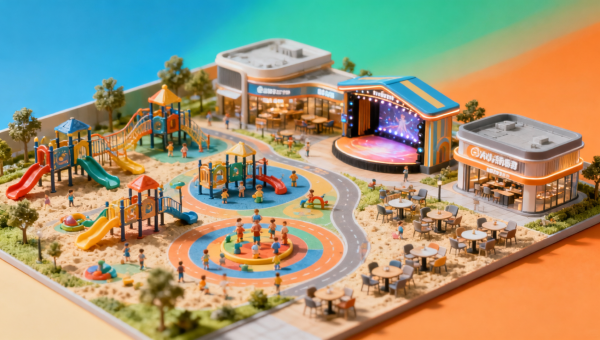
- Hybrid parks with rides, playgrounds, dining, retail, and performance areas
- Resort-linked leisure parks integrated with hotels, event venues, or holiday accommodations
Each model changes the sourcing strategy. A destination park may justify higher-capex rides and themed build-outs. A municipal or family-oriented leisure park may benefit more from durable playground systems, shaded seating, food kiosks, and low-maintenance attractions that encourage repeat visits.
The key is alignment. If your audience is families with young children, a portfolio heavy in thrill rides may not produce the best return. If the site serves tourists with extended dwell time, then restaurant zones, merchandise, live performance areas, and adjacent lodging can significantly improve average spend.
How to Validate Demand Before You Commit Capital
Demand validation is one of the most important stages in planning a profitable leisure park. Investors and sourcing teams should avoid making equipment decisions before confirming audience size, spending power, travel behavior, and competitive gaps.
Focus on these factors:
- Catchment area: How many residents and visitors can realistically reach the park within 30, 60, and 120 minutes?
- Target segments: Families, schools, tourist groups, teens, corporate events, or mixed-use traffic
- Seasonality: Local weather, holidays, school calendars, and tourism peaks
- Competitive benchmarking: Existing parks, malls, event centers, public recreation spaces, and digital entertainment alternatives
- Price tolerance: Expected willingness to pay for admission, food, premium attractions, and bundled services
For a commercial buyer, this research directly affects product sourcing. If attendance is seasonal or uncertain, highly specialized imported attractions with long payback periods may be riskier than modular systems with lower maintenance costs. If families are the core audience, inclusive playground design and shaded rest zones may have more value than visually impressive but low-throughput attractions.
Choose Attractions Based on Throughput, Maintenance, and Audience Fit
One of the most common planning mistakes is selecting attractions based on novelty alone. In reality, the most profitable equipment is often not the most expensive piece, but the one that fits the audience, handles visitor volume efficiently, and remains reliable over time.
When evaluating amusement rides and play equipment, consider:
- Capacity and throughput: How many visitors can use the attraction per hour?
- Age suitability: Does the attraction match the park’s core demographic?
- Maintenance complexity: Are parts, technicians, and service schedules manageable?
- Downtime risk: What happens to revenue and brand perception if the attraction closes frequently?
- Safety certification: Does the equipment meet the required international and local standards?
- Lifecycle cost: Purchase price is only part of the total cost of ownership
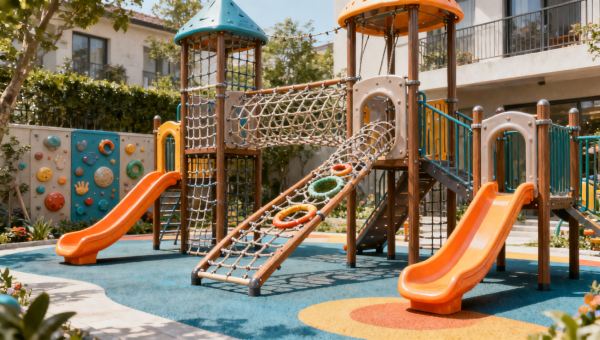
For many projects, a balanced mix works better than a headline-heavy approach. Theme park rides can create destination appeal, while playground swings, climbing systems, splash zones, and inclusive play structures broaden daily usability and increase family satisfaction. The right portfolio improves both visitor distribution and repeat visitation.
Why Inclusive Playground Design Has Commercial Value
Inclusive playground design is often treated as a social or regulatory feature, but it also creates business value. Parks that serve a wider range of physical, sensory, and developmental needs are more attractive to families, schools, communities, and public-private partners.
Commercial benefits of inclusive design include:
- Broader user accessibility and stronger family appeal
- Longer dwell time because more children can participate comfortably
- Better reputation with institutions, municipalities, and community stakeholders
- Improved suitability for educational visits and group bookings
- Greater resilience against reputational risk linked to exclusionary design
Inclusive design can involve accessible surfacing, transfer-friendly structures, sensory play elements, quiet zones, adaptive swings, wayfinding, and seating layouts that support caregivers. For buyers comparing suppliers, the right question is not just whether a product is “inclusive,” but whether the overall play environment works cohesively for different user groups.
Revenue Should Not Depend on Tickets Alone
If admission is the only serious revenue stream, profitability becomes fragile. Strong leisure parks build multiple income sources that increase average spend per guest and reduce dependence on attendance spikes.
Common revenue streams include:
- General admission and premium ride passes
- Food and beverage outlets
- Retail and branded merchandise
- Birthday parties and private bookings
- Corporate and school events
- Season passes and membership models
- Parking, lockers, rentals, and value-added services
- On-site accommodation or resort packages
This is why supporting facilities matter so much. Catering equipment affects food quality, service speed, labor efficiency, and hygiene compliance. Custom furniture shapes comfort, dwell time, and premium perception. Hotel beds and guest room FF&E become relevant when the park is part of a resort or tourism destination. Even technical items such as instrument cables and stage support equipment matter when live entertainment is used to extend evening traffic and create event revenue.
How Supporting Infrastructure Increases Visitor Spend
Many buyers focus heavily on attractions and underbudget the infrastructure that turns attendance into spend. Yet supporting infrastructure often delivers some of the clearest commercial returns.
Key examples include:
- Dining zones: Efficient kitchen layouts and commercial catering equipment support higher transaction volume and better margins
- Rest and seating areas: Custom furniture, shaded benches, and family rest spaces encourage longer stays
- Retail corners: Exit-flow merchandise placement improves conversion
- Live entertainment spaces: Proper sound systems, soundproofing materials, and durable cables improve show quality and reduce technical failures
- Accommodation: In destination projects, hotel-grade furnishings and beds support higher-value package sales
The commercial principle is simple: every friction point reduces spend, and every comfort-enhancing element can increase it. Visitors who stay longer, move comfortably, and access food, retail, and entertainment with ease are more likely to generate profitable secondary revenue.
Safety, Compliance, and Risk Control Must Be Designed Early
Safety is not a final checklist item. It affects layout, supplier selection, material choices, staffing, insurance, and long-term brand trust. A profitable leisure park is one that avoids preventable incidents, minimizes downtime, and demonstrates compliance clearly to regulators, partners, and customers.
Critical areas include:
- Ride and playground certification
- Material durability and fire performance
- Impact attenuation and surface safety
- Electrical and sound system safety
- Kitchen hygiene and food service compliance
- Accessibility and emergency access routes
- Crowd management and queue design
- Preventive maintenance systems
For sourcing teams, supplier due diligence is essential. Ask for test reports, quality documentation, reference projects, spare parts availability, installation support, and after-sales service structure. Cheap equipment can become expensive if compliance fails, replacement parts are unavailable, or maintenance demands are underestimated.
How to Evaluate Suppliers for a Leisure Park Project
For procurement professionals and distributors, supplier choice is often the difference between a smooth launch and recurring operational problems. Price matters, but in commercial leisure environments, reliability and documentation usually matter more.
Use a supplier evaluation framework that includes:
- Manufacturing capability: Can the supplier deliver at the required scale and customization level?
- Compliance readiness: Are certifications current and market-appropriate?
- Project references: Has the supplier served similar parks, hotels, or public facilities?
- OEM/ODM flexibility: Can products be adapted to your branding, layout, or local requirements?
- Lead times: Are production and logistics timelines realistic?
- After-sales support: Will the supplier provide training, spare parts, and troubleshooting?
- Total cost of ownership: What are the maintenance, replacement, and operating implications?
This matters across all categories, from large rides and playground structures to seating systems, kitchen equipment, acoustic treatments, and entertainment hardware. A supplier that understands commercial environments can often reduce risk more effectively than a low-cost vendor offering limited support.
Design the Park for Operations, Not Just for Launch Day
A leisure park can look impressive at opening and still underperform if operational realities were ignored during planning. The design should support cleaning, maintenance, staff circulation, spare parts storage, crowd flow, and phased upgrades.
Questions to address early include:
- Can staff service key areas without disrupting guests?
- Are utility systems sized for future expansion?
- Do food outlets have enough back-of-house capacity?
- Can attractions be maintained efficiently during low-traffic hours?
- Does the layout support weather protection and peak-day crowd control?
Operational design also affects customer satisfaction. Poor queue management, insufficient seating, noise spillover, unclear wayfinding, and underpowered food service can lower repeat visitation even if the attractions themselves are strong. Soundproofing materials, strategic zoning, and practical layout planning are not secondary issues; they are part of the profit model.
Key Financial Questions Buyers and Evaluators Should Ask
When assessing whether a leisure park plan is commercially viable, decision-makers should go beyond headline revenue projections. A more useful approach is to pressure-test assumptions.
Important financial questions include:
- What is the projected payback period by attraction category?
- How sensitive is profitability to lower-than-expected attendance?
- What percentage of revenue comes from non-ticket sources?
- How much annual budget is required for maintenance and replacement?
- Which assets are revenue generators, and which are support assets that improve spend indirectly?
- Can the park be developed in phases to reduce upfront risk?
For many projects, phased development is a smart strategy. It allows operators to open with a core offer, validate attendance and spend behavior, then expand with additional rides, themed zones, accommodation, or entertainment facilities once real market data is available.
Conclusion: Profitability Comes from Commercial Discipline, Not Just Attraction Value
To plan a profitable leisure park, developers and buyers need to think beyond concepts and visual appeal. The most successful parks are built on validated demand, audience-fit attractions, inclusive design, diversified revenue streams, and disciplined sourcing. They treat rides, playground systems, catering facilities, furniture, accommodation elements, and entertainment infrastructure as part of one connected commercial ecosystem.
For information researchers, procurement teams, commercial assessors, and channel partners, the key takeaway is clear: the right leisure park plan is not the one with the most features, but the one with the strongest alignment between market demand, operational capability, safety compliance, visitor experience, and long-term return on investment.
When these factors are planned together from the beginning, a leisure park is far more likely to become not only attractive, but sustainably profitable.
Search News
Hot Articles
- Pro Stage AudioFIFA Adopts Chinese Mini-LED Displays for 2026 World Cup VAR SystemApr 24, 2026
- Outdoor RidesChina FA Warns Nanjing City Over Fan Conduct; ISO 20785 Compliance AcceleratesApr 24, 2026
- Pro Stage AudioFan Zhendong Visits Silicon Valley as MLTT Investor, AI Ping-Pong Tech Draws US InterestApr 24, 2026
Popular Tags
Need ExpertConsultation?
Connect with our specialized leisureengineering team for procurementstrategies.
Recommended News
 Apr 24, 2026China FA Warns Nanjing City Over Fan Conduct; ISO 20785 Compliance AcceleratesISO 20785 compliance accelerates as China FA warns Nanjing City over fan conduct—key for sports security integrators targeting Middle East & SEA tenders.● Theme Park Strategist
 Apr 20, 2026China's Smart Timing System Gains ITU Certification at Shanghai Bike EventChina's smart timing system wins ITU-T L.1800 certification — the first Chinese sports timing platform approved for UCI-accredited cycling events. Discover how it reshapes reliability, security & global competitiveness in sports tech.● Theme Park Strategist
 Apr 17, 2026Popular Badminton AI Protocol Launched in ChengduPopular Badminton AI protocol launched in Chengdu — a game-changer for smart sports hardware, VR simulators & outdoor ride manufacturers targeting Asian youth academies.● Theme Park Strategist
 Apr 17, 2026EN 1176-7:2026 Enforced: AI Behavior Recognition Required for EU Outdoor Interactive Play EquipmentEN 1176-7:2026 is now enforced — AI behavior recognition is mandatory for EU outdoor interactive play equipment. Ensure CE compliance now.● Theme Park Strategist
 Apr 16, 2026EN 1176-7:2026 Enforces AI Safety Rules for EU Outdoor Interactive Play EquipmentEN 1176-7:2026 enforces AI safety rules for EU outdoor interactive play equipment — mandatory false-trigger ≤0.3% & local-only data processing. Act now to comply.● Theme Park Strategist
 Apr 13, 20262026 CKC China Karting Championship in Macau Sparks Export Interest for Domestic Racing GearThe 2026 CKC China Karting Championship in Macau showcased FIA-compliant racing gear, sparking export interest for domestic timing systems, carbon fiber kits & sustainable tires. Discover how this event opens global opportunities.● Theme Park Strategist
 Apr 13, 2026Japan Revises Sports Equipment Safety Standards: Mandatory Multilingual E-Manuals for Imported Fitness Gear from April 2026Japan's new Sports Equipment Safety Standards mandate multilingual e-manuals for imported fitness gear from 2026. Learn how this impacts global exporters and key compliance strategies for smooth market entry.● Theme Park Strategist
 Apr 10, 2026Middle East Tensions Raise Shipping Risks in Hormuz Strait, Air Freight Costs for Sports Equipment Surge 12%Middle East tensions escalate shipping risks in Hormuz Strait, causing a 12% surge in air freight costs for sports equipment. Learn how this impacts supply chains and strategies to mitigate delays.● Theme Park Strategist
 Apr 25, 2026China FA Warns Nanjing City Over Fan Conduct, Ups Security RulesChina FA warns Nanjing City over fan conduct—new AI security, drone countermeasures & spectrum monitoring now mandated for AFC matches.● Theme Park Strategist
 Apr 24, 2026How to Source Park Trash Cans That LastPark trash cans sourcing guide: compare durable materials, supplier options, capacity, and lifecycle cost for playground planning, hospitality procurement, and safer outdoor spaces.● Theme Park Strategist
 Apr 24, 2026Park Trash Cans: What Specs Matter Most?Park trash cans buying guide: compare material, capacity, maintenance, and safety specs for playground planning, playground surfacing, and hospitality procurement projects.● Theme Park Strategist
 Apr 24, 2026What to Check Before Buying Amusement EquipmentAmusement equipment buyers: check playground safety, playground borders, playground climbers, and sensory playground features before purchase to reduce risk and improve long-term value.● Theme Park Strategist
 Apr 24, 2026Amusement Equipment: Buy New or Used?Amusement equipment buying guide: compare new vs. used options for playground climbers, playground borders, sensory playground design, and playground safety to reduce risk and improve ROI.● Theme Park Strategist
 Apr 23, 2026Amusement Equipment Upgrades That Change Guest ExperienceAmusement equipment upgrades improve guest experience with sensory playground features, playground climbers, playground safety, playground borders, and smart commercial furniture solutions.● Theme Park Strategist
 Apr 23, 2026Amusement Equipment Safety Issues Often Missed at InstallAmusement equipment and playground safety start at install. Learn how sensory playground, playground borders, and playground climbers affect compliance, durability, and safer commercial projects.● Theme Park Strategist
 Apr 25, 2026Theme Park Rides That Cut MaintenanceTheme park rides that cut maintenance: compare durable theme park rides, playground structures, inclusive playground and playground swings for leisure park projects. Learn how smart materials and supplier support reduce downtime and lifecycle costs.● Theme Park Strategist
 Apr 25, 2026How to Plan a Profitable Leisure ParkLearn how to build a profitable leisure park with smart theme park rides, inclusive playground design, playground structures, catering equipment, custom furniture, hotel beds, and more.● Theme Park Strategist
 Apr 23, 2026Playground Swings for Parks or SchoolsPlayground swings for parks or schools: compare durable playground structures, inclusive playground options, and leisure park solutions with expert sourcing tips for safer, smarter buying.● Theme Park Strategist
 Apr 22, 2026How to Compare Theme Park RidesCompare theme park rides for safety, capacity, and ROI in a leisure park, while aligning playground structures, inclusive playground zones, and playground swings with smarter sourcing.● Theme Park Strategist
 Apr 22, 2026Is a Leisure Park Worth the InvestmentLeisure park investment guide: compare theme park rides, playground structures, inclusive playground design, swings, soundproofing materials, and custom furniture for stronger returns.● Theme Park Strategist
 Apr 22, 2026Adventure Playground Ideas That Work in Small Outdoor SpacesAdventure playground ideas for small outdoor spaces: compare layouts, indoor playground and trampoline park concepts, plus arcade games and musical instruments features to boost family appeal.● Theme Park Strategist
 Apr 22, 2026Adventure Playground Features That Improve Safety Without Feeling BoringAdventure playground and indoor playground safety features that keep fun high—compare trampoline park layouts, arcade games, and smart design tips for safer, more engaging venues.● Theme Park Strategist
 Apr 18, 20262026 Shanghai Sailing Open Adopts Domestic Smart Timing System2026 Shanghai Sailing Open adopts China's first ITU-R M.2412–certified smart timing system — a game-changer for marine sports exporters, integrators & event organizers worldwide.● Theme Park Strategist
 Apr 18, 2026EN 1176-7:2026 Enforced: AI Behavior Recognition Mandatory for EU Outdoor Play EquipmentEN 1176-7:2026 is now mandatory — AI behavior recognition required for EU outdoor play equipment. Ensure CE compliance, low-latency certification & market access before shipment.● Theme Park Strategist