How to Source Park Trash Cans That Last
Sourcing park trash cans that last is about more than price—it affects safety, maintenance costs, and the overall visitor experience in parks and leisure venues. For buyers involved in playground planning, hospitality procurement, or outdoor facility upgrades, choosing durable solutions alongside the right playground supplier and playground safety surfacing strategy can improve long-term value and brand perception. This guide explains what to evaluate before you buy.
In amusement parks, public gardens, family entertainment centers, campgrounds, waterfront promenades, and resort landscapes, waste bins are part of the visible guest experience. A poorly specified unit can rust within 12 months, tip over in high-traffic zones, or create hygiene issues that increase cleaning labor. For procurement teams, the right sourcing decision reduces replacement cycles, supports cleaner public spaces, and strengthens operational consistency across multiple sites.
For B2B buyers, the challenge is not simply finding a park trash can supplier. It is comparing materials, capacities, mounting methods, weather resistance, maintenance needs, lead times, and customization options in a way that fits both commercial budgets and brand standards. The most durable solution is usually the one matched to the exact use case, traffic load, and servicing model.
Why Durability Matters in Parks and Leisure Environments
Outdoor waste receptacles in the sports and entertainment sector face a wider range of stress factors than many buyers expect. In a playground or leisure park, a bin may be exposed to UV radiation for 8–10 hours per day, rain cycles across 4 seasons, and repeated impact from strollers, maintenance carts, or visitor misuse. That combination quickly reveals whether the product was built for true commercial use or light-duty placement.
Durability directly affects total cost of ownership. A unit priced 20% lower at the time of purchase can become more expensive if repainting is needed every 6–12 months or if hinges, liners, and lids fail during peak visitor periods. In parks with 50 to 200 bins across a property, even a small difference in maintenance frequency can translate into significant labor costs over 3–5 years.
Visitor perception is another commercial factor. Overflowing, dented, or corroded trash cans reduce the sense of cleanliness that operators work hard to create, especially in premium leisure venues, destination playgrounds, and hospitality-linked outdoor spaces. This matters not only for public image but also for tenant relationships, concession areas, and repeat guest satisfaction.
Durability also supports safety and compliance. Loose edges, unstable bases, damaged doors, or broken access panels can create avoidable hazards. In areas used by children, older adults, or high foot traffic groups, buyers should evaluate whether the trash can structure remains stable under repeated use and whether servicing can be done quickly without leaving sharp or exposed components.
Common operational pressures in outdoor recreation sites
- High traffic density during weekends, holidays, and event windows, often 2–3 times normal weekday volume.
- Mixed waste streams including food packaging, beverage containers, napkins, and wet waste from concession zones.
- Exposure to vandalism, graffiti, salt air, irrigation spray, and seasonal temperature swings.
- Frequent emptying requirements, which may range from once daily to 4 times per day in peak season.
Typical failure points buyers should anticipate
The weakest components are often not the body shell itself, but moving parts and service interfaces. Lids that warp, door hinges that corrode, bag retention rings that bend, and internal liners that crack under repeated lifting are common issues. A strong sourcing brief should look beyond appearance and ask which parts are most likely to wear out after 18–24 months of routine use.
To compare alternatives more effectively, procurement teams can use the following durability checklist.
The key takeaway is that a long-lasting park trash can is not defined by one material or one price point. It is defined by how well the full unit performs under real leisure-site conditions, including weather, guest behavior, and cleaning routines.
Materials, Construction, and Capacity: What Buyers Should Compare
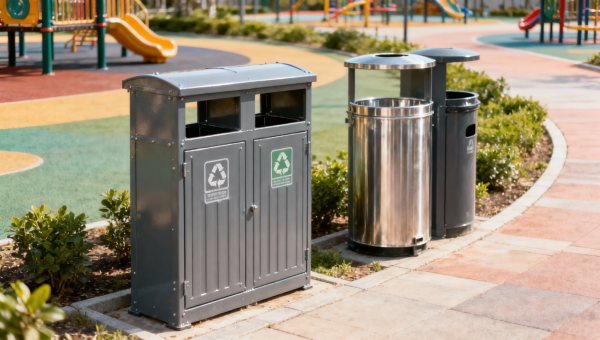
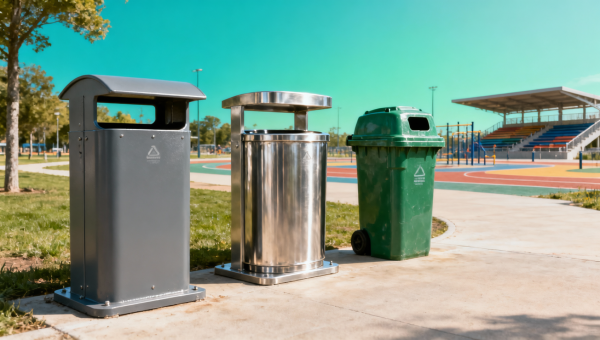
The first technical comparison should focus on material selection. Powder-coated steel is widely used in parks because it balances cost and strength, but the quality difference between a thin decorative finish and a commercial-grade coating is substantial. Stainless steel offers better corrosion resistance, especially in coastal or pool-adjacent environments, while recycled plastic and rotomolded polyethylene are useful where moisture exposure is high and low maintenance is a priority.
Capacity is another sourcing decision that should be tied to visitor flow. Small-format units of 30–45 liters may work near playground seating or trail nodes, but high-volume family leisure areas often need 60–120 liter receptacles, particularly if food and beverage sales are concentrated nearby. Oversized bins can reduce emptying frequency, but they may slow cleaning if liners are too heavy for one staff member to handle safely.
Construction details matter as much as the headline material. Buyers should ask about sheet thickness, seam welding, drainage openings, internal liners, and whether the lid and body connection is reinforced. A bin that looks robust on a specification sheet may still fail early if water collects in hidden cavities or if the opening edge chips after repeated contact with waste bags and cleaning tools.
Aesthetic compatibility should also be considered. Sports and entertainment venues increasingly want trash cans that support a design language, whether that means timber-look slats for natural parks, matte black finishes for urban recreational sites, or color-coded units for waste sorting zones. A durable product should not force operators to choose between function and visual consistency.
Comparing common park trash can materials
The table below summarizes practical trade-offs seen in outdoor leisure procurement.
For most multi-site leisure operators, there is no single perfect material. A more effective approach is zoning. For example, stainless steel may be justified within 300 meters of salt exposure, while powder-coated steel can serve dry inland promenades and molded plastic may fit splash areas or child-focused zones where impact and moisture are common.
Capacity planning guidelines
- 30–45 liters: suitable for secondary paths, trail rest points, and low-volume seating pockets.
- 50–70 liters: common for neighborhood playgrounds and medium-traffic public gardens.
- 80–120 liters: recommended for destination parks, concession areas, and sports venues with regular group traffic.
- Dual or triple stream designs: useful where recycling or waste separation is part of site operations.
When evaluating quotations, buyers should match bin size not only to visitor count but also to collection intervals. A 90-liter unit emptied every 24 hours may outperform a 45-liter unit emptied twice daily if labor access is limited or if cleaning teams cover large outdoor territories.
How to Evaluate Suppliers and OEM/ODM Capability
A durable product starts with a capable supplier. In B2B sourcing, the most common mistake is focusing on catalog appearance while overlooking manufacturing discipline. Buyers should review whether the supplier can maintain coating consistency, welding quality, and component tolerances across repeated production runs, especially when the project requires 100 units, 500 units, or a phased rollout across several sites.
For distributors, agents, and procurement managers, supplier flexibility is also critical. Park trash cans are often part of a broader outdoor furniture package that may include benches, bollards, planters, bike racks, or playground-adjacent site amenities. A supplier that can coordinate finishes, branding, and packaging across these categories often reduces project friction and simplifies logistics.
OEM and ODM capability becomes especially important when buyers need branded colors, custom opening shapes, ashtray integration, logo plates, or waste-sorting graphics. However, customization should not compromise durability. It is worth confirming whether design changes affect coating adhesion, drainage, structural balance, or replacement part compatibility.
Lead time planning is another practical issue. Standard outdoor trash cans may ship in 3–6 weeks depending on quantity and finish, while customized solutions may require 6–10 weeks once drawings, sampling, and approval are included. For projects linked to seasonal openings, event deadlines, or municipal installation windows, schedule reliability is often as important as product specification.
Questions procurement teams should ask before placing an order
- What material thickness, coating steps, and assembly methods are used for the quoted model?
- Can the supplier provide sample evaluation, finish swatches, or pilot production before mass order confirmation?
- Which components are replaceable on-site, and what is the spare parts supply plan for the next 2–3 years?
- How are products packed for export to reduce denting, scratching, or moisture damage during shipment?
- What is the realistic production cycle for standard versus customized orders?
Supplier comparison framework
The following matrix can help buyers structure supplier evaluation beyond unit price.
A strong supplier relationship is not just about getting a quote quickly. It is about obtaining reliable information early enough to reduce rework, avoid mismatched specifications, and support long-term park operations.
Installation, Maintenance, and Lifecycle Cost Control
Even a high-quality park trash can can underperform if installation is poorly planned. Buyers should define whether each location requires surface mounting, embedded anchoring, weighted freestanding placement, or wall mounting. In sports and entertainment spaces, wind exposure, cleaning equipment routes, and pedestrian movement patterns all influence which mounting method is most suitable.
Service access should be evaluated before purchase, not after delivery. If staff need 20–30 seconds longer per bin because the door opening is awkward or the liner is difficult to remove, that delay multiplies across every cleaning round. In a site with 80 units serviced twice daily, inefficient access can add several labor hours per week.
Lifecycle cost should include at least 5 elements: purchase price, freight, installation, cleaning labor, and expected repair or replacement. For some venues, a slightly heavier model with better liner retention and a weather-resistant finish delivers stronger value because it reduces both bag failures and paint touch-up frequency over a 24–36 month period.
Maintenance planning is especially important where bins sit near playground safety surfacing, synthetic turf edges, decorative paving, or hospitality terraces. Cleaning chemicals, standing water, and irrigation overspray can shorten the life of finishes and fasteners. Operators should align maintenance SOPs with the material type selected and keep replacement components standardized where possible.
Practical maintenance schedule for commercial outdoor bins
- Daily or peak-day checks: empty waste, inspect liner position, and clean contact surfaces.
- Weekly inspection: review hinges, latches, anchor bolts, lid alignment, and drainage points.
- Quarterly review: identify coating chips, corrosion spots, graffiti damage, and loose hardware.
- Annual maintenance: refresh protective finish if needed and replace high-wear service parts.
Common sourcing mistakes that increase cost
One frequent mistake is underestimating visitor peaks. A bin sized for average traffic can overflow during school holidays, festivals, or weekend tournaments. Another is specifying decorative models without checking liner compatibility, replacement part access, or anti-vandal features. These choices often look acceptable at installation but become expensive during the first high-season cycle.
A second mistake is using one bin type everywhere. Leisure sites often contain at least 3 operational zones: child-focused areas, food-heavy zones, and general landscape routes. Matching one product to all three can create either under-capacity or unnecessary overspending. Zoning-based selection usually improves both budget efficiency and operational performance.
Sourcing Strategy, Risk Reduction, and Final Buying Checklist
A practical sourcing strategy begins with clear site mapping. Buyers should identify how many bins are required, what capacity ranges are needed, which areas require anchored units, and where branding or waste segregation is necessary. For medium-sized park projects, this can often be grouped into 3 categories: standard path bins, heavy-duty food zone bins, and design-led bins for premium entrances or plazas.
The next step is sample validation. Before issuing a full commercial order, buyers should request either a physical sample or a pilot batch. A 1–3 unit test can reveal issues with finish texture, liner handling, opening ergonomics, and perceived stability that may not be obvious in photos or drawings. This is particularly important for import projects where return cycles are costly.
Commercial risk can also be reduced by standardizing details. If multiple sites use the same liner format, latch system, and anchor pattern, staff training becomes easier and spare part stock can be simplified. Standardization is often more valuable over 3 years than a small short-term saving created by mixing several unrelated models from different suppliers.
For distributors and project evaluators, documentation quality is another signal of supplier readiness. Well-prepared suppliers can usually provide dimensional drawings, material descriptions, finish options, packing plans, and lead time ranges in a structured way. That level of clarity helps buyers compare offers faster and reduces confusion during approval and installation.
Final checklist before order confirmation
- Confirm material, finish, and capacity match each park zone rather than using one generic model.
- Verify cleaning access, liner type, and expected emptying frequency for peak traffic periods.
- Check anchoring or base stability for windy, sloped, or high-interaction areas.
- Review production lead time, packaging, and delivery sequencing for phased installations.
- Ensure spare parts and service components can be supplied over the medium term.
- Request samples or pilot units whenever finish durability or custom branding is important.
FAQ
How long should a commercial park trash can last?
In normal outdoor use, a well-specified commercial unit may serve effectively for 3–7 years or longer, depending on climate, material, maintenance discipline, and traffic intensity. Coastal environments, food-heavy zones, and vandal-prone sites typically shorten service life unless corrosion resistance and structural protection are upgraded.
What capacity is best for amusement and leisure parks?
For many leisure venues, 50–70 liters works for general circulation paths, while 80–120 liters is more suitable near concessions, entry plazas, and family rest areas. The best capacity depends on visitor flow and emptying frequency, not just footprint.
Should buyers prioritize recycled plastic or metal bins?
It depends on site conditions. Recycled plastic is often useful in wet environments and child-focused spaces because it resists moisture and requires limited finish maintenance. Metal bins, especially well-coated steel or stainless steel, may offer better structural rigidity and a broader premium design range for branded leisure environments.
How long does custom sourcing usually take?
A typical range is 6–10 weeks for customized commercial outdoor bins, including drawing confirmation, finish approval, production, and packing. Standard items may move faster, often within 3–6 weeks, depending on stock position and order volume.
Sourcing park trash cans that last requires a structured view of material performance, capacity planning, supplier capability, maintenance efficiency, and lifecycle cost. For sports and entertainment buyers, the strongest results come from matching each product specification to the actual traffic level, weather exposure, and servicing routine of the site.
Global Commercial Trade supports commercial buyers, evaluators, and channel partners with sourcing intelligence built for leisure parks, outdoor amenities, and experience-driven public spaces. If you are comparing suppliers, planning an upgrade, or developing a customized outdoor waste management program, contact us to get a tailored sourcing roadmap, product guidance, and project-ready recommendations.
Search News
Hot Articles
- Pro Stage AudioFIFA Adopts Chinese Mini-LED Displays for 2026 World Cup VAR SystemApr 24, 2026
- Outdoor RidesChina FA Warns Nanjing City Over Fan Conduct; ISO 20785 Compliance AcceleratesApr 24, 2026
- Pro Stage AudioFan Zhendong Visits Silicon Valley as MLTT Investor, AI Ping-Pong Tech Draws US InterestApr 24, 2026
Popular Tags
Need ExpertConsultation?
Connect with our specialized leisureengineering team for procurementstrategies.
Recommended News
 Apr 24, 2026China FA Warns Nanjing City Over Fan Conduct; ISO 20785 Compliance AcceleratesISO 20785 compliance accelerates as China FA warns Nanjing City over fan conduct—key for sports security integrators targeting Middle East & SEA tenders.● Theme Park Strategist
 Apr 20, 2026China's Smart Timing System Gains ITU Certification at Shanghai Bike EventChina's smart timing system wins ITU-T L.1800 certification — the first Chinese sports timing platform approved for UCI-accredited cycling events. Discover how it reshapes reliability, security & global competitiveness in sports tech.● Theme Park Strategist
 Apr 17, 2026Popular Badminton AI Protocol Launched in ChengduPopular Badminton AI protocol launched in Chengdu — a game-changer for smart sports hardware, VR simulators & outdoor ride manufacturers targeting Asian youth academies.● Theme Park Strategist
 Apr 17, 2026EN 1176-7:2026 Enforced: AI Behavior Recognition Required for EU Outdoor Interactive Play EquipmentEN 1176-7:2026 is now enforced — AI behavior recognition is mandatory for EU outdoor interactive play equipment. Ensure CE compliance now.● Theme Park Strategist
 Apr 16, 2026EN 1176-7:2026 Enforces AI Safety Rules for EU Outdoor Interactive Play EquipmentEN 1176-7:2026 enforces AI safety rules for EU outdoor interactive play equipment — mandatory false-trigger ≤0.3% & local-only data processing. Act now to comply.● Theme Park Strategist
 Apr 13, 20262026 CKC China Karting Championship in Macau Sparks Export Interest for Domestic Racing GearThe 2026 CKC China Karting Championship in Macau showcased FIA-compliant racing gear, sparking export interest for domestic timing systems, carbon fiber kits & sustainable tires. Discover how this event opens global opportunities.● Theme Park Strategist
 Apr 13, 2026Japan Revises Sports Equipment Safety Standards: Mandatory Multilingual E-Manuals for Imported Fitness Gear from April 2026Japan's new Sports Equipment Safety Standards mandate multilingual e-manuals for imported fitness gear from 2026. Learn how this impacts global exporters and key compliance strategies for smooth market entry.● Theme Park Strategist
 Apr 10, 2026Middle East Tensions Raise Shipping Risks in Hormuz Strait, Air Freight Costs for Sports Equipment Surge 12%Middle East tensions escalate shipping risks in Hormuz Strait, causing a 12% surge in air freight costs for sports equipment. Learn how this impacts supply chains and strategies to mitigate delays.● Theme Park Strategist
 Apr 24, 2026How to Source Park Trash Cans That LastPark trash cans sourcing guide: compare durable materials, supplier options, capacity, and lifecycle cost for playground planning, hospitality procurement, and safer outdoor spaces.● Theme Park Strategist
 Apr 24, 2026Park Trash Cans: What Specs Matter Most?Park trash cans buying guide: compare material, capacity, maintenance, and safety specs for playground planning, playground surfacing, and hospitality procurement projects.● Theme Park Strategist
 Apr 24, 2026What to Check Before Buying Amusement EquipmentAmusement equipment buyers: check playground safety, playground borders, playground climbers, and sensory playground features before purchase to reduce risk and improve long-term value.● Theme Park Strategist
 Apr 24, 2026Amusement Equipment: Buy New or Used?Amusement equipment buying guide: compare new vs. used options for playground climbers, playground borders, sensory playground design, and playground safety to reduce risk and improve ROI.● Theme Park Strategist
 Apr 23, 2026Amusement Equipment Upgrades That Change Guest ExperienceAmusement equipment upgrades improve guest experience with sensory playground features, playground climbers, playground safety, playground borders, and smart commercial furniture solutions.● Theme Park Strategist
 Apr 23, 2026Amusement Equipment Safety Issues Often Missed at InstallAmusement equipment and playground safety start at install. Learn how sensory playground, playground borders, and playground climbers affect compliance, durability, and safer commercial projects.● Theme Park Strategist
 Apr 23, 2026Playground Swings for Parks or SchoolsPlayground swings for parks or schools: compare durable playground structures, inclusive playground options, and leisure park solutions with expert sourcing tips for safer, smarter buying.● Theme Park Strategist
 Apr 22, 2026How to Compare Theme Park RidesCompare theme park rides for safety, capacity, and ROI in a leisure park, while aligning playground structures, inclusive playground zones, and playground swings with smarter sourcing.● Theme Park Strategist
 Apr 22, 2026Is a Leisure Park Worth the InvestmentLeisure park investment guide: compare theme park rides, playground structures, inclusive playground design, swings, soundproofing materials, and custom furniture for stronger returns.● Theme Park Strategist
 Apr 22, 2026Adventure Playground Ideas That Work in Small Outdoor SpacesAdventure playground ideas for small outdoor spaces: compare layouts, indoor playground and trampoline park concepts, plus arcade games and musical instruments features to boost family appeal.● Theme Park Strategist
 Apr 22, 2026Adventure Playground Features That Improve Safety Without Feeling BoringAdventure playground and indoor playground safety features that keep fun high—compare trampoline park layouts, arcade games, and smart design tips for safer, more engaging venues.● Theme Park Strategist
 Apr 18, 20262026 Shanghai Sailing Open Adopts Domestic Smart Timing System2026 Shanghai Sailing Open adopts China's first ITU-R M.2412–certified smart timing system — a game-changer for marine sports exporters, integrators & event organizers worldwide.● Theme Park Strategist
 Apr 18, 2026EN 1176-7:2026 Enforced: AI Behavior Recognition Mandatory for EU Outdoor Play EquipmentEN 1176-7:2026 is now mandatory — AI behavior recognition required for EU outdoor play equipment. Ensure CE compliance, low-latency certification & market access before shipment.● Theme Park Strategist
 Apr 20, 2026Park benches with bolt corrosion you can’t see until it’s too latePark benches with hidden bolt corrosion risk luxury furniture, hotel furniture & commercial furniture safety—spot invisible degradation before failure.● Theme Park Strategist
 Apr 19, 2026Park benches built for coastal climates—what actually worksDiscover coastal-proof park benches, luxury furniture & custom hotel furniture built to last 25+ years in salt, sun & humidity—engineered for resorts, hotels & commercial spaces.● Theme Park Strategist
 Apr 19, 2026Why park benches fail after two seasons of outdoor usePark benches failing in 2 seasons? Discover why luxury furniture, hotel furniture, and commercial furniture specs matter—and how to choose resilient park benches, hotel chairs, and hotel tables.● Theme Park Strategist