What separates a commercial watch from a fashion driven model
A commercial watch is built to perform far beyond style alone, balancing durability, precision, compliance, and long-term value for professional and retail environments. In contrast, fashion-driven models often prioritize appearance over function. Understanding what sets a commercial watch apart helps buyers, sourcing teams, and brand researchers make smarter decisions in a market where image and performance must work together.
Why usage scenario matters more than category labels
In real sourcing work, the question is rarely whether a watch looks premium. The more useful question is where it will be sold, worn, displayed, serviced, and evaluated over time. A commercial watch may enter duty-free retail, hotel boutiques, corporate gifting programs, jewelry distribution, or uniform-related professional use. Each setting places different pressure on material strength, warranty handling, stock turnover, and perceived value.
That is why a fashion driven model can appear attractive at first glance yet underperform in business settings after 6 to 18 months of regular handling, display exposure, or after-sales demand. Commercial buyers usually care about repeatability, stable specifications, and product consistency across batches of 100, 500, or even 2,000 units. A watch that photographs well but varies in plating, movement quality, clasp tolerance, or water resistance can create downstream commercial risk.
For information researchers in global trade, the phrase commercial watch should therefore be read as a use-case standard rather than a style category. It points to a product designed for sales continuity, serviceability, professional presentation, and supply chain discipline. In many sourcing decisions, the difference is not luxury versus affordable. It is operational suitability versus short-cycle trend appeal.
A practical way to frame the decision
Before comparing watches, procurement teams often define four decision layers: end-use environment, expected wear frequency, maintenance tolerance, and replacement cycle. A commercial watch intended for hospitality gifting may need presentable packaging and low claim rates over a 12-month distribution window. A watch meant for specialty retail may need stronger storytelling and higher display durability under store lighting for 8 to 10 hours per day.
- End-use environment: office, hospitality, travel retail, jewelry counters, or uniform-support settings.
- Commercial volume: pilot runs of 50 to 100 units versus recurring orders above 1,000 units.
- Risk profile: tolerance for returns, battery replacement frequency, and cosmetic wear.
- Brand objective: short-term visual impact, long-term resale credibility, or dependable corporate utility.
This framework helps separate real commercial suitability from marketing positioning. It also explains why two watches at a similar wholesale price can serve entirely different business goals.
Three common business scenarios where a commercial watch outperforms fashion-led models
Scenario 1: Jewelry and specialty retail counters
In retail counters, a commercial watch must survive repeated handling, frequent try-ons, and long display periods without quickly showing scratches, loose fittings, or uneven finishing. Buyers in this channel usually compare not just style but return rates, battery life range, plating consistency, and ease of replenishment. A fashion-driven model may sell on impulse, but if visual surfaces degrade within a season, retailer confidence weakens fast.
For this scenario, materials matter more than trend graphics. Stainless steel cases, reliable mineral or sapphire-based crystal options, clearer dial legibility, and secure clasps usually support stronger commercial performance. Display life is another overlooked issue. Retail lighting can highlight coating defects after several weeks, so finishing quality should remain stable under daily exposure of 8 to 12 hours.
A commercial watch in retail also benefits from cleaner model architecture. Fewer highly seasonal design cues make line extension easier, especially when a distributor wants the same family in 3 to 6 colorways or multiple strap materials. This gives retailers a more manageable assortment plan and reduces dead stock risk.
Scenario 2: Corporate gifting and institutional programs
Corporate gifting creates a different requirement set. Here, the watch may represent an employer, event organizer, educational institution, or premium customer loyalty program. The product needs consistent branding execution, stable packaging presentation, and predictable delivery windows, often within 30 to 90 days depending on customization level. In this use case, a commercial watch succeeds because it can be standardized.
Fashion-driven watches can struggle in this environment because trend-led details often age faster than the gifting cycle itself. If a campaign is rolled out across regions over two quarters, a model that depends heavily on seasonal styling may already feel outdated before the final shipment lands. Corporate buyers usually prefer understated design, low visible defect rates, and broad wearer compatibility.
Another key factor is service support. A gifting program of 300 units with a 2% to 5% issue rate already creates a noticeable after-sales workload. Commercial watch programs are easier to manage when spare parts, batteries, straps, and warranty processes are defined from the start.
Scenario 3: Hospitality, travel retail, and premium experience venues
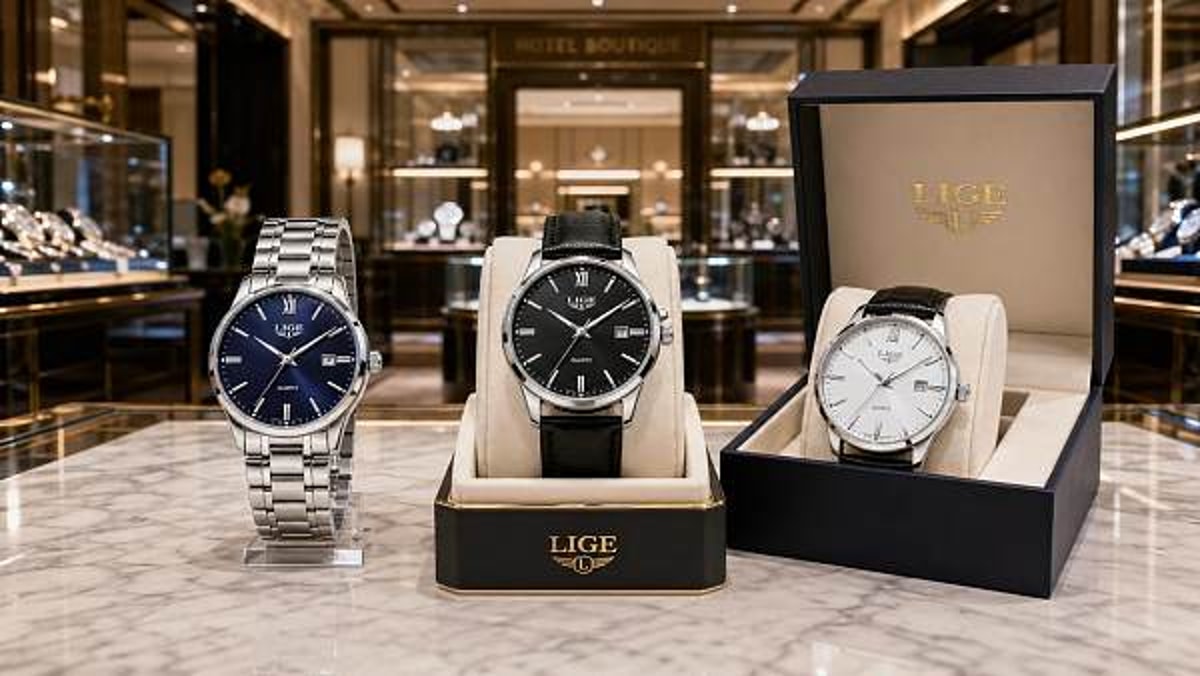
Hotels, cruise retail, airport channels, and premium leisure venues require products that sit between impulse appeal and lasting credibility. A watch sold in these spaces is often part of a curated experience, not just a stand-alone accessory. That means packaging, display resilience, multilingual labeling where needed, and smooth replenishment all affect performance. A commercial watch is better suited because it supports operational continuity as well as product storytelling.
In these settings, customers often buy on travel emotion but still expect dependable ownership. Even moderate water resistance, comfortable wear, and a clear warranty pathway become meaningful. If the watch is associated with a destination or venue brand, poor durability can reflect negatively on the broader guest experience. That is a risk many hospitality buyers try to avoid.
This is also where packaging efficiency matters. Space in travel retail or hotel boutiques is limited, so presentation should look premium without becoming bulky. Commercial watch sourcing often balances carton efficiency, shelf impact, and gifting quality in a more disciplined way than fashion-first buying does.
The table below compares how the same watch category is judged differently across common business scenarios.
The comparison shows that a commercial watch is not defined by one feature alone. It becomes valuable because it answers channel-specific needs with repeatable performance, not because it simply looks more serious.
What buyers should examine in a commercial watch before approving a sourcing decision
Construction, movement, and durability checkpoints
A commercial watch should be evaluated through basic performance checkpoints that match the target scenario. These often include case material, strap durability, crystal type, clasp integrity, movement reliability, and practical water resistance. For many mainstream commercial applications, consistent water resistance in the 3 ATM to 10 ATM range is more relevant than highly technical dive claims. What matters is honest alignment between specification and use.
Movement choice has cost and service implications. Quartz is often preferred for gifting, retail turnover, and maintenance simplicity. Mechanical options can add storytelling value, but they also require clearer user education and tighter quality control. If a buyer expects lower maintenance over 12 to 24 months, quartz-based commercial watch programs are usually easier to scale.
Surface finishing should be reviewed under direct light, not only in catalog photos. PVD tones, polished edges, printed markers, and crown alignment all influence perceived quality. Small inconsistencies may seem minor at sample stage, but across 500 units they become a pattern that affects brand perception and claims handling.
Packaging, labeling, and after-sales readiness
Commercial success depends on more than the watch head itself. Packaging should fit the channel. A retail counter may need premium shelf presence, while a bulk gifting order may need safer logistics and easier carton planning. Insert design, manual clarity, barcode labeling, and battery handling instructions can all affect receiving efficiency and sell-through readiness.
After-sales readiness is another differentiator. Buyers should ask whether batteries, crowns, straps, or buckles can be replaced without excessive lead time. Even a modest spare parts plan covering 1% to 3% of total order volume can reduce operational friction later. A fashion model may be attractive at launch yet weak in service continuity once the season ends.
For cross-border trade, documentation also matters. Product descriptions should be accurate, materials clearly stated, and any usage limitations plainly communicated. This helps reduce disputes and supports smoother channel onboarding.
The following table offers a practical checkpoint list that helps separate commercial suitability from style-led appeal.
A buyer who reviews these points early can usually identify whether a commercial watch program is built for sustained channel use or simply for a short style cycle.
Common misjudgments when a fashion watch is used in commercial settings
Mistaking visual trend strength for commercial readiness
One common mistake is assuming strong initial sell-through proves long-term fit. In reality, first 30-day movement can be driven by packaging, influencer aesthetics, or seasonal appeal. Commercial channels need more than launch energy. They need replenishment confidence, fewer defects, and enough design stability to remain relevant for at least one planning cycle, often 6 to 12 months.
Another misjudgment is underestimating wear patterns. A watch for daily professional use, repeated customer try-on, or souvenir gifting may encounter handling stress that fashion-led construction never anticipated. Thin plating, decorative-only crowns, low-grade straps, or weak buckles tend to show their limits quickly in these environments.
Buyers also sometimes overvalue trend differentiation while ignoring assortment continuity. If a model cannot be repeated with comparable look and performance after one season, it becomes difficult to build merchandising logic around it. This weakens the long-tail value of the program.
Ignoring channel operations and lifecycle cost
A lower upfront unit price does not always create a better commercial outcome. If cosmetic failure, packaging inconsistency, or spare-part absence increases claim handling, the true cost of ownership rises. This is particularly relevant for multi-location retail groups, hotel chains, and distributors that operate across several countries or service points.
Lead time assumptions can also be wrong. A fashion watch tied to a seasonal drop may have acceptable timing for a campaign, but weak repeat-order security for ongoing commercial use. By contrast, a commercial watch program usually prioritizes replenishment logic and specification discipline, even if the design language is less aggressive.
The safest path is to evaluate a watch not only as a product but as a managed item in a supply chain. That includes sampling, order confirmation, packaging signoff, inspection points, and replacement support after delivery.
- Do not approve based on hero photos alone; review wear surfaces and closures physically or through detailed quality checks.
- Check whether the model can be repeated within the next 6 to 12 months without major specification drift.
- Ask for realistic service assumptions, including battery, strap, and replacement handling.
- Match packaging style to logistics realities, especially for export cartons and gifting fulfillment.
These steps are simple, but they often determine whether a commercial watch supports business growth or creates hidden friction.
How to match the right commercial watch to your scenario
A scenario-based selection path for buyers and researchers
The best commercial watch selection starts with channel mapping. Define where the watch will be sold or used, what price perception it must support, and how much service follow-up your organization can realistically handle. A specialty retailer may accept broader design variety, while a hospitality operator may prefer fewer models with better reliability and easier replacement planning.
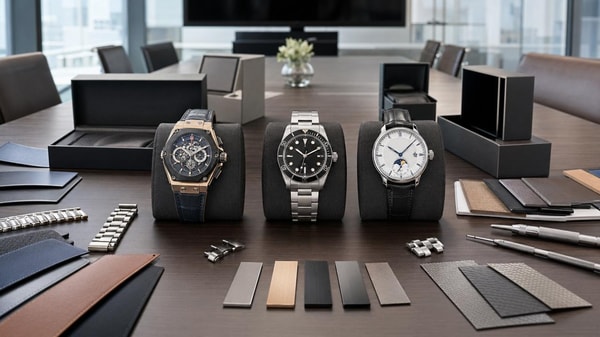
Next, set non-negotiable parameters. These might include case material preference, movement type, water resistance threshold, packaging format, logo customization method, and target lead time. Even 5 to 7 fixed criteria can improve sourcing clarity and reduce time lost on unsuitable samples. This is especially useful when reviewing multiple OEM or ODM proposals.
Finally, compare total program fit rather than isolated aesthetics. A commercial watch that scores slightly lower on trend impact may still be the stronger business option if it offers steadier quality, clearer documentation, and easier repeat supply. For information researchers, this is often the most meaningful distinction to record.
Checklist before moving to sample or quotation stage
- Confirm the application scenario: retail sale, corporate gifting, hospitality resale, event merchandise, or brand partnership.
- Set acceptable specification ranges such as water resistance, strap type, packaging level, and movement category.
- Request quality consistency evidence across production batches, not only one ideal sample.
- Clarify service expectations for 12 to 24 months, including spare parts or replacement policy options.
- Review lead time assumptions for initial order, repeat order, and any customization steps.
When these points are defined up front, the difference between a commercial watch and a fashion driven model becomes easier to measure in practical terms. The conversation moves from image to performance, from impulse to lifecycle value.
Why work with us for commercial watch sourcing insight
Global Commercial Trade focuses on the commercial realities behind product selection, not just surface-level product appeal. For buyers, sourcing teams, and market researchers evaluating a commercial watch program, we help connect application scenario, quality expectations, packaging logic, and supply considerations into one clearer decision path.
If you are comparing options for specialty retail, hospitality gifting, jewelry channels, or premium merchandise programs, we can help you narrow down the right parameters before you commit time and budget. That includes support around product positioning, specification review, customization direction, expected lead time windows, and practical sourcing questions that often get missed in early research.
Contact us to discuss your commercial watch needs in a more structured way. You can consult with us on model selection, packaging approach, delivery planning, sample support, customization options, certification-related questions where applicable, and quotation alignment for your target market. The right watch decision starts with the right scenario, and we are here to help you define it.
Search News
Hot Articles
Popular Tags
Need ExpertConsultation?
Connect with our specialized leisureengineering team for procurementstrategies.
Recommended News
 Apr 30, 2026What separates a commercial watch from a fashion driven modelCommercial watch buying explained: discover how durability, precision, serviceability, and channel fit separate true commercial models from fashion-led watches for retail, gifting, and hospitality.● Luxury Retail Analyst
 Apr 30, 2026ODM watches or private label, which model fits betterODM watches or private label? Compare speed, customization, MOQ, and sourcing risk to choose the best watch model for your brand, launch timeline, and profit goals.● Luxury Retail Analyst
 Apr 24, 2026ODM Watches: Costs, MOQ, and Lead TimesODM watches guide: compare costs, MOQ, and lead times for sports and entertainment sourcing. Ideal for hospitality procurement, resort retail, and branded event merchandise buyers.● Luxury Retail Analyst
 Apr 24, 2026ODM Watches vs OEM: Which Fits Your Brand?ODM watches vs OEM: compare speed, cost, design control, MOQ, and brand value. A practical guide for hospitality procurement, retailers, and distributors.● Luxury Retail Analyst
 Apr 14, 2026China's Berens Shines as Sole Domestic Brand at Watches & Wonders Geneva 2026China's Berens makes history as the only domestic brand at Watches & Wonders Geneva 2026, showcasing COSC-certified tourbillon movements and EU compliance. Discover how this milestone signals China's rising luxury watchmaking capabilities.● Luxury Retail Analyst
 Apr 16, 2026Supply chain solutions for watch components: Why dual-sourcing isn’t automatic—even with same specSupply chain solutions for watch components & designer eyewear: Why dual-sourcing fails without validation—OEM manufacturing, custom fabrication, and compliance risks revealed.● Luxury Retail Analyst
 Apr 16, 2026Smartwatch OEM partners who handle firmware updates—and why that changes your support liabilityDiscover smartwatch OEM partners with true firmware stewardship—critical for designer eyewear, hotel furniture integrations, and pro audio equipment sync. Reduce support liability now.● Luxury Retail Analyst
 Apr 16, 2026OEM manufacturing for watches: When 'custom' means longer lead times, not just logo changesOEM manufacturing for watches demands precision—not just logos. Discover how custom fabrication impacts lead times across designer eyewear, hotel furniture & supply chain solutions.● Luxury Retail Analyst
 Apr 16, 2026Luxury timepieces with service networks outside major citiesLuxury timepieces with certified service networks in Tier-2+ cities—backed by calibration, warranty & parts support. Also: custom jewelry, luxury accessories, orchestral instruments, park benches, music stands & more.● Luxury Retail Analyst
 Apr 15, 2026Luxury timepieces built for daily wear — not just displayLuxury timepieces engineered for daily wear—precision, durability & style. Also explore custom jewelry, luxury accessories, orchestral instruments, DJ equipment, music stands, park benches, outdoor playgrounds & more.● Luxury Retail Analyst
 Apr 13, 2026Watches & Wonders Geneva 2026: Audemars Piguet Returns, Behrens Makes History as First Chinese BrandWatches & Wonders Geneva 2026 marks Audemars Piguet's return and historic debut of Chinese brand Behrens. Discover how this event reshapes luxury watch sourcing with China's rising high-end watchmaking capabilities.● Luxury Retail Analyst
 Apr 13, 2026US CPSC Launches Review of New Fitness Tracker Regulations, Chinese Exporters Required to Submit UL/ETL ComplianceUS CPSC's new fitness tracker regulations require Chinese exporters to submit UL/ETL compliance. Learn how this impacts wearable device OEMs, logistics, and component suppliers. Stay ahead with key action items for 2026 compliance.● Luxury Retail Analyst
 Apr 11, 2026Watches & Wonders Geneva 2026: Audemars Piguet Returns, 10 New Brands Join, Behrens as Sole Chinese ExhibitorWatches & Wonders Geneva 2026 marks a historic event with Audemars Piguet's return & 10 new brands including China's Behrens. Discover luxury watch industry shifts & new opportunities in this groundbreaking exhibition.● Luxury Retail Analyst
 Apr 11, 2026EU EN 16830:2026 Eyewear Standard Mandatory from April 2026, Chinese Exporters Need Certification Within 6 MonthsEU EN 16830:2026 eyewear standard becomes mandatory April 2026. Chinese exporters must update CE certification within 6 months. Learn critical compliance steps for UV protection, impact resistance & labeling requirements to avoid market removal.● Luxury Retail Analyst
 Apr 10, 2026Designer eyewear frames labeled 'acetate' may contain only 37% bio-acetate — and no one discloses itDiscover supply chain solutions for designer eyewear, OEM jewelry & ODM watches — verify true bio-acetate content, not just labels. Premium accessories, commercial procurement made transparent.● Luxury Retail Analyst
 Apr 10, 2026ODM watches with interchangeable straps: Who controls the tolerances — designer or factory?ODM watches with interchangeable straps demand precision tolerance control. Discover how top-tier supply chain solutions, OEM manufacturing, and designer eyewear partnerships ensure premium accessories quality and commercial watch reliability.● Luxury Retail Analyst
 Apr 10, 2026Supply chain solutions for watches often ignore regional after-sales logisticssupply chain solutions for commercial watch, OEM jewelry & designer eyewear—unlock regional after-sales logistics resilience with GCT’s E-E-A-T–validated benchmarks.● Luxury Retail Analyst
 Apr 10, 2026Designer eyewear production runs under 500 units: Is MOQ negotiation still realistic?Explore realistic MOQ negotiation for designer eyewear under 500 units—backed by agile OEM manufacturing, supply chain solutions, and premium accessories expertise.● Luxury Retail Analyst
 Apr 11, 2026OEM manufacturing for eyewear: Where do tooling revisions actually begin?OEM manufacturing for eyewear starts where tooling revisions begin—early design validation, compliance mapping & pilot diagnostics. Discover supply chain solutions, designer eyewear, ODM watches & OEM jewelry excellence.● Luxury Retail Analyst
 Apr 11, 2026Commercial watch procurement often overlooks service lifecycle costsDiscover integrated supply chain solutions for commercial watch, OEM jewelry & ODM watches—reduce TCO with premium accessories, designer eyewear & more.● Luxury Retail Analyst
 Apr 11, 2026ODM watches with full compliance tracking — rare or just under-marketed?ODM watches with full compliance tracking—discover premium accessories, OEM jewelry & designer eyewear suppliers verified for commercial procurement, supply chain solutions, and traceability.● Luxury Retail Analyst
 Apr 11, 2026Designer eyewear brands: When 'custom' really means 'compromised fit'Discover how supply chain solutions & OEM manufacturing impact designer eyewear fit—plus ODM watches, OEM jewelry & premium accessories sourcing.● Luxury Retail Analyst
 Apr 07, 2026EU Updates EN 16830:2026 Eyewear Safety Standards, Impacting Chinese ExportersEU's new EN 16830:2026 eyewear safety standards impact Chinese exporters with blue light limits, impact resistance tests & AI privacy labels. Learn how to comply and maintain EU market access.● Luxury Retail Analyst
 Apr 07, 2026US New Tariffs on Optical Lenses: Impact on Chinese ExportersExplore how US new tariffs on optical lenses impact Chinese exporters, with key insights on compliance strategies for high-index resin and photochromic lenses. Essential reading for eyewear manufacturers and supply chain professionals.● Luxury Retail Analyst